Sebastian Deken

  • Elderly people are asked to define ‘love,’ and their answers are truly raw and heartfelt
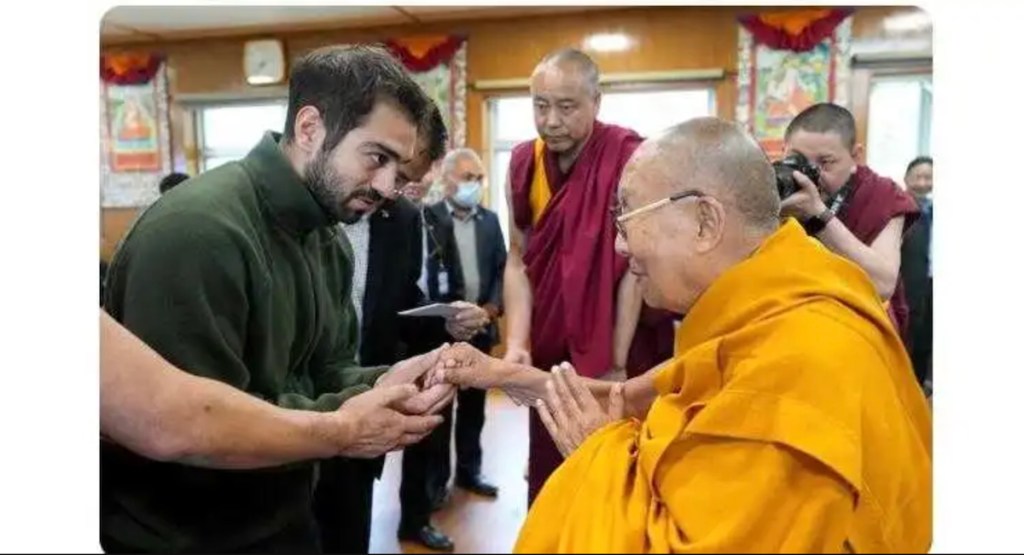
    William Rossy AKA Sprouht asks Dalai Lama for life advice.
    , , ,

    Elderly people are asked to define ‘love,’ and their answers are truly raw and heartfelt

    “Love isn’t just something that happens to you. It’s something you have to nourish.”

    When we’re young, we’re so often overwhelmed by new love. The beginnings of things can feel like we’re being whisked into another dimension, and then if or when it falls apart, those crashes can feel devastating. With time, the hope is that wisdom follows.

    After a lifetime of experience—big loves and heartbreaks—older people often have a clearer rearview mirror when it comes to love.

    William Rossy (who uses the name @Sprouht on social media) has over one million subscribers on YouTube alone and claims to have interviewed the elderly in “35 countries.” (He was even fortunate enough to interview Dalai Lama for life advice.) He asks people in their 70s, 80s, and 90s to share their deepest thoughts with questions like, “What’s a big regret you have that taught you a valuable lesson?” “What advice would you have for younger generations?” And, powerfully, “How would you define love?”


    A woman in her 80s answers, “Love, to me, is a commitment. It isn’t just something that happens to you. Ya know, like ‘Pow—LOVE!’ It’s something you work at, something you have to nourish.” Her friend adds, “You grow into it; it doesn’t just happen at first sight.”

    Of her third (and she says hopefully “final”) husband, she says, “We both had a lot of baggage. We met when we were 72, so you’re gonna have a lot of baggage. So you give each other a generous baggage allowance.” She adds, “It’s not easy to share your life with a person. You’re never gonna have the exact same response to things. Recognizing that your point of view may not be the other person’s point of view. A lot of tolerance.”

    A man in his 90s, who has been married for 67 years, answers that the secret to such a long relationship has been “compromise.” Adding, “No question. Very few things in life are worth fighting over. I want to go downtown, and she wants to go to Westmount Square. So? We went to Westmount Square, and I’m very happy.”

    When he’s specifically asked to “define the word love,” he answers, “Extreme respect and caring. No more than that. The physical side dies early.”


    People in the same age range are asked about life regrets; again, the answers are truly eye-opening. One woman mentions she didn’t have children. When pushed to answer, she first says she has no regrets, but when asked, “Did you ever regret it?” she answers, “I did feel it was something I should have, perhaps, done. But I wasn’t cut out for it.” Someone counters in the comments, “Admitting you are not cut out for children despite wanting them shows massive self-awareness. It is better to not have them than to have them and not look after them properly.”

    One man, whose wife passed away after a 55-year marriage, advises the younger generations to always talk. “Sit down and talk, no matter the disagreement.”

    Near the end of the clip, Rossy references a dear friend in Montreal who painted a drawing of an older person sitting on a bench with a younger one. He shows the painting to the elderly people he’s speaking with and asks, “What advice would you give to me on living a great life? Maybe something you wish me and people my age would know a little sooner?”

    One woman very directly answers, “Make a point of liking and knowing as many people as you can.”

    A 96-year-old woman, as she holds her cute dog, says, “Look after yourself. Take care of yourself. Don’t abuse yourself.”

    Another discusses the importance of travel. “Keep your options open. Travel is a big way to open your mind. Make sure that whatever you do in life, you have some international travel.”

    A man seconds the travel advice. “Travel. Expose yourself. And for God’s sake, be tolerant.”

    And lastly, a woman quite simply admits, “I’ve kind of learned that I don’t like to give advice. Because I don’t actually like it when people give me advice. I don’t have any advice, but I’ve got a lot of experience.”

    This article originally appeared 6 months ago. It has been updated.

  • After a 7’1” man was uncomfortable on a plane, a ‘very short’ woman came to his rescue
    Photo credit: CanvaIt's the little things.

    At a towering 7’1”, Beau Brown has a huge problem. As a literal giant, Beau has to continually duck under door frames, hunt extensively for shoe stores that offer size 18, and account for legroom everywhere he goes. As he was going on a five hour long flight, he paid an extra $150 for a Delta Comfort Plus seat for enough legroom to just modestly fit inside the plane. Unfortunately, it not only didn’t provide enough legroom, but he had to keep his neck bent to fit under the overhead bin above him. “Luckily, there was an angel in front of me,” said Beau.

    The person sitting next to Beau remarked, “Dude, you barely fit in this one,” as Beau took it all in good nature, and chatted with his seat neighbor and their cute dog. Overhearing their conversation and seeing Beau’s discomfort, a petite woman sitting right in front of Beau offered him her exit row seat.

    @bigbeaubrown

    That was about to be a brutal 5 hours! Shout out to my plane seat angel❤️

    ♬ original sound – BigBeauBrown

    “Do you want to switch seats with me?” the woman asked. “I’m very short.”

    Beau accepted her offer and graciously thanked her. The woman even picked up the chocolate bar he accidentally dropped in the aisle and gave it to him as he switched seats. While it wasn’t enough room for a fully comfortable plane ride, it was significantly better and safer for him to sit there.

    “That was the nicest thing anyone has ever done for me on a plane,” said Beau.

    This isn’t the first time Beau has had seat issues on planes. In 2021, he was kicked off his flight for being too tall and had to go on a different flight with a bigger plane. Even a first class seat didn’t fit him.

    @bigbeaubrown

    I didn’t fit on my plane so they gave me first class. It was probably because of my @cuts hoodie and joggers. They said dang this dude got CLASS. First class was still tight. #fyp #travel #tall

    ♬ Infinity – Jaymes Young

    The comments lauded this act of generosity:

    “I love that you didn’t ASK anyone to switch seats and throw a fit when they say no, like we see so often nowadays. And she was so sweet to offer! This is how humans should treat each other!”

    “Dang you lucked out with the people around you at least.”

    “It’s so nice to see somebody doing something nice for once, instead of rage bait.”

    “Shout out to the girl!! How nice of her, nice people don’t get enough acclaim.”

    “How kind of her, and you’re so sweet how appreciative you are.”

    Other commenters sympathized with Beau’s plight about height on flights:

    “At 6’3″, I struggle on economy these days. I can’t imagine flying anything other than business/first at your size.”

    “I’m 6’9” and I can empathize.”

    “It’s rough enough at 6’ with my height in my legs. I can’t imagine another foot to fold in. Bless her.”

    “Dude, I’m 6’2 and am the most uncomfortable on planes. I can’t imagine being even an inch taller let alone a foot.”

    “My husband travels almost weekly for work and has this constant battle as well and he is 6’10”! I think if your ID says a height above a certain point you should NOT be charged for needing extra room to exist!”

    All tall puns aside, the height issue on planes is pretty big. It’s not just a problem with super-tall folks like Beau, but also with people who are even a foot shorter than him. With the average male height being 5’9”, this means that anyone 5’11” and above is considered “tall.” Anyone above that height has to pay more for a seat that modestly fits them, not just for comfort reasons but safety reasons as well. Not only that, but they are competing with others to get to those few extra space seats as more airlines have shrunken them to accommodate more passengers per flight to sell more tickets.

    Let’s let this story be one of cooperation between the tall and the short. For every shelf reached for a shorter person by a taller person, a dropped item is picked up by a person closer to the ground. For every tiny adult shoe size at a store, an above-average size is offered at the same price. For every seat switched on an airplane so a tall person can be more comfortable, a seat could be switched with taller person at a concert or movie theater so the shorter person can see. A little kindness can make a big difference regardless of size.

    This article originally appeared last year. It has been updated.

  • Gen Xers recall how young we were when we started babysitting. It’s even blowing our own minds.
    Photo credit: CanvaGen X started babysitting at shockingly young ages.

    Much has been made of the contrast between Gen X and Gen Z/Gen Alpha childhoods, but some differences feel more significant than others.

    Obviously, Gen X didn’t have smartphones, social media, or even the Internet during our formative years. We roamed and explored our towns with little to no adult supervision. We came home when the streetlights went on or when our parents came to find us after the television PSA that said, “Parents, it’s 10 p.m. Do you know where your kids are?

    Some realities of Gen X childhood sound made up to younger generations, but some even sound bonkers to our own adult ears. Topping that list is how old so many of us were when we started babysitting. Some of us have had to check in with one another to make sure our memories are correct. Was I really putting someone else’s babies to bed at age 11?

    Yes, I was. And so were countless other preteens.

    Gen Xers regularly started babysitting as young as age 8

    “I need you to back me up,” wrote a Gen Xer on TikTok. “Did we not babysit entire families as children? I was 11 with zero training and full responsibility for 3 kids and an infant…paid $5 and a party pizza…My kids don’t believe me. My parents don’t recall.”

    Other Gen Xers do recall, and we’re a bit baffled by it. It didn’t seem all that odd to us at the time. But looking back, especially as parents ourselves, who let us do that? Check out these examples from TikTok, which are in no way out of the ordinary:

    “The day after my 10th birthday the neighbors down the street were excited I was finally old enough to babysit their kids. Their kids were 3 and 5. Apparently your age hitting double digits was all the qualifications needed.”

    “Yup! 11 and babysat a newborn! Like what!? 🤣 Why did they let and why did my parents let me?”

    “I was 10 watching 4 kids and I had to make dinner. 😂”

    “Yes! I was about 12 and babysat 3 kids – one was an infant and I had zero training. I was paid $2-3 an hour.”

    “Yep I had a neighbor kid I took care of starting at 8. She was 2.”

    “I was 11 watching a 2 and 3 year old. Made meals, changed diapers, gave baths. Zero training or babysitting classes taken.”

    “I was 8 and babysitting 2 nephews from one brother and 3 from another… all under the age of 5.”

    “I was 9 and holding it down with a 4, 2, and newborn. The ‘80s were wild!!!!”

    “I started babysitting my 3 year old and 6 month old brothers when I was 8. My mom went back to school and I was in charge on weekends and all summer.”

    @rochelle.digital

    Well, I mean my generation basically watched ourselves all the time so babysitting was no big deal! Can you imagine a 10 year old watch your baby alone these days? Maybe for a very short period of time if they were siblings. Other than that heck no! #nostalgiatok #80skid #80skids #generationx

    ♬ Major Tom (Coming Home) – Peter Schilling

    Gen X has spent most of its lives in caretaking roles

    Being full-on babysitters at age eight is genuinely wild, considering how most kids that age today have their own babysitters. Even knowing how different our childhoods were from the digital-native generations, having an eight- or nine-year-old caring for babies and toddlers feels like questionable decision-making on the part of all adults involved.

    As a Gen Xer, I was babysitting other people’s kids by age 11. Even though I was quite mature for my age, that seems awfully young to me now. I’m sure preteens babysitting still happens, but it’s definitely not the norm.

    And that’s probably a good thing. On one hand, there’s nothing wrong with kids learning responsibility at a young age. On the other hand, if you’re a Gen Xer who started babysitting at age eight and is a parent now, you’ve likely spent nearly all of your life in a caretaking role. And you’re likely continuing in that role both with your young adult kids and your aging parents.

    Was Gen X childhood or Gen Z childhood healthier?

    There are a lot of questions we can raise in hindsight. Even if we were capable of babysitting kids not much younger than ourselves, were we any good at it? Was it healthy for us or for those kids? Did the expectations placed on us help us learn responsibility? Or did some of us have adult responsibilities placed on us too early?

    We can ask the flip side of the same questions about younger generations. Have we expected too little of them? Has protecting their childhoods prevented them from learning responsibility? Is it healthy for kids to be constantly supervised? Did Gen X grow up and swing the pendulum too far the other way in raising Gen Z?

    Can we really even answer those questions? Gen X has been called the least parented generation, which has certainly led to some conflicting perspectives. Our childhoods are often touted as being “carefree” when viewed through rose-colored glasses. But for many Gen Xers, especially women, the reality was more like “underparented while being expected to take on parenting responsibilities.”

    In many ways, Gen X childhood was pretty great, but the premature babysitting thing was “legit sus,” as our kids would say. What were the adults thinking? Is it too late to ask?

  • Firefighters broke out their hoses to save 25 million bees from an overheating truck

    Photo credit: Canva Photos

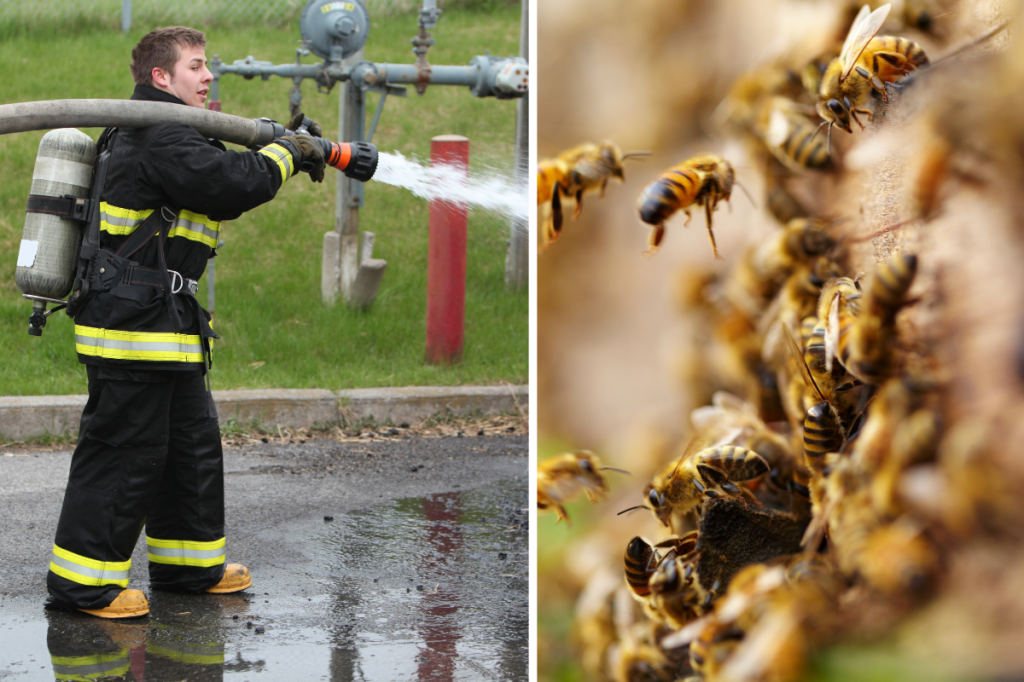
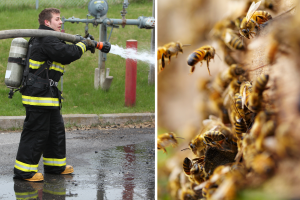
    A firefighter using a hose, left, and bees, right.

    Bees can fly, but that doesn’t mean they don’t sometimes need a ride. In fact, massive colonies of bees and their beehives are often shipped around the country by truck to help pollinate crops. They’re a crucial cog in our food supply chain, and these commutes are critically important.

    The rides, however, don’t come without their risks.

    Truck carrying 480 beehives breaks down and begins to overheat

    One such shipment was on its way through Utah, navigating a mountain pass near Salt Lake City, when the truck carrying hundreds of hives broke down.

    The weather was hot, and without a running engine or airflow from the movement of the vehicle, the inside of the trailer was rapidly heating up.

    Twenty-five million bees—tens of thousands per hive—were inside and were minutes away from dying.

    A mechanic arrived to work on the truck, but there was no telling how long it would take to get things moving again. Luckily, the Millcreek Fire Department and the Unified Fire Authority also happened to arrive. While they weren’t going to be much help getting the engine going again, they had a brilliant idea to help keep the bees safe in the meantime.

    Firefighters drench the trailer with hoses to keep the bees inside cool

    Quick-thinking fire authorities used their equipment to mist and spray the truck, keeping it cool in the hot sun.

    One neat cooperative detail: no firefighters were stung during the operation. In the photos and footage provided by Unified Fire Authority, bees are clearly seen flying around outside the trailer. That’s because the breathable mesh keeps the hives and most of the colony inside, but the bees need airflow while the truck is moving, so many of them slip in and out during the journey.

    In the end, the truck got moving again, and not a single bee—nor firefighter—was harmed.

    Heartwarming story was almost a devastating loss

    Pesticides and habitat loss have wreaked havoc on wild bee populations. Fair Planet notes that about 80% of flowering plants, including many fruits and vegetables, depend on pollinators like bees to reproduce. So while bees can sometimes be viewed as a nuisance or pest by humans, their presence is critical to the natural world around us—and our food supply.

    Managed honeybee populations are doing better than wild ones, but the death of 25 million bees would still have been a significant loss. Not only would it represent a six-figure cost and be tragic in its own right, it would put the crops they were on their way to pollinate at risk.

    Kudos to the quick thinking of the Unified Fire Authority and the Millcreek Fire Department, and to their willingness to help, even in unusual ways.

  • Adopted puppy takes first walk with new family and digs up treasure worth nearly $8,000
    Lagotto romagnolo puppy.

    Many a canine lover would agree that all dogs add value to our lives. But let’s face it, Ollie takes it to a whole new level. In 2022, Adam Clark and Kim McGuire of Blackpool, England, originally bought little Ollie as a surprise for their daughter Alicia. However, it would turn out they were in store for a lovely surprise as well.

    Meet Ollie, the world’s luckiest puppy

    Ollie is much more than an adorable face. His breed, the Lagotto Romagnolo, once used its keen sense of smell to hunt waterfowl in the wet marshlands of Italy, according to Dog Time. Here’s an example of what a Lagotto Romagnolo looks like:

    Pretty much a teddy bear on four legs.

    These pups are also natural diggers, and nowadays the only dogs bred specifically to hunt for truffles. These talents came into play rather quickly when after only 10 minutes into his first family walk in the park, Ollie began to frantically dig into the soil.

    Much to everyone’s surprise, Ollie dug up what appeared to be 15 sovereign coins, meaning pieces of gold thought to date back to the 19th century. The gold sovereign was first minted under King Henry VII in 1489 and has been produced across multiple eras since.

    gold, sovereign, coin, treasure, sovereign coins, dog
    A gold sovereign. Photo credit: www.publicdomainpictures.net

    So how much were the coins actually worth?

    Clark took the coins to be examined by a reputable gold dealer, who not only deemed the coins legitimate, but valued them to be £5,943.96, equivalent to $7,564. It’s not clear how much the family paid for Ollie, but it seems safe to say that they got their money back …and then some.

    Though Ollie’s find is remarkable, Clark still finds his presence to be the ultimate gift. “The treasure is one thing, but the fact is, I’ve bought myself my very own gold hunter, and I cannot wait to take him out again,” he told The U.S. Sun. “He is obviously a very special pup, and I’m thrilled with what he brings to the table, quite literally!”

    And apparently they make great pets too

    While Lagotto Romagnolos work really well for finding truffles (and potentially 500+ year old gold coins), they also make for great companions. Dog Time adds that they are easily trainable, good with children, and their hypoallergenic coats keep allergies at bay, though they do require dedicated grooming. It’s a pretty even trade-off for their undying affection and easy-going attitudes. Especially if they happen upon a small fortune!

    There’s no real telling what other trinkets Ollie might dig up. But one thing’s for sure, he’s making his family very happy, and that is priceless.

    This article originally appeared four years ago. It has been updated.

  • People are applauding newlyweds for their beautiful $500 wedding. Here’s how they did it.
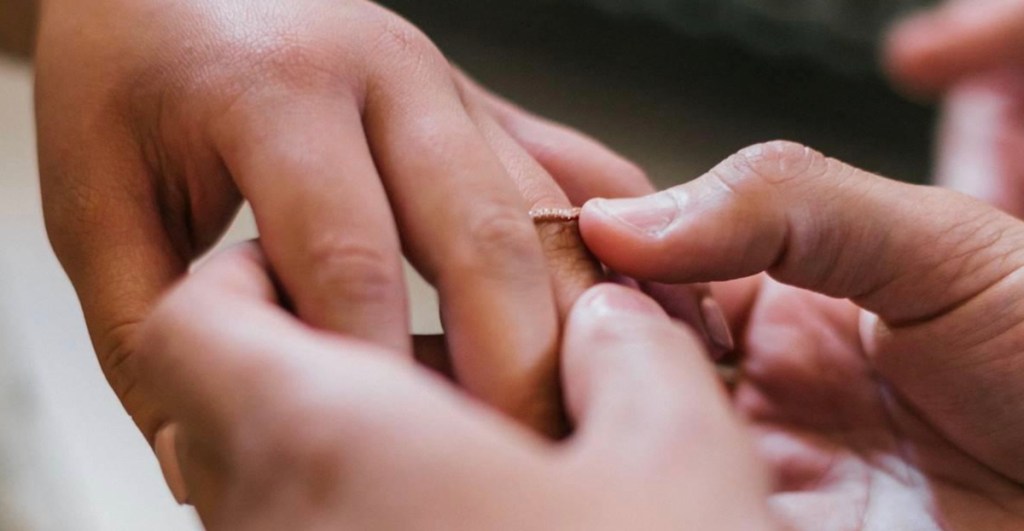
    Weddings don't have to break the bank.

    Having a big, expensive wedding seems like the worst way for a young couple to start their lives together. For those who get mom and dad to foot the bill, no problem. But in the U.S., 28% of couples reported going into debt when paying for their weddings and the average celebration costs $36,000.

    “It’s one of those life events that’s really tied to emotion, to your values, what’s important to you,” researcher Elyssa Kirkham told CNBC. ”[People are] willing to take on debt and do that trade-off if it means they can get closer to achieving their dream.” Kiara Brokenbrough and her husband, Joe, captured a lot of attention when they bucked the trend and had a beautiful wedding for just $500. The wonderful thing about the celebration is that its focus was on the couple and those who love them.

    Here is how they pulled it off for $500

    “You have a wedding, with witnesses there to witness you, vowing to your spouse, vowing to God that you guys are going to stay together for life,” Kiara told Good Morning America. ”And then you celebrate with food, drinks and dance. And that’s exactly what we did.”

    After trying on a few $1,500 dresses at a traditional wedding shop, Kiara decided to save some money by purchasing a dress for $47 at Shein. She revealed her money-saving decision in a TikTok video that went viral.

    The dress impressed a TikTok user named Kristen. “I be tryna tell yall cost of things don’t matter. It’s how you put it together and wear it. AND BABYYYYY YOU PUT IT TOGETHER AND WORE IT,” she commented on the video.

    The couple also cut costs by having the runner and flowers donated by her family. As for the venue, they chose a free location overlooking the ocean on the California coast. “Our goal was to just be as minimal as possible,” Kiara told Good Morning America. “And to spend the least amount of money as possible.” She was also super practical when thinking about her dress. “I didn’t want to spend a lot of money on a dress because I had the mindset I’m gonna wear this one time for a few hours,” she said.

    Even the reception was budget-friendly

    The Brokenbroughs saved money on the reception by having guests pay for their food and drinks. “The people we have there, they understood the assignment, they understood the things that we were trying to do, and they really supported us,” said Kiara.

    And science says they made the right call

    The Brokenbroughs’ decision to have an affordable wedding to start their marriage on good financial footing was an incredibly savvy move and, according to research, it could bode well for the couple’s future. In the end, the cost didn’t matter, it was still a wonderful celebration. “The energy was great, and people were just there to truly celebrate us,” Kiara told NBC 4. “When I got out of the car, I just ran because I was just so excited. I’m like, I’m ready to do this.”

    The linked study on how wedding spending correlates with a couple’s longevity was done in 2014 and found that “marriage duration is inversely associated with spending on the engagement ring and wedding ceremony.”

    “If the research still holds up, the Brokenbroughs’ attitudes toward finances could be a predictor of a long and happy marriage.

    “It could be that the type of couples who have (an affordable wedding) are the type that are a perfect match for each other,” one of the study’s authors, Hugo M. Mialon told CNN. “Or it could be that having an inexpensive wedding relieves young couples of financial burdens that may strain their marriage,” he added.

    This article originally appeared four years ago. It has been updated.

  • A doctor says there’s finally a clear winner in the morning or night shower debate
    Photo credit: @drjasonisfresh/TikTok, Representative Image from CanvaDr. Jason Singh explains the pro and cons of showering at night and in the morning.

    Dr. Jason Singh, who has all kinds of medical insights on TikTok, weighed in on the topic he joked was “more debatable than pineapple on pizza.” That debate would be whether it’s better to shower in the morning, or at night.

    You would think the “right answer” would be largely up to personal preference, much like which way to face while showering and whether or not to snack in the shower…two previous hot button issues online. But according to Singh, there are definitive pros and cons to each option, which could settle the debate once and for all.

    Here is what the doctor actually found

    Singh says in the clip that overnight, “your body can accumulate germs such as bacteria and fungus” through “processes like sweating and shedding skin cells,” all of which help create odor. When you shower off this residue in the AM, it brings your “skin microbiome back to a more hygienic baseline.”

    Makes a pretty compelling case for morning showers, doesn’t it? Just wait.

    Singh went on to say that nighttime showering has three things going for it.

    One, it helps release melatonin to help induce sleep. Plus, when your body adjusts from a warmer temperature to a cooler temperature, that also helps your body prepare for a good night’s rest.

    The second benefit is that it washes away “the entire day’s grime.” Which, let’s be honest, can be very therapeutic sometimes. And lastly, showering at night is the ‘better way to help hydrate your skin,” making it a better option for those with sensitive or dry skin.

    Singh’s bottom line: “Overall night-time showers have more benefits to it but morning showers have really one benefit and that’s better hygiene.”

    @drjaysonisfresh

    More debatable than pineapple on pizza

    ♬ original sound – Dr. Jason Singh

    The comments had strong feelings about this

    Singh encouraged viewers to weigh in with their own opinions, and they didn’t hold back.

    “You will never convince me to go to bed dirty,’ one person wrote. Another argued “The worst part about night time showers is long, wet hair. I hate going to bed with wet hair!”

    There ended up being some pretty funny responses as well. One person joked that they opted for morning showers since it helps them “Get my head together. Generate a to-do list. Fight with pretend people.”

    Another person noted that timing preferences can be dictated by their schedule, commenting, “night showers during the work week and morning showers on the weekends.”

    shower, hygiene, morning routine, nighttime routine, sleep, skin care, health, wellness, TikTok, doctor
    Woman takes an outdoor shower during the day. Photo credit: Canva

    Some people said two showers was the answer

    Many argued that two showers a day was the actual best option. That way you don’t go to bed dirty, and you’re fresh for the morning.

    Obviously, showering at any time consistently is perfectly fine, but Dr. Singh offered some valuable food for thought.

    Of course, you could always follow in this viewer’s footsteps, who wrote:

    “I prefer to roll around in dust like a chinchilla.”

    This article originally appeared two years ago. It has been updated.

  • Iconic writer Kurt Vonnegut’s simple graphs show how to write the 3 stories everyone loves
    Photo credit: via David Comburg/YouTubeKurt Vonnegut explains the shapes of stories.
    ,

    Iconic writer Kurt Vonnegut’s simple graphs show how to write the 3 stories everyone loves

    “There’s no reason why the simple shapes of a story can’t be fed into computers.”

    To be a great fiction writer requires understanding basic story structures and being clever enough to disguise them so your audience doesn’t know they’re watching or reading something they’ve seen before. Academics suggest that there are only a finite number of plots and structures, but that number varies based on who’s doing the talking.

    Writer Kurt Vonnegut, best known for his satirical works on American politics and culture, including “Slaughterhouse-Five,” “Cat’s Cradle” and “Sirens of Titan,” was obsessed with the shapes of stories and summed up his views in one powerful sentence: “The fundamental idea is that stories have shapes which can be drawn on graph paper and that the shape of a given society’s stories is at least as interesting as the shape of its pots or spearheads.”

    What are the shapes of stories?

    In the video below, Vonnegut explains the shapes of three different types of stories. The first one he starts with is “person gets into trouble.”

    The first question is where the main character or protagonist starts their journey. Are they in a state of good or bad fortune, and how does that change from beginning to end? The arc of this story is simple, someone starts off in good fortune, they get into trouble, and then find their way out. “Somebody gets into trouble, then gets out of it again. People love that story. They never get tired of it,” Vonnegut says with a smirk.

    The second is called “boy gets girl,” which is the basics of the story: someone finds something “wonderful,” their life is on an upward trajectory, then they trail downwards until they can get the girl or boy back. He finishes with the “most popular story” of Western civilization, and that is “Cinderella.”What’s interesting about the story is that it’s about a poor little girl whose mother has died, and her life is pure misery. But her story has a massive upswing when she meets her fairy godmother and can go to the ball. But once the clock strikes midnight, her life crashes down in a matter of seconds.

    Vonnegut’s eerie prediction about AI

    What’s interesting is that at the beginning of the video, Vonnegut notes that stories are relatively “simple” and that they should be able to be plugged into computers that could then regurgitate the same story over and over again. It almost feels like an eerie predictor of artificial intelligence. “There’s no reason why the simple shapes of a story can’t be fed into computers. They are beautiful shapes,” Vonnegut says. “Now this is an exercise in relativity, really. It’s the shape of the curves are what matters, and not their origins.”

    After seeing Vonnegut map out the basic plotlines of stories, it’s hard not to see them every time you watch a movie or TV show. It is amazing that, because there are so few characters and plot arcs in modern storytelling, anyone can create anything that feels new.

    This story originally appeared three years ago. It has since been updated.

Uncategorized

People are applauding newlyweds for their beautiful $500 wedding. Here’s how they did it.

Pop Culture

A doctor says there’s finally a clear winner in the morning or night shower debate

Pop Culture

Iconic writer Kurt Vonnegut’s simple graphs show how to write the 3 stories everyone loves

Culture

The surprisingly mysterious reason we use the $ symbol for the U.S. dollar