
Nine things new parents think they need and the more practical alternatives.

No, you actually don’t need a ‘pee pee teepee.’

new parents; baby; newborn; baby items
Things new parents think they need but don't.Photo credit: Photo by Kelly Sikkema on Unsplash

There’s nothing like preparing for a new baby. The excitement and anticipation take hold and before you know what’s happening, your baby registry is five pages long full of things you’ve probably never heard of. I’ve been there before, and now, four kids later, I can tell you with absolute certainty that there are tons of things you actually don’t need. It’s easy to get carried away when everything is so tiny and cute, especially ’cause marketing around baby stuff is bananas. The following offers some alternative items to the ones you’ll likely only use a limited number of times before practicality takes over.


Many of us have been there, standing in the baby aisle looking like we’re smuggling an oddly shaped beach ball under our now-too-small maternity shirt contemplating between the many styles of pacifiers and different types of bottles. You’d be forgiven for spending an insane amount of money on bottles shaped like a deflated spaceship that guarantee your baby will never burp, when two weeks after they’re born you find out your baby actually prefers the $0.98 ones from Walmart. Figuring out what you really need is tricky enough, so let me help you out. Hold on to your bellies or shiny new babies folks, this list might blow your mind.

Baby wipes. Baby wipes from <a href="https://www.amazon.com/Hello-Bello-Sensitive-Babies-Unscented/dp/B0B3QXGPK5/ref=sr_1_4_sspa?keywords=baby+wipes&qid=1663271338&rdc=1&sr=8-4-spons&psc=1">Amazon</a>

1. Put the Pee Pee Teepee down and back away slowly.

Aside from the word “teepee” being highly inappropriate for non-Indigenous people to use, you can go ahead and take this bad boy off your baby registry. If you’re not familiar with a “pee pee teepee,” it’s a cone-shaped item that goes on top of your little guy’s business so he doesn’t accidentally pee in his eyes or on the unsuspecting diaper changer. Here’s the thing, baby wipes or a baby washcloth work just as well. When my boys were little I’d just throw a wipe over their baby business while I changed the diaper, and once the dirty diaper was off, it’s easy to toss the used wipe in before trashing the diaper. Easy peasy and it’s one less thing to put on your list.
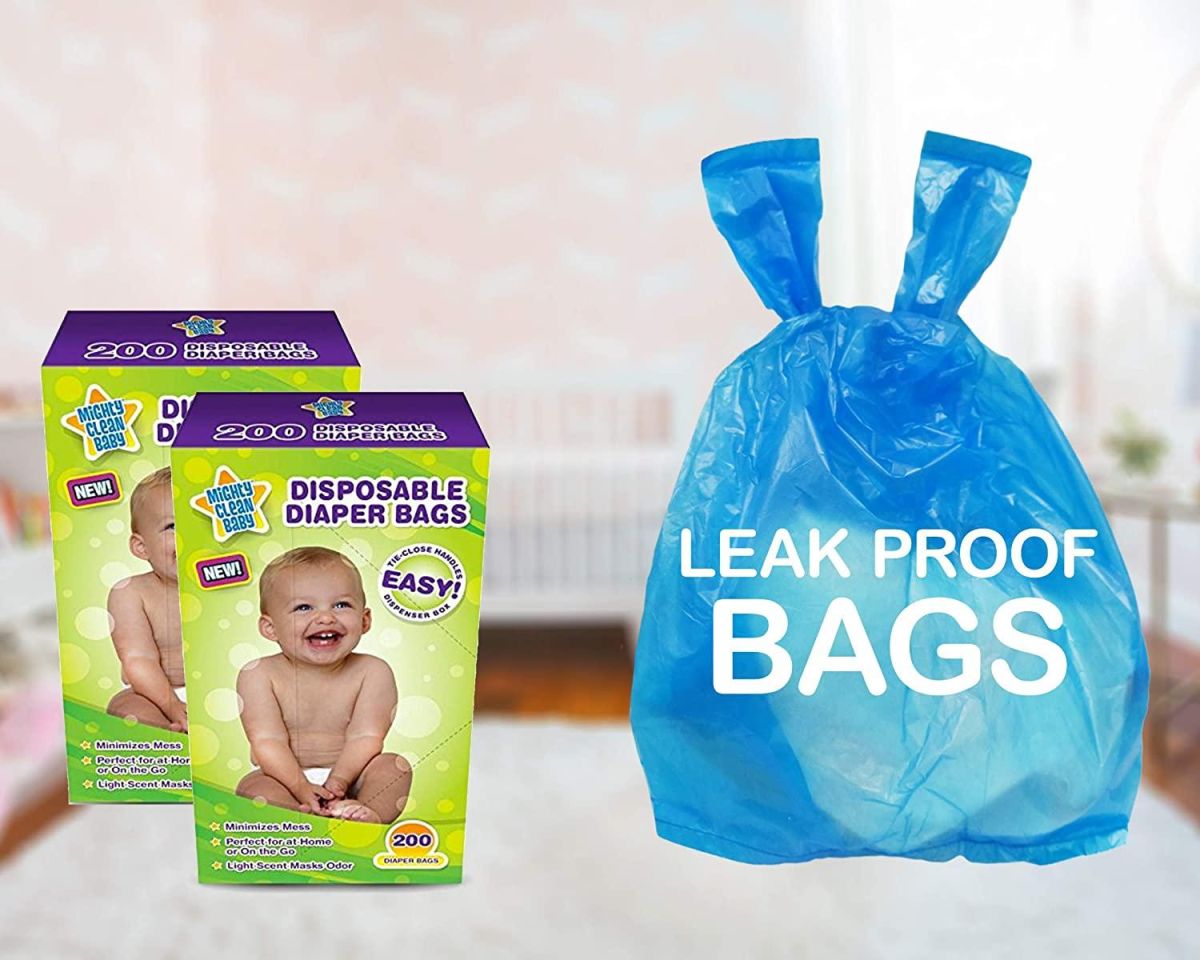
Disposable diaper bags. Disposable diaper bags from <a href="https://www.amazon.com/Mighty-Clean-Baby-Disposable-Diaper/dp/B07MVNS3WP/ref=sr_1_3_sspa?keywords=plastic+diaper+bags&qid=1663276844&sr=8-3-spons&psc=1">Amazon</a>

2. Diaper Genies are unnecessary and it’s easy to forget they exist.

I had such high hopes for my Diaper Genie as a first-time mom. They’re so cool, you shove a dirty diaper in there and twist. That’s it. It locks in the odor and makes a weird-looking segmented snake of dirty diapers. Alas, when your diaper pail is in one room and you’re changing a diaper on a wiggly baby in another, most times the diaper just winds up in the closest trash can. So just buy some small cheap trash cans to put in different rooms and then empty them at the end of the day. There’s only so much odor a diaper genie can hold and they only take special expensive trash bags. Save your money. Get some small trash cans and those little smell good bags to toss the smelly diapers.
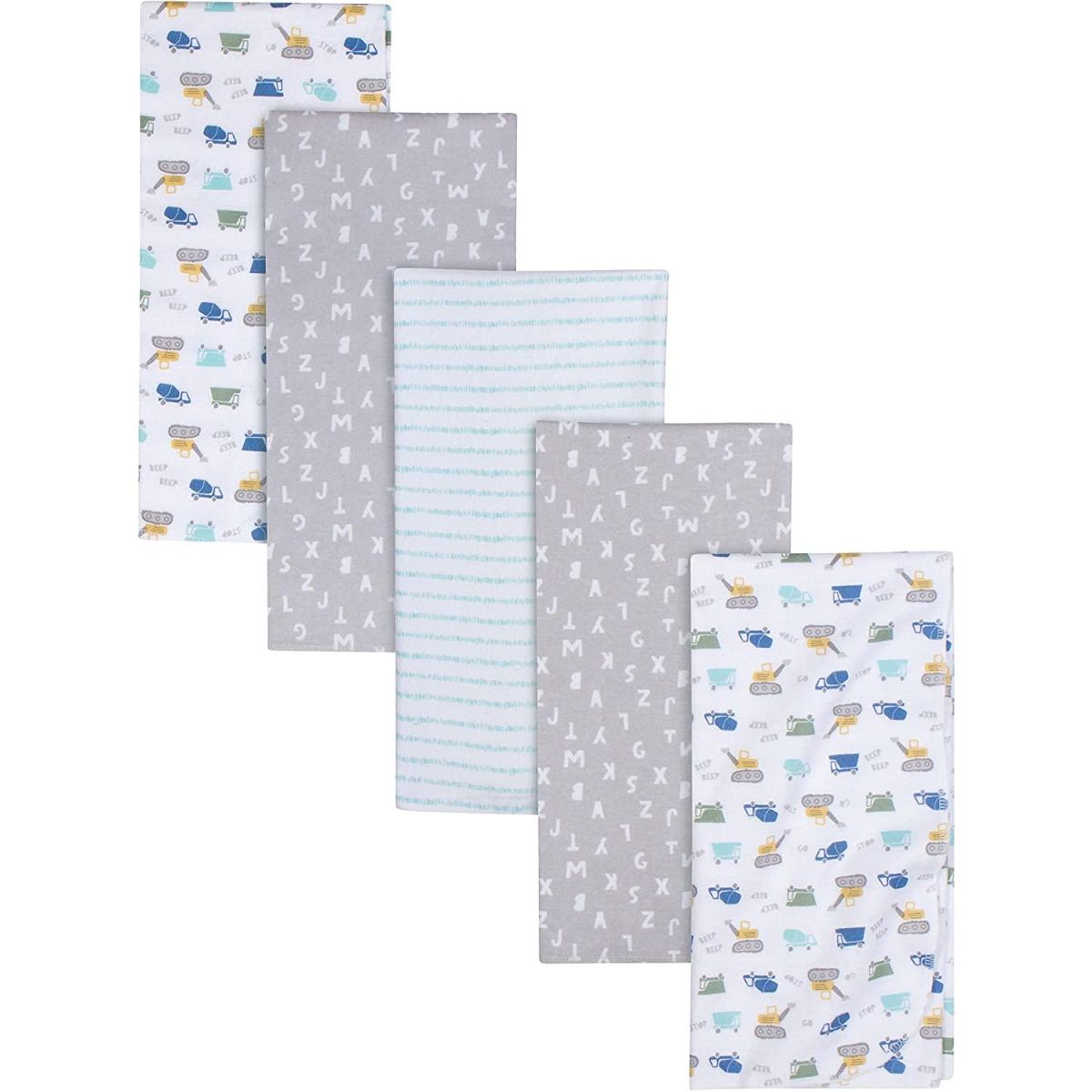
Receiving blankets. Receiving blankets from <a href="https://www.amazon.com/Gerber-Newborn-Toddler-Nursery-Receiving/dp/B092558BBF/ref=sr_1_7?crid=1USFLMBRFTXQN&keywords=receiving+blanket&qid=1663282206&sprefix=rec,aps,90&sr=8-7">Amazon</a>

3. You can buy a swaddler but you don’t actually need it.

I know this might be a controversial statement, but honestly those swaddlers are really expensive and babies quickly outgrow them. You can do the perfect swaddle with a receiving blanket for a fraction of the price and just as much energy. You know how babies come all bundled up when the nurse brings them in from the nursery? Yeah, that’s a really good swaddle that will give your snuggle bug the same coziness as an expensive swaddler.

Portable baby formula dispenser. Portable baby formula dispenser from <a href="https://www.amazon.com/Dispenser-Container-Non-Spill-Stackable-Compartments/dp/B09DCP6ZD4/ref=sr_1_5?keywords=Portable+formula+container&qid=1663282980&sr=8-5">Amazon</a>

4. You don’t have to be fancy and get a Baby Brezza.

Honestly, I had never heard of a Baby Brezza until I had my youngest, so I’m assuming its a newer invention. They’re certainly cool and also really expensive and unnecessary. These little doodads are like baby Keurigs but for formula. They hold powdered formula and water, you press a button and it supposedly perfectly mixes up a warm bottle of sustenance. The price tag on these things are about the same as a larger much more needed baby item, like a car seat-stroller combo. There have also been some concerns raised by pediatricians due to some bottles not getting enough formula added.

Take the guesswork out of it and just fill the bottles by hand. You can even put water in the bottles in advance and leave them out at room temperature and use a portable formula container to put premeasured scoops in. I know it’s no Baby Brezza, but you’ll be $200 richer and know exactly how much formula is going into your baby’s bottle.
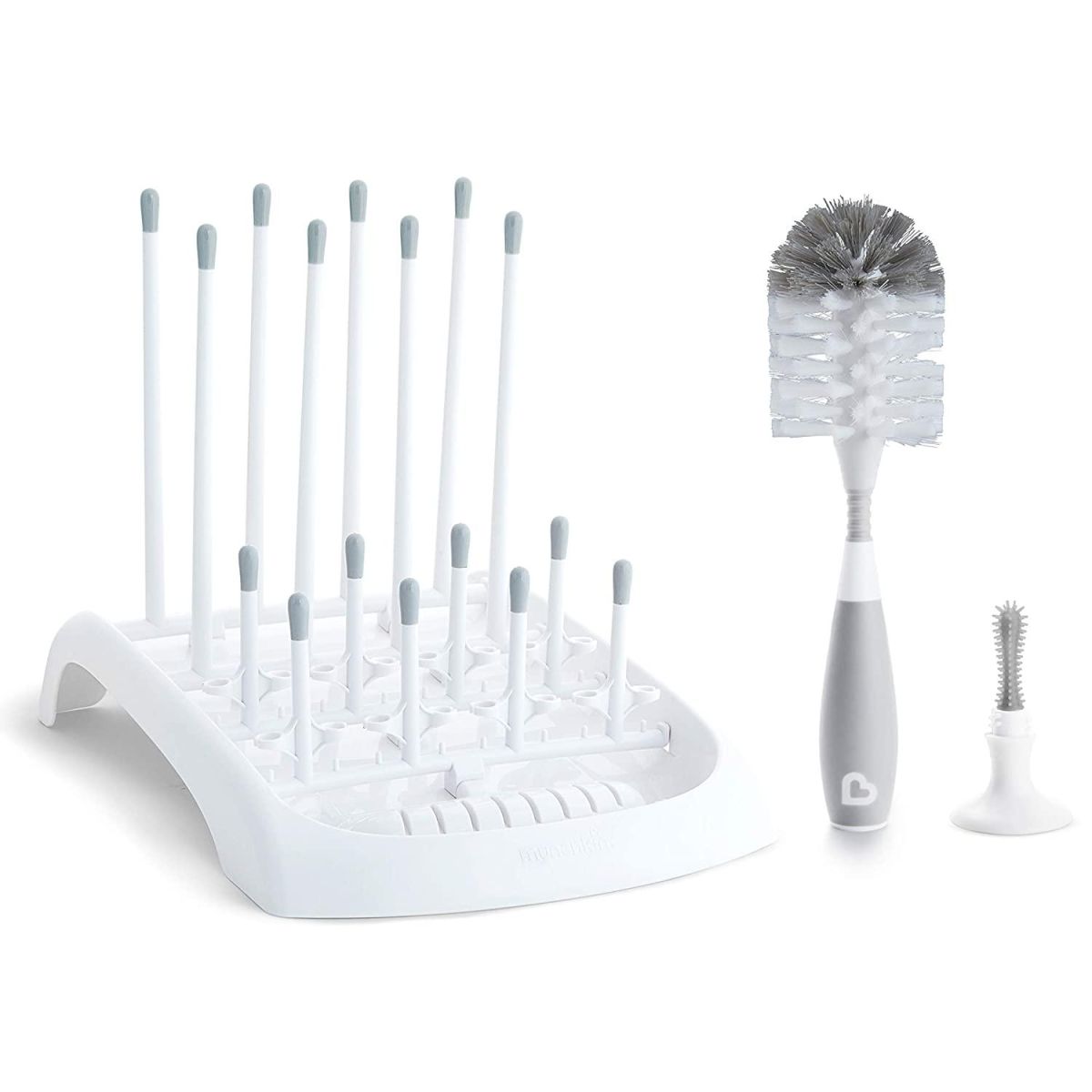
Bottle drying rack. Bottle drying rack from <a href="https://www.amazon.com/Munchkin-Bottle-Cleaning-Countertop-Bristle/dp/B0815BRDD1/ref=sr_1_41?crid=NS0GEF103VJD&keywords=baby+bottle+rack&qid=1663283334&sprefix=baby+bottle+rack,aps,98&sr=8-41">Amazon</a>

5. Your baby doesn’t need fake grass to dry their bottles on.

Don’t laugh, a fake grass bottle dryer is something that actually once sat on my kitchen counter. That’s about all it did because I dang sure didn’t use it for more than the first week. When you’re sleep deprived, you want the easiest thing available and oftentimes that’s the top rack of the dishwasher or the dish rack that’s already on your countertop. The things we get suckered into buying is laughable sometimes. Besides it being esthetically pleasing, you don’t actually need it and a regular bottle rack, in fact, works better because there are no removable trees holding the nipples.
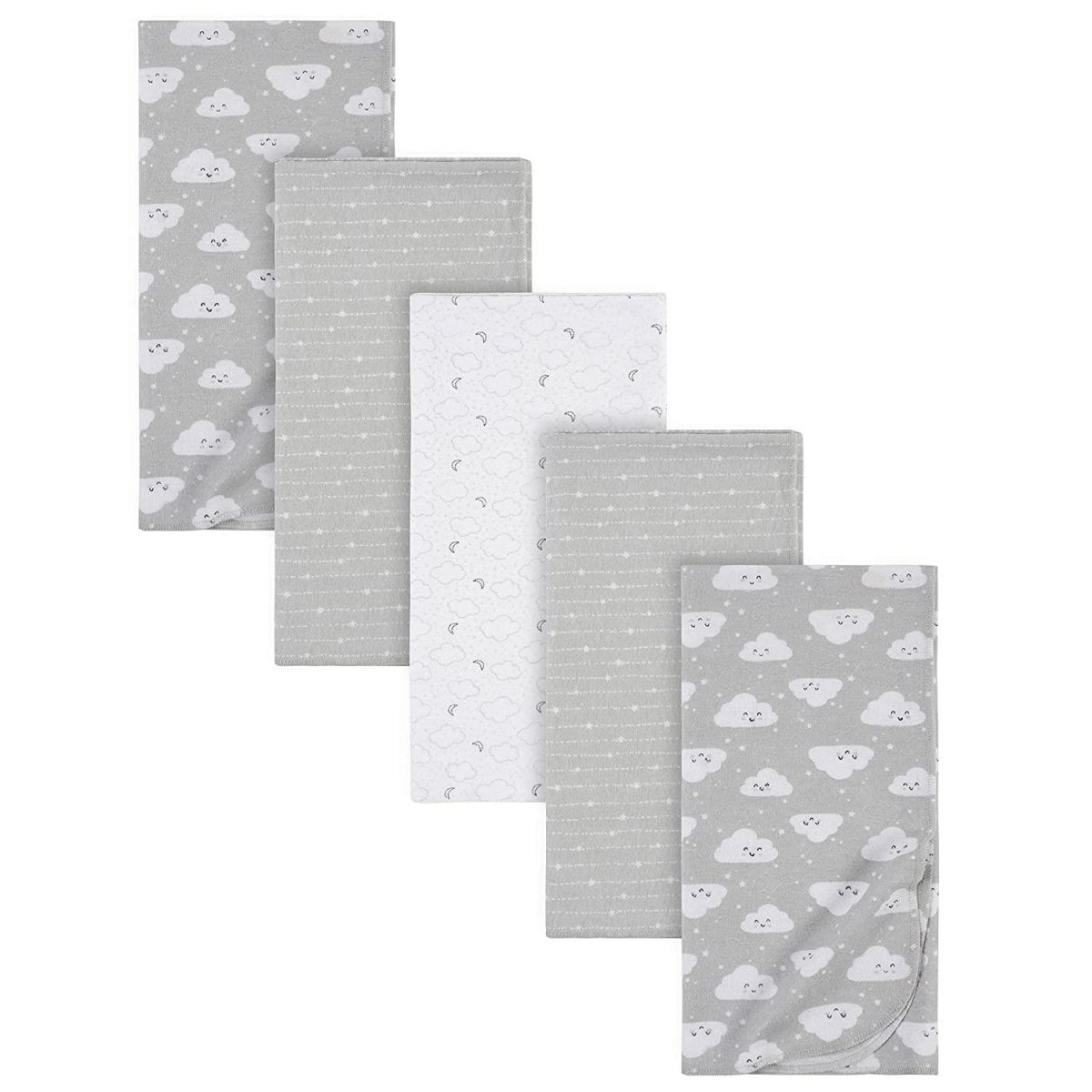
Receiving blankets. Receiving blankets from <a href="https://www.amazon.com/Gerber-Newborn-Toddler-Nursery-Receiving/dp/B09257W294/ref=sr_1_9?keywords=receiving+blankets&qid=1663283777&sr=8-9">Amazon</a>

6. Side eye anyone that says you need embroidered burp cloths.

Don’t fall for it. Yes, purpose-made burp cloths can be super cute but they’re literally used to catch baby puke. These things are too small to cover the area needed to prevent your back and shoulder from becoming a casualty of a little guy eating too fast. Remember those receiving blankets we talked about earlier? Yeah, they are much more absorbent and cover more of your body to spare you having to change clothes. Those flannel blankets are versatile. You can use them for swaddling, to cover a car seat or stroller, for burp cloths or even a clean area to change the baby on. There’s no such thing as too many receiving blankets. I’ll make it easy for you, grab a pack here.
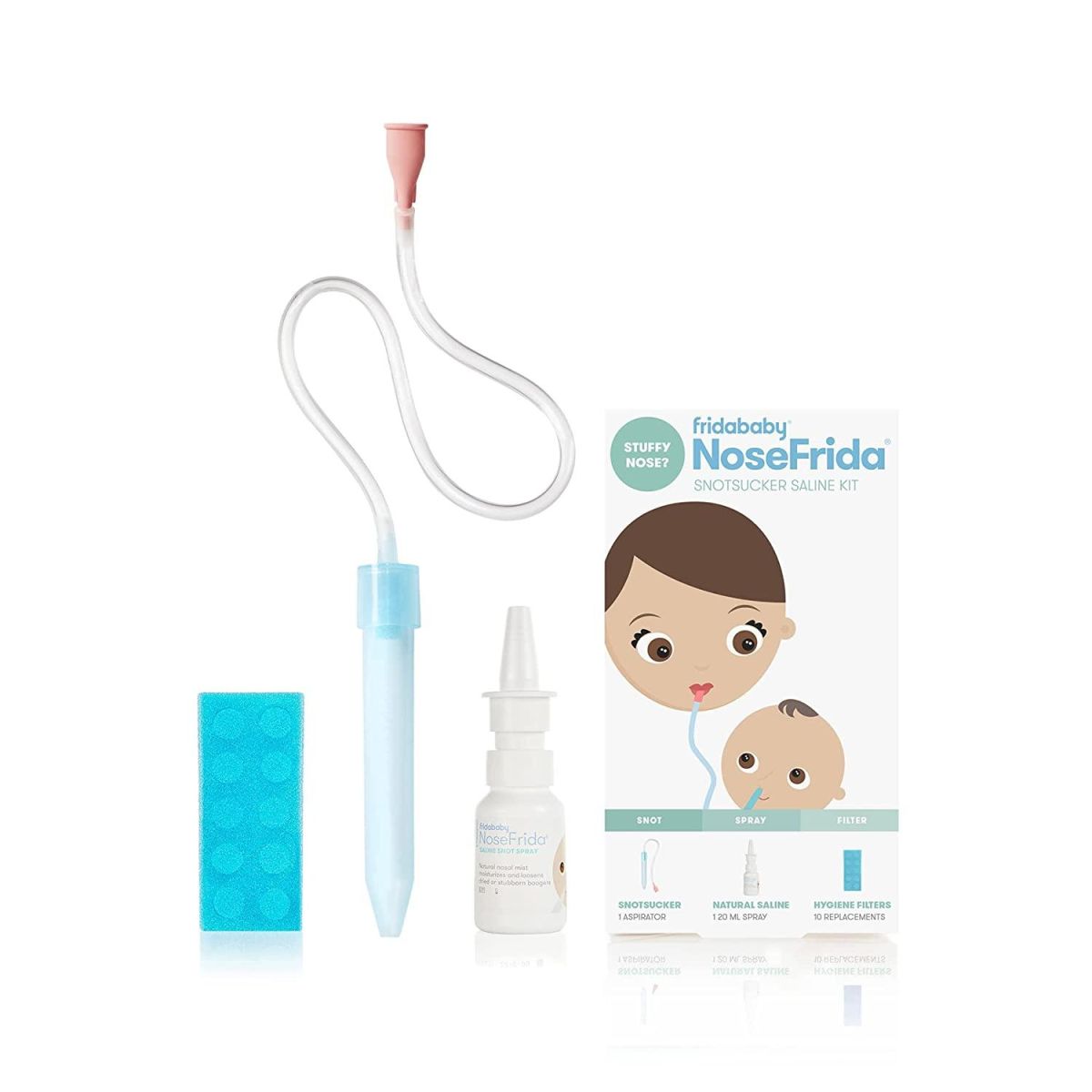
NoseFrida. NoseFrida from <a href="https://www.amazon.com/NoseFrida-Snotsucker-Aspirator-Hygiene-Fridababy/dp/B01N093BYV/ref=sr_1_6?keywords=nose+frieda&qid=1663284172&rdc=1&sr=8-6">Amazon</a>

7. Skip the bulb syringe and splurge on the NoseFrida.

The hospital will give you a useless bulb syringe that only the nurses know how to work, because I swear no matter how hard you squeeze the bulb you barely get anything out. Bulb syringes even come with many newborn essential sets. I’m sure they work, but they seem to take way too much effort for the little bit of mucus they pull out. Get the NoseFrida—yes, it’s a little more expensive but it’s worth it, even though it seems gross. I promise the hygiene filter that goes in the tube will spare you from getting baby boogers in your mouth. You can literally use that thing well into the toddler years until your little one learns to blow their nose. Can’t speak highly enough of this thing and here’s a link to it here.
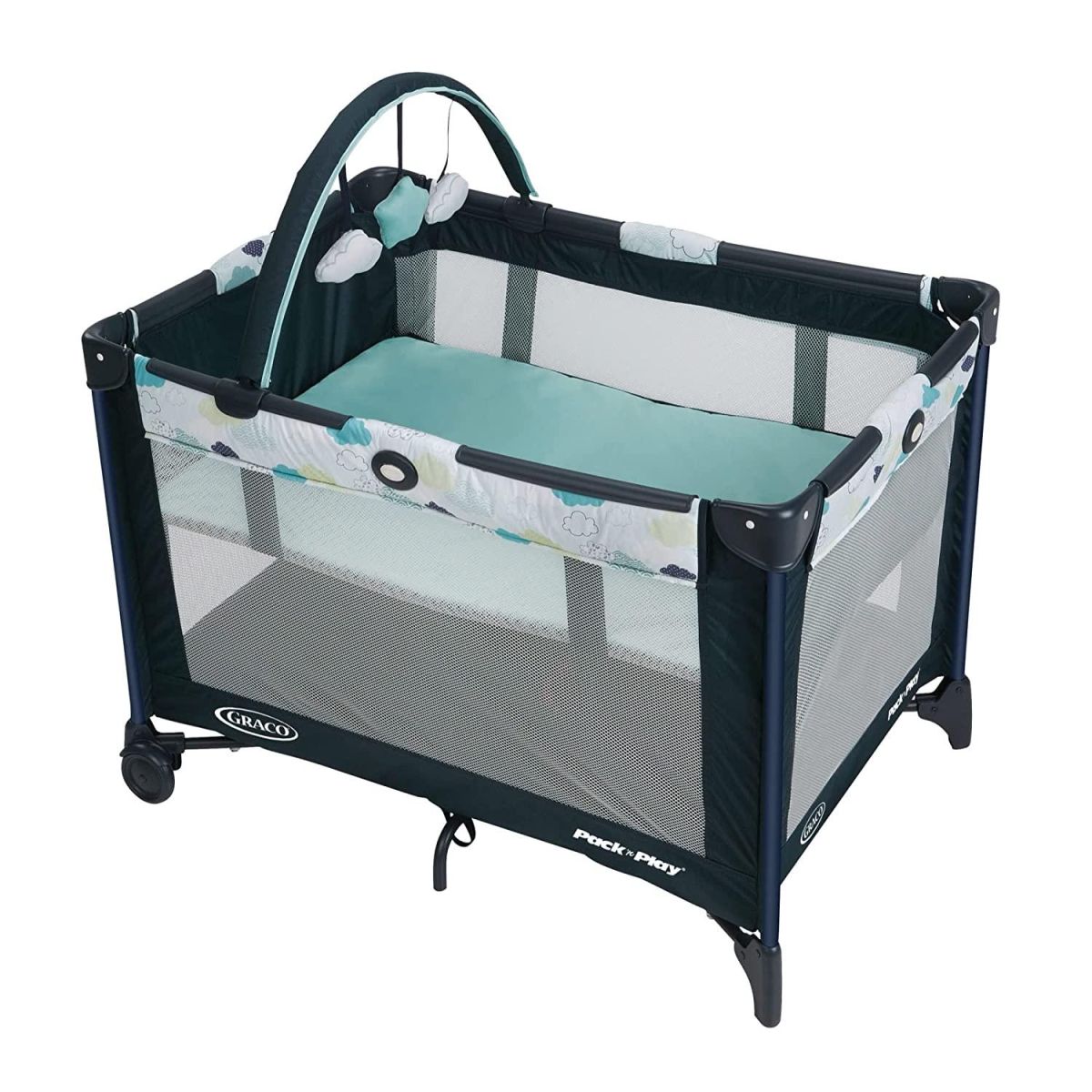
Pack 'n' Play Basic Pack 'n' Play from <a href="https://www.amazon.com/Graco-Pack-Play-Playard-Stratus/dp/B00PTL3TOO/ref=sr_1_5?keywords=pack+n+play&qid=1663338061&sr=8-5&ufe=app_do:amzn1.fos.006c50ae-5d4c-4777-9bc0-4513d670b6bc">Amazon</a>

8. Do you really need a Pack ‘n’ Play that turns into a rocket ship?

OK, maybe it doesn’t turn into a rocket ship but some of those things are so outrageous that you might need to be a rocket scientist to put it together. Pack ‘n’ Plays are really convenient and a great investment for new parents, especially if you like to travel or have family out of state. You can use it so your baby can sleep in your bedroom until you’re ready for the switch to sleeping away from your little one. Just try not to get distracted by all the bells and whistles and stick to the basics. A Pack ‘n’ Play with a bassinet is really all you need. It’s much cheaper and you’ll use the bassinet piece much longer than the ones that come with other parts.
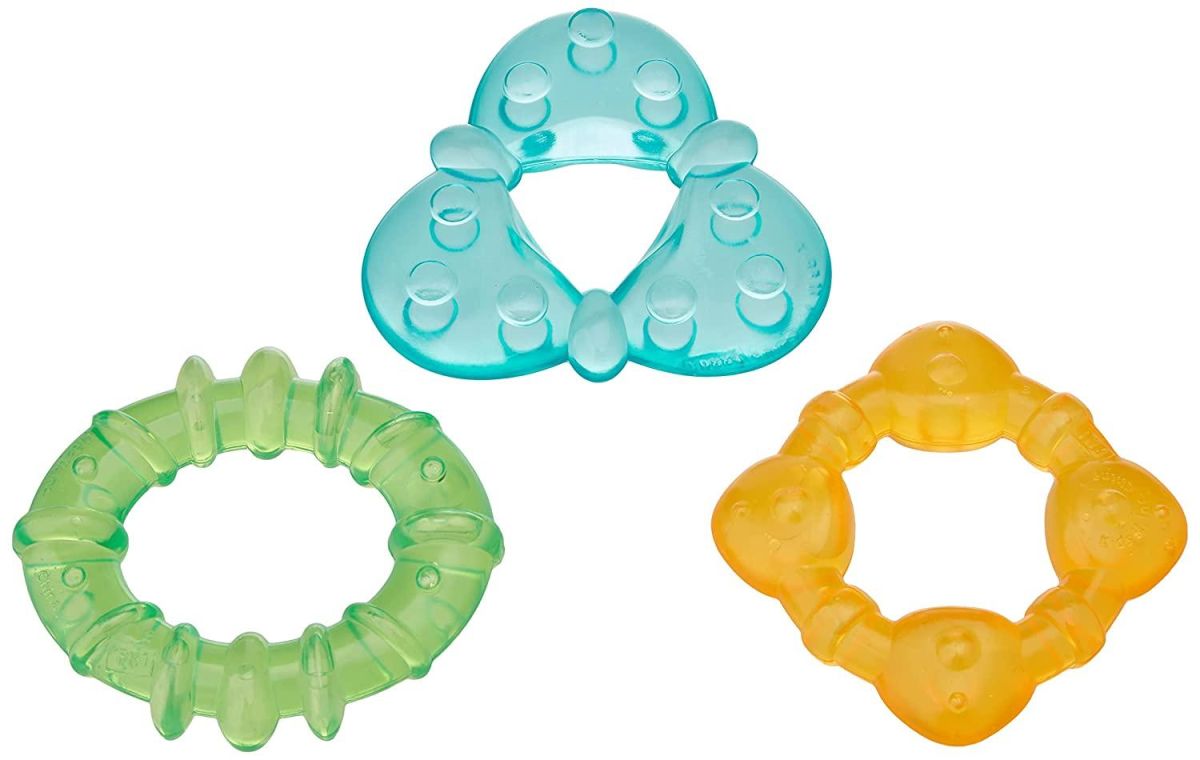
Teething rings. Teething rings from <a href="https://www.amazon.com/Bright-Starts-Chill-Teethe-Teething/dp/B001AAV30K/ref=sr_1_5?keywords=teething+ring&qid=1663338860&sr=8-5">Amazon</a>

9. Expensive teething jewelry is overrated.

Fancy teething jewelry is cute and has become quite popular lately, but babies don’t really need it. They are perfectly happy with the normal water-filled teething rings or rubber ones that can be thrown in any diaper bag. They’re tried and true, plus they’re designed specifically for teething. While the jewelry is marketed for teething babies, doctors have warned that they’re not safe enough to use for that purpose. Besides, having a baby is expensive enough, no need to add to it when you can pick up teething rings at just about any store for a reasonable price.

The idea that everything for babies has to be the most expensive top-of-the-line things is just marketing. When it comes down to it, babies need very basic things: a safe place to sleep, food, diapers and lots of love. Everything else is extra and you can be as extra as you’d like but it should never feel like it’s a necessity. Your baby will love you whether you have the Baby Brezza or mix their bottles by hand, promise.

This article originally appeared on 9.16.22

  • Dad shares list of 10 things he tells his kids ‘100 times’ for emotional resilience
    A father holds his daughter. Photo credit: Canva
    ,

    Dad shares list of 10 things he tells his kids ‘100 times’ for emotional resilience

    His powerful phrases inspired other dads to share their own.

    Present dads have an overwhelmingly positive impact on their kids’ lives—and the data supports it.

    A 2026 study published in Early Childhood Research Quarterly found that father involvement is “closely and positively linked to children’s social-emotional development, playing a crucial role in fostering emotional well-being, social competence, and emotion regulation in early childhood.”

    The study goes on to explain that this happens through direct engagement and interaction between dads and their kids, including play, teaching, and shared experiences. Even the smallest moments together can have a big impact, and one dad shared how he fosters that development through language.

    A dad explains his role in developing emotional resilience

    Reddit user Medium-Put-4976 opened up to fellow fathers on the platform about how he’s helping build his kids’ emotional resilience. He says he has a short list of impactful phrases he hopes to instill in them.

    He writes, “10 things to say to your kids at least 100 times before a time/event when they’ll need to hear it. (And mean it. Clearly saying it, but not living it, is counterproductive).”

    The post continues, explaining why repetition matters.

    “I’d like to think in the right moment I’d say the right thing, but on the fairly decent chance I don’t, I will make sure my kids have heard these things enough before the time they really need it,” he adds.

    He also shares the impact he hopes it will have on his kids.

    “For the same reasons that routines make kids feel safe, being a predictable parent is a stabilizer,” he writes. “Start now to develop your own mouth-muscle-memory.”

    He concludes the post with wisdom about his role as a father and about being someone his kids can feel secure with.

    “When this stuff falls out of my mouth easily, and frequently, I’m more likely to get it right when it matters most,” he writes. “And if not, they’ll at least know where I stand, not just in a crisis.”

    10 things to tell kids “100 times”

    Here are the phrases he shared with fellow dads, which he hopes will inspire them in their fatherhood journey:

    1. “I’m so glad you told me.”
    2. “I love you.” and “I love you, no matter what.”
    3. “I’m sorry.”
    4. “I was wrong. How can I make it right?”
    5. “I don’t know. Let’s figure it out together.”
    6. “I’m ready to listen.”
    7. “Do you want me to help, or just listen?”
    8. “You can always come home.”
    9. “I have your back.”
    10. “The world needs your __. (Reference a specific attribute and be prepared to back it up with examples of how your kid has it. Eg: ideas, enthusiasm, energy, art, voice, grit, style, friendship, kindness.. whatever fits)”

    Fellow dads share more impactful phrases

    The inspirational post ends with a callout to dads to share the important parenting phrases they say to their kids. Here are six fathers and their go-to phrases:

    Dad #1:

    “I recently saw a video that had some good ones. Pasting details below:

    Your feelings make sense.
    I was wrong.
    I love watching you figure things out.
    Tell me more about that.
    That took courage.
    You can change your mind.” – GrrATeam81

    Dad #2:

    “I have so much fun hanging out with you.
    I’m grateful for the person you are and the young man you’re growing up to be.
    I’m proud of you for doing the right thing even though it was difficult.
    Everyone makes mistakes, has accidents, and makes bad decisions. Learn from the consequences; we’ll get through it.
    What do you think about _?

    Also, I’ve always told my son ‘I promise that you’ll never regret telling me about anything.’ My parents said I could talk to them but they’d get mad or hold it against me later. When my son tells me about something he did wrong upfront, I thank him for being honest and tell him that taking responsibility voluntarily and knowing when to ask for help shows maturity and good judgment.” – CertainMedicine757

    Dad #3:

    “This is a great list. I learned two other ones recently: ‘I’m so glad you’re here’ (i.e. their presence is worthwhile) and ‘I love watching you figure things out'(the process is what I love, not results).” – Friendly-Land-1873

    Dad #4:

    “‘We are problem solvers’ is something I’ve tried to engrain in my kids.” – slidingscrapes

    Dad #5:

    “I run a slightly more Star Wars flavor on 2B. ‘I love you more than anything you could ever do wrong.’” – jeconti

    Dad #6:

    “I got this from a video, I wrote it in my notes and say it to my kid often when dropping her off at school. She loves it and even responds adding to it lol.

    It’s okay to not know it all.
    It’s okay to make mistakes.
    It’s okay to be yourself.
    It’s okay to ask for help.
    It’s okay to start over.
    It’s okay to say no.
    It’s okay to cry.
    It’s okay to feel upset.

    And recently added this to my notes and have started saying this to her when she’s working on something unfamiliar (‘difficult’):

    This feeling means your brain is growing.
    It’s okay that this is hard, hard is how we all learn.
    Stay with it. I believe in you and I’m right here.” – factsonlynomisinfo

  • Mom stopped taking teen’s phone as punishment and switched to something more helpful
    A teen girl is buried in her cell phone.Photo credit: Canva
    ,

    Mom stopped taking teen’s phone as punishment and switched to something more helpful

    “I started using consequences that actually match what I’m trying to correct.”

    When it comes to disciplining teens, every generation and every parent has their own style. Back in the Gen X days, when someone got grounded, we often heard things like, “No TV for two weeks!”

    Of course, cell phones didn’t exist back then, so removing them wasn’t an option.

    Many Gen X parents now choose to take away cell phones as punishment. But one mom, Carol, has gone viral on Instagram for declaring that she doesn’t agree with that approach. In fact, she believes it can make matters worse.

    Over a video of kids playing in a park, a chyron reads, “I’m not taking away my teen’s phone anymore as a fast consequence.”

    A new approach

    “You know when your teen messes up and your first instinct is to go straight for the phone?” Carol asked. “Yeah… that used to be me. Disrespectful tone? Phone. Didn’t follow a rule? Phone. Endless fighting with siblings? Phone. And yes… it ‘worked’ fast. They’d stop right away.”

    “But it didn’t sit right with me,” she wrote. “Because the behavior stopped but the conversation stopped too. They shut down, got defensive, and I ended up feeling like the worst mom in the world.”

    At some point, she realized that a phone can be a source of support and connection for some teenagers:

    “What slowly changed things for me was realizing this: for teens, their phone isn’t just a distraction. It’s where their friends are. Where they vent. Where they feel connected.

    So, when I took the phone away in the heat of the moment, I wasn’t just taking away a privilege… I was cutting them off from their world right when emotions were high. Another thing: the consequence wasn’t even connected to what they did. So it didn’t really correct the behavior. It just felt unfair to them and built resentment.”

    Instead, she tried to make the punishment fit the crime:

    “So I tried a small shift. I started using consequences that actually match what I’m trying to correct.

    If the tone is disrespectful?

    I don’t raise my voice. I hold the line and say we’ll talk when they can speak to me respectfully.

    If siblings can’t agree?

    The thing they’re fighting over is paused until they work it out (like both wanting the TV at the same time, they have to agree on turns and who goes first).

    And when I do believe phone access needs to be limited, I say it ahead of time, explain the boundaries, so next time it’s not a surprise.

    And the energy in our house changed. Less shutting down and resentment. More real conversations.”

    Many relate

    The post clearly resonated with parents. It has more than 72,000 likes and hundreds of comments, many in agreement and others vehemently disagreeing, sparking an interesting discussion.

    One Instagrammer, a teenager, waded into the conversation. Not surprisingly, they agreed with the assessment:

    “As a teenager, I would love to have parents who understand that taking away a phone will ‘fix’ things quickly but never in the long run and that these methods are soooo much better.”

    Another commenter disagreed:

    “What’s the consequence for disrespect? You actually don’t have one. The phone often is the cause of disrespect for my kid, and I am sure others, as she has spent too much time on it. When she is away from devices, she is a calmer and happier person, so yes, I will take it away and put limits on it. Kids need parents that will actually have boundaries and backbones.”

    Expert opinions

    Upworthy spoke with a few experts on teens. Cindy Shuster, who holds a master’s degree in elementary education and is the founder of Partner in Parenting, said, in part:

    “Teens do need to be accountable for their behavior and choices, but I see too many parents relying on the phone, and it becomes a constant battle of a back-and-forth. Nothing ever changes. Parents need to work with their teens to problem-solve through bad decisions and mistakes.”

    Shuster noted, however, that if the issue is the phone, it should be taken away:

    “Sometimes, the phone comes into play because it is the phone that may have been used to break a rule, or its use may have led to poor grades. In this case, the conversation centers around how the phone led to the outcome, and therefore there will be new rules around the phone. However, if a child did not do well in school and it is unrelated to the phone, it does not make sense to use the phone as a punishment. Instead, it is best to sit down with the child and try to understand what broke down. Help them discover what caused them to not do their best and what they could do differently moving forward.”

    Jeanette Lorandini, founder and clinical director at Suffolk DBT, had a different approach:

    “I don’t think the question is simply whether taking away a phone is ‘good’ or ‘bad.’ In DBT [Dialectical Behavior Therapy], we take a dialectical approach, looking for the middle path.

    On the one hand, a teen’s phone can be an important way for them to cope, connect, and regulate. On the other hand, limits and boundaries are still necessary. The goal isn’t to choose between connection and limits. It’s to create both. Before taking a phone away, it can help to ask what role it’s playing. Is it about connection, coping, or avoiding something painful? Punishment alone doesn’t teach skills. Teens need to learn what to do instead.

    A middle-path approach might look like setting limits on certain apps or times while still allowing connection and support. When parents are clear, consistent, and collaborative, teens are more likely to stay connected to expectations and to the relationship.”

    Many parents and teen therapists believe children and young adults have too much access to their phones in the first place.

    Brooke Sundin, a licensed marriage and family therapist, shared:

    “It’s important for families to remember that a phone is a privilege, not a right. As a mental health therapist, I encourage the parents I work with to empathize with their teen’s experience while confidently stepping into their parental authority when limits are needed.

    While many teens view their phone as a primary source of social connection, it is important to recognize the highly engaging and addictive nature of this technology. Constant screen-based connectivity can have real negative consequences for sleep, mood, and overall well-being. Real-life interactions are not the same as screen-based interactions, and screen-based communication can take away valuable opportunities to practice in-person communication.”

  • Father and son to cycle 9,600 miles to visit all 30 MLB parks and raise $1M for a children’s hospital
    Ethan and Scott Pesch are raising money for St. Jude Children's Research Hospital.Photo credit: The Pesch Family & St. Jude Children's Research Hospital
    ,

    Father and son to cycle 9,600 miles to visit all 30 MLB parks and raise $1M for a children’s hospital

    “This is well beyond us. It’s about everybody. Especially those young kids.”

    Thirty-two years ago, Scott Pesch and a group of track-and-field friends from college took on a crazy challenge: cycling across the United States to visit every Major League Baseball stadium. They came up eight stadiums short due to a player strike, but still raised $15,000 for their local Boys & Girls Club.

    On March 26, Scott and his son Ethan, a recent graduate of the University of Arizona, will recreate the ride, this time visiting all 30 MLB stadiums with a loftier goal: raising $1 million for St. Jude Children’s Research Hospital.

    On the Bike 2 Ballparks ride, the Pesches will be joined by friends and cyclists across the country who wish to take part. The journey begins in Seattle, Washington, for a Mariners–Cleveland Guardians matchup and ends on September 26 in Miami, Florida, with a Marlins–Atlanta Braves game.

    Finding a beneficiary for the ride was an emotional experience

    The Peschs’ decision to ride for the children’s hospital came after experiencing its work firsthand when Scott’s beloved professor at Cal Poly Humboldt, Dr. Richard Stull, lost his 12-year-old daughter to cancer. “It’s such a memorable ride, you have to do it for something. St Jude Children’s Research Hospital, that’s who we chose,” Scott said in a statement. “And I’m so glad we did. Because, man, that team over there is so fantastic.”

    The Pesch family visited the hospital, and the experience humbled them. “The campus is very impressive,” Scott told Upworthy. “The fact that the scientists and doctors are there, looking to cure cancer and treat cancer. And then you walk into the children’s hospital. That’s the most sobering spot. It just stands you up. It’s crazy.”

    Map of the United States showing where the Major League Baseball teams are located.
    The Peschs’ journey to all 30 ballparks. Photo credit: Bike 2 Ballparks

    Ethan has been training for more than two months to get in shape for the ride of a lifetime. “I’ve been cycling four or five times a week, probably since January, just trying to get into physical shape,” he told Upworthy.

    “Physiologically, you’re sore. Your butt’s going to hurt. You know, you just have to get used to these things,” Scott added. “But psychologically, you just have to mentally prepare for what we’re doing.”

    The Pesches have some added motivation to get them through the toughest parts of their trip: the children at the hospital. “It kind of puts things in perspective,” Scott said. “If you’re having a bad day, just think about the kids of St. Jude who are the beneficiaries.”

    One place they’ll need all the encouragement they can get is en route to Coors Field. “The biggest elevation gain is going to be going up to Denver, Colorado, when you have to climb the Continental Divide,” Scott said.

    The duo is most excited about games in San Francisco and Chicago

    The father-and-son team can’t wait for their third game in San Francisco, where they’ve been invited to throw out the first pitch at Oracle Park. “That is something that is like a dream come true. I grew up a Giants fan,” Ethan said.

    Scott is excited to relive one of his favorite moments from the ’94 ride. “I think the part that I’m looking forward to is being at Wrigley Field on the Fourth of July,” he said. “Oh, wow. Because we had that same schedule back in ‘94. We were in Chicago. We watched the Cubs play the St. Louis Cardinals on the Fourth of July.”

    The Pesch family at Wrigley Field in Chicago.
    The Pesch family. Photo credit: The Pesch family (used with permission)

    They also can’t forget about the food. Given how many calories they’ll be burning on the road, they’re free to eat and drink whatever they like at the ballpark. “I’m looking forward to going to San Diego, and they have these carne asada fries,” Ethan said. “I lived in San Diego for a little bit, and every time I went to a game, that’s all I was getting because it’s good.”

    Ultimately, the 9,600-mile trip is all about supporting children and their families in the fight of their lives. “We have even more purpose to get this thing done because of those young kids who have cancer. And it just breaks your heart. It just does,” Scott said. “But it really wakes you up. And there’s more out there than just us. This is well beyond us. It’s about everybody. Especially those young kids.”

    The Peschs’ ride is open to anyone who wants to join and support St. Jude Children’s Research Hospital. You can track their progress across the country at Bike 2 Ballparks and follow the ride on Instagram. If you’d prefer to donate, you can do so here.

  • Dad remakes AC/DC’s ‘Thunderstruck’ using only a year’s worth of baby’s recorded sounds
    Rock star babyPhoto credit: Canva

    Few things bring as much joy to a parent’s heart as the adorable sounds their babies make. But back in 2024, when a dad with a vision, a camera and a year’s worth of footage used those sounds to recreate one of the most iconic rock songs ever…let’s just say joy alone doesn’t quite cover it.

    In one of the most epically adorable and adorably epic song renditions ever, dad and video editor Matt MacMillan spliced together tiny snippets of his baby’s sounds to make AC/DC’s “Thunderstruck.” And it’s one of those things you just have to see to believe.

    Below, enjoy little Ryan singing a jaw-droppingly awesome babyfied version of “Thunderstruck.” Nothing but awe and respect for a guy who takes a whole year to get just the right sounds at the right pitches and figures out to put them together to create this masterpiece:

    Making a sneeze into a cymbal? Are you kidding me?

    People have been understandably impressed, with the video getting over 11 million views.

    “Ryan becomes the vocalist of AB/CD.”

    “I need a cover in 17 years whenever he is an adult singing over the instrumentals lol”

    “‘I recorded my son for a full year. I edited for the next 5′”

    “The fact that he genuinely found clips that fit every note he need instead of just pitch shifting like most videos like this do really makes this stand out. Good job he’s adorable.”

    “This dude had a kid just so he could make this song. What a Legend.”

    “Other parents: ‘I want my child to create masterpieces.’ This guy: ‘my child IS the masterpiece.’”

    “I’m a residential plumber and I’ve had an absolutely horrible day on a work shift that’s lasted 13 hours and even after crawling through human poop all day this made me smile laugh and giggle like a small baby.”

    Believe it or not, it’s not autotuned or pitch-shifted. Those notes are all baby.

    The real question is: How did he do it? This isn’t just some autotune trick. MacMillan really did it all manually, going through each video clip of Baby Ryan, organizing them by pitch and figuring out what notes they were.

    Perhaps most impressively, he didn’t even know the notes of “Thunderstruck” to begin with and doesn’t really read music. He had to pluck the song out on the piano and then match those notes with his baby’s sounds.

    As he wrote, “It took forever.” But he shared an inside look at how he did it here:

    Seriously, doesn’t seeing how he did it make it even more impressive? Pure human creativity and perseverance on display. What a delightful gift Ryan will have for the rest of his life. Much better than a standard baby book.

    Baby Ryan’s “Thunderstruck” was not MacMillan’s first foray into baby covers, either. He previously created a rendition of “Carol of the Bells” using Baby Ella’s sounds, and it is just as impressive (and adorable) as Baby Ryan’s. Here’s one to add to your holiday playlist: 

    Here’s to the humans who wow us with their ambitious, innovative projects that exist purely to bring a smile to people’s faces.

    You can follow Matt MacMillan on YouTube.

    This article originally appeared last year.

  • Dad shares the unique 7-point checklist his kids must finish before they get screen time
    (L) Two young teens do the dishes; (R) Young boy plays on a cell phonePhoto credit: Canva
    ,

    Dad shares the unique 7-point checklist his kids must finish before they get screen time

    A psychiatrist and father of seven went viral for sharing the typed checklist his kids must complete before they’re allowed anywhere near a phone or tablet, and even plenty of adults are saying they need someone to do this for them.

    We know too much screen time is not good for us. We also know that younger folks are particularly susceptible to screen addiction. Crucially, teachers and psychologists have been sounding the alarm about the effects of too much screen time on young people for years now. Reports flood in every year that more and more people in schools struggle to do anything without ChatGPT’s help, that they’re way behind in learning fundamental skills, that they’re disrespectful and lazy.

    Every generation has been “concerned” about the one that comes directly after them, bemoaning that they don’t have the same values or that their brains are being rotted by Elvis, rock and roll, radio, or television. So some of the doom and gloom is probably overstated, but there’s truthfully never been anything quite like iPhones loaded up with TikTok and other forms of hyper-dopamine-fueled social media.

    Still, it’s unlikely that a young person, or any person, really, can exist in modern society without some level of access to screens. So parents need to effectively help teens and tweens manage the habit and offset the dangers as much as humanly possible.

    screen time for kids, parenting tips, phone addiction, healthy habits for teens, Richard Wadsworth
    A young girl plays on the monkey bars. Photo credit: Canva

    Psychiatrist, author, and dad of seven Richard Wadsworth recently went viral after showing his own personal strategy for getting his kids to do something other than scrolling.

    It could be the perfect solution for parents to not only break screen addiction, but instill some other healthy ritual as well.

    In the clip, we first see Wadsworth’s tween son doing deltoid exercises with dumbbells. Which he apparently got up at 6:30 am to do. What could possibly incentivize practically anyone, let alone a preteen to wake up at the crack of dawn to lift weights? Was his dad forcing him to exercise?

    No. Wadsworth went on to show a typed out list of various tasks that must be performed before his kids even think about setting eyes on a phone or tablet. The list included a short workout in the form of one mile on the treadmill or 20 minutes of another exercise.

    Wadsworth explained that rather than enforcing strict rules, this method provides necessary structure without taking away choice.

    “I’m not forcing my son to exercise every day, but I am setting rules and boundaries around his screen time,” he said. “He decided he wanted to have more time after school to play with his friend. And so in order to do that, he realized that he’d need to wake up a little bit earlier and exercise in the morning.”

    In addition to exercise, the list included domestic chores like cleaning the bedroom and shared areas, finishing homework, doing laundry, preparing for the next day…and, perhaps most importantly…making sure the toilet is flushed. (Not cleaned, just flushed. Parents everywhere can relate.)

    “We have all of their screens locked away. And if they want access to any of them, they need to come ask us and we’ll go through the list together. And they’re not getting their screens until the list is done,” Wadsworth continued.

    He also drew a comparison between screen time and sugary sweets, noting how most parents probably wouldn’t routinely allow kids to eat dessert before a nutritious meal, but instead allow it to be a treat.

    screen time for kids, parenting tips, phone addiction, healthy habits for teens, Richard Wadsworth
    Two young women look at a cell phone. Photo credit: Canva

    “Just as you would hopefully have your kids eat dinner before they had their dessert, you should probably be having them do something positive…before they get on their screens.” Hence why he tries to get his kids to complete their list before going to the phone.

    And in case you’re wondering how Wadsworth’s son feels about all this, he reported having “so much energy for school” feeling “so much better” since his dad introduced the to-do list.

    Bottom line: kids need guidance from their parents. And Wadsworth recommends clear cut boundaries to help them develop good habits, “because if you don’t do it, nobody else is.”

    Wadsworth’s parenting hack was well received, with quite a few grown adults saying they could benefit from this type of boundary-setting in their own life.

    “Even I’m addicted to this screen. I have to tell myself to put it down all the time and I’m a grown adult. Kids definitely need this!” one user wrote.

    Another added, “I need someone to do this for me (I’m 28).” To which Wadsworth replied, “we all need parents sometimes.”

    “We implemented a similar plan, and I was surprised at how easy they took to it. It’s almost like kids need structure. What a concept!” another user remarked.

    While the inclusion of exercise on the To-Do List might be controversial, the facts don’t lie. Most kids and teens aren’t getting enough daily physical activity. Kids don’t play outside or walk to school anymore, either. So if they’re not exercising, they’re probably not moving much at all. And that’s just as dangerous as too much TikTok.

    Even with ongoing uncertainty around TikTok, social media isn’t going anywhere. The sooner parents can implement guidelines like these, the better equipped their kids will be at balancing tech savviness with tech dependence.

    This article originally appeared last year. It has been updated.

  • Parents experiment with 4 p.m. dinners and are blown away by the results
    A family happily eating dinner.Photo credit: Canva
    ,

    Parents experiment with 4 p.m. dinners and are blown away by the results

    “The most underrated hack for a smoother evening.” 

    Can having an early family dinner really be the key ingredient to a smooth evening? According to one family, the answer is a resolute yes. 

    In a now-viral Instagram reel, a mom of two named Lexi Poer films her husband, Jordan, making their kiddos a delicious meal—set to be served at 4 p.m. on the dot, apparently.

    4 p.m. dinners: The ultimate energy boost

    Poer told Newsweek that when dinner was typically served at the more conventional time of 6:30 or 7 p.m., her two daughters would have “meltdowns,” leaving her feeling like “we were failing at something that was supposed to be the centerpiece of family connection.”

    dinner for kids, health eating, parenting
    Screenshot

    However, after accidentally serving dinner early one day and noticing a huge difference, the couple wondered what might happen if the change became a permanent routine. The rest is history. Now, she calls 4 p.m. dinners “the most underrated hack for a smoother evening.”

    Why it works

    In her caption, Poer explains why she thinks it works.

    For one, kids “walk through the door starving.” When given a proper meal, they’re less likely to need a snack and have the energy to do their homework and extracurricular activities.

    Second, it leaves more time for “winding down” with showers, books, and simply “being” without having to do anything.

    dinner, school, parents
    Screenshot

    Poer has noticed that both of these factors have led to her two daughters being “genuinely nicer.” “A well-fed kid is a completely different kid,” she said.

    Earlier dinners have spared the couple from standing over a stove when the entire household is, as she put it, “overstimulated and hangry.” Everybody wins.

    In the comments, other parents agreed that early dinners were transformative

    “We’ve started doing this for the last 8 months. It’s definitely a game changer and takes off tension to ease into bedtime.”

    “We’ve been doing 430p dinners since our little one was 1 (she’s now almost 4) and it’s been the best. Dinner and then time to still go out to the beach or skate park before coming home for bath and bed. Bellies full and a cleaner home.”

    “This is so funny, we automatically do this anyway and then find we’re not hungry at 6-7 pm. It works well!”

    “Yes! I served dinner at 4 pm for years. The kids just couldn’t hold on any longer. A lot of meltdowns quelled due to changing the time of dinner (they got off the bus at 4-4:30)”

    early dinner, family, kids
    Screenshot

    Of course, even Poer acknowledged that for many working parents, this simply isn’t feasible—especially when the goal is to eat together as a family. Even her own household doesn’t do it every day. The fact that society generally doesn’t support a lifestyle where families can do this sort of thing, no matter how beneficial it may be, is a separate conversation. Still, the principle behind her idea remains: to experiment with “getting ahead of the hunger spiral,” as she told Newsweek.

    It works even if that means serving dinner a few minutes before your normal time. You can certainly reconsider a 6 or 7 p.m. dinner if the only reason you’re doing it is because it seems “normal” or traditional. One size doesn’t have to fit all, so by all means, do whatever brings a bit more peace to your home.

  • Toddler uses lawyer-like logic to make the case for taking candy from strangers
    A child thinking and holding his chin. Photo credit: Canva
    ,

    Toddler uses lawyer-like logic to make the case for taking candy from strangers

    His mom’s attempts to teach “stranger danger” backfired.

    Teaching children about “stranger danger” is a tough paradox. On one hand, you want your child to be comfortable and friendly around others—after all, a lot of folks we end up calling friends started out as strangers. On the other hand, they need to be careful not to interact with those who may seek to harm them.

    An easier lesson to teach is not to take candy from strangers. You can be friendly with some strangers, but never take candy from them under any circumstances.

    A young child on TikTok named Hudson, the son of pediatrician Megan Hall, is going viral for the lawyer-like way he responds when his mother tells him to stop taking candy from strangers. His logic: If you know someone’s name, they aren’t a stranger.

    @hall_fam_

    Long video but trying to teach my #toddler about taking #candy from strangers at the park. #toddlersoftiktok #fyp #funny

    ♬ original sound – Hall Fam

    It all began when Hudson took a gummy candy from a child at the park and put it in his mouth. “You can’t keep taking snacks from strangers at the park,” Hall told her son. But Hudson wanted a clearer definition of what “stranger” actually meant. “There are no strangers here,” Hudson calmly responded, adding that he knew the name of the child who gave him the candy.

    Then Hudson tried to flip the script on his mother, questioning the very nature of what it means to be a stranger. “Are you a stranger?” he asked his mom, who gave a prompt no. “But my dad tries to be a stranger to me,” Hudson said, ending the debate.

    gummy candy, gummy bears, candy, red gummy bear, yellow gummy bear
    Three gummy bears. Photo credit: Canva

    Hudson is friends with everyone when he’s at the park

    Based on what Hall told People, it looks like she’ll be having this debate for quite some time—and may need to take extra-special care at the park.

    “He has always been a really friendly and social child who genuinely believes everyone is—or should be—his friend,” she told People. “We jokingly refer to him as the mayor because he likes to talk to everyone, anywhere we go.”

    A commenter wrote, “His logic he met them, exchanged names, and played w the kids = no longer strangers.”

    “He’s about to be real confused on the rules come Halloween,” another added.

    Another loved his nonchalant nature: “The fact that he’s still tasting every ingredient in the candy while you’re warning him.”

    kids in park, kids on playground, happy kids, playing kids, children at park, kids on bridge
    Kids playing at the park. Photo credit: Canva

    How should parents discuss stranger danger with their children?

    “The phrase ‘stranger danger’ can be misleading. While it’s true that we need to teach our children to be cautious around people they don’t know, the reality is that not all strangers are harmful. Labeling all unfamiliar people as dangerous can create unnecessary fear and confusion,” Nature Therapy, a family therapy practice based in Illinois, wrote on its blog. “Statistically, most child abuse cases involve someone the child already knows. This is where the concept of ‘tricky people’ becomes more effective. It shifts the focus from fearing all strangers to identifying behaviors that are inappropriate or unsafe, regardless of whether the person is a stranger or someone familiar.”

    The debate may have been about the nuances of stranger danger, but it’s also a great example of how open-minded and kind-hearted young kids can be.

    “Children are innocent, hate is taught,” Hall said. “Children see the best in people and never think anyone would do something to harm them, and I wish this were true.”

Wholesome

NY superintendent flies to Guatemala to give diploma to graduate detained by ICE

Family

Father and son to cycle 9,600 miles to visit all 30 MLB parks and raise $1M for a children’s hospital

Family

Dad remakes AC/DC’s ‘Thunderstruck’ using only a year’s worth of baby’s recorded sounds

Family

Dad shares the unique 7-point checklist his kids must finish before they get screen time