upworthy
Add Upworthy to your Google News feed.
Google News Button
Health

Inside the heads of people who are always late, as explained by stick figures.

Everyone knows a person like this or is one themselves!

relationships, brain, time

I’m late.


This post was written by Tim Urban and originally published on Wait But Why.

I woke up this morning to a text. It was a link:

"optimistic-people-have-one-thing-common-always-late.”

Intriguing. Nothing's better than the headline: "The reason people are [bad quality that describes you] is actually because they're [good quality]."

I got to reading. And as it turns out, according to the article, late people are actually the best people ever. They're optimistic and hopeful:

"People who are continuously late are actually just more optimistic. They believe they can fit more tasks into a limited amount of time more than other people and thrive when they're multitasking. Simply put, they're fundamentally hopeful."

They're big-thinking:

"People who are habitually late don't sweat over the small stuff, they concentrate on the big picture and see the future as full of infinite possibilities."

Late people just get it:

"People with a tendency for tardiness like to stop and smell the roses…life was never meant to be planned down to the last detail. Remaining excessively attached to timetables signifies an inability to enjoy the moment."

By the end of the article, I had never felt prouder to be a chronically late person.

But also, what the hell is going on? Late people are the worst. It's the quality I like least in myself. And I'm not late because I like to smell the roses or because I can see the big picture or because the future is full of infinite possibilities. I'm late because I'm insane.

So I thought about this for a minute, and I think I figured out what's going on. The issue is that there are two kinds of lateness:

1. OK lateness. This is when the late person being late does not negatively impact anyone else — like being late to a group hangout or a party. Things can start on time and proceed as normal with or without the late person being there yet.

2. Not-OK lateness. This is when the late person being late does negatively impact others — like being late to a two-person dinner or meeting or anything else that simply can't start until the late party arrives.

John Haltiwanger's Elite Daily article is (I hope) talking mostly about OK lateness. In which case, sure, maybe those people are the best, who knows.

But if you read the comment section under Haltiwanger's article, people are furious with him for portraying lateness in a positive light. And that's because they're thinking about the far less excusable not-OK lateness.

1. OK lateness. This is when the late person being late does not negatively impact anyone else — like being late to a group hangout or a party. Things can start on time and proceed as normal with or without the late person being there yet.

2. Not-OK lateness. This is when the late person being late does negatively impact others — like being late to a two-person dinner or meeting or anything else that simply can't start until the late party arrives.

John Haltiwanger's Elite Daily article is (I hope) talking mostly about OK lateness. In which case, sure, maybe those people are the best, who knows.

But if you read the comment section under Haltiwanger's article, people are furious with him for portraying lateness in a positive light. And that's because they're thinking about the far less excusable not-OK lateness.

All of this has kind of left me with no choice but to take a quick nine-hour break from working on a gargantuan SpaceX post to discuss not-OK late people.

When it comes to people who are chronically not-OK late, I think there are two subgroups:

Group 1: Those who don't feel bad or wrong about it. These people are assholes.

Group 2: Those who feel terrible and self-loathing about it. These people have problems.

Group 1 is simple. They think they're a little more special than everyone else, like the zero-remorse narcissist at the top of Haltiwanger's article. They're unappealing. Not much else to discuss here.

Punctual people think all not-OK late people are in Group 1 (as the comments on this post will show) — because they're assuming all late people are sane people.

When a sane person thinks a certain kind of behavior is fine, they do it. When they think it's wrong, they don't do it. So to a punctual person — one who shows up on time because they believe showing up late is the wrong thing to do — someone who's chronically late must be an asshole who thinks being late is OK.

But that's misunderstanding the entire second group, who, despite being consistently late, usually detest the concept of making other people wait. Let call them CLIPs (Chronically Late Insane Persons).

While both groups of not-OK late people end up regularly frustrating others, a reliable way to identify a Group 2 CLIP is a bizarre compulsion to defeat themselves — some deep inner drive to inexplicably miss the beginning of movies, endure psychotic stress running to catch the train, crush their own reputation at work, etc., etc. As much as they may hurt others, they usually hurt themselves even more.

I spent around 15% of my youth standing on some sidewalk alone, angrily kicking rocks, because yet again, all the other kids had gotten picked up and I was still waiting for my mom. When she finally arrived, instead of being able to have a pleasant conversation with her, I'd get into the car seething. She always felt terrible. She has problems.

My sister once missed an early morning flight, so they rescheduled her for the following morning. She managed to miss that one too, so they put her on a flight five hours later. Killing time during the long layover, she got distracted on a long phone call and missed that flight too. She has problems.

I've been a CLIP my whole life. I've made a bunch of friends mad at me, I've embarrassed myself again and again in professional situations, and I've run a cumulative marathon through airport terminals.

When I'm late, it's often the same story, something like this:

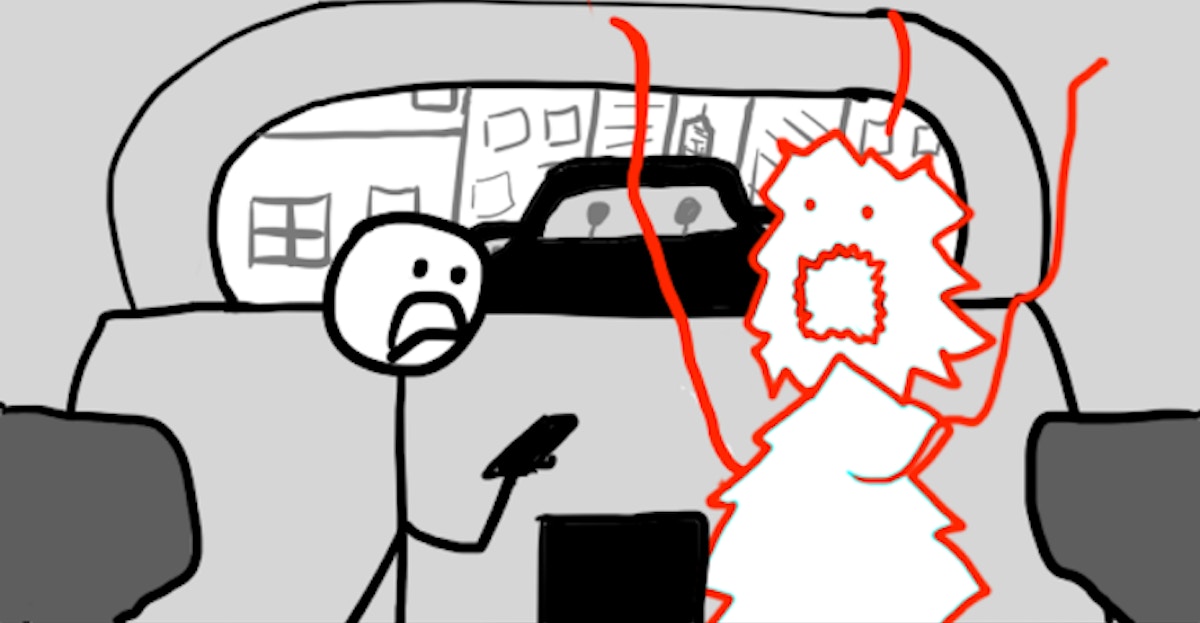
I'll be meeting someone, maybe a professional contact, at, say, a coffee place at 3:00. When I lay out my schedule for the day, I'll have the perfect plan. I'll leave early, arrive early, and get there around 2:45. That takes all the stress out of the situation, and that's ideal because non-stressful commutes are one of my favorite things. It'll be great — I'll stroll out, put on a podcast, and head to the subway. Once I'm off the subway, with time to spare, I'll take a few minutes to peruse storefronts, grab a lemonade from a street vendor, and enjoy New York. It'll be such a joy to look up at the architecture, listen to the sounds, and feel the swell of people rushing by — oh magnificent city!

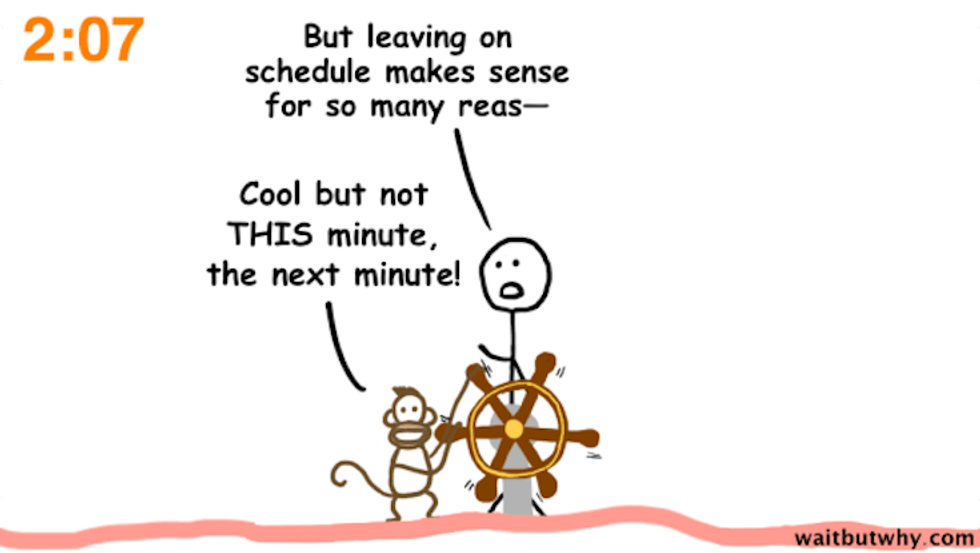
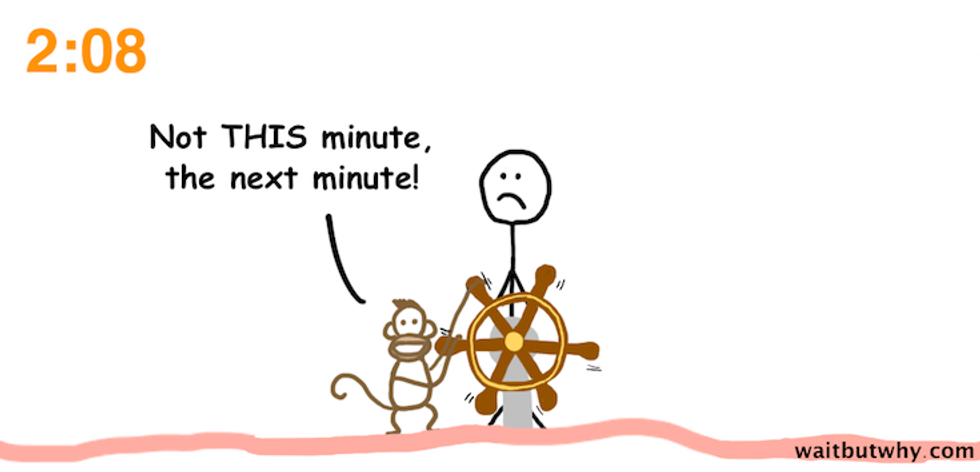
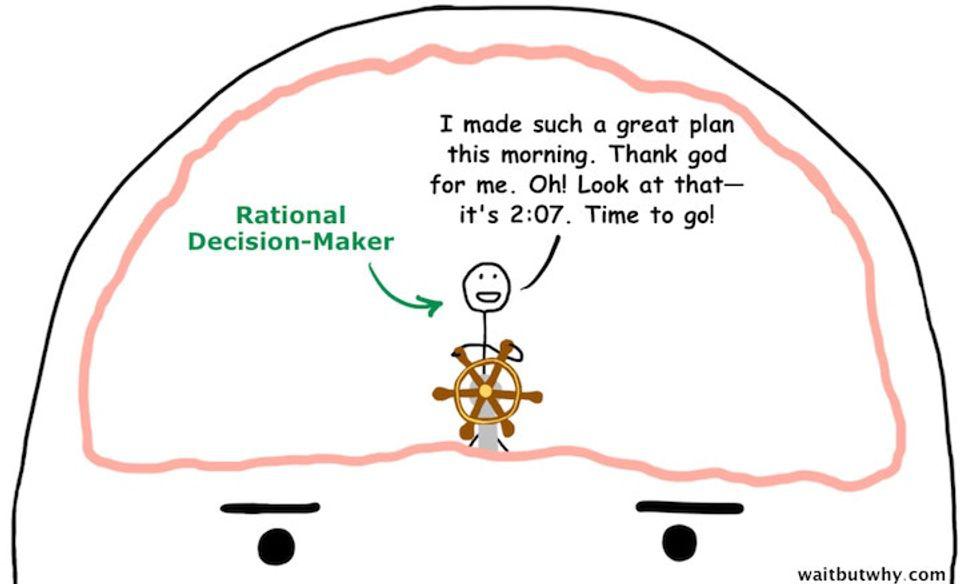
All I have to do is be off the subway by 2:45. To do that, I need to be on the subway by 2:25, so I decide to be safe and get to the subway by 2:15. So I have to leave my apartment by 2:07 or earlier, and I'm set. What a plan.

Here's how it'll play out (if you're new to WBW, you're advised to check this out before proceeding):
lateness, behavior, science

Making plans on time.

psychology, procrastination, patient

Maybe some procrastination.

avoidance, mental health, mistakes

Avoiding the issues.

delay, loafing, trifling

Arguing over avoiding the issues.

toying, delaying, loitering

Some dawdling.

dabbling, frittering, dilly-dallying

Some more dawdling.

frizzling, puttering, excuses

And some lingering.

last-minute, slow, delayed

And some more lingering.

belated, tardy, jammed

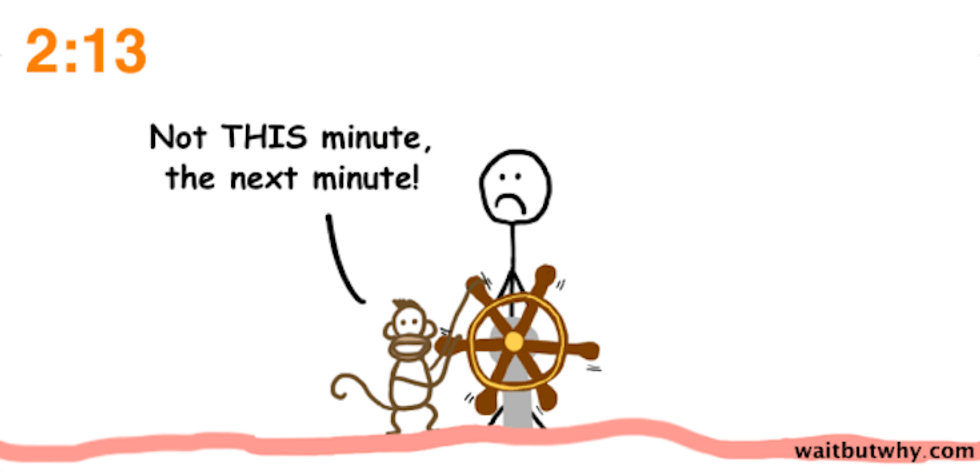
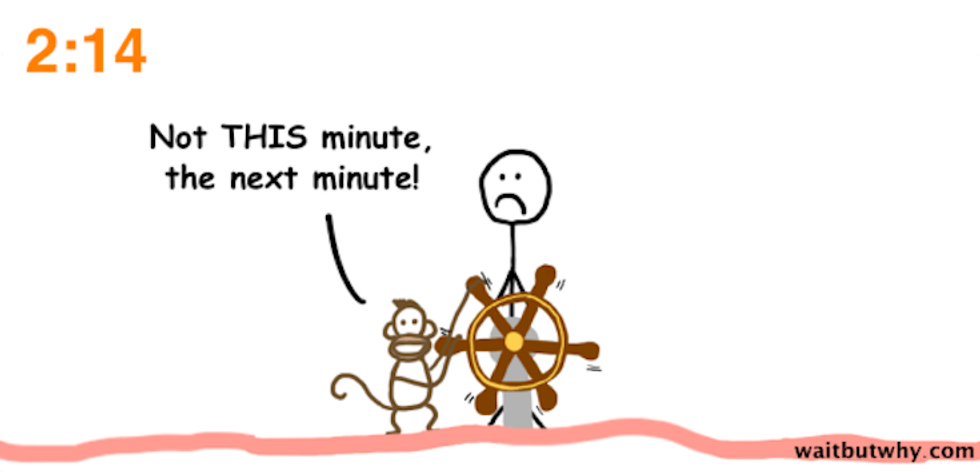
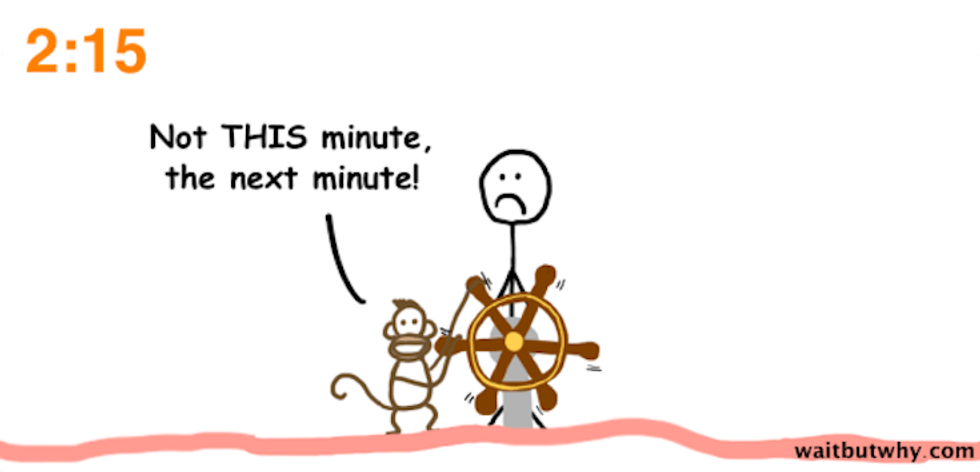
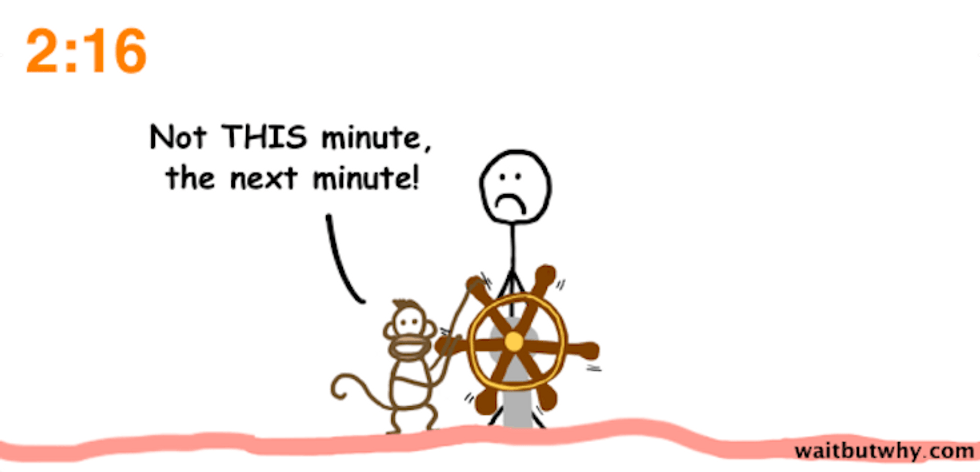
Is this dragging my feet?

lagging, dilatory, unpunctual

This is dragging my feet.

held up, in a bind, missed the boat

This is becoming a problem.

tired, worn, strained

This is feeling uncomfortable.

thin, peaked, pinched

This IS uncomfortable.

fraught, haggard, worn

This IS a problem.

dependable, accurate, conscientious

But I’m cool.

periodic, timely, ready

So cool.

quick, reliable, heedful, meticulous

Ice cold like a fighter pilot.

minutes, seconds, careful

I’m a chillin’.

lag, postpone, setback

Now worries my way.

stoppage, filibuster, hindrance

Not thinking about it.

bind, lingering, tarrying

Positive thoughts.

stoppage, difficulty, gridlock

Positive action... well now.

obstinate, customs, method

It will all workout.

madness, mental health, regulations

Maybe I’m gonna be late.

anxiety, despair, dismay

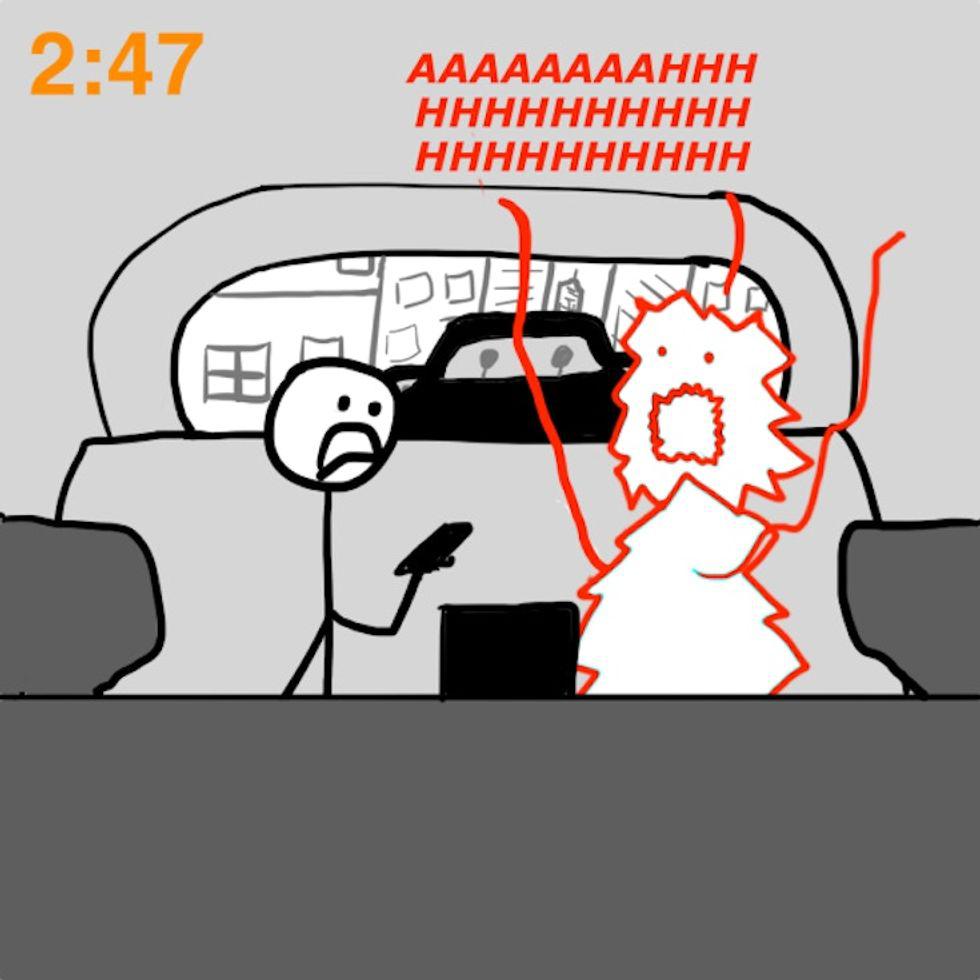
I’m gonna be late.

aversion, disquiet, distress

Oopsie.

fearless, logjam, impasse

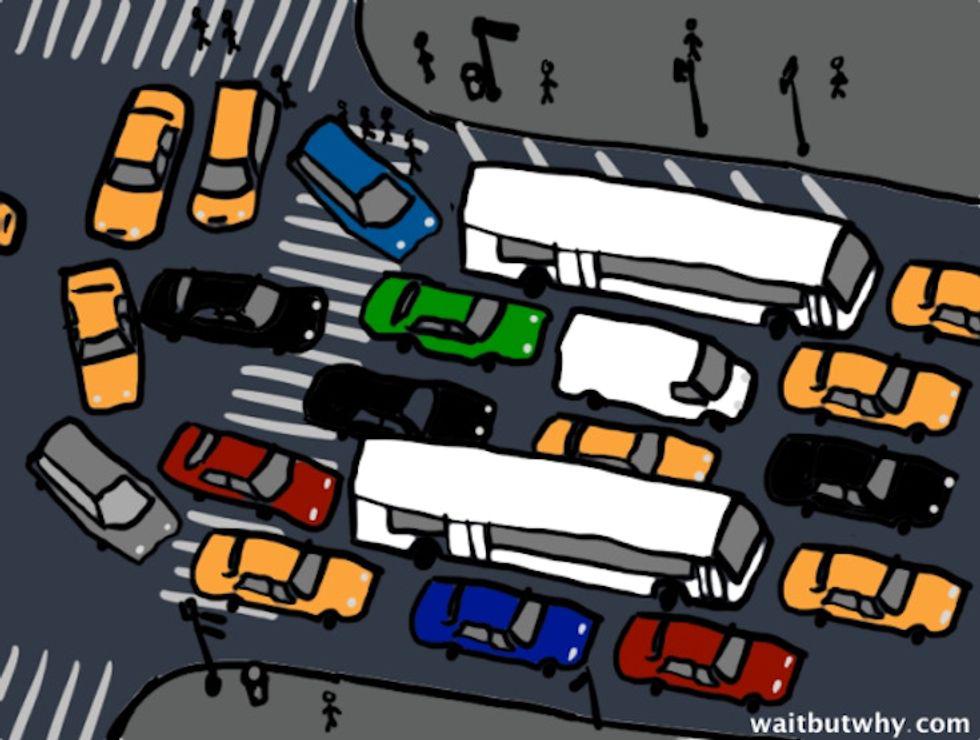
And that’s the traffic.

furious, frantic, rash, audacious

It’s the traffics fault.

careless, foolhardy, hopp

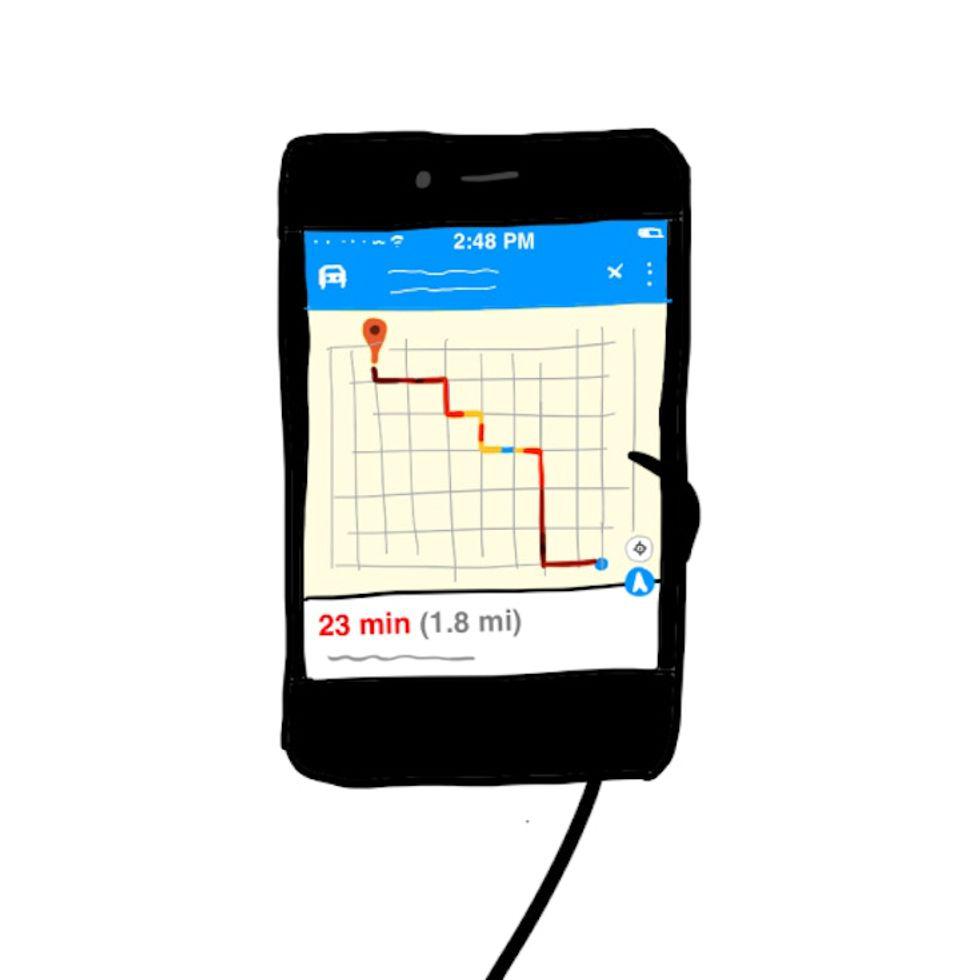
This map is broken.

denial, circumstances, schedule, madcap, impetu

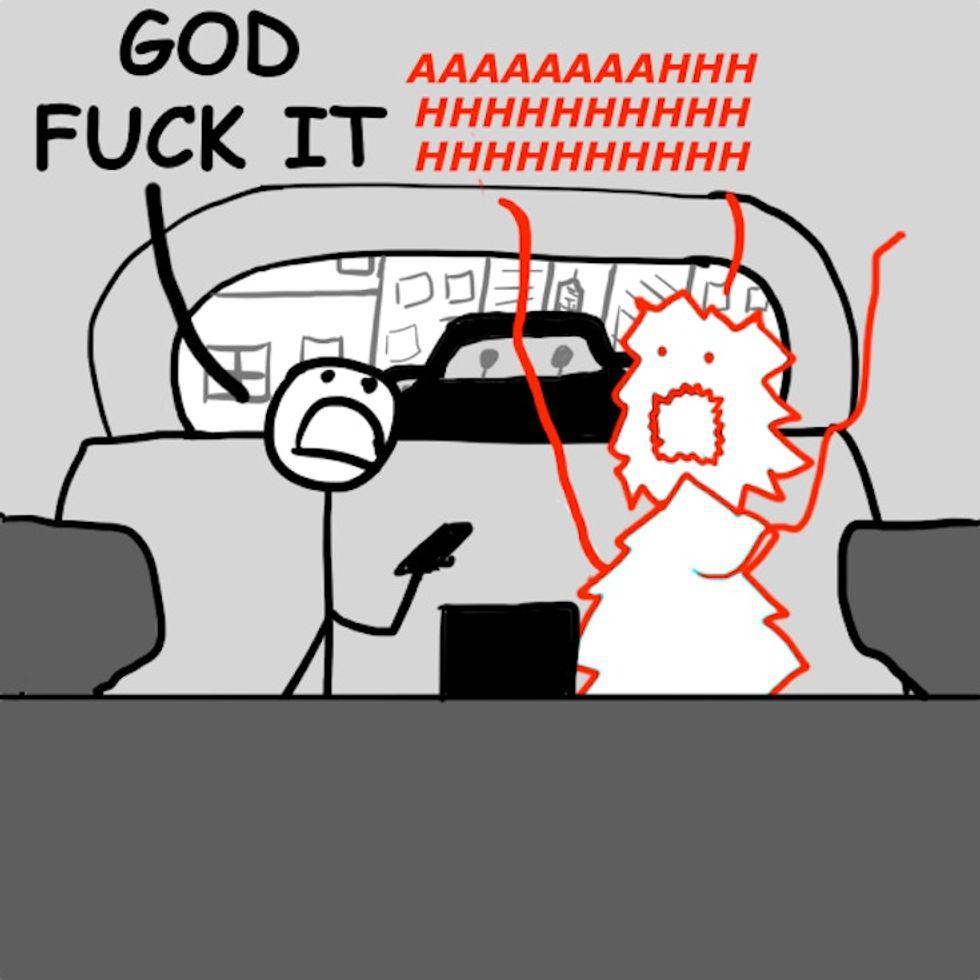
Perfect timing on being late. Nailed it.

CLIPs are strange people. I'm sure each CLIP is insane in their own special way, and to understand how they work, you'll usually have to get to some dark inner psychology.

For me, it's some mix of these three odd traits:

1. I'm late because I'm in denial about how time works.

The propensity of CLIPs to underestimate how long things take comes out of some habitual delusional optimism. Usually what happens is, of all the times the CLIP has done a certain activity or commute, what they remember is that one time things went the quickest. And that amount of time is what sticks in their head as how long that thing takes. I don't think there's anything that will get me to internalize that packing for a weeklong trip takes 20 minutes. In my head, it's eternally a five-minute task. You just take out the bag, throw some clothes in it, throw your toiletries in, zip it up, and done. Five minutes. The empirical data that shows that there are actually a lot of little things to think about when you pack and that it takes 20 minutes every time is irrelevant. Packing is clearly a five-minute task. As I type this, that's what I believe.

2. I'm late because I have a weird aversion to changing circumstances.

Not sure what the deal is with this, but something in me is strangely appalled by the idea of transitioning from what I'm currently doing to doing something else. When I'm at home working, I hate when there's something on my schedule that I have to stop everything for to go outside and do. It's not that I hate the activity — once I'm there I'm often pleased to be there — it's an irrational resistance to the transition. The positive side of this is it usually means I'm highly present when I finally do haul my ass somewhere, and I'm often among the last to leave.

3. Finally, I'm late because I'm mad at myself.

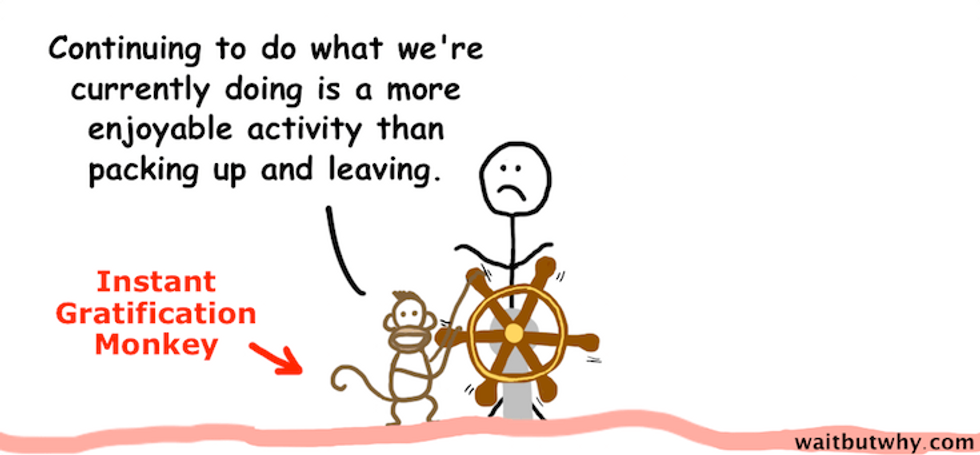
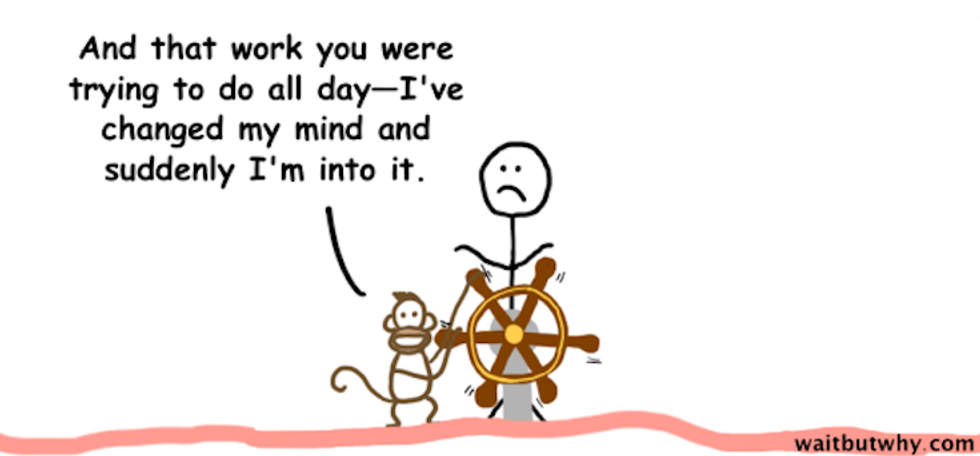
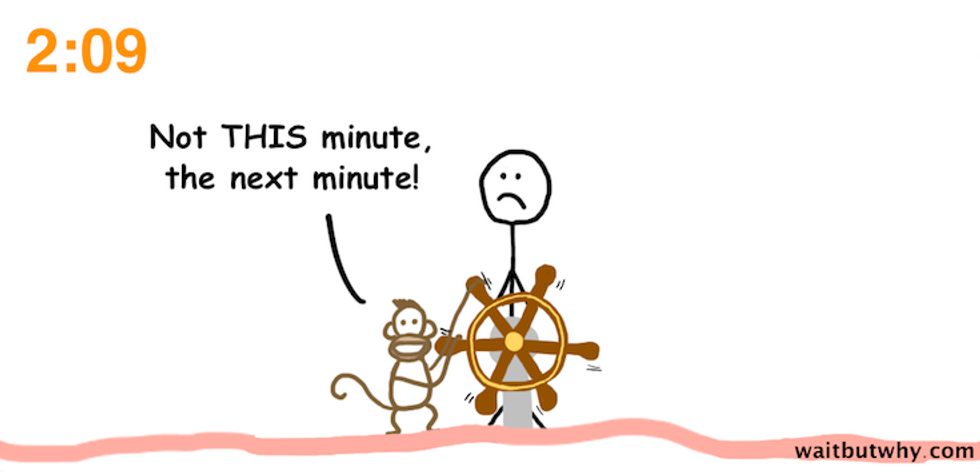
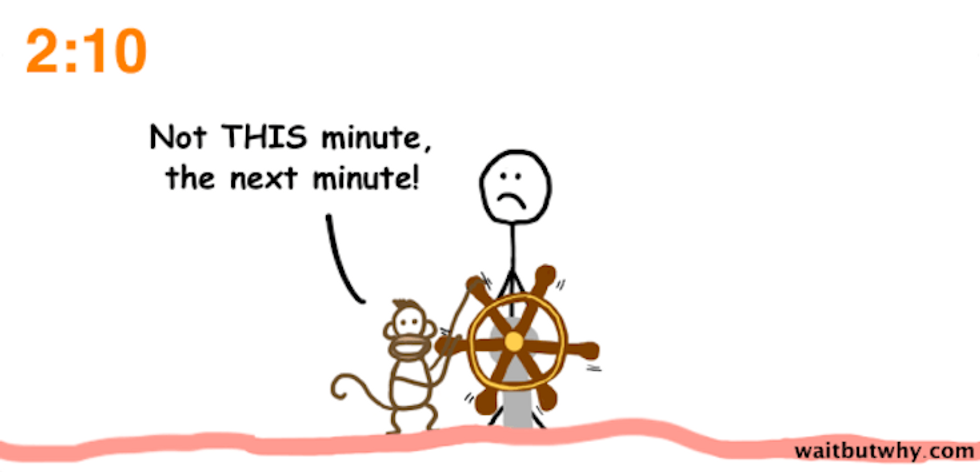
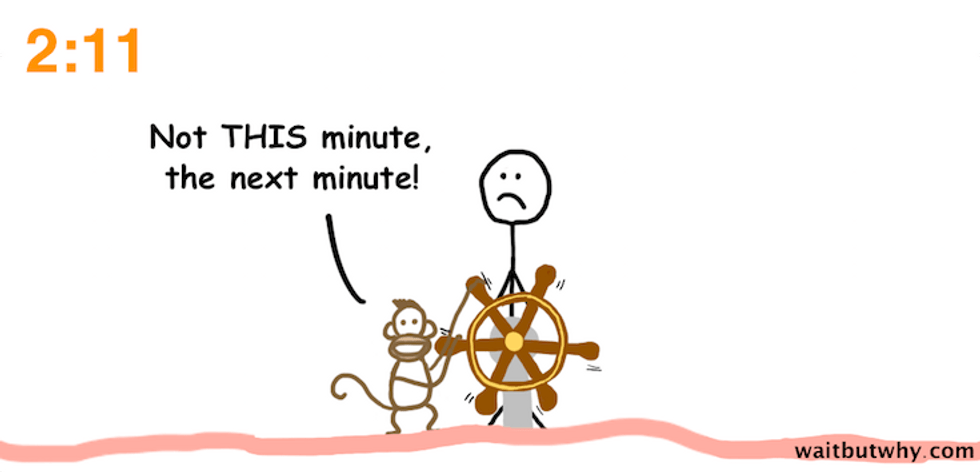
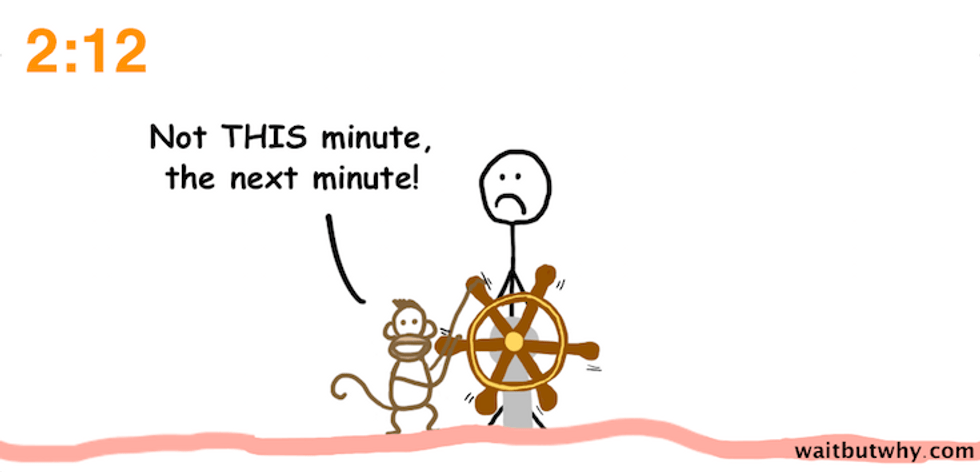
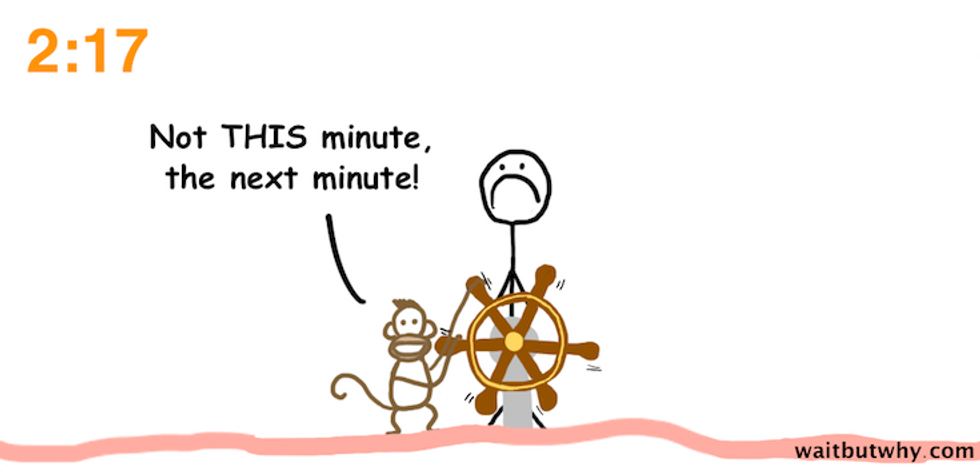
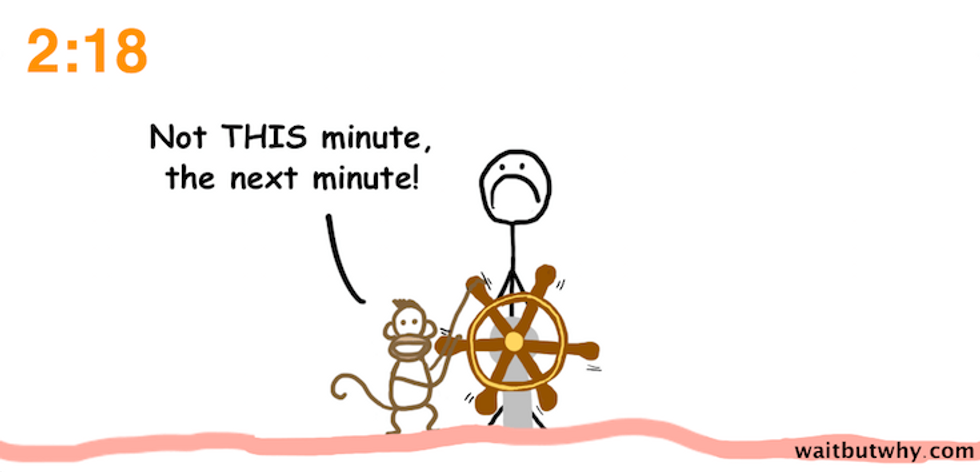
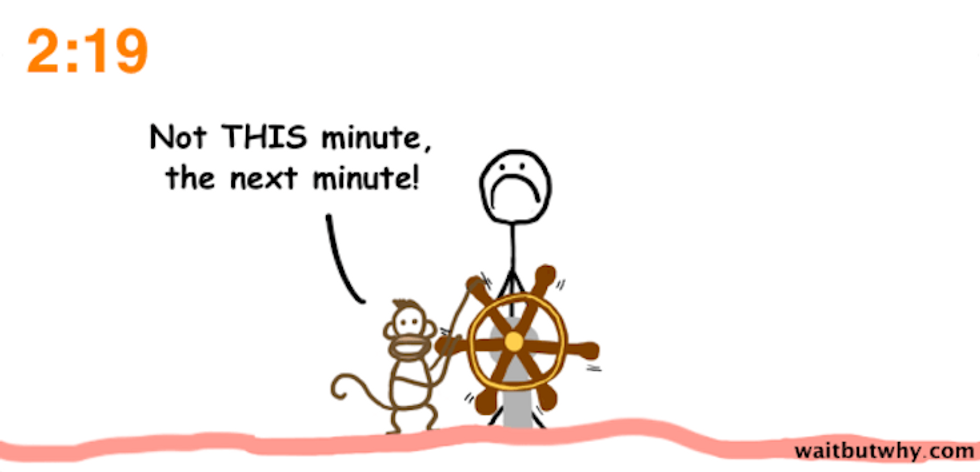
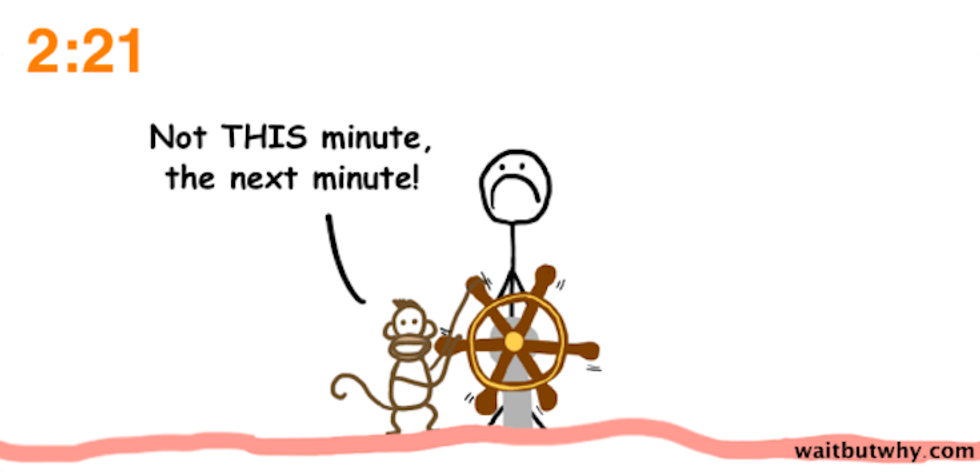
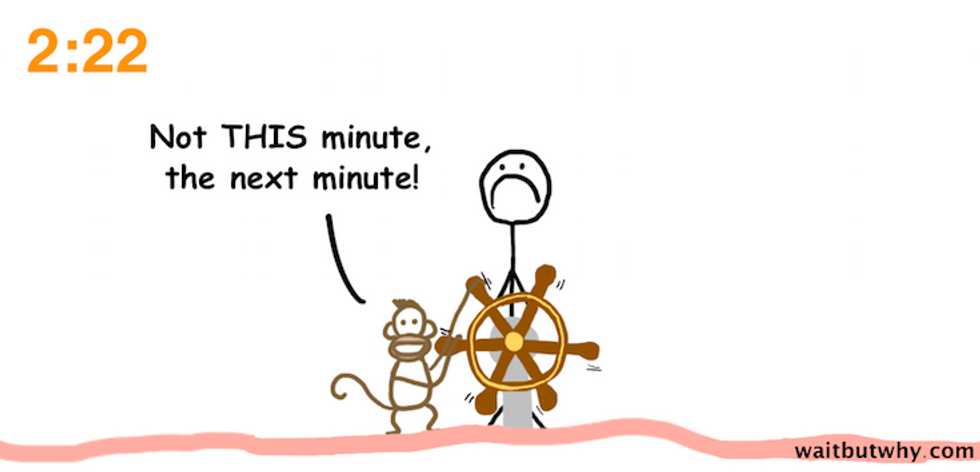
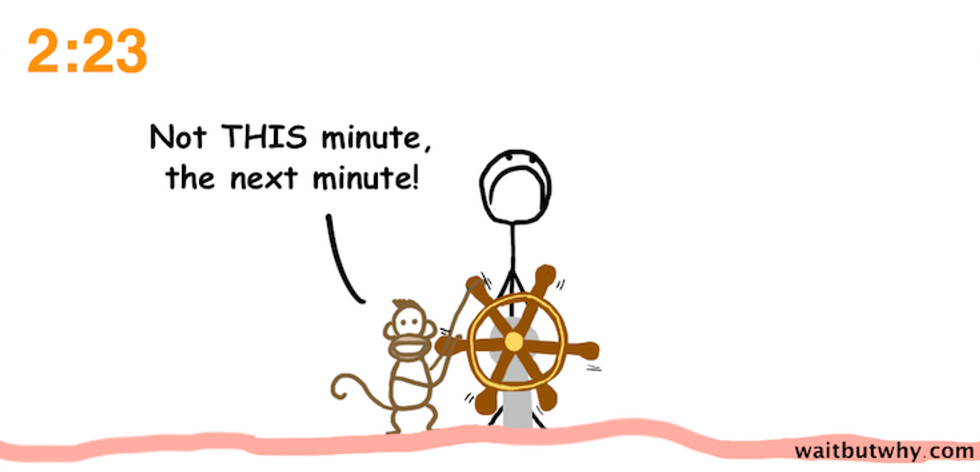
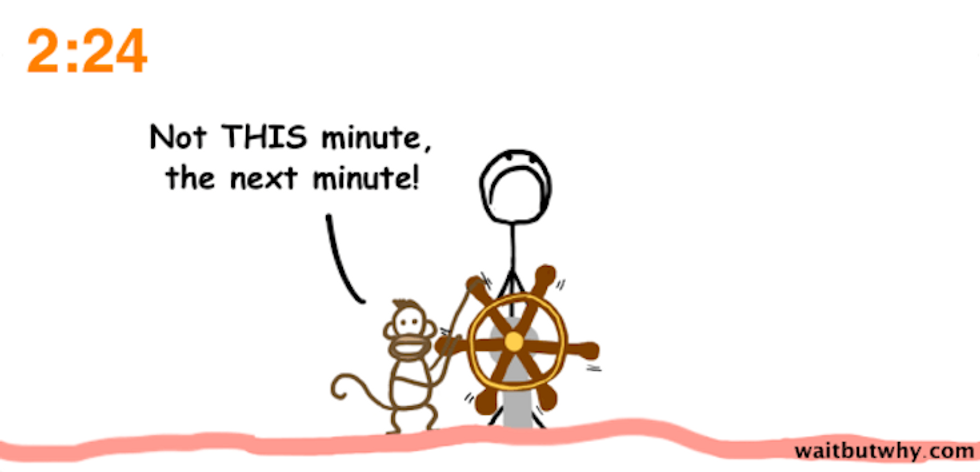
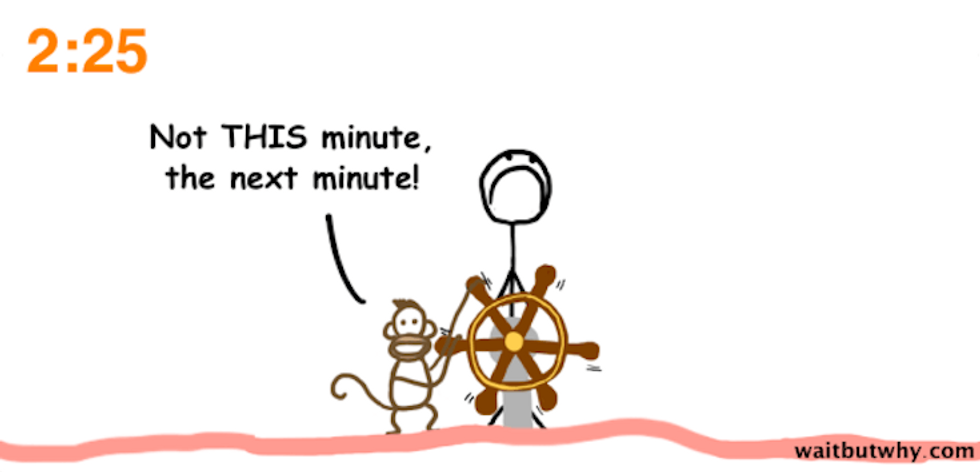
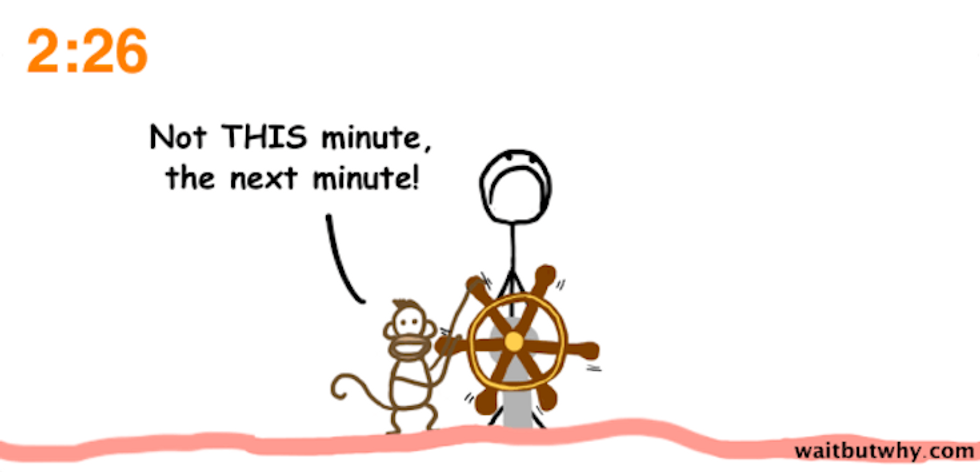
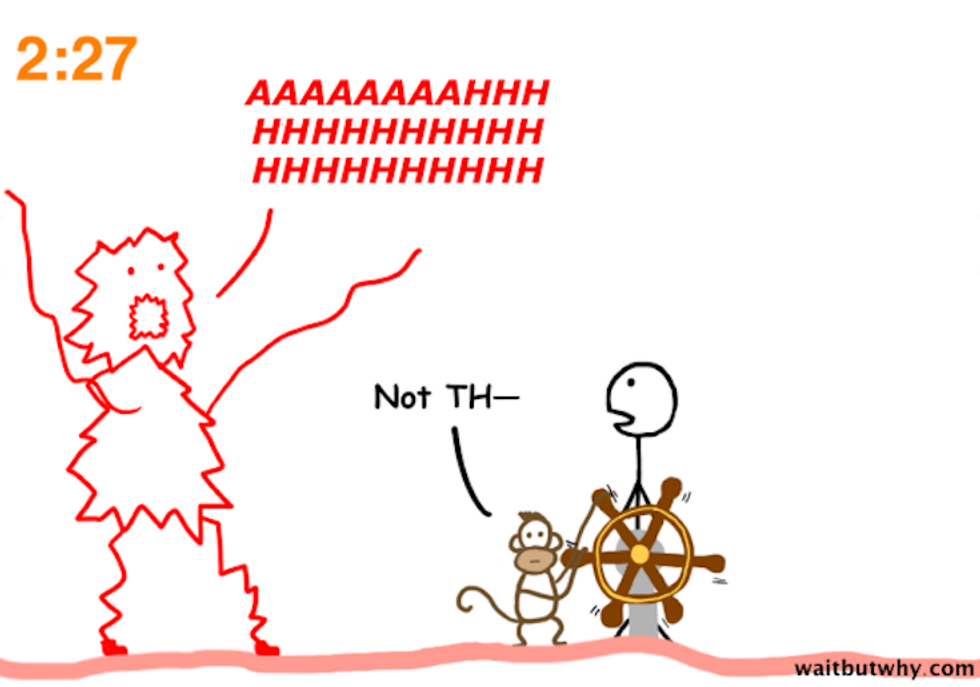
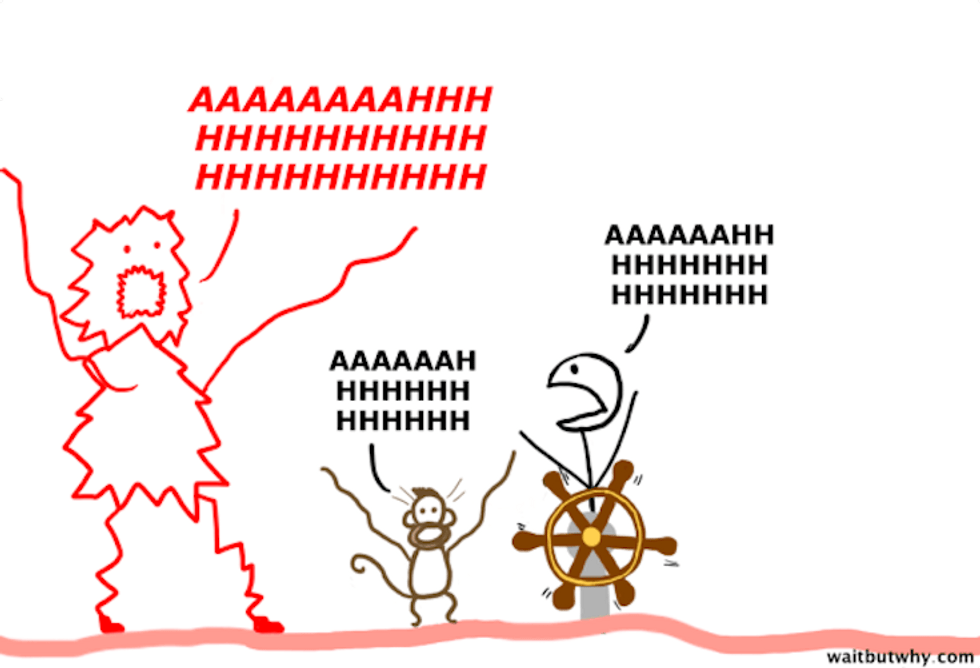
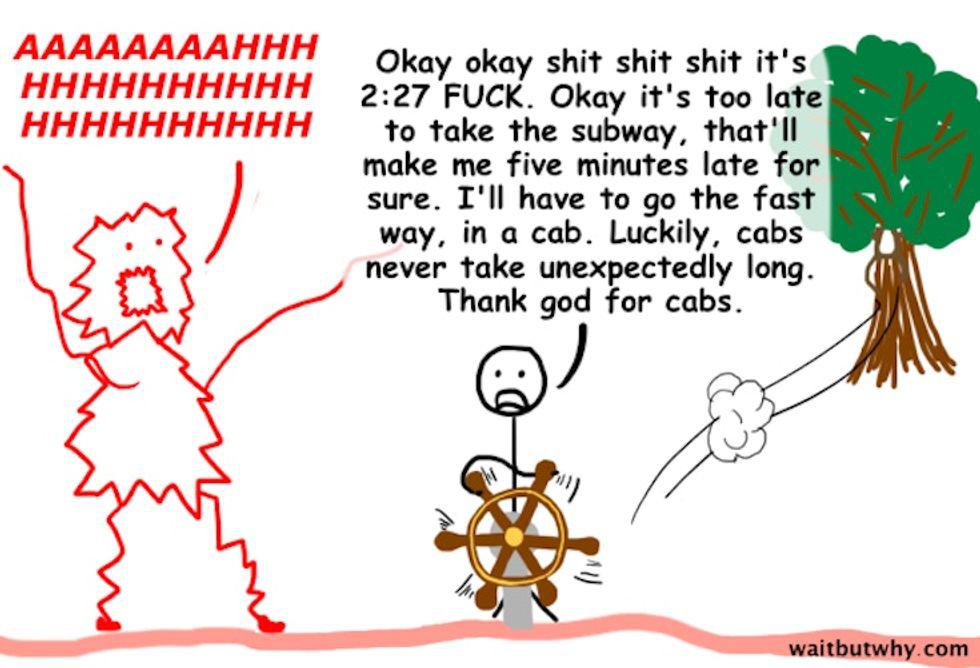
There's a pretty strong correlation here — the worse I feel about my productivity so far that day, the more likely I am to be late. When I'm pleased with how I've lived the day so far, the Rational Decision-Maker has a much easier time taking control of the wheel. I feel like an adult, so it's easy to act like an adult. But times when the monkey had his way with me all day, when the time rolls around that I need to stop working and head out somewhere, I can't believe that this is all I've gotten done. So my brain throws a little tantrum, refusing to accept the regrettable circumstances, and stages a self-flagellating protest, saying, "NO. This cannot be the situation. Nope. You didn't do what you were supposed to do, and now you'll sit here and get more done, even if it makes you late.”

So yeah, that's why I'm late. Because I have problems.

Don't excuse the CLIPs in your life — it's not OK, and they need to fix it. But remember: It's not about you. They have problems.


This article originally appeared on 04.07.16


Once a refugee seeking safety in the U.S., Anita Omary is using what she learned to help others thrive.
Pictured here: Anita Omary; her son, Osman; and Omary’s close friends
True

In March 2023, after months of preparation and paperwork, Anita Omary arrived in the United States from her native Afghanistan to build a better life. Once she arrived in Connecticut, however, the experience was anything but easy.

“When I first arrived, everything felt so strange—the weather, the environment, the people,” Omary recalled. Omary had not only left behind her extended family and friends in Afghanistan, she left her career managing child protective cases and supporting refugee communities behind as well. Even more challenging, Anita was five months pregnant at the time, and because her husband was unable to obtain a travel visa, she found herself having to navigate a new language, a different culture, and an unfamiliar country entirely on her own.


“I went through a period of deep disappointment and depression, where I wasn’t able to do much for myself,” Omary said.

Then something incredible happened: Omary met a woman who would become her close friend, offering support that would change her experience as a refugee—and ultimately the trajectory of her entire life.

Understanding the journey

Like Anita Omary, tens of thousands of people come to the United States each year seeking safety from war, political violence, religious persecution, and other threats. Yet escaping danger, unfortunately, is only the first challenge. Once here, immigrant and refugee families must deal with the loss of displacement, while at the same time facing language barriers, adapting to a new culture, and sometimes even facing social stigma and anti-immigrant biases.

Welcoming immigrant and refugee neighbors strengthens the nation and benefits everyone—and according to Anita Omary, small, simple acts of human kindness can make the greatest difference in helping them feel safe, valued, and truly at home.

A warm welcome

Dee and Omary's son, Osman

Anita Omary was receiving prenatal checkups at a woman’s health center in West Haven when she met Dee, a nurse.

“She immediately recognized that I was new, and that I was struggling,” Omary said. “From that moment on, she became my support system.”

Dee started checking in on Omary throughout her pregnancy, both inside the clinic and out.

“She would call me and ask am I okay, am I eating, am I healthy,” Omary said. “She helped me with things I didn’t even realize I needed, like getting an air conditioner for my small, hot room.”

Soon, Dee was helping Omary apply for jobs and taking her on driving lessons every weekend. With her help, Omary landed a job, passed her road test on the first attempt, and even enrolled at the University of New Haven to pursue her master’s degree. Dee and Omary became like family. After Omary’s son, Osman, was born, Dee spent five days in the hospital at her side, bringing her halal food and brushing her hair in the same way Omary’s mother used to. When Omary’s postpartum pain became too great for her to lift Osman’s car seat, Dee accompanied her to his doctor’s appointments and carried the baby for her.

“Her support truly changed my life,” Omary said. “Her motivation, compassion, and support gave me hope. It gave me a sense of stability and confidence. I didn’t feel alone, because of her.”

More than that, the experience gave Omary a new resolve to help other people.

“That experience has deeply shaped the way I give back,” she said. “I want to be that source of encouragement and support for others that my friend was for me.”

Extending the welcome

Omary and Dee at the Martin Luther King, Jr. Vision Awards ceremony at the University of New Haven.

Omary is now flourishing. She currently works as a career development specialist as she continues her Master’s degree. She also, as a member of the Refugee Storytellers Collective, helps advocate for refugee and immigrant families by connecting them with resources—and teaches local communities how to best welcome newcomers.

“Welcoming new families today has many challenges,” Omary said. “One major barrier is access to English classes. Many newcomers, especially those who have just arrived, often put their names on long wait lists and for months there are no available spots.” For women with children, the lack of available childcare makes attending English classes, or working outside the home, especially difficult.

Omary stresses that sometimes small, everyday acts of kindness can make the biggest difference to immigrant and refugee families.

“Welcome is not about big gestures, but about small, consistent acts of care that remind you that you belong,” Omary said. Receiving a compliment on her dress or her son from a stranger in the grocery store was incredibly uplifting during her early days as a newcomer, and Omary remembers how even the smallest gestures of kindness gave her hope that she could thrive and build a new life here.

“I built my new life, but I didn’t do it alone,” Omary said. “Community and kindness were my greatest strengths.”

Are you in? Click here to join the Refugee Advocacy Lab and sign the #WeWillWelcome pledge and complete one small act of welcome in your community. Together, with small, meaningful steps, we can build communities where everyone feels safe.

This article is part of Upworthy’s “The Threads Between U.S.” series that highlights what we have in common thanks to the generous support from the Levi Strauss Foundation, whose grantmaking is committed to creating a culture of belonging.

sleep, sleep tricks, sleeping techniques, science, scientific research, placebo effect, placebo

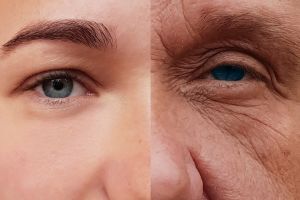
Tired man (left); energized man (right)

The benefits of getting a good night's sleep are too vast to name. Sleep is as essential for our brains as food and water are for our bodies. If you're not getting enough, sleeping better has been shown to elevate your mood, improve your memory, and even boost your physical health. And then there's the obvious: when you don't sleep well, you'll have less energy and generally perform worse on tasks that require any kind of effort or thought.

However, we're all human, and, sometimes, humans sleep terribly. Your infant might wake you up, or a car alarm might go off outside, interrupting your regularly-scheduled REM. It's not always our fault when we don't sleep well, but there might be an interesting way to fix it.


A study from 2014 may have demonstrated the existence of something called "placebo sleep," or tricking your brain into believing you slept better than you did.

sleep, sleep tricks, sleeping techniques, science, scientific research, placebo effect, placebo a man sitting at a desk with his head on his arms Photo by Vitaly Gariev on Unsplash

The placebo effect, of course, has been studied relentlessly over the years and has shown that the human body can do amazing, almost impossible things, when the brain gets on board. The classic example is when symptoms of disease get measurably better after a patient takes a "fake" pill. Another study out of Harvard showed that people who were told their jobs qualified as exercise showed improved health and fitness markers compared to people who did the same job. Placebos even work when the person knows they're taking a placebo. It's called an "honest placebo" and is considered a legitimate, ethical treatment method for many ailments.

The researchers in 2014 wanted to find out if the placebo effect could also apply to sleep. So, they lectured a group of participants about the importance of REM sleep and how it can effect cognitive functioning. The participants were then split into two groups and monitored overnight while they slept. The next morning, one group was told they achieved 28.7% REM sleep, which is terrific, and the other group was told they only spent 16.2% of their sleep time in REM, which is below average. The numbers, however, were complete fiction.

Stunningly, the participants who believed they achieved top quality sleep performed better the next day on a series of arithmetic and word association tests compared to the other groups.

In their conclusion, the authors wrote, "These findings supported the hypothesis that mindset can influence cognitive states in both positive and negative directions, suggesting a means of controlling one's health and cognition."

According to Smithsonian Magazine, follow up experiments confirmed the findings.

The key to feeling great and performing as if you had a great night's sleep may lie in simply believing that you did.

There are a lot of ways to "placebo your sleep" in order to generate that belief. For starters, you can adopt a new routine or technique or even supplement in order to prime your brain.

John Cline Ph.D. asserts for Psychology Today that the popularity of sleeping aids like melatonin may be tied less to the fact that they work, and more to the fact that people believe they work. But you don't need to take any supplements or medications. Having a slow evening wind down with a book and an herbal tea, trying a new sleeping position, or practicing some measured breathing might work just as well. Or, rather, they might work precisely because you believe they will.

sleep, sleep tricks, sleeping techniques, science, scientific research, placebo effect, placebo Can a warm cup of tea help you sleep better? If you believe it, then yes. Photo by Dana Ciurumelea on Unsplash

You could take the concept a step further and alter your morning routine on nights you know for a fact you didn't sleep well. Perhaps it's by using a new coffee brand, doing some stretches before getting out of bed, or meditating before starting your day. Anything that you truly believe might help make you more alert and focused may just work.

One viral social media sleep trend capitalizes on this research perfectly. Researchers have shown that forcing your mouth into a smile has been shown to improve your mood. Turns out, similarly, you may be able to get sleepy by pretending to be super tired. Psychologist Erica Terblanche calls it the "alpha bridge," and it involves gently closing your eyes, fluttering them open just a tad, and then closing them again as you relax and breath. It simulates the feeling of "nodding off" and is said to create the alpha brainwaves that transition your brain from wakefulness to sleep. It's another clever way of tricking your own brain.


@erica.terblanche

Here's a skill to help you fall asleep on an airplane or anywhere else for that matter. . Its called going over the Alpha Bridge. #EricaTerblanche #ThriveGuru #motivation #sleeping

It sounds cheesy, but the power of mindset and positive thinking is truly tremendous. Our beliefs and thought patterns can greatly influence our body, our behavior, and our mood. Sometimes, our mindset can even be stronger than actual reality. Now we have the data to prove that it applies to our precious sleep, too.

gen x, millennials, gen z, gen z vs gen x, gen z vs millennials, millennials vs gen x, generational humor
Photo credit: Canva

Gen X (left) and Gen Z (Right) may not understand each other, but a Millennial tries to help.

It's a tale as old as time: tension caused by generational differences. From Baby Boomers to the up-and-coming Gen Alpha, every generation seems to have a little bit of beef with the others—especially Gen Z.

Gen Z has claimed that Boomers are "angry". And Gen Zers are no longer subscribing to work burnout culture that Millennials did. And now, Gen Z has decided to come for Gen X.


One brave...or naive Gen Zer decided to declare that Gen X is "the worst generation" seemingly unprompted. But a Millennial quickly put them in their place.

@laurahigh5

Do you also like pissing off beelzebub for funzies? #genx #millennial #genz #generations #lol #joke #80s #vhs #movie #foryou #foryoupage #fyp #fypシ゚viral #fypage

In a stitched video, Millennial Laura High gave a succinct cliff's notes version of why it's best to not speak negative thoughts on Gen X aloud.

"I love Gen X. We all love Gen X...we all love Gen X," she said before bringing the camera close enough to whisper. "Okay here's the thing, you do not seem to understand who Gen X is, okay? Gen X is Boomers if they knew how to turn a document into a PDF, okay. They do not Karen out. They get quiet and they get revenge."

High then shared the secret kept by her generation: "we do not summon the latchkey kids unless it's our literal only last resort." She advised the unknowing Gen Zer to go to the edge of the woods to leave offerings to appease any Gen Xers that would likely be offended by the video.

- YouTube www.youtube.com

Gen Z and Millennials respond

Commenters agreed with her sentiment.

"There is a reason millennials leave Gen X alone, and they learned it the hard way. My fellow Gen Z’s will learn soon… very soon," one commenter said..

"Elder Gen Z raised by two Gen X parents. I do NOT back the younger half of Gen Z on this. I’m running into the woods on their behalf and leaving Ferris Bueller for my dad and a DQ blizzard for my mom," another echoed.

"Last thing she will hear from the woods, Red Rover Red Rover, we call Karen Hashtag over," said a third.

"If you've never played Red Rover with Gen Xers, just know you were lucky to have your head still attached to your shoulders after the game was over. There were no tears allowed and no telling your parents, they were gone anyway. In short: Gen Xers are ruthless, and it's best not to cross them. Seriously."

Gen X responds

gen x, generation x, gen x couple, gen xers, gen x life A happy Gen X couple have patience for younger generations, like Gen Z.Photo credit: Canva

Thankfully, Gen Xers are also open to peace offerings (and humor). Here are a few of their suggestions:

"I will accept ding dongs (in original foil) and a VHS of 'the last star fighter' I will also except a mix tape if it include at mix of metal, new wave, and Yaz."

"We will also accept any of the original Star Wars trilogy, Star Trek 2, Raiders, or Die Hard…though John Hughes films will likely will be the safest choice."

"As an Elder Gen X (1971) I accept offerings of ice cold Boone's Farm and those little chocolate donuts in the plastic sleeve. Laura, you're safe. Gen Z? Run."

"We will also allow The Neverending Story 😂."

Moral of the story: tread lightly Gen Z. Tread very lightly. If you hear someone clinking together empty glass Coke bottles outside your door, do not come out and play. It's a trap.

This article originally appeared two years ago. It has been updated.

ppe, masks, medical masks, covid, tattoo, funny, humor, pandemic, viral videos

The timing of this woman's tattoo could not have been worse.

It's amazing to consider just how quickly the world changed in early 2020. One day, we were all just casually going along, living our lives. And then the next day, everything was different. If you were to have told someone in February of 2020 that the entire country would soon go on some form of lockdown, nearly everyone would be wearing a mask, and half a million people were going to die due to a virus, no one would have believed you.

Yet, it happened. And in addition to changing the world as we know it, it also sparked a sharp political and cultural divide here in the United States.


Leah Holland got one of the most poorly-timed tattoos ever

PPE masks were the last thing on Leah Holland of Georgetown, Kentucky's, mind on March 4, 2020, when she got a tattoo inspired by the words of a close friend.

"We were just talking about things we admire about each other and he said, 'You courageously and radically refuse to wear a mask,' like meaning that I'm undeniably myself. I thought that was a really poetic way of saying that," Holland told Fox 13.

So, she had "courageously & radically refuse to wear a mask" tattooed on her left forearm.

It's a beautiful sentiment about Leah's dedication to being her true self. It's also a reminder for Holland to remain true to herself throughout her life.

However, the tattoo would take on a very different meaning just two days later, when the first case of COVID-19 was reported in Kentucky. Almost immediately, everyone in the country was advised to wear masks whenever they left the house. Some refused, citing their own personal freedom to do with their body as they wish. Holland had, completely inadvertently, taken sides in a massive culture war with some simple black ink on her forearm.


- YouTube www.youtube.com

"It basically looked like I'm totally, you know, anti-mask or whatever, which is not the case," said Holland.

Now, she was embarrassed to be seen with the tattoo for fear she'd be associated with the anti-maskers who either deny the existence of the virus or refuse to wear a mask to protect others. Either way, it's a bad look.

So Leah started wearing long-sleeve shirts and cardigan sweaters whenever in public to cover up the tattoo.

TikTok users asked each other to share their 'dumbest tattoo'


@wakaflockafloccar

#stitch with @hannanicbic I could NOT have had worse timing. #fyp #foryoupage #tattoo #worsttattoo #winner P.S. I’m not anti-mask I promise 🤦🏻‍♀️

In her video response, she talks about how her tattoo was about "not pretending to be something you're not," but then revealed it to show how — in an incredibly ironic twist — it made her out to be someone she isn't. "I just kind of wanted people to laugh with me because I think it's funny now, too," said Holland. At least the tatoo was able to spark a little levity in some dark times.

Plenty of people on TikTok laughed along with her with one user suggesting she update the tattoo with the phrase: "Hindsight is 2020." Another playfully accused her of "jinxing" the world and causing the virus outbreak. Another suggested adding an asterisk and "except during COVID" to the tattoo.

Some commenters tried to make her feel better about her poorly-timed body art. "Maybe tattoo a pair of theatre masks (one smiling, the other crying) on top, but for now, wear a hoodie," one user wrote. "Don't worry, in 15 years it will have its original meaning again!" another added.

"I was dying laughing. I'm like, I'm glad there are people that find this as funny as I think it is," said Holland.

"It will be a funny story to tell years from now," she said. "I don't think it will ever not be a funny story."

covid, masks, surgical masks, pandemic masks, friends, ppe A group of friends chatting wearing masks.via Canva/Photos


As the pandemic abated, Holland still had to explain her tattoo. The risks associated with COVID have decreased, but a fierce debate still raged over personal freedom versus responsibility to the greater good. Should you wear a mask in public when you're sick? Should you ever be required to wear a mask? How do you balance individual rights with our need to live in a cooperative society? Most won't soon forget the COVID-19 era in America, and there's no doubt that many will still feel passionate about those who refused to wear masks. Just don't lump Holland in with that group because of a poorly timed, but quite beautiful, sentiment. She'd never wear a mask, unless it were to protect herself and others from a deadly virus.

This article originally appeared four years ago.

cats, cat hotel, winter, stray cats, animal welfare

Stray cats don't always have warm places to shelter in wintry weather.

Wintery weather can be beautiful, but it can also be brutal when temperatures dip to frigid levels, not just for humans but for animals as well. Stray animals are generally pretty good at taking care of themselves, especially stray cats, but kind-hearted people still want to make sure they have a place to go to escape the elements when harsh conditions hit.

One woman took that desire to the next level with an elaborate cat apartment she built for the many stray cats in her neighborhood. We're not just talking about a shelter; it's like luxury hotel living for her feline friends. The apartment has multiple rooms, cushy blankets that get taken out and cleaned, and even a temperature-controlled water source so they're always able to find drinking water in below-freezing temps.


Check this out:

The woman who built the apartment actually lives in China and was sharing her videos on TikTok, but it seems her account has since been deactivated. This hasn't stopped people from talking about her and her impressive project, though. This thread on TikTok contains updates about the cat hotel from people finding and reposting the adorable story.

Welcome to the Meowtel Catifornia

Of course, the clever hotel jokes and puns started rolling in first thing:

'Welcome to the hotel catifornia."

"Such a lovely place."

"They can check out any time but they won't ever leave."

"I prefer Hotel Calicofornia."

"Meowriott."

"Given my skill, mine would be more like Meowtel 6."

"Pawliday Inn.'

"The Fur Seasons."'

"Meowne Plaza."

@linette303z

Building house for stray cats #fory #fyp #wild #nature #animals

People loved seeing the care and ingenuity she put into the "meowtel," as well as how happy the cats seem with the arrangement. In fact, some people were sure their own house cats would move out just to go live in this kind of cat commune.

"My cat just looked at me and sighed…"

"All the neighbours be looking for their cats and they’ve bailed to live at the kitty motel."

"They’d pack their little bags and move in without a second thought."

"They wouldn't even wait to pack their bags."

"Alright Carol it’s been real but we’re gonna head out. Found a great deal on a luxury apartment so yanno… take care."

Cats live where they want, when they want

Those people may have been joking, but several others shared that their cats really did ditch them to go live with neighbors who had more desirable living situations.

"I’ve had two cats do this. One was annoyed at our second dog’s puppy energy so she moved in with an older lady a street over. We used to see her all the time until she passed. The other missed our kids being little so she moved next door where there’s a little girl. We talked to both neighbors and said if they get sick of them to let us know and we’ll take them back but both lived the rest of their lives with their new families."

cats, cat hotel, winter, stray cats, animal welfare Some stray cats wander from home to home like a drifter. Photo credit: Canva

"One of our cats moved next door because he loves children and wanted to be with the little girl next door. Because it’s a very small village, he goes to the school most days to wait for her and they come home together. School is 3 buildings away."

"We had a cat do the same thing about 20 years ago. She hated the barks of our new puppy and would put her paw on his mouth to try and stop it. One day, she slipped outside and I found her a month later, two streets over, hanging with a couple who didn’t have a dog. They said she just showed up at the door and moved in. I gave them all her cat food and hope she had a nice quiet life."

Is it a bad idea to feed and shelter stray cats?

People have differing opinions about whether it's good to feed stray cats or not, as cats can cause problems for local wildlife, and it's not great to encourage an increasing stray cat population. According to Catster, in the United States alone, an estimated four billion birds and 22 billion mammals (such as mice, voles, rabbits, and shrews) are killed annually by both domestic and stray cats. In Canada, cats are the number one killer of birds, killing "between 100 and 350 million birds every year." These numbers are staggering, but the bird and small mammal populations can be protected if stray cats are cared for responsibly: namely, spaying and neutering those in your area to cut down on the population and finding homes for those who are friendly and comfortable with humans.

cats, cat hotel, winter, stray cats, animal welfare Stray cats should be spayed and neutered. Photo credit: Canva

According to the Feral Cat Coalition of Oregon, here are the best practices for feral and stray cats:

- Spay/neuter to prevent additional litters

- Find homes for friendly cats

- Feed outdoor cats on a schedule

- Remove food & dishes when they are done eating

- Pick up scraps and keep the feeding area tidy

- Provide fresh water

- Provide a warm place for the cats to sleep

So, go ahead and care for those kitties and keep them warm through the winter, just make sure they can't make any more kittens.

This article originally appeared two years ago. It has been updated.

nail salon ad; funny nail salon ad; Henry Pro Nails videos; viral videos; canada manicure; canadian nail tech

This Canadian nail salon has people packing their bags for a manicure

There are a lot of nail salons out there, and without word-of-mouth recommendations from people you trust, it can be impossible to know which salon to visit. Thanks to social media, many businesses can advertise their services without spending much on traditional marketing like television, billboards, and radio. Using pictures and videos of their amazing work to market can help maintain a steady flow of customers, but one Canadian nail salon is taking a slightly different approach.

Henry Pro Nails which started in Toronto, Canada, is leaving the Internet in stitches after creating a viral ad for his nail salon. The video uses the beginnings of several viral clips, but instead of the expected ending, Henry pops in to complete the viral moment in hilarious, unexpected ways.


HenryProNails takes viral videos and turns them into funny marketing

It opens with a familiar viral video of a man on a stretcher being pulled by EMS when the stretcher overturns, flopping the man onto the ground. But instead of it ending with the injured man on the ground, Henry seamlessly appears, lying out on the floor of his salon and delivers his first line, "Come to my nail salon. Your nails will look beautiful."

nails, nail salon, red nail polish, manicure, hands A woman getting her nails painted.via Canva/Photos


In another clip, a man holds his leg straight up and somehow flips himself into a split. When the camera cuts back to Henry, he's in the splits on the floor of his nail salon promoting loyalty discounts. The ad is insanely creative, and people in the comments can't get enough. Some are even planning a trip to Toronto just to get their nails done by the now Internet-famous top nail artist in Canada. This isn't Henry's first rodeo making creative ads, but this one is, without a doubt, his most popular—and effective.

People love Henry's videos

"I will fly to Canada to get my nails done here just because of this hilarious video. You win this trend for sure," one woman says.

"Get yourself a passport and make a road trip! My bf and I are legit getting ours, and it's only a 4 hr drive from where we are in Pennsylvania. Their prices are a lot better than other places I've been too," another person says while convincing a fellow American citizen to make the trip.

"Omg, where are you located? I would fly to get my nails done by you," one person writes.

"The pedicure I had at Henry’s was the best I have ever had. Unfortunately, it made all other places disappointing, and I don’t live close enough for Henry’s to be my regular spot," someone else shares.


In another hilarious video, Henry urges a woman not to divorce her husband for not cooking her dinner, but instead to come get her nails done so she'll feel a lot better.


Henry also jumped onto the "very demure, very mindful" trend on TikTok with his own take on the phrase.


It just goes to show that creative advertising can get people to go just about anywhere, but great service is what keeps them coming back. If you're ever in Canada and find yourself needing an emergency manicure, Henry's Pro Nails is apparently the place to be.

This article originally appeared two years ago. It has been updated.