New study shows that allowing cats outdoors is bad for their health and the environment
Settling the debate once and for all.

Bad for kitty. Bad for the environment.
It’s an age-old debate between cat parents—letting their feline roam outdoors versus adopting a strict indoor-only policy. Usually in cases like this, when there are two polarizing opinions, the truth lies somewhere in the middle, with pros and cons belonging to both sides.
This is not one of those times. Team Indoor is the winner here, hands down. And there’s new science to prove it.
The study, published in the journal Frontiers in Ecology and Evolution, revealed that allowing cats to free-roam is bad on multiple levels, putting themselves, their owners and even the environment at risk.For the study, researchers recorded the comings and goings of free-roaming cats using 60 motion-activated wildlife cameras across 1500 different locations in Washington, D.C. Over the span of three years, the D.C. Cat Count Survey’s findings revealed an overwhelming amount of reasons to opt for the great indoors instead.
For one thing, free-roaming cats are exponentially more exposed to dangerous diseases.
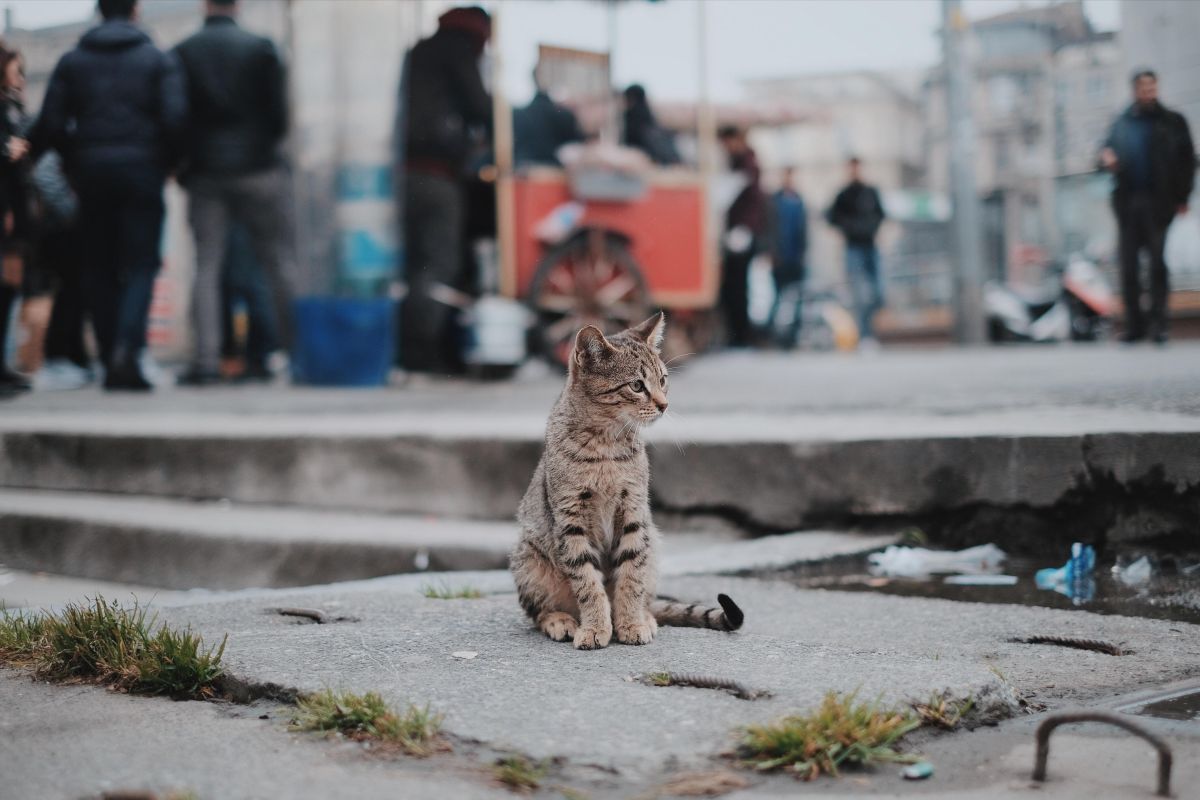
"By letting our cats outside we are significantly jeopardizing their health."
Photo by Emre on Unsplash"We discovered that the average domestic cat in D.C. has a 61% probability of being found in the same space as racoons – America's most prolific rabies vector – 61% spatial overlap with red foxes, and 56% overlap with Virginia opossums, both of which can also spread rabies," said Daniel Herrera, lead author of the study and Ph.D. student in the University of Maryland's Department of Environmental Science and Technology (ENST).
Herrera’s conclusion was straightforward: "By letting our cats outside we are significantly jeopardizing their health."Free-roaming didn’t only put cats at risk of infection—they often wander to high-exposure areas of rabies or toxoplasmosis, both of which can be transmitted to their owners.
Diseases aside, free-roaming cats pose a threat to wildlife.
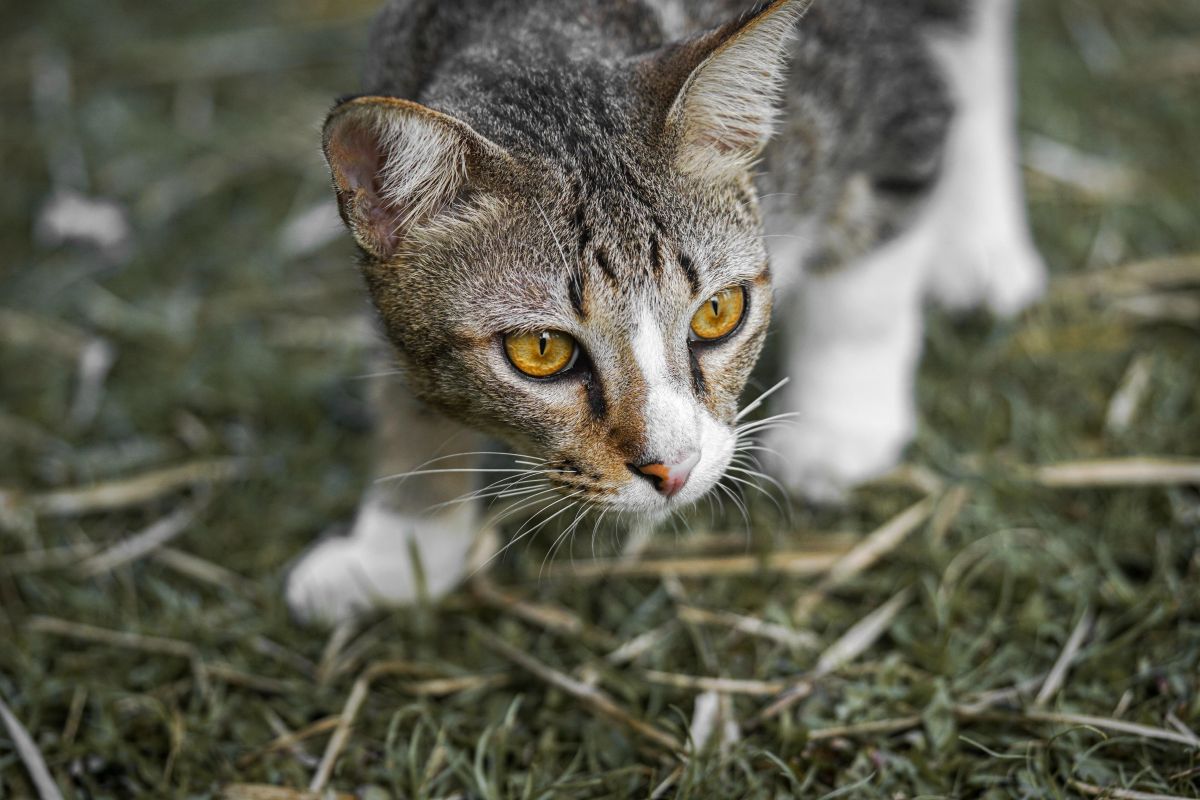
The common misconception is that cats help control non-native species like rats.
Photo by Ke Vin on UnsplashHerrera explained that while most people might assume cats help balance the food chain by hunting invasive species like rats, they frequently shared spaces and preyed on small native wildlife, including grey squirrels, chipmunks, cottontail rabbits, groundhogs and white-footed mice.
"Cats are keeping rats out of sight due to fear, but there really isn't any evidence that they are controlling the non-native rodent population. The real concern is that they are decimating native populations that provide benefits to the D.C. ecosystem,” said Herrera. Though this study only took place in one city, it feels pretty safe to assume that its findings are fairly universal.
It’s only natural to want to give our pets the best life possible. And while the thought of letting Whiskers out on an adventure might seem like a way to honor his primal side, Herrera and his fellow researchers strongly encourage keeping him safely indoors.
Luckily, there are other ways to let a cat express their natural instincts. As cat expert and influencer Jackson Galaxy advocates, consider 10-15 minutes of play a necessity, the same way you'd consider walking a dog as something that comes along with the job. Playing is a great way to not only keep your feline friend happy and healthy, it’s an adorable bonding meowment.
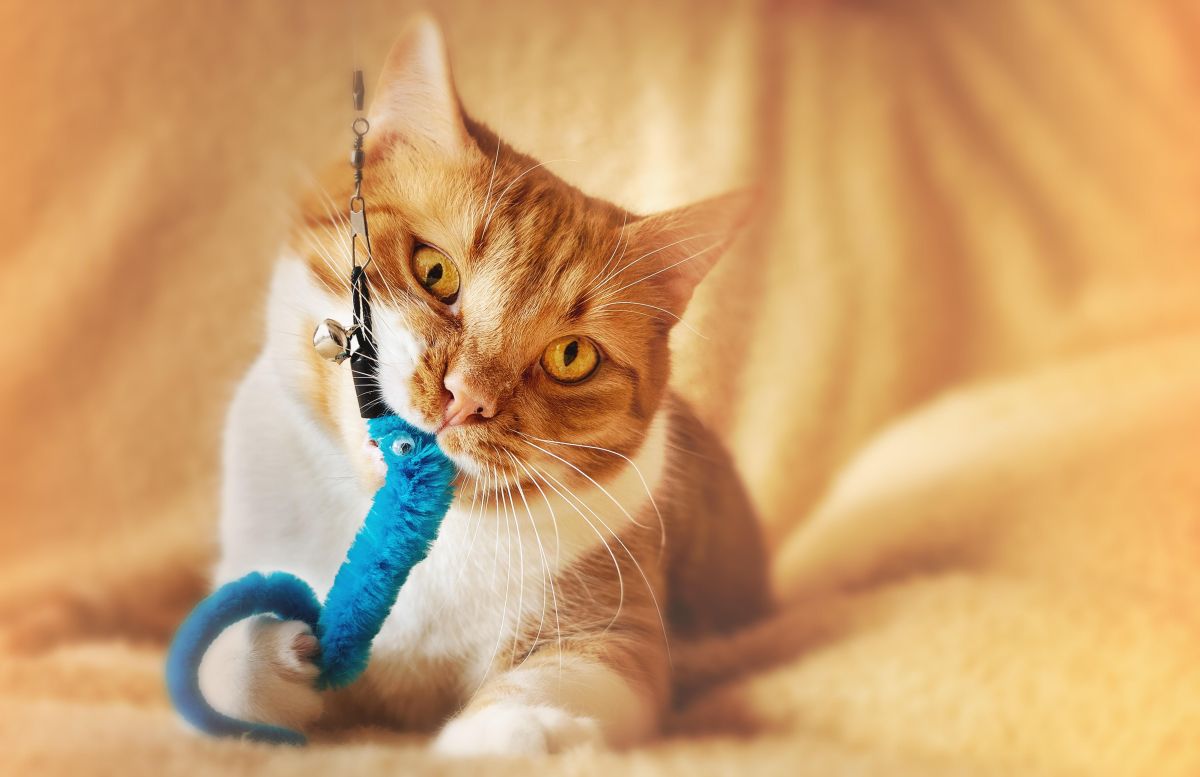
1-15 minutes of play can go a long way.
Photo by Dorothe Wouters on UnsplashUltimately, the choice on whether or not to allow a cat to roam free is up to the owner. But with great companions comes great responsibility. And all pet parents should at least be aware of the risks that come along with their decisions.

- Epic coworker spat over two workplace cats, Jean and Jorts, just keeps getting funnier ›
- It turns out your cat actually does love you, a new study claims ›
- Study shows your cat probably knows your name and those of their feline friends ›
- A major study claims your perfect pet cat actually does love you - Upworthy ›
- Resist the urge to build or topple rock cairns - Upworthy ›
- Indoor cat is so happy to be outside she does a backflip - Upworthy ›


A Generation Jones teenager poses in her room.Image via Wikmedia Commons
An office kitchen.via
An angry man eating spaghetti.via 


An Irish woman went to the doctor for a routine eye exam. She left with bright neon green eyes.
It's not easy seeing green.
Did she get superpowers?
Going to the eye doctor can be a hassle and a pain. It's not just the routine issues and inconveniences that come along when making a doctor appointment, but sometimes the various devices being used to check your eyes' health feel invasive and uncomfortable. But at least at the end of the appointment, most of us don't look like we're turning into The Incredible Hulk. That wasn't the case for one Irish woman.
Photographer Margerita B. Wargola was just going in for a routine eye exam at the hospital but ended up leaving with her eyes a shocking, bright neon green.
At the doctor's office, the nurse practitioner was prepping Wargola for a test with a machine that Wargola had experienced before. Before the test started, Wargola presumed the nurse had dropped some saline into her eyes, as they were feeling dry. After she blinked, everything went yellow.
Wargola and the nurse initially panicked. Neither knew what was going on as Wargola suddenly had yellow vision and radioactive-looking green eyes. After the initial shock, both realized the issue: the nurse forgot to ask Wargola to remove her contact lenses before putting contrast drops in her eyes for the exam. Wargola and the nurse quickly removed the lenses from her eyes and washed them thoroughly with saline. Fortunately, Wargola's eyes were unharmed. Unfortunately, her contacts were permanently stained and she didn't bring a spare pair.
- YouTube youtube.com
Since she has poor vision, Wargola was forced to drive herself home after the eye exam wearing the neon-green contact lenses that make her look like a member of the Green Lantern Corps. She couldn't help but laugh at her predicament and recorded a video explaining it all on social media. Since then, her video has sparked a couple Reddit threads and collected a bunch of comments on Instagram:
“But the REAL question is: do you now have X-Ray vision?”
“You can just say you're a superhero.”
“I would make a few stops on the way home just to freak some people out!”
“I would have lived it up! Grab a coffee, do grocery shopping, walk around a shopping center.”
“This one would pair well with that girl who ate something with turmeric with her invisalign on and walked around Paris smiling at people with seemingly BRIGHT YELLOW TEETH.”
“I would save those for fancy special occasions! WOW!”
“Every time I'd stop I'd turn slowly and stare at the person in the car next to me.”
“Keep them. Tell people what to do. They’ll do your bidding.”
In a follow-up Instagram video, Wargola showed her followers that she was safe at home with normal eyes, showing that the damaged contact lenses were so stained that they turned the saline solution in her contacts case into a bright Gatorade yellow. She wasn't mad at the nurse and, in fact, plans on keeping the lenses to wear on St. Patrick's Day or some other special occasion.
While no harm was done and a good laugh was had, it's still best for doctors, nurses, and patients alike to double-check and ask or tell if contact lenses are being worn before each eye test. If not, there might be more than ultra-green eyes to worry about.