How Gilbert Gottfried's iconic 'Iago' voice helped a father connect with his autistic son
The lesser known story behind our favorite cartoon bird.

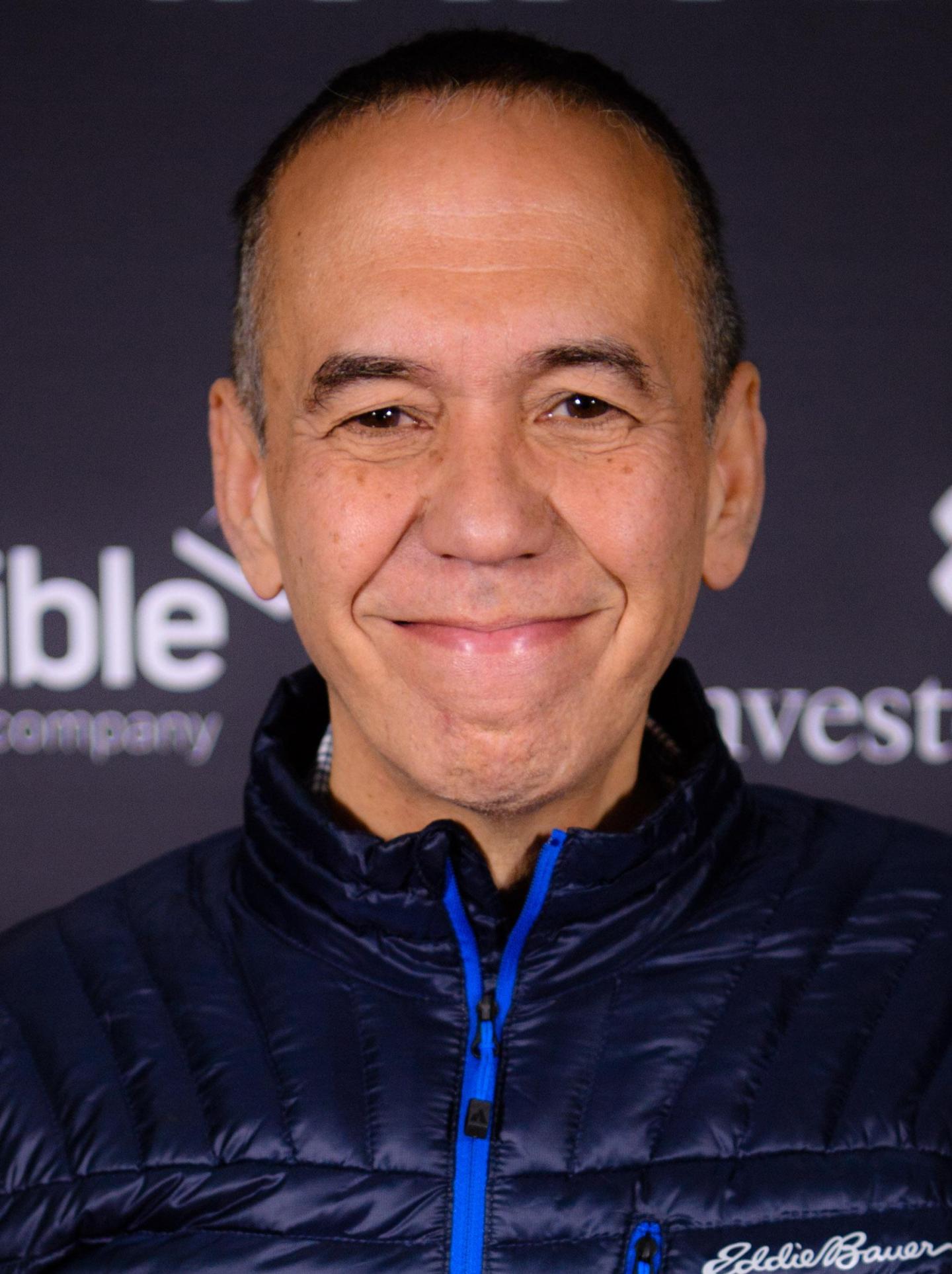
Gilbert Gottfried in 2016.
The late Gilbert Gottfried was a legendary stand-up comic, who somehow managed to pull off bizarre, even crude humor with a sense of lighthearted charm. He also appeared in countless films and TV shows as an actor, including “Saturday Night Live,” “Beverly Hills Cop II” and more recently “The Marvelous Mrs. Maisel.”
But for many ’90s kids (myself included) he was quite simply the one, the only … Iago. Gottfried brought a wisecracking, chaotic Disney parrot to life in a way that no one else could. In fact, fellow “Aladdin” actor Jonathan Freeman credited Gottfried for bringing out his best rendition of the movie’s sinister villain, Jafar.
“My performance was much improved by having had Gilbert as the parrot because I didn’t have to be psychotic. I could let him be psychotic,” Freeman said in an interview for Theater Mania.
And while nearly everyone on the planet might know about Gottfried’s Iago, they might not know how his beloved character helped one father connect once again with his autistic son.
In 2014, Pulitzer Prize winning journalist Ron Suskind wrote an article for The New York Times sharing how his son Owen’s regressive autism diagnosis came as a frustrating, confusing and painful shock.
Unlike children born with it, those with regressive autism seem to be developing typically then will suddenly experience a rapid loss in communication and social skills. This meant his once “chatty, energetic” boy stopped speaking. For four years.
In the midst of the family’s upheaval, one saving grace provided comfort and stability: Disney.
Movies such as “The Little Mermaid,” “Beauty and the Beast” and even old classics like “Dumbo” and "Bambi” still held Owen’s interest. And eventually, Suskind discovered that they could also be the key to communication.
On his brother Walt’s birthday, Owen used a Disney reference to speak a complex sentence: “Walter doesn’t want to grow up, like Mowgli or Peter Pan.”
Eager to find a way to keep the momentum going, Suskind followed Owen into his room.
As he tiptoed up the stairs, Suskind saw a puppet of Iago, one of Owen’s “favorite characters.”
Owen had been doing lots of Iago echolalia, repeating certain character lines. Echolalia is commonly described as both a symptom of autism and as a point of entry for a parent.
Suskind joked that it was “easy to identify because the character is voiced by Gilbert Gottfried, who talks like a busted Cuisinart.”
Suskind successfully grabbed the Iago puppet, then froze, not knowing what to say. Suddenly, an idea came. “What would Iago say?”
Doing his best Gilbert Gottfried, Suskind started to ask Owen simple questions.
“How ya doin'?”
“How does it feel to be you?”
He must have done a convincing Gottfried impression, because it worked. Owen and “Iago” had a long, heartfelt conversation. Owen even channeled his inner Jafar. They were playing together. A miracle.
“I hear a laugh, a joyful little laugh that I have not heard in many years,” the father wrote.
That breakthrough would eventually lead to Suskind writing a book about the life-changing discovery. He even teamed up with Owen (now all grown up) to adapt the book into a documentary called “Life Animated.”
Owen now seems to be a happy, healthy adult (a picture of him next to Gottfried below) with a fulfilling life—and yes, still a love of Disney, thanks in part to a wisecracking, chaotic parrot.
Gottfried’s voice was indeed iconic. But, as with many great artists, it also helped others find their voice. His talent made a lasting positive impact, and he will be missed.
This article originally appeared on 4.13.22

- How early diagnosis can help people with autism spectrum disorder ... ›
- Brilliant artist 'Disneyfies' people's pets into Disney characters ... ›
- The one must-see video from Disney Plus' Beatles documentary ... ›
- People are loving Kiwi the talking blue parrot on TikTok ›
- A young autistic man was scared of dogs. This stray changed everything. - Upworthy ›


a man sitting at a desk with his head on his arms Photo by
Can a warm cup of tea help you sleep better? If you believe it, then yes. Photo by 
A woman is getting angry at her coworker.via
A man with tape over his mouth.via
A husband is angry with his wife. via 
Three women sit on a blanket in the park. 
Two women engaging in a pleasant conversation inside a coffee shop
Two men engaging in a peaceful disagreement.
Resurfaced video of French skier's groin incident has people giving the announcer a gold medal
"The boys took a beating on that one."
Downhill skiing is a sport rife with injuries, but not usually this kind.
A good commentator can make all the difference when watching sports, even when an event goes smoothly. But it's when something goes wrong that great announcers rise to the top. There's no better example of a great announcer in a surprise moment than when French skier Yannick Bertrand took a gate to the groin in a 2007 super-G race.
Competitive skiers fly down runs at incredible speeds, often exceeding 60 mph. Hitting something hard at that speed would definitely hurt, but hitting something hard with a particularly sensitive part of your body would be excruciating. So when Bertrand slammed right into a gate family-jewels-first, his high-pitched scream was unsurprising. What was surprising was the perfect commentary that immediately followed.
This is a clip you really just have to see and hear to fully appreciate:
- YouTube youtu.be
It's unclear who the announcer is, even after multiple Google inquiries, which is unfortunate because that gentleman deserves a medal. The commentary gets better with each repeated viewing, with highlights like:
"The gate the groin for Yannick Bertrand, and you could hear it. And if you're a man, you could feel it."
"Oh, the Frenchman. Oh-ho, monsieurrrrrr."
"The boys took a beating on that one."
"That guy needs a hug."
"Those are the moments that change your life if you're a man, I tell you what."
"When you crash through a gate, when you do it at high rate of speed, it's gonna hurt and it's going to leave a mark in most cases. And in this particular case, not the area where you want to leave a mark."
Imagine watching a man take a hit to the privates at 60 mph and having to make impromptu commentary straddling the line between professionalism and acknowledging the universal reality of what just happened. There are certain things you can't say on network television that you might feel compelled to say. There's a visceral element to this scenario that could easily be taken too far in the commentary, and the inherent humor element could be seen as insensitive and offensive if not handled just right.
The announcer nailed it. 10/10. No notes.
The clip frequently resurfaces during the Winter Olympic Games, though the incident didn't happen during an Olympic event. Yannick Bertrand was competing at the FIS World Cup super-G race in Kvitfjell, Norway in 2007, when the unfortunate accident occurred. Bertrand had competed at the Turin Olympics the year before, however, coming in 24th in the downhill and super-G events.
As painful as the gate to the groin clearly as, Bertrand did not appear to suffer any damage that kept him from the sport. In fact, he continued competing in international downhill and super-G races until 2014.
According to a 2018 study, Alpine skiing is a notoriously dangerous sport with a reported injury rate of 36.7 per 100 World Cup athletes per season. Of course, it's the knees and not the coin purse that are the most common casualty of ski racing, which we saw clearly in U.S. skier Lindsey Vonn's harrowing experiences at the 2026 Olympics. Vonn was competing with a torn ACL and ended up being helicoptered off of the mountain after an ugly crash that did additional damage to her legs, requiring multiple surgeries (though what caused the crash was reportedly unrelated to her ACL tear). Still, she says she has no regrets.
As Bertrand's return to the slopes shows, the risk of injury doesn't stop those who live for the thrill of victory, even when the agony of defeat hits them right in the rocks.