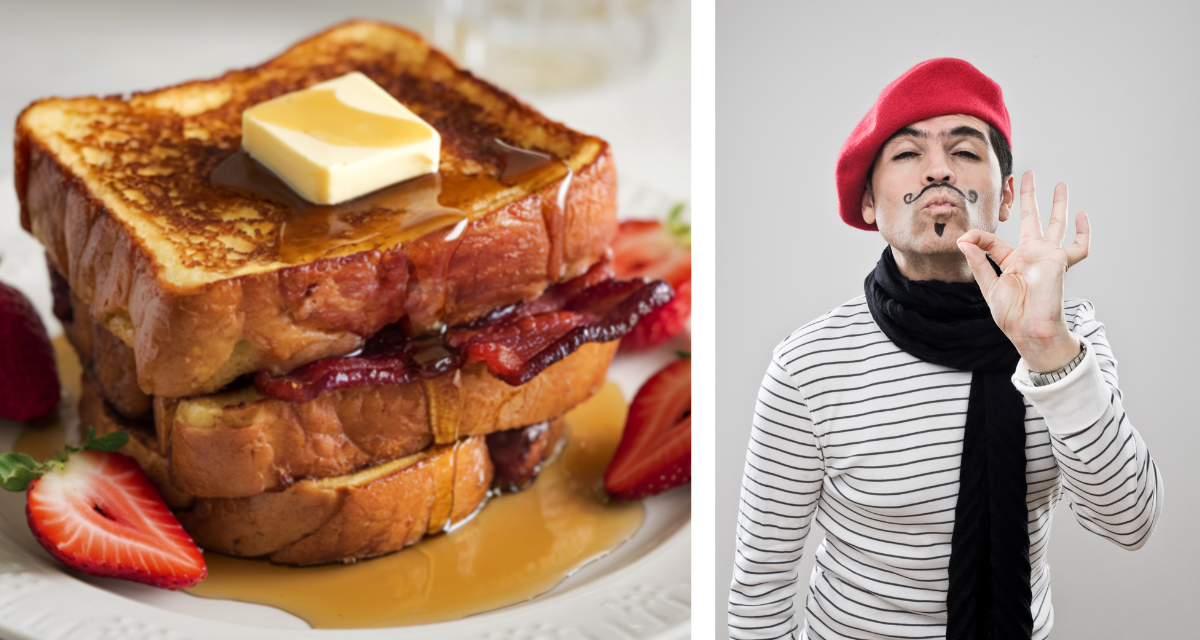
We all know and love the fluffy, sweet, decadent taste of French toast. But what many of us don’t know is that it’s about as authentic to French cuisine as chicken parm is to Italian cuisine. In fact, the dish predates the country entirely.
From ancient Rome to your breakfast plate
The earliest known recipe goes all the way back to ancient Rome. In a fourth-/fifth-century cookbook titled Apicius, you’ll find instructions for making Aliter Dulcia (“another sweet dish”), as it was called back then, which involved soaking white bread in a milk-and-egg mixture, frying it, then covering it with honey.
According to some sources, this iteration of French toast was considered a luxury food intended for the wealthy. Only “fine white bread” with the “crusts removed” would be used.
However, fast-forward to Medieval Europe, and the dish served slightly more practical purposes. It not only revived otherwise stale and useless bread in a time when food really couldn’t go to waste, but the eggs used in the dish also provided necessary protein.
During this time period, the dish went by many names, but French toast wasn’t one of them. Germans called it “eggy bread,” the Irish called it “gypsy toast,” and the English called it “poor knights,” referring to its economical ingredients. Even the French called it pain perdu, or “lost bread.”
Below, Max Miller of Tasting History recreated Suppa Dorata (often translated as “Golden Soup” or “Golden Sippets”), essentially the 15th-century Italian version of French toast, featuring a rich, crispy texture flavored with saffron and rose water rather than maple syrup or honey.
The accidental birth of “French toast”
Astoundingly, the term French toast actually refers to an American…an American who could have benefited from autocorrect.
As legend has it, in 1724, New York innkeeper Joseph French advertised it as “French toast” when he meant to call it “French’s toast.” A simple grammatical error became immortalized forever.
It seems, though, that French toast wouldn’t become America’s go-to name until World War I. Before then, it was called “German toast.” But when all things German became taboo, a name attributed to an Allied country seemed more befitting.
Sidenote: Some might recall that in 2003, the United States was trying to rebrand French toast as “freedom toast,” similar to “freedom fries” instead of “French fries.” It did not catch on.
Breakfast, dessert, or something else entirely?
Even after the name French toast stuck, people couldn’t agree on which meal it belonged to. As Miller explained, some felt it was best suited for lunch, while others thought it should be an after-dinner dessert. It wasn’t until 1866, when Godey’s Magazine (which brought us “Mary Had a Little Lamb” and that little holiday known as Thanksgiving) dubbed it an “excellent” breakfast choice, “equal to waffles.” Bold statement, indeed!
Today, French toast still goes by countless other names and variations. In several countries, it’s a savory dish. In India, it’s served with spices, green chilis, onions, and even ketchup. Similarly, Italy places mozzarella between the bread slices before dipping them in eggs and frying them. Meanwhile, in places like Brazil and Spain, where it’s called “rabanadas” and “torrijas,” respectively, it’s served on special holidays like Christmas or Lent.
No matter what you call it, this enduring dish is far more magical than it appears at first glance, carrying not only delicious comfort but also centuries of history in every bite.