Facebook is finally 'freeing the nipple' thanks in part to how it censored one harmless photo
It's a major win for inclusivity.

Grayscale photo of woman in bikini.
Facebook has been a great place for people to bare all when it comes to their emotions. But when it comes to baring all with regards to bodies, Facebook has always seemed as if they’d rather people bare none of it. Facebook has received criticism for over-sexualizing breasts, but a new recommendation from Meta’s advisory board says the nipples can come out for nonbinary users.
Recently, Facebook censored two posts from a transgender and nonbinary couple that featured the couple appearing topless. Even though their nipples were covered, an AI system took the photos down for "violating the Sexual Solicitation Community Standard" after they were flagged by a human user. The couple appealed to Meta, and the photos were reinstated, but it was enough to catch the attention of Meta’s oversight board, which advises Meta on content moderation policies and is made up of academics, politicians and journalists.
After looking at the issue, the oversight board suggested Meta change their Adult Nudity and Sexual Activity Community Standards "so that it is governed by clear criteria that respect international human rights standards."
According to the board, Meta’s policy was "based on a binary view of gender and a distinction between male and female bodies," making it "unclear" in how it deals with intersex, nonbinary and transgender users.
"We are constantly evolving our policies to help make our platforms safer for everyone," a spokesperson from Meta told The Guardian. "We know more can be done to support the LGBTQ+ community, and that means working with experts and LGBTQ+ advocacy organizations on a range of issues and product improvements."
How free the nipples should be on the social media platform has been a source of contention for more than a decade. Breastfeeding moms have been leading the battle of the boob, duking it out with Facebook CEO Mark Zuckerberg over their ability to share nursing photos on social media. They’ve gone so far as holding a "nurse in" at Facebook headquarters to protest the ban on breasts.

Woman holding her hand over her breast.
Photo by Giorgio Trovato on UnsplashIn 2020, Instagram loosened up its nudity policy thanks to a campaign started by Nyome Nicholas-Williams. While nipples are still a no-no, Instagram now allows breast cupping, hugging, and holding. And in 2021, the oversight board gave the okay for "health related nudity," allowing for photos of nips if they’re related to things like breastfeeding, birth-giving, breast cancer awareness, or gender-confirming surgery. Acts of protest are allowed as well.
Facebook has received criticism for the platform being lax on hate speech but tough on boobs. Meta CEO Mark Zuckerburg has said this is because it's "easier to build an AI system to detect a nipple than what is hate speech," which might explain why Meta is going to use "human reviewers" to "quickly assess both a user’s sex, as this policy applies to 'female nipples,' and their gender identity," according to the board.

Topless man with black background.
Photo by Дмитрий Хрусталев-Григорьев on UnsplashThe new nipple rules are only applicable to transgender and nonbinary users. "The same image of female-presenting nipples would be prohibited if posted by a cisgender woman but permitted if posted by an individual self-identifying as nonbinary," the board noted in its decision.
While the nipple might not fully be free on Facebook, it has taken one large step forward out of its cage. However, Facebook’s over-sexualization of breasts might just be a reflection of society, and in order for the nipple to run wild and out in the open, we might need to change the way people think about breasts in general.

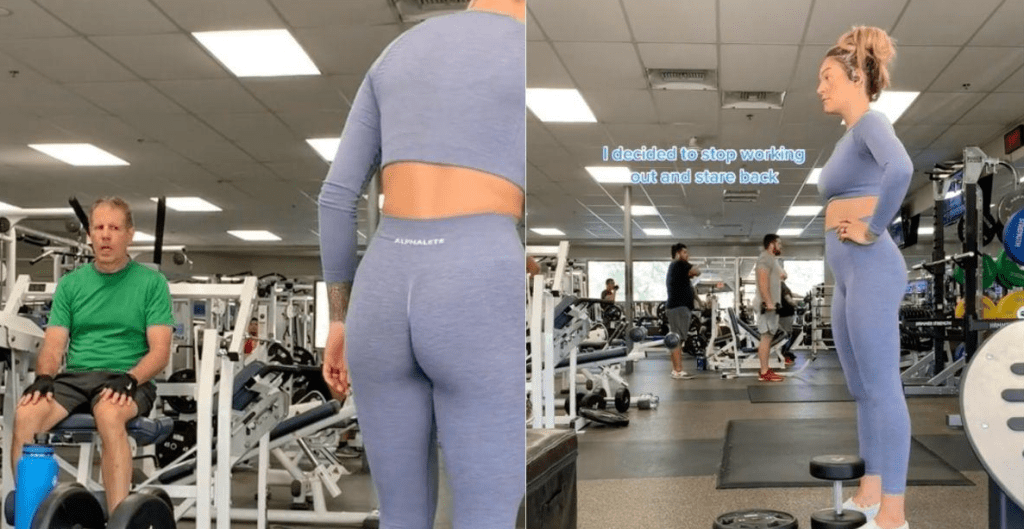
- Sexist guy asks woman at gym to wear a bra 'so other people ... ›
- A tattoo artist is giving people free 'nipple tattoos' to help cancer survivors ›
- This viral cartoon about a dad's 'useless nipples' has struck a chord with nursing moms. ›
- Threads: the new social media app everyone is talking about - Upworthy ›
- People who grew up as nudists reveal childhood experiences - Upworthy ›


Student smiling in a classroom, working on a laptop.
Students focused and ready to learn in the classroom.
Fish find shelter for spawning in the nooks and crannies of wood.
Many of these streams are now unreachable by road, which is why helicopters are used.
Tribal leaders gathered by the Little Naches River for a ceremony and prayer.

Communications expert shares the perfect way to gracefully shut down rude comments
Taking the high ground never felt so good.
A woman is insulted at her job.
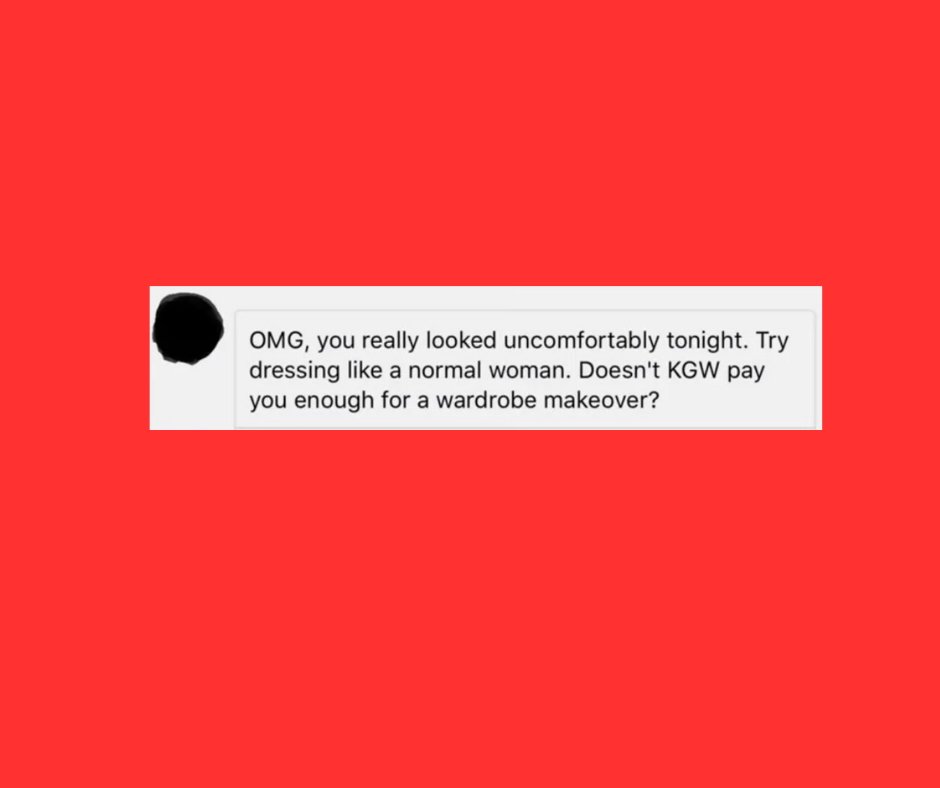
It came out of nowhere. A coworker made a rude comment that caught you off guard. The hair on the back of your neck stands up, and you want to put them in their place, but you have to stay tactful because you're in a professional setting. Plus, you don't want to stoop to their level.
In situations like these, it helps to have a comeback ready so you can stand up for yourself while making making sure they don't disrespect you again.
Vince Xu, who goes by Lawyer Vince on TikTok, is a personal injury attorney based in Torrance, California, where he shares the communication tips he's learned with his followers. Xu says there are three questions you can ask someone who is being rude that will put them in their place and give you the high ground:
Question 1: "Sorry, can you say that again?"
"This will either make them have to awkwardly say the disrespectful remark one more time, or it'll actually help them clarify what they said and retract their statement," Xu shares.
Question 2: "Did you mean that to be hurtful?"
The next step is to determine if they will repeat the disrespectful comment. "This calls out their disrespect and allows you to learn whether they're trying to be disrespectful or if there's a misunderstanding," Xu continues.
Question 3: "Are you okay?"
"What this does, is actually put you on higher ground, and it's showing empathy for the other person," Xu adds. "It's showing that you care about them genuinely, and this is gonna diffuse any type of disrespect or negative energy coming from them."
The interesting thing about Xu's three-step strategy is that by gracefully handling the situation, it puts you in a better position than before the insult. The rude coworker is likely to feel diminished after owning up to what they said, and you get to show them confidence and strength, as well as empathy. This will go a lot further than insulting them back and making the situation even worse.
Xu's technique is similar to that of Amy Gallo, a Harvard University communications expert. She says that you should call out what they just said, but make sure it comes out of their mouth. "You might even ask the person to simply repeat what they said, which may prompt them to think through what they meant and how their words might sound to others," she writes in the Harvard Business Review.
More of Gallo's suggested comebacks:
“Did I hear you correctly? I think you said…”
“What was your intention when you said…?”
“What specifically did you mean by that? I'm not sure I understood.”
“Could you say more about what you mean by that?”
Ultimately, Xu and Gallo's advice is invaluable because it allows you to overcome a negative comment without stooping to the other person's level. Instead, it elevates you above them without having to resort to name-calling or admitting they got on your nerves. That's the mark of someone confident and composed, even when others are trying to take them down.