Once a year, capybaras at this Japanese zoo are treated to a fully immersive spa day
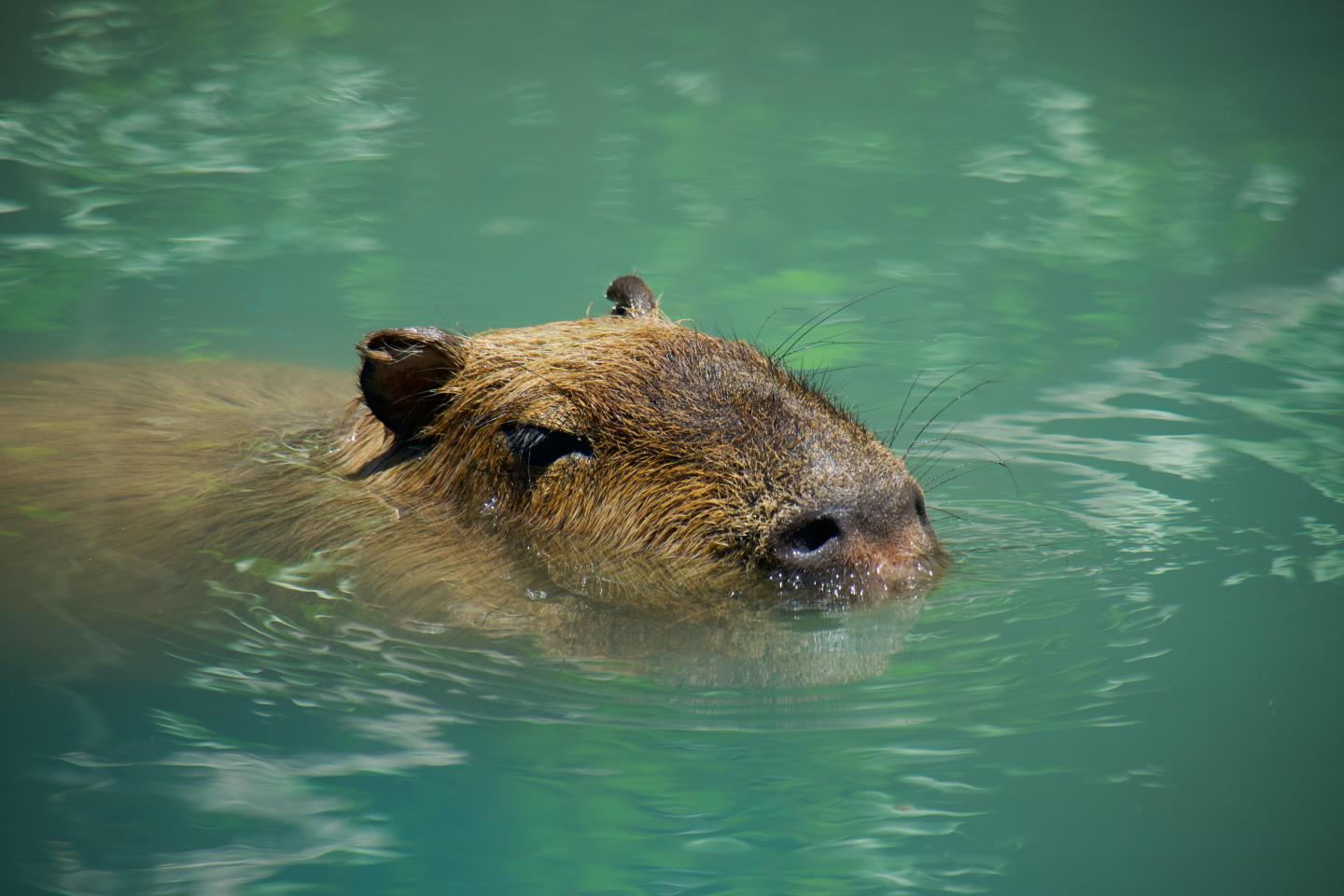
Capybaras might be known as the world’s largest rodent, but they are also experts on the finer things in life. Especially the ones that reside in Japanese zoos, who every year get to soak in a warm, steamy, citrus-scented yuzu hot bath. The Japanese tradition of bathing in yuzu (which looks like a lemon, but…
Capybaras might be known as the world’s largest rodent, but they are also experts on the finer things in life. Especially the ones that reside in Japanese zoos, who every year get to soak in a warm, steamy, citrus-scented yuzu hot bath.
The Japanese tradition of bathing in yuzu (which looks like a lemon, but is not a lemon, it’s more like an orange disguised as a lemon), dates back thousands of years. Done in an onsen—or natural hot spring—on the day of the winter solstice, these baths were used to ward off evil, and colds. Double whammy.
Munskin.com delves into the science of yuzu’s health benefits a bit more, saying that the rinds carry a substance called nomilin, which promotes good circulation. Plus, with triple the amount of vitamin C as a lemon, maybe there’s something to this warding off a cold theory. Worst-case scenario, you come out with silky smooth skin and a relaxed mind.
Okay, enough science already, let’s see that capybara bath time!
Ahead of the winter solstice tomorrow, the capybara of Nasu Oukoku Zoo took their annual yuzu hot bath pic.twitter.com/IeYTnCWr8K— Spoon & Tamago (@Johnny_suputama) December 20, 2021
Yeah, these guys seem to not mind this tradition one bit.
People visiting the zoos get to see these adorable plus-sized guinea pigs with their very own yuzu onsen on display, but seeing it on social media does wonders for the soul as well.
I think this person sums up the general consensus in their comment: “I aspire to be reincarnated as a Japanese capybara.”
I aspire to be reincarnated as a Japanese capybara.— Roger Christie (@blackcatcrosses) December 20, 2021
Well said, well said.
https://www.instagram.com/p/CXwUhPksj7w/
These little bathers were even part of an experiment, according to Vice.com. Researcher Tohru Kimura and his team observed that 21 days of bathing did give dry-skinned capybaras a new dewy complexion.
This was more so to test the hot springs themselves, rather than the benefits of yuzu, but still, the science suggested that natural hot baths could have benefits for rodents and humans alike.
So there you have it. If ever you start to second guess your urge for a nice relaxing, hot bath, just think of those happy little capybaras. And remember that we can all stand for a little TLC now and then.
A single door can open up a world of endless possibilities. For homeowners, the front door of their house is a gateway to financial stability, job security, and better health. Yet for many, that door remains closed. Due to the rising costs of housing, 1 in 3 people around the world wake up without the security of safe, affordable housing.
Since 1976, Habitat for Humanity has made it their mission to unlock and open the door to opportunity for families everywhere, and their efforts have paid off in a big way. Through their work over the past 50 years, more than 65 million people have gained access to new or improved housing, and the movement continues to gain momentum. Since 2011 alone, Habitat for Humanity has expanded access to affordable housing by a hundredfold.
A world where everyone has access to a decent home is becoming a reality, but there’s still much to do. As they celebrate 50 years of building, Habitat for Humanity is inviting people of all backgrounds and talents to be part of what comes next through Let’s Open the Door, a global campaign that builds on this momentum and encourages people everywhere to help expand access to safe, affordable housing for those who need it most. Here’s how the foundation to a better world starts with housing, and how everyone can pitch in to make it happen.
Volunteers raise a wall for the framework of a new home during the first day of building at Habitat for Humanity’s 2025 Carter Work Project.
Globally, almost 3 billion people, including 1 in 6 U.S. families, struggle with high costs and other challenges related to housing. A crisis in itself, this also creates larger problems that affect families and communities in unexpected ways. People who lack affordable, stable housing are also more likely to experience financial hardship in other areas of their lives, since a larger share of their income often goes toward rent, utilities, and frequent moves. They are also more likely to experience health problems due to chronic stress or environmental factors, such as mold. Housing insecurity also goes hand-in-hand with unstable employment, since people may need to move further from their jobs or switch jobs altogether to offset the cost of housing.
Affordable homeownership creates a stable foundation for families to thrive, reducing stress and increasing the likelihood for good health and stable employment. Habitat for Humanity builds and repairs homes with individual families, but it also strengthens entire communities as well. The MicroBuild® Initiative, for example, strengthens communities by increasing access to loans for low-income families seeking to build or repair their homes. Habitat ReStore locations provide affordable appliances and building materials to local communities, in addition to creating job and volunteer opportunities that support neighborhood growth.
Marsha and her son pose for a photo while building their future home with Southern Crescent Habitat for Humanity in Georgia.
Everyone can play a part in the fight for housing equity and the pursuit of a better world. Over the past 50 years, Habitat for Humanity has become a leader in global housing thanks to an engaged network of volunteers—but you don’t need to be skilled with a hammer to make a meaningful impact. Building an equitable future means calling on a wide range of people and talents.
Here’s how you can get involved in the global housing movement:
Speaking up on social media about the growing housing crisis
Volunteering on a Habitat for Humanity build in your local community
Travel and build with Habitat in the U.S. or in one of 60+ countries where we work around the globe
Join the Let’s Open the Door movement and, when you donate, you can create your own personalized door
Every action, big and small, drives a global movement toward a better future. A safe home unlocks opportunity for families and communities alike, but it’s volunteers and other supporters, working together with a shared vision, who can open the door for everyone.
Somewhere in southern New Jersey, in a water-filled zoo habitat, two small animals you’ve probably never thought much about are about to take their first wobbly steps into the world.
Born in mid-April 2026, they came into the world with their eyes open and alert; they were standing within hours. By their first week, they were nibbling grass alongside the adults, their tiny muzzles buried in clover as if they’d been doing it forever.
Cape May County Commissioner Vice-Director Andrew Bulakowski put it simply:
“What a wonderful joy to be blessed with additional capybara pups. Families love this exhibit, and their love will only grow with the sights of these new additions.”
They will not grow up alone. Their extended family—Budette, Marigold, and a group of older siblings from Buttercup’s October litter and Marigold’s November litter—hovers around them like a serene, fuzzy welcoming committee. They are serious about the job, too: someone always stands watch. Someone always seems ready with a nudge or a nuzzle.
Zookeepers and veterinary staff are monitoring Buttercup and her newborns closely, offering the young family regular breaks from the attention of visitors. Visitors who want a glimpse can watch from afar, on a bridge that overlooks the habitat. Patience is the price of admission to one of the sweetest scenes in the zoo.
The new capybara pups are incredibly cute. It’s difficult to look at them and not feel something inside you scream with delight. That feeling is important. In a way, it’s the entire point.
The world’s chillest giant rodent is stranger (and more important) than it looks
Capybaras (Hydrochoerus hydrochaeris) are the largest rodents on Earth. An adult can weigh up to about 146 pounds and stretch more than four feet long. That can seem intimidating on paper, but in person, capybaras carry their size with a slow, steady ease.
Their bodies are built for life between land and water, and every anatomical detail tells that story: their eyes, ears, and nostrils are positioned near the tops of their heads, so capybaras can survey their surroundings while almost entirely submerged. Their feet are partially webbed, making them powerful swimmers who can hold their breath for up to five minutes—a crucial feature when a jaguar is watching from the riverbank and the safest move is to slide under the surface and wait it out.
Capybaras eat plants. They graze on grasses and aquatic vegetation with an almost comical level of focus. It’s a pretty strict diet, though they will add fruits and tree bark when the mood strikes or the season dictates. And they don’t just look calm; they talk. Capybaras communicate with an arsenal of barks, whistles, clicks, and soft purrs that help keep their tight-knit groups coordinated and close.
How a capybara family does childcare
In the capybara world, Buttercup’s new pups don’t “belong” to her and Goomba, the father. Rather, the entire group claims them.
In the wild, capybaras don’t raise their young alone. The babies don’t rely on a single caregiver; they inherit a whole network of protection. Capybaras are profoundly social animals and live in stable groups where group bonds are maintained through constant tactile contact, mutual grooming, and scent marking. Females nurse each other’s pups. Older animals act as lookouts and babysitters, regardless of whether they share direct DNA. Scientists call this alloparenting: shared childcare built into the species’ survival.
That shared responsibility is crucial. It gives capybara pups stronger odds of survival in those first fragile months. In some field studies, more than 70% of pups raised in stable groups survive their first year, a high rate for animals so low in the food chain.
In New Jersey, Buttercup’s family follows the ancient capybara way, too. While the zoo’s visitors see a cute capybara cuddle pile, this mammalian cluster represents a finely tuned system designed to keep vulnerable animals alive.
Why wetlands depend on capybaras
In the wild, capybaras roam across much of South America and function as quiet ecosystem architects. You’ll find them in the vast Pantanal wetlands of Brazil and Bolivia; they graze in the seasonally flooded savannas of Venezuela and Colombia. Capybaras even venture into the rewilding landscapes of Argentina’s Iberá region. Basically, wherever freshwater meets grassland, capybaras tend to appear sooner or later.
As professional grazers, capybaras help maintain diverse, open wetland vegetation. When they disappear, tall grasses quickly crowd out shorter plants, and overall plant richness drops by 25% or more. Simply put, when capybaras aren’t around, plants suffer. That change is drastic and can be felt through the insects, birds, and every other creature reliant on those important plants.
Within the circle of life, as prey, capybaras also anchor South America’s food chains: they’re hunted by jaguars, anacondas, caimans, and large raptors (such as harpy eagles). They’re a major food source; a jaguar can devour dozens of capybaras in a single year. That stat sounds brutal, but if you remove capybaras from that system, the entire food chain begins to wobble.
They’re also essential, given the way capybaras move seeds as they travel and graze. Constantly nibbling and wandering, capybaras have shaped how nutrients move through the wetlands. In conservation science, animals that hold this many threads together often receive a specific label: keystone species. Pull out a keystone, and the entire system starts to crack.
Not endangered, but not untouchable
Right now, the International Union for Conservation of Nature lists capybaras as a species of “Least Concern.” But that broad label can hide a lot of trouble.
For example, the capybara’s habitat is disappearing rapidly as people drain or convert wetlands into farmland at alarming rates. Hunters target capybaras for their meat and skins, which are used to make leather. Climate change creates more intense droughts and wildfires in places like the Pantanal, the world’s largest tropical wetland. In 2020, fires burned an estimated 30% of the Pantanal biome in a single season, scorching millions of acres, as jaguars and charred caimans fled their home.
So yes, there’s real danger here, despite the capybara’s “Least Concern” conservation label. But there’s also hope.
In early 2026, Brazil expanded its Pantanal national park, adding more than 116,000 protected acres to a landscape that badly needs institutional buffers. In Argentina, a long-term rewilding effort brought jaguars back to Iberá after roughly 70 years. Those jaguars now hunt capybaras again—for the first time in living memory—restoring a predator‑prey relationship that’s essential for local ecosystems.
The picture is complicated and is always evolving, but crucially, there’s still a window for change.
What a small New Jersey zoo has to do with all of this
On a map, Cape May County Park & Zoo looks like a sweet coastal stop between beach towns. In practice, it’s part of a much larger conservation network.
The zoo is free to visit and cares for more than 550 animals across over 200 species. Cape May County Park & Zoo holds accreditation from the Association of Zoos and Aquariums (AZA), which isn’t an easy feat: it signals that a zoo meets strict standards for animal care, conservation work, and education. Fewer than 10% of licensed animal facilities in the United States achieve accreditation, for context.
Buttercup and Goomba’s family exists, in part, because those in charge decided that capybaras deserve space, resources, and long‑term planning.
Picture an excited four-year-old, hands sticky from Dippin’ Dots. She presses her face against the enclosure as Buttercup nudges her new pups towards the water’s edge. This child doesn’t know what the Pantanal is. She’s never heard of the term “keystone species.” There is no word for “alloparenting” in kindergarten. But she does know this: there’s a mother, and those little animals matter to her. They also seem to matter to the zookeepers who clean, feed, and check in on them every day.
That simple realization—that another creature’s life is important, has value—is often where the seeds of conservation are planted.
Two pups, one bigger story
Right now, Buttercup’s newest pups are exploring their habitat one cautious step at a time. They nose at the water and trail behind older siblings as they wander through the grass. When something inevitably startles them, they retreat back into their capybara family—a pile of warm bodies and damp fur—where they’ll find safety, tucked beneath the chins of adults and between their sturdy shoulders.
These tiny capybara pups are unaware of the fact that, very far away, others just like them graze the floodplains of the Pantanal and Iberá. They have no idea of their importance, no way to know that their species is the key to holding the entire wetland ecosystem together, one blade of grass at a time.
But they don’t need to know that. Humans can own that knowledge—and do something about it. That’s the power of a story like this. Two baby capybaras in a New Jersey zoo aren’t a trivial subject; it’s a doorway. You start with Buttercup and Goomba’s adorable little family, and suddenly, context floods in. “Wetlands” are no longer a concept or a word in a textbook. They’re real, faraway places where animals like the capybara live, graze, and contribute to the ecosystem.
It’s not a secret that nearly all golden retrievers are identical. Honestly, magic has to be involved for owners to know which one belongs to them when more than one golden retriever is around. Seriously, how do they all seem to have the same face? It’s like someone fell asleep on the copy machine when they were being created.
Outside of collars, harnesses and bandanas, immediately identifying the dog that belongs to you has to be a secret skill because at first glance, their personalities are also super similar. That’s why it’s not surprising when one family dropped off their sweet golden pooch at daycare and to be groomed, they didn’t notice the daycare sent out the wrong dog.
The cats were the first ones to notice
See, not even their human parents can tell them apart because when the swapped dog got home, nothing seemed odd to the owners at first. She was freshly groomed so any small differences were quickly brushed off. But this accidental doppelgänger wasn’t fooling her feline siblings.
Once the dog was in their house, they noticed that their cats started behaving strangely towards their canine sibling. The cats started attacking the dog, likely trying to get it to tell them what they did with their real dog sister. Cat slaps and a house full of strange people didn’t dampen the imposter’s spirit though, in fact, that’s what helped reveal the switcharoo.
This dog kept handing out face kisses and had no interest in seeing her favorite neighbor. After putting all of those things together, the owners decided to hightail it to the vet’s office to scan the dog’s microchip. Alas, they indeed had the wrong dog.
It would have been a great prank, though.
“We just never even thought that that would happen, and of course we thought we would know right? Like we’re her parents, we would know something was wrong, we would know right off the bat that it wasn’t Ehmi,” Kebby Kelley told Fox 9 Minneapolis-St. Paul.
Seems both golden retrievers got to go on a really strange adventure that deserves a lifetime of delicious dog treats for the confusion.
This article originally appeared three years ago. It has been updated.
Here at Upworthy, we often look for stories that will make you smile and warm your heart, and few things do that more quickly than a good doggo and an adorable kiddo. So when we ran across a ridiculously sweet story on The Dodo about a Golden Retriever and his little human sister, we simply had to share it. Taco (full name Taco Bell—seriously) is a good boy who had been lovingly waiting for his new baby sister, Vanora, to be able to play with him. And when the day finally came? Oh. My. Goodness.
Claudia Hughes is the proud mom of the furry pup and his squishy human sibling. She told The Dodo that Taco had been smitten with Vanora ever since she came home from the hospital. “When we would lay her down on the floor or our bed, Taco would just lay down next to her,” Hughes said. That’s one attentive pup. Pet parents know there’s nothing more comforting than your fur baby looking out for your human baby, and Taco has been the ideal gentle watchdog.
Hughes told The Dodo that the pooch would even get up for late-night feedings. Now that’s just beyond sweet. It’s no wonder the pup was itching for his playmate to get big enough to actually play with, and his reaction to his doggy dreams coming true is pure joy. The video of 3-year-old Taco seeing his toddler sibling taking some of her first steps has amassed more than 2 million likes on TikTok. Finally his sister can run around with him! Finally he can teach her the fun of having a dog for a big brother! Finally he gets to play! At least, that’s what I think he was thinking from his excited reaction.
And how do we know dogs are excited? Well, they get the zoomies, and if you’ve never been able to witness the absolute unadulterated joy of the zoomies, just check out his reaction in the video. It’s like he’s silently screaming, “I’m so excited!!!”
According to Hughes, Taco first started getting excited when he saw Vanora take steps in her walker, and more so when he saw her pushing the walker. But his excitement went off the charts when she could actually take steps unassisted. Don’t worry though, he was sure to keep his distance so as not to knock her down. He’s such a good doggy brother.
Teaching kindness goes both ways
Hughes told The Dodo, “We have shown Vanora that we hug Taco, we pet him gently and we give him kisses on his head.” She went on to say, “But if we get mad at him, we don’t hit him.”
It looks like both Taco and Vanora have learned important lessons in kindness. Since the video of Taco’s “Yay, she’s walking!” zoomies went viral, the two have continued to be best pals. Vanora has since perfected the art of throwing the ball for Taco to fetch, having practiced since she was barely able to walk.
A family dog can be a source of joyful companionship for all, but sometimes a special bond is formed between a child and a pup. It’s clear that Taco and Vanora have that bond, which hopefully both will enjoy for many more years. Golden Retrievers come by their friendly, fun-loving, gentle reputation honestly, and it’s just delightful to see that energy in action.
You can follow @_mostlyadorable_ and @tacothepolarpup on Instagram for more sweet photos and videos of Taco the good doggo and his family.
This article originally appeared four years ago. It has been updated.
Sometimes taking care of our beautiful home planet looks like big, broad policies tackling issues like plastic pollution and habitat destruction. And sometimes it looks like taking the time to help one tiny creature stuck in an environmental bind.
In a YouTube video that’s been viewed a whopping 20 million times, we see an example of the latter in action as some kind and compassionate divers attempt to convince an octopus to abandon the plastic cup it’s using for protection and trade it for a sturdy shell. Pall Sigurdsson has shared dozens of underwater videos on YouTube, but watching this particular video from his dive off the coast of Lembeh, Indonesia, in 2018 almost feels like watching a Pixar short film.
“We spent a whole dive and most of our air saving this octopus from what was bound to be a cruel fate,” Sigurdsson wrote in the description of the video.
“The coconut octopus, also known as veined octopus, is born with the instinct to protect itself by creating a mobile home out of coconut or clam shells. This particular individual however has been trapped by their instincts and have made a home out of a plastic cup they found underwater.”
Why a plastic cup is so dangerous for an octopus
It’s not just that the flimsy plastic cup didn’t provide the octopus adequate protection. Sigurdsson explained that a predator like an eel or a flounder would probably end up swallowing the cup with the octopus in it, likely killing both of them. Plus, even if the octopus abandoned the cup on its own, plastic simply doesn’t belong in the ocean.
“We tried for a long time to give it shells hoping that it would trade the shell,” he wrote. “Coconut octopus are famous for being very picky about which shells they keep so we had to try with many different shells before it found one to be acceptable.”
The tentacles reaching out to test the weight of each shell, the divers searching for more options to offer it, the suspense of wondering whether the octopus really would abandon its pathetic plastic pollution protection… it’s just too much.
Sigurdsson’s other underwater videos are also fun to watch. He shared one of another veined octopus who seemed to have no interest in him but became intrigued with his diver friend, Gary. The way it reaches out to touch just the tip of his finger and then shyly retreats feels like such a clear communication with no words being said.
Just how smart are octopuses?
Perhaps it is the fact that an octopus has nine brains that make them far more intelligent than anyone would have guessed before we started studying their behavior in earnest. They are known to solve puzzles, escape complicated mazes and traps, and take apart just about anything. It does make you wonder what these little guys were thinking when these divers were interacting with them. Was it curiosity? Judgment? An attempt at connection between species?
It’s funny how one small interaction in one tiny portion of the vast ocean can say so much about us, for better and for worse. Human pollution is an enormous problem and saving one little octopus won’t save the world, but it sure gives us hope and motivation to keep trying for the sake of the vast number of creatures that live in the ocean as well as our own.
Molly, an adorable, affectionate 10-year-old pit bull, found herself tied to a tree after her owners had abandoned her. According to The Dodo, Molly had “always been a loyal dog, but, unfortunately, her first family couldn’t reciprocate that same love back,” and so when the house was sold, neither Molly nor the family’s cat was chosen to move with them.
While the cat was allowed to free roam outside, all Molly could do was sit and wait. Alone. Luckily, the young couple that bought the house agreed to take the animals in as part of their closing agreement, and as soon as the papers were signed, they rushed over to check in.
In a TikTok video, April Parker, the new homeowner, walks up to Molly, who is visibly crestfallen with teary eyes. But as soon as Parker begins cooing, “Baby girl…you’re gonna get a new home,” the pitty instantly perks up, all smiles and tail wagging.
Welcome to the family
“We are going to make her life so good,” Parker wrote in the video’s caption. “She will never be left all alone tied to a tree.”
The people that sold our house to us left behind their 10yr old dog they had since it was a puppy. I was so stressed we wouldnt get the house and something bad would happeb to her. We are going to maje her life so good. She will never be left all alone tied to a tree. 😭😢@roodytoots
The video has been seen upwards of 4 million times. Countless people commented on how enraging it was to see a dog treated so carelessly.
“I’ve had my dog since she was 7 weeks old. She just turned 10 a few days ago. I literally cannot imagine doing this,” one person wrote.”
Another added: “The tears in her eyes…she doesn’t understand why they could just leave her, it breaks my heart. People like that shouldn’t be allowed to be pet owners.”
A new beginning for Molly
Subsequent videos show Parker freeing Molly from her leash and introducing the sweet pup to her husband, with whom she was instantly smitten. It’s clear that this doggo was both relieved and elated to be taken in by her new family.
Since being rescued, Molly has accompanied her new mom and dad everywhere.
“She’s sticking to our side,” Parker wrote. “She won’t stop following us around. It’s so sweet.”
Parker has created an entire TikTok channel documenting her newfound pet’s journey, aptly named “Molly’s New Life,” showing Molly enjoying warm baths, plenty of treats, cuddles…all the finer things in life.
But what Molly seems to enjoy most of all is car rides:
Molly also has two indoor cat siblings who instantly welcomed her into the family. The video below shows one of them, Joofus, comforting a trembling Molly with kisses during a thunderstorm.
We had a big storm this morning and Molly was having a hard time. Joofus got on the bed and started comforting her. It was the sweetest thing. They got snuggled up and Molly went to sleep. Animals are amazing. mollysnewlife petsarefamily
Teddy, the two-toed sloth, has become a proud papa, and thanks to a video posted by the St. Augustine Alligator Farm Zoological Park, we all get to witness his adorable reunion with his newborn son. Mama sloth, aka Grizzly, gave birth to their healthy little one in February 2022, delighting more than 3,000 people on Facebook. Mama sloth was probably happy to give birth because a sloth’s gestational period is an entire year.
The video, posted to the Florida zoo’s YouTube page, shows Grizzly slowly climbing toward her mate, who is at first blissfully unaware as he continues munching on leaves. Typical dad. Teddy quickly kicks into love mode once he sees his precious cub, however. Pretty soon it’s nothing but a sweet nose nuzzle fest. Be still, my sloth-loving heart!
“Special Delivery! We have some big news to tell you: Grizzly had a baby! Grizzly and Teddy (the father) are Hoffman’s two-toed Sloths, and the family is doing well,” the St. Augustine Alligator Farm Zoological Park announced on Facebook.
How do sloths raise their young?
As with most mammals, male sloths don’t typically care for their young. Usually, a sloth mama will go it alone, spending up to six months with the little one clinging to her chest as she traverses the trees. Eventually she’ll spend time teaching the cub to climb, forage and even do the “poop dance” (yes, it’s a real thing with sloths). However, the zoo is allowing the father to be involved in the baby’s upbringing if he so chooses.
“But since that is how they’ve elected to, we felt it was really important to keep them here that way,” a zoo curator said. “Mom and baby need time to bond together, and Teddy, very smartly, decided to give them some space.” In a follow-up video, Sarah, one of the zoo’s bird and mammal curators, praised Teddy for “very smartly” knowing when to give Grizzly and baby their “much needed space.” Healthy boundaries at their finest.
Why this birth was especially remarkable
The birth of the baby sloth is also notable because of the parents’ advanced ages. At the time of the birth, 37-year-old Grizzly was one of the oldest sloths ever to give birth, and 47-year-old Teddy was one of the oldest sloths ever recorded. The birth was the couple’s fourth child. They came to St. Augustine Alligator Farm Zoological Park in 2019 from Busch Gardens Tampa Bay. The Hoffmann’s two-toed sloths can be found in tropical rainforests across Central America, Northern South America, Peru, and Brazil.
The family currently lives at an exhibit in the park known as Sloth Landing, where visitors can get up close with the animals while learning about the conservation of rainforest animals. “The Rainforest Encounter places you up close and personal with the sloths, even providing opportunities to touch these shy animals. A brief introduction will provide an overview of the species’ habitats, behaviors, and diet, and you’ll also learn about the conservation work being done at the Alligator Farm to protect sloths throughout the world,” it says on the zoo’s website.
It looks like this sloth family of three will continue cuddling away at their sanctuary, and the internet is here for it.
This article originally appeared four years ago. It has been updated.
Dog trainer Jerri Scherff kept seeing a man in her neighborhood walking with a dog leash in his hand, but without a dog. After driving by multiple times, she decided to pull over and ask him why.
On Instagram, she shared a tearful video about their heartwarming exchange and grieving their dogs.
“Finally this morning I said, ‘Can I ask you something?’ He said, ‘Yeah.’ ‘Did you lose your dog?’” Scherff says to the camera. She adds that he nodded to her, and she tearfully replied, “‘Me too.’ And then I just hugged him.”
“He said ‘everyone makes fun of me for it, but I just miss him,’” Scherff says. “Anyway, so pray for that guy.”
In the video’s caption, Scherff writes that the two “hugged like we were passengers of a sinking ship. Bound together by tragedy…when I see him now I wave. And I say a little prayer for him that he would know comfort and peace in his grief. I could see it on his face how much he loved that dog.”
In another clip, a photo of Scherff’s beloved dog Enzo is shown, with dates marking his birth and his last day on Earth (3/27/17-3/27/26).
In an interview with Upworthy, Scherff explains that her loss is “bittersweet.”
“Losing a dog is one of the bittersweet things that almost every human being has or will experience in their lifetime if they’re lucky to have loved a dog that much that they are grieving so deeply over that loss,” Scherff says as she chokes up.
She adds, “That it’s a privilege and it’s an honor. In these incredibly divisive times, that is the one thing as human beings that we can all hold on to and relate to one another, and have compassion for each other. I would encourage people to take their dog on that walk. Throw that ball one more time.”
Finally, she hopes her video inspires others to connect.
“Don’t be afraid to reach out to someone. They may desperately need that hug and that connection,” she says. “They may have just lost their best, most special friend. For someone to acknowledge it, and grieve for a moment with them, is an honor and privilege as a human being.”
Viewers respond
The emotional video resonated with dog owners and lovers alike, with many sharing their heart-wrenching stories and how the video deeply touched them:
“You have a heart of gold.. so does he. ❤️😢🙏 prayers.”
“I get it. Ten million times over. I’m so sorry for both of your irreplaceable loss. ❤️🩹🙏”
“I’m so sorry. 😢. It hurts bad.”
“I still bring my boy’s ashes on hikes with me. You have to keep them with you somehow.”
“❤️❤️praying for all of us. We’re all healing in our own ways. Proud of him for getting out there still. You too. I do it every day myself, in honor of my girl. Her harness hangs where it’s always hung, even now 7 months later. It’ll likely hang there as long as I live in this house. This was Gucci’s House. I always called it her house, not mine.”
“It’s so real, and never softens. it changes.”
“I was sobbing before you even came on camera. I lost my heart dog in January 2025 and it’s one of the greatest pains, sending both you and this man so much love and healing.”
Volunteers are essential to animal shelters running effectively to fill in the gaps employees may not have time for. No one knows this more than Rocky Kanaka. Rocky is a pet rescue advocate, Emmy-nominated TV host, and founder of The Dog Bakery. His book “Sitting With Dogs,” a collection of real rescue stories, became a New York Times bestseller.
He uploaded a video of an extremely emaciated Vizsla mix that was doing his best to make himself as small as possible in the corner of the kennel. Kanaka immediately wanted to help him adjust so he would feel comfortable enough to eat and eventually get adopted. The dog appeared scared of his new location and had actually rubbed his nose raw from anxiety, but everything changed when Kanaka came along.
A terrified dog in the corner of his kennel
The volunteer slowly entered the kennel with the terrified dog, crouching on his knees for an easy escape if needed. But the dog attempted to essentially become invisible by avoiding eye contact and staying curled in a tiny ball. It seemed like it was going to take a long time for this nervous pup to warm up.
Before long, he’s offered a treat. Success! The brown dog takes the treat, and as minutes pass you can see his body slowly relax, eventually coming to sit directly next to Kanaka for pets. In the few minutes of the video, you see such an amazing transformation that proves this little guy just needed some love.
The internet fell in love with Bear
“It was so cute when he started wagging his tail. You could tell his whole demeanor just changed, and he was happy. Just a few kind words and a little attention. That’s all animals need. Well, besides food. Lol,” one commenter says.
“That moment when he starts to realize he’s actually safe. That gradual tail wag, and the ears perking, the eyes lighting up. You don’t have to be an expert to show an animal love and respect,” another writes.
“After that first treat his entire demeanor changed. He went from not trusting you to thinking you may be kind and he could feel less stressed. That was really amazing to see,” someone gushes.
This sweet scared dog just needed human connection by someone taking the time to sit with him to know he was safe. Once he was sure the shelter was a safe place, the dog even welcomed those who came to visit him after seeing the video.
“I went to the shelter today to visit ‘Bear’! Everyone would be thrilled to hear that he seems very happy and energetic! He has a little red squeaky bone toy that he loves. He licked my hand immediately and rubbed his head on my legs and arms, eager for affection. What a sweetheart,” a commenter writes.
This sweet boy deserves the fairy tale, and got it
Thanks to Kanaka’s sweet gesture, the dog, now named Shadow Moon, was adopted and is living his best life with his new human dad and husky brother. You can follow Shadow Moon’s journey on his Instagram page.
This article originally appeared three years ago. It has been updated.