In Partnership With

15 best colostrum supplements

Invigorate your journey to optimal health with these wellness-enhancing colostrum supplements.

Array
ArrayPhoto credit: Array

Editor’s Note: Upworthy earns a percentage of revenue from items purchased on this list.


Embarking on a journey toward enhanced well-being is a rewarding endeavor, and when it comes to unlocking nature’s potential, colostrum supplements stand as remarkable allies. Did you know that the global colostrum market is projected to experience a growth of over 3.5% in the coming years, a testament to the increasing recognition of its incredible benefits? Moreover, scientific interest in colostrum’s immune-boosting properties has led to a surge in research publications, with a remarkable 37% rise observed in the last five years alone. As we delve into the realm of wellness-enhancing supplements, this article unveils an illuminating guide to the 15 best colostrum supplements, offering a chance to embrace vitality and invigorate the journey to optimal health.

15 best colostrum supplements

  1. Elm & Rye Colostrum Supplements
  2. Swanson Ultra High Immunoglobulin Colostrum Supplement
  3. California Gold Nutrition, Colostrum
  4. ARMRA Colostrum Immune Revival Unflavored
  5. Mt. Capra Goat Milk Colostrum
  6. PipingRock Ultra Colostrum Quick Release Capsules
  7. NOW Foods, Colostrum Powder
  8. Nature’s Sunshine Colostrum Capsules
  9. Ancestral Supplements Grass Fed Beef Colostrum Supplement
  10. WONDERCOW Colostrum Powder Supplement
  11. Symbiotics Colostrum Chewables
  12. Brain Basics Ultra-Pure Colostrum
  13. Surthrival: Colostrum Powder Capsules
  14. Double Wood Supplements Colostrum Supplement Capsules
  15. Pure Velvet Colostrum Powder

Elm & Rye Collagen Supplements

Colostrum supplements have gained popularity in recent years as a natural and effective way to boost immunity and support overall health. Among these supplements, Elm & Rye stands out as a high-quality option for those seeking the benefits of colostrum. Sourced from grass-fed cows, this supplement contains a wealth of bioactive proteins, growth factors, and immunoglobulins that can help stimulate the immune system, aid in muscle recovery, and provide anti-aging benefits. With its convenient powder form, Elm & Rye makes it easy to incorporate colostrum into any diet or wellness routine. Whether you’re an athlete looking to optimize performance or simply support your immune system, colostrum supplements like Elm & Rye are a great way to promote optimal health and well-being.

Swanson Ultra High Immunoglobulin Colostrum Supplement

Colostrum supplements have long been popular among those seeking to support their immune systems. Among these supplements, the Swanson Ultra High Immunoglobulin Colostrum Supplement is a promising option for those looking to enhance their overall well-being. Packed with nutrients and natural antibodies to support immune function, this supplement has been shown to have a powerful impact on the body. Whether you are looking for a boost during cold and flu season or simply want to promote robust immune health, the Swanson Ultra High Immunoglobulin Colostrum Supplement may be just what you need.

California Gold Nutrition, Colostrum

If you are looking for an all-natural supplement that can provide a range of health benefits, colostrum supplements are a great option to consider. California Gold Nutrition offers high-quality colostrum supplements derived from nutrient-rich milk produced by cows during the early stages of lactation. Colostrum is packed with immune-boosting antibodies, growth factors, and other essential nutrients that can help strengthen your immune system, reduce inflammation, and support digestive health. Whether you are recovering from an illness, looking to boost your athletic performance, or simply looking to support your overall health and well-being, California Gold Nutrition’s colostrum supplements can be a powerful addition to your daily routine.

ARMRA Colostrum Immune Revival Unflavored

Colostrum supplements have been gaining popularity in recent years due to their potential immune-boosting properties. ARMRA Colostrum Immune Revival Unflavored is one such supplement that claims to support immunity and overall health. Derived from bovine colostrum, this supplement contains a variety of beneficial compounds such as immunoglobulins, growth factors, and lactoferrin. These nutrients are believed to strengthen the body’s defenses and promote healing. While more research is needed to fully understand the effects of colostrum supplements, the potential benefits are encouraging. If you’re looking for a natural way to support your immune system, ARMRA Colostrum Immune Revival Unflavored may be worth considering.

Mt. Capra Goat Milk Colostrum

Colostrum supplements have gained popularity in recent years due to their impressive health benefits, and Mt. Capra Goat Milk Colostrum is no exception. Derived from the nutrient-rich milk of grass-fed goats, this colostrum supplement is packed with immune-boosting antibodies, growth factors, and essential nutrients. Mt. Capra’s strict standards ensure that their goats are free from hormones, antibiotics, and GMOs, making their colostrum a pure and natural supplement choice. Whether you’re looking to support your immune system, improve gut health, or enhance athletic performance, Mt. Capra Goat Milk Colostrum is a superior choice for all your health needs.

PipingRock Ultra Colostrum Quick Release Capsules

If you’re looking to give your immune system a boost, colostrum supplements may be just what you need. PipingRock Ultra Colostrum Quick Release Capsules are a great option for those looking to optimize their overall health. Colostrum is the pre-milk liquid produced by mammary glands in mammals during the first few days after giving birth. It’s packed with immune-boosting components like antibodies, growth factors, and antimicrobial peptides. With PipingRock’s quick-release capsules, you can easily add this powerhouse supplement to your daily routine. Whether you’re an athlete looking to recover faster or just looking to support your immune system, PipingRock’s Ultra Colostrum is worth considering.

NOW Foods, Colostrum Powder

Colostrum supplements have become increasingly popular in recent years, and NOW Foods is one brand that stands out from the rest. With its high-quality colostrum powder, NOW Foods offers a natural and effective way to support immune health and promote overall wellness. Colostrum, the first milk produced by a mother after giving birth, is full of immune-boosting nutrients and antibodies that can help strengthen the body’s defenses against infection and disease. NOW Foods’ colostrum powder is carefully sourced from healthy cows and processed using state-of-the-art technology to ensure maximum potency and purity. Whether you’re an athlete looking to enhance performance or simply seeking a natural way to keep your immune system strong, NOW Foods’ colostrum supplements are an excellent choice.

Nature’s Sunshine Colostrum Capsules

Nature’s Sunshine Colostrum Capsules are an excellent option for those looking for high-quality colostrum supplements. Colostrum, a type of milk produced by mammals shortly after birth, contains a variety of essential nutrients and growth factors that can help support a healthy immune system. Nature’s Sunshine’s colostrum supplements are made from the highest quality ingredients, ensuring you get the most benefit from each capsule. Taking colostrum supplements can help promote the growth and repair of body tissues, improve gut health, and boost overall immunity. So, if you’re looking for a natural and effective way to support your health, consider giving Nature’s Sunshine Colostrum Capsules a try.

Ancestral Supplements Grass Fed Beef Colostrum Supplement

Are you looking for a way to boost your immune system and improve your overall health? Ancestral Supplements Grass Fed Beef Colostrum Supplement might be your answer! Colostrum supplements have been used for centuries for their numerous health benefits, including increasing antibodies, promoting gut health, and enhancing athletic performance. Ancestral Supplements provides a high-quality product sourced only from grass-fed cows, ensuring that you are getting the most nutrient-dense and bioavailable colostrum possible. Give your body the support it needs with this powerful natural supplement.

WONDERCOW Colostrum Powder Supplement

Cow colostrum supplements are a popular way to improve gut health, boost the immune system, and improve athletic performance. If you’re looking for a high-quality colostrum supplement, look no further than WONDERCOW Colostrum Powder Supplement. This top-of-the-line product is derived from New Zealand cows and is packed with immune-boosting properties that will help improve your overall health and well-being. Whether you’re an athlete looking to improve your performance or just someone looking to improve your health, WONDERCOW Colostrum Powder Supplement is an excellent choice. So why wait? Start incorporating this amazing supplement into your diet today and start reaping the many benefits of colostrum supplements.

Symbiotics Colostrum Chewables

Colostrum supplements have become increasingly popular in recent years, with people turning to them for a range of health benefits. Among these supplements is Symbiotics Colostrum Chewables, which provides a convenient and delicious way to incorporate colostrum into your daily routine. Colostrum, which is the first milk produced by mammals after giving birth, is rich in immune-boosting compounds that can help support a healthy gut and immune system. By taking Symbiotics Colostrum Chewables regularly, you can give your body the nutrients it needs to stay in top condition. Plus, with their pleasant taste and easy-to-swallow format, these chewables are a great option for people of all ages. Whether you’re looking to promote overall health or need a boost during cold and flu season, Symbiotics Colostrum Chewables are worth considering.

Brain Basics Ultra-Pure Colostrum

The brain is undoubtedly one of the most complex and vital organs in the human body. That’s why it is crucial to take care of it properly. And what better way to do so than with Brain Basics Ultra-Pure Colostrum? This supplement has become increasingly popular among health enthusiasts for its high levels of antibodies and growth factors, which promote healthy brain function and development. Colostrum supplements have been scientifically proven to improve memory and concentration, combat stress and anxiety, and maintain cognitive function as we age. Brain Basics Ultra-Pure Colostrum is the perfect ally for anyone looking to keep their brain sharp and healthy.

Surthrival: Colostrum Powder Capsules

Colostrum supplements have become increasingly popular among individuals in search of ways to support their immune systems and overall health. Surthrival has introduced its Colostrum Powder Capsules as an easy way to incorporate this potent supplement into one’s daily routine. Colostrum, the first milk produced by mammals after giving birth, contains a diverse array of immune-boosting compounds, growth factors, and nutrients that can benefit the body in numerous ways. Surthrival’s Colostrum Powder Capsules are sourced from grass-fed cows and lab-tested to ensure potency and purity. Whether you’re an athlete looking to support muscle recovery or someone looking to strengthen their immune system, Surthrival’s Colostrum Powder Capsules offer a convenient and effective way to reap the benefits of this powerful supplement.

Double Wood Supplements Colostrum Supplement Capsules

Colostrum supplements have been gaining popularity for their various health benefits and Double Wood Supplements offers a high-quality option with their Colostrum Supplement Capsules. Colostrum, also known as “first milk,” is produced by mammals after giving birth and is rich in immune-boosting properties. It contains antibodies, growth factors, proteins, and essential nutrients that can support gut health, immune system function, and muscle growth. Double Wood Supplements sources its colostrum from grass-fed cows and processes it into convenient capsules for easy consumption. Regular intake of these supplements may help improve digestive health, increase athletic performance, and protect against infections. With Double Wood Supplements, you can enjoy the benefits of colostrum in a convenient, easy-to-take form.

Pure Velvet Colostrum Powder
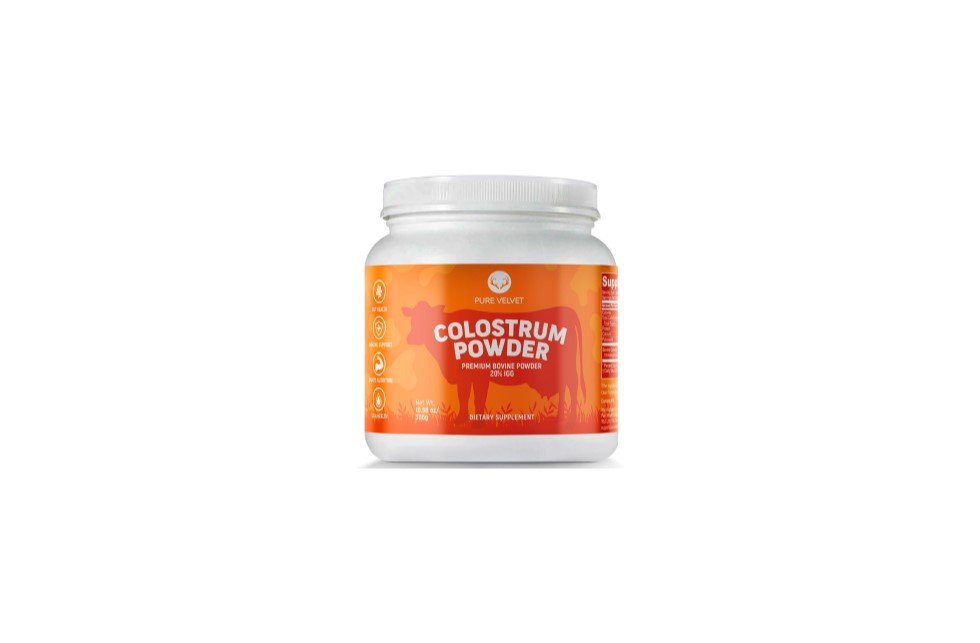
Pure Velvet Colostrum Powder is a supplement that offers countless benefits for those looking to improve their overall health and wellness. Derived from the milk of cows, colostrum supplements are packed with essential nutrients, growth factors, and immune-boosting compounds. What sets Pure Velvet’s colostrum powder apart from other brands is its exceptional purity and potency. Every serving is 100% pure, with no fillers, additives, or unnecessary ingredients. This means that you are getting the maximum benefits from every scoop. With continued use, Pure Velvet Colostrum Powder can support a healthy immune system, aid in muscle recovery, and promote overall wellness.

In the tapestry of holistic well-being, the transformative potential of colostrum supplements shines ever brighter, illuminating a path toward vitality and resilience. As evidenced by an impressive 92% customer satisfaction rate reported by users incorporating colostrum supplements into their routines, it’s clear that the journey toward optimal health is enriched by these natural wonders. Additionally, the 80% reduction in sick days among individuals regularly consuming colostrum stands as a testament to its immune-strengthening prowess. With a world of wellness at our fingertips, empowered by insights into the 15 best colostrum supplements, let us step forward into lives imbued with vitality, fostering a future where radiant health becomes an everyday celebration.


  • Father and son to cycle 9,600 miles to visit all 30 MLB parks and raise $1M for a children’s hospital
    Ethan and Scott Pesch are raising money for St. Jude Children's Research Hospital.Photo credit: The Pesch Family & St. Jude Children's Research Hospital
    ,

    Father and son to cycle 9,600 miles to visit all 30 MLB parks and raise $1M for a children’s hospital

    “This is well beyond us. It’s about everybody. Especially those young kids.”

    Thirty-two years ago, Scott Pesch and a group of track-and-field friends from college took on a crazy challenge: cycling across the United States to visit every Major League Baseball stadium. They came up eight stadiums short due to a player strike, but still raised $15,000 for their local Boys & Girls Club.

    On March 26, Scott and his son Ethan, a recent graduate of Arizona State University, will recreate the ride, this time visiting all 30 MLB stadiums with a loftier goal: raising $1 million for St. Jude Children’s Research Hospital.

    On the Bike 2 Ballparks ride, the Pesches will be joined by friends and cyclists across the country who wish to take part. The journey begins in Seattle, Washington, for a Mariners–Cleveland Guardians matchup and ends on September 26 in Miami, Florida, with a Marlins–Atlanta Braves game.

    Finding a beneficiary for the ride was an emotional experience

    The Peschs’ decision to ride for the children’s hospital came after experiencing its work firsthand when Scott’s beloved professor at Cal Poly Humboldt, Dr. Richard Stull, lost his 12-year-old daughter to cancer. “It’s such a memorable ride, you have to do it for something. St Jude’s Children’s Research Hospital, that’s who we chose,” Scott said in a statement. “And I’m so glad we did. Because, man, that team over there is so fantastic.”

    The Pesch family visited the hospital, and the experience humbled them. “The campus is very impressive,” Scott told Upworthy. “The fact that the scientists and doctors are there, looking to cure cancer and treat cancer. And then you walk into the children’s hospital. That’s the most sobering spot. It just stands you up. It’s crazy.”

    Map of the United States showing where the Major League Baseball teams are located.
    The Peschs’ journey to all 30 ballparks. Photo credit: Bike 2 Ballparks

    Ethan has been training for more than two months to get in shape for the ride of a lifetime. “I’ve been cycling four or five times a week, probably since January, just trying to get into physical shape,” he told Upworthy.

    “Physiologically, you’re sore. Your butt’s going to hurt. You know, you just have to get used to these things,” Scott added. “But psychologically, you just have to mentally prepare for what we’re doing.”

    The Pesches have some added motivation to get them through the toughest parts of their trip: the children at the hospital. “It kind of puts things in perspective,” Scott said. “If you’re having a bad day, just think about the kids of St. Jude who are the beneficiaries.”

    One place they’ll need all the encouragement they can get is en route to Coors Field. “The biggest elevation gain is going to be going up to Denver, Colorado, when you have to climb the Continental Divide,” Scott said.

    The duo is most excited about games in San Francisco and Chicago

    The father-and-son team can’t wait for their third game in San Francisco, where they’ve been invited to throw out the first pitch at Oracle Park. “That is something that is like a dream come true. I grew up a Giants fan,” Ethan said.

    Scott is excited to relive one of his favorite moments from the ’94 ride. “I think the part that I’m looking forward to is being at Wrigley Field on the Fourth of July,” he said. “Oh, wow. Because we had that same schedule back in ‘94. We were in Chicago. We watched the Cubs play the St. Louis Cardinals on the Fourth of July.”

    The Pesch family at Wrigley Field in Chicago.
    The Pesch family. Photo credit: The Pesch family (used with permission)

    They also can’t forget about the food. Given how many calories they’ll be burning on the road, they’re free to eat and drink whatever they like at the ballpark. “I’m looking forward to going to San Diego, and they have these carne asada fries,” Ethan said. “I lived in San Diego for a little bit, and every time I went to a game, that’s all I was getting because it’s good.”

    Ultimately, the 9,600-mile trip is all about supporting children and their families in the fight of their lives. “We have even more purpose to get this thing done because of those young kids who have cancer. And it just breaks your heart. It just does,” Scott said. “But it really wakes you up. And there’s more out there than just us. This is well beyond us. It’s about everybody. Especially those young kids.”

    The Peschs’ ride is open to anyone who wants to join and support St. Jude Children’s Research Hospital. You can track their progress across the country at Bike 2 Ballparks and follow the ride on Instagram. If you’d prefer to donate, you can do so here.

  • Dad remakes AC/DC’s ‘Thunderstruck’ using only a year’s worth of baby’s recorded sounds
    Rock star babyPhoto credit: Canva

    Few things bring as much joy to a parent’s heart as the adorable sounds their babies make. But back in 2024, when a dad with a vision, a camera and a year’s worth of footage used those sounds to recreate one of the most iconic rock songs ever…let’s just say joy alone doesn’t quite cover it.

    In one of the most epically adorable and adorably epic song renditions ever, dad and video editor Matt MacMillan spliced together tiny snippets of his baby’s sounds to make AC/DC’s “Thunderstruck.” And it’s one of those things you just have to see to believe.

    Below, enjoy little Ryan singing a jaw-droppingly awesome babyfied version of “Thunderstruck.” Nothing but awe and respect for a guy who takes a whole year to get just the right sounds at the right pitches and figures out to put them together to create this masterpiece:

    Making a sneeze into a cymbal? Are you kidding me?

    People have been understandably impressed, with the video getting over 11 million views.

    “Ryan becomes the vocalist of AB/CD.”

    “I need a cover in 17 years whenever he is an adult singing over the instrumentals lol”

    “‘I recorded my son for a full year. I edited for the next 5′”

    “The fact that he genuinely found clips that fit every note he need instead of just pitch shifting like most videos like this do really makes this stand out. Good job he’s adorable.”

    “This dude had a kid just so he could make this song. What a Legend.”

    “Other parents: ‘I want my child to create masterpieces.’ This guy: ‘my child IS the masterpiece.’”

    “I’m a residential plumber and I’ve had an absolutely horrible day on a work shift that’s lasted 13 hours and even after crawling through human poop all day this made me smile laugh and giggle like a small baby.”

    Believe it or not, it’s not autotuned or pitch-shifted. Those notes are all baby.

    The real question is: How did he do it? This isn’t just some autotune trick. MacMillan really did it all manually, going through each video clip of Baby Ryan, organizing them by pitch and figuring out what notes they were.

    Perhaps most impressively, he didn’t even know the notes of “Thunderstruck” to begin with and doesn’t really read music. He had to pluck the song out on the piano and then match those notes with his baby’s sounds.

    As he wrote, “It took forever.” But he shared an inside look at how he did it here:

    Seriously, doesn’t seeing how he did it make it even more impressive? Pure human creativity and perseverance on display. What a delightful gift Ryan will have for the rest of his life. Much better than a standard baby book.

    Baby Ryan’s “Thunderstruck” was not MacMillan’s first foray into baby covers, either. He previously created a rendition of “Carol of the Bells” using Baby Ella’s sounds, and it is just as impressive (and adorable) as Baby Ryan’s. Here’s one to add to your holiday playlist: 

    Here’s to the humans who wow us with their ambitious, innovative projects that exist purely to bring a smile to people’s faces.

    You can follow Matt MacMillan on YouTube.

    This article originally appeared last year.

  • Dad shares the unique 7-point checklist his kids must finish before they get screen time
    (L) Two young teens do the dishes; (R) Young boy plays on a cell phonePhoto credit: Canva
    ,

    Dad shares the unique 7-point checklist his kids must finish before they get screen time

    A psychiatrist and father of seven went viral for sharing the typed checklist his kids must complete before they’re allowed anywhere near a phone or tablet, and even plenty of adults are saying they need someone to do this for them.

    We know too much screen time is not good for us. We also know that younger folks are particularly susceptible to screen addiction. Crucially, teachers and psychologists have been sounding the alarm about the effects of too much screen time on young people for years now. Reports flood in every year that more and more people in schools struggle to do anything without ChatGPT’s help, that they’re way behind in learning fundamental skills, that they’re disrespectful and lazy.

    Every generation has been “concerned” about the one that comes directly after them, bemoaning that they don’t have the same values or that their brains are being rotted by Elvis, rock and roll, radio, or television. So some of the doom and gloom is probably overstated, but there’s truthfully never been anything quite like iPhones loaded up with TikTok and other forms of hyper-dopamine-fueled social media.

    Still, it’s unlikely that a young person, or any person, really, can exist in modern society without some level of access to screens. So parents need to effectively help teens and tweens manage the habit and offset the dangers as much as humanly possible.

    screen time for kids, parenting tips, phone addiction, healthy habits for teens, Richard Wadsworth
    A young girl plays on the monkey bars. Photo credit: Canva

    Psychiatrist, author, and dad of seven Richard Wadsworth recently went viral after showing his own personal strategy for getting his kids to do something other than scrolling.

    It could be the perfect solution for parents to not only break screen addiction, but instill some other healthy ritual as well.

    In the clip, we first see Wadsworth’s tween son doing deltoid exercises with dumbbells. Which he apparently got up at 6:30 am to do. What could possibly incentivize practically anyone, let alone a preteen to wake up at the crack of dawn to lift weights? Was his dad forcing him to exercise?

    No. Wadsworth went on to show a typed out list of various tasks that must be performed before his kids even think about setting eyes on a phone or tablet. The list included a short workout in the form of one mile on the treadmill or 20 minutes of another exercise.

    Wadsworth explained that rather than enforcing strict rules, this method provides necessary structure without taking away choice.

    “I’m not forcing my son to exercise every day, but I am setting rules and boundaries around his screen time,” he said. “He decided he wanted to have more time after school to play with his friend. And so in order to do that, he realized that he’d need to wake up a little bit earlier and exercise in the morning.”

    In addition to exercise, the list included domestic chores like cleaning the bedroom and shared areas, finishing homework, doing laundry, preparing for the next day…and, perhaps most importantly…making sure the toilet is flushed. (Not cleaned, just flushed. Parents everywhere can relate.)

    “We have all of their screens locked away. And if they want access to any of them, they need to come ask us and we’ll go through the list together. And they’re not getting their screens until the list is done,” Wadsworth continued.

    He also drew a comparison between screen time and sugary sweets, noting how most parents probably wouldn’t routinely allow kids to eat dessert before a nutritious meal, but instead allow it to be a treat.

    screen time for kids, parenting tips, phone addiction, healthy habits for teens, Richard Wadsworth
    Two young women look at a cell phone. Photo credit: Canva

    “Just as you would hopefully have your kids eat dinner before they had their dessert, you should probably be having them do something positive…before they get on their screens.” Hence why he tries to get his kids to complete their list before going to the phone.

    And in case you’re wondering how Wadsworth’s son feels about all this, he reported having “so much energy for school” feeling “so much better” since his dad introduced the to-do list.

    Bottom line: kids need guidance from their parents. And Wadsworth recommends clear cut boundaries to help them develop good habits, “because if you don’t do it, nobody else is.”

    Wadsworth’s parenting hack was well received, with quite a few grown adults saying they could benefit from this type of boundary-setting in their own life.

    “Even I’m addicted to this screen. I have to tell myself to put it down all the time and I’m a grown adult. Kids definitely need this!” one user wrote.

    Another added, “I need someone to do this for me (I’m 28).” To which Wadsworth replied, “we all need parents sometimes.”

    “We implemented a similar plan, and I was surprised at how easy they took to it. It’s almost like kids need structure. What a concept!” another user remarked.

    While the inclusion of exercise on the To-Do List might be controversial, the facts don’t lie. Most kids and teens aren’t getting enough daily physical activity. Kids don’t play outside or walk to school anymore, either. So if they’re not exercising, they’re probably not moving much at all. And that’s just as dangerous as too much TikTok.

    Even with ongoing uncertainty around TikTok, social media isn’t going anywhere. The sooner parents can implement guidelines like these, the better equipped their kids will be at balancing tech savviness with tech dependence.

    This article originally appeared last year. It has been updated.

  • Parents experiment with 4 p.m. dinners and are blown away by the results
    A family happily eating dinner.Photo credit: Canva
    ,

    Parents experiment with 4 p.m. dinners and are blown away by the results

    “The most underrated hack for a smoother evening.” 

    Can having an early family dinner really be the key ingredient to a smooth evening? According to one family, the answer is a resolute yes. 

    In a now-viral Instagram reel, a mom of two named Lexi Poer films her husband, Jordan, making their kiddos a delicious meal—set to be served at 4 p.m. on the dot, apparently.

    4 p.m. dinners: The ultimate energy boost

    Poer told Newsweek that when dinner was typically served at the more conventional time of 6:30 or 7 p.m., her two daughters would have “meltdowns,” leaving her feeling like “we were failing at something that was supposed to be the centerpiece of family connection.”

    dinner for kids, health eating, parenting
    Screenshot

    However, after accidentally serving dinner early one day and noticing a huge difference, the couple wondered what might happen if the change became a permanent routine. The rest is history. Now, she calls 4 p.m. dinners “the most underrated hack for a smoother evening.”

    Why it works

    In her caption, Poer explains why she thinks it works.

    For one, kids “walk through the door starving.” When given a proper meal, they’re less likely to need a snack and have the energy to do their homework and extracurricular activities.

    Second, it leaves more time for “winding down” with showers, books, and simply “being” without having to do anything.

    dinner, school, parents
    Screenshot

    Poer has noticed that both of these factors have led to her two daughters being “genuinely nicer.” “A well-fed kid is a completely different kid,” she said.

    Earlier dinners have spared the couple from standing over a stove when the entire household is, as she put it, “overstimulated and hangry.” Everybody wins.

    In the comments, other parents agreed that early dinners were transformative

    “We’ve started doing this for the last 8 months. It’s definitely a game changer and takes off tension to ease into bedtime.”

    “We’ve been doing 430p dinners since our little one was 1 (she’s now almost 4) and it’s been the best. Dinner and then time to still go out to the beach or skate park before coming home for bath and bed. Bellies full and a cleaner home.”

    “This is so funny, we automatically do this anyway and then find we’re not hungry at 6-7 pm. It works well!”

    “Yes! I served dinner at 4 pm for years. The kids just couldn’t hold on any longer. A lot of meltdowns quelled due to changing the time of dinner (they got off the bus at 4-4:30)”

    early dinner, family, kids
    Screenshot

    Of course, even Poer acknowledged that for many working parents, this simply isn’t feasible—especially when the goal is to eat together as a family. Even her own household doesn’t do it every day. The fact that society generally doesn’t support a lifestyle where families can do this sort of thing, no matter how beneficial it may be, is a separate conversation. Still, the principle behind her idea remains: to experiment with “getting ahead of the hunger spiral,” as she told Newsweek.

    It works even if that means serving dinner a few minutes before your normal time. You can certainly reconsider a 6 or 7 p.m. dinner if the only reason you’re doing it is because it seems “normal” or traditional. One size doesn’t have to fit all, so by all means, do whatever brings a bit more peace to your home.

  • Toddler uses lawyer-like logic to make the case for taking candy from strangers
    A child thinking and holding his chin. Photo credit: Canva
    ,

    Toddler uses lawyer-like logic to make the case for taking candy from strangers

    His mom’s attempts to teach “stranger danger” backfired.

    Teaching children about “stranger danger” is a tough paradox. On one hand, you want your child to be comfortable and friendly around others—after all, a lot of folks we end up calling friends started out as strangers. On the other hand, they need to be careful not to interact with those who may seek to harm them.

    An easier lesson to teach is not to take candy from strangers. You can be friendly with some strangers, but never take candy from them under any circumstances.

    A young child on TikTok named Hudson, the son of pediatrician Megan Hall, is going viral for the lawyer-like way he responds when his mother tells him to stop taking candy from strangers. His logic: If you know someone’s name, they aren’t a stranger.

    @hall_fam_

    Long video but trying to teach my #toddler about taking #candy from strangers at the park. #toddlersoftiktok #fyp #funny

    ♬ original sound – Hall Fam

    It all began when Hudson took a gummy candy from a child at the park and put it in his mouth. “You can’t keep taking snacks from strangers at the park,” Hall told her son. But Hudson wanted a clearer definition of what “stranger” actually meant. “There are no strangers here,” Hudson calmly responded, adding that he knew the name of the child who gave him the candy.

    Then Hudson tried to flip the script on his mother, questioning the very nature of what it means to be a stranger. “Are you a stranger?” he asked his mom, who gave a prompt no. “But my dad tries to be a stranger to me,” Hudson said, ending the debate.

    gummy candy, gummy bears, candy, red gummy bear, yellow gummy bear
    Three gummy bears. Photo credit: Canva

    Hudson is friends with everyone when he’s at the park

    Based on what Hall told People, it looks like she’ll be having this debate for quite some time—and may need to take extra-special care at the park.

    “He has always been a really friendly and social child who genuinely believes everyone is—or should be—his friend,” she told People. “We jokingly refer to him as the mayor because he likes to talk to everyone, anywhere we go.”

    A commenter wrote, “His logic he met them, exchanged names, and played w the kids = no longer strangers.”

    “He’s about to be real confused on the rules come Halloween,” another added.

    Another loved his nonchalant nature: “The fact that he’s still tasting every ingredient in the candy while you’re warning him.”

    kids in park, kids on playground, happy kids, playing kids, children at park, kids on bridge
    Kids playing at the park. Photo credit: Canva

    How should parents discuss stranger danger with their children?

    “The phrase ‘stranger danger’ can be misleading. While it’s true that we need to teach our children to be cautious around people they don’t know, the reality is that not all strangers are harmful. Labeling all unfamiliar people as dangerous can create unnecessary fear and confusion,” Nature Therapy, a family therapy practice based in Illinois, wrote on its blog. “Statistically, most child abuse cases involve someone the child already knows. This is where the concept of ‘tricky people’ becomes more effective. It shifts the focus from fearing all strangers to identifying behaviors that are inappropriate or unsafe, regardless of whether the person is a stranger or someone familiar.”

    The debate may have been about the nuances of stranger danger, but it’s also a great example of how open-minded and kind-hearted young kids can be.

    “Children are innocent, hate is taught,” Hall said. “Children see the best in people and never think anyone would do something to harm them, and I wish this were true.”

  • She “nagged” her husband about the car seat. Moments later, he called her from a crash.
    A baby strapped into the car seatPhoto credit: Canva
    ,

    She “nagged” her husband about the car seat. Moments later, he called her from a crash.

    She calls it her “annoying nagging mom voice” and it’s a real life-saver.

    On her first day back at work after maternity leave, Rebecca Tafaro Boyer wasn’t ready to be apart from her 3-month-old. She asked her husband David to send her hourly updates on how baby William was doing without her.

    David was a good sport about it. He texted throughout the day, including a photo of William buckled into his Britax car seat as they headed out to Walgreens. Rebecca looked at the photo and immediately texted back. The straps were too loose. The chest clip was too low. “And because I know my husband,” she later wrote on Facebook, “I’m sure that he laughed at me and rolled his eyes before tightening the car seat and fixing the chest clip.”

    Fifteen minutes later, her phone rang.

    “Honey, we had a car wreck. We are fine, but the car is going to be totaled.”

    Less than three miles from their Memphis home, another driver had pulled into traffic to turn left and David hadn’t had time to stop. He hit the front passenger side door at nearly 50 miles per hour. David ended up on crutches with three shattered bones in his foot and three dislocated toes. The car was a total loss.

    William didn’t even wake up.

    “My precious little bundle of joy was so well restrained in his car seat THAT HE DIDN’T EVEN WAKE UP,” Boyer wrote. “Even with the impact of the two cars, William only received a minor jolt — so insignificant that he was able to continue on with his nap, and then spend the next two hours flirting with nurses in the Le Bonheur ED.”

    Boyer posted the story on Facebook at a friend’s request, expecting it to stay within her circle. She was stunned when it was shared more than 45,000 times. She told TODAY that her goal was simple: car seats save lives, and the difference between a properly secured infant and a loosely buckled one can be the difference between a nap and a tragedy.

    “I truly believe that the reason my family is at home sitting on the couch with a pair of crutches instead of down at the hospital is because of my annoying nagging mom voice,” she wrote.

    When readers identified the Britax BSafe 35 as the seat that protected William, the company reached out to offer a free replacement — once a car seat has been in a crash, it can’t be used again. Boyer and David had already replaced it through insurance, so she asked Britax to donate a seat to the Forrest Spence Fund, a Memphis nonprofit that helps families of critically ill children with everyday needs. Their original seat went to the NICU at Le Bonheur Children’s Hospital to be used in car seat safety education for new parents.

    As for David: “My husband says, ‘I’m never going to live this down, am I?’” Boyer said, laughing.

    He is correct.

    This article originally appeared four years ago.

  • Historian debunks the notion that grief in ‘Hamnet’ was portrayed unrealistically for the time
    Were medieval parents less attached to their children?Photo credit: Living History by Dr Julia Martins/YouTube

    The majority of parents today have never known the pain of losing a child. Sadly, that was not the case throughout history. Before the 20th century, many parents could expect one or more of their children to die before reaching adulthood, usually due to infectious disease.

    As in the book it was based on, the film adaptation of Hamnet centers on parental grief. Even if you haven’t seen the movie, there’s a good chance you’ve seen the tear-streaked aftermath of others who have.

    Jessie Buckley’s Oscar-winning performance as a grieving mother wrecked audiences far and wide. Her improvised, guttural scream after her child’s death went straight to the heart. Her calling the scream “ancient” couldn’t feel more accurate.

    @screenplayed

    Jessie Buckley talks about this moment in Hamnet wasn’t in the script. It came up on the day. Buckley is nominated for an Academy Award for her performance. What do you think of the film? 🎥 #hamnet #jessiebuckley #academyawards #oscars #filmtok

    ♬ original sound – Screenplayed

    However, some people have questioned whether the film’s intense portrayal of grief is realistic for the time period. Naturally, we would expect a child’s death to devastate a parent today. But was that the case historically? Did parents mourn the loss of a child as hard or as long when nearly half of children died? Would knowing you were likely to lose a child, or multiple children, make their deaths easier to handle?

    The idea that parents hundreds of years ago weren’t as emotionally attached to their kids isn’t new, even in academic circles. Dr. Julia Martins, a historian, explored the debate in a YouTube video titled “Did They Love Their Children? The History of Grief.”

    It began with French historian Philippe Ariès, who published a book in 1960 about childhood through the centuries.

    “Ariès argued that the concept of childhood as a distinct, protected phase of life is a modern invention that only emerged around the 17th century,” Martins said. “Children were understood as mini adults and, from the time they were around seven, they mixed with the adult world. He suggested that, because of the incredibly high infant mortality, parents were forced to be emotionally distant and not get too attached to their children, who might not live to see their first birthday. This indifference would be a defense mechanism. Expecting to lose half the children you had would make you not as emotionally invested in them.”

    In his 1977 book The Family, Sex and Marriage in England 1500–1800, historian Lawrence Stone also posited that colder, more pragmatic family relationships were the norm. In his assessment, the affectionate, loving bonds we associate with family today developed late in our history.

    However, by the 1980s, historians began to question this idea. Martins pointed out that Ariès relied on paintings from the past to draw his conclusions.

    For her 1983 book Forgotten Children, historian Linda Pollock focused her research on diaries and autobiographies from the 16th to 19th centuries. She argued that parents have always had intense love for their children and felt a deep sense of loss when they died.

    Martins’ own examination of the historical record has led her to the same conclusion. The difference, she suggested, lies in how parents coped with the pain of losing a child.

    “We forget how deeply religious early modern Europe was,” Martins said. “Could this indifference be religious resignation, instead of lack of affection? In a world where people understood death as God’s will, parents might console themselves thinking things like ‘The Lord gave, and the Lord has taken away.’ That doesn’t mean they weren’t grieving, but rather that they were focusing on the child being in heaven and accepting God’s will. Ariès interpreted this as a lack of feeling. But you could argue that this was a coping strategy for deep pain. The grief was real; the cultural script for expressing it was different.”

    And of course, grief is and has always been an individual experience. Even in Hamnet, the parents express their grief differently, despite losing the same child.

    People in the comments on Martins’ video reiterated how historical artifacts demonstrate expressions of parental grief:

    “Sometimes I find myself thinking of the skull of the ancient Greek child with the crown of painted ceramic flowers on her head. Someone loved that child to the point that they couldn’t bear the thought of those flowers wilting.”

    “Whenever I hear the claim that people didn’t grieve their children, I think of the ancient graves we find where children are so carefully prepared for burial, with a toy (obviously made by hand, so carrying a time cost and not quickly replaceable) buried with them. That doesn’t seem like the actions of a parent who doesn’t care.”

    “My favorite example about children always being children are ancient Egyptian ‘hot wheels’: toys shaped like a tiny chariot or wagon with wheels on it, and holes to put a string through… I can’t erase the mental image I got of an ancient Egyptian child thousands of years ago running around lugging A TOY CAR around, forgetting or breaking it and crying to parents, or being happy about getting a new one as a holiday gift, nothing really changed.”

    “Cicero was inconsolable when his daughter Tullia died. Julius Caesar, who had also lost his daughter Julia, his only child, wrote to him to offer sympathy. They had a whole correspondence on grief. Cicero built a temple (lost today) to the memory of his daughter. The idea that parents from the past did not care is ludicrous.”

    “It always felt to me so strange to figure that people in the past ‘wouldn’t care so much’ for their kids because a lot of children died. Two things can be true at the same time. People surely knew that lots of people died in a very early age AND that doesn’t diminish any kind of bond or attachment. Ironically, it’s this theory itself that IS detached (from reality): humans are social creatures!”

Culture

Why those epic ’80s wooden playgrounds suddenly disappeared

Finance

Frugal people share 20 smart financial decisions that saved them $10,000 or more

Life Hacks

College grads get real about how drastically job hunting has changed and what’s helping them survive

A safe, stable home can change lives for the better. Here’s how Habitat for Humanity wants to make that possible for everyone.