A previous episode of “The Daily Show” addressed two hot-button issues at the same time: abortion and gun control.
It was one of the earliest tests for new host Trevor Noah, and he pretty much knocked this one out of the park. The segment began with a discussion about the pro-life movement’s laser focus on making completely legal abortions really, really hard to get.
Noah started with the movement’s push to defund Planned Parenthood on what turned out to be deceptive, altered, and debunked videos. And even he had to admit, pro-lifers are pretty great at what they do, given that they were able to get Congress to hold hearings based on … nothing, really.
Of course, not all people in the pro-life movement are against gun control, and not all people who are against gun control are pro-life, but there is a certain significant — and confusing — overlap on those two issues that is worth investigating.
So Noah turned his attention to the mass shooting in Oregon — the 294th of the year — and how we as a country are once again discussing gun control.
If pro-lifers are so concerned about the preservation of all lives, Noah wonders, then why don’t they support common-sense gun control measures?
There’s no need for doctored videos. Gun violence statistics exist (and they’re terrifying). Imagine if the pro-life movement rallied behind that?
Noah then brilliantly compared reactions from two “pro-life” presidential candidates on the Oregon shooting and on abortion.
First up was Jeb Bush on what happened in Oregon. He urged against reactionary gun legislation. “Stuff happens,” he said.
But compare that to his recent comments on abortion — which is, again, totally legal:
Now that’s a response fitting for a mass shooting.
Noah looked over to candidate Carly Fiorina for her thoughts on the Oregon shooting. Similar to Bush, Fiorina cautioned against taking any action on gun control until we know more about what happened.
Now compare that to her comments on abortion:
It’s not clear whether pro-lifers are waiting for an even 300 mass shootings in 2015 — which, at the pace we’re going, should be sometime in the next month or so — before taking action. But in the meantime, it’s really hard to see the “pro-life” rhetoric as anything more than hypocrisy.
In closing, Noah posed this to pro-lifers: If you actually care about lives, do something about guns.
Redirect the energy, lobbying, and rhetoric spent on fighting a more than 40-year-old Supreme Court decision toward sensible steps to curb gun violence.
“They just need to have a superhero’s dedication to life,” Noah says. “Because right now, they’re more like comic book collectors: Human life only matters until you take it out of the package, and then there’s nothing left.”
In a small village in Pwani, a district on Tanzania’s coast, a massive dance party is coming to a close. For the past two hours, locals have paraded through the village streets, singing and beating ngombe drums; now, in a large clearing, a woman named Sheilla motions for everyone to sit facing a large projector screen. A film premiere is about to begin.
It’s an unusual way to kick off a film about gender bias, inequality, early marriage, and other barriers that prevent girls from accessing education in Tanzania. But in Pwani and beyond, local organizations supported by Malala Fund and funded by Pura are finding creative, culturally relevant ways like this one to capture people’s interest.
The film ends and Sheilla, the Communications and Partnership Lead for Media for Development and Advocacy (MEDEA), stands in front of the crowd once again, asking the audience to reflect: What did you think about the film? How did it relate to your own experience? What can we learn?
Sheilla explains that, once the community sees the film, “It brings out conversations within themselves, reflective conversations.” The resonance and immediate action create a ripple effect of change.
MEDEA Screening Audience in Tanzania. Captured by James Roh for Pura
Across Tanzania, gender-based violence often forces adolescent girls out of the classroom. This and other barriers — including child marriage, poverty, conflict, and discrimination — prevent girls from completing their education around the world.
Sheilla and her team are using film and radio programs to address the challenges girls face in their communities. MEDEA’s ultimate goal is to affirm education as a fundamental right for everyone, and to ensure that every member of a community understands how girls’ education contributes to a stronger whole and how to be an ally for their sisters, daughters, granddaughters, friends, nieces, and girlfriends.
Sheilla’s story is one of many that inspired Heart on Fire, a new fragrance from the Pura x Malala Fund Collection that blends the warm, earthy spices of Tanzania with a playful, joyful twist. Here’s how Pura is using scent as a tool to connect the world and inspire action.
A partnership focused on local impact, on a global mission
Pura, a fragrance company that recognizes education as both freedom and a human right, has partnered with Malala Fund since 2022. In order to defend every girl’s right to access and complete 12 years of education, Malala Fund partners with local organizations in countries where the educational barriers are the greatest. They invest in locally-led solutions because they know that those who are closest to the problems are best equipped to solve and build durable solutions, like MEDEA, which works with communities to challenge discrimination against girls and change beliefs about their education.
But local initiatives can thrive and scale more powerfully with global support, which is why Pura is using their own superpower, the power of scent, to connect people around the world with the women and girls in these local communities.
The Pura x Malala Fund Collection incorporates ingredients naturally found in Tanzania, Nigeria, Pakistan, and Brazil: countries where Malala Fund operates to address systemic education barriers. Eight percent of net revenue from the Pura x Malala Fund Collection will be donated to Malala Fund directly, but beyond financial support, the Collection is also a love letter to each unique community, blending notes like lemon, jasmine, cedarwood, and clove to transport people, ignite their senses, and help them draw inspiration and hope from the global movement for girls’ education. Through scent, people can connect to the courage, joy, and tenacity of girls and local leaders, all while uniting in a shared commitment to education: the belief that supporting girls’ rights in one community benefits all of us, everywhere.
You’ve already met Sheilla. Now see how Naiara and Mama Habiba are building unique solutions to ensure every girl can learn freely and dare to dream.
Naiara Leite is reimagining what’s possible in Brazil
Julia with Odara in Brazil. Captured by Luisa Dorr for Pura
In Brazil, where pear trees and coconut plantations cover the Northeastern Coast, girls like ten-year-old Julia experience a different kind of educational barrier than girls in Tanzania. Too often, racial discrimination contributes to high dropout rates among Black, quilombola and Indigenous girls in the country.
“In the logic of Brazilian society, Black people don’t need to study,” says Naiara Leite, Executive Coordinator of Odara, a women-led organization and Malala Fund partner. Bahia, the state where Odara is based, was once one of the largest slave-receiving territories in the Americas, and because of that history, deeply-ingrained, anti-Black prejudice is still widespread. “Our role and the image constructed around us is one of manual labor,” Naiara says.
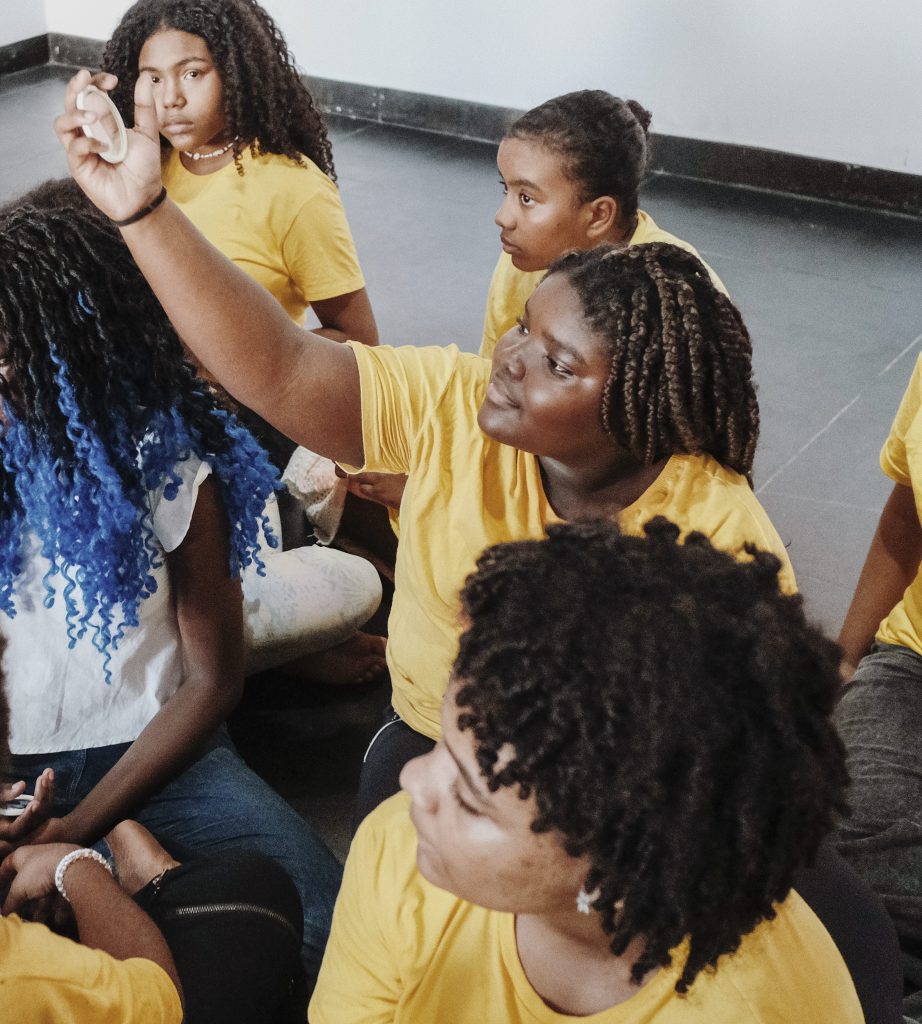
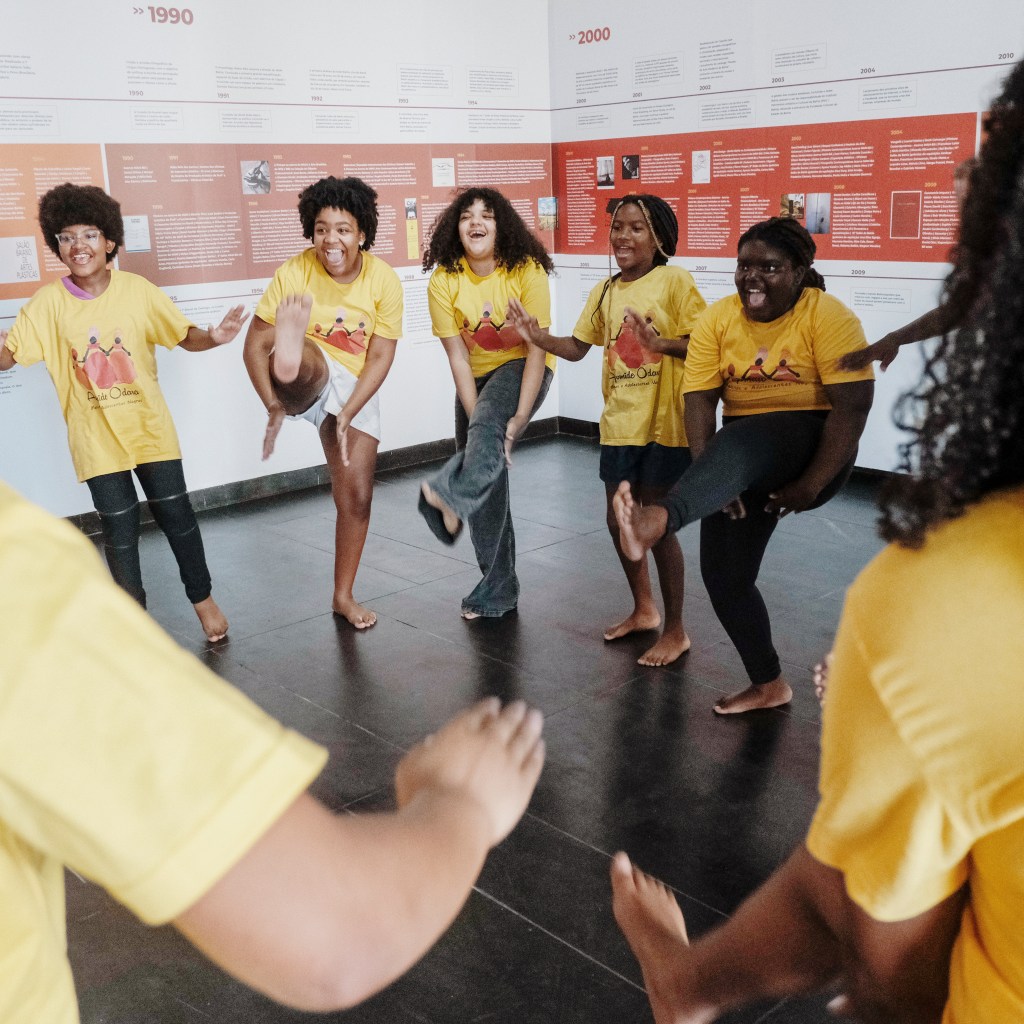
But education can change that. In 2020, with assistance from a Malala Fund grant, Odara launched its first initiative for improving school completion rates among Black, quilombola, and Indigenous girls: “Ayomidê Odara”. The young girls mentored under the program, including Julia, are known as the Ayomidês. And like the Pura x Malala Fund Collection’s Brazil: Breath of Courage scent, the Ayomidês are fierce, determined, and bursting with energy.
Ayomidês with Odara in Brazil. Captured by Luisa Dorr for Pura
Ayomidês take part in weekly educational sessions where they explore subjects like education and ethnic-racial relations. The girls are encouraged to find their own voices by producing Instagram lives, social media videos, and by participating in public panels. Already, the Ayomidês are rewriting the narrative on what’s possible for Afro-Brazilian girls to achieve. One of the earliest Ayomidês, a young woman named Debora, is now a communications intern. Another former Ayomidê, Francine, works at UNICEF, helping train the next generation of adolescent leaders. And Julia has already set her sights on becoming a math teacher or a model.
“These are generations of Black women who did not have access to a school,” Naiara says. “These are generations of Black women robbed daily of their dreams. And we’re telling them that they could be the generation in their family to write a new story.”
Mama Habiba is reframing the conversation in Nigeria
Centre for Girls' Education, Nigeria. Captured by James Roh for Pura
In Mama Habiba’s home country of Nigeria, the scents of starfruit, ylang ylang and pineapple, all incorporated into the Pura x Malala Collection’s “Nigeria: Hope for Tomorrow,” can be found throughout the vibrant markets. Like these native scents, Mama Habiba says that the Nigerian girls are also bright and passionate, but too often they are forced to leave school long before their potential fully blooms.
“Some of these schools are very far, and there is an issue of quality, too,” Mama Habiba says. “Most parents find out when their children are in school, the girls are not learning. So why allow them to continue?”
When girls drop out of secondary school, marriage is often the alternative. In Nigeria, one in three girls is married before the age of 18. When this happens, girls are unable to fulfill their potential, and their families and communities lose out on the social, health and economic benefits.
Completing secondary school delays marriage, and according to UNESCO, educated girls become women who raise healthier children, lift their families out of poverty and contribute to more peaceful, resilient communities.
Centre for Girls’ Education, Nigeria. Captured by James Roh for Pura
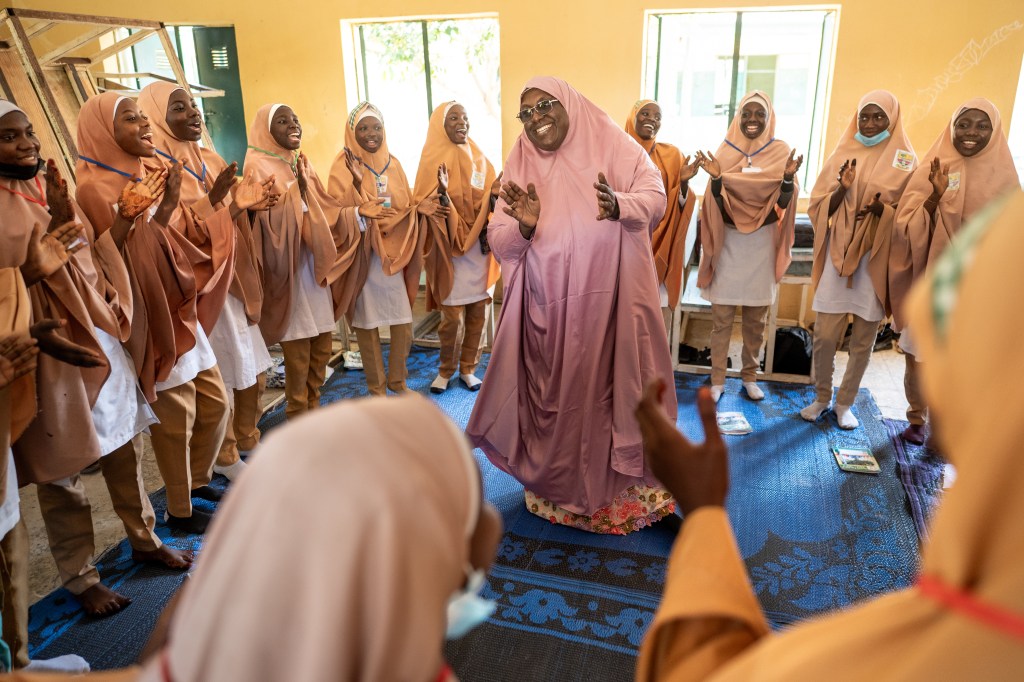
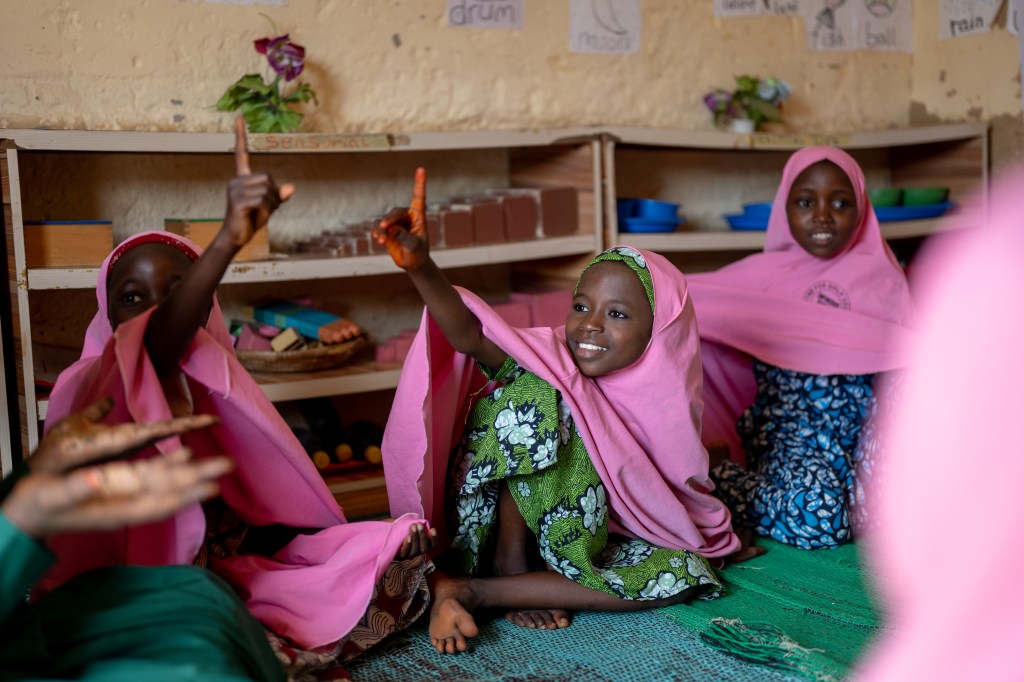
To encourage young girls to stay in school, the Centre for Girls’ Education, a nonprofit in Nigeria founded by Mama Habiba and supported by Malala Fund and Pura, has pioneered an initiative that’s similar to the Ayomidê workshops in Brazil: safe spaces. Here, girls meet regularly to learn literacy, numeracy, and other issues like reproductive health. These safe spaces also provide an opportunity for the girls to role-play and learn to advocate for themselves, develop their self-image, and practice conversations with others about their values, education being one of them. In safe spaces, Mama Habiba says, girls start to understand “who she is, and that she is a girl who has value. She has the right to negotiate with her parents on what she really feels or wants.”
“When girls are educated, they can unlock so many opportunities,” Mama Habiba says. “It will help the economy of the country. It will boost so many opportunities for the country. If they are given the opportunity, I think the sky is not the limit. It is the starting point for every girl.”
From parades, film screenings to safe spaces and educational programs, girls and local leaders are working hard to strengthen the quality, safety and accessibility of education and overcome systemic challenges. They are encouraging courageous behavior and reminding us all that education is freedom.
Experience the Pura x Malala Fund Collection here, and connect with the stories of real girls leading change across the globe.
It’s a good news/bad news situation for parents of young kids. The good news? Everyone wants to spend time with the kids! Grandparents, aunts and uncles, friends. They all want a relationship and lots of special moments with the little ones. It’s why people assume if you have family nearby that you’re “so lucky,” and that you’re overrun with free babysitting offers. Ha! If only.
The bad news comes down to one phrase: “When are you bringing them over?” Parents have been frustrated by the expectations of orchestrating stressful visits for generations — loading the kids in a car or on an airplane only to spend hours chasing them around in an un-baby-proofed environment and watching routines go to hell.
Now they’re sounding off on social media and airing their grievances.
Why visiting grandparents and other relatives is so challenging for parents
A mom recently took to Reddit to vent about everyone in her life wanting her to “bring the kids to them.”
“My parents live 30 mins away and always bug me about not coming to visit them,” she writes. They constantly ask, “Why don’t you bring our granddaughter to come see us?”
The post struck a nerve with parents, who chimed in with hundreds of passionate comments. The fascinating discussion highlights a few things that make arranging visits with young kids a potential nightmare for parents.
Grandparents’ houses are rarely childproofed
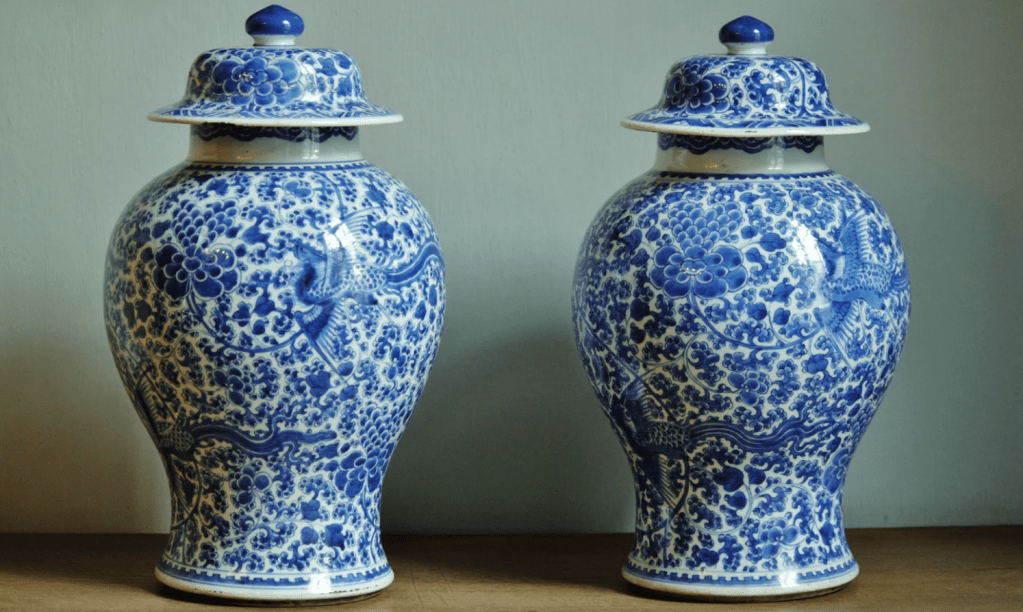
Grandparents love their breakable decor! Ceramic doo-dads, glass vases everywhere. They can’t get enough. In fact, they like to dedicate massive pieces of furniture only to housing their fine china, which they never use, but which is also extremely valuable and sentimental.
And while they should be able to decorate their house however they see fit (they’ve earned the right!) that doesn’t make it a good environment for toddlers and babies.
Blue and white porcelain vases on a shelf. Phot credit: Canva
“Last week was the last straw, I took my daughter to my parents and of course she went EVERYWHERE! flooded their toilet, broke a vase, and tried multiple times to climb their furniture,” the Reddit mom writes.
Parents in a foreign environment are on constant safety duty and can rarely sit down
Let’s be honest. Sometimes these “visits” are hardly worth the effort. After all, it’s hard to get much catch up time when you’re dutifully chasing your kid around.
“They don’t understand that my 3 yo … is absolutely wild,” writes another user in the thread. “She has no self preservation and nothing we do works. She doesn’t listen, she throws, she bites, she refuses to use the potty. It’s exhausting and then … they expect us to entertain them, when I’m trying to just keep my kid from jumping off the stairs and into an ER visit.”
A visit at the grandparents’ house is often not a fun catch-up time for mom and dad. It’s rare to get to sit down and have an adult conversation when they’re busy trying to play Safety Police. It’s common to leave one of these visits frustrating and like it wasn’t really a visit at all.
Even just putting the kids in the car for a 20-minute drive is more work than it seems
Taking the kids out of the house requires packing a bag, bringing extra clothes, loading up on snacks, etc.
It seems easy to “pop over” but it actually absorbs the majority of the day between prep, visit, and aftermath. In the case of the OP mom and her parents that are “just” 30 minutes away, that’s an entire hour of just driving, not counting any visiting time. If anyone’s ever driven with young kids, you know that’s an eternity! For a drive like that, you need snacks, you need entertainment. You may have to clean up spills, deal with traffic tantrums, or pull over to break up a fight. It’s really a lot of work.
Naps and routines go to hell
Parents with babies and toddlers know all too well — there is a price to pay for taking the kids out of the house for too long.
Chances are, the baby won’t nap in a strange environment and then you’re stuck with a cranky kid the rest of the night. You can and will try, bringing your little pack-and-play and your best intentions, but the process will be draining and probably unsuccessful.
And then guess what? You’re totally screwed when you go home later, yay!
Kids with special needs require even more consistency
Kids with autism or ADHD can really struggle outside of their zone of safety. They might become severely dysregulated, have meltdowns, or engage in dangerous behaviors. This adds even more stress to parents and makes the visits even less fun and satisfying in the end.
Explaining and mediating the generational divide
A man holds his granddaughter. Photo credit: Canva
Why is this a conflict almost all parents can relate to?
Is this a Boomer vs Millennials thing?
Some experts think that generational values and traditions might play a role.
“Many Boomers were accustomed to more traditional, hierarchical family dynamics, where visiting grandparents was a way for the younger generation to show respect,” says Caitlin Slavens, a family psychologist.
But that’s not to say this is a new problem. I can remember my own parents driving me and my brothers over an hour to visit my grandparents seemingly every other weekend, but very few occasions where they came to visit us. It must have driven my parents nuts back then!
Plus, it’s easy to forget that it’s hard for older people to travel, too. They may have their own issues and discomforts when it comes to being away from their home.
“But for today’s parents, balancing careers, kids’ routines, and the demands of modern parenting is a much bigger undertaking. Grandparents might not always see how childproofing their space or making the trip themselves could make a huge difference, especially considering how travel and disruption can impact younger kids’ moods and routines,” Slavens says.
“So yes, this divide often comes down to different expectations and life experiences, with older generations potentially not seeing the daily demands modern families face.”
Is there any hope for parents and grandparents coming to a better understanding, or a compromise?
“First, open conversations help bridge the divide—explain how much of a difference it makes when the kids stay in a familiar space, especially when they’re very young,” suggests Slavens.
“Share practical details about the challenges, like childproofing concerns or travel expenses, to help grandparents see it from a parent’s perspective. You might even work together to figure out solutions, like making adjustments to create a more child-friendly space in their home or agreeing on a shared travel plan.”
Ultimately, it’s a good thing when grandparents, friends, and other relatives want to see the kids. We all have the same goal. Just look at how incredible it can be when everything goes right:
“It’s helpful to approach the topic with empathy, focusing on everyone’s goal: more quality time together that’s enjoyable and low-stress for everyone involved. For parents, it’s about setting boundaries that work, and for grandparents, it’s about recognizing that flexibility can really show the parents that you are … willing to make adjustments for their children and grandchildren.”
Enjoyable, low-stress quality time is something everyone can get behind.
This article was originally posted two years ago. It has been updated.
Domestic violence survivors cheered on the winner of the 2024 Miss Kansas competition after she stood on stage and called out her abuser who showed up to the pageant. Before Alexis Smith was chosen from 26 participants in the state competition on June 8, 2024 to represent Kansas in the 2025 Miss America contest, she was asked to speak on stage about her Reclaimed Respect initiative.
“My vision as the next Miss Kansas is to eliminate unhealthy and abusive relationships,” Smith said. “Matter of fact, some of you out in this audience saw me very emotional because my abuser is here today. But that’s not going to stop me from being on this Miss Kansas stage and from representing as the next Miss Kansas. Because I, and my community, deserve healthy relationships. We deserve a domestic [violence] free life.”
Respect Reclaimed is about reclaiming your power and standing firmly in it. On the night of Miss Kansas, my journey took an unexpected turn when someone I have been healing from tried to disrupt my peace. Instead of falling into silence, I chose to live out my vision for a better world. I took back my power—not just for myself, but for my dreams and everyone watching and listening. This isn’t about shunning others; it’s about turning our pain into purpose and channeling it in a way that unifies and uplifts. I’m ready to use my story, tools, and resources to end unhealthy relationships in all forms. My voice and advocacy will empower everyone to reclaim their own power in their own unique way. I might be small in stature, but I stand tall in strength, purpose, and power with hopes of inspiring others to do the same. #fyp#abuse#miss#misskansas#missamerica#pageant#awareness#me#relationship#respect#tiktok
In the video shared on TikTok, the freshly-crowned Miss Kansas wrote, “Respect Reclaimed is about reclaiming your power and standing firmly in it. On the night of Miss Kansas, my journey took an unexpected turn when someone I have been healing from tried to disrupt my peace. Instead of falling into silence, I chose to live out my vision for a better world. I took back my power—not just for myself, but for my dreams and everyone watching and listening.”
She wrote that it wasn’t about shunning anyone, but about “turning our pain into purpose and channeling it in a way that unifies and uplifts.”
“I’m ready to use my story, tools, and resources to end unhealthy relationships in all forms,” she wrote. “My voice and advocacy will empower everyone to reclaim their own power in their own unique way.
I might be small in stature, but I stand tall in strength, purpose, and power with hopes of inspiring others to do the same.”
People who have experienced abuse themselves applauded her advocacy.
“As a victim of domestic violence I applaud you for speaking out!! I watched this 10 times!! I’m still getting bullied by his parents even with a no contact order. I plan on helping women like us as well.”
“WHAT A WOMAN. This is absolutely incredible. From one survivor to another, I am SO SO proud of you for reclaiming this moment for yourself. You will do amazing things “
“Incredibly brave of you. You just made a statement for all women. I appreciate you so much.”
A woman holds a sign that reads: “Love shouldn’t hurt.” Photo credit: Canva
“As an old survivor…I’m so damn PROUD OF YOU!! Love, A Stranger “
“We got to see you ACTIVELY showcasing your platform LIVE IN PERSON! My utmost respect to you Miss Alexis. This is beyond any crown, I cannot wait to watch your journey. As someone who grew up around domestic violence, I have chills watching you. You will always have a supporter in me. You absolutely ate that. “
“YAS GIRL! As a fellow survivor, you are an inspiration and I’m so proud of you for using your voice and showing your strength.”
“”I experienced emotional and psychological abuse for a very long time,” Smith shared with KMUW, “and it was recognizing that I was losing control over my own personal emotions, trying to save the emotions of someone else, and so to be able to save myself. I recognize that we don’t want to both go down together. I need to be able to leave this relationship. That way, I’m able to pursue a future, because you just never know what can happen to your partner or happen to yourself when you’re in those relationships.”
According to The Wichita Eagle, Smith uses her 19 years of experience as a ventriloquist to teach kids about healthy relationships with puppets as part of her Reclaimed Respect initiative. She also works full-time as a cardiothoracic ICU nurse. And she went on to compete at Miss America 2025 in Orlando in January, where Miss Alabama Abbie Stockard was crowned.
This article originally appeared two years ago.It has been updated.
No one wants to be unhappy or unhealthy at any age. But as we get older, health and happiness arguably play an outsized role in our quality of life. Sketchy health habits we may have gotten away with when we were younger catch up to us later in life. And what once made us feel happy may no longer be an option as we age.
So how do we stay both happy and healthy throughout our lives?
Dr. Arthur C. Brooks, a social scientist at Harvard University and a leading researcher on happiness, has studied this question. Thanks largely to the 85-year-long Harvard Study of Adult Development, the longest-running study on happiness, we can better understand which qualities and habits are associated with being both happy and healthy as people age.
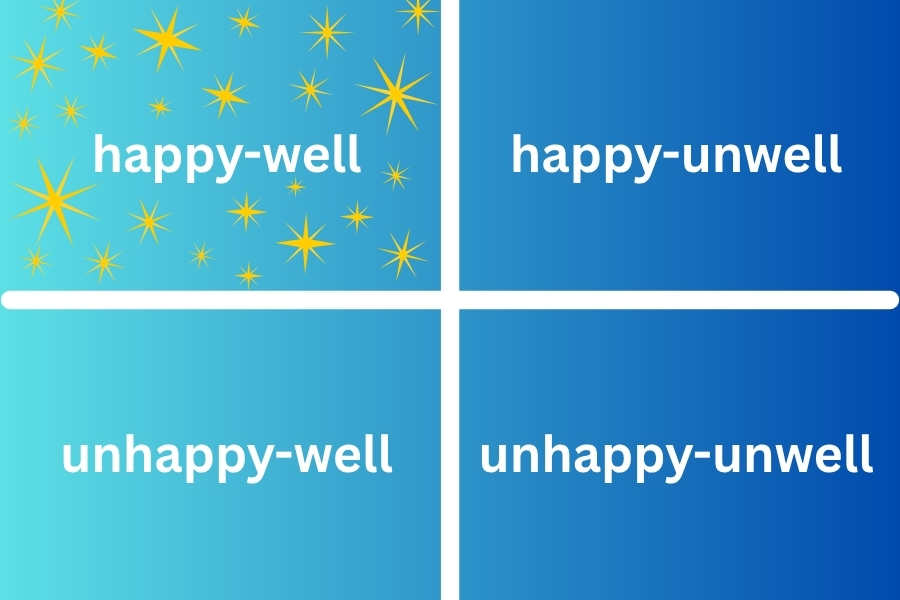
Four quadrants. Photo credit: Canva
Measuring health and happiness basically separates people into four quadrants. In an interview with Dr. Rhonda Patrick, Brooks shared that people who fall into the happy-healthy (or happy-well) quadrant tend to share seven habits in common.
The four physical habits associated with happiness and health
The first four have to do with our physical health and are ones that most of us might guess.
“Diet, exercise, smoking, and drinking,” Brooks said, adding that happy-well people are “very moderate” when it comes to substance use. “None of them were addicts, or if they had trouble with it, they quit,” he said.
Brooks shared that he smoked into his 20s and, even then, knew it was stupid. “But I still think about it every day,” he said. “I do. I love nicotine. I got addicted to it when I was 13 and quit when I was 26. And it was a relationship for me, right? But the whole point is no, because lifelong smokers have a 7 in 10 chance of dying from a smoking-related illness, and that is an unhappy way to go. You’re not going to be healthy and you’re not going to be happy dying of emphysema.”
People who age happier and healthier tend to do 7 things:
They don’t smoke, exercise regularly (but not excessively), maintain a healthy weight, and are mindful with alcohol or other substances.
As far as diet goes, Brooks said the happy-healthy people eat a “normal, healthy” diet. And for exercise, it’s really about moderation and the obvious things like walking and staying active.
“If you don’t exercise at all, you’re not happy and well,” he said. “And if you’re an exercise maniac, you actually will do some mechanical ill to your body, but actually you’re probably not happy and some compensation is going on.”
Three psychological and emotional habits associated with health and happiness
The other three habits aren’t quite as obvious.
“No. 1 is continuing to learn,” Brooks said. “And people who are life-long learners, they are healthier and they are happier. That’s usually a lot of reading, but curiosity is how that comes about. It’s just really really important.”
The next is having a technique for dealing with setbacks.
“You’ve got to get good at it,” he said. “You need skill at dealing with life’s problems. And if you don’t get good at it, you’re going to be bad when things actually crop up. And so maybe you’re good at therapy. Maybe you’re good at prayer, maybe you’re good at meditation. Maybe you’re really good at journaling. But all the happy and well people have their way to deal with it and they’re highly skilled in doing it.”
And the seventh habit, which Brooks calls “the biggie,” is simply love. “People who have the best lives, who are happy and well when they’re older, they have a strong marriage and/or close friendships,” he said. “That’s it. There’s no substitute for love. Happiness is love, full stop.”
Brooks shared other thoughts about the value in boredom and the pitfalls of social comparison in this segment, but the whole interview is filled with fascinating insights into what makes people happy and healthy.
An ideal partner isn’t just someone you can celebrate with. They’re the person who makes the bad times feel just a bit better. One husband is getting a lot of praise online for doing just that.
In a Reddit post titled “My Husband’s Response to My Really Bad Week Made Everything Just a Bit Better,” a wife explained how she had really been having a “rough week” on multiple levels. Not only had she faced a setback at work, but she also “accidentally ripped off a fingernail.” Talk about adding injury to insult.
Needing to vent, she texted her husband, saying, “I think I’m having a bad day 😕 like, I’ll be fine. I just wish I could curl up on the couch and feel all the feelings and also nap for three days 😅.”
What followed was a text that had viewers saying she should “marry” her husband all over again.
From the start, her husband both validated her emotional state and reminded her that it was temporary.
“My sweetheart,” his message began. “I know you’re going through a lot, both emotionally and physically with how draining the last week has been. I also know you’re resilient as heck and you’ll be fine, but that doesn’t make those feelings right now any less real.”
That alone earned him major brownie points, but then he sweetened the deal—literally, with ice cream.
“But we’ve got a pint of Ben and Jerry’s at home…and a lot of Critical Role to catch up on,” he wrote, referencing one of their beloved television shows. “I’m all for the curling up part of your plan.”
Then he asked, “In the meantime, want to meet up for lunch today?”
It’s easy to see why this response won over so many. It was emotionally aware, attentive, and generous, leaving many to call him a “certified keeper.”
“The ‘curling up’ part of the plan is elite support honestly.”
“Man, when someone is happily willing to just slow down with you for a bit and not find more and more reasons to be busy or not available, that’s someone that really sees you and wants to be there for you and with you. It makes it feel like it’s ok to take care of you instead of feeling guilty and like you’re just lazy.”
“Marry him. I don’t care if you’re already married, marry him again.”
“This is what love should look like.”
“Having a love like that is truly a blessing!”
On a wholesome note, it also inspired many others to share some love for their equally attentive and supportive partners.
“I have one like this and it’s nearly impossible to describe to other people how very much I love and appreciate him without looking like I’m a boasting a*****. I’m just so glad you have one too.”
“Same. I wish I could clone mine and give him out as gifts to friends I love, because I wish everyone could experience this kind of amazing love and support. It is sadly so so rare.”
“Legends like this are one in a million!! I’m lucky enough to have one too.”
This is what everyday romance looks like: rough weeks turned into cozy date nights, solitary struggles made more manageable by knowing someone is in your corner, and challenges transformed into opportunities for connection. It’s not necessarily the kind of romance we see in the movies, but it’s magical nonetheless.
Some believe responding “What?” when your name is called is rude. Parents are often fond of responding to a child saying “what” with a good old-fashioned “Don’t ‘what’ me.” Others aren’t too bothered by it and think a more polite response is a bit too formal.
Angelica Daniell, 38, currently stationed at Fort Bragg in North Carolina, says teaching her children to respond to their names with “Yes?” has brought more peace to her home. She was raised in a “What?” family, and changing the rule in her home has made a big difference.
Are you in a “what” family or a “yes” family?
“When you guys were growing up, and your parents would call you, and they’d say your name, would you say, ‘What?’ Because I grew up like, ‘what?’ You know?” she began her TikTok video.
“Ever since my kids could talk, my husband taught our kids to say ‘yes.’ So if we call Ray, he’d say, ‘Yes.’ And then he needs to come—like, yes, I hear you, but I’m coming. You don’t stay in that place and talk to you from downstairs, and you’re upstairs,” she said. “I don’t know, I just thought that’s such a special and precious thing. And I love when I call my kids, and they say, ‘Yes?’ and they come to me. I can’t tell you what that does for me.”
The big problem people have with using “what” as a response to a family member calling their name is that it makes them sound annoyed. It’s like they mean to ask, “What are you bugging me about?” or “What do you want?” By contrast, saying “yes” signals that you’re welcoming the request or favor and are ready to help.
Not everyone agrees. “I definitely grew up as a ‘what’ type of family. I still don’t see anything wrong with it. I’m not sure why people find it disrespectful,” one person said in the comments.
“My mom always said, ‘Don’t what me,’” another added.
“Even hearing ‘what’ even from other adults.. feels disrespectful,” said another.
The discussion also pointed to a bigger issue. “Genuine question for adults currently in/raised in a ‘what’ household… do y’all answer ‘what’ at work when someone calls you!?” a commenter asked.
Daniell believes that when children are polite in the home, it follows them throughout their lives. “Our home is the dress rehearsal, and the world is the stage,” she told Newsweek. “If our kids say ‘yes’ to us, our hope is they will also say it to their teachers, friends [and] coaches.”
Napoleon Hill, author of the mega-bestseller Think and Grow Rich, believed that it’s important for parents to be polite to their children as well.
“Politeness to others is usually born out of respect for the individual, which you learn as a child,” Hill wrote. “When you are treated with respect by other members of the family, you learn to respect them as well. The self-esteem that results from being recognized as a unique person by the people who matter most to you helps you develop the confidence necessary to succeed later in life. Politeness and consideration for others are habits that—once developed—usually stay with you for a lifetime.”
When people debate whether it’s better to live in a “what” or a “yes” family, it’s important to recognize that manners start at home. Even though the “what” folks may think the “yes” folks are being too formal, the habits formed at home will help define a child’s life in the real world. Finding manners in school or the office is a lot harder when you never had them at home.
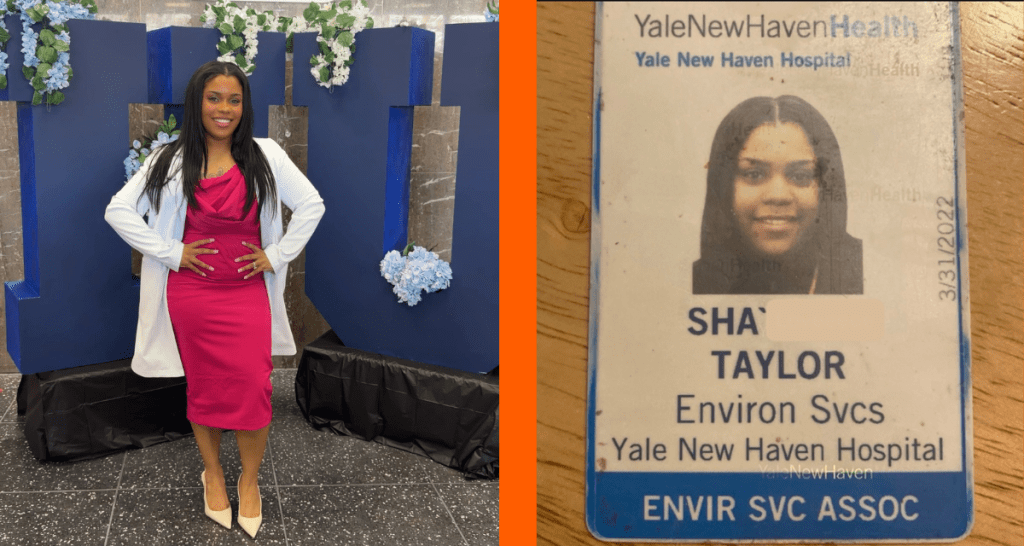
Shay Taylor-Allen’s dreams came true on March 20. The Howard University College of Medicine student was matched into the anesthesiology residency program at Yale New Haven Hospital—the same hospital where she was born and later worked as a janitor for 10 years.
In an emotional clip on TikTok, Taylor-Allen shared the moment she found out she had been matched at Yale. “#1 match and so happy to come back not as a janitor this time but as a doctor!” she captioned the video.
She told ABC News, “I was jumping up and down to the point I [thought] the concrete was going to break!”
Taylor-Allen’s mom inspires her journey
Back when she was just 18, Taylor-Allen took a job as a janitor at Yale New Haven Hospital to earn extra money. At the time, she didn’t know she would later pursue a career as a doctor.
“I was working full-time as a janitor because around that time also my mom got sick, and she was in and out of hospital,” Taylor-Allen told People. “They couldn’t figure out what was going on with her.”
After years on the job, Taylor-Allen leveraged a connection she had made with the hospital’s CEO—whose trash she once emptied—according to ABC News. She reached out directly to ask for help with her mother’s care and finding a diagnosis.
“She got back to me literally within that same day because she knew me from cleaning her room,” Taylor-Allen said. “She was like, ‘We’re going to do whatever we can to help your mom. Let me figure out what’s going on with the team.’ And within the next week, they figured out that she had a vocal cord dysfunction and everything completely changed. It was just night and day.”
She decides to become a doctor herself
The experience led her to pursue a career as a doctor and future patient advocate. “I started Googling how to become a doctor and I just went on from there,” she added.
Taylor-Allen was accepted into Howard University College of Medicine in 2021 and is set to graduate in May 2026.
“I could have never imagined that I would be going back to the same hospital that I was not only born at, but a janitor at, to be a doctor,” she told ABC News.
To support Taylor-Allen in her journey, check out her GoFundMe.
Have you ever ended a long workday feeling drained, unproductive, and wondering where the heck all your energy went? Many of us blame ourselves for not having enough willpower or discipline. We invest in new planners, download habit-tracking apps, or create rigid to-do lists to push through the exhaustion. But what if the problem isn’t your effort?
Dr. Mark Travers, a psychologist, suggests a kinder, more effective solution. He argues that your daily output isn’t about sheer willpower—it’s about being in tune with your biology. By aligning your schedule with your body’s natural rhythm, you can enjoy greater ease and joy in your tasks, transforming the way you approach work.
The science of work rhythms
Did you know? Our bodies operate on specific internal clocks that influence everything from focus to energy levels. You may already be familiar with the circadian rhythm, the all-mighty cycle that governs your sleep and wake patterns. However, this doesn’t just occur at night: during the day, your brain also runs on shorter ultradian cycles of about 90 minutes. These cycles consist of distinct energy phases: rising, peaking, and then declining. When you push past your natural peak without taking a break, you drain your mental resources, leaving you fatigued and less effective.
Additionally, researchers have identified another phenomenon, the Synchrony Effect. This concept clearly shows that timing is crucial for productivity. It’s powerful to schedule complex, high-focus tasks during your biological peak, so that you can perform them more efficiently and with greater clarity. On the other hand, trying to do difficult work during a natural energy dip can feel like an uphill climb. The key is insight: knowing when your brain is at its best can completely change how you approach your most important tasks.
The three dimensions of productivity
Travers highlights three important elements that influence how we approach our work. These aspects offer valuable insight into how we think and help explain why different people flourish under different conditions.
Intensity
Intensity measures your energetic output. Some people excel in short, powerful bursts of work, tackling tasks with explosive focus and tons of energy before needing a break to recharge. Others perform better with a steady, measured pace that allows them to sustain their momentum over longer periods. For example, a writer might sprint through the first draft of an article in a focused hour, while another might prefer to slowly build their piece over several hours. Both are valid forms of output.
Focus
This dimension explores how you manage your attention. Some individuals work best when they dedicate long, uninterrupted blocks of time to a single, complex project. For them, deep focus is key to achieving flow and completing their best work. On the other hand, some people thrive by juggling multiple tasks and rotating between activities. By shifting their focus, they feel energized and use that energy to maintain momentum throughout the day.
Structure
Finally, structure examines how much predictability you need in your routine. Those who value routine often crave fixed schedules with clear start times, consistent deadlines, and detailed calendars. Structure helps them feel grounded and in control. Others prefer flexibility and thrive when they have the freedom to make spontaneous decisions throughout their day. They might find rigid schedules stifling and gain energy from looser outlines that allow for creativity and adaptability.
Discovering your archetype
To uncover your own unique combination of intensity, focus, and structure, take the Work Rhythm Personality Test. Developed by Travers, this quick assessment reveals your individual cognitive approach and matches you with one of eight productivity archetypes. As an added benefit, Travers also lists your second-best match and your ideological opposite. It should take only about two minutes to complete, but its impact on your productivity can be tremendous.
For example, you might discover you’re a Sprinter, someone who thrives under pressure and works best with tight deadlines. Travers writes, “The Sprinter is defined by a trifecta of psychological traits that cognitive science has linked to peak episodic performance: high activation energy, single-point attentional control, and sensitivity to external scaffolding… You are built for the race.”
The place where Sprinters most often struggle is the formless afternoon: no deadline on the horizon, no clear finish line, an inbox full of vague tasks, and a calendar that just says “project work.” For most people, that’s a reasonable Tuesday. For you, it’s a productivity black hole. The solution isn’t more willpower—it’s better structure. With this work rhythm, plan for two or three intense work sprints during the day, with genuine breaks in between, rather than trying to sustain peak productivity all day.
You might not be the loudest person in the room. But when it actually matters—when the project is long, the stakes are high, and everyone else has burned out or moved on—you’re still there, still producing, still reliable. That’s the Marathoner. It is, in many ways, the most underrated archetype of all.
Some people need check-ins, progress meetings, and a manager asking, “Where are we on this?” to stay on track. You are genuinely not one of those people. If you’re an Architect, you come with your own engine. You sustain effort over long periods, focus on one problem at a time with remarkable depth, and don’t need external pressure to light the fire—the work itself does that.
Here’s the paradox, though: the same independence that makes you exceptional in the right environment can render you almost invisible in the wrong one. Recognizing this difference could be one of the most professionally eye-opening things you’ve ever done. Travers suggests keeping the same work sequence on most days, with recurring priority blocks, breaks, and a consistent shutdown ritual.
Are you good at juggling tasks? You might be a Conductor. Photo credit: Canva
The Conductor
If your brain naturally juggles five things at once and somehow keeps them all moving forward, there’s a name for that: you’re a Conductor. While other people need long stretches of uninterrupted quiet to do their best work, you actually thrive in the middle of the action. You work at a steady pace, skillfully juggling multiple tasks without dropping any, and you really shine when a deadline is approaching and your team is counting on you. While some might find complexity draining, you see it as an opportunity to bring clarity and deepen understanding.
Here’s the thing about being a Conductor, though: organizations notice. And once they do, they tend to give you more. Your days should be built around managing complexity without being consumed with it. Remember to be aware of your limits, understand your capacity, and set boundaries to protect your well-being.
Perhaps you’re a Deep Diver, in which case the modern workplace isn’t meant for you. Photo credit: Canva
The Deep Diver
There’s also the Deep Diver, whose engine runs from the inside. You bring intense, focused energy to your work. You love to tackle one challenge at a time, and once you’re engaged, you don’t need anyone to hold you there. Here’s the catch: the modern workplace was not designed with you in mind. Open-plan offices, Slack pings every six minutes, back-to-back meetings that chop your day into unusable fragments. All of it is neurologically harmful to how your brain functions best. Instead, protect your uninterrupted time by setting aside blocks in your schedule so your brain can focus on what it does best.
If the standard productivity playbook—sprint goals, KPI dashboards, weekly status updates, time-blocked calendars—has never quite fit, congrats: you’re a Flow Weaver. “The Flow Weaver is the archetype that defies the conventional productivity imagination most completely,” writes Travers.
You work at your own pace. You move between projects and ideas not according to urgency or someone else’s schedule, but according to something harder to explain: a felt sense of when you’re ready, when an idea has ripened, and when the momentum is there. Resist the urge to overschedule your day or pack it with rigid blocks. The goal for you isn’t a timetable—it’s honoring your internal signal.
You are the person everyone wants in the room when something new is about to start. Igniters bring a unique type of energy that’s truly rare: high-intensity, multi-layered, and at its most electrifying when there’s a deadline, a collaborator, or a charged social environment surrounding the work. You don’t just begin things—you’re motivated by starting things.
Harness the charge before it scatters. Start your day and hit the ground running. Channel that immediately into your highest-stakes task before anything else can dilute it.
The Firestarter combines three things that don’t always appear together: high activation energy, the ability to think across multiple domains at once, and a fierce, uncompromising autonomy. You move fast. You connect dots others haven’t noticed yet.
When your environment demands sequential compliance—forms filled out in order, mandatory syncs attended on time, processes followed precisely because “that’s how we do things here”—you experience a kind of chronic friction that’s easy to misread as poor work ethic. It isn’t. It’s a mismatch between how your brain is wired and how the institution is structured. As you plan your day, remember that the goal isn’t to fill every hour—it’s to direct your considerable energy toward the right targets before it disperses.
Achieving better results with less friction
Understanding your archetype gives you a personalized roadmap for structuring your day in a way that feels natural and effective. When you work with your biological rhythms rather than against them, you reduce friction and create a workday that feels fulfilling rather than draining. Higher job satisfaction, increased productivity, and greater life balance are all achievable when you align your schedule with your brain’s natural rhythms. It’s not about doing more—it’s about working smarter with intention and ease.
Long-acting, reversible contraception methods like IUDs have become extremely popular in the United States and beyond. Just a few decades ago, only about 2% of women relied on them. In recent years, that figure has risen to around 17%, accounting for millions of women.
The rising popularity makes sense. IUDs can be convenient, highly effective, and can even make a woman’s period far less painful or stop it altogether. There’s just one problem: getting an IUD inserted hurts. For some people, it hurts a lot.
The pain from getting an IUD can range from mild discomfort for some people to excruciating pain for others. What’s frustrating is that medical providers haven’t historically listened to patients who say the procedure is severely painful. A 2013 study found that the average patient rated the pain of insertion at 64.8 out of 100, while providers estimated it at just 35.3—a big disconnect.
For years, women struggling in the aftermath of the procedure have been told the same infuriating refrain: “Just take ibuprofen.”
Artist brings women’s frustration to life
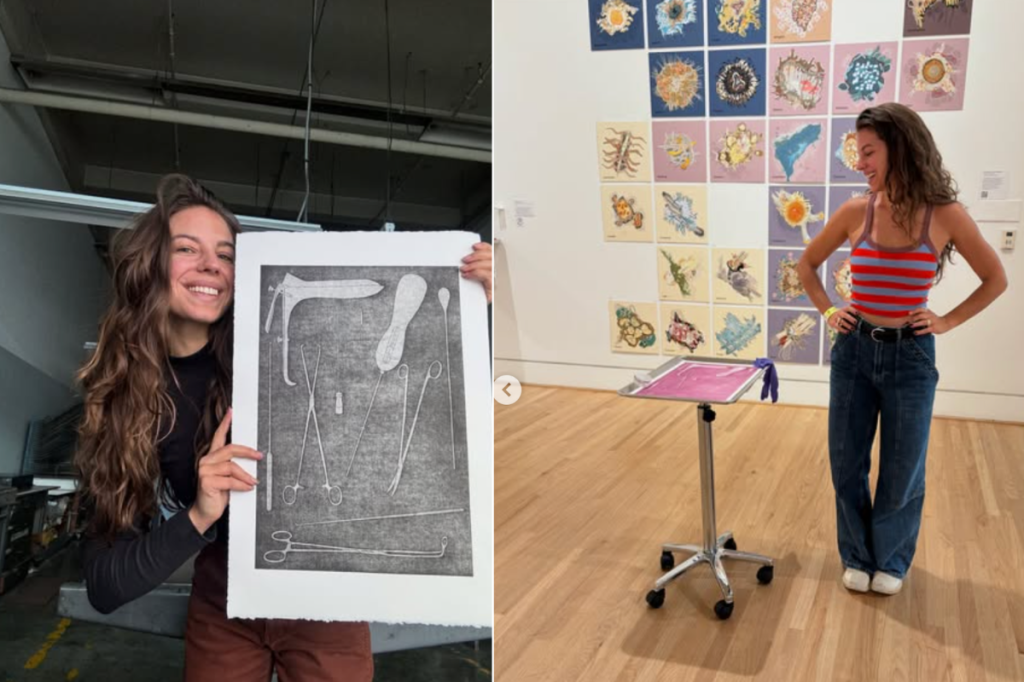
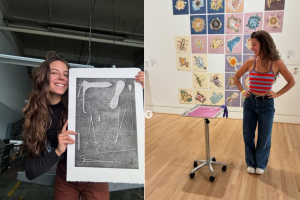
Emily Kampa recently debuted a striking piece of artwork built around this common source of dismissed pain among women.
The display, aptly titled “Just Take Ibuprofen,” boldly shows the actual medical instruments used in an IUD insertion in all of their horrific glory. Kampa listed them on her Instagram:
Speculum: 6.95” nose length
Single toothed tenaculum: 10”
Paracervical block (& needle): 6”
IUD insertion tube: 11”
MT cervix-holding clamp: 11”
OS finder: 8”
Cotton swab: 8”
IUD string scissors: 9.8”
Hook for IUD removal: 10”
IUD: 1.25”
After hours of research and planning, Kampa etched the instruments onto a copper plate, each one rendered life-size.
For the in-person installation at the Triton Museum of Art, Kampa placed the display on a real medical cart, with a surgical glove loosely dangling off the corner.
She wrote that she wanted viewers to experience the tools the same way she did when she first saw them at her OB-GYN’s office.
“‘Wait why are there scissors? Why is that q-tip SO large?!’” she recalled thinking. “That image stuck with me long after my own IUD experience and was the spark for this project.”
The art evokes a visceral reaction in viewers. It’s hard not to feel that taking a few Advil is a woefully inadequate response to the pain caused by these long, sharp instruments.
Photos of the display have been posted and reposted across social media, racking up thousands of likes and comments wherever they appear. Many women flocked directly to Kampa’s Instagram account to thank her for speaking out through her art:
“Thank you for this because I thought I was over reacting when I got physically sick. I [was] literally on the verge of vomiting and passing out. Cramps for days.”
“I never connected to an image so much in my life. … For the first two years (and still for a few days every month), felt like I had barbed wire inside me. I went to the doc after the first two weeks of pain and the nurses there said … the pain was normal for the first year.”
“Ibuprofen my a**! Too many of us have been gaslit, dismissed, ignored, traumatized, and even killed by medical professionals. Thank you for capturing this all-too-true experience and sharing your process”
“My cervix is shuddering. This is ART from experience”
Art has the power to elevate messages in unique and memorable ways. Thanks to women and artists like Kampa who have spoken out over the years, the culture of IUD pain management is steadily changing for the better.
“Systemic racism and bias as to how pain is experienced and who experiences it also has, unfortunately, influenced pain management considerations,” said Dr. Christopher M. Zahn, chief of clinical practice and health equity and quality at ACOG.
The new guidance recommends local anesthetics for the procedure, as well as “comprehensive pain management counseling” for patients, including offering the option of sedation or general anesthesia when possible.
These are big and necessary steps forward. Perhaps the most powerful part of this shifting conversation and culture, however, is that more women are being heard and their pain is finally being taken seriously.