upworthy
Add Upworthy to your Google News feed.
Google News Button
Science

A study found 4 different categories of couples. Where do you belong?

What if I told you someone did find a way to "categorize" your love style but with actual real science?

movie stars, legends, astrology, dating

This movie couple definitely could have used some healthy therapy.

Ever fallen into one of those Internet dating quizzes? You know, the ones that promise to categorize you? Like "what your astrological sign says about your relationship style."

They can be fun, but we all know they're mostly fluff.

What if I told you someone did find a way to "categorize" your love style but with actual real science?


Three relationship scientists asked about 400 couples to track how they felt about their relationship and how committed they felt to marrying their partner. They followed each of the couples for nine months. Not, like, literally followed them — that would be creepy. Instead, they just asked them a few questions and asked them to keep track of how committed they were feeling over time.

At the end of the nine months, the scientists collected all the couple's responses and delved deep into the data. They found that couples did indeed tend to fall into one of four categories.

Prepare yourself for some soul searching because you might just be:

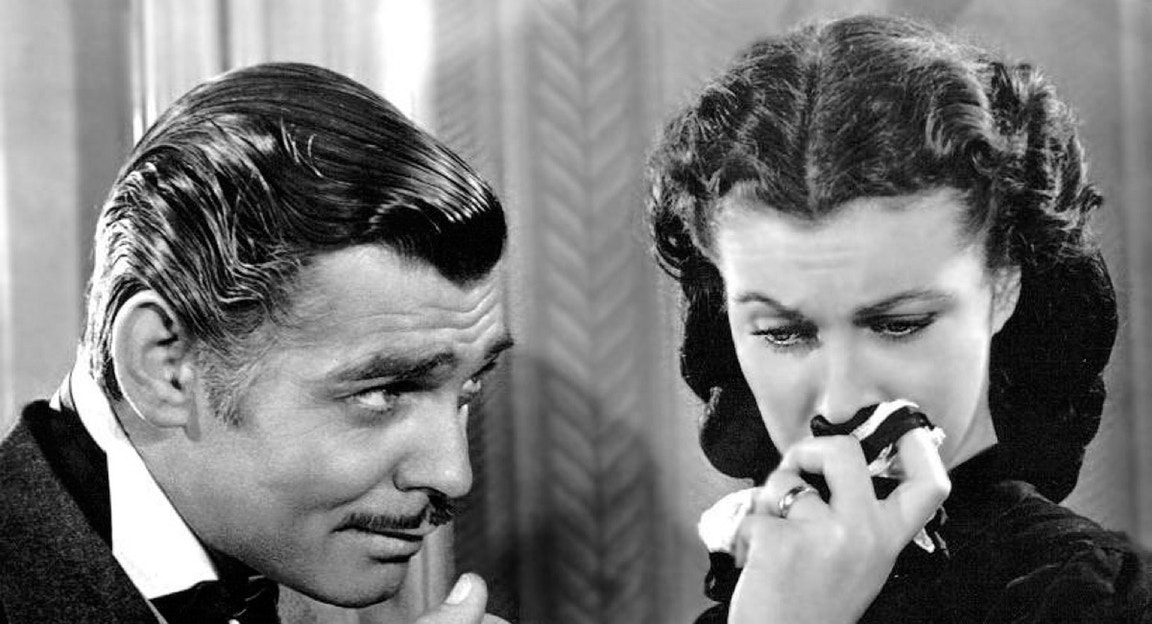
1. The Conflicted, but Passionate
celebrity, relationships, commitment

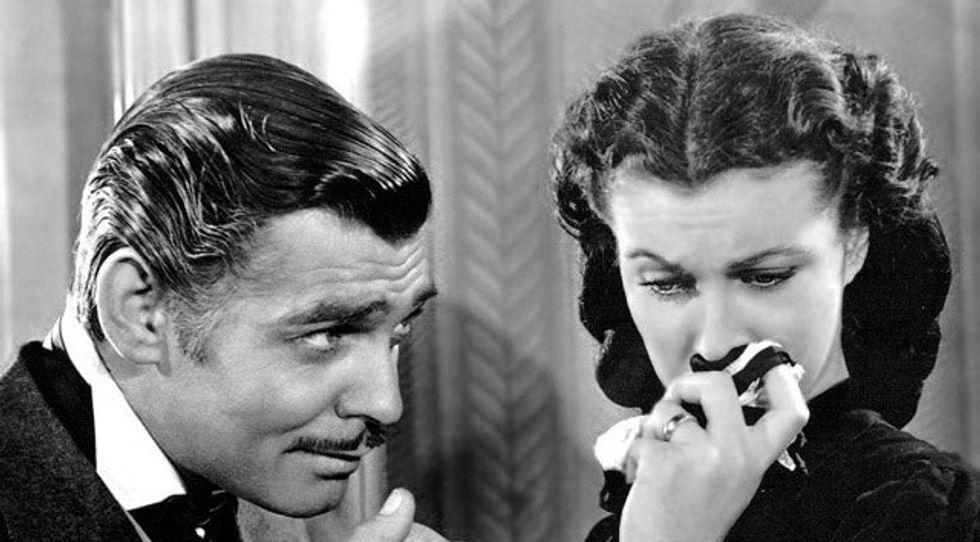
Scarlett and Rhett from "Gone with the Wind."

Image from Insomnia Cured Here/Flickr.

This is the couple Facebook made the "It's Complicated" relationship status for. Their levels of commitment tend to go up and down over time, especially after arguments. But that's not necessarily a bad thing. These folks use those conflicts to help them make decisions about the relationship, and in fact, they didn't appear to be any more destined for a breakup than any of the other groups.

Also, as a bonus, they tend to follow those turbulent downs with passionate ups. "These couples operate in a tension between conflict that pushes them apart and passionate attraction that pulls them back together," said study author Brian Ogolsky.

2. The Partner-Focused
dating, hobbies, leisure activities

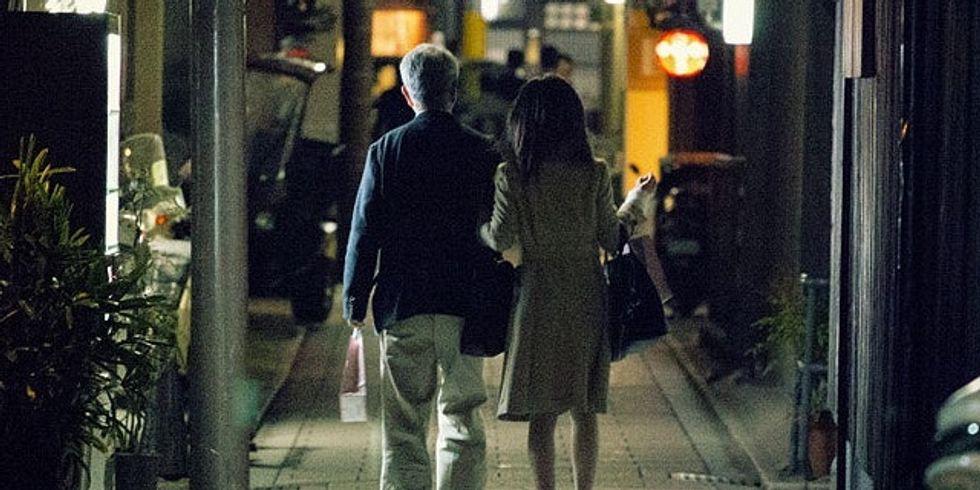
A nice night to have a couples walk.

Image from Yiannis Theologos Michellis/Flickr.

If your idea of a perfect date night is a long walk followed by eight hours of binge-watching "House of Cards" together, you might fall into this category.

Partner-focused couples tend to spend a lot of time together and share hobbies or leisure activities, and it's that shared time that tends to propel them forward. They tended to be more careful and thoughtful about their relationship decisions — more likely to build from the inside out — and tended to be the most satisfied overall.

3. The Social Butterflies
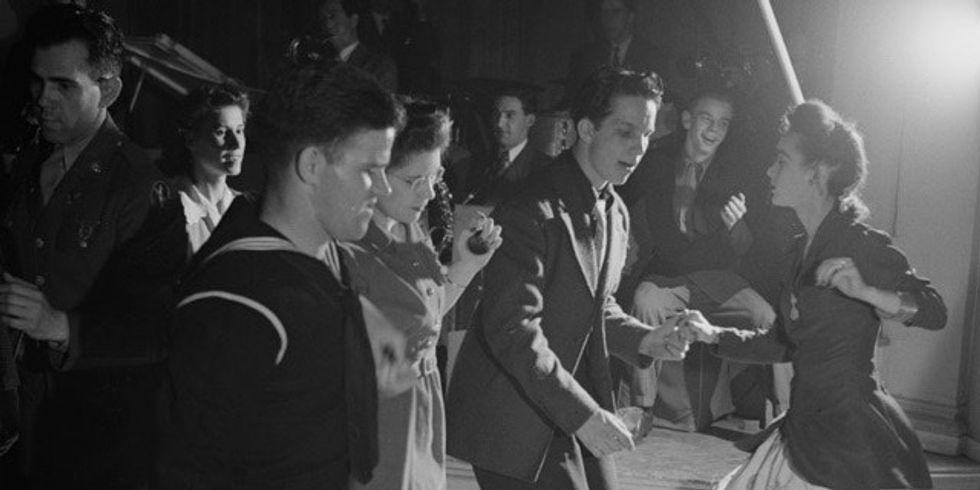
On the other hand, if your perfect evening with your partner involves grabbing all your friends and hitting the bars or breaking out Settlers of Catan for the hundredth time, this might be the category that best describes you. Social couples usually share a friend group and use that time spent with friends to inform and build their relationship as a couple.

"Having mutual friends makes people in these couples feel closer and more committed," said Ogolsky. They also tended to be pretty stable and have higher levels of love based on feelings of friendship toward each other, which can be a good indicator for long-term happiness.

4. The Dramatic

drama, community, therapy, social norms

A little Renaissance kissing with oil

Image from Sofi/Flickr.

Unfortunately, not every couple's path is easy. Things may start out good, but tend not to stay that way for dramatic couples. This type of couple tends to make decisions based on negative experiences or stuff from outside the relationship.

"These couples have a lot of ups and downs, and their commitment swings wildly," said Ogolsky. "You begin to see little things eroding, and you start to see the relationship in a negative light, and soon you give up," said Ogolsky.

Perhaps unsurprisingly, dramatic couples tended to break up the most, twice as much as other couples.

So what's best? Well, here's where this article differs from a lot of those Internet quizzes. Because the answer is that there isn't a "best" kind of relationship.

couples therapy, love, marriage, biology

What do healthy relationships start and end with?

Image from Maryam Mgonja/Wikimedia Commons.

Different couples work and grow differently. These are different pathways and it'd be a mistake to assume there's a "correct" way to love someone. Or even that you're forever locked into a certain style of relationships. "These are not predefined, for-life patterns," said Ogolsky.

And even in a single relationship, these patterns aren't predictors of destiny — a dramatic couple may, in fact, outlast a social one, and a partner-driven couple may be as passionate as anyone you could ever meet.

And the researchers willingly admit in their paper that their study doesn't cover all relationships. Many very happy couples have no desire to marry, for instance. And, it should be noted, that it wasn't too long ago that the U.S. didn't even allow all couples to get married!

Wait, you're not going to tell me how to find the perfect, golden, eternally-happy relationship?! Why even study this then?

Because, in our hearts, humans are social creatures, Ogolsky explained. Love, friendship, passion, and commitment are part of the human experience. Understanding relationships can be as important to understanding ourselves as studying chemistry or biology. They can even affect your health!

As for what you can learn from all this, the important takeaway is that what you use to make decisions — whether from conflict, from the inside, from the outside, or from friendship — can influence your level of commitment. It might be useful for couples to think not just about their choices but how they make their choices.

So ... what's your category?


This article originally appeared on 02.15.16

Gen Z; Millennials; technology; cell phones; social media; teens and technology; teens social media

Gen Z is the first generation less cognitively capable than their parents. Denmark has the solution.

Nearly every parent hopes their child will be better off than they are: smarter, more secure, and more well-adjusted. Many parents see this as a stamp of successful parenting, but something has changed for children growing up today. While younger generations are known for their empathy, their cognitive capabilities seem to be lagging behind those of previous generations for the first time in history.

Dr. Jared Cooney Horvath, a teacher turned cognitive neuroscientist who focuses on human learning, appeared before Congress to discuss concerns about cognitive development in children. In his address to the members of Congress, he says, "A sad fact that our generation has to face is this: our kids are less cognitively capable than we were at their age. Since we've been standardizing and measuring cognitive development since the late 1800s, every generation has outperformed their parents, and that's exactly what we want. We want sharper kids."


kids, intelligence, sharp kids, generations, education, cognitive abilities Student smiling in a classroom, working on a laptop.Photo credit: Canva

Horvath explains that the reason this happens is that each generation has gone to school longer than the previous generation. Gen Z is no exception to the longer duration of time spent in school, but they're the first ones who aren't meeting this normal increase in cognitive development. According to the cognitive neuroscientist, the decline is due to the introduction of screens in the classroom, which started around 2010.

"Across 80 countries, as Jean was just saying, if you look at the data, once countries adopt digital technology widely in schools, performance goes down significantly. To the point where kids who use computers about five hours per day in school for learning purposes will score over two-thirds of a standard deviation less than kids who rarely or never touch tech at school," Horvath reveals.

In most cases, the decline in performance doesn't result in better strategies. The neuroscientist shares that the standardized testing has been adjusted to accommodate lower expectations and shorter attention spans. This is an approach that educators, scientists, and researchers went to Capitol Hill to express wasn't working. But not every country is taking the approach of lowering standards to meet lowered cognitive ability. Denmark went in the opposite direction when it realized their students were slipping behind.

France24 recently interviewed educators in Denmark following their seemingly novel approach to students struggling with cognitive development. Since the beginning of the 2025/2026 school year, Denmark has not only been having students turn in their cellphones, but they've also taken tablets, laptops, and computers out of the classroom. No more digital learning for the majority of the school day. Danes went old school by bringing back physical textbooks, workbooks, and writing assignments. The results have been undeniable. Even the students can't seem to deny the success of the countrywide shift in educational approach.

"I think the biggest issue has been that, because we kind of got rid of the books and started using screens instead, that we've noticed that a lot of the kids have trouble concentrating, so it's pretty easy to swipe with three fingers over to a different screen and have a video game going, for example, in class," Copenhagen English teacher, Islam Dijab tells France24.

Now, instead of computers being part of every lesson, Denmark uses computers very sparingly and with strict supervision. One student says that it has been nice not having screen time at school because she loves to read and write. But it wasn't just the lack of attention span children were developing, they were also developing low self-esteem and poor mental health due to the amount of time spent on devices.

kids, intelligence, sharp kids, generations, education, cognitive abilities Students focused and ready to learn in the classroom.Photo credit: Canva

The data showing the negative impact of screens on teens' brains has prompted a nationwide change in Denmark that extends outside of the classroom. Afterschool activities are eliminating or extremely limiting electronic use. There is also a national No Phone Day that encourages everyone to put away their devices for the day, and Imran Rashid, a physician and digital health expert, is petitioning parliament to ban social media use for children under the age of 15. The no phone movement in Denmark is a nationwide effort that hopes to right the ship before another generation feels the effects.

tired woman, coffee work, feeling off, redhead woman, woman at desk,

A woman feeling tired at work.

Do you regularly feel off? You're lethargic, maybe dealing with some joint stiffness, or your brain feels a tad foggy. Do you get the feeling there's always some new, nagging issue holding you back from feeling your best? On Monday, you're tired; on Tuesday, a little out of focus. But by Wednesday and Thursday, you feel 100%. Friday is fine, good enough to slide into the weekend, and then the cycle continues.

A recent survey found that this fluctuation between feeling pretty good one day and weighed down the next is completely normal. Research by Talker Research, commissioned by Bayer, shows that people feel truly healthy only about 16 days a month. In other words, for every day you wake up feeling good, there's likely to be another that feels like a bit of a struggle.


Most people don't feel great every day and it's okay

The fact that a lot of folks aren't feeling their best on any given day may offer reassurance to those of us who wake up feeling a bit down and wonder, "Why me? Why can't I feel good every day?" Don't worry, we're all going through it. It's a wonderful invitation to truly embrace the days when everything feels as it should. And when you're not feeling 100%, you can have some faith that tomorrow will be better.

The study also found that many of us are doing our best to feel as good as possible, with "(62%) report prioritizing wellness this [winter] more than at any previous time." However, that comes with a catch: "[Fifty-nine percent] admit that maintaining healthy habits becomes harder when battling winter illness, creating a cycle where sickness disrupts routines, making recovery more difficult."

tired man, man needs sleep, feeling off, man shrugging, sick man A man feeling a bit down.via Canva/Photos

The Catch-22 is that most of us want to prioritize our health, but nagging fatigue and body aches tend to be worse in the winter. The study also found that 45% of Americans feel guilty and don't take time to rest when they feel a bit off, which only makes them feel worse.

"A lot of the routine, annoying health issues that prevent us from feeling our best are the symptoms of stress," Dr. Reem Hasan, chief medical officer at Vista Health and an NHS GP, told Yahoo Life. "These symptoms are often associated with stress, overwork, poor sleep, dehydration, or insufficient nutrition and do not usually involve fever, acute pain, or rapidly worsening symptoms, which are more typical of infection."

The day-to-day stresses of working, raising a family, cleaning the house, keeping our finances in check, and staying sane in an unpredictable world can all lead to a sense of nagging fatigue.

"Chronic stress activates cortisol pathways that mimic viral symptoms such as aches, tiredness, and low appetite," Dr. Kazim Dhanji, a general practitioner in the UK, says.

The doctors agree: just because you aren't technically sick doesn't mean you shouldn't take care of yourself.

happy woman, energized woman, woman running, running on beach, feeling great A happy woman running on the beach.via Canva/Photos

The message is loud and clear: feeling a bit off doesn't mean you should ignore your symptoms. They're most likely caused by stress, so taking care of yourself by getting enough rest, eating well, and staying hydrated can increase your chances of feeling good more often than a measly 16 days a month.

The good news is that if you regularly wake up feeling like you're not at your best, you're in the same boat as most Americans. Feeling bad without having the flu or a cold doesn't mean you shouldn't take good care of yourself. The survey shows that many people feel guilty about prioritizing their health when they feel "off," but there's nothing wrong with listening to your body and putting your health first.

"When people tune into what their mind and body are asking for, whether it's rest, movement, nourishment, or medicinal support, they're better primed to maintain their overall wellness throughout the year," Dr. Gabriela Zuniga, head of medical affairs for the Americas at Bayer Consumer Health, said in a statement.

Science

Helicopters dump 6,000 logs into rivers in the Pacific Northwest, fixing a decades-old mistake

Forty years ago, restoration workers thought logs were the problem. They were wrong.

river restoration, washington, river fish, restoration, Yakama Nation, indigenous land, indigenoues tribes, salmon, trout, pacific northwest

Restoration workers now see how "critical" wood is to the natural habitat.

For decades, river restoration in the Northwestern United States followed a simple rule: if you saw logs in the water, take them out. Clean streams were seen as healthy streams, fast-moving water was seen as optimal, and wood was treated like a "barrier" to natural processes, particularly those of the local fish.

Now, helicopters are flying thousands of tree trunks back into rivers to undo that thinking.


In central Washington, one of the largest river restoration efforts ever attempted in the region is underway. More than 6,000 logs are being placed along roughly 38 kilometers, or 24 miles, of rivers and streams across the Yakama Reservation and surrounding ceded lands.

Nearly 40 years ago, Scott Nicolai was doing the opposite kind of work, all in the name of restoration.

"(Back then) the fish heads — what I call the fisheries folks — we stood on the banks, and we looked at the stream," Nicolai, a Yakama Nation habitat biologist, told Oregon Public Broadcasting. "If we saw a big log jam, we thought, 'Oh, that's a barrier to fish. We want the stream to flow.'"

river restoration, washington, river fish, restoration, Yakama Nation, indigenous land, indigenoues tribes, salmon, trout, pacific northwest Fish find shelter for spawning in the nooks and crannies of wood. Photo credit: Canva

At the time, logs were removed in an effort to simplify the habitat. However, it soon became clear that wood provided vital "complexity," creating sheltered pockets for salmon and bull trout to spawn and supporting algae that feed aquatic insects. Logs also slow water, spread it across floodplains, and allow it to soak into the groundwater. That water is then slowly released back into streams, helping keep them flowing and cooler during hot, dry periods.

The consequences of removing this "critical part of the system" (in addition to overgrazing, railroad construction, and splash dam logging) were made all too clear over the years as the rivers dried up and wildlife populations declined.

"We're trying to learn from our mistakes and find a better way to manage," said Phil Rigdon, director of the Yakama Nation Department of Natural Resources.

That's why Nicolai is now helping lead a project for the Yakama Nation aimed at rebuilding river complexity by returning logs to their rightful place. Many of these streams are now unreachable by road, which is why helicopters are used. Logs are flown from staging areas and carefully placed at precise drop locations marked with pink and blue flagging tape.

river restoration, washington, river fish, restoration, Yakama Nation, indigenous land, indigenoues tribes, salmon, trout, pacific northwest Many of these streams are now unreachable by road, which is why helicopters are used.Photo credit: Canva

The wood comes from forest-thinning projects led by The Nature Conservancy and includes species such as Douglas fir, grand fir, and cedar. Although some of the timber could have been sold, it is instead being used as river infrastructure.

For tribal leaders, the work carries even deeper meaning. During the helicopter flights, they gathered along the Little Naches River for a ceremony and prayer.

river restoration, washington, river fish, restoration, Yakama Nation, indigenous land, indigenoues tribes, salmon, trout, pacific northwest Tribal leaders gathered by the Little Naches River for a ceremony and prayer.Photo credit: Canva

"It was very simple: to bring what was rightfully part of this land back to us," said former tribal chairman Jerry Meninick.

The aftermath of the original restoration project illustrates how human concepts, such as the belief in the superiority of "cleanliness," can be limited and sometimes cause more harm than good. The miracle of nature, however, is that when left to her own devices, she can heal herself.

Schools

Teachers get honest about the 7 things in education 'no one wants to admit' but are absolutely true

"Rote memorization is a better way to learn things like math facts and vocabulary words than whatever the latest trendy method is at the moment."

teachers, teachers, educational system, parents, student, kids, public school, pucblic school system, school, teens, literacy

A frustrated teacher in a classroom in front of a white board.

School really only serves one purpose: provide a nurturing environment for students to learn. But that singular task seems to grow more herculean for educators every year. Though many parents are generally aware of the challenges teachers face today, it’s still alarming to hear firsthand the full scope of what’s happening.

On the Reddit subforum r/Teachers, teachers were asked to name “something in education no one wants to admit, but we all know is true" and, well…there was no shortage of insight.


Technology (and the resulting well-documented cognitive decline it causes) was a primary source of exasperation.

teachers, teachers, educational system, parents, student, kids, public school, pucblic school system, school, teens, literacy Young students playing with numbers on a screen. Photo credit: Canva

"Nobody reads anymore…kids have unlimited use of devices."

"Screentime has killed attention spans. Students have horrible handwriting because they never write anything. It's time to close the laptops and get back to pen and paper."

"There's too much screen time in our schools right now. Technology has its place, but districts have gone all-in on 1:1 and iPads in lower grades because of 'keeping up with the Joneses' and how it looks for PR rather than instructional effectiveness. I see this as the next big battleground with parents. New parents I interact with know of the dangers of screentime, and they hate how their kids are getting inundated with it in schools."

"Cellphones are the single largest impediment to childhood development."

A school system in which students are no longer allowed to fail (and therefore actually learn from those failures) was also a recurring theme. Combine that with state testing in grades as early as Pre-K.

"The fact that teachers are often held more responsible for students failing than the students is ridiculous."

"We need to let kids fail and not graduate without punishing schools for several years to do a hard reset on our education system. The social pressure of failing works. We just have to hold the standard from K-12."

"Allowing one student to ruin the learning of an entire class should never be allowed."

Many warned that, despite certain statistics reporting suspension and other forms of punishment were going down, bad behavior is still very prevalent.

teachers, teachers, educational system, parents, student, kids, public school, pucblic school system, school, teens, literacy A male student causing trouble in the classroom with a paper airplane. Photo credit: Canva

"Administrators care much more about keeping parents happy than they do about supporting teachers or keeping disruptive kids out of classrooms."

"Not allowing kids to have consequences is going to lead to a generational crisis."

"Just because suspensions are down doesn’t mean behaviors have improved."

"I was at a school where they said at a staff meeting as a 'celebration' that office referrals were down. A teacher who DNGAF proceeded to respond, 'Well yes, because you took away the online referral form and it took you three weeks to give us a new paper form.'"

"Kids who continue to disrupt classrooms should be expelled, leaving only the kids who want to learn. Kids have a right to an education until they disrupt other kids’ ability to receive it. Throwing out the bottom 10 percent of problem behaviors would almost certainly increase the speed at which material can be covered, resulting in those kids getting wider and deeper opportunities."

Many could not hold back their frustration with the lack of support not only from the school system, but from parents.

teachers, teachers, educational system, parents, student, kids, public school, pucblic school system, school, teens, literacy A frustrated teacher with her head in her hands. Photo credit: Canva

"We are lying to the parents and community. We are producing illiterates by the bushel, and no one is addressing the issue."

"Some parents seem to think kids magically learn things as they age. This issue goes hand in hand with all the kindergartens still not potty trained or the preschoolers who can barely talk."

A couple called out the not-so-obvious ways the education system is being exploited for capital gain.

"A few years in a classroom isn’t enough to become an administrator. There should be a minimum of 10 years in a classroom before you're allowed to become even an assistant principal, let alone more than that."

"The real money in education is selling programs to schools. There is an entire parasitic class of grifters, 'entrepreneurs,' and 'thought leaders' that do nothing but go around giving speeches about how if you just buy this book/program/trademarked strategy, all your students will behave and start paying attention."

And yet, on a slightly bright note, there were plenty who offered some tough-love takes on why teaching need not be entertainment, and how the classic methods still work just fine.

teachers, teachers, educational system, parents, student, kids, public school, pucblic school system, school, teens, literacy A teacher lecturing.Photo credit: Canva

"Sometimes shit is boring, and that’s okay. Most of life is boring. I'm not a cruise director, I'm trying to teach about the Ottoman Empire."

"Lecture is okay in the classroom. Not every single minute and activity needs to be exciting and action-packed. Kids need to learn the background or reasoning behind a lesson before applying it. They're also going to need to learn to take notes if they go to college."

"'Gamifying lessons' just feeds into the instant gratification bullshit of iPad kids."

"Omg yes this. I've gotten back into education through subbing, and often it means just putting the students on whatever gameified version of education is expected of them. They often just get frustrated and let the game time out or give them the correct answer if they are even mildly frustrated by the problem."

"Rote memorization is a better way to learn things like math facts and vocabulary words than whatever the latest trendy method is at the moment."

"I'm taking French right now, and no matter what the chosen method (vocab and grammar lists, listening to lessons, etc., etc.), in the end every single method revolves around repetition (aka beating it into your head)."

And lastly, this one really hit the nail on the head…

"Every issue that exists in public schools is a microcosm of the issues that exist in society in general, and until society fixes itself, the things that are broken about the system won't get better."

That’s probably the hardest truth of all.

winston churchill, winston churchill british, sir winston churchill, winston churchill painter, winston churchill painting, winston churchill depression
Images via Wikipedia

Winston Churchill was a talented painter.

Winston Churchill may be best known as the inspired and determined Prime Minister of the United Kingdom. He served the role twice—during World War II (from 1940 to 1945), and once again from 1951-1955.

Born on November 30, 1874, Churchill's destiny as a powerful world leader began generations before him. His ancestor, John Churchill, who lived from 1650-1722, was an undefeated general considered one of England's most successful. And centuries later, Churchill would follow the footsteps of his father, Randolph, into the world of politics.


Despite his political success, Churchill battled depression much of his life. He referred to it as the "Black Dog," a metaphor he likely gleaned from Victorian nannies that was used to describe dark moods.

- YouTube www.youtube.com

One way Churchill found relief was through art. Churchill was 40 years old when he discovered his love and talent for painting. He noted that his painting began as "experiments with a child's paint-box [that] led me the next morning to produce a complete outfit in oils."

It would become a prolific passion for Churchill, who had a home studio at his country home called Chartwell.

"During his lifetime, Winston Churchill created more than 570 canvases and firmly believed that the power of observation, concentration, and creativity afforded to him by painting helped him as a leader and a statesman," said curators Timothy Riley, Sandra L., and Monroe E. Trout, Director and Chief Curator of America’s National Churchill Museum.

Of his 570 works, 350 were of landscapes or seascapes. He favored color in his works. "I rejoice with the brilliant ones, and am genuinely sorry for the poor browns," Churchill said in his essay "Painting as Pastime."

winston churchill, winston churchill painting, winston churchill painter, sir winston churchill paint Winston Churchill's painting "Tower of the Koutoubia Mosque"Image via Wikipedia

Churchill exhibited his earlier pieces as an amateur painter in the 1920s. In 1947, Churchill submitted two of his works professionally to the Royal Academy Summer Exhibition under the pseudonym Mr. David Winter to give himself a fair shot at recognition. He earned the title Honorary Academician Extraordinary, solidifying his status as a former amateur painter.

Renowned painter Sir Oswald Birley said of his talent: "If Churchill had given the time to art that he has given to politics, he would have been by all odds the world's greatest painter."

For Churchill, the creative process of painting helped him persevere through dark times.

- YouTube www.youtube.com

"Painting came to my rescue in a most trying time," Churchill also noted in "Painting as Pastime."

Churchill's daughter, Lady Soames, noted painting was a respite for him: "A lot has been made of depression in his character by psychiatrists who were never in the same room with him. He himself talks of his Black Dog, and he did have times of great depression. But in my opinion, marriage to my mother, and later his discovery of painting, which was a lifelong solace, largely kennelled the Black Dog...Of course, if you have a Black Dog, it lurks somewhere in your nature and you never quite banish it. But I never saw him disarmed by depression. I’m not talking about the depression of his much later years, because surely that is a sad feature of old age which afflicts a great many people who have led a very active life."

Churchill died on January 24, 1965. He once noted that, if he had it his way, he would be painting in the afterlife:

"When I get to heaven I mean to spend a considerable portion of my first million years in painting, and so get to the bottom of the subject," he said. "But then I shall require a still gayer palette than I get here below. I expect orange and vermilion will be the darkest, dullest colours upon it, and beyond them there will be a whole range of wonderful new colours which will delight the celestial eye."