COVID-19 has made the overlooked Black maternal health crisis even more vital to address

“New normal.” That’s the phrase ushered in by the novel coronavirus and the devastating scourge of death from COVID-19. “New normal” is the only way we as a collective can explain our current way of life: Social distancing, face mask wearing, working and teaching from home, constantly conferencing over Zoom and scheduling telehealth appointments instead…

Array
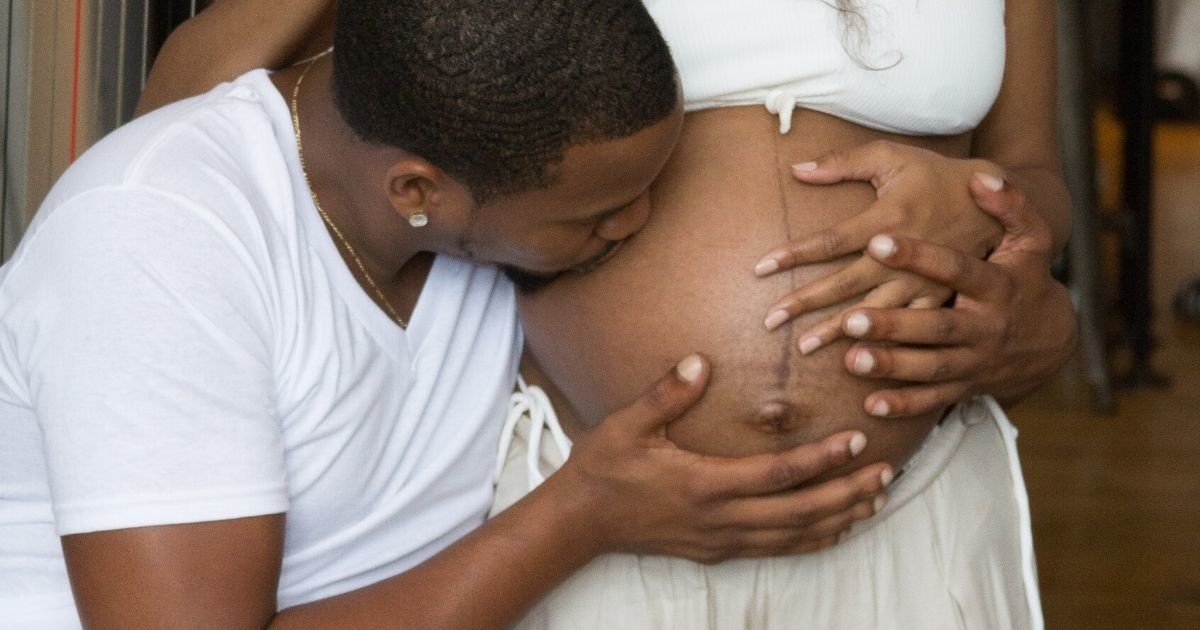
Photo credit: Photo by Andre Adjahoe on UnsplashArray

“New normal.” That’s the phrase ushered in by the novel coronavirus and the devastating scourge of death from COVID-19. “New normal” is the only way we as a collective can explain our current way of life: Social distancing, face mask wearing, working and teaching from home, constantly conferencing over Zoom and scheduling telehealth appointments instead of physically seeing a doctor unless absolutely necessary.

However, not all characteristics of “normal” life are easily converted to digital expression. Specifically, giving birth.

Right now as the United States grapples with more than 100,000 COVID-19 deaths, a resurgence of the virus in a dozen states, and massive demonstrations over the most recent murders of unarmed Black men and women, there is one crisis that is not getting the same attention, a crisis that has been allowed to linger and fester in this country for decades: The glaring disparity in the maternal death rate and infant mortality rate for Black mothers and their newborns.


Pre-pandemic numbers show that Black women are three to four times more likely to die during childbirth than are white women, and Black infants are twice as likely to die at birth or immediately after than are white infants.

“The thought of losing a child that didn’t even get a chance to live life is truly terrifying,” says Rebecca Merriweather, who recently gave birth to a baby girl.

Merriweather wasn’t aware of the statistics surrounding Black maternal health and infant mortality when she learned she was pregnant, but already had concerns of her own: “Preeclampsia and possible complications during labor and how to avoid them.” Preeclampsia is a pregnancy complication characterized by high blood pressure and is 60% more common in Black women compared to white women.

“Oftentimes women take very good care of themselves,” said Certified Nurse Midwife Marsha E. Jackson CNM, MSN, FACNM. “They’re often knowledgeable, they’re eating right, they’re doing all the right things, and they start running into problems with their blood pressure creeping up and things like that and it stems back to our whole healthcare system and all of the hurts we as Black people have experienced for centuries.”

To help stave off some of those complications, Dr. Chandra Adams, M.D. has had to find new ways to keep up with her patients health while also providing them the best care.

“We’re doing telehealth visits, which works pretty well, but we had to work out getting blood pressure cuffs, encouraging people to buy them, that way if they aren’t coming to the office we can keep up with their vital signs,” Dr. Adams said.

In the midst of the pandemic some Black women have been taking their birth experience into their own hands, looking for alternatives to decrease their risks and exposure to the coronavirus and any complications that could impose on their pregnancy, labor, and delivery. Those alternatives include midwifery care.

“More Black women go to the hospital to have their babies, but I think with this pandemic we have had an increase in women seeking our services,” Jackson said. Jackson is the owner, co-founder, and director of BirthCare & Women’s Health, Ltd. based in Alexandria, Virginia, a midwifery practice that caters to clients who have births in their homes or in the BirthCare birth center.

Dr. Adams, The Owner of Full Circle Jax in Jacksonville, Florida runs a private practice with doctors and midwives on staff. While she believes in the midwifery and birth center model, she cautions that it is not for everyone.

“I’m not opposed to out of hospital birth, but I don’t think any decisions about birth should be made out of fear . . . You shouldn’t run from a hospital because of a perceived danger without understanding what the risks are of delivering outside of the hospital.”

Tecoya Harris, currently pregnant with her first child, admits to having mixed feelings about giving birth.

“I feel anxious about delivery due to the fact that I can’t anticipate how it will feel,” Harris said. “At the same time, my faith is high so I have to trust that God has brought me to this moment because I am ready. Having resources, a strong partner, and a doula also helps bring down some of those anxieties.”

Dr. Adams strongly advocates for her moms to have a doula, and also encourages pregnant women to use their voice to advocate for themselves.

“I’ve been hearing women saying [about health problems] ‘I’ve never brought it up again because I was afraid of what a doctor would say to me,’ and so they just stopped talking about their problem. Don’t stop talking about your problem! Go find somebody who’s going to listen to you, and treat you like someone who respects you, and will find out what’s wrong. That’s our job. That’s literally our job!”

While that may be the job, history shows the healthcare industry has a negative track record when it comes to listening and believing Black women when they say something is wrong.

“The system has done a terrible job of listening to Black women,” Dr. Adams said.

Tennis superstar Serena Williams and Olympic-gold medal winner Allyson Felix have both been vocal about their birth experiences, the complications they faced, and how they had to fight to be heard to get well. Yet their stories, though cautionary, still end with a positive outcome. The same cannot be said for Charles Johnson IV who lost his wife Kira in 2015 when she bled to death after the birth of their second child.

“They [were] under the care of a physician, and basically they just let her die,” Jackson said, recounting hearing Charles Johnson IV tell his family’s story during the 2020 virtual conference of the American College of Nurse Midwives.

Jackson and Dr. Adams believe some of the blame for the Black maternal health crisis lies with ever expanding physician practices.

“One of the biggest problems was when hospitals started to employ physicians,” Dr. Adams said. “Physicians, before, when we started we’d hang our shingle and open solo practices. You had the personal care because in the similar fashion of the mom-and-pop shop you were responsible for the level of customer service, and that is how you kept your ‘customers’ coming back.”

Now, many physicians are employed by hospitals or large doctor groups who are more focused on productivity. Dr. Adams said that has led to a decrease in time doctors have with their patients, which can lead to a decrease in care. Because of this, Dr. Adams and Marsha Jackson both say Black women need to educate themselves in every way.

“You have to do research in the beginning. You want to find out what kind of options are available,” Jackson said.

“But you’re not going to go to medical school,” Dr. Adams added. “There’s a certain amount that you can’t just get from Googling or reading on your own . . . but if you gather enough information about people you’ll find what you’re looking for.”

This advice applied before the pandemic hit. Now, the country’s response to COVID-19 has made it all the more important for pregnant Black women to do their research, assess their risks, and have the hard conversations with their doctors.

On her birth experience, Merriweather said, “The labor and delivery ward where I had my child was very meticulous in keeping the section of the hospital cut off from the rest to protect the lives of the mother and baby from the virus. Each doctor and nurse was only allowed to work in that division of the hospital and had to be tested before being allowed in while wearing masks.”

For Harris, hearing of positive birth experiences from friends and loved ones has helped to keep her spirits up, even in the face of the pandemic and Black maternal health crises.

“Although it is scary, seeing that other women have had healthy babies and deliveries give me hope,” Harris said. “Our bodies were made to do this and we are already amazing moms with every decision we make during pregnancy.”

Pandemic or no pandemic, Dr. Adams—who has been focused on the Black maternal health crisis for over a decade—says while this discussion isn’t new, people are finally being heard and there is responsibility for doctors and Black women.

“What is unfortunate in the healthcare system is that Black women are not listened to, we are not treated with respect, and we are not believed when we present valid complaints,” she said. “[But] what is actually physically killing us is hypertension and hemorrhage. We are not dying from people not being nice to us. We are disenfranchised and we’re not receiving the appropriate amount of preventative care, and sometimes responsive care, because of that.”

In early March, U.S. Representatives Lauren Underwood, Alma S. Adams, and Senator Kamala Harris introduced the Black Maternal Health Momnibus Act of 2020. The legislation is a package of nine individual bills aimed at “comprehensively addressing every dimension of the Black maternal health crisis.” However, the package has received little exposure due to COVID. Once again, Black women, mothers, and their children are left to fend for themselves at a time when Black people are twice as likely to die from COVID than their white peers.

With the future passability of the Black Maternal Health Momnibus Act unknown, and the expected resurgence of COVID-19 in the fall (or until there is a vaccine) the onus remains on Black women to educate and advocate for themselves and their unborn children, and perhaps to seek a collaborative model of care where available.

“Cooperative care between midwives and physicians is essential,” Dr. Adams said. “You have to have a midlevel to understand what is normal. [Someone] who has been trained enough to see enough to know what is abnormal and to appropriately refer to someone to handle when something is abnormal.”

  • People who got out of toxic relationships share the red flag they wish they’d taken seriously from the start
    Photo credit: CanvaCouple arguing
    ,

    People who got out of toxic relationships share the red flag they wish they’d taken seriously from the start

    “If it feels weird, IT IS WEIRD.” People who got out of bad relationships share the one thing they noticed early and wish they hadn’t explained away.

    There’s a particular kind of clarity that comes after leaving a bad relationship. Things that seemed explainable at the time suddenly line up into an obvious pattern. The warning was always there. It just didn’t look like a warning yet.

    Across social media thousands of people have shared the specific ‘red flag‘ moments they noticed early on but later regretting ignoring.

    The “jokes” that weren’t jokes

    “Constantly ‘joking’ about other people being better looking or smarter,” wrote one person on Reddit. “At first, I brushed it off as humor, but over time it became clear that those ‘jokes’ were actually digs at my self-esteem. Should’ve realized earlier that a relationship where someone makes you feel less than isn’t healthy.” The camouflage of humor is one of the most common delivery mechanisms for contempt, it gives the person plausible deniability while the cumulative damage adds up.

    The tip thief

    “When we first started dating, we went to a restaurant, and he spotted the server’s tip on the table and pocketed the money with a smug look on his face,” one person shared with BuzzFeed. “He proceeded to do it to two of her tables.” She stayed. He turned out to be “broke, lazy, and entitled.” How someone treats a stranger, especially one who can’t push back, tends to be a more reliable window into their character than how they treat you when they’re trying to impress you.

    The convenient indifference

    “Being indifferent to everything,” wrote another Reddit user. “They do not want to give an opinion on anything or be a part of decision-making, no matter how major it is.” It can feel easygoing at first, low-maintenance, drama-free. What it often turns out to be is a way of remaining unaccountable. You can’t be blamed for outcomes you never weighed in on.

    When the weirdness gets explained away

    “His ex-wife showed up at one of our first dates and made a big scene,” shared one person on BuzzFeed. “He kept assuring me she was just having a hard time moving on.” She interrupted more dates, pranked the writer at work, and broke into their car. “He dumped me to go back to her. As people say, if it feels weird, IT IS WEIRD.”

    The target of unspecified anger

    From Bored Panda: “She was always angry with me about something. Some way that she felt mistreated, unseen, etc. It was so consistent that I realized it had nothing to do with me. She just needed someone to be the target of her anger, and I wasn’t interested in being that someone.” Chronic, diffuse anger that lands on you regardless of what you do isn’t about you, but staying in it is a choice that gets harder to reverse the longer you make it.

    The gaslighting that didn’t look like gaslighting yet

    “She would say that I was yelling when I wasn’t,” shared one person. “She would say I had said hurtful things and that I ‘don’t even realize what I was saying.’ I ended up seeing a psychiatrist at her suggestion and was put on medication for seven years.” The insidious thing about gaslighting is that it works precisely because the person experiencing it assumes the confusion is their fault. If you find yourself constantly questioning your own memory of conversations, that’s worth examining.

    The love-bombing

    Psychology Today notes that a 2021 Reddit survey on early warning signs of abusive relationships repeatedly surfaced one pattern: intensity that arrives too soon. “You’re the only one who understands me. I never met anyone like you before.” A whirlwind of attention and validation (like constant messages and declarations of connection after a few weeks) can feel like finally being truly seen. It can also be a way of establishing emotional debt before the dynamic shifts.

    What people notice after

    The most common thread across thousands of these accounts isn’t that the red flags were invisible. It’s that they were visible and felt in real time, but were talked out of taking them seriously by the other person and by the relationship’s good moments, or by the internal voice that says you’re being too sensitive, too suspicious, too demanding.

    “If it feels weird, it is weird” is not a perfect heuristic. But checking in with that feeling, rather than immediately explaining it away, appears to be one of the more consistent pieces of advice from people who wish they’d done it sooner.

  • Doctors thought the smaller twin was struggling in the womb. She was perfectly fine. She had been saving her sister.
    Photo credit: CanvaA pair of newborn twins in the hospital.
    ,

    Doctors thought the smaller twin was struggling in the womb. She was perfectly fine. She had been saving her sister.

    A young mom refused to choose between her daughters. The smaller one made sure she didn’t have to.

    At 21 weeks pregnant with twins, Leah McBride got news that no expectant mother wants to hear. Her daughters had twin-to-twin transfusion syndrome, a condition where blood flow between twins becomes dangerously imbalanced. One baby becomes the donor, passing nutrients to the other, while the other receives everything. The size difference between her girls had already reached 48 percent.

    Doctors advised her to terminate the smaller twin, Poppy, to give her other daughter, Winnie, a better chance. They were worried Poppy would have a heart attack from giving away so many nutrients, and that Winnie might have a stroke.

    Leah refused to choose.

    Doctors were concerned about the smaller twin

    She sought a second opinion at Memorial Hermann Hospital in Houston, where doctors recommended surgery to correct the blood flow imbalance. It worked. But at 27 weeks, her water broke, and the situation became urgent again. Doctors used steroids to try to delay delivery, knowing that earlier was riskier. “We needed to buy as much time as possible because 28 weeks was still too early to deliver them safely,” Leah said.

    At 31 weeks, Poppy’s heart rate began dropping and wouldn’t stabilize. Doctors had no choice but to deliver both girls. Poppy and Winnie were born on May 24, 2019.

    The twist that surprised everyone

    What happened next surprised everyone. Poppy, the smaller twin at 1lb 11oz and the one whose monitor had been sounding alarms, was born perfectly healthy. Nothing was wrong with her heart.

    It was Winnie who was in trouble. She weighed 3lb 8oz but had underdeveloped lungs and was rushed to the intensive care unit. At 14 days old, she needed brain surgery to relieve a buildup of fluid. She came through it.

    A lifesaver of a sibling

    Leah said the doctors told her plainly: “I think your tiny twin saved her sister’s life.” Poppy’s heart rate had been fluctuating on the monitors, triggering the early delivery. But there was nothing wrong with Poppy. The medical team’s belief is that she was sending distress signals because Winnie wouldn’t have survived much longer in the womb.

    “Poppy’s heart rate had been all over the place, so they had to deliver,” Leah told reporters, “but when she was born, she was completely fine.”

    The girls, now 6, are thriving. Winnie was reading books from memory by age 3. Poppy is still smaller than her twin, but according to Leah, she still keeps a close eye on her sister. When Leah tried to move their beds apart, they weren’t having it.

    “They are so close,” Leah said. “It’s sweet.”

  • Why don’t space photos ever show stars? NASA’s explanation is simpler than you’d think and a photo from Artemis II proves it.
    Photo credit: NASAImage of the Earth and Moon taken from outer space
    ,

    Why don’t space photos ever show stars? NASA’s explanation is simpler than you’d think and a photo from Artemis II proves it.

    It comes down to basic camera science. The same rules that apply to your phone apply to cameras 400,000 kilometers from Earth.

    Every time NASA releases a stunning image from space of something like the Earth glowing against blackness, or the Moon’s cratered surface in sharp detail, the same question follows: where are the stars?

    It happened again when NASA’s Artemis II crew, which launched April 1, 2026 and flew around the Moon before splashing down in the Pacific on April 10, began beaming back photos from their historic 10-day mission. The images were breathtaking. The backgrounds were pitch black. And the conspiracy theories started almost immediately.

    The camera can only do so much

    NASA’s answer, as explained in an Instagram post, is straightforward: it’s just how cameras work.

    A camera captures a limited range between the brightest and darkest parts of a scene. When you’re photographing the Moon or the Earth from space, you’re dealing with an enormous difference in brightness. The sunlit surface of the Moon is extraordinarily bright, while stars are extraordinarily dim. To expose correctly for the bright object in the foreground, the camera’s settings have to be adjusted in a way that makes the faint stars in the background vanish into black.

    Three settings control this. Shutter speed determines how long the camera’s sensor is exposed to light. ISO controls how sensitive that sensor is to light. And aperture determines how wide the lens opens. Getting the Moon in sharp, detailed focus means tuning all three for brightness, which is the opposite of what you’d need to pick up the faint glow of distant stars. You could technically try to capture both, but the result would be a blurry, overexposed mess where neither looks right.

    The same thing happens on Earth. Try taking a photo of the night sky next to a bright streetlight. The stars disappear. The light itself isn’t unusual. It’s physics.

    The photo that proves both sides

    The most remarkable image from the Artemis II mission accidentally became the perfect illustration of exactly this phenomenon. On April 6, during their seven-hour flyby of the Moon’s far side, the crew captured a total solar eclipse. The Moon completely blocked the Sun for nearly 54 minutes of totality, far longer than any eclipse visible from Earth’s surface.

    In that image, stars are clearly visible. Dozens of them, scattered across the frame around the dark disk of the Moon with its glowing halo of light. Venus appears as a bright silver glint on the edge. It’s one of the most striking photographs ever taken by humans in deep space.

    The reason the stars appear is the same reason they normally don’t: the object in the foreground is dark. With the Moon blocking the Sun, there’s no blinding bright surface to expose for. The camera settings could be adjusted to capture the dim light of distant stars, and they showed up exactly as they should.

    As NASA noted in the image description, stars are “typically too faint to see when imaging the Moon, but with the Moon in darkness stars are readily imaged.”

    A historic mission

    The Artemis II mission marked humanity’s return to the Moon’s vicinity for the first time since Apollo 17 in 1972. The crew included commander Reid Wiseman, pilot Victor Glover, and mission specialists Christina Koch and Jeremy Hansen of the Canadian Space Agency. They set multiple records. Koch became the first woman to travel beyond low Earth orbit. Glover became the first person of color to witness the lunar far side. Hansen became the first person from a nation other than the United States to go to the Moon. And the mission broke the all-time crewed distance record, reaching 406,771 kilometers from Earth, surpassing the mark set by Apollo 13 in 1970.

    The crew also captured an Earthset, with Earth sinking below the Moon’s horizon, that deliberately echoed the iconic Earthrise photo from Apollo 8 in 1968. They photographed ancient lava flows, impact craters, and surface fractures on the far side. They witnessed six meteoroid impact flashes on the darkened lunar surface.

    Koch described the experience with characteristic simplicity: “The Moon really is its own unique body in the Universe. It’s not just a poster in the sky that goes by. It’s a real place.”

    And it turns out space is full of stars. You just need the right conditions and the right camera settings to see them.

  • His mysterious toe pain lasted five years. The scan that finally caught it gave him four days to live.
    Photo credit: CanvaA doctor examines a patent's leg.

    Richard Bernstein walked around barefoot a lot at home, so when his right toe started hurting in 2017, he assumed he’d stubbed it. A visit to his podiatrist confirmed nothing was broken and nothing was wrong. He moved on.

    But the pain didn’t.

    Five years of pain that no one could explain

    Over the next few years it crept upward from his toe to his ankle, then to his knee. A sports medicine doctor suggested stenosis and recommended physical therapy. That didn’t help either. Walking became gradually harder. On a trip to Greece, Bernstein had to sit out while his friends climbed to hilltop monasteries. He took his dog to the park less and less.

    In March 2022, his right leg swelled noticeably. His doctor ordered an abdominal scan. What it found changed everything.

    What they found when they finally looked

    Bernstein had a massive cancerous kidney tumor that had grown into his vena cava, the main vein that returns blood from the lower body to the heart. The tumor and tumor thrombus were a foot long and weighed around two and a half pounds. Because the vena cava was almost completely blocked, blood was backing up in his lower extremities, which explained the years of unexplained pain creeping up his right side. His two main coronary arteries had also been compromised, with 99 percent of their function lost.

    He was referred to Dr. Michael Grasso, chair of urology at Phelps Hospital. Grasso’s assessment was direct. “He told me I had four days to live,” Bernstein said.

    A 12-hour surgery, three specialists, one chance

    The surgery required three specialists working simultaneously over 12 hours at Lenox Hill Hospital in New York City. Dr. Grasso handled the kidney and tumor removal. Cardiothoracic surgeon Dr. Jonathan Hemli performed a double bypass on the coronary arteries, which had been discovered only once Bernstein was already admitted, an unexpected complication that Hemli said they couldn’t ignore. “It would have been really disappointing to cure him of his kidney cancer only to learn in six months, nine months, a year that the poor man had a heart attack and didn’t survive,” Hemli told TODAY. Vascular surgeon Dr. Alfio Carroccio opened the vena cava to remove the tumor thrombus, which extended all the way into the heart.

    To do the work safely, the team had to cool Bernstein’s body, stop his heart, and run him on a heart-lung bypass machine while they operated. Then they slowly warmed him back up and restarted his heart.

    Bernstein spent three days sedated afterward, a week in intensive care, and nearly three weeks in cardiac rehab relearning to walk. He lost around 30 pounds. He gained it back.

    He’s now on ongoing immunotherapy and doing twice-yearly scans. Dr. Grasso’s update: “The cancer hasn’t spread anywhere else, which is amazing, considering where he came from.”

    Bernstein’s own assessment of how he got through it: “My attitude is ‘it is what it is, and there’s not much we can do about it.’ That got me through.” His advice for anyone else in a similar situation: “If something is wrong and they can’t find it, don’t give up looking. Trust your feelings about your own body.”

    And on the swollen leg that finally triggered the scan that saved him: “If my whole leg hadn’t swollen up, I would have dropped dead.”

  • Women’s pet cockatiel proudly belting out ‘September’ by Earth, Wind & Fire has people rolling
    Photo credit: CanvaA cockatiel poses for a photograph.

    “Do you remember…the 21st night of September?” has been one of the most iconic song openings for decades, as the R&B hit by Earth, Wind and Fire perpetually serves as a catchy favorite for dance clubs, movie scenes and TikTok clips alike. However, “September” has also gained wild popularity among an unlikely group: pet cockatiels.

    One cockatiel in particular has taken a shining to the song to the point of obsession, much to the combined delight and chagrin of his owner. You see, Kiki doesn’t just like listening to the song, he sings and dances to it. Loudly. Over and over. At uncomfortable hours of the morning.

    Kiki’s owner has shared multiple examples of her pet bird reveling in his favorite song, and it’s hilarious every time.

    Watch:

    But Kiki doesn’t even need anyone else around in order to sing his favorite song. Here he is singing and dancing all by himself when his owner left the room and left her camera running to see what he would do.

    As cute and hilarious as this is, it surely gets old after a while, right? It’s one thing to watch in a video—it’s got to be entirely another to hear it all the time at home.

    It’s also not just a Kiki quirk. Apparently, “September” is a “thing” among cockatiels. Other cockatiels have been known to love it and sing it, though not quite as well as Kiki does.

    Someone on Reddit asked why so many cockatiels love the song—one person even said it was basically the cockatiel national anthem at this point. No one knows exactly why, but this explanation by Reddit user nattiecakes is as good an explanation as any:

    Yeah, cockatiels genuinely like the song in a way they don’t universally take to many other songs. My cockatiel is 17 and early in life basically seemed to max out his harddrive space learning a little bit of La Cucaracha, The Flintstones theme, the phrase ‘pretty bird,’ and this horrible alarm clock sound that is similar to the hungry baby cockatiel sound. We thought we could not get him to learn anything else because they do have some limits.

    Then ‘September’ came. Every cockatiel loved it. We decided to see if our cockatiel loved it.

    I sh*t y’all not, within a DAY he whistled the first three notes, which is really all that matters. He hasn’t been able to learn more, but he loves it.

    Now our African grey whistles it to him constantly. He used to reliably whistle La Cucaracha to our cockatiel when our cockatiel would get angry and upset, and our cockatiel would start singing instead and forget he’d been upset. But almost immediately our grey switched to using ‘September’ 90% of the time. Like, it’s so plain even to our grey that ‘September’ is the song to unlock a cockatiel’s better nature. I think the grey likes it a lot too, but he has many other songs he likes better.

    As for why cockatiels like this song so much… all I can guess is it really resonates with their cheery vibe. I think the inside of a cockatiel’s mind is usually like a disco.”

    It’s pretty clear that Kiki’s love for “September” is unstoppable. His owner even recorded him singing it in slow motion, which is really wild to watch:


    Rock on, Kiki. Just maybe not so early in the morning.

    You can follow @kiki.tiel on Tiktok for more Tiki musical serenades.

    This article originally appeared two years ago. It has been updated.

  • Woman with unfortunate initials warning parents to think things through before naming their kids
    Photo credit: CanvaWoman holding her nose looking in the refrigerator.
    ,

    Woman with unfortunate initials warning parents to think things through before naming their kids

    “When you’re deciding what to name your kids, look at what their initials are going to be.”

    A lot of thought goes into choosing a baby’s name. Will other kids have the same name when they start kindergarten? Is the name too dull? Is the name too original? Will the name lead to bullying? Will the name look good on a job application? Could you run for president with this name?

    Popular TikToker Emily Windham, 23, from Birmingham, Alabama, is adding another question that parents should ask themselves: What will their initials be? Windham has gone viral for her video in which she reveals how disheartening it is when she has to write her initials, especially when they appear multiple times on a document. To put it simply, they are pretty yucky.

    “When you’re deciding what to name your kids, look at what their initials are going to be,” she says at the beginning of her video. “Every time I have to initial a document, I have to write ‘EW.’ All these little initial lines just say EW EW EW EW.” The situation is frustrating for Emily because her parents considered naming her Alexia, which would have been AW, which is sweet. “That’s so cute,” she said.


    The post inspired other people with unfortunate initials to comment; some of them are much harder to live with than EW.

    “Yea… mine is XL,” Xitlali wrote.

    “Mine is ‘BLT’ because it was my dad’s favorite sandwich. Mom didn’t notice until it was too late I don’t even like blts,” Bryony Tally Art wrote.

    “Mine is ‘PP’ elementary and middle school was a blast,” Pais wrote.

    “I knew a girl in school whose name was Amy, and her initials were also AMY, and I’ll never forget because that’s so baller,” Charlie wrote.

    “My son’s initials are BRB,” Ashleigh wrote.

    “My initials are EGG,” El-Glory wrote.

    “My initials spell EMO and I think that’s awesome,” Elle wrote.

    “Mine is OG… now I’m getting married and it’ll be OJ. Can’t decide if I like an original gangster or Orange Juice more,” Olivia wrote.

    “Mine is ME, and when I sign out on duties at work, someone goes, ‘Can someone please stop signing ME and sign your initials?’ I’m like, those are my initials,” a TikToker named Madison wrote.

    @thesam_show

    sorry if i talk about this problem too much but it is HAPPENING AGAIN!!

    ♬ original sound – Sam Showalter

    Emily’s story is similar to that of Samantha Hart, a woman who went viral on TikTok in 2023 because her name doesn’t exactly work well with modern email conventions. Clearly, her parents hadn’t thought that her name would cause any trouble in the late ’90s when email was a new thing. So, she made a video warning parents to think of their children’s future email addresses before selecting a name.

    “My name is Samantha Hart,” the 27-year-old said. “Most companies use the email designation of first initial, last name, meaning my email would be shart.” A shart is an accidental release when one assumes they only have gas, which is not exactly how one wants to be known in professional circles. Imagine sending an email to someone at another company and their name comes up as SHart. YOu might even think that someone is pranking you.

    “At every single workplace, I have received an email from HR the week before I start letting me know that my name does not exactly fit the company email structure as they would intend and [asked] would I mind if they gave me a different structure for my email,” Hart said. That’s kind of the HR people to help Samantha save a bit of face when starting a new job, so the thing she’s most known for, before meeting anyone, is her questionable email address.

    Sadly, Hart will probably have to deal with this whenever she gets a new job. Hopefully, she enjoys doing long stretches with her employers.

    This article originally appeared two years ago. It has been updated.

  • Can you tell someone will die months before it happens? A hospice nurse shares the clues.
    Photo credit: CanvaA nurse comforts a hospital patient.

    Death is a mystery in so many ways, despite the fact that we all know for sure it’s going to happen. We don’t know when we will go and can’t really be sure of what comes next, so whether we’re thinking about ourselves or a loved one, there’s understandably a lot of fear and uncertainty around death.

    That’s why Julie McFadden’s work is so important. As a palliative care nurse in the Los Angeles area, who has seen over a hundred people die, her videos shed light on the process to make us all a bit more comfortable with the inevitable. McFadden is also the author of the bestseller, “Nothing to Fear.” The nurse’s experience helping people in their final stages has given her a unique perspective on the process.

    In one video, she shared how she can see the first symptoms that someone is going to die a natural death about 6 months before they finally do. In other words, she can determine that someone only has half a year left to live when most of us have no idea they have entered the final stages of life.

    @hospicenursejulie

    Replying to @Mariah educating yourself about scary topics will help decrease fear. ✨Nothing to Fear ✨- my book- out june 11th #hospicenursejulie #hospicenurse #caregiversoftiktok #medicaltiktok #learnontiktok #nothingtofearbook

    ♬ original sound – ? Hospice nurse Julie ?

    What are the signs a person is dying at the 6-month mark?

    McFadden says that people who are dying are usually placed in hospice care when the symptoms begin to appear around the 6-month mark.

    “You will have very generalized symptoms. Those symptoms will usually be, one, you will be less social. So you’ll be more introverted than extroverted,” McFadden said. “Two, you will be sleeping a lot more. And three, you will be eating and drinking a lot less. Literally, everyone on hospice, I see this happen to.”

    death, dying, afterlife, hospice, signs of dying
    A heavenly view of the sky. Photo credit: PIxbay/Pexels

    What are the signs a person is dying at the 3-month mark?

    You are going to notice more debility,” McFadden continues. “They will be staying in their house most of the time. It’s going to be difficult getting up and just going to the bathroom. Again, sleeping a lot more and eating and drinking a lot less.”

    What are the signs a person is dying at the 1-month mark?

    Something usually begins to happen in the final month of someone’s life. They start to believe they are in contact with others they have lost. It’s like they are there to make the dying person feel comfortable with their final transition.

    “Usually around the one month mark is when people will start seeing ‘the unseen’, they have the visioning. They’ll be seeing dead relatives, dead loved ones, dead pets, old friends who have died,” McFadden said. “Again, not everyone — but many, many people will start seeing these things at around one month.”

    Angela Morrow, a registered nurse at Verywell Health, agrees that people in the final stage of life often hear from those who have passed before them. Morrow says we should refrain from correcting the patients when they share their stories of talking to people and pets who have died. “You might feel frustrated because you can’t know for sure whether they’re hallucinating, having a spiritual experience, or just getting confused. The uncertainty can be unsettling, but it’s part of the process,” Morrow writes.

    At the end of the video, McFadden says that the most important factors palliative care nurses look at to determine the stage of death are eating, drinking and sleeping. “Most people, a few weeks out from death, will be sleeping more than they are awake. And they will be barely eating and barely drinking,” McFadden said.

    In the end, hospice nurses “allow the body to be the guide” as they help their patients transition from life to death.

    McFadden’s work has brought a lot of peace to her followers as they go through trying times. “My mom is in hospice right now and she’s currently, I think, hours or days from death. YourTikToks have helped me out tremendously,” Deb wrote. “My grandma passed away in February, and she experienced all of this. this page brings me peace knowing everything she went through was natural,” Jaida added.

    “Thanks, Julie. I volunteer in a hospice end-of-life facility, and this helps educate the families. Your posts are wonderful,” Grandma Nita wrote.

    One of the things that makes death so scary is the number of unknowns surrounding the process, so it’s important that McFadden shares her stories of helping people to the next side. She shows that death is a natural process and that hospice nurses are here to help make the transition as peaceful as possible.

    This article originally appeared two years ago. It has been updated.

  • A Vietnam veteran stood on street corners handing out resumes for six years. One woman saw him and changed his life within 24 hours.
    Photo credit: CanvaAn older man rests by the side of the road.

    When a woman stopped to pump gas in Folsom, California, she noticed a 62-year-old man standing on the nearby street corner holding a sign. He wasn’t asking for money. He was handing out resumes.

    She offered him cash anyway. He declined and handed her a copy of his resume instead.

    “My heart sunk,” she later wrote. She went home and posted his story, along with his resume, to a private Facebook group called Folsom Chat. Within 24 hours, as CBS Sacramento reported, George Silvey had a job.

    Sacramento veteran’s determination pays off

    Silvey was a Vietnam veteran who had spent six years standing on street corners trying to find work the old-fashioned way. He’d had careers in maintenance, heavy equipment operation, painting, and in-home healthcare. He wasn’t looking for charity. He was looking for someone to take a chance on him.

    “I know that once I get my foot in the door, I can make a lot of money real fast,” he told reporters. “All I need is the opportunity.”

    This veteran’s job search was over

    The Facebook post did what six years of sidewalk networking hadn’t. Summer Gonzalez, co-owner of KiKi’s Chicken in Rancho Cordova, saw it and called. The next day Silvey was washing dishes and taking out trash. He showed up early.

    “How many people are really asking to earn their money when you see them out on the street?” Gonzalez said. “And how can you say no to someone that actually wants to take the initiative to take care of himself?”

    She didn’t say no. Neither did Silvey when his roommate’s phone started ringing off the hook with offers after the post went up. “It threw me for a loop because I didn’t expect this to happen so fast,” he said.

    On his first day he put on his uniform shirt and got straight to work. Gonzalez watched and said simply: “He’s a great guy.”

    The importance of community

    Silvey called it a lucky day. But the luck was mostly the woman at the gas station who saw someone doing exactly what she would have wanted someone to do — refusing to beg, asking instead to be given a shot — and decided she was going to make sure he got one.

    “Never give up, never give up hope,” Silvey said afterward. “It can happen and it will happen.”

Family

Woman with unfortunate initials warning parents to think things through before naming their kids

Health

Can you tell someone will die months before it happens? A hospice nurse shares the clues.

Uncategorized

A Vietnam veteran stood on street corners handing out resumes for six years. One woman saw him and changed his life within 24 hours.

Family

His neighbor kept stealing gas from his backyard. His two-part revenge ended with a police arrest.