When you look at a state map, you see cities and towns of various sizes and populations. Even the tiniest towns with a handful of people—or even just one resident—have a place on the map.
One might assume, then, that every named town on every published map is a real place. But as it turns out, there have been imaginary towns on maps, from centuries ago up until the relatively recent past. And they were published that way on purpose.
The map trap was a clever way to prevent plagiarism
They’re called “phantom settlements” or “paper towns” and are part of a phenomenon known as map traps. Basically, map traps are place names conjured out of thin air and put on a map to protect a mapmaker’s copyright.
It may seem strange for a professional mapmaker to make a map wrong on purpose, but it’s actually rather brilliant. Historically, cartography has been an incredibly important profession. Before the Internet and global positioning systems, paper maps were how people oriented themselves and found their way from place to place. Creating an accurate map was a vital and valuable skill.
If a cartographer created and published a map, they wouldn’t want people to plagiarize it. Inventing phantom settlements—pretend places with fake names that only exist on a map—was a way for cartographers to essentially “watermark” their original maps. If someone else made a map that included the fake town (or street or other detail), it would be clear whose map they had plagiarized.

The confusing nonexistence of Algoe, New York
One of these phantom settlement map traps was (or wasn’t?) Algoe, New York. If you’ve read John Green’s novel Paper Towns, you’re probably familiar with it. It’s not a real town. It never existed.
Algoe was the brainchild of Otto Lindberg and Ernest Alpers from General Drafting Company. In the 1930s, they were commissioned to create a map of New York and dropped the fictional Algoe at a dirt road intersection in the Catskill Mountains.
Some years later, Rand McNally published a map that included Algoe. The trap worked. Or did it? When General Drafting threatened to sue the mapmaking giant, Rand McNally told them they would lose.
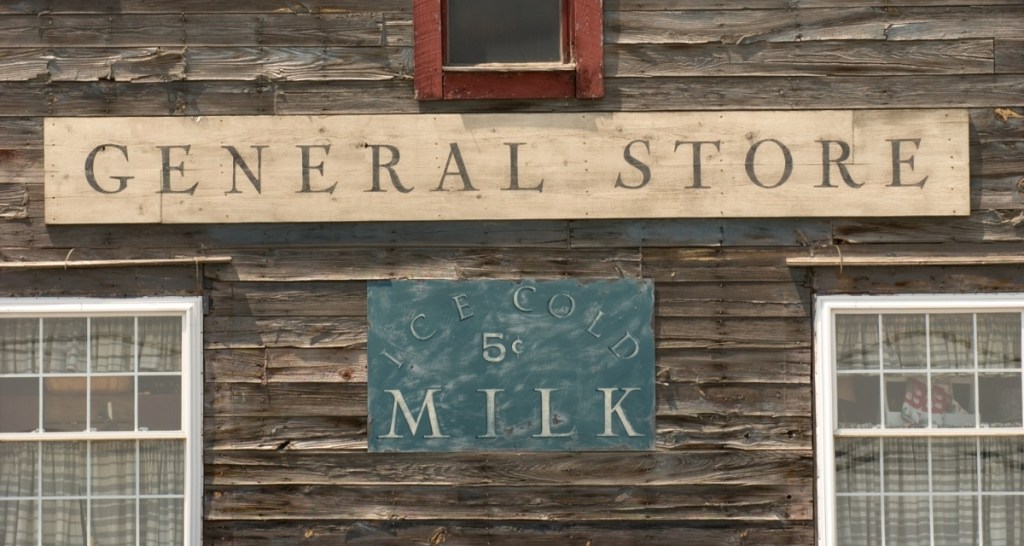
In an ironic twist of events, an “Algoe General Store” had been built at the intersection where Algoe was located (but didn’t really exist) on the map. The store owner had seen Algoe on the map and named his general store accordingly. Rand McNally claimed it had obtained the coordinates for Algoe from county records. And those records showed the Algoe General Store located at that place on the map, hence Algoe showing up on their map.
Do map traps still exist in the age of online maps?
Though there wasn’t a real town there and the shop didn’t last long, the general store’s name was enough to prove that a place called Algoe did exist. In fact, it was apparently included on Google Maps up until 2014, even though it was never actually a real place.
Today, if you type “Algoe, New York” into a Google Maps search, it comes back with a “no results” message. The same goes for “goblu” and “beatosu,” two fictional places in Michigan that were included in the official map of Michigan in 1978. (Variations of “Go Blue” and “Beat OSU” were a shout-out to the rivalry between the University of Michigan and Ohio State University by Peter Fletcher, the former chairman of the Michigan State Highway Commission. The map was also reprinted after some complaints.)
It’s hard to know how many phantom settlements in countries around the world have snuck into our modern navigation systems, but by now, it’s safe to guess they’ve mostly, if not entirely, been weeded out.
But hey, if you want to invent your own town, maybe start by building a general store with your proposed town’s name on it. It seems to be the way to go.