The word “trending” may have gained a whole new meaning in the Internet age, but trends have always existed as a social phenomenon. A video of teens in the ’90s doing “Cat’s Cradle” has people pondering how trends spread, sometimes worldwide, without social media.
For those who are unfamiliar, Cat’s Cradle is a game of sorts involving a long loop of string wrapped around your hands and fingers in a specific pattern. The game involves transferring the string from one person to another without getting it tangled. Here’s what it looks like:
The video on X triggered a ton of nostalgia in those who remember playing Cat’s Cradle. But the most remarkable thing is that people from all over the world say they played it around the same time:
“HOW is this a universal thing. We did this exact thing, exact same moves, in Norway in the early 90s. Pre internet.”
“That’s a great question. I used to play that game back in the ’90s, too, and I’m from Brazil.”
“Same in Italy.”
“What? This is a global thing, greetings from Chile.”
“This is a game we used to play in Korea. Seeing it for the first time in a long while makes me miss my childhood memories.”
“We did this in Romania too.”
To be fair, Cat’s Cradle has been around for a long time. No one appears to know its exact origin. But a specific reference to the game appears in the 1768 novel The Light of Nature Pursued by Abraham Tucker:
“An ingenious play they call cat’s cradle; one ties the two ends of a packthread together, and then winds it about his fingers, another with both hands takes it off perhaps in the shape of a gridiron, the first takes it from him again in another form, and so on alternately changing the packthread into a multitude of figures whose names I forget, it being so many years since I played at it myself.”

It appears the game has seen surges in popularity at various times—but how? Why did it specifically trend in the ’90s? How did games, fashion, music, dance styles, and more become popular across the country or even the world before the Internet?
Those who remember life before social media have shared recollections of how trends spread on forums like Reddit and MetaFilter. It’s a fascinating glimpse into a nearly forgotten past:
“Everyone at a school would do it. Then, one group of people from this school would go to a youth group, and meet a group of people from a different school. It would become common throughout the youth group.
People from the youth group would go to their own respective schools, and it would spread around the rest of their school mates who don’t go to that youth group – but perhaps go to a different youth group.
Once something got popular enough, it might feature in magazines or even on TV.” – LondonPilot
“Cultural transmission was a lot slower previously. In the 60s it was said New Zealand was five years behind England, later it was three years.
Broadcast radio and later TV sped up cultural transmission immensely. TV shows were transported on film and played on telecine machines at the studios, up to six years behind the original release.
Magazines were a bigger thing than now. International magazine subscriptions by airmail were extremely expensive so surface mail added up to two months to delivery. Many people read magazines via public libraries.
Note none of the above are interactive, and only magazines allowed niche interests. Broadcast media had very few channels (until the US got cable TV) e.g. in NZ in the 70s a in a big city there might be six radio stations and one TV station. Later there were four major TV stations.
There was much less diversity. Record shops had knowledgeable staff who could make recommendations. These were important as an album was a significant investment.
People travelled and brought back new ideas. (In those days, Western countries were different to each other 😉
Schoolkids spread jokes and games – one person could infect a whole school with a good game.” – cyathea
“I think in the pre-internet days some trends and fashions were spread broadly via mass media, but many were regional and local. My wife grew up in small town Midwest and I grew up in the Boston area, both in the 70s to 80s. There were music, fashion and other cultural trends that were part of everyday life for me in the early- to mid-80s that were entirely unknown to her at that time.” –slkinsey
“I think the big thing was that trends moved more slowly. So you’d have a thing that happened on TV and your weekly magazine (Time, Newsweek) would talk about it. Or your monthly humor magazine (Mad, Cracked). A lot more people watched the same channels, so you’d see people dressed on shows and dressed in commercials… I lived in a rural area, and when I’d visit friends in the big city I’d get ideas and some of those would filter down. I assume it was like this for other people, getting ideas from people more cosmopolitan and then the trickle down. Same with radio, there were only so many stations and there would be a culture that built up around each one which might include shows they promoted (you’d go, you’d see other people) and maybe local events or stuff around them.” –jessamyn
“I think social media is more about an acceleration in the spread of trends, as well as an increase in the scope of their spread, than the absence of trend-spreading before. Prior to Facebook/etc, people talked to one another, in person…
Media wasn’t ‘social’ as we mean it today, but it was still… media. That, and people did what people do – watched the ‘in’ person or people among them and often copied/followed along. Based on my memories of summer camp, trends spread there practically in minutes, sans phones or the internet. Some of this had to do with most of the campers originating in the same hometown. They all just… knew… what was “in” (based on all knowing each other, they decided what that was, in turn based on movies, TV shows, etc) and good luck if you weren’t from their town. People set trends, and others follow, or try to follow – whether through gossip and magazines and MTV, or through social media. All that’s changed is the speed in which trends get set, and the size of the area that they reach.” – Armed Only With Hubris
“- Cool kids moving from other parts of the country to my rapidly-growing Minneapolis suburb were a vector for fashion trends in particular.
– Older siblings would see shows at local venues, interact with others in the audience as well as the bands themselves and people traveling with them, and then bring those influences back to their friends and younger siblings.
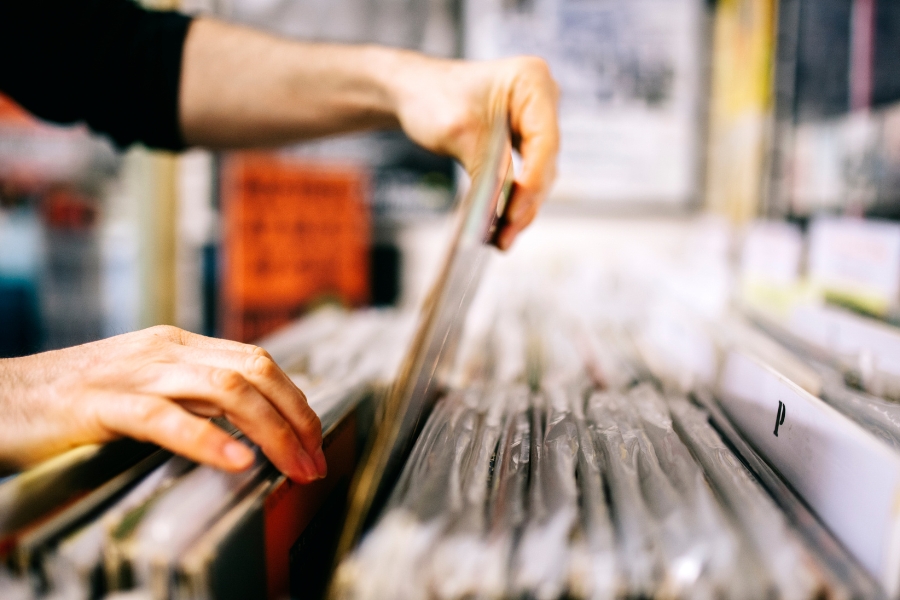
– A handful of shops played important roles spreading culture. Music stores were hangout spots where music was discovered and ideas mixed.
– Alternative radio stations and college radio had a big reach even out into the small towns and countryside.” – theory
It’s wild to see these explanations and realize how much the Internet has changed things. Newspapers, magazines, radio stations, and record shops have struggled just to survive in the digital age. Rarely do they serve as influential forces in what’s popular.
The people we used to think of as trendsetters are now “influencers.” Real-life social connections have morphed into social media connections that spread trends in the blink of an eye. It’s hard to remember a time when trends spread slowly, either in person or through influences we all shared. But it sure is fun to remember a time when a simple string game could keep us occupied for hours.