7 practical tips for creating more hygge in your home

Embrace the winter season with cozy comfort and connection, Denmark-style.

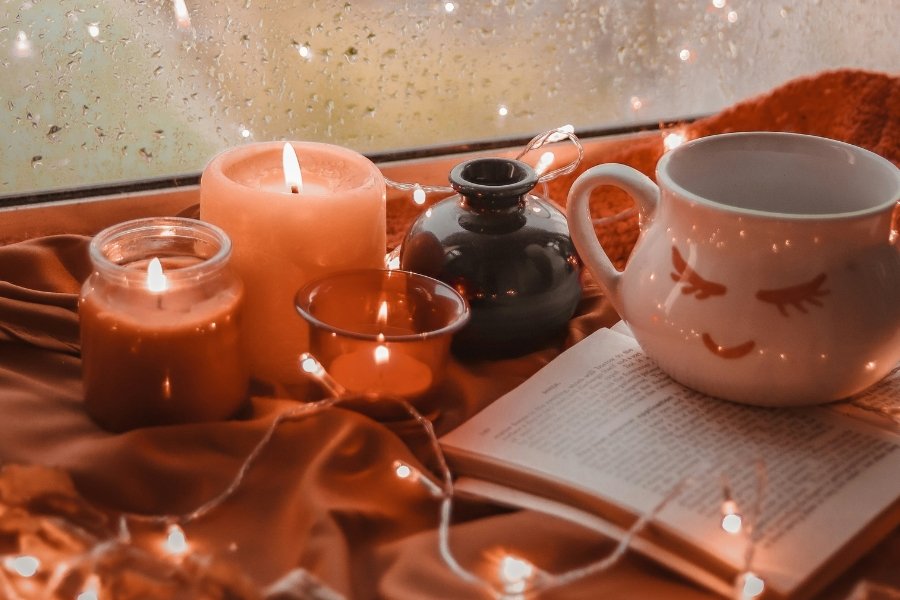
warm lights and candles on a window sill
Hygge is an aesthetic, an atmosphere and an experience all at once.Photo credit: Photo by Nav Rashmi Kalsi on Unsplash

As an Amazon Associate, Upworthy may earn proceeds from items purchased that are linked to this article, at no additional cost to you.

Some people love everything about winter—the brisk air, the frosty trees, the long evenings. Others loathe the frigid winter months and have to be dragged through them, kicking their fur-lined snow boots all the way.

If you’re one of the latter, I’ve got bad news. Winter happens whether we like it or not—always has and always will. So rather than fight it, perhaps a better approach is to embrace it—or at least the good parts about it. Leaning into indoor warmth and playing up cozy comfort and connection make the dark, cold months much more bearable.

That’s the idea behind the Danish concept of hygge, which encourages slowing down, appreciating the simple things, and creating a warm, inviting haven of comfort in your home. Many of us have become familiar with hygge in recent years, but we may not know how to actually make it happen. There’s no one right or wrong way to create hygge, but here are seven practical tips for bringing more of it into your home.


1. Maximize natural light—but also add string lights
string lights in front of a window
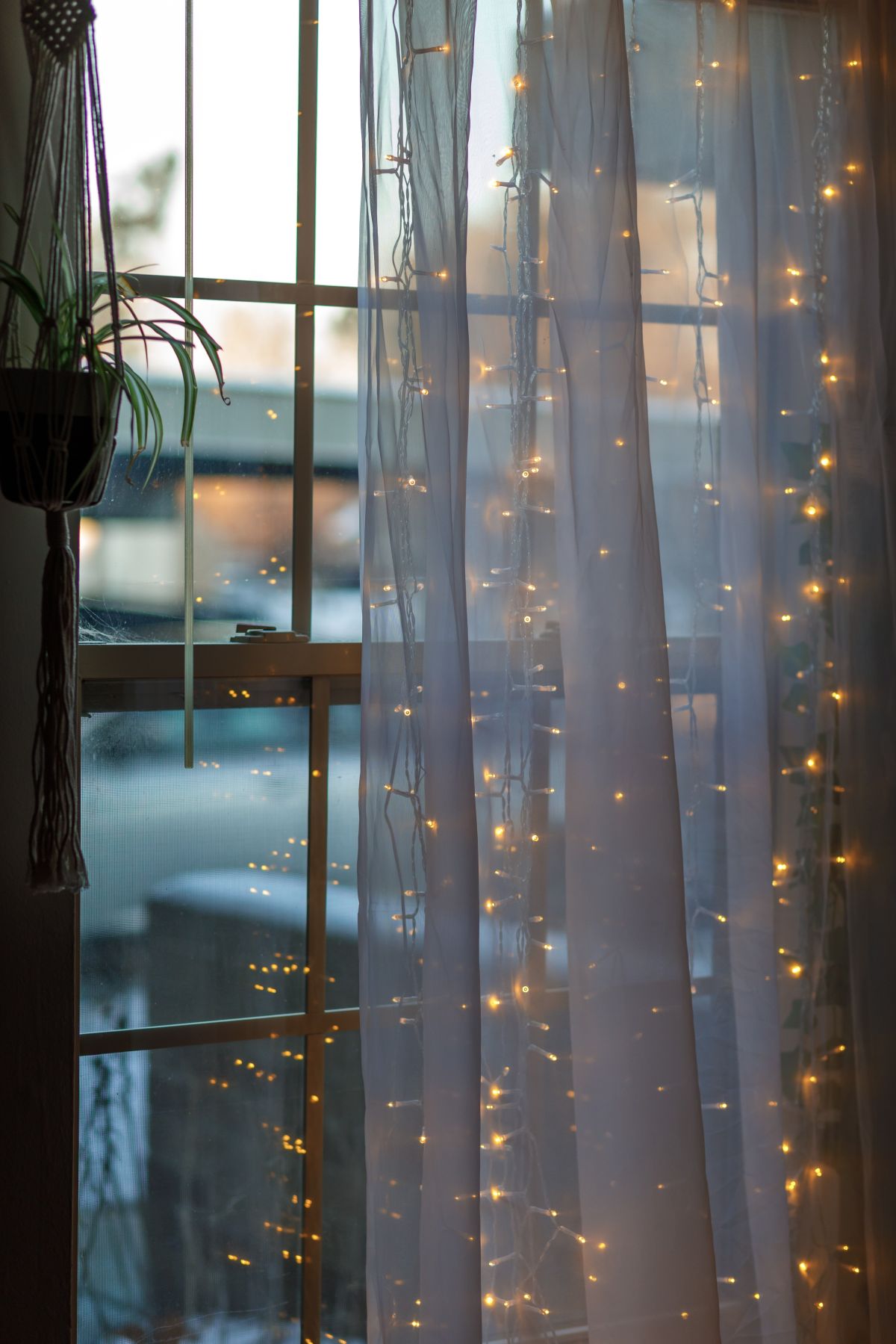
When in doubt, add more string lights. Photo by <a href="https://unsplash.com/@thephotographermom?utm_content=creditCopyText&utm_medium=referral&utm_source=unsplash">Shashi Chaturvedula</a> on <a href="https://unsplash.com/photos/white-and-blue-window-curtain-iXG6hbevvPw?utm_content=creditCopyText&utm_medium=referral&utm_source=unsplash">Unsplash</a>

We get less sunlight in the winter, so during the day, we need to maximize whatever natural light we have. Keep curtains open and keep your windows unobstructed during the day.

Then add more light! Fairy lights/string lights/twinkle lights—whatever you prefer to call them—aren’t just for Christmas and they add so much warmth to a space, even during the day. Drape them around the windows, across the mantle, along the wall or wherever it makes sense to put them. Also, once night hits, opt for lamps instead of overhead lights, which can feel cold and harsh.

2. Introduce soft, plush textures

woman reading under a fluffy blanket
The fluffier and softer the better Photo by <a href="https://unsplash.com/@coleito?utm_content=creditCopyText&utm_medium=referral&utm_source=unsplash">Cole Keister</a> on <a href="https://unsplash.com/photos/a-person-holding-a-doughnut-eKQOa96zZM8?utm_content=creditCopyText&utm_medium=referral&utm_source=unsplash">Unsplash</a>

Plush blankets, fur pillows, throws made from sheepskin or cotton—all the things you’d want to cuddle up with add to hygge. Decor elements made out of natural materials like woven baskets, wooden accents, and textured rugs also enhance the warm hygge aesthetic.

3. Bring the outdoors indoors

u200bPine and pinecone sitting on a table
Bringing in plants doesn't have to be complicated or expensive. Photo by <a href="https://unsplash.com/@sixteenmilesout?utm_content=creditCopyText&utm_medium=referral&utm_source=unsplash">Sixteen Miles Out</a> on <a href="https://unsplash.com/photos/red-and-brown-pine-cone-on-green-pine-tree-pjID9-qfOAw?utm_content=creditCopyText&utm_medium=referral&utm_source=unsplash">Unsplash</a>

We bring fresh flowers indoors in spring and summer, but often neglect to think of plants as decor in winter. But bringing the outdoors in with potted plants and boughs of greenery promotes a sense of calm and well-being. Even just some simple pinecones or sprigs of pine can add a lot to the atmosphere.

4. Embrace candles and soothing scents

candles on a table
Candles warm up any space immediately. Photo by <a href="https://unsplash.com/@sixteenmilesout?utm_content=creditCopyText&utm_medium=referral&utm_source=unsplash">Sixteen Miles Out</a> on <a href="https://unsplash.com/photos/white-pillar-candles-on-brown-wooden-table-bdVmIkx_gIs?utm_content=creditCopyText&utm_medium=referral&utm_source=unsplash">Unsplash</a>

Candles are a hygge essential, adding a warm glow and tranquility to any space. Even battery-operated flameless candles help with hygge if you aren’t able to use real candles in your space. Naturally scented candles or essential oil diffusers in soothing scents like lavender, vanilla or cinnamon can make the hygge experience multi-sensory, enhancing the calming effect.

5. Invite people over for a cozy, casual hangout
four friends laughing and hanging out
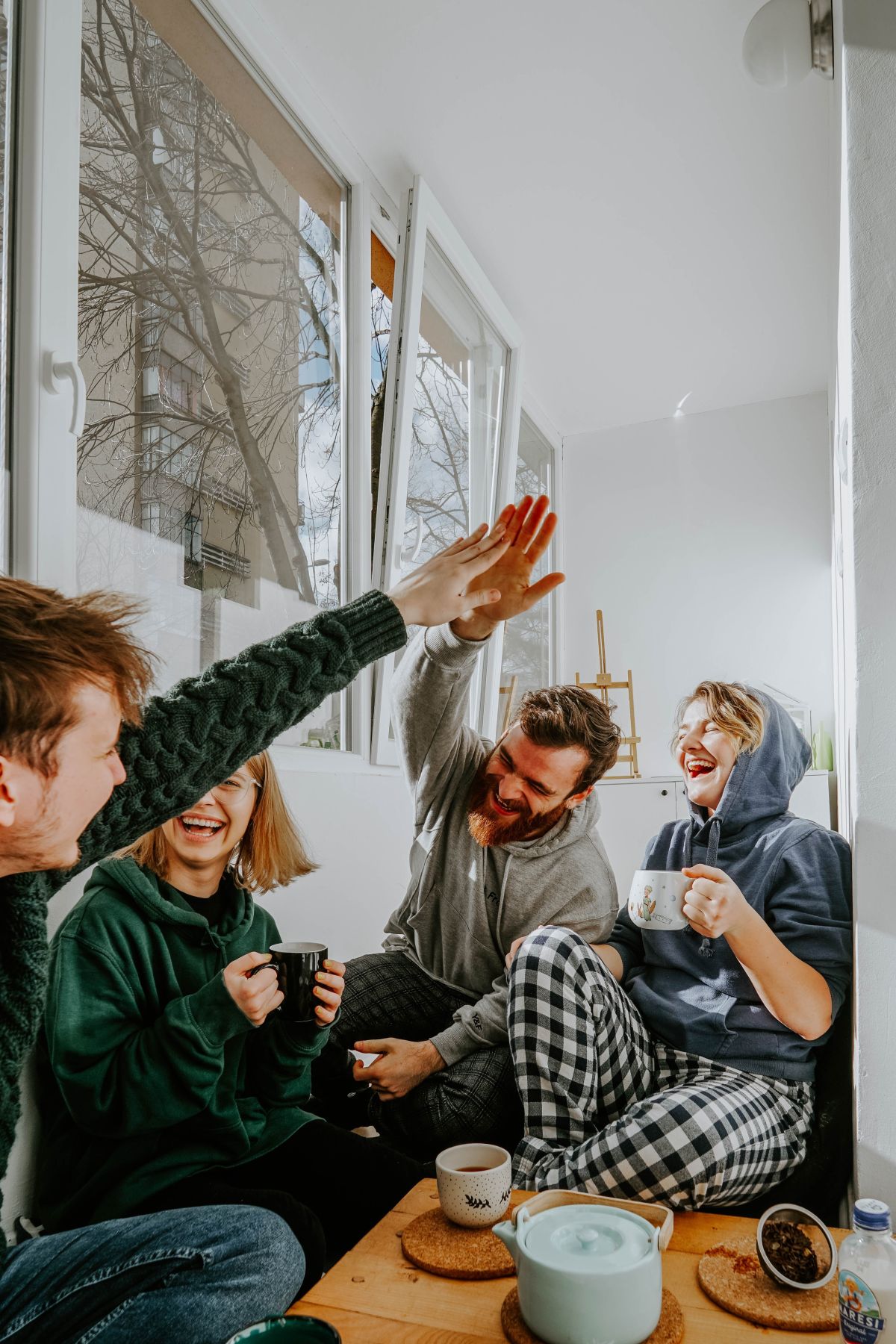
Keep company casual. Photo by <a href="https://unsplash.com/@coleito?utm_content=creditCopyText&utm_medium=referral&utm_source=unsplash">Cole Keister</a> on <a href="https://unsplash.com/photos/a-person-holding-a-doughnut-eKQOa96zZM8?utm_content=creditCopyText&utm_medium=referral&utm_source=unsplash">Unsplash</a>

Warmth and coziness isn’t just about decor, it’s about well-being, and a hygge atmosphere really shines when you’re connecting with people. So have a get together, but keep it simple. Invite a few friends or family members over for a cup of cocoa. Maybe play a classic board game. Bake cookies together and enjoy them. Or just sit by the fire or the candles and chat. Invite them to come in their jammies if you want. Keep it casual and cozy.

6. Create a hygge corner for yourself
pillows, books and candle on a window seat
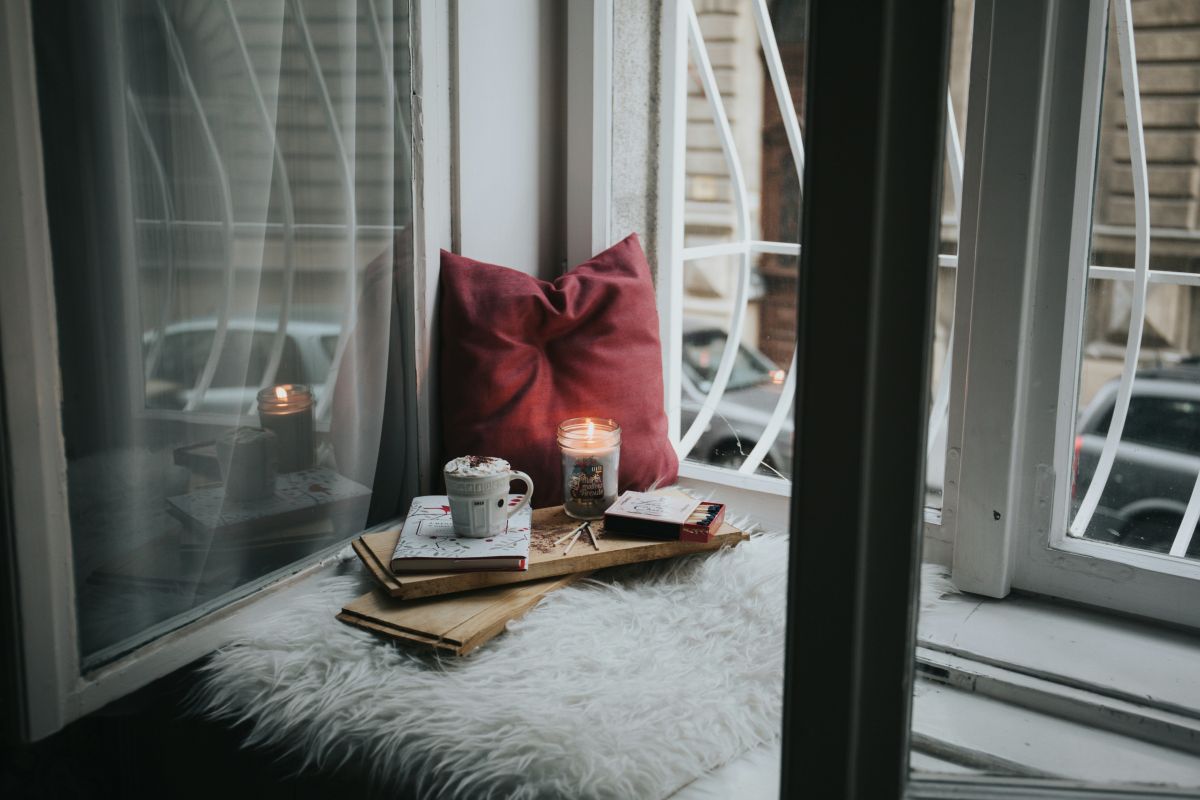
Make yourself a cozy personal space all your own. Photo by <a href="https://unsplash.com/@happpyal?utm_content=creditCopyText&utm_medium=referral&utm_source=unsplash">allison christine</a> on <a href="https://unsplash.com/photos/white-ceramic-mug-on-white-knit-textile-3GNesMmbHBo?utm_content=creditCopyText&utm_medium=referral&utm_source=unsplash">Unsplash</a>

“Connection” also means connecting with yourself. Designate a specific area of your home as your personal hygge haven. Maybe you create a cozy reading nook, a quiet meditation spot, or a comfy armchair by a window. Fill it with books, artwork or cherished mementos that bring you joy.

7. Indulge in self-care with simple rituals

woman in sweater holding a mug
Cozy up with your favorite cup. Photo by <a href="https://unsplash.com/@happpyal?utm_content=creditCopyText&utm_medium=referral&utm_source=unsplash">allison christine</a> on <a href="https://unsplash.com/photos/white-ceramic-mug-on-white-knit-textile-3GNesMmbHBo?utm_content=creditCopyText&utm_medium=referral&utm_source=unsplash">Unsplash</a>

Again, hygge isn’t just an aesthetic; it’s an attitude of embracing simple pleasures. What basic self-care rituals can you add to your daily routine? Maybe a warm cup of tea? Reading by a fireplace? A candlelight bath? Writing in a journal? Focus on self-care activities that promote peace and well-being.

Hygge isn’t about accumulating specific possessions or achieving a certain style; it’s about purposefully creating an atmosphere that nurtures comfort, contentment and well-being. Winter really is easier to get through when you lean into the season, which means slowing down, comforting all of your senses and giving yourself the gift of cozy, tranquil connection with yourself or with others.


  • A landmark new study shows that 45 percent of older adults cognitively improve as they age
    A senior couple working out.Photo credit: Canva
    ,

    A landmark new study shows that 45 percent of older adults cognitively improve as they age

    “What we found is that improvement in later life is not rare, it’s common.”

    Most people assume that by the time you hit your 60s, you’ve reached the point of continuous mental and physical decline. The mind just isn’t as sharp, and the body becomes overtaken by inflammation, stiff joints, and brittle bones. However, a new study from Yale University says that, for the most part, this is only true for those who believe it.

    A new study published in the journal Geriatrics found that when researchers followed 11,000 participants over the age of 65 for up to 12 years, 45% of them improved in either the mental or physical domains, with some improving in both. About 28% improved physically, and 32% improved mentally. To determine whether the participants improved or declined, they completed a global mental performance assessment and a walking test.

    “Many people equate aging with an inevitable and continuous loss of physical and cognitive abilities,” lead author Becca R. Levy, an international expert on psychosocial determinants of aging health, said in a statement. “What we found is that improvement in later life is not rare, it’s common, and it should be included in our understanding of the aging process.”

    When it comes to aging, attitude is everything

    The researchers hypothesize that the major reason some people show improvements is their beliefs about aging. Those who have a more positive view of the aging process were much more likely to show improvements in their mental and physical health. Those with negative views on aging were much less likely to show any improvement.

    It makes sense because if you believe that you can improve after the age of 65, you’re much more likely to try. If you think that you can or cannot improve your health over the age of 65, you’re probably right.

    “Our findings suggest there is often a reserve capacity for improvement in later life,” Levy said. “And because age beliefs are modifiable, this opens the door to interventions at both the individual and societal level.”

    seniors, geriatrics, working out, exercise, happy women
    A group of older women exercising. Photo credit: Canva

    How to stay mentally and physically fit after 65

    Improvement after 65 requires regularly performing age-appropriate mental and physical exercises. The Centers for Disease Control and Prevention recommends at least 150 minutes of moderate-intensity physical activity per week, which can be divided into about 22 minutes a day.

    Here are exercises that can help people age well:

    1. Brisk walking

    Studies show that walking is great for seniors’ mental and physical health and can help reduce the chances of developing cardiovascular problems as well as cognitive issues, including dementia and Alzheimer’s.

    walking, working out, exercise, aging, seniors,
    A group of people walking. Photo credit: Canva

    2. Resistance exercises

    Resistance exercises, or strength training, can help prevent muscle loss and improve metabolic health. They’re also known to elevate mood and improve sleep quality. Examples of strength training exercises include light weights, squats, and standing push-ups against a wall.

    3. Meditative movements

    Mental and physical exercises such as tai chi and yoga have been shown to improve health in older adults. They are great for flexibility, mental sharpness, and muscle strength. The combination of mindfulness, breathing, and movement benefits both the body and mind.

  • Her dog wouldn’t stop sniffing her breath. She thought it was weird but it saved her life.
    A woman sitting with her dog. Photo credit: Canva
    , ,

    Her dog wouldn’t stop sniffing her breath. She thought it was weird but it saved her life.

    Dogs can be weird. Any dog owner will tell you that, but typically their shenanigans are just personality quirks. Unfortunately for Colleen Ferguson of Kent, England, her dog’s weird behavior wasn’t just a silly personality thing. For several weeks, Ferguson’s German Shepherd was obsessively sniffing her mouth. This was a new behavior that she found…

    Dogs can be weird. Any dog owner will tell you that, but typically their shenanigans are just personality quirks. Unfortunately for Colleen Ferguson of Kent, England, her dog’s weird behavior wasn’t just a silly personality thing.

    For several weeks, Ferguson’s German Shepherd was obsessively sniffing her mouth. This was a new behavior that she found quite odd. The dog, Inca, was only two years old, but she seemed to know something was wrong with her owner and was doing her best to let her know. Inca constantly sniffed around Ferguson’s mouth and frowned.

    german shepherd, dog smells cancer, dog saves life, wholesome, pets, culture
    A woman and her dog outside. Photo credit: Canva

    The dog’s persistence caused the then 60-year-old woman to become concerned, which led her to the dentist. Everything checked out fine, but Inca was still frowning after sniffing Ferguson’s mouth. This prompted Ferguson to visit her doctor to be tested for other things that might change the smell of her breath.

    According to Medical News Today, diabetes can cause the breath to smell differently. Gluten intolerance and Celiac disease can also cause bad breath, according to Imperial Dental Center. Ferguson was cleared of any gut-related issues after tests from her doctor. Yet Inca would not stop telling her something was wrong. Growing more concerned about her dog’s new behavior, Ferguson decided to do a full-body scan to rule out anything unusual.

    “Her behavior towards me changed, she just started homing in on my mouth. Every time she could get a sniff of my mouth she would frown,” Ferguson told The Mirror. “She just had this focused intent on my mouth, and you couldn’t push her away until you had done an outbreath. When she got that she would give me such a look and walk away. In no way did I expect lung cancer at all. It was such a shock because I am a non-smoker, and because I taught biology, I was very anti-smoking.”

    Turns out, Inca was trying to tell her she had a tumor growing in her lungs. Thanks to the dog’s keen nose and insistent behavior, Ferguson was able to catch the cancer early. Before long, the science teacher was off to surgery, where doctors removed a golf-ball-sized tumor.

    german shepherd, dog smells cancer, dog saves life, wholesome, pets, culture
    Doctors operating on a patient. Photo credit: Canva

    “The surgeon said…’that dog saved your life. We never catch it at stage one,’” Ferguson told the BBC.

    This remarkable discovery took place in 2015, and since then scientists have been working on recreating a nose like Inca’s. The Massachusetts Institute of Technology is currently developing an “e-nose,” a mechanical nose that scientists are training with AI to detect cancer. They have moved to the trial phase, testing more than 500 urine samples to see if the artificial nose is as accurate as a dog’s nose in detecting cancer.

    Dr. Andreas Mershin, a quantum physicist, developed the device that will be used to screen donated urine samples. The samples were prescreened by Medical Detection Dogs, and the results of the e-nose will be compared with those of the dogs.

    german shepherd, dog smells cancer, dog saves life, wholesome, pets, culture
    A dog sits in the grass. Photo credit: Canva

    “This is a major milestone,” Mershin told Medical Detection Dogs. “We’ve worked to emulate the dogs’ abilities and train machines in a similar way—rewarding them for correct identifications. It’s like giving our devices a new sense: a nose. Phones already have eyes and ears, but machine olfactors are the next frontier in health technology and AI sensing. This could transform the world of diagnosis, screening, and early detection.”

    While the e-nose is currently designed to detect prostate cancer, once it’s perfected, the mechanical nose will hopefully detect other cancers as well.

    Ferguson, for one, is thankful that her dog’s nose detected her lung cancer early, giving her a renewed chance at life.

    “I was just so lucky,” she told The Mirror. “Every day is special with her. To catch it at stage one is just remarkable. I don’t know how I would have survived with radiotherapy and chemotherapy. She saved me a lot of fuss. It was meant to be.”

  • A relatively unknown eating disorder is on the rise as Millennials warn about ‘2000s skinny’
    A woman standing in front of a mirror.Photo credit: Canva
    ,

    A relatively unknown eating disorder is on the rise as Millennials warn about ‘2000s skinny’

    Recently, adolescent girls have taken to social media to flaunt that they’re “2000s skinny,” while the women who lived through it are sounding the alarm. The days of people being encouraged to embrace their natural curves seem to be over, as many now strive to make themselves smaller. Wellness culture is morphing into something dangerous,…

    Recently, adolescent girls have taken to social media to flaunt that they’re “2000s skinny,” while the women who lived through it are sounding the alarm. The days of people being encouraged to embrace their natural curves seem to be over, as many now strive to make themselves smaller.

    Wellness culture is morphing into something dangerous, resulting in unrealistic body standards. Celebrities like Demi Lovato, Britney Spears, and Lindsay Lohan were called fat when they were still adolescents in the early 2000s. Back then, it wasn’t uncommon to see hip, collarbone, and chest bones protruding on the red carpet—or even in a local high school.

    2000s skinny, heroin chic, diet culture, wellness influencers, eating disorders, orthorexia
    A woman measures her waist. Photo credit: Canva

    There was a name for it back then: “heroin chic.” The term was “used to describe an ultra-thin, waifish body, as well as a style of fashion photography that glamorized a skeletal figure,” Percival Fisher Jr., a psychotherapist, writes for DetoxRehabs.net.

    In that era, teen girls—much like their favorite young celebrities—were developing eating disorders and body dysmorphia. Raven-Symoné has said she underwent two breast reductions and liposuction before the age of 18 due to fat-shaming. Lovato, Taylor Swift, and Lohan have also shared that they struggled with eating disorders earlier in their careers.

    2000s skinny, heroin chic, diet culture, wellness influencers, eating disorders, orthorexia
    Skinny woman refuses food on a plate. Photo credit: Canva

    Teen girls were doing all they could to make themselves as small as possible because that was suddenly the beauty standard. Now it’s back. The trend is catching on, in part thanks to wellness influencers who stress “clean eating” to achieve physical and mental fitness. Advice about keeping daily calories under 1,200 or doing juice cleanses to maintain a low weight is showing up in the algorithm.

    In a video uploaded to social media, a very thin woman poses for the camera. The text overlay on the video reads, “If you think 800–1,200 calories a day is starvation, just know that the 2000-calorie diet was made up by the elite who prey on kids.” James Cappola, a fitness coach, responded to the video by calling out the dangerous misinformation and warning about the risks of anorexia and orthorexia.

    Personal trainers, nutritionists, dietitians, and Millennials are among the chorus shouting into the void. But it may be too late. With social media, fear-based nutrition advice, and the re-emergence of heroin chic converging, orthorexia is on the rise.

    Orthorexia is a relatively unknown eating disorder that has not yet been included in the Diagnostic and Statistical Manual of Mental Disorders, Fifth Edition as an official diagnosis. The National Eating Disorder Association describes the disorder as an obsession with healthy eating. “People with orthorexia become so fixated on so-called ‘healthy eating’ that they actually damage their own well-being and experience health consequences such as malnutrition and/or impairment of psychosocial functioning,” the association explains.

    The warnings from older adults and experts online don’t seem to stop teen girls from showing off their extreme thigh gaps. When a new video of a girl getting down to a size 00 goes up, a Millennial adjusts her messy bun and shares the war stories of her adolescence.

    In a TikTok video, wellness entrepreneur Autumn Clayman says, “Everyone is getting freakishly thin online. This trend needs to stop. This trend needs to stop. We’re right back to early 2000s skinny—it’s freaky. It’s scary, and people aren’t considering what this trend is going to do to their bodies long term.”

    @autumnclaymann

    anyone else feel similarly about this topic?

    ♬ original sound – Autumn Clayman

    After disclosing that she used to struggle with an eating disorder, Clayman shares her concern about people going to extremes to be thin. She then explains how extreme undereating is “disrupting their hormones, bone density drops, they go through mood issues, so more anxiety, depression, thyroid slows down, fertility drops, chronic stress, gut and digestion issues, skin issues, blood sugar issues, just all the things.”

    A man who goes by the name Brandon Ruins Everything on TikTok explains something younger people may not know about the trend: “People are talking about bringing back 2000s skinny, and I don’t think y’all realize that 2000s skinny isn’t a body type. It’s a goalpost that keeps moving. You will never be skinny enough to be 2000s skinny.”

    Getting healthy and being comfortable in your body are admirable goals. The way you do it—and the reasons you’re doing it—matter. Changing your body to fit a trend can lead to unhealthy expectations and behaviors, as concerned voices have pointed out. Hopefully, the ultra-skinny trend fades as quickly as it returned.

  • 15 hard truths that people swear made their lives so much better
    A woman learns a harsh truth about her friends. Photo credit: via Liza Summer/Pexels

    A significant part of adulthood is realizing that many uncomfortable truths are indeed real, even if we wish they weren’t. At first, these harsh truths may dampen our spirits and make us feel that the world is a bit colder. However, understanding some of life’s hard lessons opens us up to greater possibilities and can help us overcome the obstacles holding us back.

    Harsh truths help us realize when relationships aren’t as great as they can be. They also prevent us from having too much faith in people and institutions that will ultimately disappoint us. Knowing dark truths can also help us appreciate the things that are truly beautiful, honest, and good. A Redditor named Rare_Can_5418 asked the AskReddit forum, “What difficult truths, the sooner you accept them, the better your life will be?” and received over 6,500 responses. Many of them were centered around harsh truths about relationships and the fact that even if we do our best in life, we can still end up with the short end of the stick.

    The key is to keep going and never let failure get you down.

    Here are 15 of the “difficult truths” that made people’s lives a lot better.

    1. Stop comparing yourself

    “There will always be someone better looking, better educated, younger, more experienced, more intelligent or wealthier than you. Do your best, live without regret, have empathy and kindness, give when you can, expecting nothing in return. Focus on your heart value more than what others have.”

    “Comparison is the thief of joy.”

    Research shows we have a tendency to compare ourselves to highly visible and highly skilled people, which makes us feel worse. We wonder why we can’t cook as well as our foodie friend or why we’re not as organized and put-together as our Type A neighbor. No wonder comparisons make us feel like crap!

    harsh truths, hard truths, life lessons, reality, adult life, adulting, psychology, imposter syndrome, askreddit, life hacks
    Comparison is the thief of joy. Giphy

    2. Some people won’t like you

    “You can be sweetest, juiciest peach on the tree. But some people don’t like peaches.”

    “In Spanish, there’s a saying: ‘Nadie es moneda de oro para que lo quiera todo el mundo,’ which translates to something like nobody is a gold coin to be liked/wanted by everyone else.”

    Worrying too much about making everyone like you is a quick path to becoming a people pleaser, an impossible task that takes a serious toll on your mental health.

    3. Things are just things

    “They don’t have feelings. They don’t care if you give them away or sell them or throw them out. If a thing is useful, keep it. If not, get rid of it.”

    Psychologists refer to perceiving that inanimate objects have feelings as anthropomorphizing. Psych Central says that humans project feelings onto objects to relate to them more deeply. “People generally anthropomorphize to make sense of events and behaviors they experience. Further, attributing emotions, attitudes, mental states, faces, and values to non-human things can help you feel connected to something,” Sarah Barkley writes in a PhD-reviewed article.

    harsh truths, hard truths, life lessons, reality, adult life, adulting, psychology, imposter syndrome, askreddit, life hacks

    Things don’t care if you throw them away. Giphy

    4. Not all friendships last

    “Surprisingly though, the ones that last are not necessarily the best (or even good) ones.”

    “Most friendships are based on convenience, I’ve found. Unless two people are willing to put in a lot of effort, time and distance will do more to end a friendship than any disagreement.”

    It’s natural and OK to outgrow friendships. If you’ve put in a solid effort and it’s not working the way it used to, being comfortable with letting the relationship go will do wonders for your guilt and stress levels.

    5. You may be the bad guy

    “You can do your best with someone and still be the villain in their story.”

    “One of my current favourite memes is: I don’t care if I’m the villain in your story, you’re the clown in mine.”

    The truth is we’re all just people doing our best, even the people who have wronged you.


    harsh truths, hard truths, life lessons, reality, adult life, adulting, psychology, imposter syndrome, askreddit, life hacks

    You might be the villain in someone’s story. Giphy

    6. You can’t change people

    “You can only help people who actually want it. If they’re not ready to change or put in the effort, there’s not much you can do. Realizing this can save you a lot of frustration and help you focus on people who actually appreciate your help.”

    “It’s always tough having those friends who are constantly complaining but doing nothing to address what they are complaining about. But as an adult, you just have to sit there and listen. No point in offering help to someone who isn’t asking for it. Kinda like how it’s really tough to teach someone who isn’t interested in being taught.”

    Expecting others to change is bound to lead to disappointment. There’s a saying that goes, “When people show you who they are, believe them.” Hoping and wishing and working to make them somewhere else, more often than not, gets you nowhere.

    7. How we judge ourselves and others

    “We judge ourselves by our intentions. We judge others by their actions.”

    “In psychology, this is called fundamental attribution error.”

    The Fundamental Attribution Error is a psychological phenomenon where we assume someone’s actions reflect their personality without considering the situation. It’s like when we blame someone’s driving skills for being in an accident instead of the curvy road.

    harsh truths, hard truths, life lessons, reality, adult life, adulting, psychology, imposter syndrome, askreddit, life hacks

    We judge others differently than how we judge ourselves. Giphy

    8. Depending on people

    “Once you’re an adult, there really isn’t anyone you can 100% depend on except yourself. There will still be people in your life to lean on, but everyone has their limits in how they can help you.”

    Perhaps one of the harshest truths of all, but once you accept it, the path forward becomes extremely clear. It’s up to you to make everything happen, and there’s really no one else to blame if you don’t.

    9. Nice doesn’t equal good

    “Nice people aren’t always good people.”

    “One of my bosses doesn’t greet/make small talk and is known for being quite firm. He’s been the most helpful throughout my most difficult period dealing with tragedy. Some people with that personality type simply get things done when you need them done without the chattering.”

    Niceness can even be toxic when it’s not coming from a place of genuine authenticity. Sometimes hard conversations and conflict are necessary, and avoiding them is not healthy.

    10. Everything is temporary

    “You can suddenly lose anything and anyone at any time…and maybe all at once or in quick succession without so much warning.”

    11. Nobody is thinking about you

    “In general, people in the real world are oblivious to you. You’re not even a blip on their radar. If you’re insecure about something you wear or how you look, remember: nobody cares.”

    Worried about something small like how the sleeves on your shirt fit you? It’s OK if you care, but no one else will. People are far too consumed with their own lives and problems to remember the minutiae of some stranger they saw in passing. Accepting this is incredibly freeing!

    harsh truths, hard truths, life lessons, reality, adult life, adulting, psychology, imposter syndrome, askreddit, life hacks

    Nobody is paying attention to you (and that’s a good thing). Giphy

    12. No one is coming to save you

    “No one is coming to save you, so you have to do it all yourself.”

    “And once you internalize this and do it, your self-esteem will be through the roof.”

    13. Nobody knows what they’re doing

    “Before i graduated high school I thought, thank god, I finally won’t have to deal with annoying obnoxious kids and I’ll be treated like an adult, I come to find out 95% of adults are worse then the actual kids, nobody knows what they’re actually doing and life is actually a big joke.”

    This realization could help cure your Imposter Syndrome. Most people are just making it up as they go along and so you shouldn’t feel ashamed of doing the same.

    14. Love is reciprocal

    “If a romantic interest is not giving you the same attention/respect you give them, they don’t really care about or want you, and you’re in for a world of hurt if you keep telling yourself otherwise.”


    harsh truths, hard truths, life lessons, reality, adult life, adulting, psychology, imposter syndrome, askreddit, life hacks

    We accept the love we think we deserve. Giphy

    15. Who’s good for you?

    “People who are good for you will make you feel happy, joyful, accepted, cared for, and filled with fun times, despite any differences. People who are not good for you will make you feel anxious, sad, down, slighted, judged, and never check in on you if you’re not okay, and won’t even bother noticing when you’re not okay. Genuine people will never let you suffer in silence or watch you suffer. Stay away from those who make you feel negative emotions and thoughts.”

    These are called harsh or hard truths for a reason. It’s human nature to feel self-conscious, feel like an imposter, try to change people, or worry if other people like us. But the more of these you can free yourself from, the better you’ll feel.

    This article originally appeared last year. It has been updated.

  • People amazed by woman’s tender dedication to her 48-year-old husband with dementia
    A woman cuts tomatoes while a man looks on.Photo credit: Canva
    ,

    People amazed by woman’s tender dedication to her 48-year-old husband with dementia

    He no longer remembers his wife so she does it for both of them

    LaShonda Adams, who runs the TikTok page “I Am Chronicles of Mrs. Adams,” found herself becoming the primary caregiver for her husband after a medical emergency nearly caused her to lose him.

    When a young couple says their wedding vows, they’re not thinking much about the “sickness” part. Typically in that moment, both parties are presumably healthy and an illness changing things feels like a distant possibility, not an inevitability.

    Adams recently uploaded a video of herself explaining to her 48-year-old husband how he knows her. He appears confused, and Adams soon reveals why.

    dementia; caregiver; early onset dementia; loving wife; calming voice; faith in humanity
    A couple looks at a shopping list. Photo credit: Canva

    “What you’re going through is called sundowning,” Adams says gently to her husband. “It’s where you go through this space where you don’t understand, and then you get in this very confused state where you don’t understand what’s going on or where you are, or who’s around you.”

    Forty-eight is young for a dementia diagnosis, but after a massive heart attack, he received life-changing news. He was without oxygen to his brain for more than 20 minutes. This form of dementia is typically not associated with the elderly. The once-vibrant man is experiencing vascular dementia.

    According to the Alzheimer’s Association, “Vascular dementia is a decline in thinking skills caused by conditions that block or reduce blood flow to various regions of the brain, depriving them of oxygen and nutrients.”

    The diagnosis appears to have occurred within the past two years, based on older videos. She displays a lot of patience and grace, which is melting the hearts of viewers.

    “I’m your wife. Those are your kids, and you’re at home,” Adams says calmly. “You had a heart attack, baby, and you lost oxygen to the brain. When you lost oxygen to the brain, it made you lose your memory of 24 years, okay? So sometimes you remember me, sometimes you don’t. You’re having a moment. You’re going to be alright.”

    He then asks her name, and she quietly responds. After clarifying that he no longer works, his wife explains that he’s off right now due to his disability. “This is the first time I’m hearing anything,” he says. “I’ve been here all day. Nobody said nothing.”

    @iamchroniclesofmrsadams

    Trying to keep my husband calm while he experiences Sundowner Syndrome#lifenlovewithdementia

    ♬ original sound – iamchroniclesofmrsadams

    Adams reassures him that she reminds him daily, but he insists this is his first time waking up in someone else’s house. She responds with patience:

    “Well, I’m here. I’m your wife, and I love you. I’m going to take care of you and make sure that you get cared for, okay? Alright? And any questions you have, or anything you want to know, I’m here to answer. Alright? We have pictures, we have memories that I can show you to kind of help.”

    @iamchroniclesofmrsadams

    The Day I became Mrs.Adams The day I vowed to love for better ,for worse ,for rich ,for poor, in sickness and health ,to cherish and love til death do us part ❤️❤️❤️❤️❤️❤️❤️❤️❤️❤️❤️❤️

    ♬ Only You X Playdate – 𝖈𝖆𝖊𝖗⛧

    Mr. Adams doesn’t remember anything past the age of 24 at any given moment, but it appears his memory is most impaired when the sun starts going down. Some viewers have compared it to the movie 50 First Dates, in which Drew Barrymore plays the love interest of Adam Sandler, who eventually realizes she has amnesia.

    One person writes, “50 First Dates in real life.”

    Another praises the wife’s care, saying, “Dementia nurse here. You’re doing amazing!!!!”

    dementia; caregiver; early onset dementia; loving wife; calming voice; faith in humanity
    A couple celebrates with champagne. Photo credit: Canva

    For others, the heartwarming interaction hit close to home. One person shares, “I’m early stages of Cardiovascular Dementia and sometimes, I experience these moments and it’s scary. Your voice is very calm and you’re doing an awesome job caring for your husband. God Bless You.”

    One devoted daughter shares, “My Dad has dementia.. one day I helped him look for me until he said ‘there you are, pickle head. i was calling you!’ I cried myself to sleep that night after I put him to bed. You’re doing so great, Sis!! keep loving him the way you do. it keeps em grounded just a little longer at a time.”

    dementia; caregiver; early onset dementia; loving wife; calming voice; faith in humanity
    A couple embracing. Photo credit: Canva

    “Dementia will break your heart, over and over again,” someone else says. “Your strength gives him peace. I hear it, I see it. He feels it.”

    Another professional praises her approach, writing, “Memory Care Director here. While I absolutely think this is so unfair for him to go through this as such a young age. Dementia is the absolute worst. You are doing such an amazing job. The calm voice is needed, especially at sundowners time. Stay so strong.”

  • People share the home remedies their families swear can fix any ailment
    A can of Diet Coke and Vicks VapoRub.Photo credit: Flickr
    ,

    People share the home remedies their families swear can fix any ailment

    Here are 11 “cure-alls” people have been using for generations.

    Most families have health traditions passed down for generations that may not be 100% FDA-approved. But there’s something to be said for being sick as a kid and having your mother or grandmother give you Saltine crackers and 7UP for an upset stomach, or rub some Vicks VapoRub on your back when you have a cold.

    Even though it’s not exactly what the doctor would order, these traditions, which may have started long before modern medicine, connect us across generations and are an important part of a family’s fabric. Being there for each other when you’re feeling bad is what family is all about.

    sick child, sick kid, temperature, thermometer, care
    A sick child. Photo credit: Canva

    A Redditor asked fellow users to share their family “cure-alls,” and received plenty of responses from folks who have sworn by these remedies for generations.

    Here are 11 of the best responses to the question: “What’s that one ‘cure-all’ home remedy every family seems to have?”

    1. Ginger tea

    “In my house, it’s ginger tea with honey for EVERYTHING, Cold? Ginger tea. Stomach ache? Ginger tea. Bad mood? Yep… ginger tea. At this point, I’m convinced it’s our family’s official medicine.”

    “In ginger tea’s defense, ginger is scientifically proven to have a soothing effect for nausea/stomachache! It’s not super strong, but it’s something.”

    If your family prescribed ginger tea when you were sick with the stomach flu, they were actually doing a good thing. According to Johns Hopkins, ginger is good for nausea and helps fight bloating and gas.

    2. Vicks VapoRub

    “For my mother-in-law, it’s Vicks.”

    “I’m Latina and yeah. I’ve had a lot of allergies in my life, so it’s genuinely helped me a lot. I put some on my nose when I’m congested, and it sometimes clears my breathing a bit. If I have sniffled my nose to the point of being sore, it helps reduce the soreness. I put it on my temples when I get a congestion headache. It also helps dull skin itching. It will not replace medicine or an antihistamine if that’s what’s needed. But if you need to keep from scratching, the cooling sensation helps. I use it on bug bites all the time, and I have eczema, so I put it on itchy, irritated skin to prevent myself from scratching it raw. My mom tells me she used to have to eat it (do NOT ingest Vicks) by the spoonful whenever she got sick. And if anyone gets a cut, my grandma recommends Vicks in place of an antibacterial ointment. It’s technically not recommended for open wounds, but apparently it does have some mild antifungal properties due to the camphor? I don’t use it on cuts lol.”

    vick's, vaporub, remedies, vapor, health, sickness
    A tub of Vicks VapoRub. Photo credit: Ajay_Suresh/Flickr

    3. Gargle with salt water

    “Gargle with warm salt water, for any ailment north of the ankles.”

    4. Vinegar

    “Vinegar. I’m a redhead, and when I got sunburnt, mom always put vinegar on me.”

    “My mom did this, too. I’m not sure what it’s supposed to do for the sunburn.”

    Unfortunately, vinegar isn’t going to help a sunburn. In fact, it can dry out your skin, making the sunburn worse.

    5. Ginger ale

    “In Michigan, nearly everything can be cured with a warm Vernors.”

    vernor's, ginger ale, midwest, remedies, cure-alls
    A 6-pack of Vernor’s Ginger Ale. Photo credit: Bill Walsh/Flickr

    6. Diet Coke

    “Not really a home remedy, but I swear, Diet Coke cures most of my ills. Headache, stomachache, heartache…it always makes me feel better.”

    “I don’t drink Diet Coke very often. BUT, I do when I have a headache or stomachache. Works most of the time!”

    7. Pretending you aren’t sick

    “Pretending they aren’t sick. One section of my family is wealthy and narcissistic. They think 1) they are ‘above’ being ill, and 2) as long as they don’t admit to being sick, they aren’t. It’s wild. Also, if they catch a cold, they always say it’s allergies. Then they continue to go out in public, spreading their germs everywhere. They can’t possibly be contagious, since it’s just allergies.’ So gross.”

    Thinking you aren’t sick probably won’t keep you from catching a virus. However, studies show that being mindful, meditating, relaxing, and practicing yoga can help reduce the painful symptoms of an illness.

    8. Oreos

    “My uncle took Oreos with him on the troop ship to Europe during World War II, and never got seasick. Since then, Oreos are my family’s first line of defense.”

    9. Jell-O

    “Jello, specifically orange jello.”

    “My mom would make me hot jello water (you know, like the form it’s in before you put it in the fridge to set). I have no idea why she did this. But I have not introduced it to my kids, or they would always pretend to be sick!”

    jell-o, organge jell-o, gelatin, desert, remedies
    Orange Jell-O. Photo credit: Matt Reinbold/Flickr

    10. Honey

    “Once my kids were old enough, I gave them a teaspoon of honey when they were under the weather. It seemed to help their sore throat and cough.”

    “I actually have a bottle of honey just for being sick because it coats my throat lol.”

    11. Chamomile tea

    “Grandma swore chamomile tea worked for any stomach upset or nausea. For head colds, Vicks VapoRub, under the nose, on the chest and back, around the neck, followed by inhaling the vapors of the Vicks melted in boiling water. You had to sit under a towel inhaling the steam until the water was cold. She’d then bundle you into bed with the towel around your head and piled on the blankets to make you sweat. You could only get out of bed when you stopped sweating. Hated it cause u don’t like the smell of eucalyptus and felt gross after the sweating part of the treatment.”

  • Scientists discover method for sleeping on tough problems to solve them creatively
    , ,

    Scientists discover method for sleeping on tough problems to solve them creatively

    We spend a third of our lives asleep, and during that time our bodies and minds are restored. But wouldn’t it be great if we could also use that time to think brilliant thoughts that help us when we wake? Imagine if, while you sleep, your mind could solve problems, come up with creative ideas,…

    We spend a third of our lives asleep, and during that time our bodies and minds are restored. But wouldn’t it be great if we could also use that time to think brilliant thoughts that help us when we wake? Imagine if, while you sleep, your mind could solve problems, come up with creative ideas, and recall long-forgotten memories.

    A new study by neuroscientists at Northwestern University has taken the first step toward making this possible by training people to solve difficult puzzles in their sleep.

    The researchers conducted a sleep study with 20 people who had prior experience with lucid dreaming. Participants were given a series of tough brainteasers to work on for three minutes, with each one paired with its own musical soundtrack.

    The brainteasers were difficult enough that most went unsolved. As participants went to bed in the lab that night and entered REM sleep, researchers played the soundtracks from the unsolved puzzles to encourage them to dream about them. When participants woke up the next morning, the findings were remarkable.

    sleep study, man sleeping, sleep research, dreams, creativity in dreams
    A man in a sleep study. Photo credit:u00a0Canva/Photos

    What the sleep study found

    Sixty percent of the participants had dreams that referenced the specific puzzles they couldn’t solve while awake. Those who dreamed about the unsolved puzzles increased their problem-solving ability from 20% to 40%.

    Karen Konkoly, a post-doctoral researcher in Paller’s Cognitive Neuroscience Laboratory, explained the findings in a press release:

    “Even without lucidity, one dreamer asked a dream character for help solving the puzzle we were cueing. Another was cued with the ‘trees’ puzzle and woke up dreaming of walking through a forest. Another dreamer was cued with a puzzle about jungles and woke up from a dream in which she was fishing in the jungle, thinking about that puzzle. These were fascinating examples to witness because they showed how dreamers can follow instructions, and dreams can be influenced by sounds during sleep, even without lucidity.”

    The study shows incredible potential for using our dreams to solve complex problems and increase creativity.

    “My hope is that these findings will help move us towards stronger conclusions about the functions of dreaming,” Konkoly said. “If scientists can definitively say that dreams are important for problem solving, creativity, and emotion regulation, hopefully people will start to take dreams seriously as a priority for mental health and wellbeing.”

    sleep study, woman sleeping, sleep research, dreams, creativity in dreams
    A woman in a sleep study. Photo credit:u00a0Canva/Photos

    How to lucid dream using the MILD technique

    Wouldn’t it be incredible if you could tap into the power of your dreams to solve problems or come up with new ideas like the participants did in the laboratory? Even though it may sound too good to be true, there are research-backed ways to learn how to control your dreams. One of the most popular is the MILD (Mnemonic Induction of Lucid Dreams) technique.

    Here are some steps to achieve lucidity, according to lucid dreaming instructor Daniel Love:

    Step 1: Prepare for lucidity

    Before you fall asleep, tell yourself that you will wake up and remember your dreams during each period of the night.

    Step 2: Remember your dream

    When you awaken from a dream period, do your best to recall every possible detail. Stay awake until you’ve remembered all you can.

    lucid dream, dream creative dream, dreamscape, clouds
    Faces in the clouds in a dream. Photo credit:u00a0Canva/Photos

    Step 3: Create your intent

    As you prepare to fall back asleep, focus on the following intention: “The next time I am dreaming, I will remember to recognize that I’m dreaming.”

    Love says to think about it the same way you would think about a product you want to buy at the store.

    Step 4: See yourself as lucid

    As you focus on step three, imagine yourself back in the dream noticing that you are lucid, and rewrite the dream as if you are now in control.

    Step 5: Repeat as necessary

    Repeat steps three and four until you fall asleep. If your mind wanders from your intention, simply repeat them again.


    @inducedlucidity

    This is what I consider the most effective method to lucid dream – the mild technique #luciddreaming #luciddreams #luciddreamingtips #spirituality

    ♬ original sound – inducedlucidity
  • Hospice nurse reveals the ‘one sign’ that someone is going to die within 4 weeks
    A nurse explains how 'visioning' 3-4 weeks before death works.Photo credit: via Canva Photos
    ,

    Hospice nurse reveals the ‘one sign’ that someone is going to die within 4 weeks

    A new video by a hospice nurse offers a compelling reason for people to feel comfortable facing the unknown. Julie McFadden, a hospice nurse, shares that when her patients are nearing death, they often have comforting visions. McFadden posts videos helping to demystify the dying process and bring comfort to people with a loved one in hospice care, or who may be dying…

    A new video by a hospice nurse offers a compelling reason for people to feel comfortable facing the unknown. Julie McFadden, a hospice nurse, shares that when her patients are nearing death, they often have comforting visions. McFadden posts videos helping to demystify the dying process and bring comfort to people with a loved one in hospice care, or who may be dying themselves. Her profile reads, “Helping understand death to live better and die better.” McFadden is also the author of the bestselling book, “Nothing to Fear.”

    Hospice Nurse Julie has earned over half a million subscribers and has witnessed over a hundred deaths. In a recent video, she reveals that people are often comforted by friends and relatives who have passed away in their final days. She says that when people begin experiencing these visions, it’s a sign that they will be passing away within a few weeks. It’s almost as if these loved ones are welcoming them to the other side.

    “Here’s one sign that someone is close to death that most people don’t believe happens,” Julie begins the video.

    A sign that someone is close to death

    – YouTubeyoutu.be

    “Usually, a few weeks to a month before someone dies, if they’re on hospice, they will start seeing dead loved ones, dead relatives, dead pets. This happens so often that we actually put it in our educational packets that we give to patients and their families when they come on hospice so they aren’t surprised or scared when it happens,” she continues.

    The experience is called visioning; although no one knows how or why it happens, it’s common among all her patients. “We don’t know why it happens, but we see it in definitely more than half of our patients,” she continues.

    People often believe that the visions are caused by a lack of oxygen to the brain. However, Julie says that isn’t true. “Because when it does happen, most people are alert and oriented and are at least a month from death, so they don’t have low oxygen,” she said.

    Visioning is always a comforting experience

    A terminally ill woman in her hospital bed.

    A terminally ill woman in her hospital bed.via Canva/Photos

    It often involves relatives who ‘come from the other side’ to let them know everything will be okay and encourage them to let go and pass away. People also experience being taken on journeys with loved ones or having sensory experiences from the past, such as smelling their grandmother’s perfume or their father’s cigar.

    These visitors can also appear in groups. Patients might report the room feeling ‘crowded’, like they are being joined by many people at once. The interesting thing is that patients aren’t afraid of the visions. In fact, they welcome them. They work towards making them feel comfortable as they transition out of life.

    Medical professionals are unsure why visioning occurs

    Christopher Kerr, the CEO of Hospice & Palliative Care, an organization that provides palliative care in Buffalo, New York, says that the relatives who often appear in these visions are those who protected and comforted the dying parent while they were alive. So, they may see a parent who nurtured them, but not one they feared.

    Kerr has extensively studied the mysterious phenomena that occur when people die, but has no real explanation for why his patients experience visioning. “I have witnessed cases where what I was seeing was so profound, and the meaning for the patient was so clear and precise, that I almost felt like an intruder,” he told BBC Brazil. “And trying to decipher the etiology, the cause, seemed futile. I concluded that it was simply important to have reverence, that the fact that I could not explain the origin and process did not invalidate the experience for the patient.”

    In a more in-depth video, Hospice Nurse Julie shares actual footage of a dying woman experiencing visioning. It’s extremely powerful:

    YouTubewww.youtube.com

    It’s comforting to know that for many, the final days of life may not be filled with pain and fear but instead with a sense of peace and joy. While we may never fully understand the reasons behind these mysterious visions, if they bring calm during such a daunting time, we can simply be grateful for their presence. They’re kind of like life, in general. In the end, we may not really know what it was all about, but we can be happy that it happened.

    This article originally appeared last year. It has been updated.

Wholesome

Women’s wrestling champion earns praise for going easy on a terrified new wrestler

Family

Mom shares daughter’s epic response to girls who bullied her, and people are applauding

Wholesome

A woman was surprised with a party bus for her 60th birthday. She immediately took it to see her own mom battling dementia.

Identity

A woman didn’t think she had an accent. A linguist proved her wrong with just one word.