English may boast one of the lengthiest vocabularies in the world, but there are still entire emotional universes Merriam-Webster can’t quite encapsulate. Thankfully, other cultures can. Our ability to understand these layered, sometimes conflicting feelings proves that beneath our differences, we share the same emotional language.
Here are some of the most beautifully specific emotions that have no English equivalent, grouped by the inner worlds they illuminate. Together, they show one thing: human feelings are far more connected than we might assume,
1. The many faces of love, longing, and heartache
Woman in denim jacket covers face with sleeve, standing outdoors with blurred background.Photo credit: Canva
Chappell Roan said it best: “love is a kaleidoscope.” One of tenderness, ache, inevitability, and memory. These words perfectly capture the emotional fine print of human connection.
- Saudade (Portuguese) – A deep nostalgic longing for someone or something loved and lost. The love that lingers long after the moment is gone.
- Tu’burni (Arabic) – “I hope I die before you,” said not morbidly but because life without the beloved would be unbearable.
- Onsra (Boro, India) – Loving for what you know will be the last time.
- Mágoa (Portuguese) – A heartbreak so profound that its traces remain visible in gestures and expressions.
- Sielvartas (Lithuanian) – A seemingly endless grief or emotional turmoil, often tied to loss.
- Toska (Russian) – Spiritual anguish with no clear cause—sometimes love-sickness, sometimes existential ache.
- Koi No Yokan (Japanese) – The feeling that you’re destined to fall in love with someone. Not love at first sight, but the inevitability of it.
- Forelsket (Norwegian) – The consuming, euphoric high of new love. Technically, we do have an English equivalent (puppy love).
- Mamihlapinatapai (Yaghan) – A shared look between two people, both hoping the other will initiate something they both want.
- Gigil (Tagalog) – The irresistible urge to squeeze someone because they’re impossibly cute or beloved.
- Jeong (Korean) – A deep, multifaceted emotional bond encompassing love, affection, empathy, and attachment.
These words prove that love cannot be reduced to a single emotion.
2. Awe, inspiration, and emotional transcendence
Woman with outstretched arms in a sunlit field, enjoying the outdoors.Photo credit: Canva
Some emotions lift us out of our everyday selves—through nature, art, music, or inner stillness. These words celebrate those moments when the world feels bigger, deeper, or more alive.
- Tarab (Arabic) – A musical ecstasy that transports you.
- Duende (Spanish) – The visceral, spine-tingling feeling you get from powerful art.
- Shinrin-yoku (Japanese) – The restorative calm from “forest-bathing.”
- Dadirri (Australian Aboriginal) – Deep, contemplative, respectful listening.
- Querencia (Spanish) – A place where your soul rests and regathers strength.
- Ailyak (Bulgarian) – Doing things calmly and slowly, resisting the rush of life.
- Ataraxia (Ancient Greek) – A serene calm that comes from acceptance and clarity.
- Sukha (Sanskrit) – True, lasting happiness not dependent on circumstances.
- Eudaimonia (Greek) – A form of human flourishing that includes joy, purpose, and even the ability to hold suffering with grace.
These are the emotions that open us up to natural beauty and to the deeper parts of ourselves.
3. Yearning, wanderlust, and the emotional pull of place
Lush forest with vibrant green and orange foliage in soft, misty sunlight.Photo credit: Canva
These words capture the feelings that tie us to geography—whether we’re longing to leave, ecstatic to go, or transformed when we arrive somewhere new.
- Fernweh (German) – A longing for faraway places you haven’t visited yet.
- Dépaysement (French) – The disorientation (good or bad) of being somewhere entirely unfamiliar. Think of it as reverse déjà vu.
- Resfeber (Swedish) – The nervous excitement right before a journey begins.
- Vårkänsla (Swedish) – The giddy, heart-lifting feeling when spring finally returns.
- Iktsuarpok (Inuit) – The restless anticipation of waiting for someone to arrive.
- Waldeinsamkeit (German) – Also belongs here for its nature-rooted serenity.
These words remind us that our surroundings shape our inner world.
4. Connection, community, and shared human vibes
Friends laughing and drinking coffee at a cozy cafe table.Photo credit: Canva
Some feelings only exist between people in crowds, in friendships, in shared silences, or in the subtle emotional temperature of a room.
- Gezelligheid (Dutch) – Cozy, heartwarming togetherness.
- 분위기 / Boon-wee-gi (Korean) – The overall atmosphere or vibe of a situation.
- Fika (Swedish) – A ritualized break to slow down and connect (usually over coffee).
- Mokita (Kivila) – A painful truth everyone knows but agrees not to mention.
- Commuovere (Italian) – Being moved to tears by someone’s story or kindness.
Human life is held together by shared awareness, and these words embody some of those shared experiences.
5. Strength, resilience, and grit
Woman with curly hair in sunlight, eyes closed, wearing a purple top.Photo credit: Canva
These words show that courage and resourcefulness take many forms.
- Sisu (Finnish) – Deep perseverance and courage in adversity.
- Orenda (Huron) – The human will’s power to shape the world despite fate.
- Jijivisha (Hindi) – A zest for life; desire to live fully and vibrantly.
- 加油 / Jiā yóu (Chinese) – “Add oil!” A cheer of encouragement and solidarity.
- Desenrascanço (Portuguese) – Cleverly untangling yourself from trouble using creativity.
- Pihentagyú (Hungarian) – A relaxed-brain quick-wittedness; clever mental play.
Some emotions are fuel to keep us going.
6. Humor, embarrassment, and the awkwardness of existence
Man smiling with hand over face, standing outdoors against a blue sky background.Photo credit: Canva
Humans are messy. These words capture the cringiness that makes us lovable.
- Jayus (Indonesian) – A joke so bad it's good.
- Age-otori (Japanese) – When your haircut makes you look worse.
- Litost (Czech) – The sting of suddenly realizing your own misery—often with a dash of revenge fantasy.
- Lebensmüde (German) – “Life tiredness” that sometimes explains reckless behavior.
They celebrate the ways we laugh our way through being human.
7. Serenity, fulfillment, and slower ways of living
Hand painting a still life on canvas with blue and orange tones.Photo credit: Canva
These words name feelings we desperately need more English words for—the grounded peace that comes from completing something meaningful or living at a human pace.
- Yuan bei (Chinese) – Perfect, satisfying accomplishment.
- Ailyak (Bulgarian) – Calm, unhurried living.
- Meraki (Greek) – Pouring your soul, passion, and creativity into what you do.
- Querencia (Spanish) – A place of inner refuge and strength.
- Ataraxia (Greek) – Acceptance-based tranquility.
These words are all about the intrinsic fullness that comes from finishing something well, doing things with heart, and letting yourself breathe.
8. The hard-to-define emotional in-betweens
Woman sitting on a chair in the water, writing in a notebook at sunset.Photo credit: Canva
Some feelings sit in liminal spaces, hard to define but unmistakably human.
- Torschlusspanik (German) – The fear that the door of opportunity is closing as you age.
- Desbundar (Portuguese) – Letting loose and shedding your inhibitions.
- Dadirri (Aboriginal) – Quiet, contemplative inner listening.
- Dépaysement (French) – Emotional disorientation abroad (also fits here).
"Bittersweet" is an English word that comes to mind, but how nice to have even more words to choose from.
Why these words matter more than ever
Maybe the real beauty of these untranslatable emotions isn’t that other languages have them and English doesn’t. It's that humans everywhere feel them, even if we don’t always know how to say them out loud.
So the next time you experience something too complicated to explain, take heart: there’s probably a word for it somewhere in the world…and someone who’s felt it, too.
Sources: Berlitz, BBC, Thought Catalog, Collective Hub
12 non-threatening leadership strategies for women
We mustn't hurt a man's feelings.
Men and the feels.
Note: This an excerpt is from Sarah Cooper's book, How to Be Successful Without Hurting Men's Feelings.
In this fast-paced business world, female leaders need to make sure they're not perceived as pushy, aggressive, or competent.
One way to do that is to alter your leadership style to account for the fragile male ego.
Should men accept powerful women and not feel threatened by them? Yes. Is that asking too much?
IS IT?
Sorry, I didn't mean to get aggressive there. Anyhoo, here are twelve non-threatening leadership strategies for women.
Encourage.
With permission from Sarah Cooper.
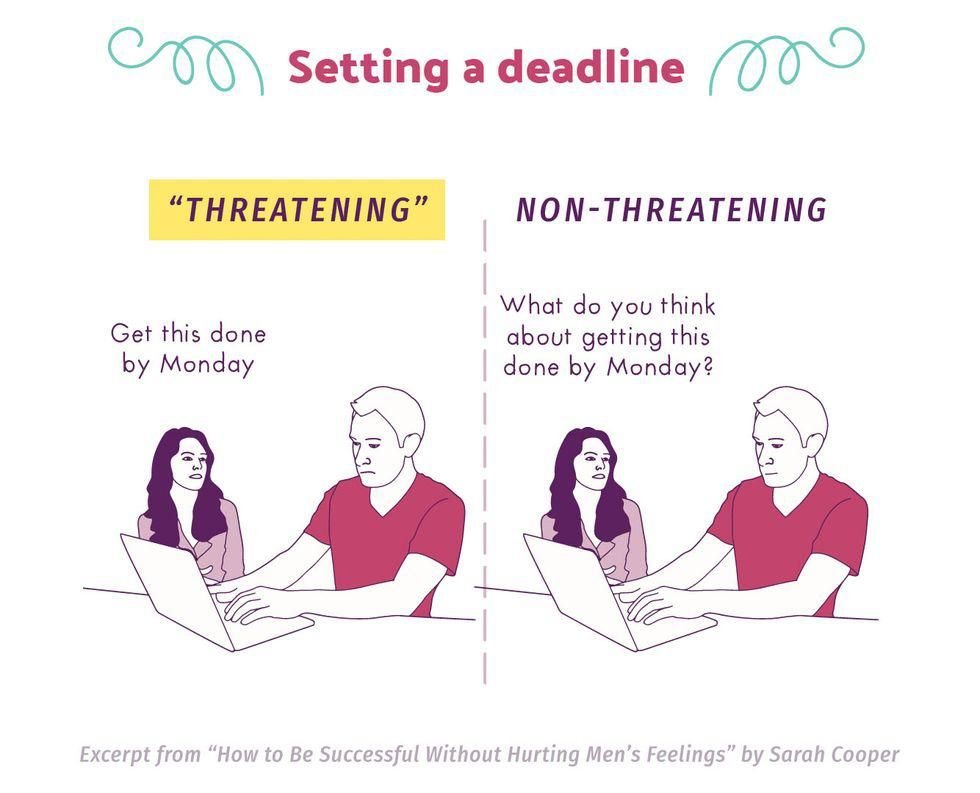
When setting a deadline, ask your coworker what he thinks of doing something, instead of just asking him to get it done. This makes him feel less like you're telling him what to do and more like you care about his opinions.
Sharing ideas.
With permission from Sarah Cooper.
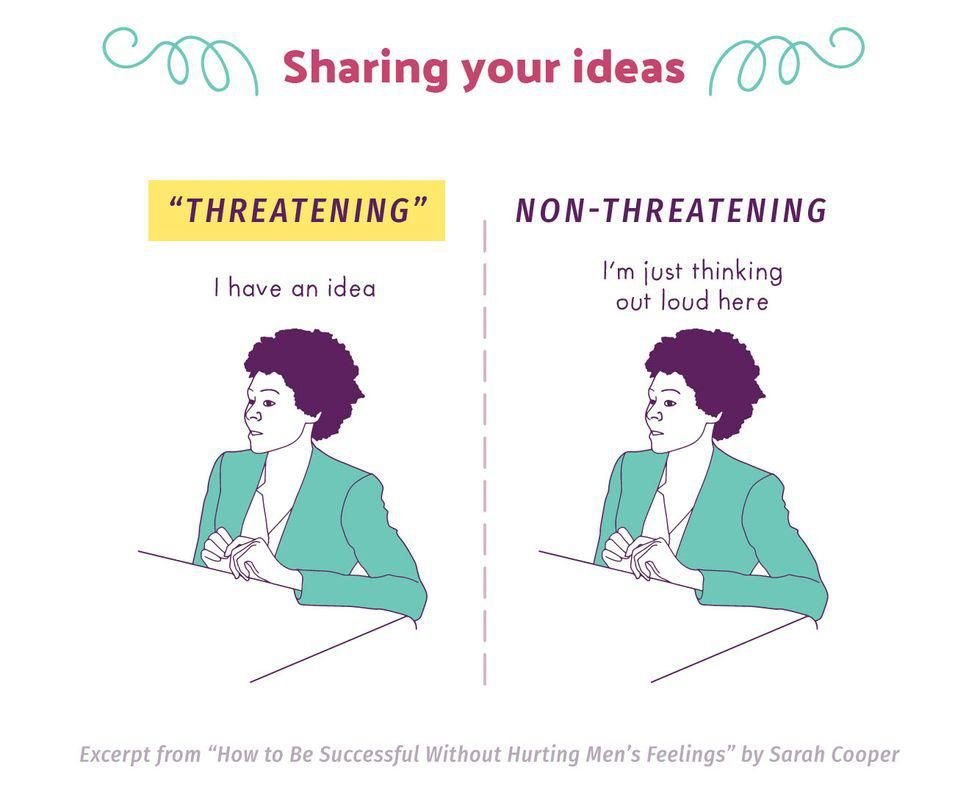
When sharing your ideas, overconfidence is a killer. You don't want your male coworkers to think you're getting all uppity. Instead, downplay your ideas as just "thinking out loud," "throwing something out there," or sharing something "dumb," "random," or "crazy."
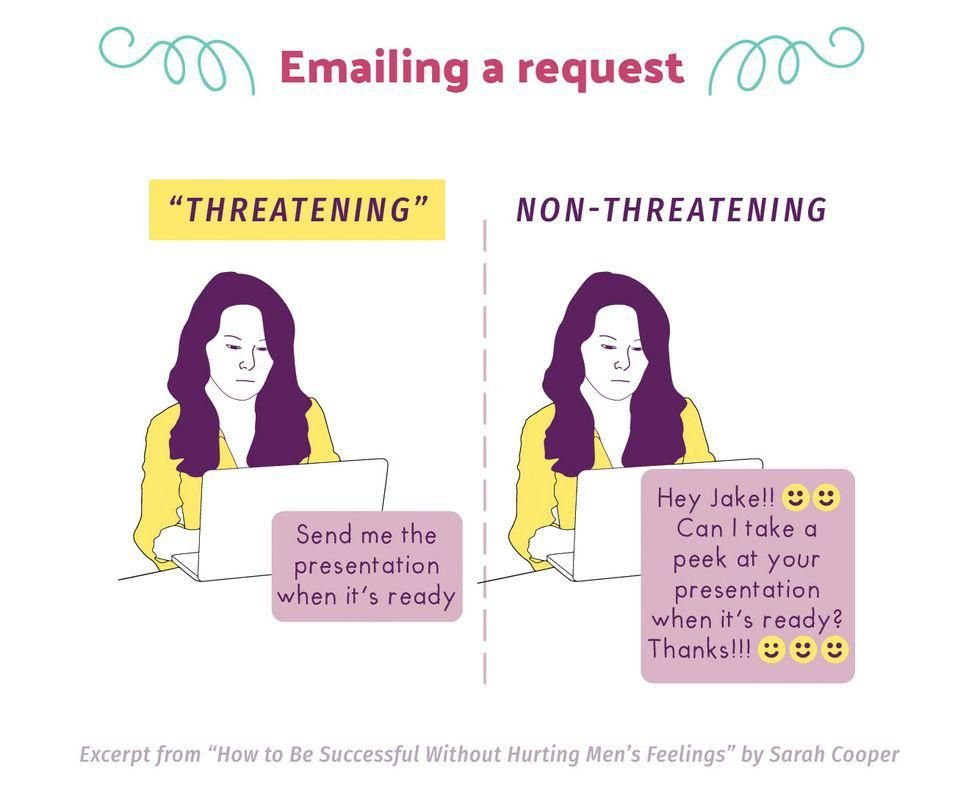
Email requests.
With permission from Sarah Cooper.
Pepper your emails with exclamation marks and emojis so you don't come across as too clear or direct. Your lack of efficient communication will make you seem more approachable.
Idea sharing.
With permission from Sarah Cooper.
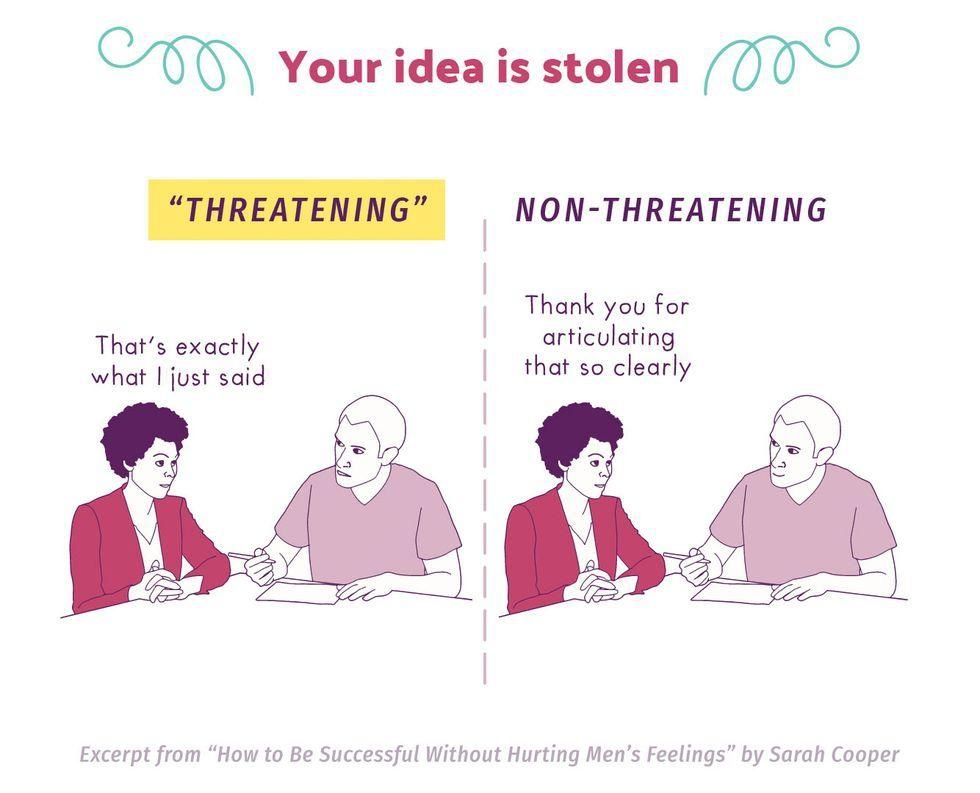
If a male coworker steals your idea in a meeting, thank him for it. Give him kudos for how he explained your idea so clearly. And let's face it, no one might've ever heard it if he hadn't repeated it.
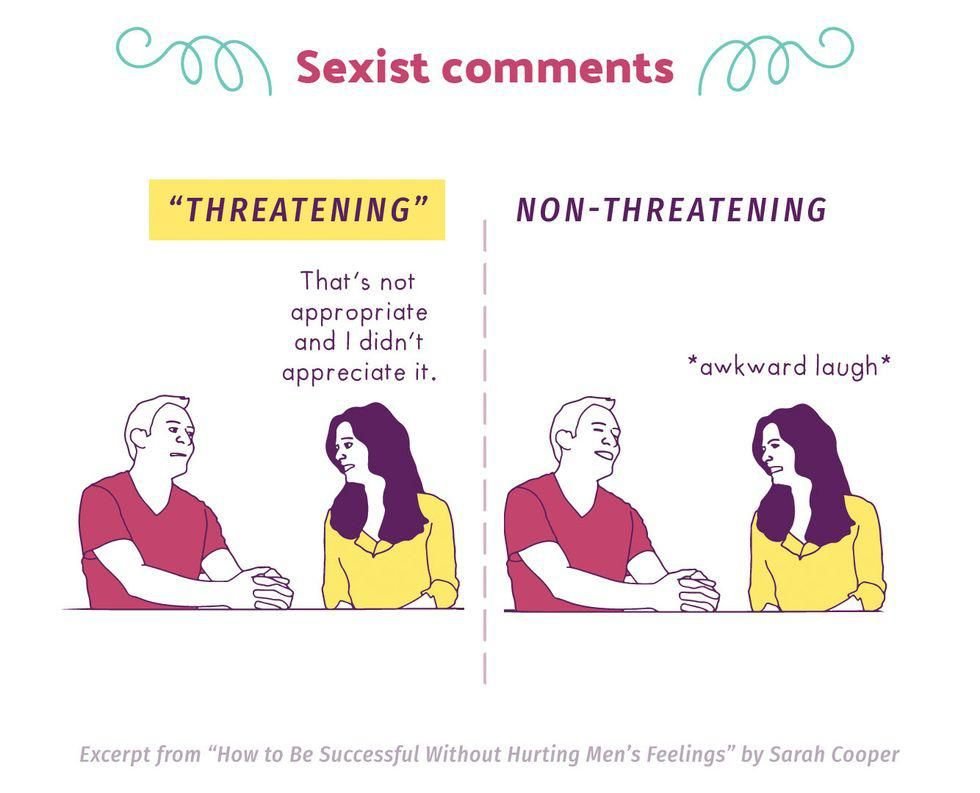
Sexism.
With permission from Sarah Cooper.
When you hear a sexist comment, the awkward laugh is key. Practice your awkward laugh at home, with your friends and family, and in the mirror. Make sure you sound truly delighted even as your soul is dying inside.
Mansplain.
With permission from Sarah Cooper.
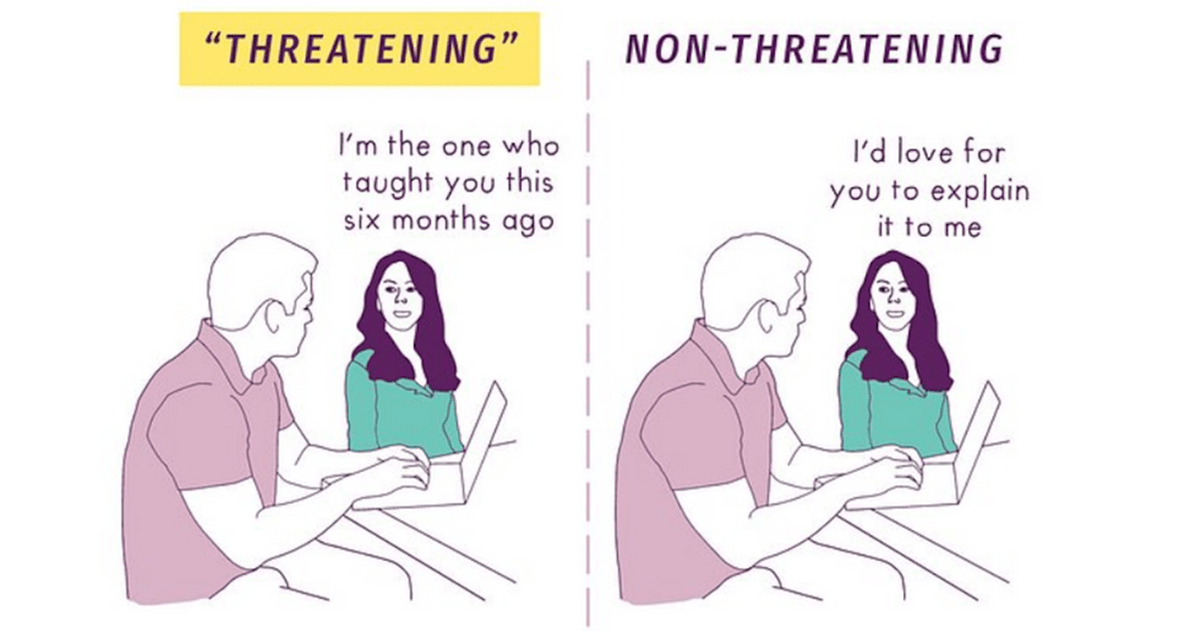
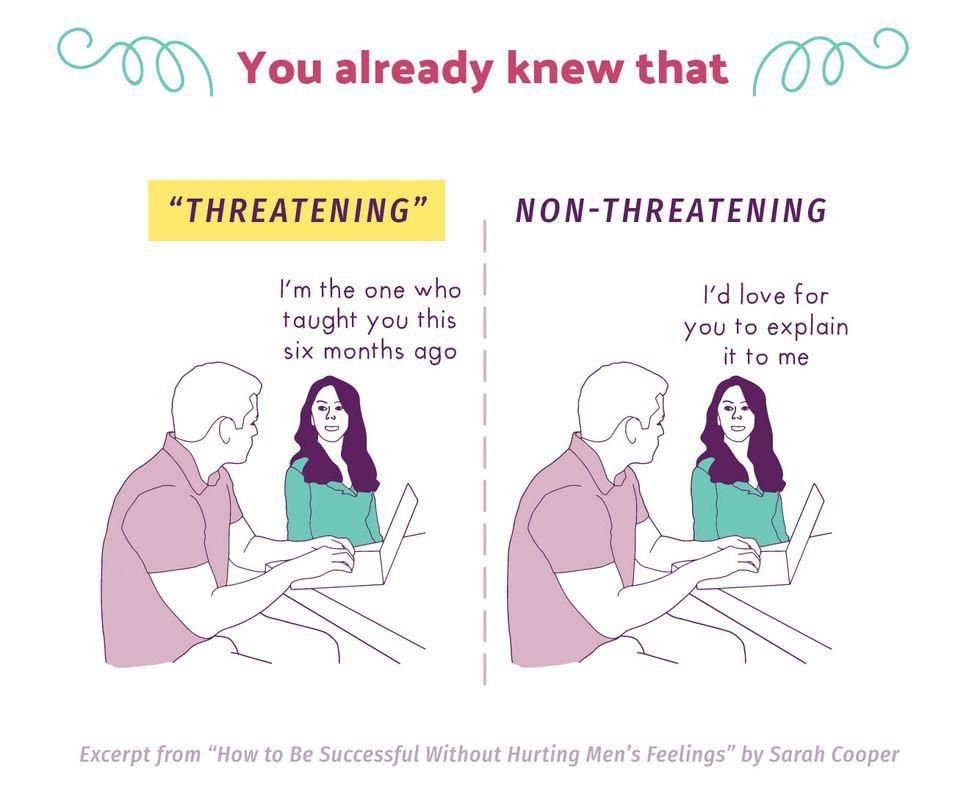
Men love explaining things. But when he's explaining something and you already know that, it might be tempting to say, "I already know that." Instead, have him explain it to you over and over again. It will make him feel useful and will give you some time to think about how to avoid him in the future.
Mistakes.
With permission from Sarah Cooper.
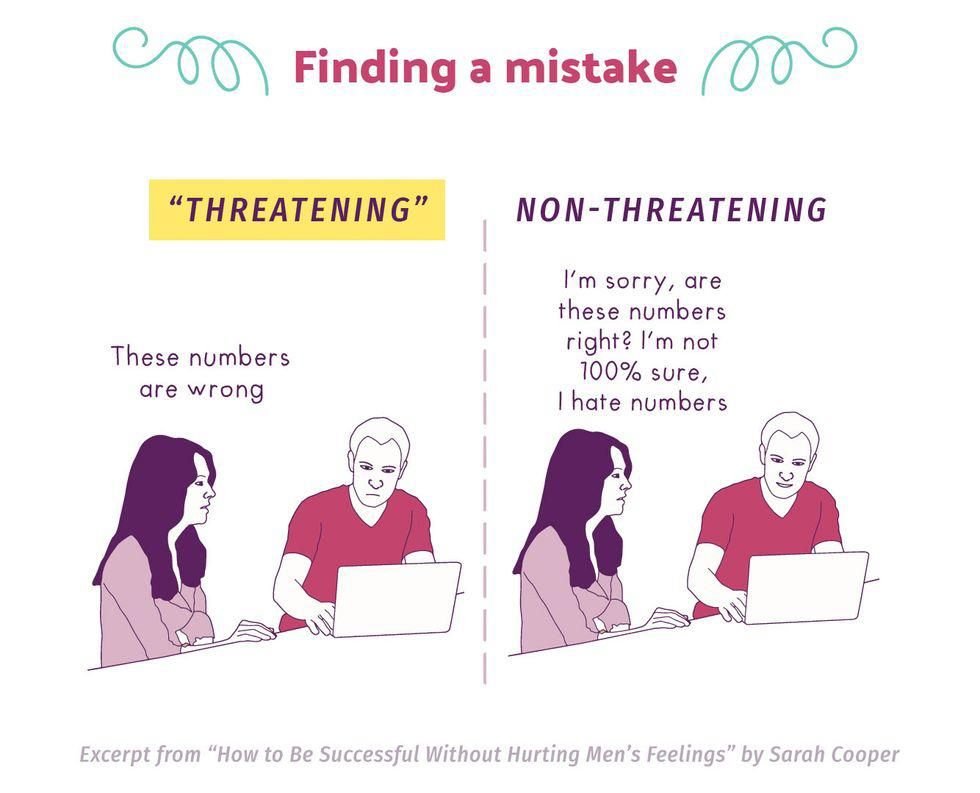
Pointing out a mistake is always risky so it's important to always apologize for noticing the mistake and then make sure that no one thinks you're too sure about it. People will appreciate your "hey what do I know?!" sensibilities.
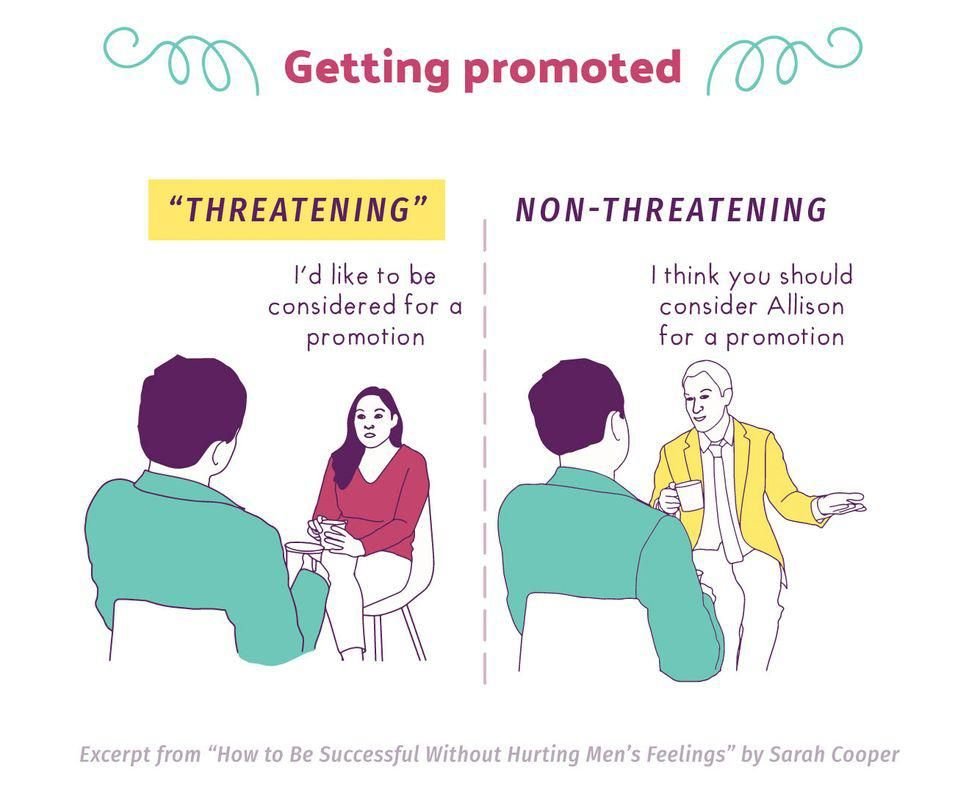
Promotions.
With permission from Sarah Cooper.
Asking your manager for a promotion could make you seem power- hungry, opportunistic, and transparent. Instead, ask a male coworker to vouch for you. Have your coworker tell your manager you'd be great for the role even though you don't really want it. This will make you more likely to actually get that promotion.
Rude.
With permission from Sarah Cooper.
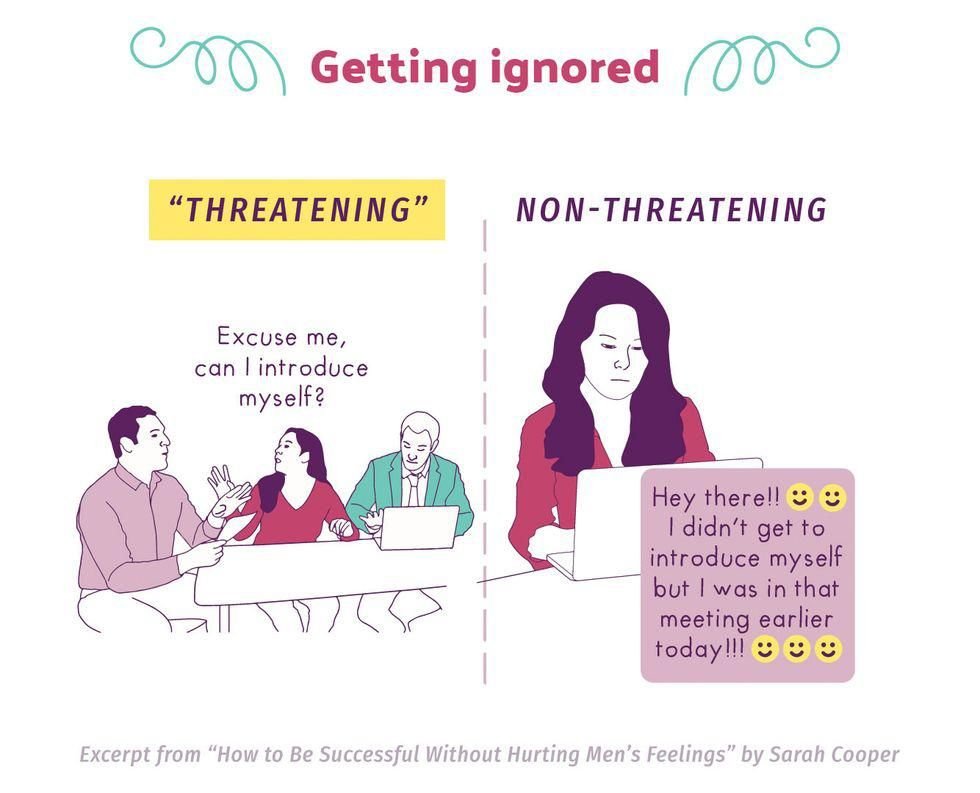
Sometimes not everyone is properly introduced at the start of a meeting. Don't take it personally even if it happens to you all the time, and certainly don't stop the meeting from moving forward to introduce yourself. Sending a quick note afterward is the best way to introduce yourself without seeming too self-important.
Interruptions.
With permission from Sarah Cooper.
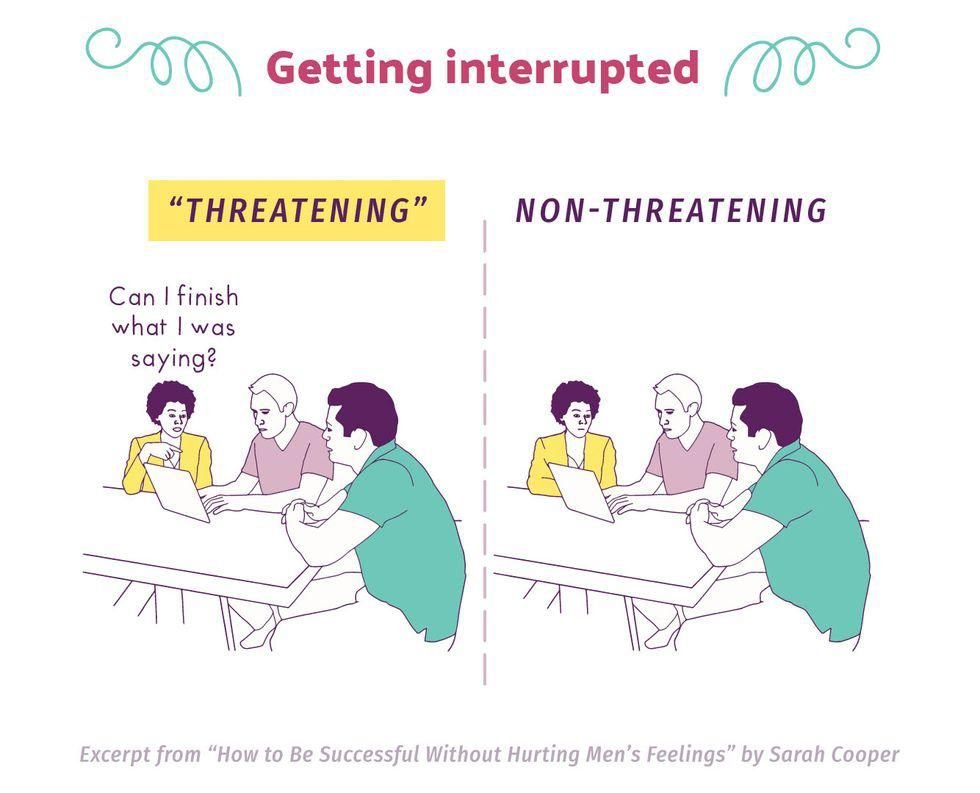
When you get interrupted, you might be tempted to just continue talking or even ask if you can finish what you were saying. This is treacherous territory. Instead, simply stop talking. The path of least resistance is silence.
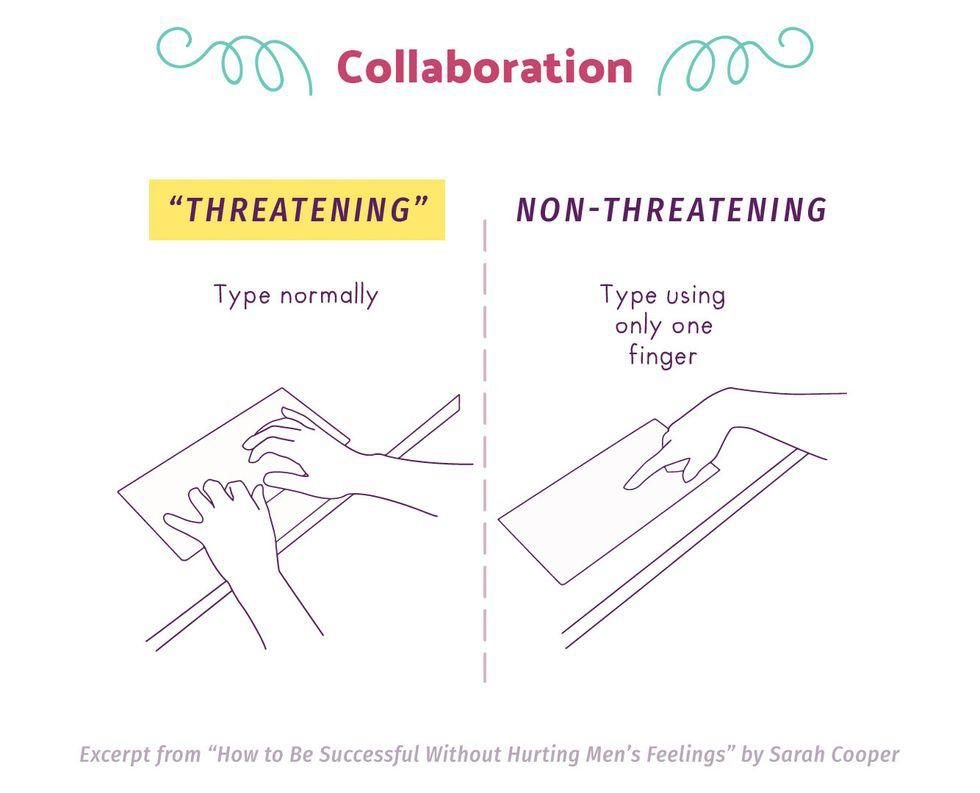
Collaboration.
With permission from Sarah Cooper.
When collaborating with a man, type using only one finger. Skill and speed are very off-putting.
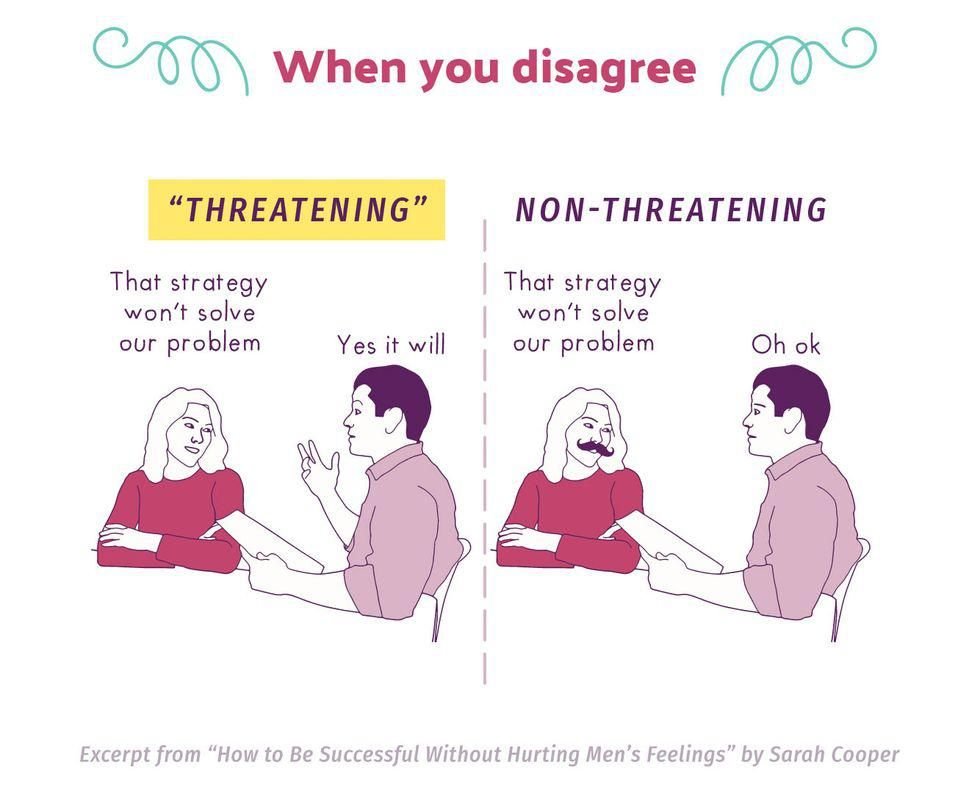
Disagreements.
With permission from Sarah Cooper.
When all else fails, wear a mustache so everyone sees you as more man-like. This will cancel out any need to change your leadership style. In fact, you may even get a quick promotion!

In conclusion...
With permission from Sarah Cooper.
Many women have discovered the secret power of non-threatening leadership. We call it a "secret power" because no one else actually knows about it. We keep our power hidden within ourselves so that it doesn't frighten and intimidate others. That's what makes us the true unsung heroes of the corporate world.
About the Author: Sarah Cooper
Sarah Cooper is a writer, comedian, and author of 100 Tricks to Appear Smart in Meetings. Her new book, How to Be Successful Without Hurting Men's Feelings, is out now.
The comedic book cover.
With permission from Sarah Cooper.
A satirical take on what it's like to be a woman in the workplace, Cooper draws from her experience as a former executive in the world of tech (she's a former Googler and Yahooer). You can get the book here.
This article was originally published on 3.25.19