10 things kids get in trouble for that adults get away with all the time

Why do we expect children to have more self-control than grown-ups?

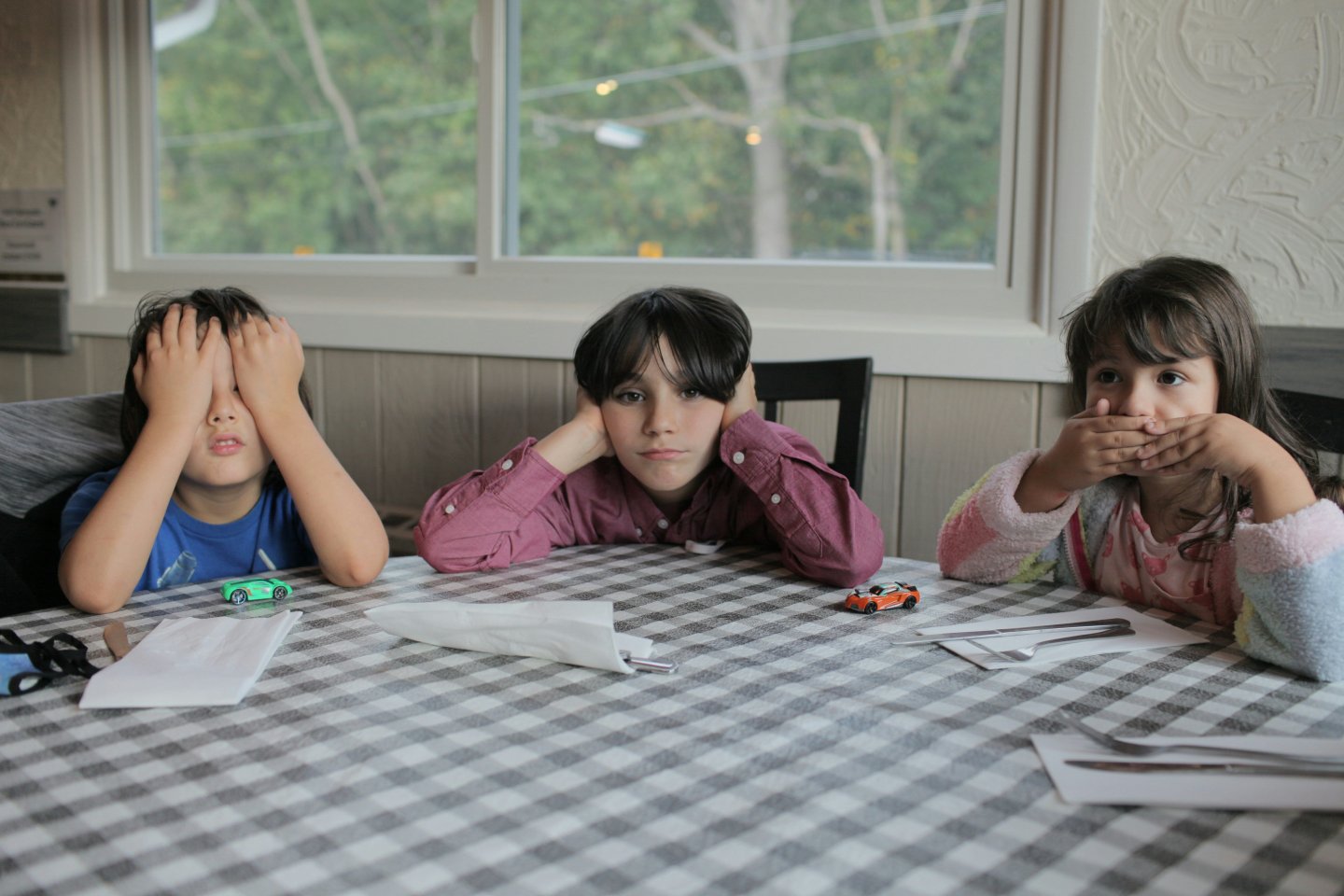
three kids at a table, one with hands over eyes, one with hands over ears, one with hands over mouth
Photo credit: Photo by Keren Fedida on UnsplashKids know when we're being hypocritical.

Raising kids is tough and no parent does it perfectly. Each child is different, each has their own personalities, strengths and challenges, and each of them requires something different from their parents in order to flourish.

But there’s one thing that parents have long said, with their actions if not with their words, that justifiably drives kids bonkers: “Do as I say, not as I do.”

To be fair, both moral and actual law dictate that there are things that adults can do that kids can’t. Children can’t drive or consume alcohol, for example, so it’s not hypocritical for adults to do those things while telling kids they cannot. There are other things—movies, TV shows, books, etc.—that parents have to decide whether their kids are ready for or not based on their age and developmental stage, and that’s also to be expected.

But there are some gaps between what adults do and what they expect kids to do that aren’t so easy to reconcile.


In fact, there’s a lot of hypocrisy when it comes to the way adults behave and the way they think kids should behave that warrants some examination. Here are 10 things some people punish kids for that adults do with total impunity:

1. Being hangry

Grown-ups are so familiar with being cranky when they need food that they coined the term “hangry.” And yet, if a child melts down because they’re hungry, they are expected to pull themselves together and “stop that fussing.”

Sure, kids have to learn to regulate their emotional expression, but being punished for needing food and not being able to control their reactions to hunger yet isn’t going to teach them that regulation. They have a hard enough time learning that skill when they aren’t hungry, so give kids a little grace when the hanger hits. (And always carry snacks.)

2. Not wanting to share something special

The concept of sharing is something most parents try to instill into their kids in order to move them away from self-centeredness. That’s not a bad thing, for sure.

But it’s worth noting that most adults have certain special belongings that they don’t want other people to use, which is totally fine, so expecting kids to always share everything doesn’t really make sense. Instead, teach kids that if they have something special that they don’t want to share, to keep that item put away when other kids are around. They can also learn to kindly say, “Actually, that toy is extra special to me, but I’m happy to let you play with this one” while offering something else.

3. Breaking dishes, dropping drinks, or other oopsies

How many of us don’t break a dish on occasion, simply due to fumbling fingers?

Accidents happen, and it’s not always because we’re being careless. If a kid is tossing a dish up in the air and trying to catch it behind their back or some other foolish game, that’s worth a talking to about carelessness. But if a child breaks something or drops something, our first reaction shouldn’t be to get angry and blame or shame them.

Grown-ups don’t get in trouble when they drop something. Kids, who have a lot less experience with their hands, definitely shouldn’t. Model forgiveness and compassion by helping them clean up the mess, and move on.

4. Not responding immediately

“Did you hear what I said? Are you listening?” we ask our children mere minutes after they had to repeat “Mommy, Mommy, Mommy,” to us before we were able to respond to them.

We can’t expect our kids to immediately pull their attention away from what they are doing every time we want to say something to them, just as we can’t always immediately shift our focus to them if we’re putting together a recipe or typing out a thought or in the middle of a calculation.

It’s reasonable to teach kids to respectfully say, “One second, please,” if we want their attention when they’re in the middle of something. That teaches them that their learning/play is worth concentrating on, but also that responding to their parents is important. Give them a little time to disengage, just as adults grant one another all the time if we need to talk.

5. Forgetting things

Adults sometimes forget their lunchbox at home. Adults sometimes leave their jacket someplace by accident. Forgetting things is a normal human phenomenon, not limited to children, and we all give one another grace when we forget something.

With kids, we tend to be less forbearing. If forgetting is a daily occurrence, then sure, it might need to be addressed. But making a kid go hungry because they forgot their lunch even though we could easily bring it to them because “this will teach them to remember it” is kind of silly. Would we do that to our spouse if they forgot their lunch? No. Why do it with a kid (again, unless it’s a recurring habit)?

6. Refusing to eat something

We all have likes and dislikes, and one man’s feast is another man’s napkin food. We would never force an adult who doesn’t like sweet potatoes to stay at the table until they finish their sweet potatoes. Why do that to kids?

Encouraging kids to try something they’ve never tasted is one thing, but making them eat something they’ve tried and didn’t like is just ick. Kids can learn to be grateful for the food they have without being made to eat everything on their plate. Provide lots of options, encourage tasting, but don’t force kids to eat anything. That’s a quick way to take the enjoyment out of trying new foods and create a negative association with eating certain foods—the exact opposite of what you’re wanting.

Most kids will grow out of picky eating, but there will always be certain things people don’t care for. It’s okay to let that be.

7. Fidgeting

Some people have a really hard time sitting still for long periods of time, adults and children alike. But kids are the ones who get in trouble for not sitting still. Look at how popular standing desks, under-the-desk treadmills and walking meetings have become for working adults—and that’s even when they have comfortable, ergonomic office chairs to sit in.

Yet kids are expected to sit in uncomfortable desks most of the day without being able to get up and move around as they need to? No wonder some kids get fidgety.

8. Being in a bad mood

We all have our moments, don’t we? Times when we’re just feeling salty or irritable and we don’t even know why? Maybe it’s hormones, maybe it’s hanger, maybe it’s a full moon—whatever it is, we let people know we’re feeling prickly and do what we need to do to either stay away from people or put ourselves right.

What certainly wouldn’t help is having someone chide us for having a “bad attitude” and insist that we “shape up.” Helping kids manage their mood or alter their environment when they’re struggling to manage it is a much more effective life skill than punishing them for being in a bad mood.

9. Complaining

Ever seen a grown-up sit down to do their taxes without a single complaint? No, you haven’t, because even if we’re getting a refund the process of figuring it out is painful.

Plenty of adults complain when we have to do something we don’t want to do, and it’s not because we were raised that way, most of the time. It’s because some things just suck and it makes us feel better in the moment to express how much they suck.

What kids complain about may seem trivial or silly to us, but it’s not to them. Totally find to teach kids that complaining doesn’t do any good, but not worth punishing them for it.

10. Sneaking sweets

Umm, hi. Guilty, pretty much daily.

It’s technically not sneaking when you own the sweets and you’re a grown-up, but it feels like it. And who can blame kids for wanting to raid the cookie jar or the chocolate chip stash? Not saying they should. Just saying I get it, kid.

What else belongs on this list?

This article originally appeared on 3.1.24

  • Pregnant journalist spun around to smack her co-host. But he wasn’t the one who poked her.
    Photo credit: Tiktok.com/@janai | ABC NewsNewscasters on air laugh together.
    ,

    Pregnant journalist spun around to smack her co-host. But he wasn’t the one who poked her.

    “Oh… I am sorry, I got kicked, and I thought you poked me. I was ready to swat you.”

    Janai Norman (@janai) was about to go on-air with her ABC News co-host Kenneth Moton when she felt something poke her pregnant belly. Hard.

    She spun around at full speed, ready to smack Moton for messing with her. Then she realized he was standing several feet away, completely innocent, and had no idea what was happening.

    “Oh… I am sorry, I got kicked, and I thought you poked me. I was ready to swat you,” Norman said, seconds before dissolving into laughter.

    The baby had kicked so hard it felt exactly like someone pressing a finger into her belly. Moton cracked up. “The baby is like, ‘Watch this,’” he joked.

    Norman shared the throwback moment on TikTok on March 30, and the video has been viewed 5.8 million times. The comments are full of other pregnant people confirming that yes, some kicks absolutely feel like someone jabbing you from the outside.

    “I know exactly which kind of ‘poke’ kick she felt! It’s not a normal baby kick! It legit feels like a big finger poke,” one person wrote.

    Another said, “I know exactly what that kick felt like lol. I don’t even know if it’s a kick or some weird placenta movement, but it happens sometimes when I yawn or stretch. It feels like something poked you hard as f**k. It makes me jump every time.”

    Someone else confessed, “Every time my baby would kick me, I always thought my phone was getting a notification, lol.”

    One commenter pointed out that Norman’s instant protective reaction was actually kind of sweet: “She’s going to be a great mom; she went right into protector mode.”

    The whole thing happened in the span of maybe three seconds, but it perfectly captures one of the weirder parts of being pregnant. Your body does things you have zero control over, and sometimes those things are so startling you almost clock your coworker on live television.

    Moton dodged a bullet. The baby, meanwhile, was probably just stretching.

    Follow Janai Norman (@janai) on TikTok for more lifestyle content. 

  • Mom admits she isn’t perfect in a hilarious self-made ‘back-to-school’ sign
    First day of school can be exhausting … but for who?

    Every year, back-to-school season brings new school supplies, a trip to Target for clothes, and social media channels flooded with photos of kids holding chalkboards. Over the past decade, back-to-school photos with kids standing on their doorsteps with signs with their name, grade, year, and teacher have been ubiquitous on social media.

    There’s nothing wrong with the photos, they’re a cute way for parents and kids to mark the passage of time. For most parents, it’s a way to remember that it all goes by way too fast. However, for the “perfect” parents out there who like to flaunt their Instagrammable lifestyle, they’re another way to show off their “flawless” first days on social media.

    One mom said what we were all thinking

    In an attempt to show parents they don’t have to fall for the myth of perfection on social media, Jeni Bukolt, a mother of two boys from Waxhaw, North Carolina, posted a first-day photo of herself looking burnt out and wearing sunglasses. School hadn’t even begun yet.

    “Mom’s first day of school,” the handmade sign read. “I am 42 years tired. I’ll probably miss a school ‘theme’ day. I really like sleep. Please don’t ask me to volunteer. But I will buy you supplies.”

    “I make signs for my kids each year but lately I’ve thought about how I always feel behind, as though I’m failing (in some way),” Bukolt told Today. Clearly, other parents feel the same because it was a hit with a lot of them on Instagram.

    A lot of comments were from parents who thought the photo was a breath of fresh air during a stressful time of year. “Brilliant, you speak for millions!” cathycole wrote. “May we all survive the drop off/pick up lane,” merakifitnessandpole added.

    “I thought maybe if I can create a lighthearted moment, some other moms will laugh and understand we’re all in this kind of struggle together. Like, let’s have empathy for each other,” Bukolt told Good Morning America.

    Bukolt hopes her post builds an “empathy bridge” between parents. She’d also like to shine a little reality on the parents who feel judged on social media.

    “I also feel like when you look at social media, there’s all these, [picture perfect] worlds,” she added. “It’s not the true story. And some people think like, ‘Oh, they have it better or they’re perfect,’ and this is an opportunity to say no, we’re all real human beings … we’re all in the struggle together.”

    Not everyone thought it was funny

    But of course, there were some humorless parents who thought her post wasn’t supportive of teachers or her two sons. So Bukolt made a follow-up where she explained that she was just having fun.

    “For the keyboard warriors… yes I do have a job, yes I love my kids and no, I don’t hate teachers. Back to work. Have a great day!” she wrote.

    She kept it going the next year too

    The next year, Bukolt returned with another sign where she said she’s “43 years tired,” has a “new sleep routine,” and please don’t ask her to do any math. “Liam asked me about division last night. I know that common core math should be easier, but apparently I am NOT smarter than a 4th grader,” she joked in the comments.

    Parenting is hard and we all fall short of glory at times. Kudos to Bukolt for making us feel a little less alone and letting us know that some folks have already accepted their imperfections on the first day.

    “If other moms can get a good laugh about it, then that makes my heart happy,” she said.

    This article originally appeared four years ago. It has been updated.

  • Baby twins separated for the first time steal an adorable secret nighttime reunion
    They so clearly missed each other.

    If you’ve ever spent a significant amount of time with twins, you know that no other relationship compares. My husband has twin brothers, and one of those brothers had twin daughters (busting the twins-skip-a-generation myth), so our family is quite familiar with the twin bond.

    Over and over, we’ve watched with amusement as one adult twin will move across the country for one reason or another, with the other twin eventually, but inevitably, following them. Twins redefine the word “inseparable,” which makes sense since they’ve literally been together since before they were even born.

    This baby monitor video says it all

    Nowhere is that bond more apparent than in a video of twin babies at the end of their first day of separation ever.

    In a TikTok video shared by @thattwinmama back in 2023, we see black-and-white footage from a baby monitor showing baby twin sisters standing in adjacent cribs.

    “Our twins were separated for a day for the first time in their entire lives…” the video text reads. “That night we put them down leaving them alone for the first time in over 24 hours. And pretty sure it’s safe to say they definitely missed each other.”

    Watch how the baby girls cuddle and love on one another with the sweetest tenderness.

    The head kiss? The back pat? Come on. It doesn’t get any cuter than that.

    They still have that special bond today

    And in case you were wondering, that fierce love is still going strong, as seen in these later videos from the account:

    @thattwinmama_

    If looks could kill 😅 Honestly they both would ride or die for one another if I’m honest. #twins #twinmom #twinsisters #twinbond #twinsoftiktok #momlife #funnyvideos #funnytoddlers #fypシ #doechii

    ♬ Anxiety – Doechii

    Science backs up what we already knew

    There truly is nothing like the bond between twins. There have even been documented cases of twins who were separated at birth and who ended up having the same traits and making similar life choices later in life. It’s a relationship only twins themselves get to experience, but anyone who is a friend or family member of twins has to try to understand it if they truly want to know them because it’s such a unique and inseparable part of their identity.

    This article originally appeared three years ago. It has been updated.

  • The forgotten reason teachers don’t use the letter ‘E’ in grading anymore
    Photo credit: CanvaA female student shocked by her poor grade on a test.

    We all know how the grading system works. A is the best score you can get (and the only acceptable score for the perfectionists among us). Then comes B, which is also generally considered positive. By C, you’re in dangerous territory. D is even worse. And F, well, F is the equivalent of wearing a dunce cap.

    But where’s the E grade? Why do we skip over this letter?

    Turns out, we didn’t always exclude the letter E from our grading system. And it led to some very confused parents.

    The missing grade that vanished from report cards

    The earliest record of a letter-grade system comes from Mount Holyoke College in 1897, which quickly spread to virtually every school in North America. When it first debuted, E was the lowest grade a student could receive, with A still being the highest.

    Though popular, the system was fairly wonky from the start. As reported by Slate, A represented scores between 95 and 100, while B and C each stood for 10-point ranges. Students could get a D only with a score of “precisely 75.” Anything below that received an E. And then, only a year later, they added F to represent “fail,” and tweaked each letter grade to represent only five points, with scores below 75 resulting in failure. E reflected scores 75 to 79.

    Why schools dropped the letter E

    However, as the story goes, many parents who viewed E on their child’s report cards interpreted it as “Excellent,” rather than practically failing.

    By 1930, most schools became aware of the unintended consequences and did away with the letter grade entirely.

    Of course, this hasn’t been the only time schools have experimented with different grading metrics. Some played around with varieties of numerical scales (0-4, 0-9, 0-20, 0-100). Others tried just three grade groups (best, worse, and worst), while some used four under the following labels: “first in their respective classes,” “orderly, correct, and attentive,” “have made very little improvement,” and “they have learnt little or nothing.”

    In fact, the further back you go, you’ll notice that tracking an individual student’s progress and mastery through close, personal observation and detailed, descriptive feedback was the norm rather than categorization. But as schools kept getting an influx of students, a standardized and seemingly more efficient system became the norm.

    Of course, there have been criticisms of this method since its inception. For decades, educators have shared concerns that it prioritized getting a certain letter grade rather than the intrinsic value of learning.

    Could grading systems change again?

    learning, teachers, grading
    Image of a hand writing “Never Stop Learning” in marker. Canva

    That debate is still happening today. In recent years, some schools and universities have experimented with alternatives like pass/fail systems, standards-based grading, narrative evaluations, and competency-based assessments that measure whether students have mastered specific skills rather than averaging test scores. Others have adopted portfolios and teacher feedback in place of traditional report cards altogether.

    Supporters of these approaches argue that they can reduce anxiety and encourage students to focus more on growth, participation, and curiosity. Critics worry they may make it harder to measure achievement consistently or compare students across schools.

    Either way, the disappearing E grade is proof that the grading system has never been quite as fixed or timeless as many people assume. What feels permanent in one generation of classrooms can easily be rewritten by the next. And, arguably, it should be able to adapt as we do. 

  • Boomer dad plays song to comfort his daughter going through divorce and it’s everything
    Some dads just get it.

    There’s no shortage of stories out there showing how emotionally distant or out of touch some baby boomers can be. Younger generations are so fed up with it that they have their own catchphrase of frustration, for crying out loud. The disconnect becomes especially visible in parenting styles. Boomers, who grew up with starkly different views on empathy, trauma, and seeking help, have a reputation for being less than ideal support systems for their children when it comes to emotional issues.

    But even if they often have a different way of showing it, boomer parents of course have a lot of love for their children, and many try their best to be a source of comfort when their kid suffers as any good parent would. Occupational therapist Jacqueline (@jac.rose8) shared a lovely example of this by posting a video of her boomer dad helping her through a divorce in the best way he knew how.

    His solution was unexpected and perfect

    Turns out, it was the perfect thing.

    “My husband just said he’s divorcing me and my dad came over and I was non-functional in bed,” Jacqueline wrote her video, adding that “…boomer dad didn’t know what to do, so he played his favorite song, the Dua Lipa ‘Rocket Man’ remix.”

    In the clip, Jacqueline’s dad is faced toward the window describing what he imagines while listening to the song and performing the sweetest dad dance ever. They go back and forth a little bit, but it’s clear that her dad just wants to sit with her in the moment, be a little silly, and provide her with some comfort.

    The heartwarming moment served as a great reminder that a lot of words aren’t always necessary.

    The internet fell completely in love

    “I am CRYING. This is so precious, he is trying his hardest to be there for you in any capacity. How pure ❤️,” one person wrote.

    Another added, “This would instantly make me feel better.”

    Even Jacqueline shared in the comments that her dad “didn’t know what to say but he was there and helped me in such a sweet way. He’s the best.”

    Proving that he has multiple love languages, Jacqueline later shared that her dad also went out to Home Depot to replace her lightbulbs. Not only that, but her mom also made Jacqueline’s favorite dinner.

    @jac.rose8

    Replying to @NatCat1738 divorcetok divorcesucks divorcesupport divorcesupportforwomen divorcesupportsquad supportivedad supportivemom disabilitytiktok

    ♬ original sound – Jacqueline

    Great parents exist in every generation

    It can be easy to sometimes focus a little too much on the generational differences between boomers and everyone else, but really, it goes to show that great parents (and great people) exist in every generation. Part of what makes them great is knowing that they don’t need to be perfect in order to show up when things are hard. Being there and sharing their love is enough.

    This article originally appeared three years ago. It has been updated.

  • Florida teacher says she’s quitting her job because of school’s ‘course recovery’ shortcut
    Photo credit: @toriefowler/TikTok, used with permissionFlorida Teacher Torie Fowler explaining why course recovery is used to play the system.
    ,

    Florida teacher says she’s quitting her job because of school’s ‘course recovery’ shortcut

    She explained how many students use course recovery to play the system.

    There are plenty of reasons teachers across the country have listed for why they are leaving their jobs. But whether it’s burnout or battling against artificial intelligence, there’s one common denominator: the classroom is, by and large, no longer the haven of learning it once was.

    One teacher recently gave a prime example of this when she explained “course recovery,” and why that alone has led to her quitting.

    What is course recovery?

    In a now-viral Tiktok clip, Torie Fowler, an English teacher in Florida, shared that course recovery was originally intended to help struggling students stay on track for passing a class. Essentially it works by offering a semi-condensed make-up curriculum, primarily via online modules, rather than forcing students to repeat the full semester.

    However, as Fowler explained, things have gone too far.

    @toriefowler

    Do you know what course recovery is? I’m positive it’s a public school thing, but what exactly is the child learning from this concept? #teacherlife #teachersoftiktok #teaching #teacher #publicschool

    ♬ original sound – Torie Fowler

    For instance, one of her seniors who earned an 18 percent in her class (which is already bonkers considering the student didn’t ever show up to class, apparently) was assigned course recovery. Somehow, this student was able to complete the entire nine weeks of recovery assignments in a single day, magically passing the class with a 75.

    “What are we doing?” Fowler said at the end of her clip.

    Granted, course recovery does have its uses. In an interview with Today, Fowler noted that students burdened with illness, family instability, or learning challenges can greatly benefit from it. Still, the students who know how to play the system use it as an easy workaround, forfeiting the opportunity to actually learn. And so far, the system encourages that kind of behavior.

    “We are teaching them that there are no consequences for their actions,” she said. “It’s becoming more about getting them through and walking across the stage than actual learning.”

    @toriefowler

    You can read the full article at the link in my bio, but in terms of public education, do you agree? #teachersoftiktok #teacher #teacherlife

    ♬ Self Aware – Temper City

    Teachers across the country share the same concern

    Fowler is far from the only educator experiencing this frustration. Down in the comments, many fellow teachers sounded off.

    “We have the same here in RI. It’s so unfair to the teachers, admins and other students.”

    “I’ll do you one better: in my district a student who fails a class can do course recovery and change the whole grade for that class. That F becomes an A on the transcript as fast as the student can find answers to everything online, and they can do that in a day.”

    “Credit recovery is a joke. I had a student fail on purpose bc CR was easier. If they can complete an entire semester of Algebra in 3 days (I’ve seen it), they aren’t learning the content. Why are we allowing this?!?”

    Fowler’s video is just one of many worrying examples of how modern schools are prioritizing graduation rates over meaningful education. Many teachers say they entered the profession to help students grow, think critically, and build real skills for the future. When that mission starts feeling impossible, it’s no surprise that so many educators are deciding they can no longer stay.

    @toriefowler

    In all my feels as I realize my time in this room is coming to an end this month. Some of it was more than I could dream of, while the reality of a system we can’t change is more than I want to carry. #publicschool #teacher #teachersoftiktok #teachersbelike #teacherlife

    ♬ original sound – Breezee Talk – Breezee Talk

    However, as Fowler put it, it’s important to talk about what’s not working, because with enough conversation, “change can begin.”

  • Millennials struggling to buy a home want ‘out of touch’ Boomer parents to get their reality
    Photo credit: Images via Canva/Photodjo, Andy Dean PhotographyMillennials are frustrated with their Boomers parents about real estate.

    Millennials trying to buy homes in today’s economy are up against a rock and a hard place. Unlike for their Boomer parents, the dream of buying a home continues to feel further away.

    According to the National Association of Realtors (NAR), Millennials “continue to be fenced out of homeownership.” The organization reported that in 2025, the average age of first-time homeownership rose to 40 years old, up from 38 just the year before, with the share of first-time buyers falling to a record low of 21%. “The historically low share of first-time buyers underscores the real-world consequences of a housing market starved for affordable inventory,” said Jessica Lautz, NAR deputy chief economist and vice president of research.

    Millennials are venting on Reddit

    Millennials are airing their frustrations amongst each other in the Reddit thread r/Millennials, sharing their stories and experiences with their Boomer parents, with many calling Boomers “out of touch.”

    One Millennial wrote, “This topic is like hitting a dead horse, but I just needed to rant. Back story, I work out at a gym with people who are our parents age, and of the boomer generation. I overheard them saying, ‘we bought our first home for $65,000. I’m sure kids these days are only paying $125,000 for that same house’. When they said that, I burst out laughing. How are they so out of touch? It drives me nuts.”

    Another Millennial replied, “Willful ignorance. Takes four seconds to go on Zillow and find out that’s bullsh*t .”

    And another shared, “I’m not kidding… when I showed my dad actual data on itemized COL inflation, he said that ‘the data just says that but that doesn’t mean it’s real’…. This is a guy that I would normally consider smart and with it. When it comes to these kinds of topics of societal degradation, he can’t accept it. He is willfully ignorant to things being worse now for me than they were for him at my age.”

    The Zillow experiment that actually worked

    Others explained how they attempted to explain to their Boomer parents how expensive homes currently are. Another shared, “Last Christmas, the sibs and I collectively managed to remember all the addresses we had lived in in our childhoods and Zillowed all of them to show our parents. All are still standing. All were built in the 70s. All are rural or suburban/small towns. Parents were astounded at what these 50+ year houses are going for today, especially compared to what they paid for them 30-40 years ago.”

    Millennials added their conversations with parents who got defensive. One wrote, “I legit just had this same conversation! They say ‘complain when it’s 14% interest’ excuse me, your house was 60k and dad was making 40, don’t piss on me and tell me it’s raining. That fancy 250k house is now like 600k…get a grip, average house is 438k.”

    Another shared, “My dad still gives me a hard time about renting, constantly tells me how I should invest in a house. I sat him down one day and opened up a mortgage calculator, showed him how with the current interest rates it just wasn’t gonna happen- he seemed to get it. For a little bit anyways haha. I saw him last month and he told me again how rent is wasted money yadda yadda.”

    How to talk to your Boomer parents about housing

    Millennials can have healthy and productive conversations with their Boomer parents when discussions about buying a home become tense or uncomfortable, Aly Bullock, LMFT, a licensed marriage and family therapist with Paired, tells Upworthy.

    Here are three things Millennials can say to their parents during these tough talks:

    Phrase #1: “I understand that we have different views on this, and that’s okay with me.”

    Bullock explains, “This acknowledges that you understand their POV and you are still willing to stick with your own opinion. It is a very gentle way of setting a boundary and letting them know you are comfortable having different opinions.”

    Phrase #2: “I would love to hear you out, and my request is that in return you respect my right to make a personal decision even if it does not align with what you’ve shared.”

    “Even when their kids are grown, parents still love the chance to influence their children,” says Bullock. “This phrase lets your parents know that you would love to hear their opinion, you welcome it, AND reminds them gently that you are grown and they should offer you similar respect.”

    Phrase #3: “This conversation seems to keep causing tension between us, and I’d rather focus on something we have in common right now. Can we set it aside for a bit?”

    According to Bullock, “This acknowledges the tension without placing blame. It gives the adult child an opportunity to stop the conversation before it deteriorates further, while emphasizing the positive pieces of the relationship.”

    Finally, she notes that it may take placing boundaries around these conversations. “Remember that you don’t have to tell your parents everything. Some things are better left unsaid,” says Bullock. “The truth is that parents change as they age and may or may not be able to cope well with generational differences or unmet expectations. Try to have compassion for them as you decide which things to keep to yourself in order to protect your own mental health.”

    This article originally appeared one year ago. It has been updated.

  • Dad discovers his son has pinworms and pediatrician hits him with even worse news
    Dad discovers child has pinworms and it's freaking people out

    If you’re a parent you’re likely in one of two categories: parents who have never heard of pinworms or parents who shuddered at the headline. Parents are not really given any sort of warning for all of the eyebrow raising situations that occur in childhood and one dad has found out that there was a lot left out of that non-existent parenting handbook. If you thought lice was bad, well, frankly, you have no idea.

    Justin, a dad that runs the TikTok page parentingcheerleader took to social media to tell the world of the current nightmare fuel parenting situation he was experiencing. He’s also doing parents on social media a solid by giving them a heads up on the disturbing secret plaguing the parenting world: pinworms.

    So what exactly are pinworms?

    The viral video starts out with no trigger warning before he says though clenched teeth, “my son has worms in his anus.” Yeah, you read that right. It’s a thing. A slightly terrifying but totally normal thing.


    These don’t look so bad until you realize where they live. By DPDx, PHIL – Public Domain

    About 20% of kids will get pinworms at some point. They can affect anyone, but adults rarely get them because they generally have better hygiene habits and awareness about putting their hands in their mouth after touching surfaces. (You usually get a pinworm infection by accidentally swallowing the eggs. Yeah… sorry for that) The first signs will be an itchy butthole, trouble sleeping, and irritability or loss of appetite.

    If you’re a glutton for punishment, read on! Pinworms are hard to diagnose, for obvious reasons. They’re very small and hard to see, plus they like to live in a very sensitive, hard to reach area. But they are visible to the naked eye, so diagnosis sometimes involves quite literally looking at a child’s butt with a flashlight. Sometimes doctors will use tape to see if they can collect eggs from the area, which can be seen under a microscope.

    No word from Justin on how he figured out that his kid had pinworms, but that’s probably for the best.

    “No one tells you about this stuff when you’re thinking about being a parent but apparently it’s like super normal for a child to just have worms in his booty hole,” a flustered, baffled Justin says. In the video, he’s on his way to pick up medicine for his kid while trying to somehow wrap his head around the reality of the situation.

    Then a pediatrician made it worse

    Dr. Cerissa Key, a pediatrician, chimed in on Justin’s disturbing revelation and assured him and every parent watching that pinworms are a common thing that happens in young children.

    But she also dropped some info that others including Justin may not have been ready to hear.

    “Justin, sir. I hate to be the bearer of bad news. But if your son has worms in his booty hole, sir, politely and respectfully, you also have worms in your booty hole,” Key reveals.

    Key goes on to explain that kids are “disgusting” and don’t wash their hands well so pinworms spread easily if a child at school or daycare has them. She advises that parents stock up on the chalky banana flavored medication that clears them up and to wash everything on hot while being sure to vacuum your floors well. Luckily, there are good over-the-cofteoaboutunter options for suffering families, as well as stronger prescription methods available. Typically, medication can get rid of the pinworm infection pretty quickly.

    Parents on the internet did not take this well

    People in the comment section of both videos were horrified that this was an actual thing while others commiserated with the stressed dad.

    “I have no kids and now I’m paranoid I have pinworms with no symptoms,” one person writes.

    “I’ve raised 4 kids and never had this happen. Tomorrow this will be my entry on my gratitude journal,” a mom confesses.

    “Do I have kids? No…Do I even work around kids? Also no…do I still have the urge to take this medicine just in case anyways? 100000%,” someone says.

    Several people were forced to question if they even wanted kids anymore knowing there’s a 20% chance they may have to deal with this at some point in the future.

    Not everyone was stressed, some were thankful for the information. “Thank you! We haven’t experienced pinworms yet, but super informative and helps to make parenting normalized,” another commenter writes.

    Key suggests that if your child has pinworms that the entire family should take a dose of the medication two weeks apart to make sure any left over newly hatched eggs are also killed. Why so thorough? Well, it’s estimated that one pinworm (or threadworm) can lay up to 16,000 eggs.

    And on that note…

    While you may not have been warned about pinworms, no one ever said parenting would be glamorous. It just seems people weren’t prepared for how unglamorous it could get.

    This article originally appeared three years ago. It has been updated.

Travel

300 women bought a French chateau for $7,700 each and made it an ‘adult summer camp’ for all women

Family

Mom admits she isn’t perfect in a hilarious self-made ‘back-to-school’ sign

Family

Baby twins separated for the first time steal an adorable secret nighttime reunion

Pop Culture

Nail-biting video shows a woman as she realizes a creepy man is following her