19 musicals that are not only catchy—they could help with dementia, according to science

Back in 2013, researchers in the U.S. stumbled upon a novel new treatment for dementia patients: listening to show tunes. Seriously.

musicals, theater, art, dementia, treatments
A picture taken of the Broadway street sign in New York City. Photo credit: Photo by Jordhan Madec on Unsplash

Back in 2013, researchers in the U.S. stumbled upon a novel new treatment for dementia patients: listening to show tunes. Seriously.

A study of nursing home patients found that residents who sang show tunes — specifically from “Oklahoma!” “The Wizard of Oz,” and “The Sound of Music” — demonstrated increased mental performance, according to a report in the New York Daily News:

“Researchers working with elderly residents at an East Coast care home found in a four-month long study … that people who sang their favorite songs showed a marked improvement compared to those who just listened.”

A similar study in Finland, cited in The Guardian, demonstrated that singing not only helped dementia patients feel better and focus, but actually improved certain types of memory as well.

Even better? There are tons of classic show tunes specifically about remembering.

Here are 23 tunes every Broadway fan needs to memorize for the day when it’s not so easy to remember. It’ll help to start brushing up now.

1. The one about remembering the good old days.

“Those Were the Good Old Days,” “Damn Yankees”

If you’re the devil in “Damn Yankees,” that means the Great Depression, the Black Plague years, and when Jack the Ripper was running around. Good times!

2. The one about remembering a parade that probably never happened.

Any playlist of show tunes about memory has to include this standard from “The Music Man,” in which Professor Harold Hill remembers the best day of his life, when “Gilmore, Liberati, Pat Conway, The Great Creatore, W.C. Handy, and John Phillip Sousa all came to town.”

Whether or not any of it actually happened is … up for debate, to put it mildly.

3. The one about remembering a really fun trip you took to a medium-sized Midwestern city.

“Kansas City,” “Oklahoma”

“Oklahoma’s” Will Parker is so psyched about his Kansas City vacation he can’t help bragging about it to all the other cowboys. And why not? It’s a neat city! Have you been to Joe’s Kansas City Barbecue? Neither has Will Parker, since he was there in 1906, but you should totally go.

4. The one about remembering how fun it was to murder that guy that one time…

“Cell Block Tango,” “Chicago”

…while glancing nervously over your shoulder to make sure Queen Latifah isn’t around.

5. The one about remembering the questionable choices it’s too late to go back in time and not make.

“Where Did We Go Right?” from “The Producers”

Looking back doesn’t always go well for characters in musicals. It definitely doesn’t for “The Producers’” Bialystock and Bloom, as they tear around their office wondering how their incompetently directed, poorly acted, aggressively pro-Hitler musical wound up becoming a massive hit despite their every attempt to make it fail.

6. The one about remembering the little things.

“I Remember/Stranger Than You Dreamt It,” “Phantom of the Opera”

Perhaps the greatest testament to how emotionally transporting “Phantom of the Opera” is: Christine, removing the phantom’s mask for the first time, can just straight-up claim to remember mist like, one mist in particular — and no one calls her on it ever.

7. The one about remembering the worst day of your life.

“The Barber and his Wife,” “Sweeney Todd”

No character in musical theater is more nostalgic than Sweeney Todd, who, just moments after we meet him, croons this delightful ditty reminiscing about the time he was framed for a crime he didn’t commit and banished from England so that an evil judge could rape his wife who subsequently poisoned herself.

A tune you can hum!

8. The one about remembering things differently than everyone else around you.

“Satisfied,” “Hamilton”

Not sure if you’ve heard, but “Hamilton” is good, you guys.

After Alex and Eliza Schuyler meet and fall in love in “Helpless,” Angelica Schuyler basically goes “Wicked” on her sister’s song, recalling how agonizing it was watching her sister and the man who she herself is super into get together. But she sucks it up and buries it! Older siblings are the best.

9. The one about remembering that cute girl you just met like five seconds ago.

“Maria,” “West Side Story”

A classic from “West Side Story.” Sure, it’s about remembering a meet-cute that literally just happened — Tony and Maria’s orchestral-swell-assisted gaze across a crowded gym — but Tony is super jazzed about it, so it makes the list.

Gosh, I sure hope those crazy kids work out!

10. The one about remembering all the worst things from when you were a kid, and one kind-of-OK thing.

“At the Ballet,” “A Chorus Line”

The ballet isn’t that great, but it’s better than devastating childhood trauma. Score one for the ballet! Thanks, “A Chorus Line!”

11. The one about remembering old hobbies.

“Dentist!” from “Little Shop of Horrors”

“Little Shop of Horrors’” Orin Scrivello, DDS, is just misunderstood. I mean, who among us didn’t “shoot puppies,” “poison guppies,” or “take a pussycat and bash in its head” now and again as a kid? The ’50s were a simpler time!

12. The one about remembering watching a dude die on the battlefield and feeling feelings about it.

“Momma Look Sharp,” “1776”

47 years before “Hamilton” brought us the swaggery, ass-kicking side of the Revolutionary War, “1776” tore our guts out with this song, in which a courier to the Continental Congress recalls watching a mother comfort a young soldier as he dies at the battles of Lexington and Concord.

Hercules Mulligan does the guest rap. (Just kidding. There is no guest rap. It’s just gorgeously somber for a while and then over.)

13. The one about remembering the best four years of your life.

“I Wish I Could Go Back to College,” “Avenue Q”

Of course the sad-sack puppet man- and woman-children of “Avenue Q” want to go back to college! Who among us doesn’t long for the days of term papers, humiliating romantic encounters, and crushing, debilitating debt? And meal-plan ice cream, too!

14. The one about remembering some A-plus advice from your best friend.

“Cabaret,” “Cabaret”

Ladies and gentlemen, Sally Bowles from “Cabaret” is no fool! No matter how many lovers leave, or how much her career nosedives, or how nutty local politics get, she always remembers this important life lesson she learned from her good friend Elsie.

If only you had such a great, wise friend, maybe your outlook would be as good as Sally’s. You could be so lucky!

15. The one about remembering last Christmas.

“Halloween,” “Rent”

When it comes to the science of memory and cognition, “Rent” asks the big questions:

“Why are entire years strewn on the cutting room floor of memories? When single frames from one magic night forever flicker in close-up on the 3-D Imax of my mind?”

Poetic? Pathetic? We report, you decide.

16. The one about remembering everything and realizing how terrible it all was.

“Rose’s Turn,” “Gypsy”

Ah, yes. “Rose’s Turn.” The 11 o’clock number to end all 11 o’clock numbers in “Gypsy,” the most musical of all musicals. Truly, there aren’t many things more enjoyable than listening to Mama Rose replay the events of the last decade and change inside her own brain in a slow-motion nervous breakdown as the notion that her entire life has been completely worthless gradually dawns on her with ever-increasing dread.

Did I mention how fun musicals are?

Trivia time! You know that thing in music where trumpets go, “Ya da da da daaaa DA. Da DA da DA!” You know that thing? This is the song that thing comes from.

17. The one about remembering the first time you knew what you wanted to be when you grew up.

“Ring of Keys,” “Fun Home”

There’s nothing better than a song that makes you want to shout: “I am so glad I’m watching a musical instead of a basketball game right now.” This moment in “Fun Home,” where Alison recalls seeing a delivery woman — the first person who looked like the woman she felt like — is really, really one of them.

“This is a song of identification that is a turning moment, when you think you’re an alien and you hear someone else say, ‘Oh, me too,’” composer Jeanine Tesori told Variety. “It’s a gamechanger for Alison. And that’s just Musical Theater 101.”

…And the entire audience bursts into happy tears forever.

18. The one about remembering a nice dream you dreamed.

“I Dreamed a Dream,” “Les Misérables”

When your life isn’t going so great, it’s good to remember the positive! Things didn’t exactly go super well for Fantine in “Les Mis.” But, hey, she had a pretty good dream once!

19. The one about remembering your single greatest regret and vowing to never remember it again.

“Turn It Off,” “The Book of Mormon”

What’s the ticket to living as fun-loving and guilelessly as the Mormon elders in “The Book of Mormon?” Don’t just bury those traumatic, scary, impure memories — CRUSH THEM, OK?!

20. The one about remembering a really successful first date.

“Sarah Brown Eyes,” “Ragtime”

Ah, young love. Even in “Ragtime,” a musical that features racism, state violence, attempted child murder, and terrorism, at least we have this song, in which Coalhouse Walker Jr. recalls how he got his beloved Sarah to fall truly, madly, deeply in love with him with his peerless piano skills? So romantic.

Gosh, I sure hope those crazy kids work out!

21. The one about remembering a scary dream.

“Sit Down, You’re Rockin’ the Boat,” “Guys and Dolls”

With, perhaps, only a smidge more credibility than grifter-from-another-mother Professor Harold Hill, “Guys and Dolls’” third-most-degenerate gambler Nicely-Nicely Johnson recalls a terrifying dream where he had to convince a group of skeptical evangelical crusaders that he’s decided to give up the dice once and for all.

Side note: People in musicals are unbelievably good at remembering dreams. This is, like, full detail. I’d be like, “Um, I was at the Statue of Liberty, and you were there? I think? It wasn’t really you, it was like a combination of you and my dad. And we were in prison. But at the Statue of Liberty.”

22. The one about remembering how it used to be when you were young and full of hope instead of old and bitter and jaded.

“Our Time,” “Merrily We Roll Along”

The closing number of “Merrily We Roll Along” is actually the first chronologically, since the musical goes backward. It’s the play’s happiest moment — Frank, Charley, and Mary on a roof watching Sputnik go by, giddily talking about how thrilling, perfect, and successful their futures are going to be. It’s so hopeful! But so sad, ’cause you already know all the achingly bittersweet stuff that’s going to happen.

Ach! So poignant! I’m dead from poignant.

23. The one about remembering.

“Memory,” “Cats”

“Cats.” The OG.

All right team, what did I miss?

This article originally appeared on 02.26.16

  • Google productivity expert says ‘fun homework’ makes you happier. Here’s why it actually works.
    Laura Mae Miller is rewriting the book on productivity.Photo credit: Canva, Laura Mae Miller
    ,

    Google productivity expert says ‘fun homework’ makes you happier. Here’s why it actually works.

    The simple trick Google productivity expert Laura Mae Martin swears by.

    We all know the feeling: You walk through the front door after a long day, or slam your laptop shut, and the weight of the world slides off your shoulders. Your overworked brain, desperate to relax, entices you to collapse onto the couch and scroll through your phone until it’s time to sleep.

    But is this the best way to recharge? By doing nothing? Experts say no.

    @xparmesanprincessx Spending this cozy Sunday planning my curriculum for 2026 ✍️ I’m going to break my year up in to 4 semesters with different themes and focuses for each month and have more long term learning projects like relearning Spanish! #curriculum #learning #personalgrowth #personalcurriculum #books ♬ original sound – Elizabeth Jean

    A fascinating practice on social media called the “personal curriculum” is trending. Championed by Google executive productivity advisor Laura Mae Martin, the concept is simple yet counterintuitive. The idea is to assign yourself “homework”—not to earn a degree, promotion, or extra cash, but for the pure joy of learning. TikTok user Elizabeth Jean also helped popularize the term “personal curriculum,” and posts videos with tips on how to create your own.

    Adding tasks to an overflowing to-do list might sound like a recipe for burnout, but Martin suggests that a structured, self-directed learning plan can boost energy, sharpen the mind, and restore a sense of identity.

    The unexpected science of “fun homework”

    It’s easy to compare our brains to batteries that drain during the day and require total rest to recharge. But cognitive science shows that our minds are more like muscles. To stay healthy, we need new and interesting activities that challenge us.

    When we engage in what researchers call “cognitively stimulating activities,” the physical structure of our brains changes. A 2017 report from the Global Council on Brain Health highlighted that keeping the mind active is essential for maintaining brain health as we age. Creative activities like painting, photography, or writing can reduce cortisol levels, lowering stress hormones and creating an emotional regulation loop that leaves you feeling refreshed and ready for the next day.

    A systematic review in BMJ Open found a clear link between lifelong learning and a lowered risk of dementia. Researchers explained that challenging the brain with new information builds cognitive reserve, a.k.a. its ability to adapt and remain resistant to damage.

    Think of it as investing in your mental future. Each time you tackle a new language lesson or deep-dive into Renaissance art history, you’re strengthening your brain in ways that can last a lifetime.

    Redefining what it means to be productive

    The word “productivity” can carry heavy connotations. It suggests endless checklists, exhausting efficiency hacks, and squeezing every drop of output from our waking hours. Laura Mae Martin offers a refreshing alternative, defining productivity in simple terms: “Productivity is accomplishing what you intend to do, when you intend to do it.”

    This meaning allows us to reclaim our time. It shifts our mindsets from external validation to internal satisfaction.

    How to build your syllabus

    Let’s put this in practical terms. How do you bring these “nice ideas” into the real world? By creating a “personal curriculum” and treating it with the same respect you would have for a college course. Humans respond well to structure and deadlines. Here’s how to create a syllabus that sticks:

    1. Follow the spark: Genuine curiosity must drive your personal curriculum. If you hated calculus in high school, don’t pick it up again for arbitrary reasons, like trying to feel smart. Look for subjects that make you lose track of time. Identifying every tree in your neighborhood could be one, or mastering the perfect sourdough loaf.
    2. Diversify your materials: Learning exists everywhere, not solely in dense textbooks. Keep required texts engaging and fun, mixing in podcasts, workshops, flashcards, and documentaries. If you are learning a new language, listen to an album in that language. If you’re studying paleontology, visit a local natural history museum.
    3. Set the scene: Get yourself in the zone with a little learning mise en place. Find a specific chair and reserve it for reading, or flipping through flashcards. Make a study playlist and fill it with songs to play in the background. When you sit in that chair, or hit play, you are signaling to your brain that it’s time to switch into “student” mode.

    The 20–30 minute rule

    Don’t spend all your free time on this. Overload is the greatest pitfall with personal curriculums. We get excited, plan to study every night for two hours straight, then find ourselves exhausted and discouraged.

    Sustainability lies in the “Goldilocks” rule for time commitment: keep sessions between 20 and 30 minutes.

    Simple 20–30 minute blocks fit into even the busiest schedules yet, they’re long enough to achieve a flow state.. Slot one in after dinner or while drinking your morning coffee.

    Valerie Craddock, a content creator, shared her November curriculum on TikTok, embracing this method. It included gentle, actionable goals: walk 8,000 steps, practice penmanship three times a week, work out for 30 minutes. By keeping her curriculum low stakes, Craddock set herself up for a winning streak instead of a guilt trip.

    Make room for what matters

    How do you protect this newfound time? Martin suggests a simple but effective tactic: integrating your personal calendar with your work one.

    This gives you a complete view of the week. You might see Tuesday packed with meetings, so you’ll make a mental note to keep that evening free. Thursday looks much lighter, offering the perfect window to pencil in that 30-minute creative writing session.

    productivity, book, google, expert, homework
    Woman working, productively. Photo credit: Canva

    An approach like this helps you honor the natural ebb and flow of energy, and prevents you from overcommitting on days when you’re already drained. When you schedule “fun homework” with the same seriousness as an All-Hands meeting, you’re sending yourself a powerful message: personal growth is as important as obligations.

    Redefining “you”

    One of the most rewarding aspects of the personal curriculum is its ability to reshape our sense of self. In a society obsessed with asking, “What do you do for work?” discovering an answer that’s not attached to a paycheck can feel freeing.

    When you learn, you transcend the role of parent, employee, or partner—you become a historian, linguist, painter, or botanist.

    Buy the notebook, write a syllabus, and enjoy becoming a beginner again. You might discover that a little homework can unlock the key to reconnecting with yourself.

  • Woman shares why she started filming herself sprinting in skirts. It’s honestly brilliant.
    Running in skirts and dresses changed everything for Deb Voisin.Photo credit: Courtesy of @thearchitectureofhealth/YouTube

    Activewear is a $400 billion industry, with no shortage of brands selling moisture-wicking tops, running shorts, yoga pants, and all manner of athletic clothing designed for exercise. In fact, we’ve become so accustomed to “workout gear” that the idea of exercising without it feels almost wrong.

    Enter Deb Voisin, who not only challenges the notion that people need to run in any particular clothing, but runs herself barefoot and in skirts or dresses, like a preschooler—one with a keen understanding of biomechanics, that is.

    running, sprinting, barefoot, child, joy
    A young girl runs on the sand. Photo credit: Canva

    Voisin says she could “barely walk” due to an injury caused by overstretching, and she hadn’t been able to find a healing method that worked. Not wanting surgery, she studied biomechanics and natural movement and made an interesting discovery about sprinting.

    “Once I realized that a sprint is an amplified walking pattern, I knew that if I could learn how to sprint beautifully, I could walk pain-free,” she shares.

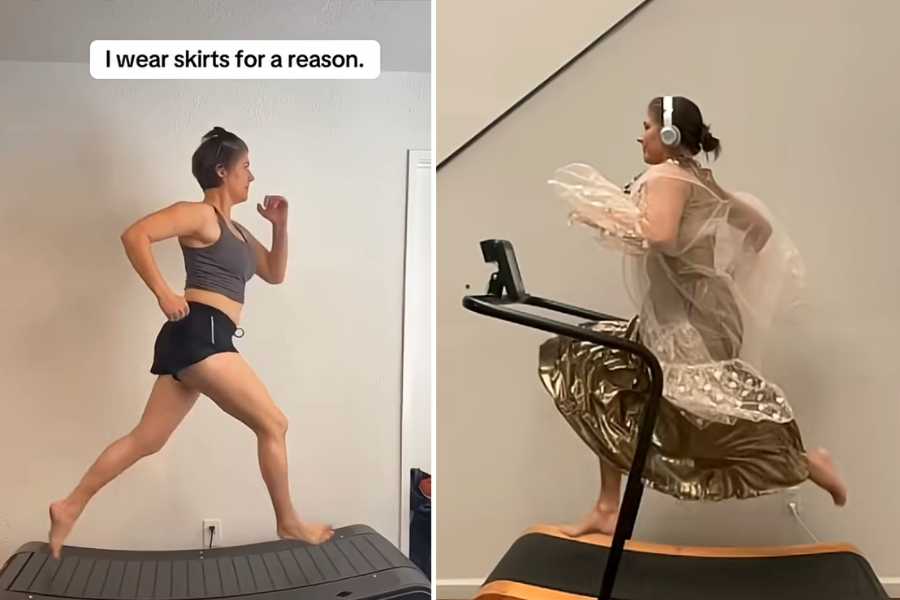
    To hone her form, she filmed herself sprinting on a curved treadmill. But there was a problem: she hated looking at herself.

    “So I wore skirts and played dress up like a little girl,” she says. “It worked!”

    Watch:

    Voisin tells Upworthy it worked on multiple levels.

    “I started wearing skirts because they helped me stop hating looking at myself—and I realized they also make healthy movement visible,” she says. “Aligned movement is wavy and alive, not rigid. Running is timeless and human, and the fabric lets you actually see that flow.”

    She says she always hated running, but sprinting in skirts shifted her perspective.

    “Once I realized that sprinting is the ultimate expression of a naturally aligned body, I aimed high and shot past pain into ease and power I don’t think I ever felt growing up,” she explains. “Now I help others find their way back to that feeling.”

    Voisin also says the comments on her video, which has been viewed more than 4 million times, made her weep.

    “I had no idea how healing it would feel to be so openly accepted for something that even people close to me didn’t understand,” she says. “I just knew there was beauty and healing in it.”

    Here are some of the viewer comments that made Voisin cry:

    “Something about a running, whimsical lady in a skirt and no shoes is so magical.”

    “Every time a human loves herself, is a win for all the universe.”

    “Who noticed, the more she practices, the more she looks younger just like a little girl happy running and discovering the world that she sees as a beautiful and happy place? Beautiful lady, am glad seeing you running, run run run..”

    “You literally look like you aged in reverse in the process! Amazing how healing joy can be for our bodies.”

    “Every single shot of you running in a skirt looks like it comes from a movie I’d love to watch.”

    “People forget, we often don’t like doing things that are good for us, because we copy how everyone else is doing it. Make it fun for you, do it the way you want to do it. Find those joys in your life. It’s your first time living.”

    running, sprinting, barefoot, child, joy
    Running with joy might require a different outfit. Photo credit: Canva

    “I also just love the kick in the face to traditional ‘workout’ clothes. It’s just more consumerism, you don’t need special clothes to workout. Just use what you have!”

    “I loved the reel, the fabric movement, the timelapse, the self love, the deep desire to heal, fit body at later ages… all of it made me smile at how we all creatively approach our problems.”

    “I’ve been an avid runner in my life, but haven’t run much for a few years now. This brought tears to my eyes, your beauty and grace and commitment. I am inspired to run again, for the sheer joy of it!”

    It’s amazing what can happen when you infuse joy into physical activity. Maybe joy for you isn’t running in a skirt and watching it flow in slo-mo, but something else entirely. Whatever joy looks like, leaning into it may help you reclaim the motivation you lost somewhere along the way and empower you to keep your body moving and healthy.

    You can find more from Deb Voisin on her website.

  • Psychologists say there are 4 types of introverts. These are the personality traits of each one.
    A woman sits in a chair reading a book. Photo credit: Canva
    ,

    Psychologists say there are 4 types of introverts. These are the personality traits of each one.

    The four types of introverts: Social, Thinking, Anxious, and Restrained.

    Introverts can have many personality stereotypes. Many people assume they are quiet homebodies who prefer alone time, but not all introverts are the same.

    Psychologist Jonathan M. Cheek, along with his colleagues Jennifer Grimes and Julie Norem at Wellesley College, presented findings in a 2011 study identifying four types of introverts: Social, Thinking, Anxious, and Restrained (STAR).

    “Many people assume introversion is fixed, but introversion is on a spectrum,” Chloë Bean, a somatic trauma therapist in Los Angeles, told Upworthy.

    Essentially, there is no one-size-fits-all type of introvert.

    “It can shift depending on life phase, your stress level, burnout, support system, and trauma history,” Bean said. “What looks like ‘being introverted’ is sometimes the nervous system doing it’s job, protecting you especially when you’re feeling overwhelmed or need to connect with yourself more.”

    Four types of introverts

    In an interview with The Cut, Cheek explained that these introvert “types” are more like “shades,” and that introverts are often a mix of each one. Here’s what you need to know about each type of introvert:

    introvert, introverts, being introverted, social introvert, introverts hanging out
    Three women sit on a blanket in the park. Photo credit: Canva

    Social introverts

    Bean noted that social introverts may be selective about who they connect with. They enjoy spending time with others but need downtime to recover.

    “They prefer to stay home with a book or a computer, or to stick to small gatherings with close friends, as opposed to attending large parties with many strangers,” Cheek explained.

    How to tell if it’s you:

    “You may tend to lose a lot of energy when socializing in large groups even when they’re fun and prefer one-on-one time,” said Bean. “You may feel more regulated with one person at a time, as you can feel overstimulated with more than one person at a time.”

    Thinking introverts

    Thinking introverts are internally rich, deep, and active but appear quiet on the outside, Bean noted. They spend a lot of time reflecting, imagining, creating, or analyzing.

    “You’re capable of getting lost in an internal fantasy world,” Cheek said. “But it’s not in a neurotic way, it’s in an imaginative and creative way.”

    How to tell if it’s you:

    “You feel energized and excited by ideas but you feel exhausted when there is constant feedback and stimulation externally,” Bean explained. “You need time to be with your thoughts to come to your conclusion so staying with your inner voice and process is supportive because you can get easily distracted by others’ thoughts and opinions.”

    @onlyjayus

    The 4 Types Of Introverts

    ♬ original sound – Bella Rose

    Anxious introverts

    Bean said that anxious introverts deal with anxiety and avoidance driven by fear, as the body anticipates rejection or not being accepted socially.

    How to tell if it’s you:

    You might replay conversations, dread upcoming plans and cancel them when the tension and anxiety gets too strong,” Bean shared. “This is often less about your personality and more about your nervous system feeling dysregulated by thoughts about socializing.”

    Restrained introverts

    Restrained introverts are highly observant, take time to warm up to others, and are cautious about who they spend their energy with, Bean explained.

    How to tell if it’s you:

    “It might take you some time to feel like you can trust others and feel safe enough to speak up,” Bean said. “You might also avoid being put on the spot or being the center of attention.”

  • Man who created ‘Reasons to Stay’ website after brother’s death, tearfully shares success story
    Tearful man with head in his hands being comforted. Photo credit: Canva
    , ,

    Man who created ‘Reasons to Stay’ website after brother’s death, tearfully shares success story

    People can write a letter to a stranger and be their reason to stay another day.

    Editor’s Note: This story discusses suicide. If you are having thoughts about taking your own life, or know of anyone who is in need of help, the 988 Suicide & Crisis Lifeline is a United States-based suicide prevention network of over 200+ crisis centers that provides 24/7 service via a toll-free hotline with the number 9-8-8. It is available to anyone in suicidal crisis or emotional distress.

    Mental illnesses like depression don’t discriminate. It can hit anyone, and not everyone survives their fight with the condition. Ben West, a man from the United Kingdom, has intimate familiarity with what happens when someone loses their battle with depression. He lost his younger brother, Sam, to suicide eight years ago.

    In an effort to help with his own grieving process and connect with those who may feel alone, he created a website. The video launching the site Reasons to Stay went viral due to its touching story and noble mission. It’s a website that allows people from across the world to leave letters of encouragement to people who may be contemplating suicide. The hope is that someone needing a reason to stay one more day will find their reason in one of those letters.

    suicide prevention; suicide awareness; depression; mental illness; reasons to stay
    Comfort in a hug: a shared moment of empathy and support. Photo credit: Canva

    The website is simple: it displays the latest letter on the home page, offers sign ups for letters to go directly to your email in the form of a newsletter, and shares places to seek help. If someone wants to read a different letter, all they need to do is refresh the page.

    “This letter was written by someone in the world that cares. It was delivered to you at random when you opened this page,” the Reasons to Stay website explains.

    The creation of this website was strictly an act of compassion for fellow humans, but recently, West received an email revealing that his site saved a life. The website’s founder wept while sharing the news on his Instagram page, saying, “I got a message today, and I’m not going to share the message, but what I can share is that it worked. It worked for someone. We can be fairly confident that it really worked for someone.”

    suicide prevention; suicide awareness; depression; mental illness; reasons to stay
    A comforting hug during an emotional moment. Photo credit: Canva

    He admits that the person still has a difficult journey ahead, but celebrates that they get to continue on at all. “Like I said before, social media, it can be such a bad place, but how amazing that it can be used for something like this. Like, that person, maybe it wouldn’t reach them if it didn’t go viral, so thank you so much, everyone, for sharing and getting involved in this over the last couple of weeks. What a special thing. What an amazing thing. It worked.”

    According to the Centers for Disease Control, “One person dies by suicide an average of every 11 minutes. Over 49,000 people lost their lives to suicide in 2022. Every year, millions of Americans think about, plan, or attempt suicide.”

    In August 2025, JAMA Network released an article urging people to consider human connection as a form of suicide prevention. The authors of the article share that there’s power in human connection, writing, “At a time when individuals experiencing suicidality often feel unseen, unheard, and burdensome, structured follow-up sends a clear message: you matter. You are not forgotten.”

    Reasons to Stay is putting human connection at the forefront in hopes of saving lives. People are moved by his selfless gesture, with some sharing their own stories of survival. One person shares, “From someone who tried to, this is essential. Wish I had that back then. Will definitely use your site if those thoughts ever come back to me. I’m so proud of you, and so is Sam. We’re safer now.”

    suicide prevention; suicide awareness; depression; mental illness; reasons to stay
    Woman seated against brick wall, covering ears with hands. Photo credit: Canva

    Another writes, “My dad took his own life. I wish he could’ve had a website like this to go to. I am sobbing happy tears to know that someone’s life was saved, and I’m also so incredibly sorry for your loss. I understand the ache— but you made something beautiful for your brother.”

    “You may or may not be familiar with David Kessler’s “The sixth stage of grief,” but in that book he suggests that the 6th stage is: finding meaning. You’ve created meaning by saving others. Sam’s spirit and legacy lives on through you and his life and death now means, not just something to you, but something to many others around the world. What an absolutely beautiful and healing way to honour Sam, and what a gift this is to the world. Thank you Sam. Thank you Ben. So special. So powerful,” someone else kindly shares.

  • Scientists discovered a fascinating trick to feeling like you slept great even if you didn’t
    Tired man (left); energized man (right)Photo credit: Canva

    The benefits of getting a good night’s sleep are too vast to name. Sleep is as essential for our brains as food and water are for our bodies. If you’re not getting enough, sleeping better has been shown to elevate your mood, improve your memory, and even boost your physical health. And then there’s the obvious: when you don’t sleep well, you’ll have less energy and generally perform worse on tasks that require any kind of effort or thought.

    However, we’re all human, and, sometimes, humans sleep terribly. Your infant might wake you up, or a car alarm might go off outside, interrupting your regularly-scheduled REM. It’s not always our fault when we don’t sleep well, but there might be an interesting way to fix it.

    A study from 2014 may have demonstrated the existence of something called “placebo sleep,” or tricking your brain into believing you slept better than you did.

    sleep, sleep tricks, sleeping techniques, science, scientific research, placebo effect, placebo
    a man sitting at a desk with his head on his arms Photo by Vitaly Gariev on Unsplash

    The placebo effect, of course, has been studied relentlessly over the years and has shown that the human body can do amazing, almost impossible things, when the brain gets on board. The classic example is when symptoms of disease get measurably better after a patient takes a “fake” pill. Another study out of Harvard showed that people who were told their jobs qualified as exercise showed improved health and fitness markers compared to people who did the same job. Placebos even work when the person knows they’re taking a placebo. It’s called an “honest placebo” and is considered a legitimate, ethical treatment method for many ailments.

    The researchers in 2014 wanted to find out if the placebo effect could also apply to sleep. So, they lectured a group of participants about the importance of REM sleep and how it can effect cognitive functioning. The participants were then split into two groups and monitored overnight while they slept. The next morning, one group was told they achieved 28.7% REM sleep, which is terrific, and the other group was told they only spent 16.2% of their sleep time in REM, which is below average. The numbers, however, were complete fiction.

    Stunningly, the participants who believed they achieved top quality sleep performed better the next day on a series of arithmetic and word association tests compared to the other groups.

    In their conclusion, the authors wrote, “These findings supported the hypothesis that mindset can influence cognitive states in both positive and negative directions, suggesting a means of controlling one’s health and cognition.”

    According to Smithsonian Magazine, follow up experiments confirmed the findings.

    The key to feeling great and performing as if you had a great night’s sleep may lie in simply believing that you did.

    There are a lot of ways to “placebo your sleep” in order to generate that belief. For starters, you can adopt a new routine or technique or even supplement in order to prime your brain.

    John Cline Ph.D. asserts for Psychology Today that the popularity of sleeping aids like melatonin may be tied less to the fact that they work, and more to the fact that people believe they work. But you don’t need to take any supplements or medications. Having a slow evening wind down with a book and an herbal tea, trying a new sleeping position, or practicing some measured breathing might work just as well. Or, rather, they might work precisely because you believe they will.

    sleep, sleep tricks, sleeping techniques, science, scientific research, placebo effect, placebo
    Can a warm cup of tea help you sleep better? If you believe it, then yes. Photo by Dana Ciurumelea on Unsplash

    You could take the concept a step further and alter your morning routine on nights you know for a fact you didn’t sleep well. Perhaps it’s by using a new coffee brand, doing some stretches before getting out of bed, or meditating before starting your day. Anything that you truly believe might help make you more alert and focused may just work.

    One viral social media sleep trend capitalizes on this research perfectly. Researchers have shown that forcing your mouth into a smile has been shown to improve your mood. Turns out, similarly, you may be able to get sleepy by pretending to be super tired. Psychologist Erica Terblanche calls it the “alpha bridge,” and it involves gently closing your eyes, fluttering them open just a tad, and then closing them again as you relax and breath. It simulates the feeling of “nodding off” and is said to create the alpha brainwaves that transition your brain from wakefulness to sleep. It’s another clever way of tricking your own brain.


    @erica.terblanche

    Here’s a skill to help you fall asleep on an airplane or anywhere else for that matter. . Its called going over the Alpha Bridge. #EricaTerblanche #ThriveGuru #motivation #sleeping

    ♬ Solas x Interstellar – Gabriel Albuquerqüe

    It sounds cheesy, but the power of mindset and positive thinking is truly tremendous. Our beliefs and thought patterns can greatly influence our body, our behavior, and our mood. Sometimes, our mindset can even be stronger than actual reality. Now we have the data to prove that it applies to our precious sleep, too.

  • ‘Spiritual shift’: ICU nurse shares the one phrase that means someone will pass very soon
    A man who is ready to pass away.Photo credit: via Canva/Photos

    When people in the healthcare world experience people dying on a regular basis, they begin to see patterns as to when patients will pass away. Hospice workers say that when people are in their final days, they begin to see the people they’ve loved in the past surrounding their hospital bed. They will share many of the same regrets and have frequent hallucinations.

    Kirstie Robb, a TikToker who has worked as an ICU nurse for the past four years, has noticed a trend in people who are about to pass away. She says that when she hears a specific phrase from those who are brought in, regardless of the reason, they will be gone very soon: “Every single person who passes away says the same thing,” she explained in her TikTok. “They say…’Can you please tell my family I love them? I don’t feel good. I know I’m gonna die.’”

    Somehow, people know when they are ready to die

    Death is such a mysterious process that Robb can’t believe that so many people she’s seen know when the moment is upon them. We’re never trained to sense our death. Why is it that these people have such a clear understanding that it is upon them? Robb says it is due to an internal, spiritual shift that defies medical understanding. “You guys, people know when they’re gonna die,” she says.

    @kirstierobbb

    those who are meant to see this will see it.

    ♬ original sound – kirstierobbb

    “There’s a shift that happens that’s spiritual, that nobody can explain, right? Their vitals may be stable. Their condition may be the exact same way it was when they came in. There’s nothing inherently dangerous,” she continued. “Yet in every single circumstance, no matter what brought them in initially, no matter how many hours it is from the last time that they said that, they always die. Always.”

    Lessons from being among the dying

    Robb’s experience with the dying led her to remind everyone how important our lives are and to focus on what truly matters, rather than chasing material possessions. “Life is not meant to be an endless pursuit of things. Life is meant to be enjoyed. Life is meant to be appreciated. Life is meant to be explored. Why are you actually here?” Robb asks.

    There is no research-based reason for this shift that occurs in people when they know they are going to pass. But David Casarett, M.D., explained his experience with it in Psychology Today.

    afterlife, going to the light, bright light, death, final days, hallucination, heaven
    A man walking towards the light. viau00a0u200bvia Canva/Photos

    “What they tell me is that they feel—something. Something different, or changing, or new. One young man dying of a sarcoma told me he felt free. Another middle-aged woman dying of liver cancer said she felt like she was falling out of a plane. Both had been correct to sense something amiss, and both died within the hour,” Dr. Casarett wrote. “I don’t know how we could possibly foresee our own deaths. I’m not saying it’s impossible; it’s just beyond my power to explain.”

    While there is a lot of mystery surrounding death, Robb and Dr. Casarett’s experience with it shows that those who are ready to pass away seem to be at peace and are accepting of their final journey home, wherever that may be. It should give all of us a feeling of relief that our final hours may be the most peaceful we ever experienced.

  • We all know the feeling. You walk through the front door after a long day, or slam your laptop shut, and the weight of the world slides off your shoulders. Your overworked brain, desperate to relax, entices you to collapse onto the couch and scroll through your phone until it’s time to sleep.

    But is this the best way to recharge? By doing nothing? Experts say no.

    @xparmesanprincessx Spending this cozy Sunday planning my curriculum for 2026 ✍️ I’m going to break my year up in to 4 semesters with different themes and focuses for each month and have more long term learning projects like relearning Spanish! #curriculum #learning #personalgrowth #personalcurriculum #books ♬ original sound – Elizabeth Jean

    A fascinating trend on social media is trending, called the “personal curriculum.Championed by Google executive productivity advisor Laura Mae Martin, the concept is simple yet counterintuitive. The idea is to assign yourself “homework”—not to earn a degree, promotion, or extra cash, but for the pure joy of learning. TikTok user Elizabeth Jean also helped popularize the term “personal curriculum,” and posts videos with tips on how to create your own.

    Adding tasks to an overflowing to-do list might sound like a recipe for burnout, but Martin suggests that a structured, self-directed learning plan can boost energy, sharpen the mind, and restore a sense of identity.

    The unexpected science of “fun homework”

    It’s easy to compare our brains to batteries that drain during the day and require total rest to recharge. But cognitive science shows that our minds are more like muscles. To stay healthy, we need new and interesting activities that challenge us.

    When we engage in what researchers call “cognitively stimulating activities,” the physical structure of our brains changes. A 2017 report from the Global Council on Brain Health highlighted that keeping the mind active is essential for maintaining brain health as we age. Creative activities like painting, photography, or writing can reduce cortisol levels and lower stress hormones, creating an emotional regulation loop that leaves you feeling refreshed and ready for the next day.

    A systematic review in BMJ Open found a clear link between lifelong learning and a lowered risk of dementia. Researchers explained that challenging the brain with new information builds cognitive reserve, a.k.a. its ability to adapt and remain resistant to damage.

    Think of it as investing in your mental future. Each time you tackle a new language lesson or deep-dive into Renaissance art history, you’re strengthening your brain in ways that can last a lifetime.

    Redefining what it means to be productive

    The word “productivity” can carry heavy connotations. It suggests endless checklists, exhausting efficiency hacks, and squeezing every drop of output from our waking hours. Laura Mae Martin offers a refreshing alternative, defining productivity in simple terms: productivity is accomplishing what you intend to do, when you intend to do it.

    This meaning allows us to reclaim our time. It shifts our mindsets from external validation to internal satisfaction.

    How to build your syllabus

    Let’s put this in practical terms. How do you bring these “nice ideas” into the real world? By creating a “personal curriculum” and treating it with the same respect you would have for a college course. Humans respond well to structure and deadlines. Here’s how to create a syllabus that sticks:

    1. Follow the spark: Genuine curiosity must drive your personal curriculum. If you hated calculus in high school, don’t pick it up again for arbitrary reasons, like trying to feel smart. Look for subjects that make you lose track of time. Identifying every tree in your neighborhood could be one, or mastering the perfect sourdough loaf.
    2. Diversify your materials: Learning exists everywhere, not solely in dense textbooks. Keep required texts engaging and fun, mixing in podcasts, workshops, flashcards, and documentaries. If you are learning a new language, listen to an album in that language. If you’re studying paleontology, visit a local natural history museum.
    3. Set the scene: Get yourself in the zone with a little learning mise en place. Find a specific chair and reserve it for reading, or flipping through flashcards. Make a study playlist and fill it with songs to play in the background. When you sit in that chair, or hit play, you are signaling to your brain that it’s time to switch into “student” mode.


    The 20–30 minute rule

    Don’t spend all your free time on this. Overload is the greatest pitfall with personal curriculums. We get excited, plan to study every night for two hours straight, then find ourselves exhausted and discouraged.

    Sustainability lies in the “Goldilocks” rule for time commitment: keep sessions between 20 and 30 minutes.

    Simple 20–30 minute blocks fit into even the busiest schedules. Slot one in after dinner or while drinking your morning coffee. Yet, they’re long enough to achieve a flow state.

    Valerie Craddock, a content creator, shared her November curriculum on TikTok, embracing this method. It included gentle, actionable goals: walk 8,000 steps, practice penmanship three times a week, work out for 30 minutes. By keeping her curriculum low stakes, Craddock set herself up for a winning streak instead of a guilt trip.

    Make room for what matters

    How do you protect this newfound time? Martin suggests a simple but effective tactic: integrating your personal calendar with your work one.

    This gives you a complete view of the week. You might see Tuesday packed with meetings, so you’ll make a mental note to keep that evening free. Thursday looks much lighter, offering the perfect window to pencil in that 30-minute creative writing session.

    productivity, book, google, expert, homework
    Woman working, productively. Photo credit: Canva

    An approach like this helps you honor the natural ebb and flow of energy, and prevents you from overcommitting on days when you’re already drained. When you schedule “fun homework” with the same seriousness as an All-Hands meeting, you’re sending yourself a powerful message: personal growth is as important as obligations.

    Redefining “you”

    One of the most rewarding aspects of the personal curriculum is its ability to reshape our sense of self. In a society obsessed with asking, “What do you do for work?” discovering an answer that’s not attached to a paycheck can feel freeing.

    When you learn, you transcend the role of parent, employee, or partner—you become a historian, linguist, painter, or botanist.

    Buy the notebook, write a syllabus, and enjoy becoming a beginner again. You might discover that a little homework can unlock the key to reconnecting with yourself.

  • Experts explain why the ‘Infinity Tracing Technique’ can be a game changer for people with insomnia
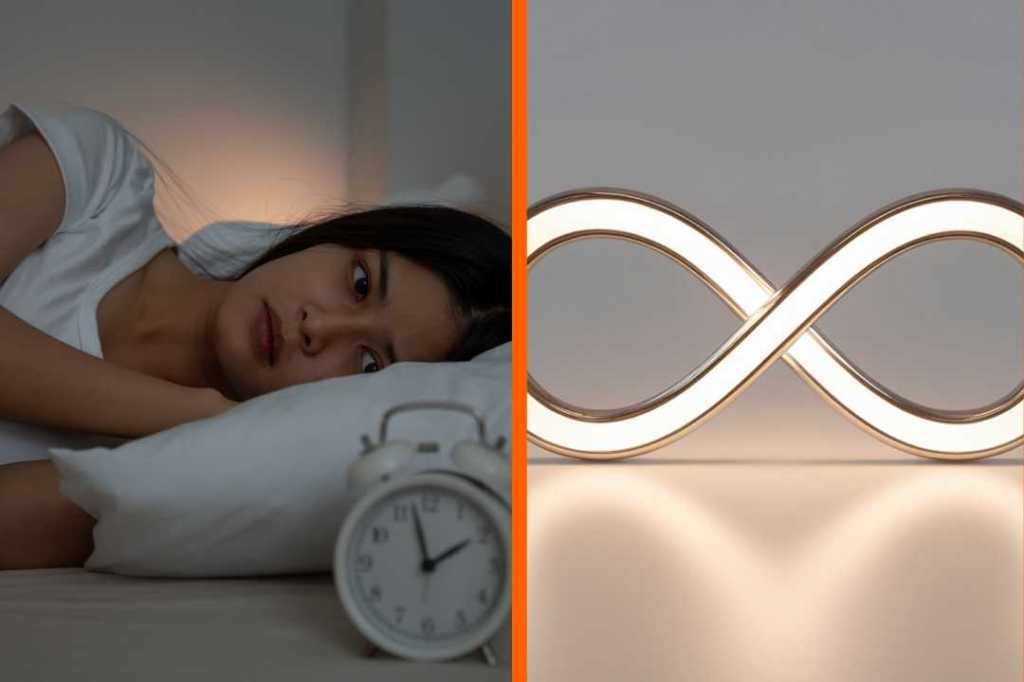
    Left: A woman who can't sleep. Right: An infinity symbol. Photo credit: Canva

    It’s 2:00 a.m., and you simply can’t get your mind to shut down. You’ve tried counting sheep, but they just keep crash-landing into meadows, making the insomnia even worse. Maybe you’ve tried every trick in the book, from over-the-counter sleep aids to lavender-scented pillows. Well, there’s one more trick to try, and some people swear by it.

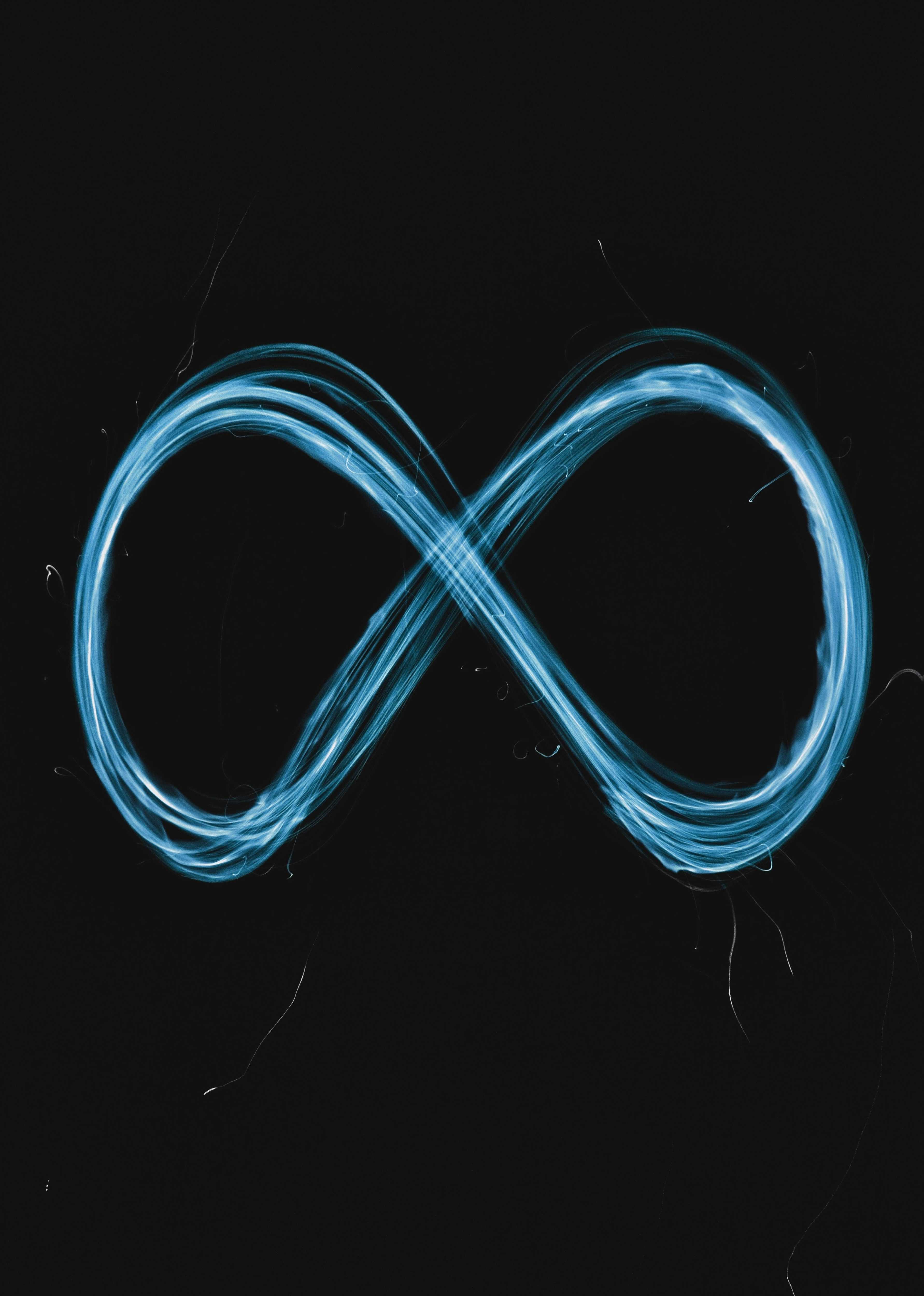
    It’s called the “Infinity Tracing Technique,” and it’s actually quite simple. Simply put your finger in the air and imagine tracing the infinity symbol (the number eight sideways) for a couple of minutes. This easy technique can instantly help calm an overactive mind.

    @drjoe_md

    Is the infinity tracing technique the hack you need for an overthinking brain? #overthinking #anxiety #insomnia #mentalhealth

    ♬ original sound – Dr. Joe, M.D. ?

    Dr. Joe Whittington explains the idea in layman’s terms in a TikTok video. “You ever lay in bed at night overthinking all the embarrassing things you’ve done since childhood?” he asks. “Same. So I’m gonna teach you a technique that might help you calm your overactive brain.”

    He breaks down exactly how to do it:

    “What you do is you take your finger, put it in the air, and you trace the infinity symbol slowly and methodically. Not like you’re casting spells. And as you’re tracing this infinity symbol, you’re gonna just follow it with your eyes. Only your eyes. What this does is it activates your vestibular center, which is involved with your balance and eye movements. When your vestibular system gets activated, it can help calm racing thoughts. Sort of like distracting a toddler with a shiny object, except for the toddler is your overactive brain.”

    It’s helpful to the brain in other ways, too. “It’s a technique often used in therapy and neuroscience to help you stop doomscrolling your regrets,” he adds.

    relaxation techniques, sleep, sleep hacks, Infinity Tracing technique, figure eight
    A blue light painting of an infinity symbol. Photo by Sandip Kalal on Unsplash

    Whittington is likely referring to a therapy technique called EMDR, which uses similar methods involving eye movement. EMDR stands for Eye Movement Desensitization and Reprocessing, and it’s used to help people process complex trauma.

    The EMDR Institute explains how it works:

    “During EMDR therapy, the client attends to emotionally disturbing material in brief sequential doses while simultaneously focusing on an external stimulus. Therapist-directed lateral eye movements are the most commonly used external stimulus, but a variety of other stimuli, including hand-tapping and audio stimulation, are often used.”

    Similarly, the Infinity Tracing Technique pairs eye movements with specific brain activity to help calm the mind and redirect focus. This technique has recently become popular due to therapists and influencers sharing it online.

    Sarah Jackson offers additional insight in her Instagram Reel, where she demonstrates the process using a capped blue marker to “write” in the air. She explains that “Figure-8 tracking,” as she calls it, activates not only the vestibular system but also the ocular system.

    “Eye muscles connect directly to the brainstem — the part of the brain that governs survival functions,” she writes. “Tracking a moving object sends rhythmic signals, saying: I’m balanced, I’m oriented, I’m safe.”

    Jackson further explains:

    “The vestibular system regulates balance and spatial orientation. Its connection to the brainstem helps calm the nervous system. Smooth, predictable movement supports groundedness, signaling safety. Cross-lateral movement integrates both hemispheres, aiding emotional processing and shifting focus from internal preoccupation to external grounding.”

    Many followers of both social media accounts say they’ve benefited from the technique. One TikToker jokes, “So I don’t need to try to remember my junior high school locker combo?”

    On the Instagram Reel, one commenter notes that the technique works: “This is great and so effective! I’m always looking for quick wins like this on those days where you can’t tell where the time goes.”

Wholesome

Teacher shares her surprisingly wholesome story of learning what ‘Netflix and chill’ means

Motherhood

Mom shares how she went from feeling alone to having a ‘huge mom village’ in just one year

People Skills

3 types of ‘effortless’ psychology-based opening lines to start a conversation with anyone

Pop Culture

Jim Henson interviewing with Muppets is a delightful reminder of his magical genius