
The 3 things you learn after your mother dies.

Love you, Mom. ❤️

a mother holds her baby's hand
I still miss her.Photo credit: Image from Pixabay.

My mother died from ovarian cancer when I was a young child.

I’m in my late 30s now, and I’m still navigating this loss as I move through life. I’ve lived most of my life without my mother at this point, but I still miss her.

Here are three things I’ve learned since losing Mam:

1. Grief is not linear and is not solely expressed through tears.

Someone you love has been taken away from you, and your heart has broken into pieces. It’s natural to grieve, but we all grieve differently. Grief shows up in anger, sorrow, guilt, fear, and sometimes peace. It is unpredictable and, at times, exhausting.

I cried when my mother died, and I cried at her funeral when my school choir sang “Be Not Afraid.” I didn’t cry much in the immediate years that followed — not directly as a result of Mam’s death, but probably indirectly related to it. I certainly felt fear and anger and other emotions related directly to my loss.

Then sadness hit me like a ton of bricks one day when I was in my early 20s. A compassionate friend asked me about Mam, and as I hadn’t spoken about her to anyone outside the family, I broke down. It was a good release. The years have brought many stages of grieving.

Mother’s Day is never easy. Shopping for my wedding dress without my mother brought up intense feelings of loss. And sometimes it just hits me hard, on a regular day, yanking me out of my pleasant thoughts. A mother in a dressing room with her daughter, and they’re trying on clothes together, admiring how the other looks. The mother telling the daughter how beautiful she is.

Or a friend of mine, meeting her mother for lunch and I can’t even imagine what that would be like! I can’t even fathom the amazing joy of having lunch right now with Mam! And then I get that heaviness in my chest and my stomach feels bad.

There’s no closure. My grieving stems from having loved so deeply. I have learned to tune into the emotions I’m feeling and to acknowledge the love, the pain, and the loss.

2. There are no replacements.

Nobody can replace your mother. We love our mothers in our own individual ways. Our mothers care for us when we’re sick, guide us in life the best ways they can, listen to us, and love us unconditionally.

For a mother, her child is always her first priority. And we sense this. We feel it. We know it, even if she doesn’t say it.
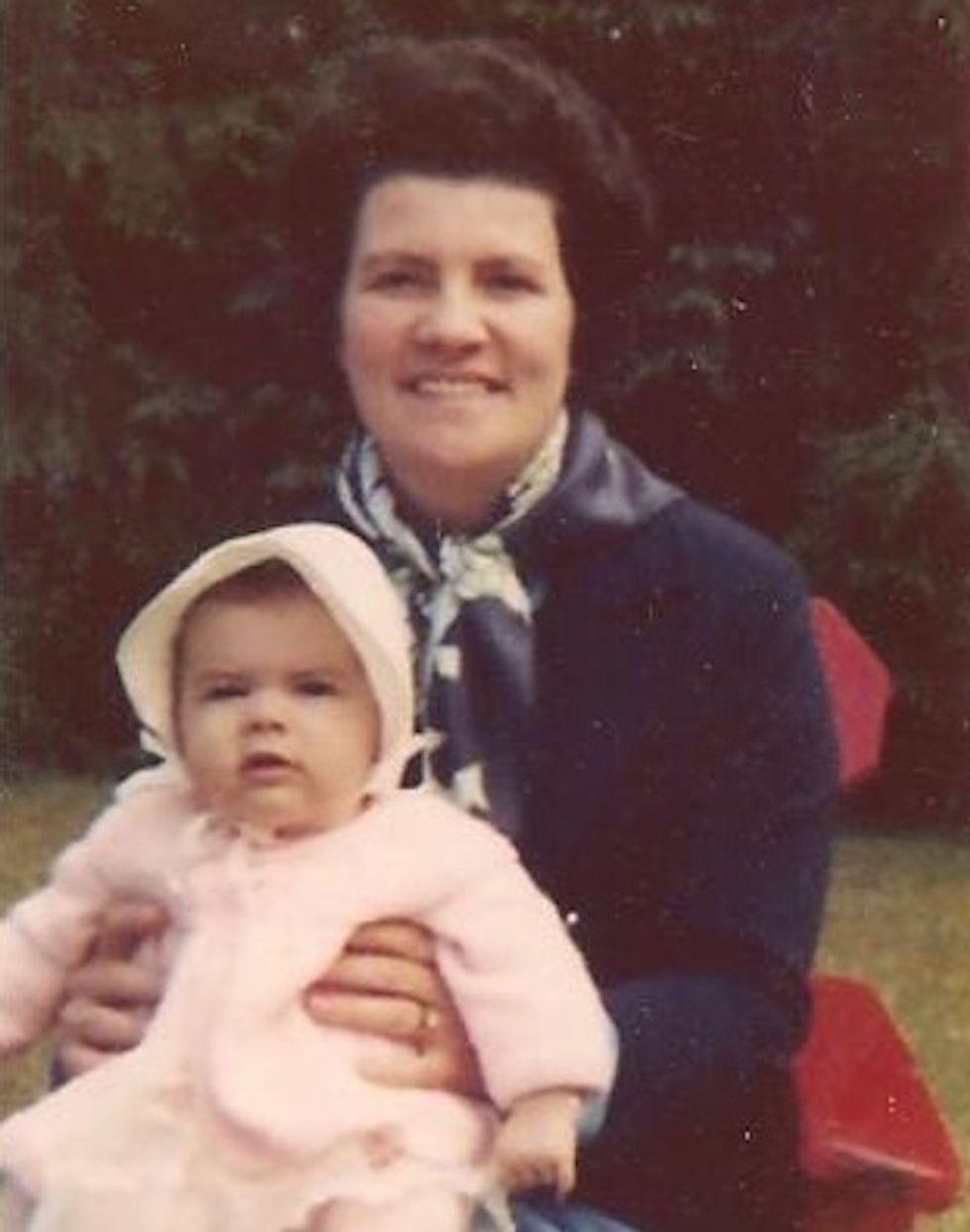
mother holding her baby girl
I was told that she called me her little angel. Photo provided by author Carmel Breath.

My mother was beyond happy when I was born a healthy baby girl. I was told that she called me her little angel. She carried me in her womb for nine months.

By the time I was born, we had that unbreakable bond, and she knew me from that first second of my existence. There’s never going to be a replacement for that person who loved me probably more than she loved herself. The joy in her eyes when she saw me, the warmth of her arms wrapped around me, the pain in her eyes when she had to say goodbye are all ways that I remember the deep love she had for me.

Mam prepared lunches for me every day to take to school, named muffins after me because they were my favorite, and surprised me with the best doll she could find when I was a few years old. She repaired my soft toys when they tore, taught me to have manners and sit up straight, wiped my eyes when I cried and my nose when I was sick.

Today I look for certain qualities in people. I look for a warmth, a radiance, a compassion and kindness that Mam had. I look for humor, a voice of sense, and strength of character. These are traits that my mother had. I find some of them in others.

But it’s never the same. There’ll never be another Mam. She’s irreplaceable on so many levels.

3. There are other people who will love you and other people for you to love.

Family members and friends will love you. They might not know exactly what your needs are or how to address them, but it’s worth reaching out to them. People struggle with different things.

Perhaps family members cannot love you or be there for you, and we may have to look around, let go, and reach further than we might want to in order to find the people who really love us, but there is someone out there to love you, and there’s someone in need of your love.

I was blessed with the kindest, most devoted father who gave my brother and me all the love and care we needed. My dad is a gem in my life. He calls me to hear my news and to share his. He worries when I’m not feeling good and is overjoyed when I’m happiest. He listens to my concerns and trusts me to make the right decisions.

My dad has helped me so much in dealing with my loss, through caring for me and loving me unconditionally. I have the most wonderful fiancé who loves me to no end. And I’ve friends in my life who I know truly care about me.

I’ve been blessed with a lovely family, but it doesn’t mean that I don’t reach out to others. I’ve reconnected with old friends after years of distance. I’ve discovered things I have in common with others and opened up to new friendships.

Having people to love is truly healing. I was a kindergarten teacher for 10 years. I loved the children in my care, and they showed me so much love in return. By spreading love, we invite more love into our lives. Try volunteering or working in a school or a hospital. There are people everywhere in need of love.

Our world is so big and yet so small now in this age of technology. We can reach out to others across continents.

Our mothers were the first to show us the true meaning of love. In honor of our mothers, let’s spread that love wherever we can.

This article originally appeared eight years ago.

  • Parents are sick and tired of explaining why they ‘never want to bring the kids over’ for a visit
    A dad plays with his young daughterPhoto credit: Canva

    It’s a good news/bad news situation for parents of young kids. The good news? Everyone wants to spend time with the kids! Grandparents, aunts and uncles, friends. They all want a relationship and lots of special moments with the little ones. It’s why people assume if you have family nearby that you’re “so lucky,” and that you’re overrun with free babysitting offers. Ha! If only.

    The bad news comes down to one phrase: “When are you bringing them over?” Parents have been frustrated by the expectations of orchestrating stressful visits for generations — loading the kids in a car or on an airplane only to spend hours chasing them around in an un-baby-proofed environment and watching routines go to hell.

    Now they’re sounding off on social media and airing their grievances.

    Why visiting grandparents and other relatives is so challenging for parents

    A mom recently took to Reddit to vent about everyone in her life wanting her to “bring the kids to them.”

    “My parents live 30 mins away and always bug me about not coming to visit them,” she writes. They constantly ask, “Why don’t you bring our granddaughter to come see us?”

    The post struck a nerve with parents, who chimed in with hundreds of passionate comments. The fascinating discussion highlights a few things that make arranging visits with young kids a potential nightmare for parents.

    Grandparents’ houses are rarely childproofed

    Grandparents love their breakable decor! Ceramic doo-dads, glass vases everywhere. They can’t get enough. In fact, they like to dedicate massive pieces of furniture only to housing their fine china, which they never use, but which is also extremely valuable and sentimental.

    And while they should be able to decorate their house however they see fit (they’ve earned the right!) that doesn’t make it a good environment for toddlers and babies.

    parenting, grandparents, toddlers, family visits, childproofing
    Blue and white porcelain vases on a shelf. Phot credit: Canva

    “Last week was the last straw, I took my daughter to my parents and of course she went EVERYWHERE! flooded their toilet, broke a vase, and tried multiple times to climb their furniture,” the Reddit mom writes.

    Parents in a foreign environment are on constant safety duty and can rarely sit down

    Let’s be honest. Sometimes these “visits” are hardly worth the effort. After all, it’s hard to get much catch up time when you’re dutifully chasing your kid around.

    “They don’t understand that my 3 yo … is absolutely wild,” writes another user in the thread. “She has no self preservation and nothing we do works. She doesn’t listen, she throws, she bites, she refuses to use the potty. It’s exhausting and then … they expect us to entertain them, when I’m trying to just keep my kid from jumping off the stairs and into an ER visit.”

    A visit at the grandparents’ house is often not a fun catch-up time for mom and dad. It’s rare to get to sit down and have an adult conversation when they’re busy trying to play Safety Police. It’s common to leave one of these visits frustrating and like it wasn’t really a visit at all. 

    Even just putting the kids in the car for a 20-minute drive is more work than it seems

    Taking the kids out of the house requires packing a bag, bringing extra clothes, loading up on snacks, etc.

    It seems easy to “pop over” but it actually absorbs the majority of the day between prep, visit, and aftermath. In the case of the OP mom and her parents that are “just” 30 minutes away, that’s an entire hour of just driving, not counting any visiting time. If anyone’s ever driven with young kids, you know that’s an eternity! For a drive like that, you need snacks, you need entertainment. You may have to clean up spills, deal with traffic tantrums, or pull over to break up a fight. It’s really a lot of work.

    Naps and routines go to hell

    Parents with babies and toddlers know all too well — there is a price to pay for taking the kids out of the house for too long.

    Chances are, the baby won’t nap in a strange environment and then you’re stuck with a cranky kid the rest of the night. You can and will try, bringing your little pack-and-play and your best intentions, but the process will be draining and probably unsuccessful.

    And then guess what? You’re totally screwed when you go home later, yay!

    Kids with special needs require even more consistency

    Kids with autism or ADHD can really struggle outside of their zone of safety. They might become severely dysregulated, have meltdowns, or engage in dangerous behaviors. This adds even more stress to parents and makes the visits even less fun and satisfying in the end.

    Explaining and mediating the generational divide

    parenting, grandparents, toddlers, family visits, childproofing
    A man holds his granddaughter. Photo credit: Canva

    Why is this a conflict almost all parents can relate to?

    Is this a Boomer vs Millennials thing?

    Some experts think that generational values and traditions might play a role.

    “Many Boomers were accustomed to more traditional, hierarchical family dynamics, where visiting grandparents was a way for the younger generation to show respect,” says Caitlin Slavens, a family psychologist.

    But that’s not to say this is a new problem. I can remember my own parents driving me and my brothers over an hour to visit my grandparents seemingly every other weekend, but very few occasions where they came to visit us. It must have driven my parents nuts back then!

    Plus, it’s easy to forget that it’s hard for older people to travel, too. They may have their own issues and discomforts when it comes to being away from their home.

    “But for today’s parents, balancing careers, kids’ routines, and the demands of modern parenting is a much bigger undertaking. Grandparents might not always see how childproofing their space or making the trip themselves could make a huge difference, especially considering how travel and disruption can impact younger kids’ moods and routines,” Slavens says.

    “So yes, this divide often comes down to different expectations and life experiences, with older generations potentially not seeing the daily demands modern families face.”

    Is there any hope for parents and grandparents coming to a better understanding, or a compromise?

    “First, open conversations help bridge the divide—explain how much of a difference it makes when the kids stay in a familiar space, especially when they’re very young,” suggests Slavens.

    “Share practical details about the challenges, like childproofing concerns or travel expenses, to help grandparents see it from a parent’s perspective. You might even work together to figure out solutions, like making adjustments to create a more child-friendly space in their home or agreeing on a shared travel plan.”

    Ultimately, it’s a good thing when grandparents, friends, and other relatives want to see the kids. We all have the same goal. Just look at how incredible it can be when everything goes right:

    “It’s helpful to approach the topic with empathy, focusing on everyone’s goal: more quality time together that’s enjoyable and low-stress for everyone involved. For parents, it’s about setting boundaries that work, and for grandparents, it’s about recognizing that flexibility can really show the parents that you are … willing to make adjustments for their children and grandchildren.”

    Enjoyable, low-stress quality time is something everyone can get behind.

    This article was originally posted two years ago. It has been updated.

  • Mom says changing one communication rule in her home made it more peaceful
    A daughter reading to her mom.Photo credit: Canva
    ,

    Mom says changing one communication rule in her home made it more peaceful

    “Our home is the dress rehearsal, and the world is the stage.”

    Some believe responding “What?” when your name is called is rude. Parents are often fond of responding to a child saying “what” with a good old-fashioned “Don’t ‘what’ me.” Others aren’t too bothered by it and think a more polite response is a bit too formal.

    Angelica Daniell, 38, currently stationed at Fort Bragg in North Carolina, says teaching her children to respond to their names with “Yes?” has brought more peace to her home. She was raised in a “What?” family, and changing the rule in her home has made a big difference.

    Are you in a “what” family or a “yes” family?

    “When you guys were growing up, and your parents would call you, and they’d say your name, would you say, ‘What?’ Because I grew up like, ‘what?’ You know?” she began her TikTok video.

    “Ever since my kids could talk, my husband taught our kids to say ‘yes.’ So if we call Ray, he’d say, ‘Yes.’ And then he needs to come—like, yes, I hear you, but I’m coming. You don’t stay in that place and talk to you from downstairs, and you’re upstairs,” she said. “I don’t know, I just thought that’s such a special and precious thing. And I love when I call my kids, and they say, ‘Yes?’ and they come to me. I can’t tell you what that does for me.”

    The big problem people have with using “what” as a response to a family member calling their name is that it makes them sound annoyed. It’s like they mean to ask, “What are you bugging me about?” or “What do you want?” By contrast, saying “yes” signals that you’re welcoming the request or favor and are ready to help.

    mom and daughter, chores, cleaning dishes, happy family, suds,
    A mom and daughter doing the dishes. Photo credt: Canva

    Not everyone agrees. “I definitely grew up as a ‘what’ type of family. I still don’t see anything wrong with it. I’m not sure why people find it disrespectful,” one person said in the comments.

    “My mom always said, ‘Don’t what me,’” another added.

    “Even hearing ‘what’ even from other adults.. feels disrespectful,” said another.

    The discussion also pointed to a bigger issue. “Genuine question for adults currently in/raised in a ‘what’ household… do y’all answer ‘what’ at work when someone calls you!?” a commenter asked.

    Daniell believes that when children are polite in the home, it follows them throughout their lives. “Our home is the dress rehearsal, and the world is the stage,” she told Newsweek. “If our kids say ‘yes’ to us, our hope is they will also say it to their teachers, friends [and] coaches.” 

    Napoleon Hill, author of the mega-bestseller Think and Grow Rich, believed that it’s important for parents to be polite to their children as well.

    “Politeness to others is usually born out of respect for the individual, which you learn as a child,” Hill wrote. “When you are treated with respect by other members of the family, you learn to respect them as well. The self-esteem that results from being recognized as a unique person by the people who matter most to you helps you develop the confidence necessary to succeed later in life. Politeness and consideration for others are habits that—once developed—usually stay with you for a lifetime.”

    When people debate whether it’s better to live in a “what” or a “yes” family, it’s important to recognize that manners start at home. Even though the “what” folks may think the “yes” folks are being too formal, the habits formed at home will help define a child’s life in the real world. Finding manners in school or the office is a lot harder when you never had them at home. 

  • Dad gleefully cleans his family’s bathroom with a car wash sprayer and people are inspired
    Using car wash supplies to clean a bathroom is genius.Photo credit: Canva
    ,

    Dad gleefully cleans his family’s bathroom with a car wash sprayer and people are inspired

    His use of car-detailing supplies for bathroom cleaning is next-level.

    It’s fair to say that most people don’t find great joy in cleaning the bathroom. But after seeing the way dad/”Renaissance man” Sebastian talks about deep-cleaning his family’s bathroom with car-detailing supplies, that could change.

    In fact, he doesn’t just talk about it. Videos of him demonstrating how he uses an automatic foam sprayer, brushes, wash mitts, microfiber drying towels, and more have inspired thousands of people to follow in his footsteps. That says a lot. This is bathroom cleaning, after all.

    In Part 1, Sebastian explains that once a month, he deep-cleans the bathroom, starting with dusting and vacuuming. First, he removes everything from the space. Then he uses a Swiffer duster and an industrial air scrubber to suck up all the dust he displaces (not a standard bathroom-cleaning tool, for sure). After dusting, he vacuums. Thoroughly.

    Then comes the fun part: the automatic foam sprayer.

    Sebastian mixes Dr. Bronner’s Castile Soap, isopropyl alcohol (to disinfect), and water in the foam sprayer. Then he hoses down the entire shower, tub, toilet, sinks, and countertop with the foamy mixture, which is oh-so satisfying.

    Then he starts scrubbing with car wash brushes. Also so satisfying.

    Are you wondering how on Earth he’s possibly going to rinse all of that off? Fear not. He has a system.

    That system includes a spray bottle (with a design that puts all others to shame) and a squeegee. Spraying the foam with water keeps it from drying out and makes it easy to squeegee away. Then he goes in with a big, honking car wash mitt to remove the rest.

    The mitt might be the best part, though Sebastian gets particularly excited about the microfiber towel that comes next.

    “The best towel ever made,” he says. “It is a microfiber towel made by The Rag Company for the automotive detailing industry. And it is quite literally the most absorbent towel I’ve ever used in my entire life.”

    And he’s still not done. He cleans the remaining surfaces (window sills, tops of lights, top of the door frame, etc.) with castile soap. Then he goes in with sodium percarbonate (an eco-friendly oxygen bleach powder) to clean the sink bowls, toilet, tub, and grout.

    Then he rinses it all off with his superabsorbent microfiber towel, and voilà! A sparkly clean bathroom.

    People in the comments expressed how impressed and inspired they were by Sebastian’s cleaning regimen:

    “Wow. People’s minds are going to be blown. I did not see the squeegee or the puffy glove coming. 👏👏❤️❤️”

    “This inspired me to do a much-needed scrub of my own shower last night at 10:30pm, and for that I thank you.”

    “It has never occurred to me to clean a bathroom like this but honestly it looks very thorough!!”

    “This is SUCHHHHHHH a brilliant and effective way to clean a bathroom! My dad worked at a car wash for years and years and I feel like he would have loved this.”

    “Ok, I know the products aren’t sponsored but they should be. I am ready to BUY. This is a masterclass in adulting.”

    At viewers’ request, Sebastian and his wife, Lyndsey, created a list of his favorite cleaning products with affiliate links. However, Lyndsey also shared that they are donating all affiliate income to charity.

    Who knew bathroom cleaning could be so riveting? You can follow Lyndsey’s Instagram account for more.

  • With accidents rising, here are 7 clever and kind ways people took their parents’ car keys
    An older man who still drives poses with his car keys.Photo credit: Canva
    ,

    With accidents rising, here are 7 clever and kind ways people took their parents’ car keys

    “We asked his doctor to officially declare him as unfit to drive so he heard it from someone else.”

    The number of older drivers in the United States continues to grow. According to data reported by NPR from the Federal Highway Administration, the number of drivers ages 65 and older increased by 88% from 2003 to 2023.

    As Americans live longer than previous generations, many continue to drive, leading to an increase in car accidents and related deaths. The Centers for Disease Control and Prevention reports that in 2022, about 9,100 older adults were killed in traffic crashes, and more than 270,000 were treated in emergency departments for crash-related injuries.

    Many states place restrictions on older drivers once they reach a certain age or require additional testing to maintain a driver’s license. But it often falls to adult children to decide whether their parents can continue driving.

    Deciding to take car keys away

    According to a 2026 survey from Pew Research Center, 10% of adults in the U.S. report being caregivers for a parent age 65 or older. As their parents age, many adult children find themselves responsible for making tough decisions about their driving abilities.

    It’s a delicate situation that many American families struggle to navigate.

    A 2013 survey from Liberty Mutual found that 55% of adult children with older parents were concerned about their parents’ ability to drive safely. The same survey found that only 23% brought up the issue, while 29% chose not to have the conversation at all.

    People share how they took car keys away

    On Reddit, people with aging parents shared real-life stories of how they took car keys away from their loved ones to help others facing the same challenge. Here are seven examples of how they did it:

    “We asked his doctor to officially declare him as unfit to drive so he heard it from someone else. This was reported to the DMV and his license was revoked. Then we took all the keys to our house and hid them there. Shortly after, we sold the car.” – Illustrious-Shirt569

    “When my mom ended up with Alzheimer’s and she got to the point that she was no longer safe on the road, my husband and I removed the distributor cap on the car. We told her that her car was inoperable and that we would get it to the shop ‘soon’. Then we managed to sneak her keys out whilst someone else distracted her. Anytime she asked about the car, we just told her we made an appointment with the repair shop for ‘next week’. Shortly after we took the car away, her cognitive abilities declined sharply. We ended up having to put her in a memory care facility. It was the best thing for everyone because trained people could watch her 24/7.” – suzanious

    “My 84 year old mom’s license came up for renewal this year and in our state eye exams are required past 80. She was stressing about having to go do that, where and when. So I said ‘Well I guess you’re not required to renew it. You could retire from driving with a perfect record’ which is true, she was always a safe driver. She liked that idea a lot and admitted I was driving her everywhere anyway. Very relieved it won’t be a battle later on.” – Laura1615

    “My Mom turned 80 and the DMV wanted her to take a written test and an eye exam. I gave her the online practice tests and told her to do her best. When we got there for her appointment, she looked at the clerk and said I don’t want to drive, I just need an ID. The clerk happily processed the ID request and told mom that if she didn’t like the picture, she could come back anytime and take another one.” – Jettcat-

    “We lived in a small town and we asked the police to come to the house and talk and take them away. Especially if you have a doctors note. Or even two notes.” – Reckless_Fever

    “My father still has a license and is still insured. I mulled over taking the key for 6 months before doing so. First I got an insurance app that tracked his trips and locations. Then I bought a dash cam. Finally, I took my dad’s keys. Now I don’t let him drive unless I am present. This way he doesn’t go out unless necessary and if he gets tired I can take over. He hasn’t given up asking for the key, but I pushback by saying ‘I am the key, bring me with you.’ We have a schedule now when we go to the store together, so he doesn’t really have a reason to go by himself. He prefers to let me drive now.” – daydream-interpreter

    “My mother’s car stopped working while she was in rehab after breaking her hip. The car was on its last legs anyway. I went to the shop and told them they needed to take the car away, examine it and determine that it couldn’t be fixed. The lady agreed. It was not the first time she had heard this. I signed over the title and they took it for junk value. Had it been worth anything I would probably have had them sell it, or donate it. My mother, who had insisted it could be fixed, took their word for it and that was the end of it. Later on, when she asked to borrow my car, I told her I could drive her anywhere, but if she wanted to drive she would have to get herself into the car herself. As she couldn’t walk by then, that was the end of that.” -FranceBrun

  • Mom explains how her 1st grader’s second-day of homework already crushed his spirit
    A young boy doing his homeworkPhoto credit: Cassi Nelson/Facebook
    ,

    Mom explains how her 1st grader’s second-day of homework already crushed his spirit

    “He already doesn’t get home from school until 4 pm. Then he had to sit still for another hour plus to complete more work.”

    Debates about homework are nothing new, but the ability of parents to find support for homework woes from thousands of other parents is a fairly recent phenomenon. A mom named Cassi Nelson shared a post about her first grader’s homework and it quickly went viral. Nelson shared that her son had come home from his second day of school with four pages of homework, which she showed him tearfully working on at their kitchen counter.

    “He already doesn’t get home from school until 4 pm,” she wrote. “Then he had to sit still for another hour plus to complete more work. I had to clear out the kitchen so he could focus. His little legs kept bouncing up and down, he was bursting with so much energy just wanting to go play. Then he broke my heart when he looked up at me with his big teary doe eyes and asked…. ‘Mommy when you were little did you get distracted a lot too?!’ Yes sweet baby, mommy sure did too! I don’t know how ppl expect little children to sit at school all day long and then ALSO come home to sit and do MORE work too….”

    Nelson tells Upworthy that she felt “shocked” that kindergarteners and first graders have homework, much less the amount expected of them. “We didn’t have homework like this when we were in these younger grades.”

    Expert opinion and research is somewhat mixed on the homework front, but there is no conclusive evidence that homework is universally beneficial for students and too much homework can actually be harmful. As a standard, the National Education Association (NEA) and the National Parent Teacher Association (NPTA) support a limit on homework of “10 minutes of homework per grade level.”

    With that as a guide, a first grader shouldn’t have more than 10 minutes of homework on any given school day, but it’s not unusual for young kids to have two or three times the recommended limit of homework. That can be stressful for both kids and parents, cutting into valuable family time and limiting kids’ time to decompress, play and freely engage in imaginative activity.

    Homework, School, Kids, Child Development, Homeschooling
    Kids working on their homework. Photo credit: Canva

    As Nelson concluded, “It’s breaking their spirit and it robs them of what little fun and family time they have when they come home after a long day of school.”

    Most parents and even most teachers in the comments agreed with her that four pages of homework is too much for a first grader, especially on only the second day of school:

    “Poor little man. Children below a certain grade should not be given homework! Small children have a hard time sitting still for a long period of time yet alone expected to sit and do hours of homework, for what??? They are SMALL CHILDREN! Let them snack, play, laugh and all the other fun things when they get home. You are only a child once, they don’t need that taken away from them. Let them embrace their inner creativity, imagination, recipes, etc.”

    “This breaks my spirit. Our schools are huge scams. You’re exactly right Cassi. Homework is ridiculous. Kids til the age of 10 primarily learn through real life situations and play scenarios.”

    “I hate that for him! My little one has ADHD and doing homework after sitting in class all day is very stressful to him and makes him hate school. They are in school for 7 hours they shouldn’t have homework. That definitely takes away any kind of family time and that’s why kids never spend time with parents anymore because they have all this homework to do after being gone all day. I feel that if it can’t be done in the 7 hours they have the kids then it should wait until the next school day.”

    “I don’t make them do homework at home when they are that little. It’s not fair!They are at school allllll day! And it’s already sooooo much for their little bodies and brains! I’ve never had a teacher upset about it either.. and even if I did oh well!”

    “That breaks my heart. 4 pages is absolutely ridiculous for young kids. My daughter is going into 2nd grade next month, the 2 years in school it was always 1 page of homework sometimes back and front if it was math. And to read.”

    “I don’t send homework home with my students , 8 hours a day is enough for little minds to be going . They need and deserve a break,” a teacher wrote. “As a second grade teacher, I don’t believe in sending homework home. I do send a reading log home and ask that they complete an hour of reading for the entire month, but I understand they are just kids and need to be kids!” another added.

    “I was in this boat with my son…conversation with the principal and teachers helped dramatically!! It’s too much and we have to advocate for them.”

    The response to her post, which Facebook users shared over 90,000 times, blew Nelson away. “I NEVER thought me sharing my thoughts openly about how my heart hurt watching my little guy struggle would connect to so many others worldwide going through the same thing,” she says.

    Many parents shared that excessive homework led them to the decision to homeschool their children, which Nelson took to heart. The week after sharing her viral homework post, she shared that they had had their first day of homeschooling. It was “A HUGE SUCCESS!!!!” she wrote, with her son getting far more work done in a far shorter amount of time, sitting for classes for just 1 hour and 45 minutes total.

    Nelson tells Upworthy she felt totally intimidated to try homeschooling. “I seriously thought there was no way,” she says. “But I knew I had to set my fear aside and just take the leap for my kids. I told myself I’d figure it out one way or another. And here we are three days in and it’s been the easiest and best choice I’ve ever made.”

    Homeschooling is not the right solution for every family, however, so the question of homework remains an important issue for kids, parents, teachers, and schools to work out.

    This article originally appeared last year.

  • Mom says pretend play is the ‘secret’ to getting her angsty teen to open up
    A teen and her mom having fun with sunglasses.Photo credit: Canva
    ,

    Mom says pretend play is the ‘secret’ to getting her angsty teen to open up

    “I revived a fun way to defuse the teen-angst vibe and connect to our girls.”

    Psychologists say one of the best ways to get a child to open up is not to ask direct questions, which may put them on their heels, but to play a game with them.

    “Research demonstrates that parent and child brains ‘sync up’ during play and that they literally become ‘on the same wavelength’ as they play,” Robyn Koslowitz, PhD, writes at Psychology Today. “This makes it much easier for the child to feel comfortable expressing their feelings.”

    Research shows that play brings young children and parents together. Alyson, a mom who works in sports marketing, says it’s a total game-changer—and “the secret”—to getting her angsty 14-year-old daughter to share what’s really happening in her life.

    “I revived a fun way to defuse the teen-angst vibe and connect to our girls,” Alyson writes in a TikTok post. “Used it when my kids were little simply to entertain and now use it to joke her out of the teen-funk we all know and love.”

    @thebusinessofgolf

    Teen Girl Mamas: I revived a fun way to defuse the teen-angst-vibe and connect to our girls. Used it when my kids were little simply to entertain and now use it to joke her out of the teen-funk we all know and love. Here’s to raising the vibe and trying to keep the peace! #mom #teenmom #parenting #parentinghack #connection #playing #fyp #girlmom #silly #family

    ♬ original sound – Alyson

    Mom says playing with her teenage daughter helps her open up

    Alyson realized the power of play when her daughter had a total meltdown over not having anything to wear on Christmas Eve. So, she took on the role of a high-end fashion shopkeeper.

    “I brought her into my closet, and I did this whole big, ‘Oh, are you shopping with us today? Please, let me get you a treat,’” she says. “And I gave her a chocolate, and I gave her a beautiful flute of apple cider or something. And I was like, ‘Let me show you some pieces. I have a few pieces to show you today.’ And her attitude went from ‘I hate my life, I don’t like what I’m wearing’ to, like, ‘Oh, this is kind of fun.’”

    teen, mom, parenting, mom and daughter, cool mom
    A mom and her teen. Photo credit: Canva

    The same technique worked when Alyson pretended to take her daughter to a fancy spa.

    “I will go upstairs now, and I will blow out her hair, and she will spill the tea, just like you do in the salon,” she says. “So while she’s snacking and noshing and feeling like she’s being pampered and taken care of, we can have an interaction that’s kinder, softer, gentler than our typical, like, ‘Oh my God, you’re so annoying. Why do you keep asking me these questions?’ kind of situation.”

    Commenters loved Alyson’s method for getting her daughter to talk

    teen, mom, parenting, mom and daughter, cool mom
    A mom and her teen. Photo credit: Canva

    “These are the things that when she gets older, she will look back and think, my mom didn’t just love me, she also liked me,” a commenter writes.

    “I think they still like to ‘play’ and nobody realizes it, it just has to fit their age! This makes so much sense,” another adds. “When I was her age, I had much younger siblings, and as a teenager, I loved getting to still do ‘kid stuff’ with them! So this is kind of connecting the dots for me.” 

    Teenagers want to be close to their parents, but they’re also at a stage where they need to find independence, which can put them in a real bind. In her video, Alyson shows that with a little extra effort and cleverness, parents can break down barriers and make a meaningful connection with their teens.

  • Mom tears up describing her idea for a Pirate’s Booty ad. Now everyone’s crying with her.
    Kelsey Pomeroy shares her moving idea for a Pirate's Booty ad.Photo credit: @kelsewhatelse/Instagram
    ,

    Mom tears up describing her idea for a Pirate’s Booty ad. Now everyone’s crying with her.

    Just pay this woman and make the commercial already, because DANG.

    In the Internet age, our relationship with ads has gotten a little…well, weird. Traditional television commercials still exist, of course, but it feels like their quality has been circling the drain for a while. (Looking at you, Super Bowl LX.) Truly clever or emotionally moving ads feel rarer and rarer.

    And yet, here we are, witnessing people cry real tears over an advertising idea. Not an actual advertisement, mind you—just a verbal description of a hypothetical commercial. It starts with a mom named Kelsey Pomeroy stepping on a piece of Pirate’s Booty at Target and ends with thousands of people needing a moment to collect themselves.

    From the get-go, Pomeroy could barely keep it together as she shared the Pirate’s Booty ad idea that hit her while she was shopping.

    “I have the best ad idea for Pirate’s Booty,” she said, wiping her eyes, “’cause I just lived it.”

    She explained that she was shopping by herself at Target while her kids were in school when she heard a crunch. “I looked down and I’d stepped on a piece of Pirate’s Booty,” she said. “And I immediately get emotional because every mom knows what that means.”

    (If you’re not a mom or don’t know what that means, a dropped piece of booty likely means a mom had been giving her little one Pirate’s Booty to keep them occupied while she shopped.)

    “So here’s the ad,” Pomeroy continued. “A mom is shopping in a store, and she steps on a piece of Pirate’s Booty that’s been dropped. And immediately, she’s kind of emotional, and she has these flashbacks of pushing her little toddler or younger preschooler in the cart at the store, entertaining them and trying to distract them with the Pirate’s Booty to just bargain for one more aisle. It flashes back to the present and the screen widens a little bit, and you can see that she’s with the older version of her kid. He’s in some sort of sports gear, right? And he’s like, ‘Hey Mom, we needed to get some snacks for the game,’ and she goes over and she picks up a box of Pirate’s Booty, and she puts it in the cart.”

    “On the way out of the store with her older son,” Pomeroy continued, “she passes the mom who’s got the toddler and the Pirate’s Booty in the cart. And they just kind of lock eyes with each other. And it says something like, ‘Pirate’s Booty: with you for every version of them’ or something.”

    Then she lost it again, saying, “I just can’t.”

    Yeah, nobody can, apparently. The comments are filled with people’s lip-quivers and full-on tears:

    “Did not expect to cry about @piratesbooty today but it was worth it 😭 I see my son in that sports gear! Can’t wait to watch the actual ad one day 👏”

    “Before watching: why is she crying over a hypothetical ad for a pirates booty?? After watching: WE BOTH CRYING OVER THIS HYPOTHETICAL AD NOW😭😭😭😭😭😭”

    “Sobbing thinking of how my 3 year old won’t call it ‘booty pirates’ forever 🥲🥲🥲”

    “Husband- ‘why are you crying’
    ‘Someone on the internet had an idea about pirates booty.’ 😭😭”

    “I’m too pregnant to hear this 🥲.”

    “Hi. Don’t have children and I’m crying. 😭”

    “I’m crying. I’m in the teenager stage and toddler stage of parenting. It hits hard.”

    “So we’re all collectively crying about pirates booty now, right?”

    A preschooler sits in a grocery cart at Target
    The years of shopping with a little one are challenging but fleeting. Photo credit: Canva

    Even the Pirate’s Booty account responded, “I think I got some sand in my eyes 🥲.”

    People are clamoring for Pirate’s Booty to make the ad a reality and pay Pomeroy for her clearly effective idea. Target thought it was a great idea, too.

    What hits home about this ad concept is that it’s so very real. Pirate’s Booty is beloved by kids of all ages. Moms are well aware of this. So it’s perfectly natural to tie the product to the emotional experience of watching your kids grow. Tapping into a flashback or time-jump moment that moms experience is a powerful and brilliant way of showcasing the product. It doesn’t feel forced. We’d all know it’s an ad, but people appreciate ads that reflect our lived reality.

    For moms, feeling wistful about time going too fast with our kids is real. The fact that Pirate’s Booty spans all ages is real. (My kids are young adults and still love it.) Everything Pomeroy described feels real. And now the brand has people begging them to make this ad. How often does that happen?

    Do the right thing, Pirate’s Booty. Bring this heart-tugging ad to life—the idea quite literally fell at your feet like a dropped snack.

    You can follow Kelsey Pomeroy on Instagram for more.

  • A dad said he takes his young daughter to the women’s restroom. Then women chimed in.
    A dad sparked a huge response when he asked other parents which restroom they take their kids into.Photo credit: Alex Vigilante/Instagram
    ,

    A dad said he takes his young daughter to the women’s restroom. Then women chimed in.

    “I would rather feel awkward or uncomfortable than having my daughter feel uncomfortable.”

    It’s one of the all-time classic “girl dad” problems: you’re out with your young daughter and she needs to “go potty.” Do you take her into the men’s room or the women’s room?

    Most guys would go to the men’s room without a second thought. But one dad has people wondering if there might be a better way.

    Alex Vigilante coaches high-achieving men to “live a more aligned life, be more present, [and be] more whole.” He also shares content about fatherhood and his own life as a dad.

    Question goes viral

    Recently, Vigilante posed a question to fellow girl dads on Instagram: “When you’re out in public and your daughter has to go to the bathroom, which restroom do you take her to if there’s not a gender-neutral restroom?”

    He took his viewers by surprise with his answer: “Today, I took her into the women’s restroom. … I think that is the better route than taking her to the male restroom.”

    In the caption to his post, Vigilante outlined his reasoning. One point in particular was especially thought-provoking.

    “I would rather feel awkward or uncomfortable than having my daughter feel uncomfortable,” he wrote, adding that he didn’t feel it was appropriate to have his young daughter around grown men using the facilities. Vigilante also noted that he prefers to go in when no women are inside and will openly announce himself so as not to startle anyone.

    The now-viral Reel drew more than six million views, and needless to say, a passionate discussion ensued.

    Men react

    First came the dads who vehemently disagreed and said they would never set foot inside a women’s restroom, even with a toddler girl in tow.

    “Men’s restroom, respectfully. Handicap stall. Clorox wipes and Lysol travel size spray in hand. The potential for a misunderstanding isn’t one I’m willing to entertain.”

    “Imagine two or three dads in the women’s restroom…no bro, just use the dudes’ and go in the stall with her if she’s a little one, if she’s older, find a better solution. Don’t go in the girls restroom.”

    “The world doesn’t revolve around me or my daughter, & it’s not fair for an innocent adult female to walk into me in her safe place.”

    dads, fathers, parenting, girl dad, girls, kids, family, public restrooms, bathrooms, gender, debate, viral instagram
    Urinals in a men’s bathroom. Photo credit: Canva

    Women react

    Then moms and women at large began to chime in. Their collective response was surprising and heartwarming.

    Though not a monolith, of course, a majority of women who responded to Vigilante’s video were strongly in favor of dads bringing their daughters into the women’s room. Many recalled being young and feeling intimidated by the presence of grown men in the men’s room, even with their fathers there.

    “Please use the women’s restroom we really don’t mind. We were once little girls who needed protected too.”

    “As a woman I support dads bringing their daughters to the woman’s room.”

    “Absolutely! I have been in places before and if I see a man bringing his daughter towards the restroom I always offer to announce it in the bathroom and I stand at the entry door and keep everyone informed that comes in until they are finished. It takes a village!”

    “I’d rather feel a little uncomfortable and know a child is safe in the women’s restroom than have a little girl in the men’s room where there’s urinals and what not.”

    Honest discussion changed the minds of at least a few dads

    Several admitted they always “hated” bringing their daughters into the men’s room but didn’t see another way. After the warm response from moms, they were inspired to give it a try.

    “I’ve literally never considered this. Dude, thank you for bringing up. My first reaction was that I would never want to make other women afraid or uncomfortable if I was in there with my baby girl. And then I read the comments. WOW. Women are incredible. Sad that we have to even worry about this, but grateful to know my daughter has other women who freely have her back without even knowing her.”

    However, the opposing view is also valid, making this a complex issue. It could even become a legal one. While it’s not generally considered illegal for a man to enter a women’s restroom, the situation can become murky if someone feels threatened and raises a complaint.

    For his part, Vigilante said he’s never had an issue taking his daughter to the women’s room, but would happily leave if he made anyone uncomfortable.

    A better solution?

    It seems there should be a better solution by now, and fortunately, there has been incremental progress in this area.

    For starters, more men’s rooms have changing tables than in years past. This not only allows dads with babies to avoid going into the women’s room to change them, but also helps rebalance the distribution of childcare labor, which has historically been skewed toward moms.

    There’s also a push to “ditch the gap” in public restroom stalls, offering greater privacy for all.

    There’s even been a steep rise in the availability of family or gender-neutral bathrooms in public spaces, which helps everyone. In some places, they’re required by law.

    There are other solutions as well. For girls old enough to go in alone, many dads choose to stand outside the bathroom, sometimes with the door propped open so they can hear what’s going on and talk to their daughter for comfort.

    In the end, it’s an individual choice that requires dads to be mindful of others, as well as their daughter’s comfort level.

    “My daughter’s safety comes first…so I feel empowered to keep doing this,” Vigilante wrote in the comments. “I respect the opinion of parent who think otherwise, as they just want their kids to be safe as well.”

Family

Parents are sick and tired of explaining why they ‘never want to bring the kids over’ for a visit

Culture

A pageant winner boldly calls out her abuser in the audience during her final interview

Health

Happiness expert shares the 7 habits of people who are happy and healthy later in life

Wholesome

She reached out to her husband after a ‘rough week.’ His loving response was everything.