upworthy
Add Upworthy to your Google News feed.
Google News Button
Internet

Mom sparks debate when she reveals entire family shares the same deodorant stick

"Why would he have his own? I'm not paying for another stick of deodorant."

hygiene; sharing deodorant; sharing deodorant video; house shares deodorant; family shares deodorant

Does your household share deodorant? Mom sparks debate.

Personal hygiene is, well...personal. Everyone has their own hygiene routine that is personalized to them, their needs and abilities. Typically no matter who you are personal hygiene includes soap, water, toothbrush, toothpaste, sometimes razors, hair care products and deodorant.

Generally, very few things that touch your body are shared with other people in your household. Many family members will share shampoo, body wash and toothpaste but that is usually where the sharing of hygiene supplies end. At least according to a lot of confused people on the internet.

The debate started after a mom took to the internet in an effort to prove her husband wrong in his way of thinking. Missusmom, complained to her 89.7K followers that her husband wants her to buy their son his own deodorant after the deodorant disappeared.

This request from her husband left the mom of three flabbergasted because the idea of buy their son his own deodorant seemed like a ridiculous request.

That's when she decides to ask the internet, "do all of the people in your house share deodorant or does each member that wears deodorant have their own stick of deodorant?"


After giving the back story to why she's asking the question, she explains what she feels the "right answer" is leaving viewers confused and some a little grossed out.
Faint Fainting GIF by DrSquatchSoapCoGiphy

"I'm not buying five to eight sticks of deodorant every month. I would need to put extra money into our budget but we all use clinical strength deodorant. That's like $10 to $12 a thing. I'm not spending $60 to $80 on deodorant just so everybody can have their own stick. Am I crazy and wrong or is he delusional, because personally I think he's delusional," Missusmom pleads her case.

Unfortunately, the results of her plea did not turn out the way in which she expected resulting in nearly 50k comments and numerous video replies explaining that it's not normal for families to share the same stick of deodorant.

Some people were very passionate about not sharing hygiene products including deodorant, toothbrushes, razors and wash cloths.
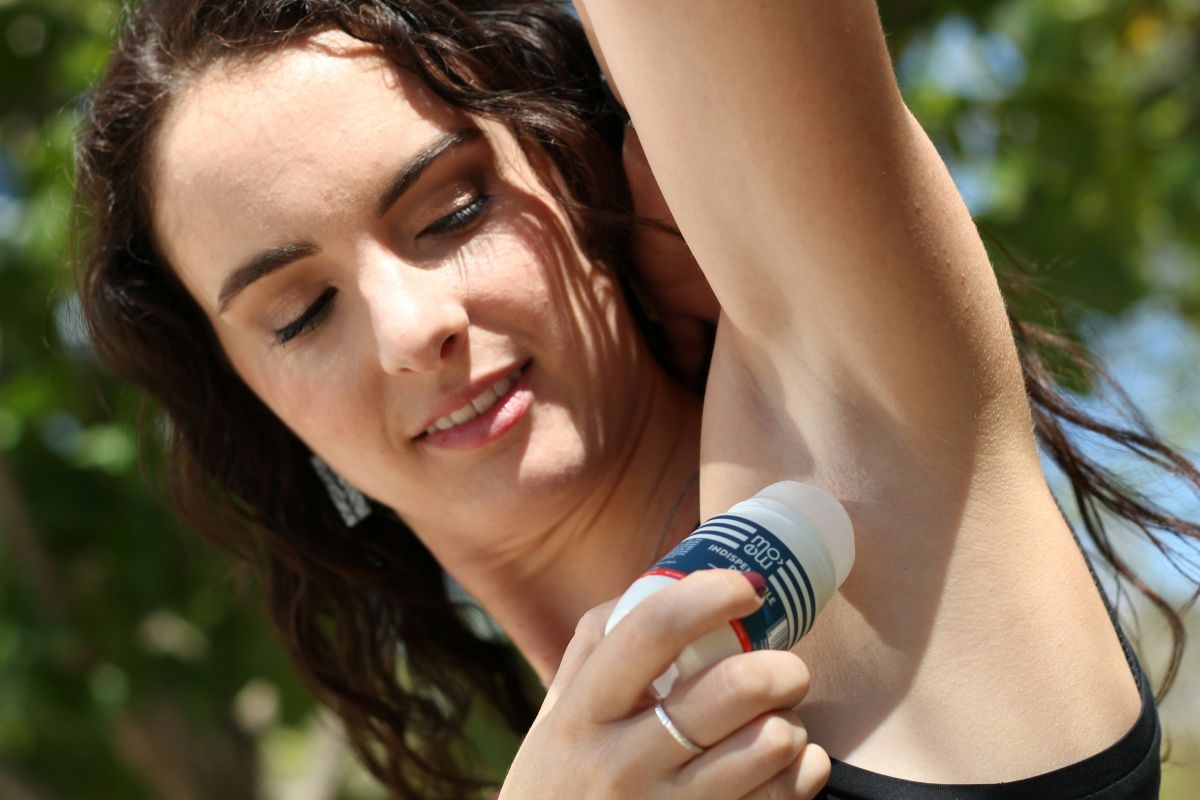
woman holding blue and white bottle Photo by Ana Essentiels on Unsplash

"Never in my life have I heard of ANYONE sharing deodorant unless they were in dire need," one person shares.

"I'm sorry but I have never known anyone who HAS shared deodorant. In fact, we all have multiple sticks. The kids have one for home, one for their gym locker, sports bag, ect.," another commenter explains to the mom.

"I have been poor, I mean poor poor but I have never shared a deodorant," someone else says.

A few people pointed out the risk of cross contamination of skin conditions like this commenter, "toothbrushes, razors, hairbrushes, and deodorant are not a shared product. What if someone had a staph infection or impetigo?"

"I was 15 when I got a blocked duct it swelled up with puss and I had to have it lanced and drained. The suspected cause?? My brother stealing and using my deodorant and then me using it after I shaved transferring bacteria," someone warns.

Work Sweating GIFGiphy

This is something that has clearly struck a chord with people giving the mom something to think about but she's not completely alone in her thought process.

There were several comments that mentioned sharing deodorant with their significant other, though they didn't share the hygiene product with their children.

Others confessed confusion as they didn't understand why the mom's reasoning on the cost increase, "I'm confused. Aren't you finishing deodorant twice as fast by sharing anyway? So buying everyone their own stick would just make you have to replace it less frequently."

@amaramunroe

#stitch with @missusmom No, that's just gross and unsanitary

Is the mom onto something with sharing deodorant or should everyone have their own stick? Put your thoughts in the comments.


Planet

Our favorite giveaway is back. Enter to win a free, fun date! 🌊 💗

It's super easy, no purchase or donation necessary, and you help our oceans! That's what we call a win-win-win. Enter here.

Our favorite giveaway is back. Enter to win a free, fun date! 🌊 💗
True

Our love for the ocean runs deep. Does yours? Enter here!

This Valentine’s Day, we're bringing back our favorite giveaway with Ocean Wise. You have the chance to win the ultimate ocean-friendly date. Our recommendation? Celebrate love for all your people this Valentine's Day! Treat your mom friends to a relaxing spa trip, take your best friend to an incredible concert, or enjoy a beach adventure with your sibling! Whether you're savoring a romantic seafood dinner or enjoying a movie night in, your next date could be on us!

Here’s how to enter:


  • Go to upworthy.com/oceandate and complete the quick form for a chance to win - it’s as easy as that.
  • P.S. If you follow @oceanwise or donate after entering, you’ll get extra entries!

Here are the incredible dates:

1. Give mom some relaxation

She’s up before the sun and still going at bedtime. She’s the calendar keeper, the lunch packer, the one who remembers everything so no one else has to. Moms are always creating magic for us. This Valentine’s Day, we’re all in for her. Win an eco-friendly spa day near you, plus a stash of All In snack bars—because she deserves a treat that’s as real as she is. Good for her, kinder to the ocean. That’s the kind of love we can all get behind.


Special thanks to our friends at All In who are all in on helping moms!

2. Jump in the ocean, together

Grab your favorite person and get some much-needed ocean time. Did you know research on “blue spaces” suggests that being near water is linked with better mental health and well-being, including feeling calmer and less stressed? We’ll treat you to a beach adventure like a surfing or sailing class, plus ocean-friendly bags from GOT Bag and blankets from Sand Cloud so your day by the water feels good for you and a little gentler on the ocean too.

Special thanks to our friends at GOT Bag. They make saving the ocean look stylish and fun!

3. Couch potato time

Love nights in as much as you love a date night out? We’ve got you. Have friends over for a movie night or make it a cozy night in with your favorite person. You’ll get a Disney+ and Hulu subscription so you can watch Nat Geo ocean content, plus a curated list of ocean-friendly documentaries and a movie-night basket of snacks. Easy, comfy, and you’ll probably come out of it loving the ocean even more.

4. Dance all day!

Soak up the sun and catch a full weekend of live music at BeachLife Festival in Redondo Beach, May 1–3, 2026, featuring Duran Duran, The Offspring, James Taylor and His All-Star Band, The Chainsmokers, My Morning Jacket, Slightly Stoopid, and Sheryl Crow. The perfect date to bring your favorite person on!

We also love that BeachLife puts real energy into protecting the coastline it’s built on by spotlighting ocean and beach-focused nonprofit partners and hosting community events like beach cleanups.

Date includes two (2) three-day GA tickets. Does not include accommodation, travel, or flights.

5. Chef it up (at home)

Stay in and cook something delicious with someone you love. We’ll hook you up with sustainable seafood ingredients and some additional goodies for a dinner for two, so you can eat well and feel good knowing your meal supports healthier oceans and more responsible fishing.

Giveaway ends 2/15/26 at 11:59pm PT. Winners will be selected at random and contacted via email from the Upworthy. No purchase necessary. Open to residents of the U.S. and specific Canadian provinces that have reached age of majority in their state/province/territory of residence at the time. Please see terms and conditions for specific instructions. Giveaway not affiliated with Instagram. More details at upworthy.com/oceandate

Pets

Vet demonstrates 'squish the cat' method of safe cat handling in delightfully helpful video

There's a reason Dr. Burstyn's "How to pick up a cat" video has been viewed 23 million times.

cats, pets, cat handling, veterinarian, feline behavior

Handling a cat may seem like a delicate matter, but being delicate isn't actually the way to go.

If you've ever tried to make a cat do something it doesn't want to do, you've likely experienced the terror that a cat's wrath can invoke. Our cute, cuddly feline friends may be small, but the razor blades on their feet are no joke when they decide to utilize them. Even cats who love us can get spicy if we try to manhandle them, so we can imagine how things will go with cats who don't know us well. But sometimes it's necessary to handle a cat even if it's resistant to the idea.

This is where Vancouver veterinarian Dr. Uri Burstyn comes in. His "How to pick up a cat like a pro" video, in which he demonstrates a few ways of picking up and handling a cat, has been viewed over 23 million times since he shared it in 2019. Unlike many viral videos, it's not humorous and nothing outrageous happens, but the combo of Burstyn's calm demeanor and his repeated instructions to "squish that cat" has endeared him to the masses.


- YouTube www.youtube.com

The video truly is helpful; he shows the ways to pick up a cat that make them feel the most secure using his cats, one-year-old Claudia and 14-year-old Mr. Pirate. He explains that cats spook very easily and it's best to introduce yourself to them gently. Let them sniff your fingers, keeping your fingers curled in, and once they've sniffed you, you can often give them a light rub on the cheek or under the chin.

Picking them up is a different story. The reason many cats will claw or scratch you when you try to pick them up is because they feel unsupported or unsafe, so they'll scramble around trying to get some footing. Burstyn shows how he picks up Claudia with one hand under the chest and one hand under her abdomen. If he needs to carry her around, he squishes her into his body so she feels "nice and supported." He may even put a hand under her front paws.

cats, pets, cat handling, veterinarian, feline behavior Cats can be finicky about how they're held. Photo credit: Canva

Then came the best part of the video: "Squish That Cat"

"Now if we do have a cat who's trying to get away from us?" Burstyn said. "We always squish that cat. If you're trying to hold the cat down, whether it's to trim their nails or to give them a pill, or whether you just want to have a cat not run off for a moment, squish that cat. All you need to know about cat restraint is to squish that cat."

Burstyn explains that cats generally feel very secure being squished, even if they're really scared.

"Sometimes cats come to me in the clinic, and they're quite afraid," he said. "And you just gently squish them, and they'll sit there and kind of not hurt themselves, not hurt us. Just hang out and let us do our thing."

He demonstrated putting a towel over the cat, explaining, "If you have a towel handy, this is one of the best cat restraint tools around. You can just throw a towel on the catty and squish her with the towel, that way they won't get a claw into you if they are scrambling about a bit. Very safe and gentle, and generally cats are very, very happy to be squished like that."

cats, pets, cat handling, veterinarian, feline behavior Squish that cat. Photo credit: Canva

Dr. Burstyn also showed how to do a "football hold," tucking the cat under your arm with them facing backwards. "So this is kind of an emergency way if you really need to carry a cat somewhere in a hurry," he said. Scooping up Claudia, he explained, "Little head's under your arm, butt in your hand, and you squish her tight to your body. And with that little football carry, you can basically hold a cat very securely and very safely, because it's really hard for them to rake you with their hind legs."

If you're worried about over-squishing your cat, Dr. Burnstyn says don't. "You don't have to worry about hurting a cat," he said. "They're very, very tough little beasts. You know, just squishing them against your body's never going to do them any harm. In fact, they tend to feel more safe and secure when they're being held tightly."

Dr. Burnstyn also demonstrated how to pick up and set down a "shoulder cat" who insists on climbing onto people's shoulders and hanging out there, as Mr. Pirate does. It's highly entertaining, as Mr. Pirate is a big ol' chonky kitty.


@yozron

she loves my shoulders i guess #catcore #kittendad #kittensoftiktok #cat #fyp

People in the comments loved Dr. Burnstyn's demonstration, with several dubbing him the Bob Ross of veterinary medicine. Even people who don't have cats said they watched the whole video, and many loved Claudia and Mr. Pirate as well.

"This is just proof that cats are liquid."

"12/10 cat. Excellent squishability."

"So essentially, cats love hugs? That's the most wonderful thing i've heard all day."

"This cat is so well mannered and looks educated."

"Mr Pirate is an absolute unit."

"S q u i s h . T h a t . C a t ."

"I need 'Squish that cat' shirt.

"Dang, that actually helped with my female cat. She has been through at least two owners before me and had some bad expriences which obviously resulted in trust issues. She has now been with me for two years and it had gotten loads better, but she still did not want me to hold her. Normally I simply would have let her be, but for vet visits and such it was not an ideal situation. But then I saw this video and tried to squish the cat. And she loves it! She is turning into quite the snuggly bug. Thank you!"

So there you go. When all else fails, squish that cat and see what happens.

You can follow Dr. Burstyn on YouTube at Helpful Vancouver Vet.


guitar, learning, young woman, laptop, acoustic guitar, strumming

A woman learning how to play guitar.

Learning a new skill means studying and then practice, practice, practice. That might mean learning how to read music and then playing “Für Elise” by Beethoven over and over again. Or, if you’re learning to speak French, you have to memorize the words and then hone your pronunciation through repetition. But what would happen if you gave your brain a moment during practice to really soak in what it was doing instead of a nonstop information dump?

How to learn things faster

A 2021 study from the National Institutes of Health found that when you’re studying a new skill and practicing, you can speed up your progress by taking short breaks. Instead of keeping your head in the piano and playing for 45 minutes straight, your brain does a better job at encoding new information if you drop in a series of 10-second breaks.


The strategy makes a lot of sense for this simple reason: your brain has difficulty encoding and learning new information simultaneously. So why not give it a second to catch up?

golf, golf teacher, golf instructor, wedge, golf course A man getting golf lessons.via Canva/Photos

"Our results support the idea that wakeful rest plays just as important a role as practice in learning a new skill. It appears to be the period when our brains compress and consolidate memories of what we just practiced," the senior author of the study said, according to Fox 13 Seattle. "Understanding this role of neural replay may not only help shape how we learn new skills but also how we help patients recover skills lost after neurological injury like stroke."

How to use the 10-second memory technique

There isn’t any official time limit between when you should take a break and let your mind encode the new information. Still, neuroscientist Andrew Huberman suggests that “every few minutes” you stop what you’re doing, clear your mind, and let your brain encode the information for 10 seconds. “Now, you actually have to do the work, and how many of these to insert? It should be random,” Huberman said.

- YouTube www.youtube.com

So, if you were playing “Für Elise” on the piano, set a time for five minutes of intense playing, then when the alarm goes off, sit still for ten seconds and clear your mind of everything, almost like a meditation. Then your brain will kick into action, like a computer booting up, and encode what you just learned. Next, set a timer for three minutes; after the next encode break, set a timer for seven minutes, and so on.

sign language, learning to sign, learning a langiage, classroom, sign language teacher Students learning sigh language.via Canva/Photos

The researchers tested their hypothesis by placing a brain-scanning cap on right-handed participants who were shown a series of numbers on a computer screen and asked to type them as many times as possible with their left hand. The gains were even greater for those who did the 10-second breaks than for those who had just had a great night’s rest.

Ultimately, the 10-second technique makes a lot of sense because it’s a lot harder to concentrate on something when doing two things at the same time. You’ve got to give your brain a moment to jot down notes instead of learning and writing at the same time.

At the end of the day, what’s not to like about the 10-second technique? You get to take a break and improve your skills at the same time.

guitar, learning a skill, neuroscience, music, exposure, passive exposure, gardening

A woman learning how to play guitar.

Learning a new skill, such as playing an instrument, gardening, or picking up a new language, takes a lot of time and practice, whether that means scale training, learning about native plants, or using flashcards to memorize new words. To improve through practice, you have to perform the task repeatedly and receive feedback so you know whether you’re doing it correctly. Is my pitch correct? Did my geraniums bloom? Is my pronunciation understandable?

However, a new study by researchers at the Institute of Neuroscience at the University of Oregon shows that you can speed up these processes by adding a third element to practice and feedback: passive exposure. The good news is that passive exposure requires minimal effort and is enjoyable.


"Active learning of a... task requires both expending effort to perform the task and having access to feedback about task performance," the study authors explained. "Passive exposure to sensory stimuli, on the other hand, is relatively effortless and does not require feedback about performance."


woman reading, woman book, young woman, studying, new skills A woman reading a book.via Canva/Photos

How to pick up new skills faster?

So, if you’re learning to play the blues on guitar, listen to plenty of Howlin’ Wolf or Robert Johnson throughout the day. If you’re learning to cook, keep the Food Network on TV in the background to absorb some great culinary advice. Learning to garden? Take the time to notice the flora and fauna in your neighborhood or make frequent trips to your local botanical garden.

If you’re learning a new language, watch plenty of TV and films in the language you are learning. The scientists add that auditory learning is especially helpful, so listen to plenty of audiobooks or podcasts on the subject you’re learning about.

But, of course, you also have to be actively learning the skill as well by practicing your guitar for the recommended hours each day or by taking a class in languages. Passive exposure won't do the work for you, but it's a fantastic way to pick up things more quickly. Further, passive exposure keeps the new skill you're learning top-of-mind, so you're probably more likely to actively practice it.

What is passive exposure?

Researchers discovered the tremendous benefits of passive exposure after studying a group of mice. They trained them to find water by using various sounds to give positive or negative feedback, like playing a game of “hot or cold.” Some mice were passively exposed to these sounds when they weren't looking for water. Those who received this additional passive exposure and those who received active training learned to find the water reward more quickly.

gardening, woman gardening, gardening shears, leaning gardening, weeds A woman tending to her garden.via Canva/Photos


“Our results suggest that, in mice and in humans, a given performance threshold can be achieved with relatively less effort by combining low-effort passive exposure with active training,” James Murray, a neuroscientist who led the study, told University of Oregon News. “This insight could be helpful for humans learning an instrument or a second language, though more work will be needed to better understand how this applies to more complex tasks and how to optimize training schedules that combine passive exposure with active training.”

The one drawback to this study was that it was conducted on mice, not humans. However, recent studies on humans have found similar results, such as in sports. If you visualize yourself excelling at the sport or mentally rehearse a practice routine, it can positively affect your actual performance. Showing, once again, that when it comes to picking up a new skill, exposure is key.

The great news about the story is that, in addition to giving people a new way to approach learning, it’s an excuse for us to enjoy the things we love even more. If you enjoy listening to blues music so much that you decided to learn for yourself, it’s another reason to make it an even more significant part of your life.

- YouTube www.youtube.com

This article originally appeared last year.

austin appelbee, hero, heroic, heroic teenager, hero teenager, swept out to sea, ocean rescue

Rescue team on the shore.

A family in Australia is hailing their 13-year-old son as a hero after he saved their lives following a kayaking and paddleboarding expedition that saw them quickly drift miles off shore. Austin Appelbee bravely left his family (mother Joanne, brother Beau and sister Grace) floating in the waters of Western Australia on Friday, Jan. 30 to seek help in. The nearest land was almost four miles away.

"The wind picked up and it went from there," Joanne Appelbee told BBC News. "We lost oars, and we drifted out further.... It kind of all went wrong very, very quickly."


With every moment dragging the family further into the ocean, Joanne had to make a gut-wrenching decision: to ask Austin to attempt to swim ashore for help, knowing he may not survive.

- YouTube www.youtube.com

A mother's gut-wrenching decision

With conditions worsening and daylight fading, Joanne had to make one of the most difficult choices of her life.

"One of the hardest decisions I ever had to make was to say to Austin, 'Try to get to shore and get some help, this could get really serious really quickly,'" she told the ABC News. "I knew he was the strongest and he could do it. I would have never went because I wouldn't have left the kids at sea, so I had to send somebody."

According to a statement from the WA Police Force, Austin "alerted authorities after he decided to return to shore in fading light and rough conditions. He paddled a short distance before his kayak took on water and swam approximately four kilometers (about two nautical miles) before reaching land."

Naturaliste Marine Rescue commander Paul Bresland added that Austin swam for the first two hours with a life jacket on, calling his swimming "superhuman." "And the brave fella thought he's not going to make it with a life jacket on, so he ditched it, and he swam the next two hours without a life jacket," he explained to ABC News.

- YouTube www.youtube.com

The family had been stranded at sea for 10 hours when a rescue helicopter spotted Joanne and her two children clinging to a paddle board 8.5 miles offshore. A "volunteer marine rescue vessel was directed to their location and all three were successfully rescued and returned to shore."

Joanne is also being hailed a hero for tethering herself and her kids to the paddleboard as they floated further and further out. "We kept positive, we were singing, and we were joking and … we were treating it as a bit of a game until the sun started to go down, and that's when it was getting very choppy [with] very big waves," she said. "As the sun went down, I thought something's gone terribly wrong here and my fear was that [Austin] didn't make it. Then, as it got darker, yeah, I thought there was no one coming to save us. It was the end, it was definitely the end."

@cnn

A 13-year-boy swam for more than two miles in "rough conditions" to get help for his family who were stranded out at sea. Austin Appelbee told CNN affiliate 9News that he focused on happy things to keep him going. #cnn #australia

Austin Appelbee speaks

Austin shared more about his heroic battle to save his family.

"I started paddling to shore on the kayak … but it kept taking on water and I was fighting rough seas and then I thought I saw something in the water and I was really scared," he shared with ABC News. "I was trying to get the happiest things in my head, and trying to make it through, [and not think of] the bad things that will distract me."

Mentally, he had to keep himself locked in.

"And at this time, you know, the waves are massive, and I have no life jacket on … I just kept thinking 'just keep swimming, just keep swimming," he added. "And then I finally made it to shore, and I hit the bottom of the beach, and I just collapsed."

However, the physical challenge was not over. Once he made it to land, Austin had to run two kilometers (about 1.25 miles) to the family's parked car to call authorities on his mom's cell phone.

"I said, 'I need helicopters, I need planes, I need boats, my family's out at sea.' I was very calm about it," he said, adding that "nice ladies on the beach" were able to offer him food before he "just passed out."

Days later, Austin was using crutches to help him walk on incredibly sore legs. Despite the physical exertion and trauma, he remained humble about the ordeal.

"I don't think I am a hero—I just did what I did," he told BBC News.

slow dances, school dances, millennials, gen x, music nostalgia
Photo credit: Canva, annastills (main image) / anlomaja (text box)

A young couple dances.

When you think back to your own school dances—from buttoned-up proms to casual after-the-ballgame romps—you may feel a tinge of wistful sadness, teenage angst, or residual awkwardness. But no matter the emotion, or perhaps because of it, you probably remember exactly which songs were playing. If you happen to hear an R&B slow jam or a classic rock power ballad on the radio, all of those feelings can come flooding back.

While some tracks transcend age, every generation has its definitive slow-dance songs. If you look around online, you'll find numerous threads devoted to the topic, with hundreds of people casting their votes. So let's all shuffle into our collective gymnasium and remember some of these eternal bangers.


- YouTube www.youtube.com

"I can almost smell the gym full of kids wearing too much cologne"

Our first stop is the r/GenX subreddit, where users shared some staples from middle school and high school. The OP mentioned a handful of '80s hits from Journey ("Open Arms," "Faithfully," and "Who's Crying Now") as well as favorites from Foreigner ("Waiting for a Girl Like You" and "I Want to Know What Love Is"). They also highlighted the Joe Cocker and Jennifer Warnes duet "Up Where We Belong," which sounds like it was scientifically engineered for slow dancing.

Here are some other popular responses:

  • Bryan Adams - "(Everything I Do) I Do It For You"
  • Bryan Adams - "Heaven"
  • Cyndi Lauper - "Time After Time"
  • The Cars - "Drive"
  • Nazareth - "Love Hurts"
  • The Bangles - "Eternal Flame"

"OMG," one person wrote. "[R]eading through this I can almost smell the gym full of kids wearing too much cologne and the popcorn machine run by a lunch lady getting in some overtime."

- YouTube www.youtube.com

"Still love that song!"

One song kept popping up in threads for both Xennials and Millennials: K-Ci & JoJo's 1998 R&B anthem "All My Life."

"My senior prom, I remember slow dancing to 'All My Life' by K-Ci & JoJo," one user wrote. "Still love that song!"

Another Redditor added, "STOP IT. I opened the comments to say exactly this."

These other '90s songs also got some votes:

  • Seal - "Kiss From a Rose"
  • Boyz II Men - "End of the Road"
  • Aerosmith - "I Don't Want to Miss a Thing"
  • Savage Garden - "I Knew I Loved You"
  • Goo Goo Dolls - "Iris"
  • Celine Dion - "My Heart Will Go On"
  • All-4-One - "I Can Love You Like That"
  • Edwin McCain - "I'll Be"
  • Brian McKnight - "Back at One"

But what about the current millennium? Do teenagers even slow-dance these days? In 2023, Billboard's Kyle Denis spoke with a number of DJs to find out whether the ritual has disappeared for Gen Z. It's a fascinating look at shifting cultural norms, including how factors such as the omnipresence of camera phones and the lyrical sentiments of popular songs have helped drive that change.

"I feel like the content directly relates to it—to me, slow [dancing] goes with more romantic music," said DJ R-Tistic. "Whether it's [Jodeci's] 'Forever My Lady,' a Luther [Vandross] song, or even, for the late '90s, a D'Angelo-Lauryn Hill 'Nothing Even Matters.' Those [songs] are more about romance."

- YouTube www.youtube.com