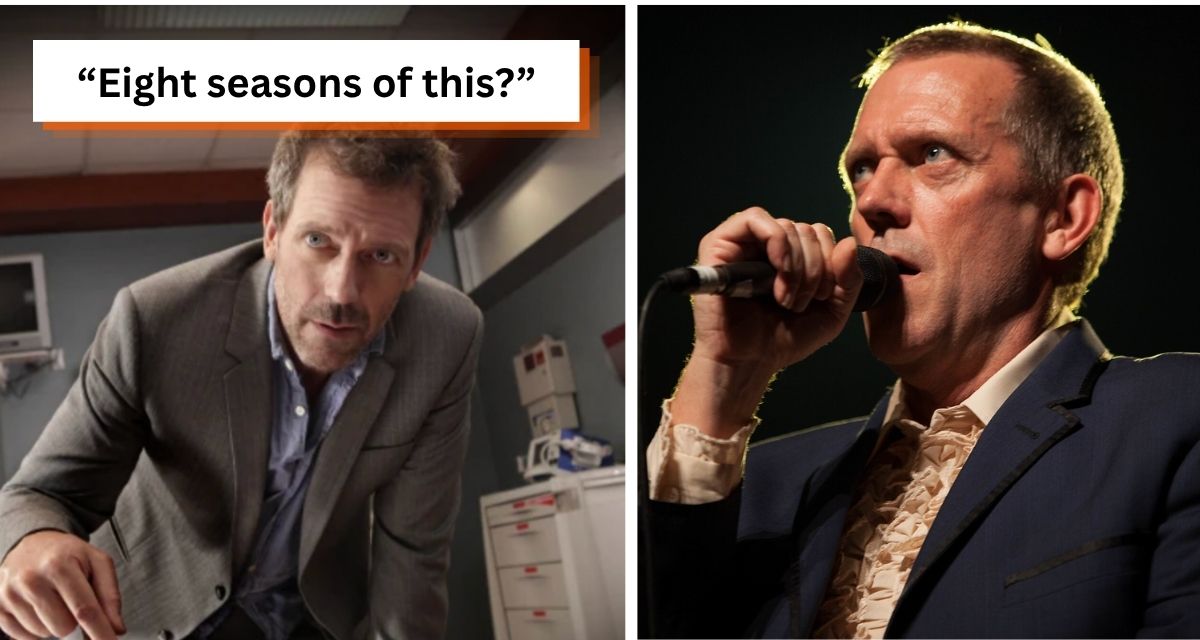
When writer Janet Murray took to X to make a joke about the repetitive formula of the Fox TV medical series House, she certainly didn’t expect a response from House himself. Or the vitriol that came as a result.
“Late to the party, but I’ve started watching Season 1 of House. Same narrative every episode: Patient has mysterious illness. Hugh Laurie (House) gets diagnosis wrong. Patient nearly dies. Hugh Laurie gets diagnosis wrong again. Gets threatened with being fired. Patient nearly dies again. Hugh Laurie has last-minute left-field idea. Gets diagnosis right. Doesn’t get fired. Eight seasons of this?” Murray’s post read.
When a playful critique meets its star
Laurie saw the post and decided to issue a retaliation reminiscent of his lovably condescending character, writing:
“Thanks for your critique, Janet. We actually tried a couple of episodes where House (Hugh Laurie) (please put the brackets in the right place) gets it right first time, but they were only 6 minutes long. NBC weren’t happy. Then we tried some where House never gets it right and the patient dies. The audience wasn’t happy.
One could apply your trenchant analysis to other art forms: JS Bach wrote 30 Goldberg variations on the same chord structure; Frida Kahlo painted 50 portraits of herself; Henry Moore, what??
The point is, or was, variations on a theme; if all you see is hospital, medical blah blah, then it wasn’t meant for you. Nonetheless, I look forward to your first novel!”
How a conversation became a pile-on
Writing for UnHerd, Murray noted that this is when she saw a distinct “tone change” in the comments. What started as what she called a “good-natured” debate quickly turned into “tribal defense” once Laurie entered the space.
On the one side, Murray said her feed was filled with accusations of being “stupid, humorless, and a Karen.” She noted it felt “oddly unsettling” to suddenly receive so much hatred from strangers who “simultaneously” upheld a celebrity that they also didn’t actually know.
Of course, Laurie was also a target of some name-calling as well, and made a point to mention it in his apology follow-up post to Murray.
“I’m sorry if people have been having a go at you because of my tweet. Not at all the plan. I was very slightly drunk and already upset about something that had nothing to do with you. If it’s any comfort, I got it in the neck too. I’m a thin-skinned twat, apparently, even though it wasn’t my skin. I was sticking up for the writers who I adored. Obviously I shouldn’t have cited Bach/Kahlo/Moore – asking for trouble – and would have done better to go for the 10,000 blues songs written around the same 12 bar chord structure. I’ve listened to most of them and will keep doing so. Because we love what we love.”
What the exchange reveals about online culture
Murray accepted the apology, and even clarified that she did, in fact, enjoy the show (“despite the repetition”) and praised Laurie’s performance in it.
Which leaves us with this question…if these two were able to have a peaceful discourse between themselves online, why weren’t the other commenters?
In many ways, we already do know why. Anonymity makes it easier to attack. Many social media platforms reward anger as it drives engagement, and written text can be very subjective in interpretation. That, combined with the artificial bond people can create with fictional characters (and the celebrities who portray them), makes for a perfect recipe for what transpired.
Though the Internet is such an integral part of our lives, we are clearly not in full agreement on what the Internet is actually for. Because of that, it easily turns into a place where opinions, facts, ideologies, praise, condemnation, the best and worst of everything humanity has to offer…all get mixed together into one homogenized, intangible goop. And in doing so, they become indistinguishable from one another. That’s why posting a simple personal observation about a TV show from a decade ago became an intellectual battlefront.
The irony is that House was never really about medicine; it was about recognizing that people are complex, and should be treated as such, rather than oversimplifying their existence. The discourse in the comment section reveals how easily we can forget that.