Have you ever stared out into the backyard and wondered how that little patch of dirt could possibly turn into a beautiful garden? And not just any garden, but the one of your dreams? If so, you’re exactly the kind of person Charlotte makes videos for.
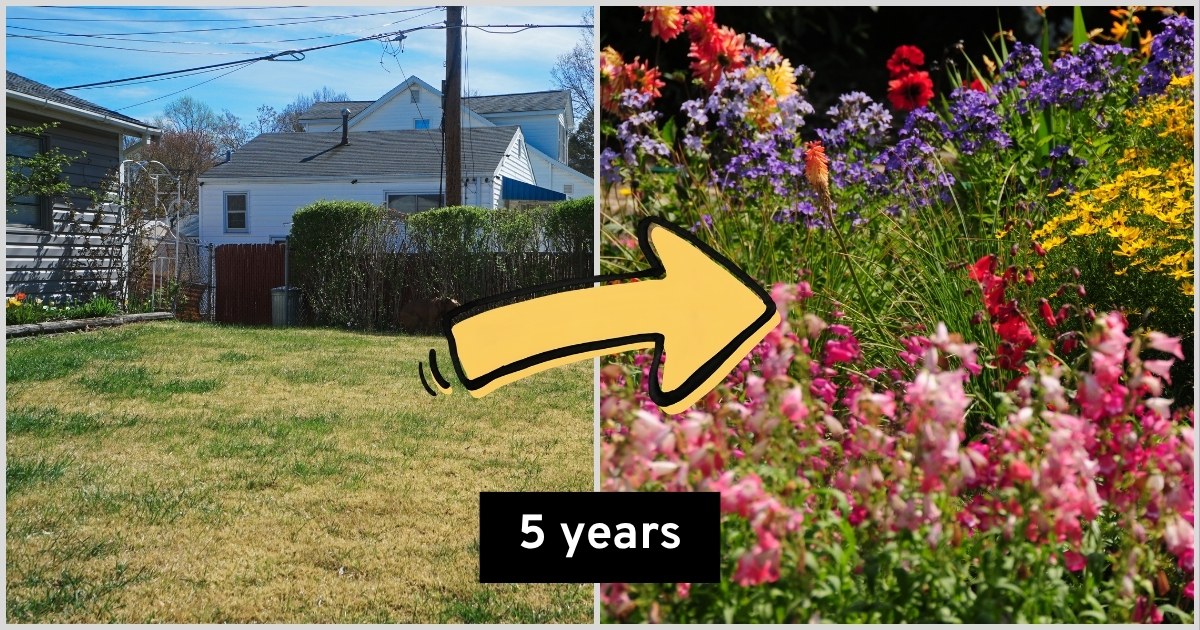
Charlotte (@new.house.home on TikTok) spent five years turning the boring, blank yard behind her home into a lush, wildlife-filled cottage garden. And because she filmed the process every year, you get to watch the whole thing unfold.
The best part? She’s under the impression that you can do it too. Charlotte makes the (very convincing) case to millions of viewers that the only thing standing between them and a garden like hers isn’t money or square footage. It’s patience.
From cookie-cutter to deeply personal
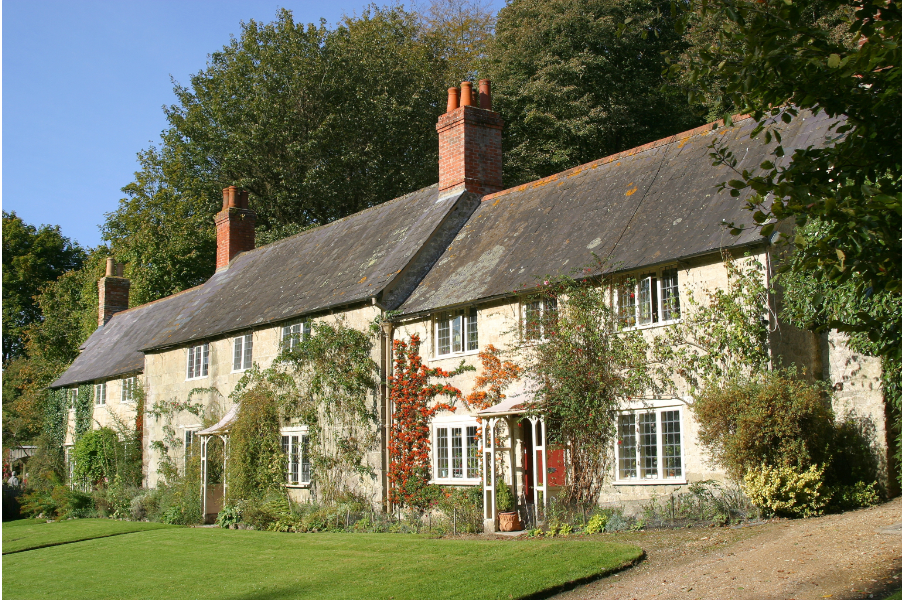
Charlotte and her partner Ben live in a “new build,” which is the British term for a recently constructed home in a new housing development. Think of it as the U.K. cousin of the cookie-cutter subdivisions rising up across the United States. Turns out, these backyards come with the same problems, no matter what side of the Atlantic you’re on. They tend to be small and boxy because developers fit as many homes onto a plot as possible. Lawns are plain, sometimes nothing more than turf rolled over rubble, and the soil underneath can often be compacted, poor, and full of builders’ debris.
So if your plot feels uninspiring, that’s not your fault. There’s a reason why the Royal Horticultural Society (RHS) literally begins its guide on new build gardens with “don’t be put off.”
Charlotte’s starting point looked like all of them: a crisp little lawn, a walkway, and some thin planter boxes against the fence. Tidy, defined, and completely bare.
Five years, one small plot
What makes her backyard transformation so watchable is that Charlotte didn’t do anything dramatic. Yes, she’s a professional (in her bio, she’s listed as a “creative director” and “award-winning show border designer” who was seen on the BBC program, Gardeners’ World). But it’s not like she and Ben knocked it all and started from scratch. The cottage garden of their dreams didn’t just appear overnight.
Year after year, we see more added to the layout, but the yard’s bones remain in tact: it’s the same patio, the same small patch of grass behind a picket fence, the same gravel path, the same shed in the corner. What changes is everything else. One year, a picnic table appears, followed by raised vegetable beds and a greenhouse. Soon, flowers sprout: roses, sunflowers, zinnias, cosmos in bright hues, silvergrass, garnet-colored pincushions, tangles of fennel, snapdragons, wild fleabane, verbena clusters, and hollyhock.
Charlotte didn’t work from a master plan. She paid attention and got to work, then never gave up. In another video, she describes how, within the first few months, she and Ben noticed that sun hit a certain spot in the yard every evening. “We thought we’d create a seating area there,” she says. “We dug up the turf, added some gravel, then topped it with stone.”
From there, the garden grew, one problem at a time. She’d always wanted a pond, so they dug one beside the seating area with a little fountain, “so we could hear the sound of water.” Leftover material became the foundation for a vegetable garden behind the shed, where there was a natural “sun trap.” When rain turned the lawn boggy, the couple laid a gravel path to link it all together. Over time, Charlotte’s green thumb flourished and growing space ran out, so Ben built another raised bed from scaffold boards.
Slow and steady, that’s the lesson hiding in this garden. Charlotte uncovered new delights in her garden season by season, rather than designing it up front. She sums it up simply: “Now five years later, it’s the cottage garden of our dreams.”
Patience beats a big budget every time
If you’re feeling torn between “I love this” and “I could never,” Charlotte’s here to help you.
Her cottage garden is the blueprint. The style began in 16th-century rural England, where it was a means of survival, not a luxury. Working families maximized these green spaces, planting vegetables, herbs, and hardy flowers straight into the soil; they used any free seeds or cuttings they could find. The fruits of their labor provided sustenance, along with medicine and pest control.
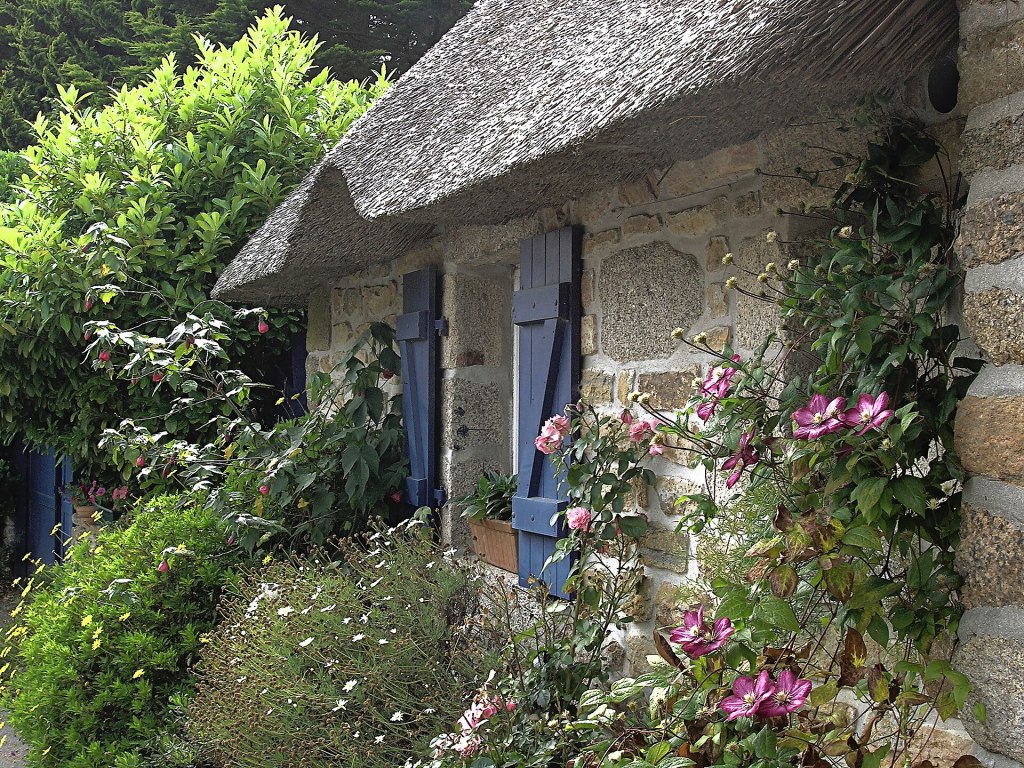
With cottage gardens, there’s also a charming, repeatable design: a simple boundary (picket fences, stacked stones, a low hedge), vertical supports for climbing plants (like trellises), and various self-seeding plants to ensure blooms throughout the year. Informality is the point, as gardens are filled with meandering paths, dense and irregular plantings, organic techniques, and wildlife features like bird feeders and ponds.
Charlotte’s garden follows this tradition. Notice what she didn’t need: a landscaper, an endless yard, or a finished vision. Instead, she trusted her garden to unfold slowly, naturally, and in a way that made sense for her lifestyle. The experts land in the same place. The RHS advice for a new-build garden is almost soothing: gather inspiration, make a plan, and “do it bit by bit as time and money allow; don’t feel you have to do it all at once.”
Patience is a virtue, but it’s increasingly rare. The hard part about creating a garden in 2026 isn’t the cost, it’s the waiting. We want our spaces photo-ready now. But a real garden doesn’t sprout up that quickly.
The case for growing your own grass
Charlotte’s page isn’t just pretty pictures and sage advice for growing sage. She has a mission, and she states it clearly:
“Another day, another plea to new build owners to grow a garden, not lay a carpet down.”

That “carpet” is artificial turf, the low-effort default many new homeowners reach for. But what about the birds and insects that live in your yard? For these creatures, the stakes couldn’t be higher. A living garden feeds and shelters wildlife. “AstroTurf,” on the other hand, is biologically inert. Fake grass offers its environment nothing: no food, no cover, no protection. It even runs startlingly hot: researchers have measured synthetic turf to be up to 36.5°C (about 66°F) hotter than natural grass on a sunny day.
This isn’t only a British problem. In 2024, a review in Environmental Health Insights reported that artificial turf could be responsible for 12% to 50% of the world’s microplastic pollution. Beyond plastic fragments, AstroTurf has been found to leach toxic chemicals, including zinc and lead, into its surrounding soil and waterways.
In the comment sections, Charlotte’s viewers chime in.
“The birds, bees, butterflies and various other insects thank you,” wrote one person.
“I hope and pray we get more of this across the country instead of concrete slabs,” said another.
One step at a time
You don’t need to reinvent your whole yard this weekend. Rome wasn’t built in a day, and neither was Charlotte’s garden. Start with one small step: a single pot, one pollinator-friendly plant, one patch of turf you decide not to pave over.
Her TikTok page offers lots of great tips, including how to create zones to make the space feel bigger, tricks for keeping your gardening flowering, and a list of the five things she believes are “worth the money.”
Charlotte’s garden is proof that, with a little patience, any boring backyard can have its Cinderella moment and turn into your favorite wildlife sanctuary. Remember: the best time to plant is today.