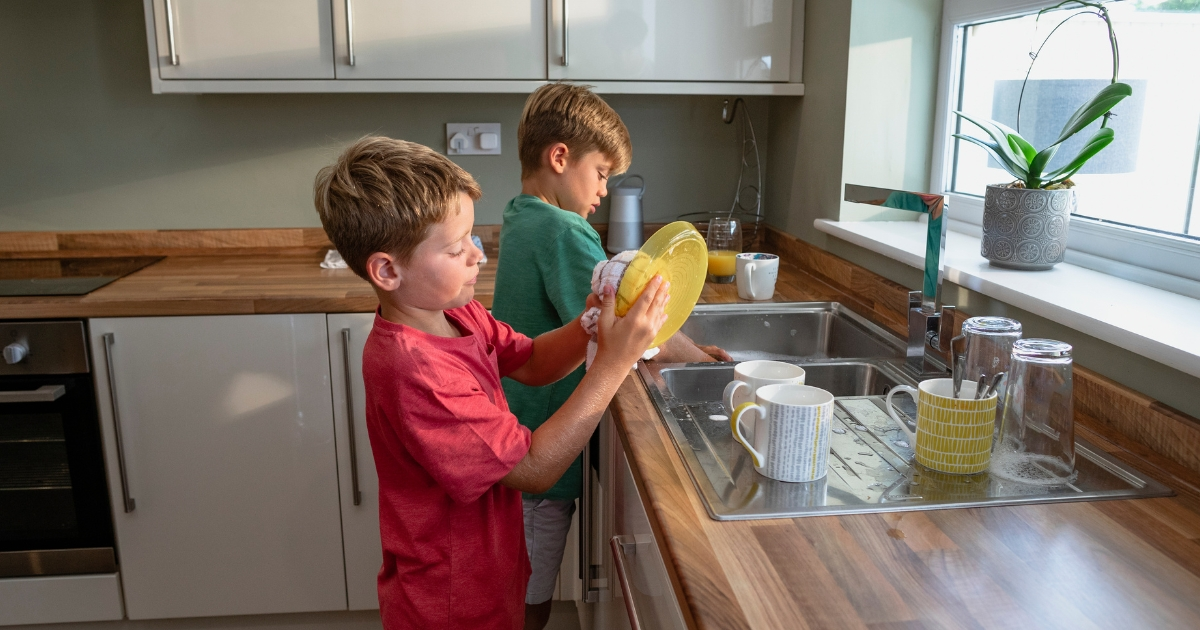
Picture this: you’re at the end of a long day, dishes are stacked, clothes are on the floor, and there’s a yogurt cup that’s been sitting next to the TV stand for who knows how long. You turn to your kids and ask for help. They look around the room and say, with total sincerity, “Help with what?” Suddenly, your frustration turns into confusion, because…what?
If that scene feels familiar, you might appreciate the “Noticing Time” chore method. It started with one frustrated mom, a 20-minute timer, and a discovery that changed how she thought about her home entirely.
The accidental experiment that started it all
Back in 2020, when the whole world suddenly found themselves at home, Kate Mangino (author of Equal Partners: Improving Gender Equality at Home) hit her limit.
Surrounded by chaos, she set a timer and told her two children, aged 9 and 6, to walk around the house, notice what needed attention, and just do it. No list. No instructions.
Her kids froze. They genuinely couldn’t see the mess. In that moment, Mangino realized the true root of the problem: they hadn’t been taught the skill of noticing yet.
“That’s when it hit me,” wrote Mangino in an article for Good Housekeeping. “Noticing what needs to be done does not come naturally to anyone… Noticing is a skill we teach.”
Why noticing really is a skill
This idea, that seeing what needs to be done is separate from the actual act of doing it, isn’t just a hunch. Harvard University sociologist Allison Daminger studies what researchers call “cognitive labor,” which essentially describes the invisible mental work of anticipating a need before anyone says it out loud. You do it every day: keeping track of the carton of milk sitting in the fridge and sensing when it’s about to expire, for one. Renewing your parking permit weeks in advance is another example. It’s the work of writing the to-do list, not just checking items off it. It’s “noticing.”
Daminger’s research suggests these “noticing” habits aren’t fixed parts of who we are, even though we tend to treat them that way. A person might proclaim, “I’m just not a details person,” but science says this is more of a learned skill than anything else. Noticing, like riding your bike and parallel parking, is shaped by practice and your environment.
The good news: noticing can be taught. Mangino caught that important distinction and built an entire system around it.
What is ‘Noticing Time,’ exactly?
It’s about as simple as parenting tools get. You set a timer on your phone (approximately 15 minutes for little kids, 20-30 for older ones), and set your children loose. Mangino describes it like this: “Until the timer goes off, kids need to walk around the house, notice what needs to be done, and do it.”
That’s it. No chore chart, no list. You don’t tell them which tasks count because the goal was never to get the “right” jobs done. It’s to practice the noticing itself. Mangino will tell you straight: the first few rounds of “Noticing Time” won’t produce much actual tidying. But that’s the point. Your kids aren’t learning to clear the mess. They’re learning to see it.
Of course, a little help goes a long way. In her article, she recounts the early rounds of “Noticing Time” in her household, writing:
“That first time we walked around the living room together. I asked them to skim the floor with their eyes. What do you see that could be picked up? Once they identified things that needed to be off the floor, we talked about where each item belonged. Take the pajamas for example. Where do PJ’s live once you’re done with them? In the laundry basket upstairs.”
The part that’s not really about chores at all
If it were only about tidier bedrooms, Mangino’s “Noticing Time” method would still be handy. But the reason it resonates goes deeper. “Noticing Time helps build a cognitive skill,” she says. “This helps kids prepare for real life, because adulting requires flexibility and the ability to address whatever needs attention on any given day.”
Six years in, she says the payoff has expanded beyond the physical stuff. Her kids have started noticing emotional needs, too: when she’s had a rough day and could use a hug, or when someone needs a little space. “I hope my kids use their noticing skills beyond their childhood home,” Mangino writes. “I hope one day their noticing helps them be a good roommate, partner, employee, supervisor, or parent.”
This method was never about the dishes or pile of dirty clothes in the corner. It’s about raising kids who can really see what’s going on around them.
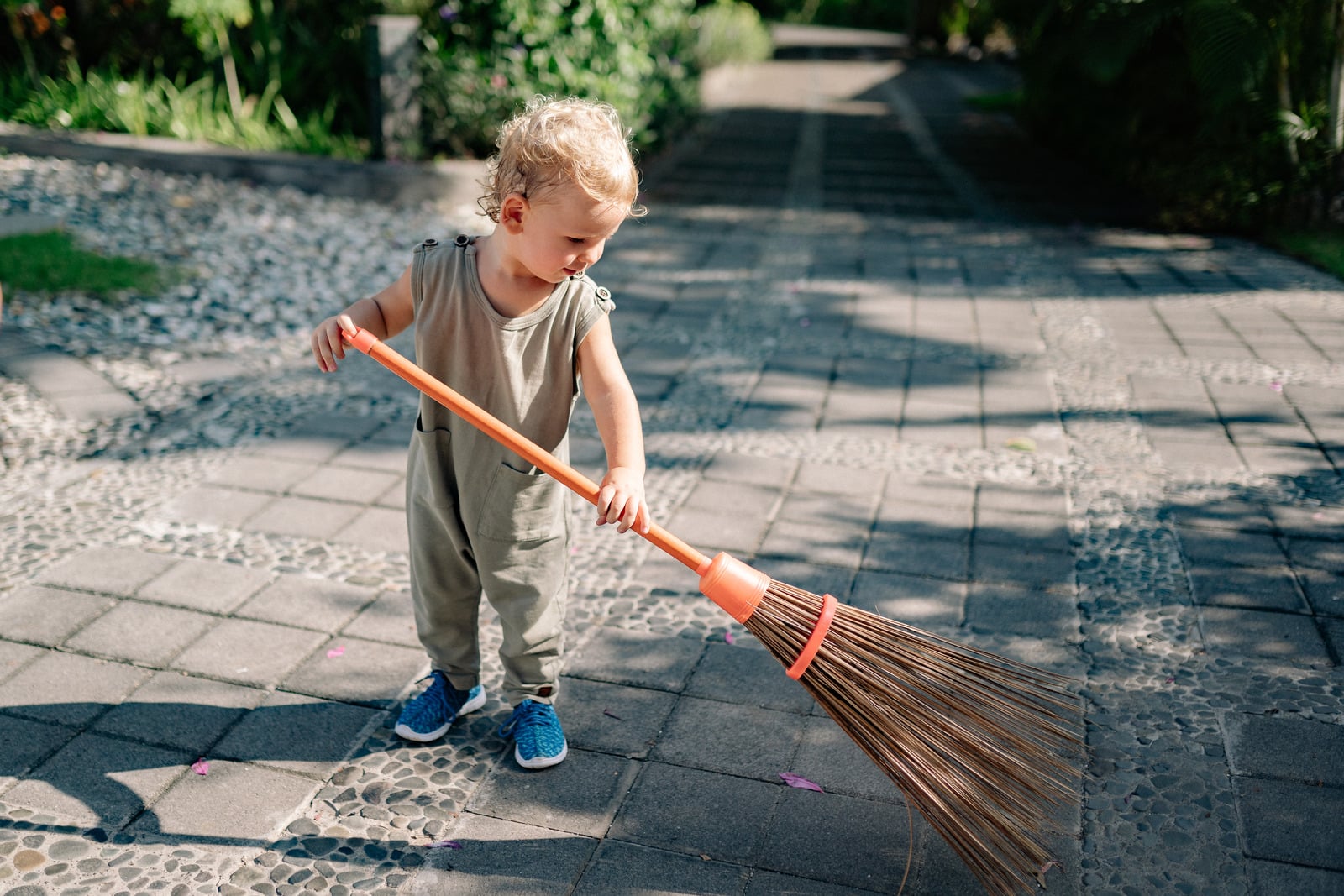
How to try “Noticing Time” this week
Want to test Mangino’s method? You don’t need much, just a timer on your phone. Here are a few of her tips and tricks for getting kids to “notice.”
- Set a timer for 15–20 minutes.
- Tell your kids to walk around, notice what needs doing, and do it. No need to ask for permission or check with you.
- If it’s their first time, walk with them and ask gentle questions instead of giving orders: “What do you see on the floor?” Or “Where do those pajamas live?”
- When the timer goes off, thank them. Every time.
Skip a week? No guilt. The method is forgiving by design: there’s nothing to mess up.
Mangino is firm about one thing: do “Noticing Time” with all your kids, not just the girls. Studies have found the same pattern for years: girls get handed more chores earlier, so they get the practice sooner. Boys just get asked to do it less. Teaching every kid to notice is how you keep the gap from hardening into the next generation’s marriages.
The bottom line
Noticing isn’t a personality trait that some kids are lucky to be born with. It’s a skill, and 20 minutes and a timer might be all it takes to teach it. In fact, when given clear instructions, children can learn it surprisingly quickly. “In typical kid fashion, my children caught on fast. The investment in teaching them to Notice quickly paid dividends,” writes Mangino. “Like any other skill, the more they practiced, the better they got. And after a while, when I set my phone timer, they didn’t balk—they got right to work.”
Do it with every kid in the house, and soon you’re raising people who can properly see the world around them, including its messes.