Many moms who stay at home with their kids have experienced eagerly looking forward to their partner coming home, only to feel the opposite of relieved once they actually get there.
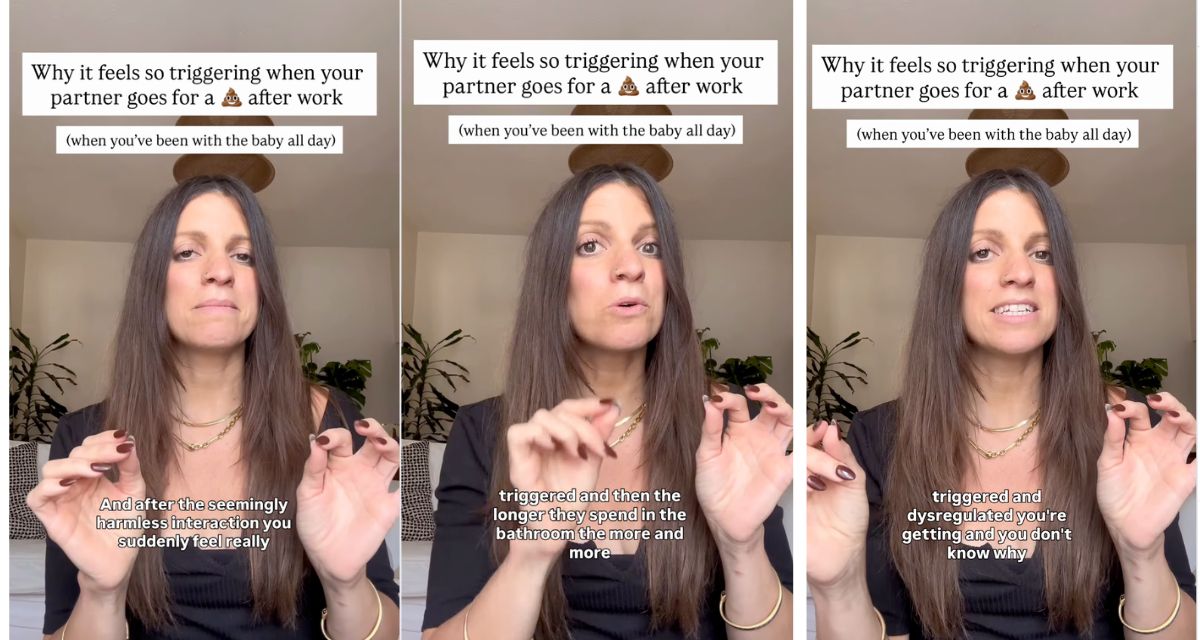
During these moments, even a partner going to the toilet can be triggering, according to postpartum and motherhood psychotherapist Sophie Harris (@looking_after_mum). In fact, it’s a situation she commonly hears about among her clients.
What’s really happening here, Harris notes, is a reaction to seeing starkly different “realities.” Mom’s reality is spending 8+ hours not being able to enjoy the “basic human right” of going to the toilet in peace. Meanwhile, their partner gets to enjoy it “willy nilly.” Therefore, resentment builds.
When freedom starts to feel unequal
This dynamic can reveal itself in many different, seemingly innocent activities. When a partner goes to the gym, heads to work, attends a social outing, scrolls on their phone while tending to the child, or gets sick and needs to rest, it can stir up unexpectedly strong emotions.
The common denominator with all these triggers: “It highlights the freedom they have and completely take for granted that you don’t have.”
And of course, yet another emotional layer to add on top of it all is not wanting to seem resentful. After all, these things are generally perfectly reasonable to want. But for so many moms, those necessities become luxuries. That, and feeling underappreciated since the partner might not grasp the full scope of “being needed” all day.
And so, with so many emotions to process at once, there can be a bit of a shutdown. And even though they’ve been looking forward to their partner’s return, they still might find themselves acting “cold” or getting easily irritated.
How parents can avoid resentment in their relationship
Naming the problem can help
Experts often point out that resentment tends to grow when expectations and experiences go unspoken. Many parents assume their partner understands what their day looks like, but the reality of constant caregiving can be difficult to fully appreciate from the outside.
Having specific conversations can make a meaningful difference. Rather than saying “I need more help,” it can be more effective to describe concrete situations: being unable to finish a meal while it’s hot, rarely getting uninterrupted time to think, or feeling responsible for every small decision throughout the day. The more clearly the experience is communicated, the easier it becomes for both partners to work toward solutions.
Building in recovery time
One approach therapists frequently recommend is creating protected breaks for each parent. That could mean one parent takes over childcare for 30 minutes after work so the other can shower, take a walk, read, or simply sit without being needed.
Small windows of autonomy can go a long way toward reducing feelings of deprivation. The goal isn’t keeping score. It’s making sure that both adults have opportunities to recharge and maintain a sense of self outside their caregiving responsibilities.
Remembering the real source of resentment
For many families, the issue isn’t actually the bathroom break, the gym visit, or the social outing. It’s the feeling that one person’s needs are easier to accommodate than the other’s. Once that underlying concern is recognized and discussed openly, couples are often better equipped to create a routine that feels more sustainable for everyone involved.