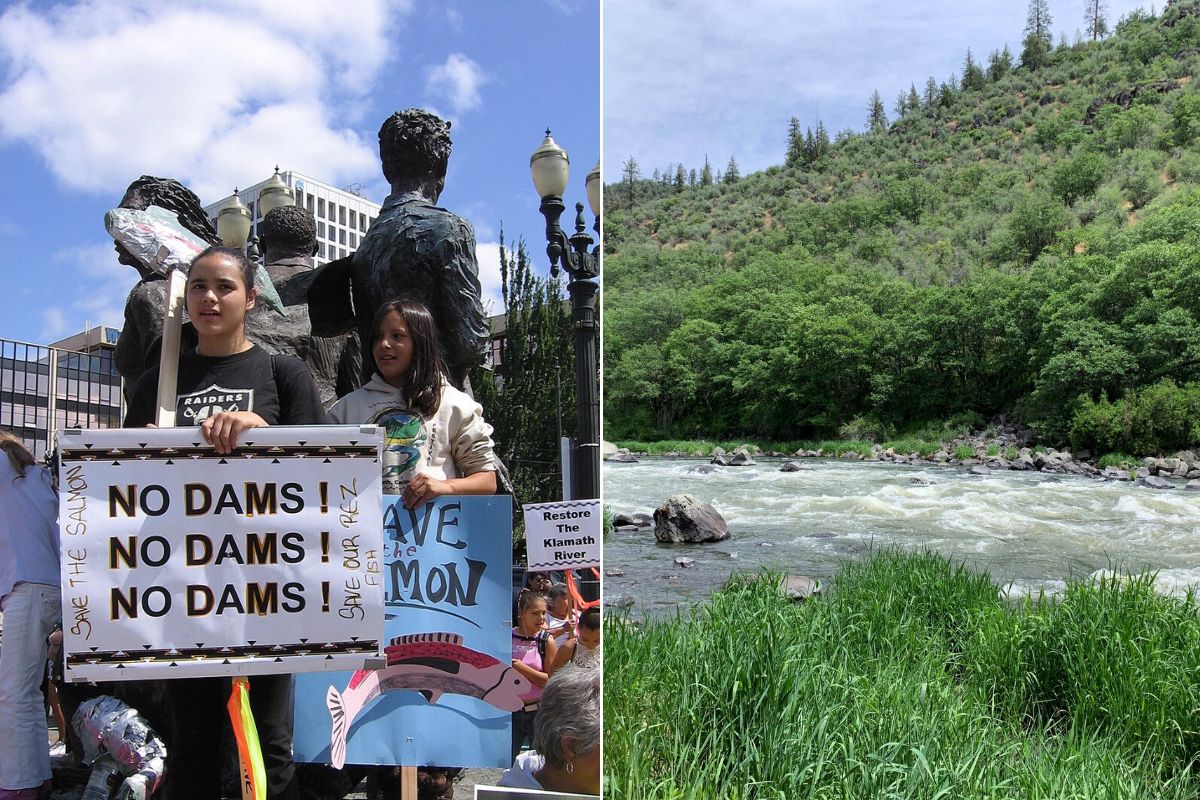
The ancient and beautiful Klamath River runs along the border of southern Oregon and Northern California. For millions of years, it was a fertile breeding ground for fish—one of the largest salmon runs in the country, in fact—a lifeline for wildlife and vegetation in the area, and more modernly, a source of food for local tribes.
But in the early 1900s, what was then known as the California Oregon Power Company (COPCO) built a series of hydroelectric dams that would harness the river’s power and turn it into electricity that could be sold. It decimated the area. The dams cut the salmon off completely from more than 400 miles of open river. They also degraded water quality and supported the growth of toxic algae.
On top of that, the hydropower dams were underperforming and causing more problems than they were worth. COPCO, now PacifiCorp, got only about 2% of its energy from the dams, and it simply wasn’t worth the investment to upgrade them to meet current standards.
Something had to be done.
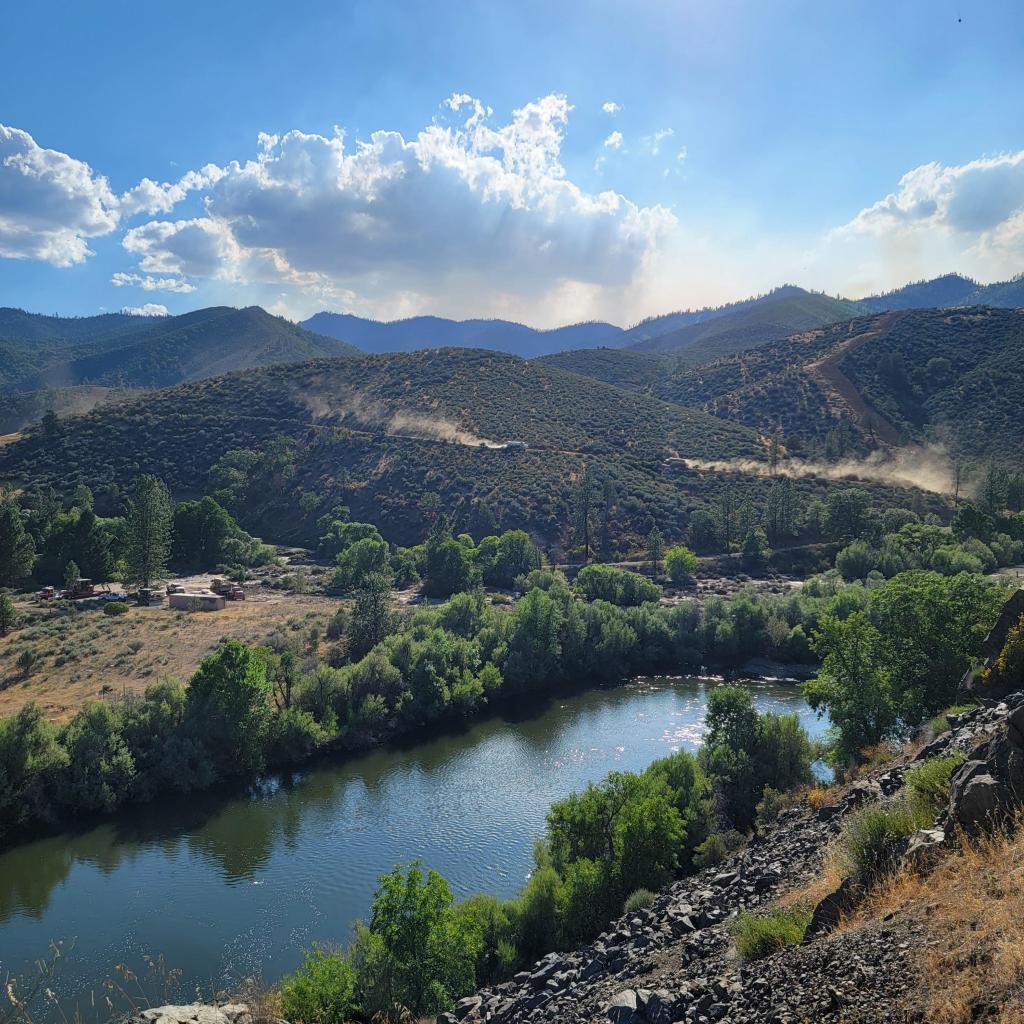
Four dams were finally destroyed in 2024
Indigenous tribes in the area lobbied for years to have the dams removed. They’d used the river for food, trade, and everyday life for centuries, and they saw up close as the salmon population suffered and dwindled further each year.
Local Yurok tribal member Ashley Bowers told Earthjustice, “[When I was a child] it was normal to catch upwards of 300 fish in one day. The salmon were plentiful, and the river was teeming with life.”
Even in Bowers’ own lifetime, the number of salmon in the river plummeted to unthinkable levels. At one point, Klamath River salmon were considered endangered and became a protected species.
It took years of protests and litigation before the federal government approved a plan to have the dams removed. The project began in 2023 and was one of the largest dam removal and river restoration projects in history. Its total cost was more than $450 million.
Within about 10 months, engineers with the Klamath River Renewal Corporation removed four key hydroelectric dams along the river in California and Oregon. The dams were detonated using explosive charges, and large chunks of debris were removed by heavy machinery.
Here’s the moment one of the dams underwent a controlled demolition, allowing water to flow through almost immediately:
Two years later, scientists are stunned by the results
Scientists predicted that removing the dams would have amazing benefits for the region, especially for the salmon. But even they underestimated how quickly and powerfully the river would recover.
“The speed and scale of the river’s recovery has exceeded our expectations and even the most optimistic scientific modeling, proving that when the barriers fall, nature has an incredible power to heal itself,” Barry McCovey Jr., director of the Yurok Tribal Fisheries Department, told the San Francisco Chronicle.
The salmon revival started almost immediately. Within days, thousands of salmon began migrating upstream. By the 2025 season, nearly 70,000 salmon had returned to the river and its tributaries. That’s 180% of what scientists had originally projected.
Not only did the salmon come back, but they also had far more room to swim and lay their eggs. They returned to parts of the river they hadn’t seen in 100 years.
The water quality in the Klamath River also improved dramatically. With the dams in place, a stunning 58% of water samples failed to meet public safety standards. By 2026, after two years without the dams, 100% of samples passed the test. The area is still prone to toxic algae blooms, however.
River health affects the land, too
With the water flowing again, life on land benefits as well. Some 1,300 acres of land formerly covered by reservoirs are being replanted with native vegetation—19 billion seeds’ worth. There’s also more room for birds to return and build nests.
Perhaps most beautifully, the river found its old path once again—the one that had been buried beneath a century of sediment. It’s as if the water had a memory, and the century it spent held back by dams will ultimately be just a brief blip in its ancient lifespan.
More and more old, unsafe, and obsolete dams are being removed across the United States and around the world. It’s important for rivers to remain connected. Flowing rivers stay cooler as temperatures rise, and their ecosystems are better able to withstand floods, droughts, and extreme weather. And the fish appreciate it, too.
“Building river barriers brings a long list of safety and environmental problems,” Fernández-Garrido, a senior grants manager for the European Open Rivers Programme, told CNN. “It is always safer and more cost-effective to work with nature rather than against it.”