Matt Orr

  • Astronaut shares the profound ‘big lie’ he realized after seeing the Earth from space
    Photo credit: via Rubén Moreno Montolíu/Flickr Our home, from space.

    Sixty-five years ago, Soviet cosmonaut Yuri Gagarin became the first human to make it into space and the first to experience what scientists now call the “overview effect.” This change occurs when people see the world from far above and notice that it’s a place where “borders are invisible, where racial, religious and economic strife are nowhere to be seen.”

    The overview effect makes man’s squabbles with one another seem incredibly petty and presents the planet as it truly is, one interconnected organism.

    In a compelling interview with Big Think, former NASA astronaut, author, humanitarian and CEO of ispace-U.S. Ron Garan explains how, if more of us developed this planetary perspective, we could fix much of what ails humanity and the planet.

    Garan has spent 178 days in space and traveled more than 71 million miles in 2,842 orbits. From high above, he realized that the planet is a lot more fragile than he thought.

    What Garan saw from up there changed everything

    “When I looked out the window of the International Space Station, I saw the paparazzi-like flashes of lightning storms, I saw dancing curtains of auroras that seemed so close it was as if we could reach out and touch them. And I saw the unbelievable thinness of our planet’s atmosphere. In that moment, I was hit with the sobering realization that that paper-thin layer keeps every living thing on our planet alive,” Garan said in the video.

    “I saw an iridescent biosphere teeming with life,” he continues. “I didn’t see the economy. But since our human-made systems treat everything, including the very life-support systems of our planet, as the wholly owned subsidiary of the global economy, it’s obvious from the vantage point of space that we’re living a lie.”

    It was at that moment he realized that humanity needs to reevaluate its priorities.

    “We need to move from thinking ‘economy, society, planet’ to ‘planet, society, economy.’ That’s when we’re going to continue our evolutionary process,” he added.

    earth, planet earth, home, humanity, overview effect
    The earth is in our hands. Canva Photos.

    Garan says that we are paying a very “high price” as a civilization for our inability to develop a more planetary perspective and that it’s a big reason why we’re failing to solve many of our problems. Even though our economic activity may improve quality of life on one end, it’s also disastrous for the planet that sustains our lives.

    It’s like cutting off our nose to spite our face.

    He wasn’t the only one moved by the view

    Actor William Shatner, who spent years playing the iconic Captain James T. Kirk on the original Star Trek series, had a similar experience to Garan’s when he went to space for real in October 2021:

    “It was among the strongest feelings of grief I have ever encountered,” Shatner wrote. “The contrast between the vicious coldness of space and the warm nurturing of Earth below filled me with overwhelming sadness. Every day, we are confronted with the knowledge of further destruction of Earth at our hands: the extinction of animal species, of flora and fauna … things that took five billion years to evolve, and suddenly we will never see them again because of the interference of mankind.”

    “We’re not going to have peace on Earth until we recognize the basic fact of the interrelated structure of all reality,” Garan said.

    And yet Garan still has hope for us

    However dire the situation looks from the surface of Earth, the astronaut has hope that we can collectively evolve in consciousness and wake up and embrace a larger reality. “And when we can evolve beyond a two-dimensional ‘us versus them’ mindset, and embrace the true multi-dimensional reality of the universe that we live in, that’s when we’re going to no longer be floating in darkness … and it’s a future that we would all want to be a part of. That’s our true calling.”

    This article originally appeared four years ago. It has been updated.

  • Mother with Alzheimer’s who lost her speech harmonizes with daughter in beautiful videos
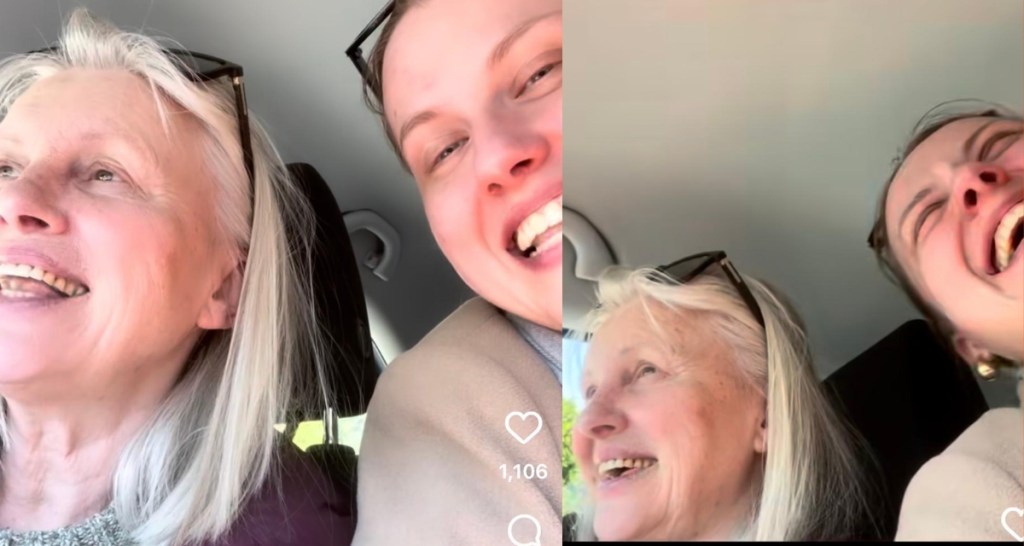
    Photo credit: Ester Wiesnerova, CanvaEster and her mother Marina sing in the car.
    ,

    Mother with Alzheimer’s who lost her speech harmonizes with daughter in beautiful videos

    “Music is how I communicate with my mom these days. I’ve never been more grateful for it.”

    Like for many of us, having connected moments with her mother are timeless and special for musician Ester Wiesnerova. She’s incredibly vulnerable about her mom (whose real name is Maria but is mostly referred to as Marina) and her Alzheimer’s diagnosis. The disease moves bit by bit, fading her memory and ability to find words. But in a silver-lined twist, Wiesnerova found that she and mother are still able to bond through music.

    In clips making the rounds on social media, Wiesnerova shares moments where she is able to harmonize with her mom through various songs. At the top of one of her videos, she notes, “The power of music is incredible.” One look at these clips, and it’s clear that’s true.

    In an Instagram Reel posted on Mother’s Day, we see the pair joyfully singing in a car. The chyron across the clip reads, “Alzheimer’s took her words. But she still sings a full chorus – by heart in her second language in harmony with me.” As they lean in, each with sunglasses atop their heads, they smile while crooning “Guantanamera” in Spanish. (The song, with lyrics by Cuban poet José Martí, is a patriotic folk tune celebrating the “people.”)

    Wiesnerova comments, “Music is how I communicate with my mom these days. I’ve never been more grateful for it.” So many in the comment section agree, with one even claiming, “This is the most beautiful video ever.” Another notes how Marina seems lit up by the music: “Her eyes are sparkling.”

    In a second Instagram clip marked “Part 2,” Wiesnerova ups the ante. The chyron reads, “Alzheimer’s took my mom’s words. But she still sings. In harmony. In a foreign language.” This time the two sing the traditional Hebrew song “Hava Nagila.” She writes, “I’m starting a song. Will she join in?”

    After just a few seconds, a text pops up on the video: “It worked! Wait to hear her sing gorgeous harmonies. So nice to hear her voice again.” She then asks Marina if “she wants to harmonize.” Indeed, she does. Wiesnerova gives her mother the starting pitch, and once again, pure glee spreads across both of their faces. She writes, “Finding a way to connect with her and smile means so much.”

    Neuropsychology researchers continue to find the special link between dementia and music. In a piece posted to the Northwestern Medicine site, they quote neurologist Borna Bonakdarpour, MD, who they state “combines his love of music with research on how musical intervention affects the brain of people with dementia.”

    Bonakdarpour shares, “When we use musical intervention, we’re looking for areas and networks in the brain that are intact to serve as bridges and help the areas that are not working well. Singing, for example, can be a bridge to communicating better through language. The rhythmic nature of music can help people walk better.”

    This can be equally beneficial for caregivers and family members. He states, “People with Alzheimer’s may come alive again when they hear music. Some start dancing alone or with their caregivers, which is a very big deal. Caregivers find the person lost to them in the context of music.”

    Anna Maria Matziorinis and Stefan Koelsch of the Department of Biological and Medical Psychology, University of Bergen in Bergen, Norway, co-authored a 2022 study entitled, “The Promise of Music Therapy for Alzheimer’s Disease.” In it, they also note how important music can be for these patients, writing, “Musical memory is partially spared in patients with AD, despite severe deficits in episodic (and partly semantic) memory. AD patients can learn new songs, encode novel verbal information, and react emotionally to music.”

    Upworthy had the chance to chat with Wiesnerova about the lovely bond she maintains with her mom. She shares that it was in early 2023 when she got her diagnosis. “Singing and playing the piano together is something that was always very natural for us—that’s what we did together. She was a piano teacher and songwriter her whole life, I’m a singer and composer. When she got diagnosed, we just kept doing what we always did together. First she would play and I would sing.”

    music therapy, music, Ester Wiesnerova, Marina Wiesnerova
    Marina Wiesnerova and sunflowers. Photo Credit: Ester Wiesnerova

    She explained that even as Marina’s ability to speak was fading, she still maintains the power of music. “Even as her capacity to speak and understand language was going down, her musical abilities very much stayed. She even responds to verbal cues as long as they’re music-related. Like if I say, sing quieter, articulate more, or harmonize with me, she usually does it. But then if I ask her where she is right now or what my name is, she doesn’t respond. It’s fascinating.”

    As for their relationship, they’ve always been close. “My whole life we’ve been very close—true best friends. We shared everything. She was also the only person in my family who encouraged my music career. Slowly losing her to the illness has been very difficult, as I was slowly adjusting to this new version of her and learning to love who she is now. And learning to find my ground when the person who grounded me is slowly disappearing. I am writing an album about this process to be released next year.”

  • Man’s raw truth about why he hasn’t gotten over his mom’s death hits home: ‘I don’t want to.’
    Photo credit: CanvaA man lying in bed in a state of grief.

    Losing a loved one is arguably one of the hardest human experiences, but also one of the most universal. Few of us will go through life untouched by grief, but some losses hit harder than others, even when we know they are coming. For instance, most people expect their parents will die before they do, but that doesn’t make the loss any easier when it happens.

    One man’s raw embrace of grief after losing his mother is resonating with people everywhere.

    “You said you’re a middle-aged man who hasn’t gotten over the loss of his mother,” Steven Bartlett, host of The Diary of a CEO podcast, said to guest Scott Galloway, a New York University marketing professor. “Is there a way to?”

    “I don’t want to,” replied Galloway, wiping away his tears.

    Grief isn’t a bug, but a feature

    “I think the receipts for love is grief,” Galloway said. “I hope my boys feel the same way about me. It hasn’t gotten in the way of my life. It makes me be more bold with my emotions. I used to see it as a problem. I went to grief counseling. Now I see it not as a bug, but as a feature. And so what I would tell every young person is I hope they have a lot of joy in their life. I also hope they have a decent amount of grief, because that means they have people they love immensely.”

    “You can never tell your parents how much you love them too much,” he continued. “Forgive them, and…my mom died slowly, which was bad for her, but it was good for me because nothing went unsaid. I miss my mom terribly. I’m a middle-aged man who hasn’t gotten over the death of his mother. Light of my life. Raised me on her own. Secretary’s salary. Gave me confidence. Everything.”

    Do we really need to “get past” the loss of a loved one?

    Galloway’s honesty about not wanting to get over his mom’s death hit home for a lot of people. So often, grief gets treated as a problem to fix, rather than an integral part of the human experience. Counseling can help when grief interferes with someone’s daily life, of course. But the idea that we need to “get over” or “get past” the loss of a loved one doesn’t make sense for a lot of people, as evidenced by the Instagram comments:

    “Profound grief has not hindered my life. I welcome the tears. Heart forever broken but still beating.”

    “My mom passed away 10 years ago and the pain can be unbearable. This is a beautiful way to frame this as ‘Receipts for love is Grief’ 🥹 I needed to hear this 🙏🏾 Thanks for sharing Scott.”

    “Lost my mum 3 years ago and miss her everyday – the reason the way I am is because of her and I can never thank her enough – single mother warrior queen. ❤️”

    “Exactly what I say when people tell me I need to get over losing my mom 🥹❤️ thank you.”

    grief, loss, grave
    Grief can last a lifetime. Photo credit: Canva

    “I’ve never ever gotten over my mother passing nor will I ever and I am pleased to watch this video as I know I’m not alone. 💔”

    “We need more of this type of conversation – BE BOLD WITH YOUR EMOTIONS! ♥️ People run away and hide from grief, pain and the uncomfortable – grief really is the receipts for LOVE ❤️ Grief doesn’t need fixing, just honour 🤍”

    “I wonder at what point did humanity veer so off course that we started seeing grief as a problem. Thank you for this conversation! Grief is here because love was here first! ❤️”

    “Grief is healthy. And we’re not supposed to ‘get over’ the loss of loved ones, in my opinion, we learn to love them and honor them differently.”

    “This is exactly how I feel about my dad. What a beautiful way of looking at grief.”

    Grief is evidence of love, and in Galloway’s case, the evidence clearly speaks for itself. What a beautiful tribute to his mother and a relatable approach to processing a profound loss.

  • Want to appear more approachable? The surprising color to wear is orange.
    Photo credit: CanvaThe best colors to wear to appear more approachable.

    Meeting new people is never easy, especially when it comes to making friends as an adult. From engaging conversations to body language, a lot goes into nailing a good first impression.

    And thanks to color psychology, your wardrobe also matters. Specifically, the colors you choose to wear can also impact how people perceive you.

    “Research in color psychology consistently shows that colors influence first impressions, emotional responses, and social perception,” therapist Sonia Panchyshyn tells Upworthy.

    Krista Walker, LCSW, J.D., and clinical director at The Ohana, adds “Research has found that people tend to form quick impressions based on color and other visual cues. The brain tends to associate certain colors with environmental or emotional cues.”

    The color that conveys approachability

    If you want to appear more approachable to others, there is one color you should try wearing: orange.

    “Warm tones like orange are often associated with friendliness, energy, and openness, which can make someone appear more approachable,” says Panchyshyn.

    A 2025 review on colors and emotion confirmed that light colors are associated with more positive emotions than dark colors. Orange was specifically linked with “positive, high arousal emotions.”

    In another study, orange was correlated with increased energy and attention levels.

    “Orange tends to communicate friendliness, warmth and energy. It’s associated with social connection. This can make a person appear more inviting,” says Walker.

    Additional colors for approachability

    If orange just isn’t your color, there are a couple more hues worth trying.

    Blue

    As communication expert Vanessa Van Edwards previously shared, she chose to wear blue to come off as more “confident, knowledgeable and calm” for her viral TED Talk, which she notes helped her feel “more calm and more calm to the audience.”

    Walker also tells Upworthy, “Blue is connected with emotional safety and trust. This may make the person seem more approachable.”

    Green

    Green is also an approachable color to try.

    “So much research shows that green reminds us of a lush spring. So, if you want to be seen as fresh and new, try green,” says Edwards.

    Susan Albers, PsyD, a psychologist for Cleveland Clinic, also explained, “Studies on the psychology of the color green indicate that it tends to trigger a sense of calmness and relaxation. This is because green is the dominant color in nature.”

    Red

    According to Edwards, if you want to be seen as “high energy,” try red.

    “When people are passionate, when they’re feeling excited, they often blush. So red is the most high-energy color,” she shares.

    Light pink

    Color analyst and founder of Your Color Style Jen Thoden explained that “blushing” colors (light pinks) give an “approachable, friendly vibe.”

    She explains that in professional settings when you may be wearing a navy suit (“which can be unapproachable, maybe a little bit more serious, a little bit more authoritative”), pairing it with a light pink can help you appear “a little friendlier and soften the look.”

    And as a reminder, clothing color is not the only factor that contributes to approachability.

    “Other things to seem more approachable besides color include eye contact, a genuine smile, and relaxed shoulders,” Walker tells Upworthy. “Overall, people are generally more approachable when they feel confident and comfortable compared to what color they are wearing.”

  • Mom draws all over her toilet to teach her kids a lesson on cleanliness
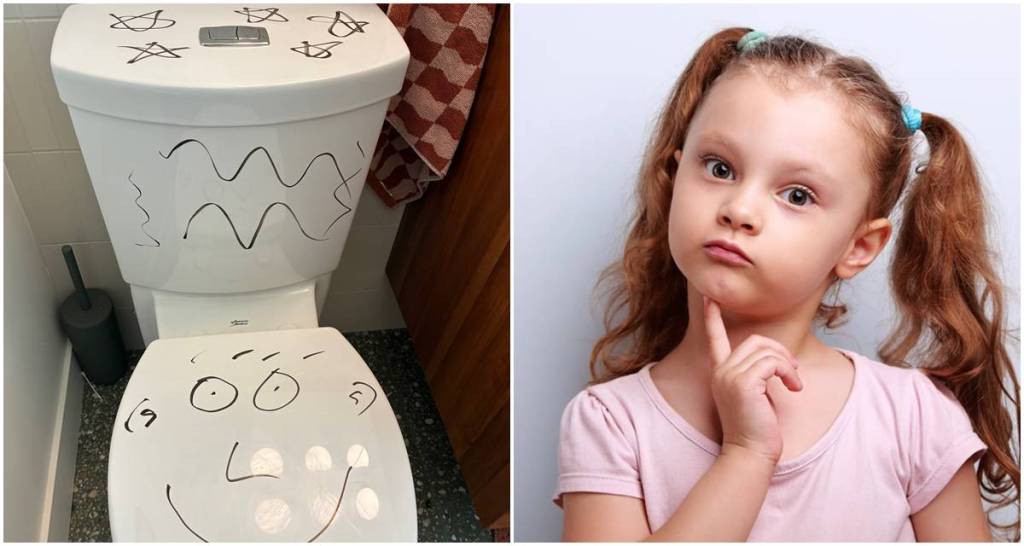
    Photo credit: via Canva and Tod PerryA confused child and a toilet with artwork.
    ,

    Mom draws all over her toilet to teach her kids a lesson on cleanliness

    It may seem a little odd, but it’s pretty brilliant.

    Teaching kids how to clean up after themselves is one of the hardest things to do as a parent…mainly because it’s difficult to make taking out the trash or washing the dishes exciting.

    Jayne Ann Osborne, the creator behind MommingonPurpose, deserves love from parents everywhere because she took an incredibly icky chore, cleaning the toilet, and turned it into an activity her kids enjoyed. “Ready to teach your kids how to level up their toilet cleaning skills? You’re just a dry-erase marker game away!” Osborne opens her video.

    To teach her kids how to clean the toilet, Osborne first disinfected it herself, so her young kids wouldn’t be exposed to any germs. Then, she drew all over it with a dry-erase marker that wipes off easily with a wet rag. She told her kids that all the marks on the toilet were germs and that they all had to be wiped away. 

    Mom has a fun way of teaching her kids to clean the toilet

    “By scrubbing the dry-erase marker off, they are learning all the nooks and crannies of the toilet in a way that is fun, challenging, and memorable. Without the ick,” she captions the video.

    The dry-erase marker game works well because it teaches multiple lessons. Firstly, there are many hidden spots on a toilet that need cleaning and may not be noticed at first glance. Secondly, a toilet should be thoroughly cleaned because germs have many places to hide. After the job was complete, she gave her kids a prize depending on how well they wiped away all the evil germs.

    germs, bacteria, cleanliness, disease, microscopic bacteria
    Microscopic bacteria. Credit: TrueCreatives/Canva

    Be careful when drawing on the lid

    Osborne does have a big note for everyone who tries this at home: “Keep a little isopropyl alcohol handy in case the dry-erase marker scribbles leave anything behind.”

    Editor’s note: I tried this on my own toilet, and it took a little soap and water to get the dry-erase marker off the plastic toilet lid. It doesn’t wipe down as easily as porcelain. 

    toilet, gloves, cleaning backroom, cleanser, antibacterial cleanser
    Someone cleaning a toilet. Credit: PixelShot/Canva

    Shifrah Combiths, a writer at Apartment Therapy, tried the toilet game and made sure her children understood the importance of cleaning the entire bowl. “The kids were exuberant about wiping off the marker, and we had to make sure they didn’t scrub the toilet tank lid too hard. My husband was worried it might crack! I also let them discover and wipe down all the marker lines as they found them, but I made sure after they were done, to explain to them that when cleaning a dirty toilet for real, it’s very important to start with the cleanest areas on the toilet and then work their way to the dirtiest. Of course, this only teaches them about the outside and lid of the toilet and not the bowl, but it’s still a useful lesson,” Combiths wrote.

    Combiths also had a little difficulty getting the marker off the toilet lid. “The marker wiped perfectly clean from the porcelain surfaces of the toilet, but left marks behind on the plastic lid. Osborne recommends using isopropyl alcohol if this happens, and a Magic Eraser got most of it off in our case,” she wrote.

    Osborne’s toilet-cleaning hack is a great way to teach kids how to clean one of the dirtiest and trickiest parts of the house, but she also has a great lesson for parents. With a little creativity and a sense of humor, just about anything can be made to be fun, even cleaning the toilet.

  • Why college graduates are booing out-of-touch commencement speakers off the stage

    Photo Credit: Canva Photos

    Gen Z is done pretending to look up to millionaires and billionaires.
    ,

    Why college graduates are booing out-of-touch commencement speakers off the stage

    Gen Z faces stiff challenges post-graduation. They’re up for the fight.

    Gen Z takes a lot of criticism. They’re called antisocial, emotionally immature, and phone-obsessed. They’re even called lazy.

    But there’s one thing you can’t deny about Gen Z: that, as a whole, they’re done pretending they’re willing to just go along with the status quo. Young people are challenging everything, from pop culture to work culture, and nothing reflects the tide they’re working to change better than this year’s graduation ceremonies.

    2026 commencement speakers totally miss the mark with young grads

    First up was Gloria Caulfield, Vice President of Strategic Alliances for Tavistock Development Company. She spoke at a commencement ceremony at the University of Central Florida (UCF) and got off to a rough start when she proclaimed, “The rise of artificial intelligence is the next industrial revolution.”

    A shower of boos from graduating students began raining down on her. It took Caulfield off guard and, after a chuckle, she needed a moment to gather her thoughts. “OK, I struck a chord. May I finish?”

    “Only a few years ago, AI was not a factor in our lives,” she continued. For this, the students cheered. As the speech went on, the boos only grew louder every time Caulfield mentioned the exciting capabilities of AI. She was visibly flustered by the response.

    Ex-Google CEO fares even worse in controversial address

    Then there was Eric Schmidt, who delivered remarks to graduates at the University of Arizona.

    The 71-year-old tech billionaire, and former CEO of Google, was already in the students’ poor graces due to recent allegations of sexual abuse. When he, too, began extolling the exciting virtues of artificial intelligence, the stadium full of grads let him have it.

    In part of his monologue, he said: “There is a fear in your generation that… the machines are coming, the jobs are evaporating, that the climate is breaking, that politics is fractured, and that you are inheriting a mess that you did not create.”

    He then blamed social media for amplifying the fear and uncertainty, and advocated for young people to help shape artificial intelligence in order to solve these problems—to yet another chorus of boos.

    Schmidt and Caulfield did not appear to get the memo that Gen Z is not thrilled with AI, overall. Though a good number of young people do admit to using it from time to time, negative sentiment among Gen Zers has risen sharply in recent years.

    Many feel anxious or even flat-out angry about the advancements of artificial intelligence. To them, it’s not an exciting tool to boost the bottom line the way it is for CEOs and VPs. It’s a real threat to their futures. In that sense, the speeches from this year’s commencement speakers have been shockingly tone deaf.

    Best-selling author booed for criticizing younger generations

    Jonathan Haidt, the massively best-selling author behind The Anxious Generation, has been a leading voice in the movement to protect kids from phones, social media, and technology; and to give them more independence as they grow up.

    He’s even gone so far as to call Gen Z coddled, soft, and fragile. Haidt has also attacked universities, claiming they insulate students from challenging ideas with ‘safe spaces and trigger warnings,’ and been vocally against diversity and inclusion initiatives.

    It turns out, Gen Z graduates weren’t super excited to hear him speak at their graduation. They let him know exactly how they felt with loud boos during his address at NYU graduation.

    The boos represent a fascinating shift

    Multi-millionaires and billionaires used to represent the pinnacle of the American Dream. Tech CEOs and Silicon Valley bigshots have been popular choices at commencement ceremonies for years. They’re able to speak as people who “made it” and reached ultimate success.

    But young people aren’t falling for it. Gen Z is not impressed with wealth. They’re acutely aware of the growing wealth gap between the older generations and themselves. They don’t face an easy path coming out of school, with huge inflation, stagnant wages, skyrocketing house prices, and growing personal debt.

    AI, for whatever positive advances it has made, has largely been a main driver of layoffs that have put more money into the pockets of the 1%. It’s hard to blame young people for not wanting to listen to a billionaire lecture them on the importance of hard work, or for not wanting to cheer a technology that might make their dream job obsolete.

    You also have to respect that Gen Z isn’t willing to sit there politely and clap for a man who called them coddled and emotionally fragile.

    As they prepare to embark into the next phase of adulthood, Gen Z faces tough—seemingly impossible—challenges. But if these viral moments have taught us anything, it’s that the kids will go down swinging.

  • 6 alternatives to saying ‘let me know if you need anything’
    Photo credit: Milada Vigerova on UnsplashPeople going through major struggles don't always know what they need or how to ask for help.
    ,

    6 alternatives to saying ‘let me know if you need anything’

    If someone is drowning, you don’t wait for them to ask for help. You just take action.

    When we see someone dealing with the loss of a loved one or some other major life crisis, it’s instinctual for many of us to ask how we can help. Often, the conversation looks something like this:

    Us: I am SO sorry you’re going through this. What can I do to help?

    Person in crisis: I honestly don’t know right now.

    Us: Okay…well…you let me know if you need anything, anything at all.

    Person in crisis: Okay, thank you.

    Us: I mean it. Don’t hesitate to ask. I’m happy to help with whatever you need.

    And then…crickets. The person never reaches out to take you up on the offer.

    Was it that they didn’t really need any help, this person going through a major life crisis? Unlikely. As sincere as our offer may have been, the problem may be that we didn’t really offer them what they actually needed.

    One of those needs is to not have to make decisions. Another is to not have to directly ask for help.

    When a person is in a state of crisis, they can feel like they’re drowning. They might be disoriented and fatigued, and doing anything other than keeping their head above water long enough to breathe can feel like too much.

    If someone is drowning, you don’t ask them what you can do to help or wait for them to ask. You just take action.

    Six things you can actually do right now

    Here are some specific ways you can take action to help someone who you know needs help but isn’t able or willing to ask for it:

    1. Make them food

    It may be tempting to ask if you can make them a meal and wait for them to say yes or no, but don’t. Simply ask if they or anyone in their household has any dietary restrictions, and then start shopping and cooking.

    Meals that can be popped in the refrigerator or freezer and then directly into the oven or microwave are going to be your best bets. Include cooking or reheating instructions if it’s not obvious. Disposable aluminum trays are great for homemade freezer-to-oven meals and can be found at just about any grocery store. Casseroles. Stir-fried rices. Soups. Comfort foods.

    Easy-prep meals are great. Photo credit: Canva

    If you don’t cook, you can buy them gift cards to local restaurants that deliver, or give them a DoorDash or Uber Eats gift certificate (large enough to cover the delivery, service fees and tip as well, which combined can be as much as a meal sometimes).

    If you want to make it a community-wide effort and no one else has done so yet, set up a “meal train,” where different people sign up for different days to bring meals to spread out the food help over time. There are several free websites you can use for this purpose, including Give In Kind, Meal Train, and Take Them a Meal. These sites make it super easy for anyone with the personalized link to sign up for a meal.

    2. Clean their kitchen and/or bathrooms

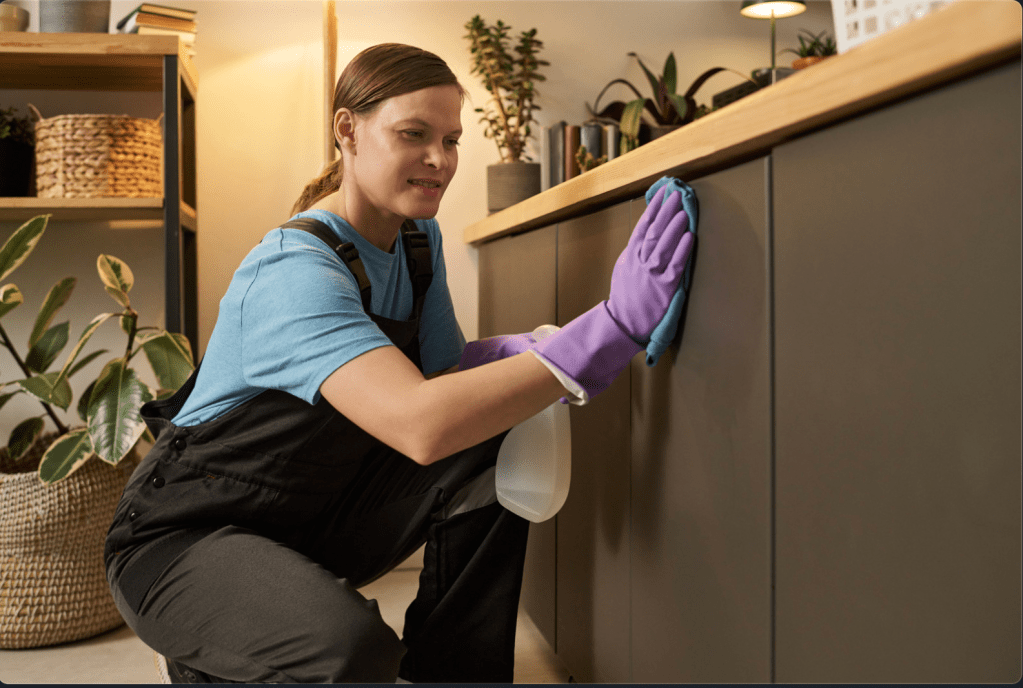
    Kitchens are always in use, and keeping up with dishes, especially in a house full of people, is a challenge even under normal circumstances. Same with keeping the refrigerator cleaned out. Same with cleaning the bathroom.

    Rather than asking if they want it done, as many people won’t want to say yes even if they would appreciate the help, try saying something like, “I want to come and make sure your kitchen is ready for you to make food whenever you want to and that your bathroom is a clean space for you to escape to whenever you feel like it. Is Tuesday or Wednesday at 1:00 better for you?”

    There is always something that needs cleaning. Photo credit: Canva

    The fewer complex decisions a person in crisis has to make the better, so saying, “Is this or that better?” rather than offering open-ended possibilities can be helpful.

    3. Do laundry

    Offer to sit and chat with them, let them vent if they need to…and fold their laundry while you’re at it.

    Are they the kind of people who might be embarrassed by you seeing or handling their underclothes? Fine. Wash, dry and fold towels or bedsheets instead. Just keep the laundry moving for them.

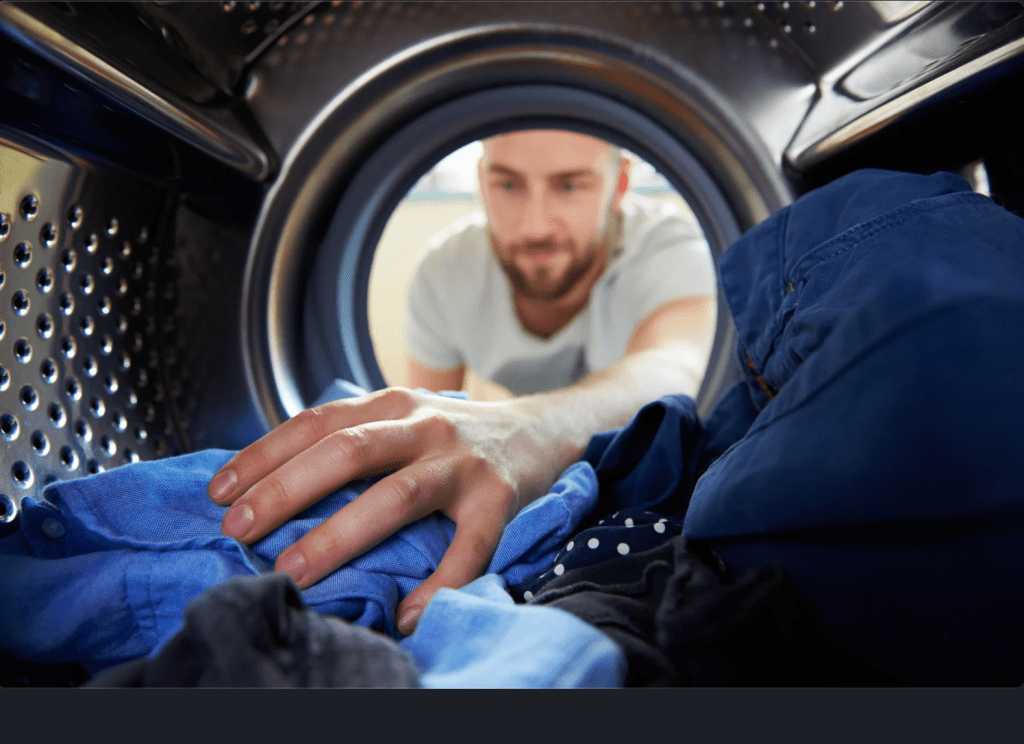
    There is always laundry to do. Photo credit: Canva

    And if it doesn’t feel appropriate or desirable for you to do their laundry at their house, you can offer a pick-up laundry service, either yourself or an actual hired service. Tell the person to put bags or bins of laundry at the door and you (or the service) will come pick it up and bring it back clean and folded the next day. That’s a great way to be of service without feeling like you’re intruding.

    4. Run errands for them

    “Hey, I’m heading out to the store, what can I grab you while I’m there?” is always a welcome phone call or text. Let them know when you’re going to be running your own errands and see if there’s anything they need dropped at the post office, picked up from the pharmacy, or anything else.

    Offer to pick stuff up when you are on a grocery run. Photo credit: Canva

    You can also offer to run errands with them. “Hey, I’ve got some errands to run. Do you want to join me?” They may have no desire to leave the house, or they may desperately want to leave the house, so be prepared for either answer, but the offer is solid. Even just not having to drive might be a relief if they have things they need to pick up or drop off places.

    5. Provide childcare

    If the person is a parent, taking their kid(s) out for a chunk of the day can be a big help. Caring for yourself is hard when you’re going through a difficult time, and the energy a person might use to actually do that often gets usurped by caring for others. Obviously, parents can’t just neglect their children, so anything you can do to relieve them of that responsibility for a while is gold.

    Caring for someone’s kids is one of the most helpful things you can do. Photo credit: Canva

    Offering to take the kids to do something fun—a day at the park, ice skating, etc. is even better. A parent knowing their kid is safe, occupied, and happy is its own form of relief.

    6. Ask what they’re struggling with and focus your help there

    While all of these practical household things are helpful, there might be some people who find comfort or solace in doing those things themselves. If that’s the case, talk with them about what their immediate needs are and what they’re having a hard time dealing with. Then focus your energies there. “What can I do to help?” may not be as effective a question as “What are you having a hard time doing right now?” They may not know what kind of help they need, but they probably know how they’re struggling.

    The small stuff matters more than you think

    One person might be lonely and just want some company. Another person might need a creative outlet or a mindless distraction or something physical like going for a walk or a hike. Someone else might have pets they need help caring for, a garden that needs tending, or the oil changed in their car. Someone might even need a person to serve as a shield or buffer between them and all the people coming to offer their condolences.

    Note that many of these things are basic life maintenance stuff—those are often the things that get hard for people when they’re dealing with the emotional and logistical stuff surrounding whatever they’re going through, and they’re often the easiest things other people can do for them. A time of crisis is not a normal time, so normal etiquette, such as asking if you can or should do something rather than just letting them know you’re going to do it, doesn’t always apply.

    If there’s a specific thing with specific tasks, such as planning a funeral, that might be a good opportunity to ask how you can help. But people deep in the throes of grief or struggle often need someone to take the reins on basic things without being asked to. Again, there’s a good chance they feel like they’re drowning, so don’t wait for an invitation. Just grab the life preserver, put it around them, and do whatever needs to be done to get them to shore.

    This article originally appeared two years ago. It has been updated.

  • Mom has comical response to commenters who complained she was too old for her outfit choices
    Photo credit: Photo by Daniel Monteiro on Unsplash What happened to dressing your age?

    Mom has comical response to commenters who complained she was too old for her outfit choices

    She made the cardinal offense of being 37 and daring to not dress like a grandma.

    Once women reach a certain age, society does something weird. It starts sending messages that you’re simply too old to dress as if you have a social life. In general, it seemed as if society had been moving away from those unrealistic expectations laid upon moms and women over the age of 35, but maybe not.

    Jessica Buwick, a mom on TikTok, found out fairly quickly that people still have interesting ideas about how “old people” should dress when going out in public. The mom, who was 37 at the time, ordered a plethora of outfits to try on in search of one for her son’s graduation after seeing other moms on social media dressing up more for graduations than parents did when she graduated.

    In her silly, lighthearted video, Buwick tried on all of the outfits, but none of them made the cut for various reasons. One was too short and didn’t zip. Another was ill-fitting and confusing. They were obvious catastrophes that just didn’t work, so she made the misfortune into funny content, but people had a lot to say.

    Then the comments got ugly

    While many people laughed along, others took the opportunity to take jabs at Buwick’s fashion choices.

    One commenter decided to point her in the right direction by commenting, “Maybe YOU should have shopped in an age-appropriate section of the store so you don’t look like a SKANK in your clothing, thereby humiliating your poor son.”

    Yikes. That was unnecessarily rude and harsh, but, sadly, it was a common tone as multiple people pointed out how she was going to embarrass her son.

    Her response was absolutely perfect

    However, instead of letting the haters get to her, Buwick decided to follow up with a video of more “appropriate” outfits for an elderly mother to wear while attending her child’s graduation.

    “Apparently I triggered a whole demographic of y’all when I shared my dress options for my son’s high school graduation. A lot of you were horrified with my choices,” she said. “Apparently they were not appropriate for a high school graduation nor for someone of my age…37.”

    Clearly, the mom received the message and proved it by donning a floor-length gown with long sleeves to make sure minimal skin was showing. In another outfit reminiscent of The Sound of Music, she burst into song to complete the look. It didn’t make the cut in the end, though, because the sleeve was slightly sheer. The outfit she settled on at the end was clearly more the speed she thought the commenters were expecting.

    So what did she actually wear in the end?

    She took the comments in stride and made others laugh while doing so. Her son’s graduation had already passed, and in a follow-up video she showed the outfit she decided to go with: a cute pair of dress shorts, a tank top and a brightly colored blazer.

    While I’m sure someone will disagree with that outfit choice as well, Buwick seems to have found a perfectly hilarious way to handle the negativity.

    This article originally appeared three years ago. It has been updated.

Generations

Why college graduates are booing out-of-touch commencement speakers off the stage

Skills

6 alternatives to saying ‘let me know if you need anything’

Uncategorized

Mom has comical response to commenters who complained she was too old for her outfit choices

Pets

Family stages an intervention for pit bull that only misbehaves when Grandma is around