
Tags
More for You
-
The next generation of female leaders has arrived. Here’s how they’re making sure they (and every girl) get a chance to learn.
Malala Fund and their local partners, with support from Pura, help girls find their voice. The result: greater access to education and a better world.
Music, community and joy drive real change
In a small village in Pwani, a district on Tanzania’s coast, a massive dance party is coming to a close. For the past two hours, locals have paraded through the village streets, singing and beating ngombe drums; now, in a large clearing, a woman named Sheilla motions for everyone to sit facing a large projector screen. A film premiere is about to begin.
It’s an unusual way to kick off a film about gender bias, inequality, early marriage, and other barriers that prevent girls from accessing education in Tanzania. But in Pwani and beyond, local organizations supported by Malala Fund and funded by Pura are finding creative, culturally relevant ways like this one to capture people’s interest.
The film ends and Sheilla, the Communications and Partnership Lead for Media for Development and Advocacy (MEDEA), stands in front of the crowd once again, asking the audience to reflect: What did you think about the film? How did it relate to your own experience? What can we learn?
Sheilla explains that, once the community sees the film, “It brings out conversations within themselves, reflective conversations.” The resonance and immediate action create a ripple effect of change.

MEDEA Screening Audience in Tanzania. Captured by James Roh for Pura Across Tanzania, gender-based violence often forces adolescent girls out of the classroom. This and other barriers — including child marriage, poverty, conflict, and discrimination — prevent girls from completing their education around the world.
Sheilla and her team are using film and radio programs to address the challenges girls face in their communities. MEDEA’s ultimate goal is to affirm education as a fundamental right for everyone, and to ensure that every member of a community understands how girls’ education contributes to a stronger whole and how to be an ally for their sisters, daughters, granddaughters, friends, nieces, and girlfriends.
Sheilla’s story is one of many that inspired Heart on Fire, a new fragrance from the Pura x Malala Fund Collection that blends the warm, earthy spices of Tanzania with a playful, joyful twist. Here’s how Pura is using scent as a tool to connect the world and inspire action.
A partnership focused on local impact, on a global mission
Pura, a fragrance company that recognizes education as both freedom and a human right, has partnered with Malala Fund since 2022. In order to defend every girl’s right to access and complete 12 years of education, Malala Fund partners with local organizations in countries where the educational barriers are the greatest. They invest in locally-led solutions because they know that those who are closest to the problems are best equipped to solve and build durable solutions, like MEDEA, which works with communities to challenge discrimination against girls and change beliefs about their education.
But local initiatives can thrive and scale more powerfully with global support, which is why Pura is using their own superpower, the power of scent, to connect people around the world with the women and girls in these local communities.
The Pura x Malala Fund Collection incorporates ingredients naturally found in Tanzania, Nigeria, Pakistan, and Brazil: countries where Malala Fund operates to address systemic education barriers. Eight percent of net revenue from the Pura x Malala Fund Collection will be donated to Malala Fund directly, but beyond financial support, the Collection is also a love letter to each unique community, blending notes like lemon, jasmine, cedarwood, and clove to transport people, ignite their senses, and help them draw inspiration and hope from the global movement for girls’ education. Through scent, people can connect to the courage, joy, and tenacity of girls and local leaders, all while uniting in a shared commitment to education: the belief that supporting girls’ rights in one community benefits all of us, everywhere.
You’ve already met Sheilla. Now see how Naiara and Mama Habiba are building unique solutions to ensure every girl can learn freely and dare to dream.
Naiara Leite is reimagining what’s possible in Brazil
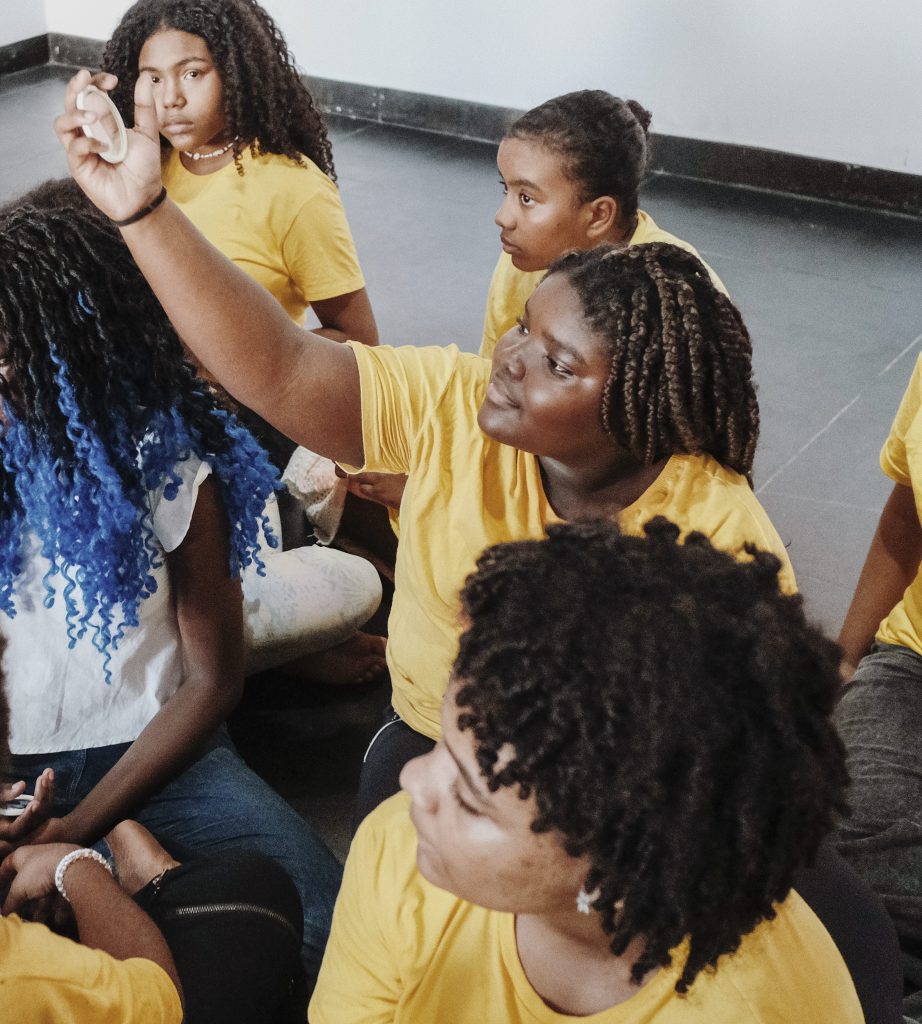
Julia with Odara in Brazil. Captured by Luisa Dorr for Pura In Brazil, where pear trees and coconut plantations cover the Northeastern Coast, girls like ten-year-old Julia experience a different kind of educational barrier than girls in Tanzania. Too often, racial discrimination contributes to high dropout rates among Black, quilombola and Indigenous girls in the country.
“In the logic of Brazilian society, Black people don’t need to study,” says Naiara Leite, Executive Coordinator of Odara, a women-led organization and Malala Fund partner. Bahia, the state where Odara is based, was once one of the largest slave-receiving territories in the Americas, and because of that history, deeply-ingrained, anti-Black prejudice is still widespread. “Our role and the image constructed around us is one of manual labor,” Naiara says.
But education can change that. In 2020, with assistance from a Malala Fund grant, Odara launched its first initiative for improving school completion rates among Black, quilombola, and Indigenous girls: “Ayomidê Odara”. The young girls mentored under the program, including Julia, are known as the Ayomidês. And like the Pura x Malala Fund Collection’s Brazil: Breath of Courage scent, the Ayomidês are fierce, determined, and bursting with energy.

Ayomidês with Odara in Brazil. Captured by Luisa Dorr for Pura Ayomidês take part in weekly educational sessions where they explore subjects like education and ethnic-racial relations. The girls are encouraged to find their own voices by producing Instagram lives, social media videos, and by participating in public panels. Already, the Ayomidês are rewriting the narrative on what’s possible for Afro-Brazilian girls to achieve. One of the earliest Ayomidês, a young woman named Debora, is now a communications intern. Another former Ayomidê, Francine, works at UNICEF, helping train the next generation of adolescent leaders. And Julia has already set her sights on becoming a math teacher or a model.
“These are generations of Black women who did not have access to a school,” Naiara says. “These are generations of Black women robbed daily of their dreams. And we’re telling them that they could be the generation in their family to write a new story.”
Mama Habiba is reframing the conversation in Nigeria

Centre for Girls' Education, Nigeria. Captured by James Roh for Pura In Mama Habiba’s home country of Nigeria, the scents of starfruit, ylang ylang and pineapple, all incorporated into the Pura x Malala Collection’s “Nigeria: Hope for Tomorrow,” can be found throughout the vibrant markets. Like these native scents, Mama Habiba says that the Nigerian girls are also bright and passionate, but too often they are forced to leave school long before their potential fully blooms.
“Some of these schools are very far, and there is an issue of quality, too,” Mama Habiba says. “Most parents find out when their children are in school, the girls are not learning. So why allow them to continue?”
When girls drop out of secondary school, marriage is often the alternative. In Nigeria, one in three girls is married before the age of 18. When this happens, girls are unable to fulfill their potential, and their families and communities lose out on the social, health and economic benefits.
Completing secondary school delays marriage, and according to UNESCO, educated girls become women who raise healthier children, lift their families out of poverty and contribute to more peaceful, resilient communities.

Centre for Girls’ Education, Nigeria. Captured by James Roh for Pura To encourage young girls to stay in school, the Centre for Girls’ Education, a nonprofit in Nigeria founded by Mama Habiba and supported by Malala Fund and Pura, has pioneered an initiative that’s similar to the Ayomidê workshops in Brazil: safe spaces. Here, girls meet regularly to learn literacy, numeracy, and other issues like reproductive health. These safe spaces also provide an opportunity for the girls to role-play and learn to advocate for themselves, develop their self-image, and practice conversations with others about their values, education being one of them. In safe spaces, Mama Habiba says, girls start to understand “who she is, and that she is a girl who has value. She has the right to negotiate with her parents on what she really feels or wants.”
“When girls are educated, they can unlock so many opportunities,” Mama Habiba says. “It will help the economy of the country. It will boost so many opportunities for the country. If they are given the opportunity, I think the sky is not the limit. It is the starting point for every girl.”
From parades, film screenings to safe spaces and educational programs, girls and local leaders are working hard to strengthen the quality, safety and accessibility of education and overcome systemic challenges. They are encouraging courageous behavior and reminding us all that education is freedom.
Experience the Pura x Malala Fund Collection here, and connect with the stories of real girls leading change across the globe.
-
Tech expert explains why you ‘magically’ see ads for things you think about
Algorithms don’t need to hear your thoughts to predict them.
A number of years ago, people started to suspect their phones were listening to them. They’d “magically” see ads on Facebook or news websites for products they had barely mentioned in passing. Because our phones are always listening for “wake words” (like “OK Google” or “Hey Siri”), it was natural to grow suspicious that they were monitoring conversations and auctioning off that data to advertisers.
The truth is, your phone is not always listening and scanning your conversations for ad triggers. However, countless people have reported seeing ads for things they’ve merely thought about.
The reason this predictive advertising happens is fascinating, a little scary, and just a tad reassuring.
“I can’t be the only one noticing this”
Aakash Gupta writes about AI, tech, product growth, and more. He recently took on the challenge of explaining this freaky concept to a concerned Internet citizen.
“I get how the phone can target ads by hearing and seeing me, but how is it showing me ads based on my thoughts? I can’t be the only one noticing this,” an X user wrote.
Here’s Gupta’s explanation: It starts with a real-time auction every time you open an app or website that serves ads.
“Every time you open a website or app, a real-time bidding auction fires in under 100 milliseconds,” Gupta wrote on X. “Your GPS coordinates, browsing history, device fingerprint, age, gender, income bracket, and hundreds of inferred interest categories get packaged into a ‘bid request’ and broadcast to hundreds of companies simultaneously. One company wins the ad slot. All of them keep the data.”
Some estimates put the number of ads the average person sees in a given day between 4,000 and 10,000. In fact, most are almost invisible to us now. That’s why ad companies have to make them hyper-targeted.
Gupta explained that your data isn’t only collected when you use a website. Some apps on your phone may pull your location data thousands of times per day, creating a detailed map of pretty much everywhere you go.
So how does that lead to “telepathic” advertising? By figuring out what people who are almost exactly like you are interested in buying.
“The algorithm doesn’t hear your thoughts. It compares your behavioral fingerprint against millions of similar profiles and predicts your next interest before you’re consciously aware of it,” Gupta wrote. “It makes hundreds of predictions per day. You ignore the misses. The five hits feel like telepathy.”
Akash Muni, a software developer, explained it even more simply:
“You are not unique. There are 10,000 people with your exact age, location, income bracket, browsing history, purchase pattern and social graph. When those 10,000 people started searching for running shoes, you hadn’t yet. But you will.”
He said it’s called “predictive behavior modeling,” and that it has become eerily accurate.
Famous case
One famous case of this kind of modeling in advertising involved Target sending coupons for baby items to a pregnant teenager’s home. The only problem was that they identified her pregnancy so quickly that her parents didn’t even know yet.
The New York Times wrote, “[A Target statistician was] able to identify about 25 products that, when analyzed together, allowed him to assign each shopper a ‘pregnancy prediction’ score. More important, he could also estimate her due date to within a small window, so Target could send coupons timed to very specific stages of her pregnancy.”
Similar modeling is used in many ways, not just advertising. Some companies combine data on their employees with known trends and events (like layoffs or changes in HR policies) to predict when someone might quit or leave—even before they do.
When it happens on your phone in a fraction of a second, it can be pretty shocking. In fact, the accuracy can be so spooky that some people refuse to believe the modeling is “predictive” at all.
“Everyone is saying it just predicts.. now explain if I just happen to think about a random product which doesn’t basically interest me in any shape or form.. for example a conversation I just happened to have like 5 years ago.. and boom!.. here you go, ads flying in right after,” one X user wrote.
“Yes, yesterday I was thinking of the cafe I once hoped for, and in the morning the first ad I saw was that cafe’s ad. How is it possible?” wrote another.
As Gupta said, predictive modeling is wrong hundreds or thousands of times a day. But we don’t notice those ads for things we’re not interested in because we’re too focused on the ones that are frighteningly accurate.
It’s hard to accept that our thoughts and choices aren’t as unique as we’d like to think they are

Some people have trouble believing that phones aren’t psychic. Photo credit: Canva It turns out humans are actually pretty predictable. Much of what we do and think is driven by our environment and the systems we live in. Those environments and systems can be tracked and measured with incredible efficiency.
If there’s any solace to take in this relentless mining of our data, it’s that the whole system works because there are people out there just like us. There are countless others the same age, with similar family structures, interests, income brackets, and more. In another world, maybe we would all be friends!
In the meantime, we can thank them for turning us on to that awesome pair of running shoes we didn’t even know we needed.
-
Parents experiment with 4 p.m. dinners and are blown away by the results
“The most underrated hack for a smoother evening.”
Can having an early family dinner really be the key ingredient to a smooth evening? According to one family, the answer is a resolute yes.
In a now-viral Instagram reel, a mom of two named Lexi Poer films her husband, Jordan, making their kiddos a delicious meal—set to be served at 4 p.m. on the dot, apparently.
4 p.m. dinners: The ultimate energy boost
Poer told Newsweek that when dinner was typically served at the more conventional time of 6:30 or 7 p.m., her two daughters would have “meltdowns,” leaving her feeling like “we were failing at something that was supposed to be the centerpiece of family connection.”
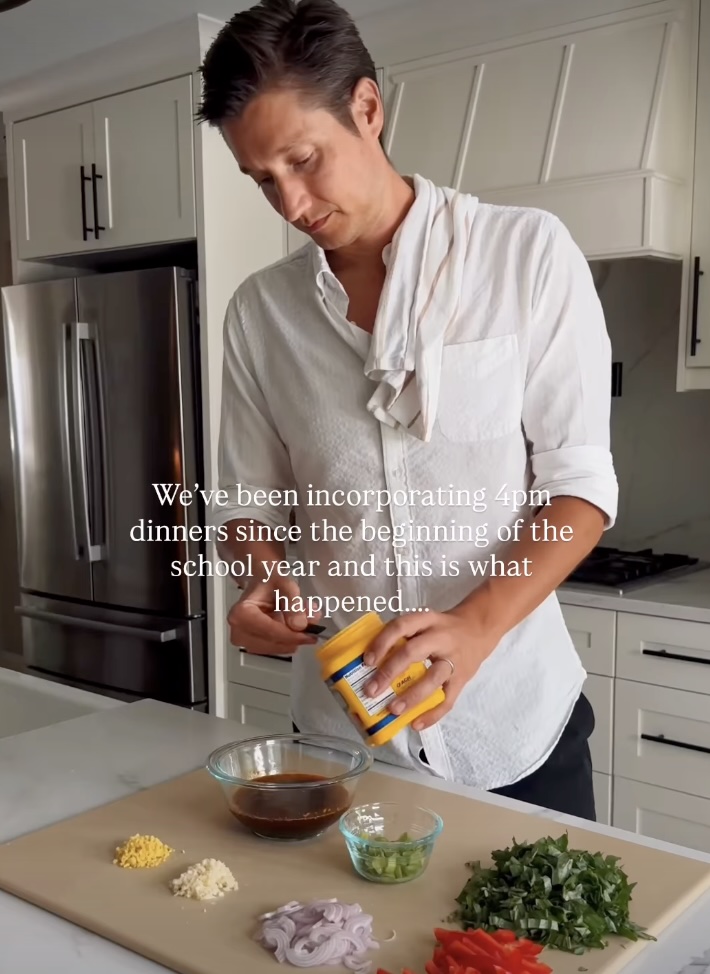
Screenshot However, after accidentally serving dinner early one day and noticing a huge difference, the couple wondered what might happen if the change became a permanent routine. The rest is history. Now, she calls 4 p.m. dinners “the most underrated hack for a smoother evening.”
Why it works
In her caption, Poer explains why she thinks it works.
For one, kids “walk through the door starving.” When given a proper meal, they’re less likely to need a snack and have the energy to do their homework and extracurricular activities.
Second, it leaves more time for “winding down” with showers, books, and simply “being” without having to do anything.

Screenshot Poer has noticed that both of these factors have led to her two daughters being “genuinely nicer.” “A well-fed kid is a completely different kid,” she said.
Earlier dinners have spared the couple from standing over a stove when the entire household is, as she put it, “overstimulated and hangry.” Everybody wins.
In the comments, other parents agreed that early dinners were transformative
“We’ve started doing this for the last 8 months. It’s definitely a game changer and takes off tension to ease into bedtime.”
“We’ve been doing 430p dinners since our little one was 1 (she’s now almost 4) and it’s been the best. Dinner and then time to still go out to the beach or skate park before coming home for bath and bed. Bellies full and a cleaner home.”
“This is so funny, we automatically do this anyway and then find we’re not hungry at 6-7 pm. It works well!”
“Yes! I served dinner at 4 pm for years. The kids just couldn’t hold on any longer. A lot of meltdowns quelled due to changing the time of dinner (they got off the bus at 4-4:30)”
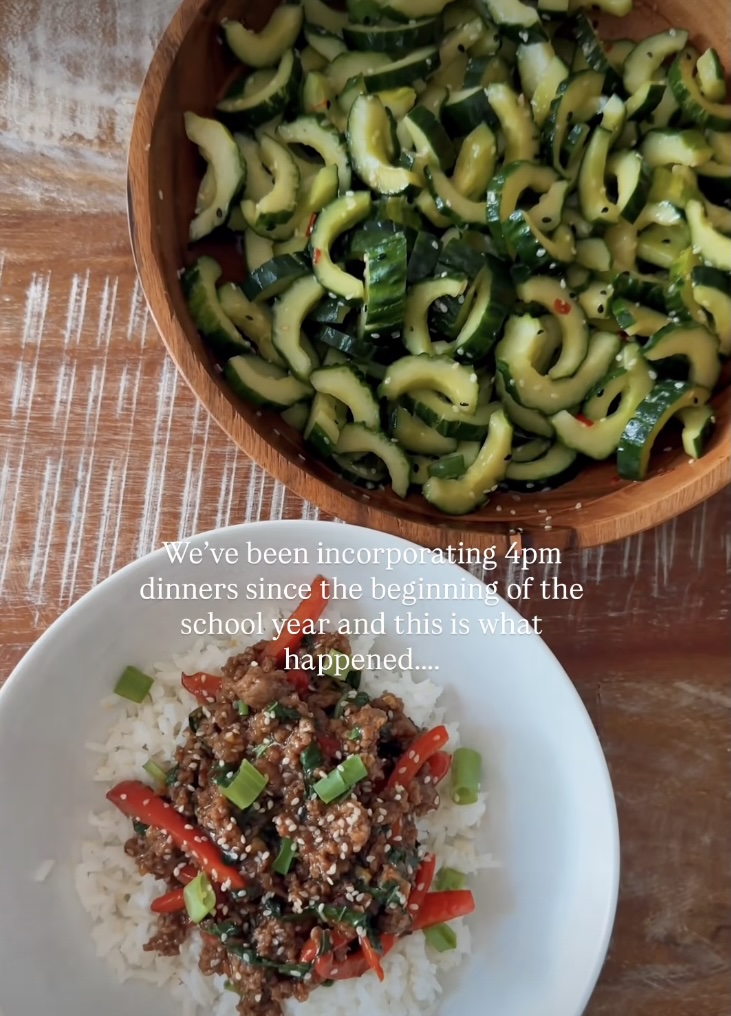
Screenshot Of course, even Poer acknowledged that for many working parents, this simply isn’t feasible—especially when the goal is to eat together as a family. Even her own household doesn’t do it every day. The fact that society generally doesn’t support a lifestyle where families can do this sort of thing, no matter how beneficial it may be, is a separate conversation. Still, the principle behind her idea remains: to experiment with “getting ahead of the hunger spiral,” as she told Newsweek.
It works even if that means serving dinner a few minutes before your normal time. You can certainly reconsider a 6 or 7 p.m. dinner if the only reason you’re doing it is because it seems “normal” or traditional. One size doesn’t have to fit all, so by all means, do whatever brings a bit more peace to your home.
-
101-year-old woman answers kids’ questions about the old days in this delightful clip
“You’re really old, but you’re really good at it.”
In a compilation that has resurfaced and gone viral (yet again) on social media, a 101-year-old woman named Alice is seen meeting a gaggle of young children, all eager to see the world through the lens of her long life.
The group is called HiHo Kids, and they’re part of an online content platform that features children learning and playing. Their Facebook page emphasizes the importance of embracing youth: “Every kid – including the one inside each of us – needs imagination and curiosity about the world. HiHo promotes empathy through play.”
No question is too big, too silly, or too small for Alice. The young tikes are, as children tend to be, truly earnest, and Alice seems happy to share what her life has been like for more than a century. In a montage, various children sit across from her. One asks, “What are we here to talk about?” Alice answers with honesty and humor: “Well, I think it might be how old I am.”
This is, of course, followed by the question, “How old are you?” Alice replies, “I’m in my 101st year.”
After a brief discussion about where Alice grew up, a boy named Micah asks about life back in the old days. Alice answers, “We didn’t have radio. No television. We didn’t have telephones when I was a little girl. There were not any trucks. They had wagons, and horses pulled them.”
What was the world like?
One young girl asked whether the world was in such turmoil. “Back then, did you see any wars?” Alice maintained her honest approach. “I did, and I was in a war. I was in the Second World War. We worked on decoding and encoding machines. Very secret work. The officers had guns, and they said if you told any of the secrets, they would shoot you dead.”
Micah looks a bit nervous, so Alice reassures him. “But nobody got shot.” He seems relieved. “Good,” he says, smiling and nodding.
To lighten things up a bit, a young girl asks, “What did you do for fun?” Alice fondly recalls, “I had dolls and blocks. But I really liked ‘boys’ things.’ Marbles and tops. And I thought boys were much luckier than girls. We had to wear skirts and stockings, even in the coldest weather.”
Clara questions this: “Girls couldn’t wear pants?” Alice affirms, “That’s right.” Clara concludes that it’s simply not fair.
Favorite insect
Though Alice is now retired, she lights up when talking about her past work as a biology professor. “If you look at my shirt, you’ll see some of the things I taught about.” She points to a few insect brooches on her pale blue button-down, including a spider. When asked about her favorite insect, Alice doesn’t hesitate: “Ants. I did research on ants.”
Clara could talk about ants all day. She explains that although they’re tiny, they’re incredibly strong. “They can carry something big, like a banana. Even three of them can, even though they’re this tiny.” Alice is impressed by her knowledge. “You’re very good—and you’re only six years old!”
Micah asks what Alice likes to do for fun. “Well, right now I’m watching the Olympics. I write books, and I do puzzles. I enjoy email. I write to a lot of my friends. I even play Scrabble. Also, I try to get exercise every day.”
She tells the kids she’s grateful to still have a working mind and body. “Some old people aren’t very well anymore. Some of them can’t remember things. Some of them have to have somebody help them. But I can do everything myself.” Micah exclaims, “That’s good! That means you’re really old, but you’re really good at it.”
The rest of the conversation is quite moving. Alice is asked what the hardest part of getting older is. “You miss people. And especially when you live over 100 years. Most of the people I ever knew, and in my family, are dead.”
Not afraid of dying
This leads to a beautiful question: “Are you afraid of dying?” Alice is most certainly not. “No, I’m not afraid of dying. I feel very healthy and happy. My doctor said, ‘Maybe you’ll just die in your sleep.’ So I’m not afraid, because I have a good life.”
Finally, quite possibly the most important question of the session: “What is the secret to living a long life?” Alice answers, “Being happy, working hard, getting exercise, doing things for yourself, not expecting other people to do everything for you. Those things help you live a long time.”
The comments under the Facebook reel, where this was also posted, are full of praise.
One commenter wrote, “As a geriatric nurse, Alice’s brain is freaking amazing for 101. Shoot, it’s amazing for most of my 70-80 year olds. Amazing.”
Another agreed with Alice’s life: “She was a freaking decoder! These kids don’t even know the titan they’re sitting across from them. This is so cool!”
And of course, people loved Alice’s interactions with the sweet children. “You can tell she loves to teach,” a commenter wrote. “She’s absolutely magical with the children. What a gift to introduce these kids to Alice.”
-
Why didn’t people smile in old-timey photographs? Smiling meant something different back then.
Our perceptions of smiling have changed dramatically since the 1800s.
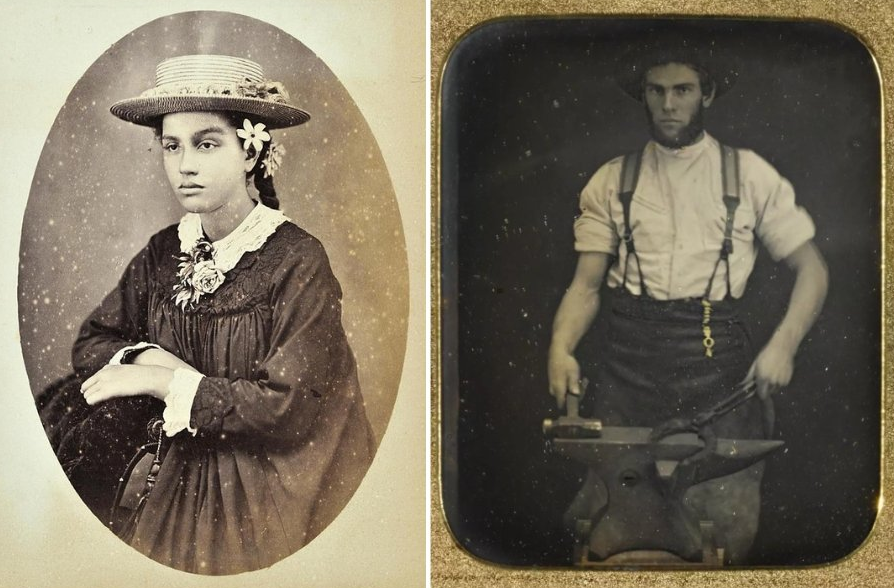
If you’ve ever perused photographs from the 19th and early 20th century, you’ve likely noticed how serious everyone looked. If there’s a hint of a smile at all, it’s oh-so-slight. But more often than not, our ancestors looked like they were sitting for a sepia-toned mug shot or being held for ransom or something. Why didn’t people smile in photographs? Was life just so hard back then that nobody smiled? Were dour, sour expressions just the norm?
Most often, people’s serious faces in old photographs are blamed on the long exposure time of early cameras, and that’s true. Taking a photo was not an instant event like it is now; people had to sit still for many minutes in the 1800s to have their photo taken.
Ever try holding a smile for only one full minute? It’s surprisingly difficult and very quickly becomes unnatural. A smile is a quick reaction, not a constant state of expression. Even people we think of as “smiley” aren’t toting around full-toothed smiles for minutes on end. When you had to be still for several minutes to get your photo taken, there was just no way you were going to hold a smile for that long.
But there are other reasons besides long exposure times that people didn’t smile in early photographs.

Mona Lisa – Photo credit: Public domain The non-smiling precedent had already been set by centuries of painted portraits
The long exposure times for early photos may have contributed to serious facial expressions, but so did the painted portraits that came before them. Look at all of the portraits of famous people throughout history prior to cameras. Sitting to be painted took hours, so smiling was out of the question. Other than the smallest of lip curls like the Mona Lisa, people didn’t smile for painted portraits, so why would people suddenly think it normal to flash their pearly whites (which were not at all pearly white back then) for a photographed one? It simply wasn’t how it was done.
A smirk? Sometimes. A full-on smile? Practically never.

Algerian immigrant to the United States. Photographed on Ellis Island. Photo credit: Augustus F. Sherman via William Williams/Wikimedia Commons Smiling usually indicated that you were a fool or a drunkard
Our perceptions of smiling have changed dramatically since the 1800s. In explaining why smiling was considered taboo in portraits and early photos, art historian Nicholas Jeeves wrote in Public Domain Review:
“Smiling also has a large number of discrete cultural and historical significances, few of them in line with our modern perceptions of it being a physical signal of warmth, enjoyment, or indeed of happiness. By the 17th century in Europe it was a well-established fact that the only people who smiled broadly, in life and in art, were the poor, the lewd, the drunk, the innocent, and the entertainment […] Showing the teeth was for the upper classes a more-or-less formal breach of etiquette.”
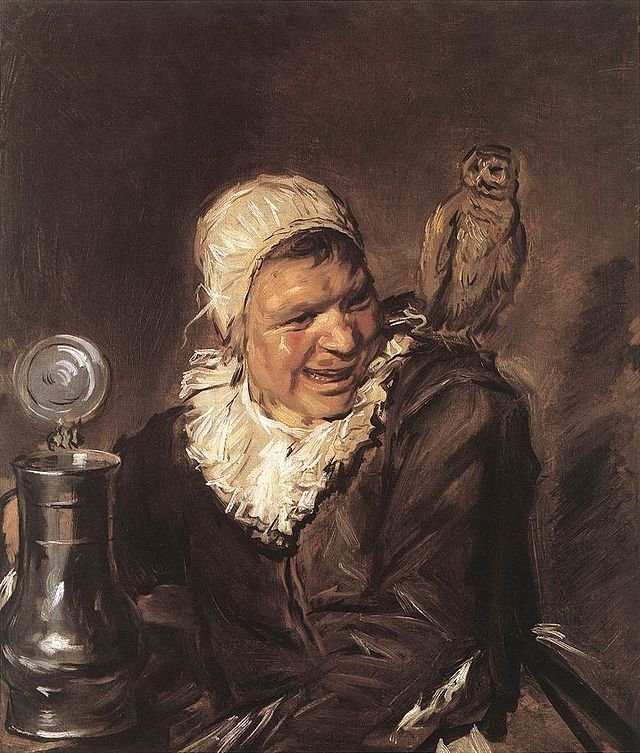
"Malle Babbe" by Frans Hals – Photo credit: Frans Hals via Public domain In other words, to the Western sensibility, smiling was seen as undignified. If a painter did put a smile on the subject of a portrait, it was a notable departure from the norm, a deliberate stylistic choice that conveyed something about the artist or the subject.
Smiling simply didn’t work well in old portraits
Even the artists who attempted it had less-than-ideal results. It turns out that smiling is such a lively, fleeting expression that the artistically static nature of painted portraits didn’t lend itself well to showcasing it. Paintings that did have subjects smiling made them look weird or disturbing or drunk. Simply put, painting a genuine, natural smile didn’t work well in portraits of old.
As a result, the perception that smiling was an indication of lewdness or impropriety stuck for quite a while, even after Kodak created snapshot cameras that didn’t have the long exposure time problem. Even happy occasions had people nary a hint of joy in the photographs that documented them.
Another reason why people didn’t smile in old photos is that dental hygiene wasn’t the same as it is today, and people may have been self-conscious about their teeth. “People had lousy teeth, if they had teeth at all, which militated against opening your mouth in social settings,” Angus Trumble, the director of the National Portrait Gallery in Canberra, Australia, and author of A Brief History of the Smile, said, according to Time.
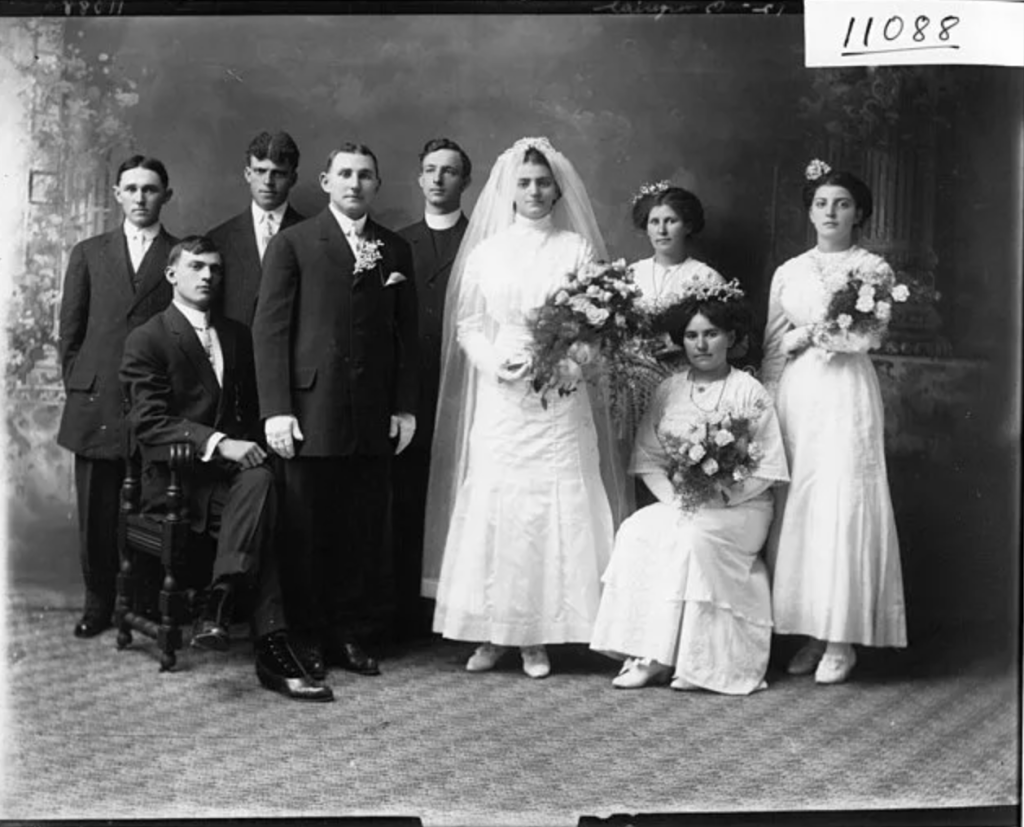
Even wedding party photos didn’t appear to be joyful occasions. Photo credit: Wikimedia Commons Then along came movies, which may have changed the whole picture
So how did we end up coming around to grinning ear to ear for photos? Interestingly enough, it may have been the advent of motion pictures that pushed us towards smiling being the norm.
Photos could have captured people’s natural smiles earlier—we had the technology for taking instant photos—but culturally, smiling wasn’t widely favored for photos until the 1920s. One theory about that timing is that the explosion of movies enabled us to see emotions of all kinds playing out on screen, documenting the fleeting expressions that portraits had failed to capture. Culturally, it became normalized to capture, display and see all kinds of emotions on people’s faces. As we got more used to that, photo portraits began portraying people in a range of expression rather than trying to create a neutral image of a person’s face.
Changing our own perceptions of old photo portraits to view them as neutral rather than grumpy or serious can help us remember that people back then were not a bunch of sourpusses, but people who experienced as wide a range of emotion as we do, including joy and mirth. Unfortunately, we just rarely get to see them in that state before the 1920s.
This article originally appeared last year.
-
Vet delivers best response after being told it’s ‘disgusting’ to let cats on the furniture
Don’t mess with cat people.
No one would get a dog expecting it to not bark, try to eat human food, or need daily walks. And yet people regularly get flummoxed when their just-as-loveable cat exhibits completely natural behaviors like climbing tabletops or scratching at furniture.
Cat people, who delight in adapting their lives to make them as enriching as possible for their feline family members, know the flaw in this logic. After all, most cats spend more time in the house than their human counterparts. So shouldn’t the house belong just as much to them?
If you answered yes, then this response video from a vet should have you feeling pretty vindicated. If you answered no, prepare to reconsider.
Dr. Matt McGlasson is a veterinarian and chief medical officer at Noah’s Ark Animal Clinics in Kentucky, where he oversees a four-hospital network, and also happens to be the proud dad of a special needs cat named Rupaul. As he told Newsweek, he gets several comments each week saying it’s gross to have cats on the furniture. One viewer went further and called it “disgusting.”
McGlasson’s response to that comment racked up 11.8 million views on Instagram, and with good reason.
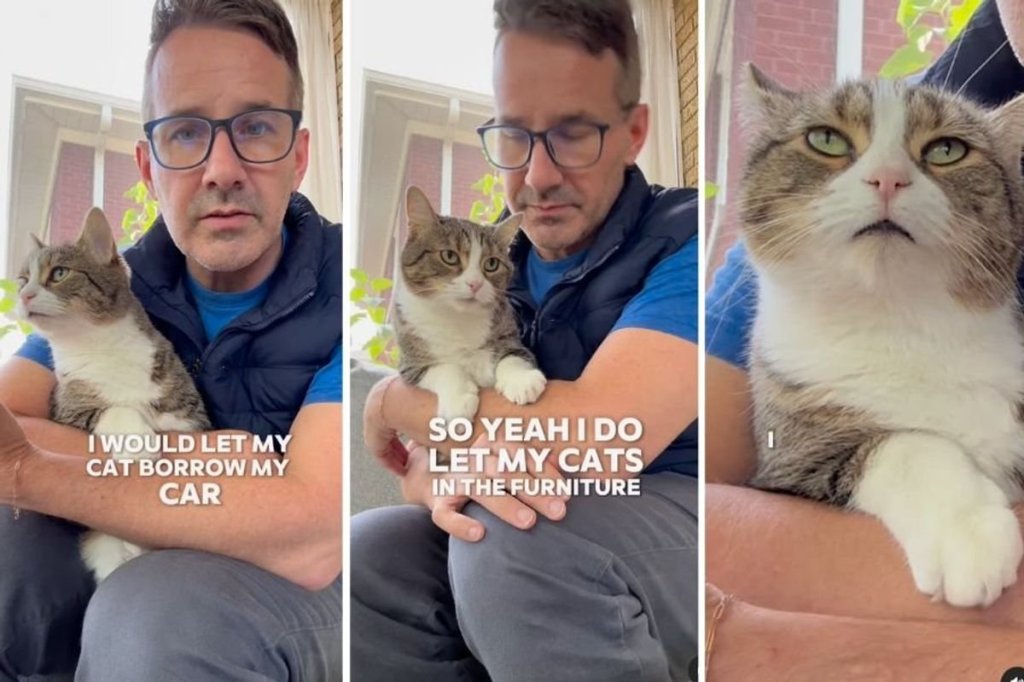
In the clip, McGlasson holds up Rupaul, who can’t use her hind legs, and lists off everything he would do for his cat, including co-signing a loan for her, letting her do his taxes, giving her the passwords to all his accounts, going into business with her, giving her $20,000 for bringing him a dead mouse, and making her the beneficiary on his life insurance policy. He also mentioned capital punishment, which he’s not normally in favor of, but “if someone hurts Rupaul, that’s another story.” And last, but certainly not least, letting Rupaul on the furniture.
Put simply: “My cat can do whatever she wants. It’s her world. I’m just living in it.”
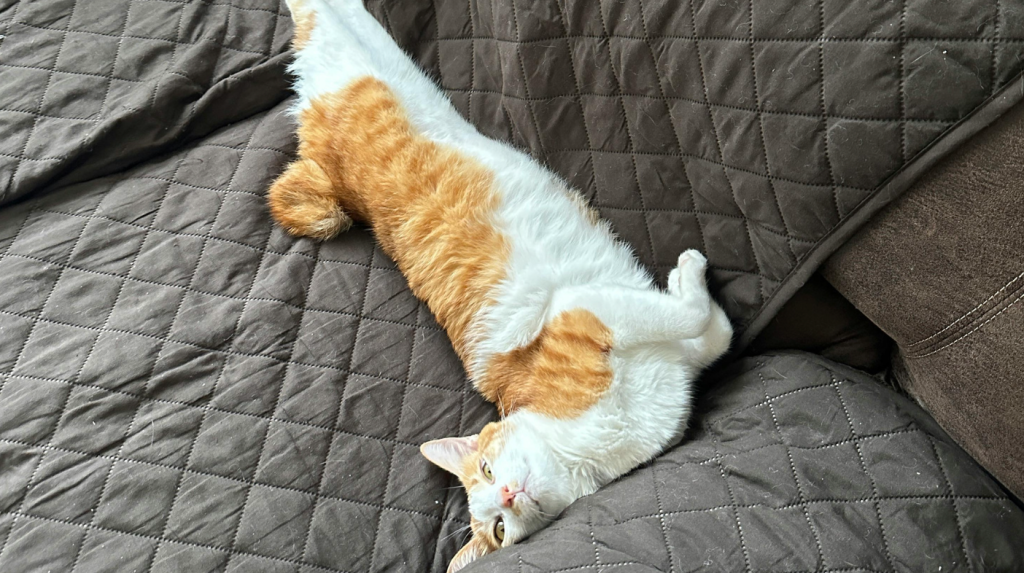
A cat stretches out on the couch. Photo credit: Canva Fellow cat owners in the comments could not agree more.
“My husband picked his new chair based on the cat. The arm had to be wide enough for her to sit whenever she chooses to have quality time with him.”
“I would donate my kidneys to Square if she needed them. Yes, I mean both.”
“‘You let your cat sleep with you?’ Ma’am, I’d let him represent me in court.”
“I bought my house for my senior kitties. I wanted to get out of our apartment so they could feel grass beneath their paws again before their time was up.”
Bottom line: climbing is part of a cat’s inherent programming. If cat owners truly want their home to be a safe space for their cat, this needs to be part of the equation. The good news is there are plenty of ways to redirect those instincts without conflict, like making sure there are dedicated cat trees to climb and scratching posts to use, or opting for furniture fabrics that cats tend to avoid, like microfiber.
And as a general rule, cats respond to positive reinforcement rather than punishment. Contrary to popular belief, cats don’t “know” when they’re being bad. Scolding them just teaches them to associate their behavior with negative attention, which isn’t fun for anyone.
As McGlasson, now with nearly 800,000 TikTok followers and a book called “How to Rate a Cat,” would tell you: having a pet in your home provides so much fulfillment and connection that small compromises, or large bank loans, are well worth it.
By the way, McGlasson’s TikTok and Instagram are full of hilarious (and informative!) cat content. Here’s a small sampling:
For more pawsome videos just like these, be sure to give McGlasson a follow.
This article originally appeared last year.
-
Toddler uses lawyer-like logic to make the case for taking candy from strangers
His mom’s attempts to teach “stranger danger” backfired.
Teaching children about “stranger danger” is a tough paradox. On one hand, you want your child to be comfortable and friendly around others—after all, a lot of folks we end up calling friends started out as strangers. On the other hand, they need to be careful not to interact with those who may seek to harm them.
An easier lesson to teach is not to take candy from strangers. You can be friendly with some strangers, but never take candy from them under any circumstances.
A young child on TikTok named Hudson, the son of pediatrician Megan Hall, is going viral for the lawyer-like way he responds when his mother tells him to stop taking candy from strangers. His logic: If you know someone’s name, they aren’t a stranger.
It all began when Hudson took a gummy candy from a child at the park and put it in his mouth. “You can’t keep taking snacks from strangers at the park,” Hall told her son. But Hudson wanted a clearer definition of what “stranger” actually meant. “There are no strangers here,” Hudson calmly responded, adding that he knew the name of the child who gave him the candy.
Then Hudson tried to flip the script on his mother, questioning the very nature of what it means to be a stranger. “Are you a stranger?” he asked his mom, who gave a prompt no. “But my dad tries to be a stranger to me,” Hudson said, ending the debate.

Three gummy bears. Photo credit: Canva Hudson is friends with everyone when he’s at the park
Based on what Hall told People, it looks like she’ll be having this debate for quite some time—and may need to take extra-special care at the park.
“He has always been a really friendly and social child who genuinely believes everyone is—or should be—his friend,” she told People. “We jokingly refer to him as the mayor because he likes to talk to everyone, anywhere we go.”
A commenter wrote, “His logic he met them, exchanged names, and played w the kids = no longer strangers.”
“He’s about to be real confused on the rules come Halloween,” another added.
Another loved his nonchalant nature: “The fact that he’s still tasting every ingredient in the candy while you’re warning him.”
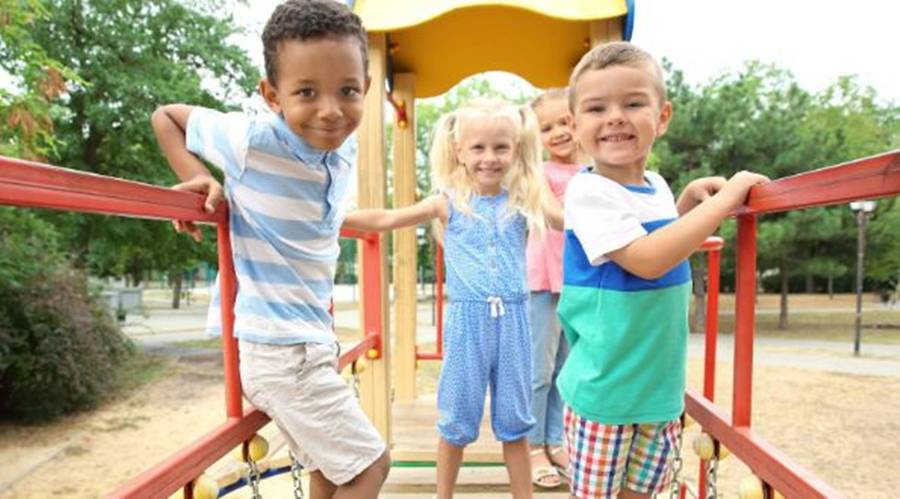
Kids playing at the park. Photo credit: Canva How should parents discuss stranger danger with their children?
“The phrase ‘stranger danger’ can be misleading. While it’s true that we need to teach our children to be cautious around people they don’t know, the reality is that not all strangers are harmful. Labeling all unfamiliar people as dangerous can create unnecessary fear and confusion,” Nature Therapy, a family therapy practice based in Illinois, wrote on its blog. “Statistically, most child abuse cases involve someone the child already knows. This is where the concept of ‘tricky people’ becomes more effective. It shifts the focus from fearing all strangers to identifying behaviors that are inappropriate or unsafe, regardless of whether the person is a stranger or someone familiar.”
The debate may have been about the nuances of stranger danger, but it’s also a great example of how open-minded and kind-hearted young kids can be.
“Children are innocent, hate is taught,” Hall said. “Children see the best in people and never think anyone would do something to harm them, and I wish this were true.”
-
‘You better than that’: Door camera shows woman stopping package thief with tough love
She turned a tense moment into an unforgettable display of empathy.
In a moment when most people might respond with anger and discipline, one Philadelphia woman chose instead to lead with compassion.
On March 6, Bernadette Williams noticed a stranger across the street near a neighbor’s porch. As seen on Williams’ doorbell camera, a woman with a partial face covering appeared to reach for a delivered package. It was the kind of scene that immediately raises alarm, and Williams responded without hesitation.
‘What are you doing? Put that back! Put that back!’
The woman quickly dropped the package. For a brief moment, the situation hung in the balance. It could have turned into a confrontation, a threat, or a call to the police. But then Williams made a choice that shifted the entire tone of the encounter.
“I said, ‘She’s in trouble. How can I make a bad situation better?’ You have to be a part of the solution,” she later told WPVI.
Rather than continuing to call out the woman, Williams began speaking to her in a completely different way. As her voice softened, her message changed from warning to encouragement.
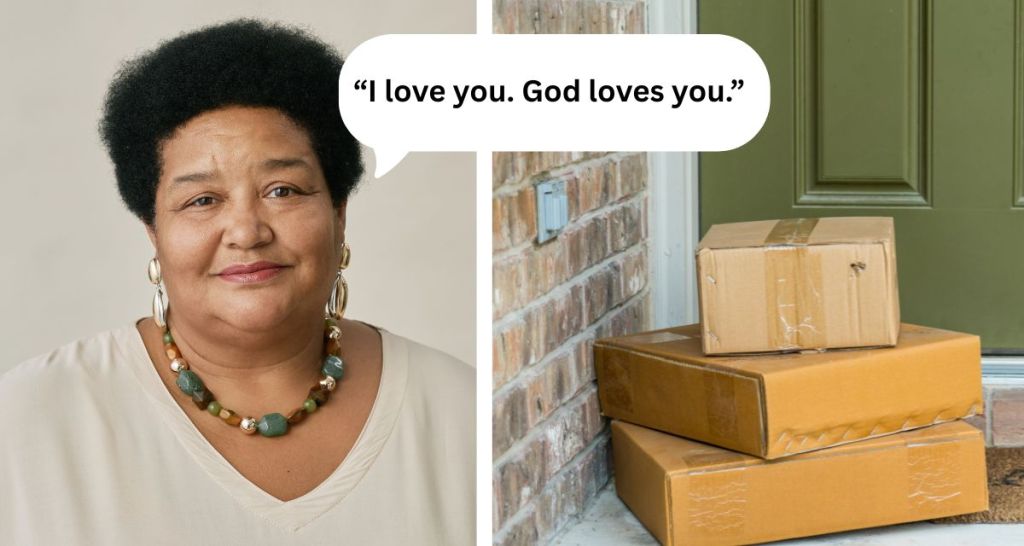
“You better than that. Get some help. I love you. God loves you,” she told the woman.
Then came the offer that has stayed with so many people who have heard the story. Reaching into her pocket, Williams told the stranger, “I’ll give you some money. Here’s $7, here’s $7.” It was all she had, and she gave it up willingly.

Close-up of hands offering money. Photo credit: Canva The exchange was brief, but its impact was clear
As WPVI reported, the woman apologized and thanked her before leaving. Williams said she could see something had shifted in her expression.
“Her eyes of ‘I’m sorry.’ That was in her heart, and that’s what I read. I hope that she will be fine, and I have faith that she will be fine.”
For Williams, the decision was not about ignoring wrongdoing, but about recognizing what might be underneath it. Instead of seeing a thief, she saw someone who might be struggling.
“She started realizing ‘I am somebody,’” Williams said. “She started realizing that ‘There is somebody out here that cares.’”
A close-up of eyes. Photo credit: Canva That perspective comes from years of living in the same neighborhood and feeling connected to the people in it. Williams believes that communities are shaped by how people choose to respond to one another, especially in difficult moments.
“We are a part of this community, and we can make our community better,” she told WPVI.
The big takeaway
There’s a common assumption that accountability must come with harshness. This story shows that it doesn’t always have to. The would-be thief is held accountable while maintaining everyone’s dignity, making a different choice in the future far more likely.
While it’s impossible to know what happens next for the woman in the video, what remains is the example Williams set by actively choosing humanity when most would not.
-
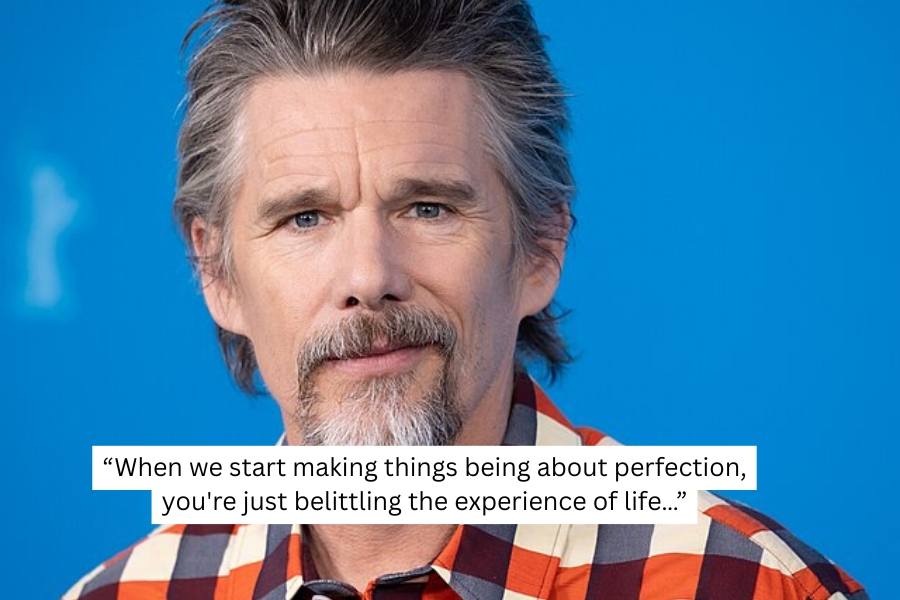
Ethan Hawke beautifully explains why AI art can’t replace imperfect human creativity
This energy is what AI can’t replicate.
As AI plays an increasing role in our world, questions about its appropriate use abound. There’s no doubt that technology has the potential to improve our lives dramatically. But the way we choose to use it can also impact us in ways we may not fully appreciate.
For instance, how might AI impact our relationship with human creativity? Ethan Hawke was asked about the idea that “AI is the future of art,” and how he would argue that human creativity matters. People are loving his thoughts.
Ethan Hawke on AI art versus reality
“Nature is reality,” he said. “And when you get away from reality, you get lost. Human creativity is nature manifest in us. It is happening in us.”
Then he gave an example of why AI art will never be able to replicate a piece of art created by a human.
“AI could make an amazing portrait of the Sundance Film Festival, and it’ll be incredible,” he said. “Or my 14-year-old could color her impression of it. And the thing about my 14-year-old’s is it’s not perfect. It’s hers. It’s unique to a moment in time and a place. And it’s inimitable because it’s coming from her, and she is beautiful. And it’s not the painting; it’s the energy behind the painting.”
“What makes a poem great is not this collection of words,” he continued. “It’s the energy behind the poem. Dance can be…you see people who can barely dance, and you can cry at the joy happening with the music. Because they’re alive right now and they won’t be forever. And when we start making things being about perfection, you’re just belittling the experience of life. You’re just totally ceding your humanity.”
Hawke concluded, “It makes me sad, but it also makes me excited, because I don’t want to do that. I’m not going to do that.”
So many people resonated with his response in the comments:
“This is so beautiful and so true ~ everything he says is so profound and I’m here for this thinking…. we’ve become a weird world of social media perfection.”
“I love how he got 🥲 talking about the imperfections created by hand from his daughter. What a beautiful way of describing creativity.”
“Can he just write a philosophy book already? We all know we’d read it.”
“@ethanhawke always saying what the world needs to hear. Thank you sir! Thank you for defending the magic of NATURE and defending the MAGIC of humanity. More of this ENERGY and CONSCIOUSNESS ❤️❤️❤️.”
“This feels less like an anti-AI take and more like a pro-human one.”
AI isn’t going anywhere, time to choose the role it plays in society
That last comment hits the nail on the head. Whether you love it, hate it, or aren’t sure how to feel about it, AI is here. The conversations we have about it, and how we consciously choose to engage with it, matter. There’s a lot to consider on that front, ethically, educationally, environmentally, and more.
But one thing those considerations are forcing us to do is to examine the value of human creativity. Not the dollar amounts we can assign to it, but the inherent value of the energy behind an artist’s unique expression. Generative AI will never be able to replace human creativity, no matter how “perfectly” it may replicate it. The real beauty of art is the singularity of the human spirit and the unique energy an artist brings to it.
As Hawke said, we can choose not to cede our humanity in the age of AI—and we can be excited about that choice because the beauty of human creativity is absolutely worth celebrating.






Why didn’t people smile in old-timey photographs? Smiling meant something different back then.

Get stories worth sharing delivered to your inbox.
Advertisement





.jpg)