Getting older… if you’re lucky, it’s going to happen. And the internet loves to make aging sound like a full-time job. Lift heavy! Know your macros! Expose yourself to a precise dose of sunshine at a prescribed time! Don’t forget to add a complicated supplement stack on top of your current prescription medications if you want to ward off a litany of maladies. And, oh, you’re going to need a much bigger pill storage case.
Who knew getting organized about getting older would steal away so much time?
Researchers in Taiwan tracked more than 13,000 adults 65 and older for a median of seven years. Many had common pre-existing conditions that can present as we age, like high blood pressure. Researchers put this group through a battery of quick, low-tech fitness tests. No treadmills, lab coats, or fancy machines required.
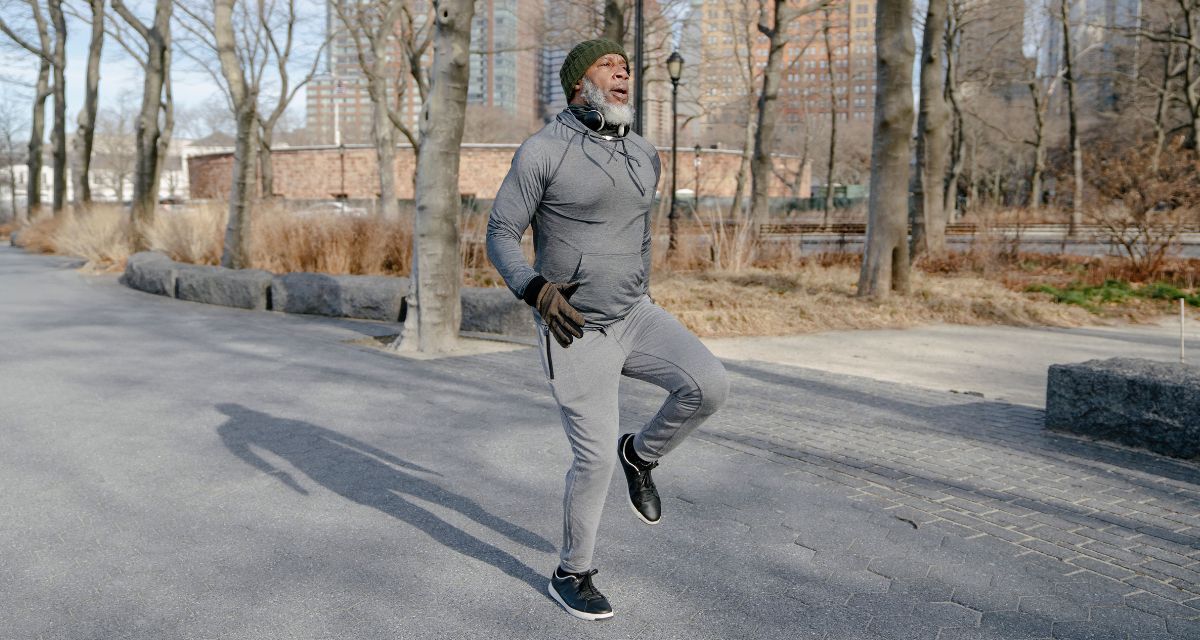
The results, published in JAMA Network Open, found that the people who performed best on these tests dramatically increased their life expectancy. And it didn’t require them getting shredded like lettuce either. It all starts with trying to stand on one leg for 30 seconds.
This one-leg stance turned out to be a powerful clue
Participants worked through a lineup of seven total tests covering balance, strength, endurance, and flexibility. Those who landed in the top fifth had about 61% lower risk of dying over the following seven years compared to those in the bottom fifth. The core test came when participants were asked to hold a one-leg stance with their eyes open for up to 30 seconds.
Foot and ankle surgeon Dr. Bob Baravarian told Upworthy, “Falls are one of the most common end-of-life issues. Good balance and muscle strength lead to good cardiovascular and cognitive health.” By concentrating more of your fitness time on balance and core exercises, you can help stave off these types of declines and keep walking for longer.
Sure, heart disease, diabetes, and low blood pressure are still issues, but they can be mitigated to a degree if you’re able to stay mobile.
Why functional movement helps adults thrive despite diagnosis
So what types of movements can you add to your fitness routine to help maintain mobility? Dr. Jamie Bovay, a physical therapist with Denver’s KinetikChain, shared with Upworthy some solid steps to take in the right direction. “Do these for just five minutes a day to build the physical durability required to keep your independence.”
1. The Tandem Balance Hold (Heel-to-Toe Standing)
Stand near a kitchen counter for safety. Place your right foot directly in front of your left foot, so your right heel is touching your left toes (like you’re walking a tightrope). Look straight ahead, take your hands off the counter, and try to hold still for 30 seconds. After that, switch feet.
This exercise forces your ankles and hips to make micro-adjustments continuously. Now you’re retraining the small stabilizer muscles that keep you steady on uneven ground.
2. Single-Leg Clock Reaches
Stand on your left leg with a slight bend in your knee. Imagine you’re standing in the center of a clock face. Tap your right foot out to 12 o’clock, bring it back to center, tap it to 3 o’clock, back to center, and tap to 6 o’clock. Repeat 3 times, then switch legs.
This movement mimics what happens as you turn when walking. It forces your standing leg to stabilize your hip while your weight shifts around it.
3. Figure-8 Line Walks
Pick a clear space. Now, visualize a large figure-8 on the floor, about 6 to 8 feet long. Walk the pattern smoothly, making tight turns around the loops. Focus on keeping your stride even and your eyes looking forward, not glued to your feet.
This seemingly simple movement challenges your vestibular, or inner ear, system. If you can train your body to process direction changes, you can stay mobile longer.
Here’s the genuinely hopeful part. Many of the people in this study were living with real health issues: diabetes, high blood pressure, you name it. Fitness wasn’t reserved for the picture of perfect health. It was about function: could you catch yourself before a stumble? Could you get up off the couch without help? Could you keep your legs steady under you? With these goals in mind, consistently engaging in the exercises above can help improve mobility and, as a result, increase your chances of securing additional years of quality life.