Mariah Carey inspired a Twitter rally after a Texas bar banned her Christmas song
Mariah Carey’s uber famous “All I Want For Christmas Is You” has been a staple of the holiday since the late ’90s. Who can remember the last time they entered a department store without trying–and failing– to match that impossible whistle tone during the final chorus? It’s about as synonymous with Yuletide cheer as Rudolph,…
Mariah Carey’s uber famous “All I Want For Christmas Is You” has been a staple of the holiday since the late ’90s. Who can remember the last time they entered a department store without trying–and failing– to match that impossible whistle tone during the final chorus? It’s about as synonymous with Yuletide cheer as Rudolph, only sassier.
Well, apparently a (still unidentified) bar in Texas has had quite enough of the holiday pop hit. Someone there taped an unceremonious piece of white paper next to the jukebox that stated plainly “Mariah Carey’s All I Want for Christmas Is You will be skipped if played before Dec. 1. After Dec 1 the song is only allowed one time a night.”
I mean, the whole “when to start playing Christmas music” debate has been a source of contention for years. I personally cringe when November 1 rolls around and carols permeate the radio stations, but clearly this bar had an even stronger stance. The paper was tweeted by a critic for National Review. From there, the tweet went viral.Those familiar to retail had a shared trauma response. “If you haven’t worked retail then let me explain.The song plays 50 times a day on the store radio from November 1 (maybe earlier) to December 25. It’s hell,” wrote one “victim.”
If you haven’t worked retail then let me explain.
The song plays 50 times a day on the store radio from November 1 (maybe earlier) to December 25.
Another (soon to be divorced) man wrote: “I need to print this out for my wife,” which received the prompt response of “How about you let your wife enjoy things she likes before she decides you aren’t one of those things?” Yup, holiday drama is already coming in hot.
One Twitter user responded with “Is this the war on Christmas I’ve heard about?” which caught the attention of Carey herself. Carey’s response? In a word, iconic. The pop singer posted a photo of herself from a 2015 ad for the mobile video game “Game of War,” completely decked out in battle armor and holding a sword. Move over Xena, there’s a new warrior princess in town. And she’s ready to defend her Christmas kingdom.
Another wrote “me on my way to fight for the queen” accompanied by a video of Carey on a jet plane and singing yet another holiday song. That’s some kind of allegiance, if you ask me.
Carey posted another video on Instagram, showing three jack-o-lanterns sitting in a row with the words “it’s not time.” Scary, sinister music plays and a bell tolls. Carey, wearing a sparkly red gown and sky high heels sneaks in through a door holding a giant candy cane the size of a baseball bat (you might see where this is going). With a swing of her candy cane, Mariah destroys one of the pumpkins, changing the message to “it’s time” while her famous-slash-infamous song plays. If a war on Christmas is what they want, a war on Christmas is what they’ll get.
This got even more fan responses, including the person who wrote, in all caps, “MARIAH INVENTED CHRISTMAS.” Not historically accurate, but the sentiment is palpable.If you think that’s something, check out the other Twitter user who wrote “SHE IS CHRISTMAS SHE IS SANTA SHE IS THE GODDAMN TREE.” Seriously, don’t mess with Mariah fans.
Though that one bar in Texas might have won the battle, the victor in this War for Christmas is still Queen Mariah, most definitely. She’s already promoting her new Apple TV special “Mariah’s Christmas: The Magic Continues,” following up last year’s “Mariah Carey’s Magical Christmas Special.” Which might be maddening to some, but to many, it embodies a fun, cheeky, more modern way to invite the holiday spirit. And hey, at least you know TV specials don’t play on repeat while you do your Christmas shopping…
In March 2023, after months of preparation and paperwork, Anita Omary arrived in the United States from her native Afghanistan to build a better life. Once she arrived in Connecticut, however, the experience was anything but easy.
“When I first arrived, everything felt so strange—the weather, the environment, the people,” Omary recalled. Omary had not only left behind her extended family and friends in Afghanistan, she left her career managing child protective cases and supporting refugee communities behind as well. Even more challenging, Anita was five months pregnant at the time, and because her husband was unable to obtain a travel visa, she found herself having to navigate a new language, a different culture, and an unfamiliar country entirely on her own.
“I went through a period of deep disappointment and depression, where I wasn’t able to do much for myself,” Omary said.
Then something incredible happened: Omary met a woman who would become her close friend, offering support that would change her experience as a refugee—and ultimately the trajectory of her entire life.
Understanding the journey
Like Anita Omary, tens of thousands of people come to the United States each year seeking safety from war, political violence, religious persecution, and other threats. Yet escaping danger, unfortunately, is only the first challenge. Once here, immigrant and refugee families must deal with the loss of displacement, while at the same time facing language barriers, adapting to a new culture, and sometimes even facing social stigma and anti-immigrant biases.
Welcoming immigrant and refugee neighbors strengthens the nation and benefits everyone—and according to Anita Omary, small, simple acts of human kindness can make the greatest difference in helping them feel safe, valued, and truly at home.
A warm welcome
Dee and Omary's son, Osman
Anita Omary was receiving prenatal checkups at a woman’s health center in West Haven when she met Dee, a nurse.
“She immediately recognized that I was new, and that I was struggling,” Omary said. “From that moment on, she became my support system.”
Dee started checking in on Omary throughout her pregnancy, both inside the clinic and out.
“She would call me and ask am I okay, am I eating, am I healthy,” Omary said. “She helped me with things I didn’t even realize I needed, like getting an air conditioner for my small, hot room.”
Soon, Dee was helping Omary apply for jobs and taking her on driving lessons every weekend. With her help, Omary landed a job, passed her road test on the first attempt, and even enrolled at the University of New Haven to pursue her master’s degree. Dee and Omary became like family. After Omary’s son, Osman, was born, Dee spent five days in the hospital at her side, bringing her halal food and brushing her hair in the same way Omary’s mother used to. When Omary’s postpartum pain became too great for her to lift Osman’s car seat, Dee accompanied her to his doctor’s appointments and carried the baby for her.
“Her support truly changed my life,” Omary said. “Her motivation, compassion, and support gave me hope. It gave me a sense of stability and confidence. I didn’t feel alone, because of her.”
More than that, the experience gave Omary a new resolve to help other people.
“That experience has deeply shaped the way I give back,” she said. “I want to be that source of encouragement and support for others that my friend was for me.”
Extending the welcome
Omary and Dee at the Martin Luther King, Jr. Vision Awards ceremony at the University of New Haven.
Omary is now flourishing. She currently works as a career development specialist as she continues her Master’s degree. She also, as a member of the Refugee Storytellers Collective, helps advocate for refugee and immigrant families by connecting them with resources—and teaches local communities how to best welcome newcomers.
“Welcoming new families today has many challenges,” Omary said. “One major barrier is access to English classes. Many newcomers, especially those who have just arrived, often put their names on long wait lists and for months there are no available spots.” For women with children, the lack of available childcare makes attending English classes, or working outside the home, especially difficult.
Omary stresses that sometimes small, everyday acts of kindness can make the biggest difference to immigrant and refugee families.
“Welcome is not about big gestures, but about small, consistent acts of care that remind you that you belong,” Omary said. Receiving a compliment on her dress or her son from a stranger in the grocery store was incredibly uplifting during her early days as a newcomer, and Omary remembers how even the smallest gestures of kindness gave her hope that she could thrive and build a new life here.
“I built my new life, but I didn’t do it alone,” Omary said. “Community and kindness were my greatest strengths.”
Are you in? Click here to join the Refugee Advocacy Lab and sign the #WeWillWelcome pledge and complete one small act of welcome in your community. Together, with small, meaningful steps, we can build communities where everyone feels safe.
This article is part of Upworthy’s “The Threads Between U.S.” series that highlights what we have in common thanks to the generous support from the Levi Strauss Foundation, whose grantmaking is committed to creating a culture of belonging.
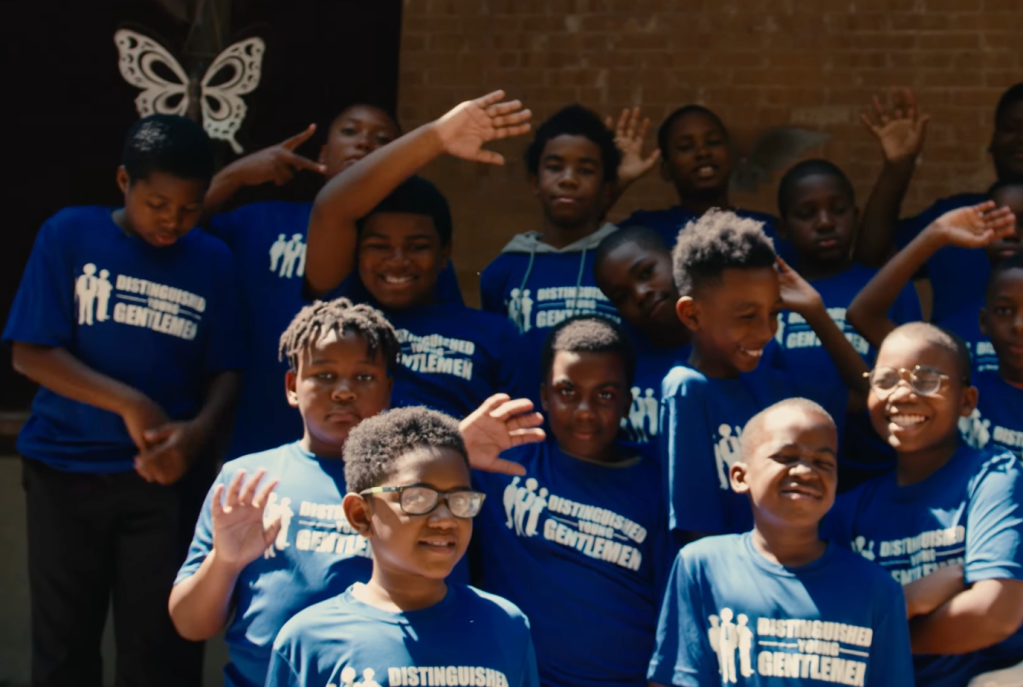
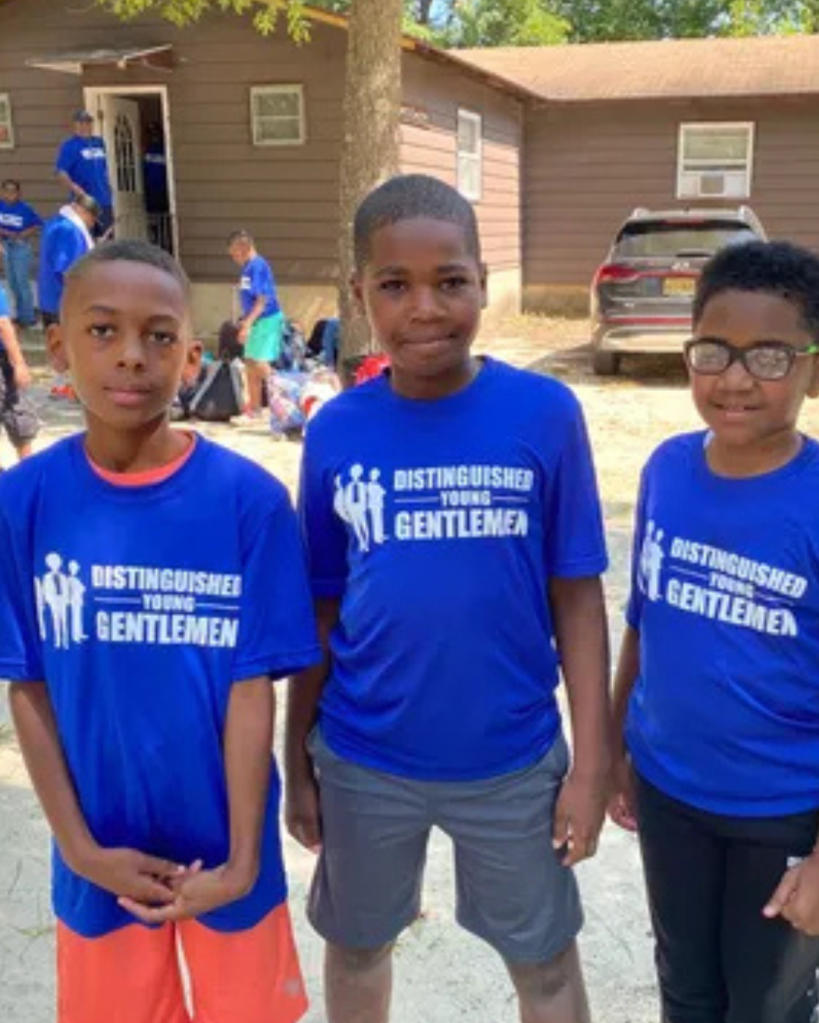
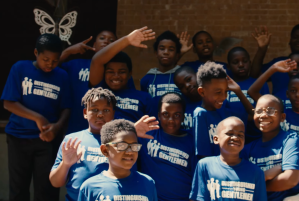
West Philadelphia teacher Dwayne Frazier started an afterschool club where students suit up and learn how to become ‘Distinguished Young Gentlemen.’ #philly#goodnews
One student puts it plainly: “The first time I ever wore a suit was when I joined the Distinguished Young Gentlemen. It feels good. I think I look handsome in it.”
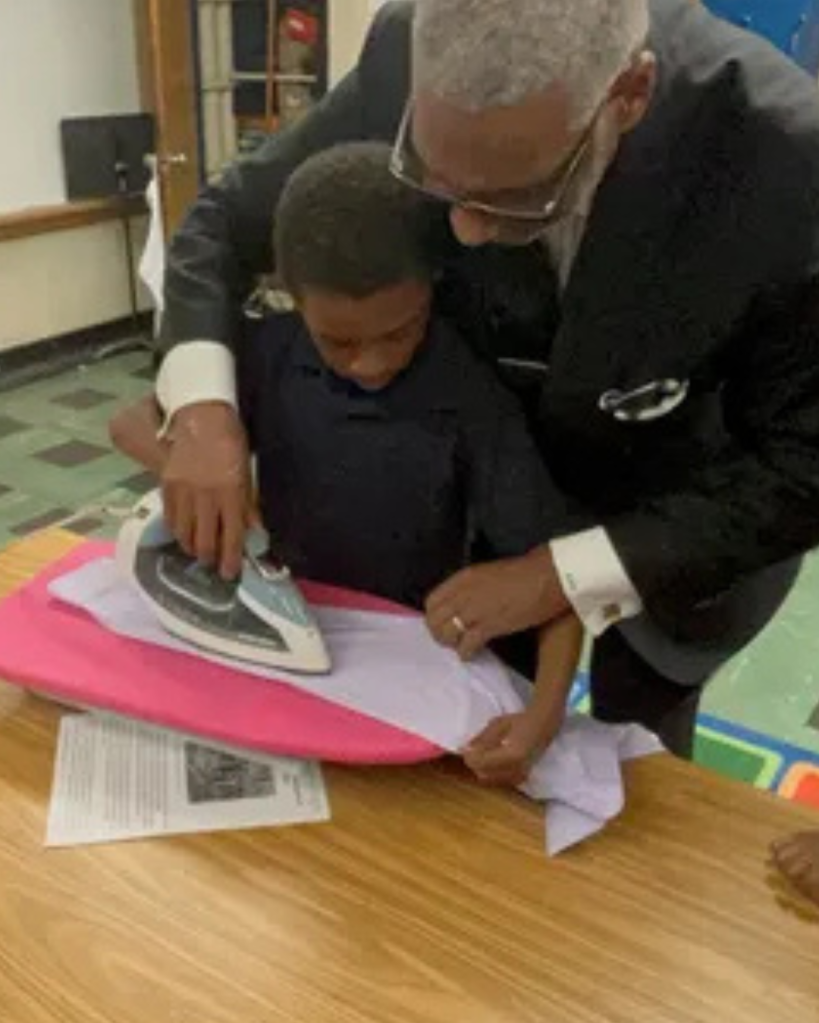
At the heart of all this is Dwayne Eric Frazier—a teacher, retired firefighter, and ordained reverend. He built the Distinguished Young Gentleman club (DYG) from scratch, transforming it from an after-school initiative into a registered 501(c)(3) nonprofit dedicated to impacting lives well beyond the classroom.
Meet the man behind the mission
Growing up in North Philadelphia, Frazier’s father taught him how to tie a necktie, polish his shoes, and look people in the eye while speaking. Those lessons stuck, following him through military service—three years of active duty in the U.S. Army and six years in the Air National Guard—and through a 26-year career with the Philadelphia Fire Department.
After retiring from the fire department in December 2019, Frazier returned to school for his master’s in early childhood education at Lincoln University. In 2020, he began teaching elementary classes, building on his B.A. in African American studies from Temple University and an M.A. in religion from Cairn University.
DYG’s roots go back to 1996, when Frazier coached a youth basketball team called the “Distinguished Gentlemen” and used the sport to foster etiquette among Philadelphia children. The idea stayed with him, and in 2021, with support from volunteer Gordon Stewart Harrison, he formalized it as an after-school club at Cassidy Elementary.
He also credits Sleman Clark, a Temple University student who ran a mentorship camp in the neighborhood where he grew up in the 1970s, as his inspiration. That early experience of being seen and guided by an older person planted a seed that took decades to bloom.
More than a suit
The dress code matters at DYG, but the curriculum goes much deeper.
The club meets weekly after school, with students required to wear suits, neckties, and dress shoes every other week. Frazier models this daily, viewing disciplined dress as a silent statement: “When you dress right, you don’t have to say a word—it speaks for you.”
Professional etiquette: firm handshakes, strong eye contact, punctuality, how to carry a wallet, and how to dress for job interviews.
Respect and character: how to treat women, emotional regulation, and self-discipline.
Appearance and presentation: necktie-tying, shoe-polishing, and what it means to show up prepared.
Career awareness: exposure to professions beyond the ones visible to kids in their neighborhood.
Emotional intelligence is central. As Frazier says: “It’s about manners, appearances, and self-respect. Learn how to think before they speak, not react with emotions.”
He describes the program’s core values as “respect, responsibility, reading, and resilience.”
Impact beyond the classroom
Field trips are where Frazier’s vision comes into full focus.
DYG has taken students to the White House and United States Congress for civic education. In February 2024, they toured the 6abc Philadelphia newsroom, where they met the station’s general manager and on-air talent. They also visited the WDAS radio station and spoke with on-air personality Patty Jackson, who discussed what a career in broadcasting can look like.
The most ambitious trip happened in October 2025: a multi-day journey to Atlanta. DYG spent months planning and fundraising for the trip. In July, Frazier reached out to the public on Classix 107.9 FM to explain why he chose Morehouse College as the destination:
“I always wanted to go to Morehouse College. It’s an HBCU—it’s the only Black male college in the country—and it promotes positivity. I wanted to take the boys to see that.”
From October 9 to 13, the group visited Morehouse College, Clark Atlanta University, the Martin Luther King Jr. Center, Tyler Perry Studios, and The Coca-Cola Company headquarters—driven by the idea: “If you can see it, you can believe it.”
Showing West Philadelphia elementary school students the campus of a prestigious HBCU gave them a tangible, lived sense that higher education is a path available to them.
After returning, one student said he wanted to become a lawyer. Another added, “I act like a gentleman, I think like a gentleman, and I look like a gentleman.”
Breaking the cycle
Cassidy Elementary serves a community in which 99% of students qualify for free or reduced-price lunch, and 86% are Black or African American. DYG’s focus is breaking cycles of poverty and inequality by equipping boys with social and interpersonal skills. The goal is clear: to help every participant succeed in life, no matter the environment.
Frazier clearly distinguishes between the cultural influences working against young boys and what DYG aims to build.
“When we look at society today, and what the culture is doing to our young boys, we get to reel them back in and give them the basics,” he said in a 2025 feature for 6abc Philadelphia. “Basic things like coming on time. When you see a person, look them in the eye, shake their hand.”
For 8th grader Safiy Salley, the program is “a very big blessing to actually be involved in something that could really change my life.” His classmate Lance Epps, reflecting on the visit to 6abc Philadelphia, said, “It shows you’re more than you’re presented in your regular clothes. I think to myself, ‘Should I wear a suit every day?’”
That question—and the fact that a middle schooler in West Philadelphia is asking it—speaks volumes about what DYG truly represents.
A community that shows up
DYG relies on donations and volunteers. The organization is officially registered as Distinguished Young Gentlemen of America Inc. and holds 501(c)(3) nonprofit status. Contributions help fund field trips, provide students with suits, and sustain the program week after week. If this story moved you, visit DYG’s website to donate or learn more.
DYG shows that with one person’s vision—and a suit—lasting change is possible.
Have you ever been in a meeting where something appeared…off, but you couldn’t explain why? That subtle feeling is the Icelandic concept of intuition known as InnSæi (pronounced “in-sy-ay”).
In our hyperconnected world, we’ve grown distant from this inner wisdom. Notifications ping, feeds scroll endlessly, and information floods in from every direction, taking us far away from InnSæi.
To do so, it’s worth asking: what if you could reconnect with this lost sense? What if you could tap into this hidden intelligence to make better decisions, lower stress, and handle life’s uncertainties with more confidence?
This brings us to InnSæi. Let’s explore what it means, why it’s more relevant than ever, and how you can begin cultivating it today.
The true meaning of InnSæi
The word InnSæi combines two Icelandic roots: Inn (meaning “inside” or “inward”) and Sæi (to see, also evoking “sær,” meaning “sea”). This beautiful, poetic compound reflects three connected aspects of intuition.
A person sits in front of the ocean with their back to the camera. Photo credit: Canva
The sea within
This refers to the ongoing activity of your unconscious mind: a place of imagination, vision, and quick pattern recognition that works below conscious awareness. Neuroscientist Joel Pearson describes intuition as “the learned, productive use of unconscious information.” Your mind is constantly active, continually connecting ideas, like a steady, ever-moving current. Research shows that our brains begin processing decisions up to seven seconds before we are consciously aware of them.
To see within
Self-awareness, also known as metacognition, is like a mirror for your mind, allowing you to clearly observe your thoughts, feelings, and reactions. It helps you differentiate genuine intuition from fears, biases, or wishful thinking that can obscure judgment. Studies show that developing metacognitive skills improves emotional control and boosts decision-making. By turning your focus inward, you can block out the noise and pay attention to what truly matters in your inner world.
To see from the outside
This dimension represents an inner compass, or the natural competence to steer life’s uncertainties with inspired confidence. It focuses less on strict rules and more on staying true to your authentic values and deeper intuition. This compass provides clarity, focus, and fortitude, guiding you through the most chaotic times.
Why intuition is more important than ever
We live in an era of constant information overload. Today, an average person consumes more data in a single day than someone in the 15th century did in a lifetime. Our attention has become a limited resource, continuously pulled by content algorithms, 24-hour news cycles, and endless virtual distractions.
Three children play with a tablet. Photo credit: Canva
This nonstop flow of information can drown out your intuition. It creates a disconnect from your body, your internal signals, and the indicators that could guide you toward the right path. As Icelandic author and intuition expert Hrund Gunnsteinsdóttir notes, “We’ve outsourced our inner expertise.”
Intuition embodies more than just a desirable trait; it is a key part of innovation, creativity, and effective leadership. A 2017 study found that Nobel laureates see intuition as a key factor in their revolutionary findings. Similarly, business leaders often credit their most successful decisions, especially in uncertain or urgent situations, to their gut instincts.
Intuition is like a muscle—you can strengthen it through practice.
Try this: Take a few slow, deep breaths. Put one hand on your stomach and notice its movement with each inhale and exhale. Ask yourself what you are sensing—warmth, tension, calm, or unease. Name these feelings silently or out loud. Notice any changes as you breathe and pay attention to what your body is telling you. Do this daily to make the signals more familiar.
Ask yourself simple, honest questions: How am I feeling today?Is this decision aligned with who I am right now? Notice whether your stomach feels at ease or tense.
With regular practice, your body’s internal signals grow clearer.
2. Keep a daily journal (5-15 minutes)
Stream-of-consciousness journaling is a profoundly effective way to gain mental clarity. Letting thoughts drift freely onto paper without editing or restraint creates mental space. Research shows that handwriting improves clarity and memory more than typing.
Someone writes in their journal. Photo credit: Canva
Try this: Set a timer for 5 to 15 minutes and write without stopping. Do not analyze, censor, or judge what you write—just keep the pen moving. If you hit a blank, write “I don’t know what to write” repeatedly until another thought appears. Afterward, briefly review what you wrote and make a note of any emotions or physical sensations you notice.
Over time, you’ll begin to observe patterns: recurring fears, internal critical voices that aren’t yours, or repetitive thought loops. Building this awareness helps you distinguish between true intuition and mental chatter. As you write, pay attention to your body. Observe physical reactions to your ideas.
3. Be mindful of what captures your attention
Your focus is the gateway to intuition. It shapes your inner world and your perception of reality. Yet, we rarely notice what captures our attention during the day.
Try this: Carry a small notebook throughout your day. When something captures your attention—a phrase, a color, or a strong emotion—immediately write it down, noting the time and place. Keep this up for a week.
A woman writes in her journal. Photo credit: Canva
At the end of the week, review your notebook. Select 10 words or phrases that stand out most. Write these in a vertical list on a new page. Spend two minutes simply observing the list—do not analyze. Notice if feelings, ideas, or connections come to mind. Write down any motifs or impressions that arise.
Flow is the magical state where you forget about time and self, fully immersed in what you’re doing. Research shows that in states of flow, the brain decreases activity in executive control regions and increases activity in sensory areas, creating space for intuitive insights to surface.
A woman in a black dress holds a scarf in the wind. Photo credit: Canva
Try this: Select a task that is meaningful but slightly challenging for you. Set a timer for 60 minutes. Remove all potential distractions (phone, notifications), and consider playing only instrumental music. Focus on the task without stopping to judge or edit. Afterward, take three minutes to note how you felt and any thoughts that came to you during the session.
Gunnsteinsdóttir used this technique when developing a strategy for her work on InnSæi. She downloaded a template, set a timer, and let her vision flow onto the page. “I didn’t stop to think about what I was writing; I simply allowed what emerged to flow,” she explains. After 60 minutes, she read what she had written and made only minor tweaks.
After your flow session, reflect in your journal: Did you lose sense of time? What would you do differently next time? Did this state help you access your inner compass?
Charting your way forward
In tough times, a strong InnSæi is vital. Trusted intuition anchors you and yields richer guidance.
Begin with one small new practice: spend five minutes on intentional breathing each morning, or write a journal entry at night thinking about how your body felt that day. Keep a notebook for tracking observations that catch your attention. Schedule one 60-minute flow session each week. Track your progress in your journal and review it weekly to notice changes or patterns.
A person in a white t-shirt and colorful hat sits in front of the water with their back to the camera. Photo credit: Canva
With practice, your inner signals grow clearer. Observation becomes sharper, decisions more confident, and you handle uncertainty with ease. Your ever-present intuition is a steady guide. Will you make space to listen?
Begin now—your inner compass is prepared to guide you.
Torchy Swinson, a self-described great-grandmother of seven, has figured out a formula for imparting wisdom in both a heartfelt and hilarious way. In fact, her effortless ability to chat with her social media audience has garnered her over one million followers on TikTok alone.
Her hook is this: she begins each clip with the line, “I was gonna tell you something,” which sounds like the elderly loved ones so many of us personally know. The idea is that, perhaps, she thought of something to say, forgot it, and then remembered again. This is followed by her thoughts on life or just a story about her day.
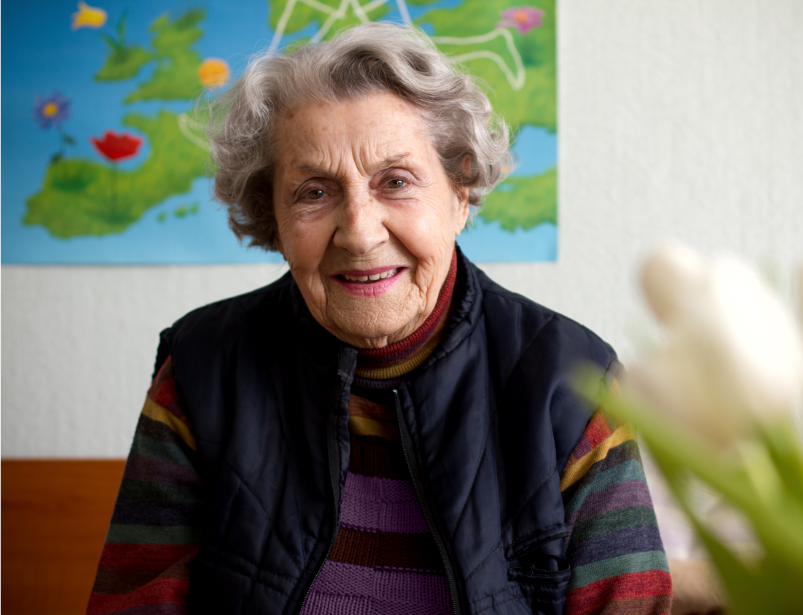
A smiling elderly woman. – Photo credit: Canva Photos
In one viral video (with over 1.7 million views and nearly 63,000 likes), she simply talks about something she learned in school. Her Southern accent in full force, she says, “I was gonna tell you something. Y’all I’m so glad that I learned about parallelograms instead of taxes when I went to school. Cuz it comes in so handy, this parallelogram season.” She then adorably rolls her eyes and shakes her head.
Many on Facebook can relate.
“We were talking about that yesterday. How kids are not taught to write a check and balance it,” someone comments.
Another commenter goes even further, writing, “The amount of times that fractions and decimals have saved my life is incredible! I am so glad they taught me this rather than investments and retirement funds. On another note, can I just say when you pop up and I hear that ‘I was gonna tell y’all something….’ it just makes my day. It’s so refreshing to hear someone else having the same thoughts and feelings regarding these insane times. I sure love you!”
In an interview with First Alert 7, Swinson explained that her oldest great-granddaughter set her up on TikTok in 2020. Thinking she would share a joke or a poem, she rechecked a few months later to find she had become quite popular.
We talked to @Torchy Swinson yesterday about how she got started on TikTok tune in to the newscasts tonight to see our Hendricks Hero! community hero fyp permianbasin westtexas
In another clip, Swinson begins with her standard, “I was gonna tell you something.” She leads us to believe this might be a serious post, but it takes a turn: “I may look alright on the outside. But inside, I’ve already had to say ‘bless your heart’ three times.”
An Instagrammer lovingly responds, “Bless your heart every moment of every day from an old TikTok follower from way back.”
Some of her videos cite biblical Psalms, which her audience greatly appreciates. At other times, she simply offers good old-fashioned advice about aging:
“I was gonna tell you something. I just reached the last years of the ‘I’ll be so glad when…’ I wasted so much time on that. ‘I’ll be so glad when they’re out of diapers. I’ll be so glad when they start school. I’ll be so glad when they’re out of school. I’ll be so glad when this, when that…when we can retire.’ If I could tell you one thing, and I’m not trying to be that old wise woman giving you advice, but if I could tell you one thing. Don’t postpone joy. Find your joy in what’s happening today, cuz that’s where it lies.”
Sometimes sharing joy really is the gift that keeps on giving.
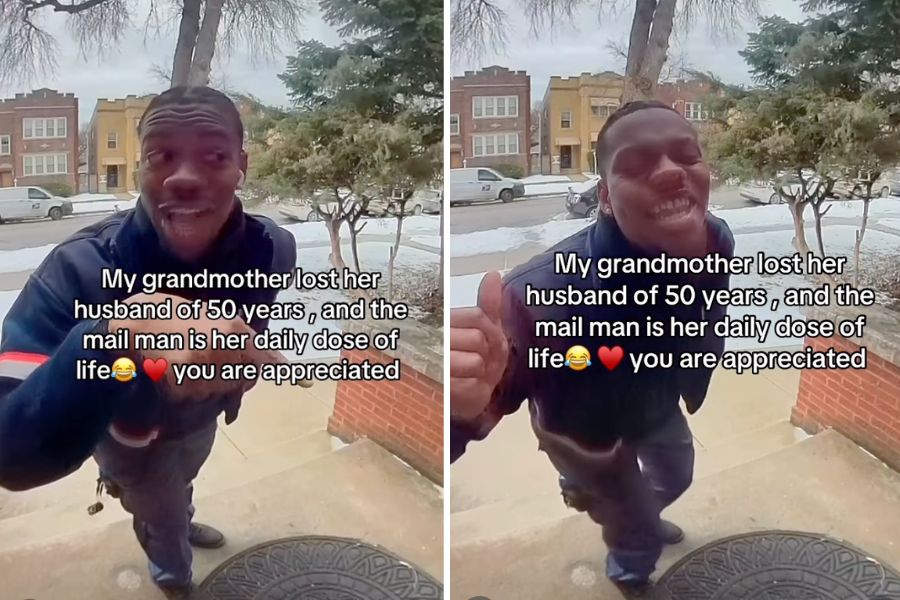
For 23-year-old mailmanLavonte Harvey, joy was found every day along his delivery routes as he sang tunes while dropping off letters and packages. Clearly, he wasn’t the only one enjoying it. As Whitney Cumbo shared on Instagram, Harvey was her grandmother’s “daily dose of life,” especially after she had lost her husband of fifty years.
That’s why Cumbo knew she had to ask Harvey to sing a special song for her grandmother’s birthday. Harvey agreed, and a video of his sweet serenade took off online, garnering more than 14 million views.
It’s easy to see why it resonated with so many. Between Harvey’s angelic vocals, generous spirit, and genuine kindness, there’s so much to love here.
“He has such a beautiful voice …… you can tell he is such a kind soul,” one viewer wrote.
“Renewing my faith in humanity one song at a time. What a star!!” added another.
But going viral was only the beginning. After learning that Harvey endured a daily two-and-a-half-hour commute, Cumbo, a financial literacy teacher, set up a GoFundMe for him. It quickly raised enough money to purchase a new truck, cutting his commute to a much more feasible half hour.
“I’m able to walk my dog now in the morning, come home and feed him in time,” Harvey said, according to People. “I’m able to have more of a personal life. It’s not all just work-life based.”
Harvey would later open up about his own mental health, sharing that he struggles with depression, often in silence. For him, singing was a small way to “keep pushing in healthier ways” and, hopefully, uplift others in the process.
After being on the receiving end of such “genuine support [and] love,” Harvey was further inspired to keep spreading joy in new ways, including starting a clothing company.
“For me, I just want to keep spreading hope,” he said, as reported by People. “Be your true, authentic self, don’t allow anyone or nay-sayers tell you who you can or cannot be. Even when no one is watching, be who you are.”
What a lovely sentiment. You never know what magic awaits when you share a piece of your heart with the world. Whether it leads to viral fame, a new car, or simply making someone else’s day, it’s always worth it. May we all find the motivation and courage to share our truest selves today.
While caring for the elderly can be extremely rewarding, it comes with a specific set of challenges that aren’t often discussed. Delivering high-quality care is vital for anyone in this position, but this must come with a level of patience many of us might take for granted.
While visiting my own mother in the senior living home where she resides, I was able to sit down for heart-to-hearts with a few of the caregivers who work for various residents. They opened up in a way I found beautifully vulnerable and surprising. Here are their stories. (At their request, I have changed their names.)
Setting boundaries with families
Caregiver discusses a patient with another family member. / Image via Canva
A woman named Veronica shared that she often feels stuck in the middle of family disputes. “I don’t like it when I’m just trying to do my job and take care of clients and I’ve got 20 people calling me. Sisters, wives, brothers, daughters, sons, and even best friends. Everyone has an opinion. I wish they’d have family meetings and decide what to do without sticking me in the middle.”
Another woman, Anne, added her two cents, saying, “Family dynamics are tricky. I want to respect how hard it is to age on everyone in the family, without feeling like I’m inserting myself in the drama.”
They want to be asked about their day
A caregiver takes a break. / Image via Canva
Anne shares that she sometimes feels invisible. “Sometimes I wish they would ask how things are in my life. What my hopes and wishes are. I would like it if they understood that sometimes I need a day off, or that my body hurts sometimes.”
On a resource site for caregivers, one of the helpful tips is finding the balance between helping others and self-care. This means paying attention to their own mental and physical health needs. “Maintaining your health is crucial for being able to care effectively for your loved one. Take care of your own health by focusing on nutrition, exercise, and sufficient rest. Regular self-care routines can help you stay strong and resilient in the face of caregiving demands.”
Mental Health America also has a few articles dedicated to self-care as a caregiver. “If you cannot remember the last time you slept properly, ate adequately, exercised weekly, or did not feel guilty about taking a sick day, then you’re probably feeling the impacts of caregiving on your mental and physical health. Ask yourself: ‘What could I do to replenish myself?’”
They go on to give tips: “Is there any small action that could improve my life or make me feel more content with my present state? If you’re treating yourself fairly, the answer should be yes. Everyone always has some need that could be better fulfilled—caregivers are no exception.”
Sometimes, especially after a caregiver has worked with a person for more than a month or two, they develop a true bond. While the connection is genuinely satisfying, it can make the loss of that patient even harder.
Mark, who has been working with senior citizens for two decades, explains how devastating the losses can feel. “I worked with a woman named Evelyn for seven years. She passed away at the age of 94. It’s especially hard because when you’re in this business, you might have three clients pass in the span of a few weeks.”
Veronica added, “Sometimes people forget how much we love the elderly we work with.”
These sentiments come back to decompression. Processing just one loss can be difficult. Having to do so for multiple people in a short amount of time takes extra healing time for everyone.
The resource site also notes how important it is to take breaks when needed. “Caregiving can be overwhelming, so taking respite breaks regularly is important. These breaks can help prevent burnout and give you time to recharge. Schedule time for yourself to engage in activities that you enjoy and that help you relax.”
Disney movies have been a part of the American childhood since the studio released its first feature-length animated film in 1937, Snow White and the Seven Dwarfs. Ever since, Disney films have been known for their catchy, clever songs.
On Reddit, logophiles and Disney fans shared advanced vocabulary words they first learned after hearing them in Disney songs.
“Wow we used to be UTTERLY SPOILED with the level of internal rhyme and skillful poetics that went into kid’s songs,” one person wrote.
These are 14 vocabulary words people learned as kids from Disney songs that have stuck with them to this day:
Genuflect
Definition: “To bend the knee; to touch the knee to the floor or ground especially in worship; to be humbly obedient or respectful.” Movie:Aladdin Song: “Prince Ali” Lyrics: “Prince Ali, fabulous he, Ali Ababwa Genuflect, show some respect Down on one knee”
Meticulous
Definition: “Very careful about doing something in an extremely accurate and exact way; showing or requiring extreme care and attention to detail.” Movie: Lion King Song: “Be Prepared” Lyrics: “So prepare for the coup of the century Be prepared for the murkiest scam (Ooh, la, la, la!) Meticulous planning (We’ll have food!) Tenacity spanning (Lots of food!) Decades of denial (We repeat!)”
Mediocrity
Definition: “Mediocre, of moderate or low quality, value, ability, or performance; ordinary, so-so.” Movie: The Sword in the Stone Song: “That’s What Makes the World Go Round” Lyrics: “You must set your sights upon the heights Don’t be a mediocrity Don’t just wait and trust to fate And say, that’s how it’s meant to be”
Expectorating
Definition: “To eject from the throat or lungs by coughing or hawking and spitting.” Movie: Beauty and the Beast Song: “Gaston” Lyrics: “No one hits like Gaston Matches wits like Gaston In a spitting match, nobody spits like Gaston I’m especially good at expectorating Ten points for Gaston!”
Prattle
Definition: “Trifling or empty talk; a sound that is meaningless, repetitive, and suggestive of the chatter of children.” Movie: The Little Mermaid Song: “Poor Unfortunate Souls” Lyrics: “The men up there don’t like a lot of blabber They think a girl who gossips is a bore Yes, on land it’s much preferred For ladies not to say a word And after all, dear, what is idle prattle for?”
Dote
Definition: “To be lavish or excessive in one’s attention, fondness, or affection —usually used with on.” Movie: The Little Mermaid Song: “Poor Unfortunate Souls” Lyrics: “Come on, they’re not all that impressed with conversation True gentlemen avoid it when they can But they dote and swoon and fawn On a lady who’s withdrawn It’s she who holds her tongue who gets her man”
Cabaret
Definition: “A restaurant serving liquor and providing entertainment (as by singers or dancers).” Movie: Beauty and the Beast Song: “Be Our Guest” Lyrics: “We’ll prepare and serve with flair A culinary cabaret You’re alone And you’re scared But the banquet’s all prepared”
Pachyderms
Definition: “Any of various nonruminant mammals (such as an elephant, a rhinoceros, or a hippopotamus) of a former group (Pachydermata) that have hooves or nails resembling hooves and usually thick skin.” Movie: Dumbo Song: “Pink Elephants on Parade” Lyrics: “I can stand the sight of worms And look at microscopic germs But technicolor pachyderms Is really too much for me”
Coup
Definition: “A sudden decisive exercise of force in politics and especially the violent overthrow or alteration of an existing government by a small group.” Movie: The Lion King Song: “Be Prepared” Lyrics: “You won’t get a sniff without me! So prepare for the coup of the century Be prepared for the murkiest scam (Ooh, la, la, la!)”
Qualm
Definition: “A feeling of uneasiness about a point especially of conscience or propriety; a sudden feeling of usually disturbing emotion (such as doubt or fear).” Movie: The Hunchback of Notre Dame Song: “The Bells of Notre Dame” Lyrics: “You can lie to yourself and your minions You can claim that you haven’t a qualm But you never can run from Nor hide what you’ve done from the eyes The very eyes of Notre Dame”
Reprimand
Definition: “A severe or formal reproof; criticism for a fault; rebuke.” Movie: The Little Mermaid Song: “Part of Your World” Lyrics: “Bet’cha on land they understand Bet they don’t reprimand their daughters Bright young women, sick of swimmin’ Ready to stand”
Precocious
Definition: “Exhibiting mature qualities at an unusually early age; exceptionally early in development or occurrence.” Movie: Mary Poppins Song: “Supercalifragilisticexpialidocious” Lyrics: “It’s supercalifragilisticexpialidocious Even though the sound of it is something quite atrocious If you say it loud enough, you’ll always sound precocious Supercalifragilisticexpialidocious”
Nabob
Definition: “A provincial governor of the Mogul empire in India; a person of great wealth or prominence.” Movie: Aladdin Song: “Friend Like Me” Lyrics: “Mister Aladdin, sir, have a wish or two or three I’m on the job, you big nabob“
Nom de plume
Definition: “A name that a writer uses instead of their legal name; pseudonym; pen name.” Movie: Aladdin Song: “One Jump Ahead” Lyrics: “One jump ahead of the slowpokes One skip ahead of my doom Next time gonna use a nom de plume“
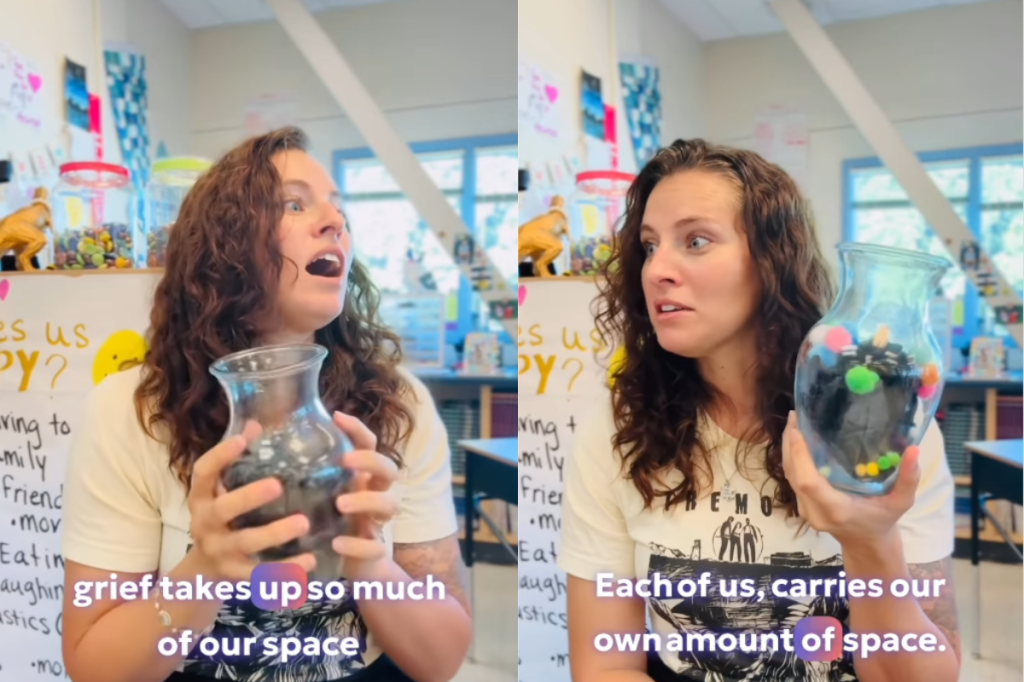
Fourth grade teacher Miss Ryan Brazil explains what grief is to her students using a vase. – Photo credit: Images courtesy of Instagram/@miss.brazil_28 (used with permission)
Grief is a universal experience that touches everyone—from kids to adults. And for fourth grade teacher Ryan Brazil, she used her own recent loss to help educate and open up to her students about grief.
In a touching video, Brazil tenderly explained what grief is to her students after they finished reading A Kids Book About Grief by Brennan C. Wood. She tells her class, “More than half our class is in tears and is being vulnerable and brave and sharing stories of their own grief.”
She then pulls out an empty vase that she explains represents her “brain and her heart,” before adding: “I normally have more space for patience, focus, and calm. I showed them how little things that happen during the day like noise, questions, mistakes are like colorful pom poms filling up the vase. Normally, there’s plenty of space to handle those things.”
However, due to grief, she added that she has less space—and put a crumpled up piece of black construction paper in the vase to demonstrate the space grief can occupy in a person’s heart and mind. “It can make you more tired, less patient, and quicker to feel overwhelmed. I wanted my students to understand that if I seemed off lately, it wasn’t about them. It’s just my brain and heart are doing a lot of extra work right now,” she added in the video caption. “It turned into one of the most healing moments I’ve ever had in my classroom.”
Brazil tells Upworthy that the lesson deeply impacted not just her students, but herself. “My sister passed away recently and very unexpectedly, so I’ve been having a difficult time. I was feeling overwhelmed and in pain, and I needed a way to discuss what was happening in my brain and my heart,” Brazil says.
So, she decided to share with her students rather than hide. “Discussing grief with my students changed something in our classroom. So many kids opened up about their own losses,” she says. “Some were more recent and some were before they were born, but they were still hurt by them. There was this release of emotions that felt like they were probably holding on to those feelings for a long time. We really rallied around each other and were there for each other. It was really helpful for me, personally. I felt understood in that moment and part of a community.”
She hopes that her video will encourage others (including educators) to open up to students. “I am not an expert (on most things, honestly), but I don’t think that’s what kids need,” she adds. “They don’t need us to be perfect, they just need us to give them space to feel and understand that feelings are welcome. We all learned that grief isn’t something to hide. It’s something we can learn to hold onto together.”
Expert tips for how to teach kids about grief
Looking for more ways to explain what grief is to your kids? These are five tips from grief experts to help.
Name the feelings, not just the loss
“Kids often mirror our emotions but don’t always have the words for them. Instead of avoiding words like sad or angry, model using them out loud: ‘I’m feeling sad today because I miss Grandpa’,” Angie Hanson, a certified grief coach, educator, and author of Chapters of a Resilient Heart, tells Upworthy. “This helps kids name and normalize their own emotions. Grief becomes less scary when it’s spoken about openly.”
Tip #2: Use simple, honest language
“It is commonplace to use words like ‘passed away’ or ‘lost’ when talking about death, but these words can be confusing and add to misconceptions and anxiety for young children,” Jessica Correnti, MS, Certified Child Life Specialist at Kids Grief Support and author of The ABCs of Grief, tells Upworthy. “It is recommended to use concrete, factual words like ‘death,’ ‘died,’ and ‘dying’ even though these may feel blunt or difficult to say. Grief is a small word, but a very confusing and layered experience.”
Create a “heart space” ritual
“Like the vase activity, give grief a visual home. Create a small jar or box called a heart space,” says Hanson. “When they miss someone, they can place drawings, notes, or keepsakes inside. This teaches them that love doesn’t disappear, it changes form, and it’s okay to keep that connection.”
Keep grief in the conversation, not just the moment
“Children revisit grief as they grow. Keep their loved one’s memory woven into everyday life,” says Hanson. “Bake their favorite cookies, tell stories, or say, ‘I wonder what Grandma would think of this.’ It shows that grief isn’t a one-time event but an ongoing expression of love and remembrance.”
Recognize that you may be grieving too
“It is important for adults to have trusted spaces and people to confide in about their grief reactions so they can be present and available for their child(ren),” Dr. Micki Bruns, Ph.D., a childhood bereavement experts and CEO of Judi’s House/JAG Institute, a childhood bereavement center in Denver, Colorado, tells Upworthy. “At the same time, adults should normalize grief reactions and model healthy coping.”
This article originally appeared last year. It has been updated.
Flying on airplanes with dozens of perfect strangers is, in many ways, a social experiment. We’re forced to sit in seats that aren’t big enough for most of us, uncomfortably close to people we don’t know (some of whom are stressed out or anxious), with unclear social etiquette rules we haven’t all collectively agreed upon.
And yet we do it because the miracle of human flight enabling us to travel in hours to places that used to take days, weeks, or even longer, is too awesome to pass up. Most of us have things we’d prefer our fellow passengers do or not do to make the experience better for everyone, however, so we asked our Upworthy Facebook audience, “If you could enforce one social rule during flights, what would it be?” The responses were largely what you might expect and you can see them below, but there was one unexpected comment that stood out. The rule that received the most love, with over 1,200 likes, was this one:
Any dog on the plane has to visit every passenger that requests
While not everyone loves dogs, most people do. And what would make a flight more enjoyable than getting to meet a dog on board? Perhaps we can start a petition to make cabin doggy visits for anyone who wants them an official thing…
Other responses were helpful reminders of both common courtesy and somewhat standard airplane etiquette for those who might not fly often enough to be familiar with it. In addition to the “meet the dog” rule, here are 10 more social rules people wish they could enforce on flights:
Be nice to flight attendants
Imagine being responsible for both the comfort and safety of 100+ people from different places with different needs in a cabin hurtling through the sky 30,000 feet above the Earth. Flight attendants deal with a wide array of people day in and day out, and we should all make sure we treat them with the kindness and respect that they deserve.
Middle seat gets the armrests
Nobody should be hogging the armrests, but if anyone has a right to them, it’s the sacrificial soul who has to sit in the middle seat. (And window seat controls the window, in case that’s not common sense.)
No matter your age, headphones to listen to things on a flight are a must. Photo credit: Canva
Headphones, please
No one wants to listen to your video but you. Imagine if everyone listened to movies or YouTube videos or whatever without headphones—total social chaos. In public and on planes, use headphones to listen or watch something.
No ‘manspreading’
We all know the legroom on flights has become practically non-existent, and for people with long legs it can be hard to not bang your knees up against the seat in front of you. But spreading your legs apart so wide that it infringes on other people’s leg space just isn’t cool. We’re all in the same boat, so we have to respect one another’s space.
Keep your shoes and socks on
There may be an exception here for long-haul flights as long as you keep your socks on and don’t have stinky feet, but bringing a pair of slippers or something is still courteous. But definitely keep your socks on and be aware that you might not be able to tell if your own feet smell.
One overhead bag per passenger until everyone’s got their luggage settled. Photo credit: Canva
Don’t put a second bag or a jacket in the overhead bin until everyone has put their first bag in
Overhead space is limited, so wait until everyone has had a chance to get their carry-on into that space before adding more than your one bag to it. Once everyone’s settled in, feel free to add whatever overflow you have.
Try not to fart
We’ve all been on a flight where someone let one rip and made everyone’s eyes water. Unless you have zero choice in the matter, refrain from dropping gas bombs on your fellow passengers. We’re all human and humans fart, but an airplane cabin is a tight spot where people can’t get away. At least take it to the lavatory if you can.
Be aware of smells in general
Come clean and fresh, but not perfumed. Deodorant? Yes, please. Strong cologne or perfume? No. Food that emits a strong odor? Also no.
Even if you know it by heart, please don’t talk during the safety demonstration. Photo credit: Canva
Stay quiet during the safety demonstration
Some people fly all the time and could recite the safety demonstration spiel by heart, but that doesn’t mean everyone is familiar with it. It only takes a few minutes and first-time flyers need to hear it. It’s respectful to the flight attendants to not talk through their presentation and courteous to other passengers who need to listen.
Remain seated until it’s your row’s turn to deplane
On most flights, as soon as the plane arrives at the gate and the seatbelt sign is turned off, people rush to stand up and gather their luggage. But it’s always going to take several minutes to even start getting the first passengers off the plane, and it’s not going to go any faster to crowd into the aisle.
If we all follow these “rules,” flying can be a more pleasant experience for everyone—even our good doggo friends who might be on board.
This article originally appeared last year It has been updated.