A story first shared by Fox 29 in Philadelphia, Pennsylvania, is the epitome of customer service that goes above and beyond.
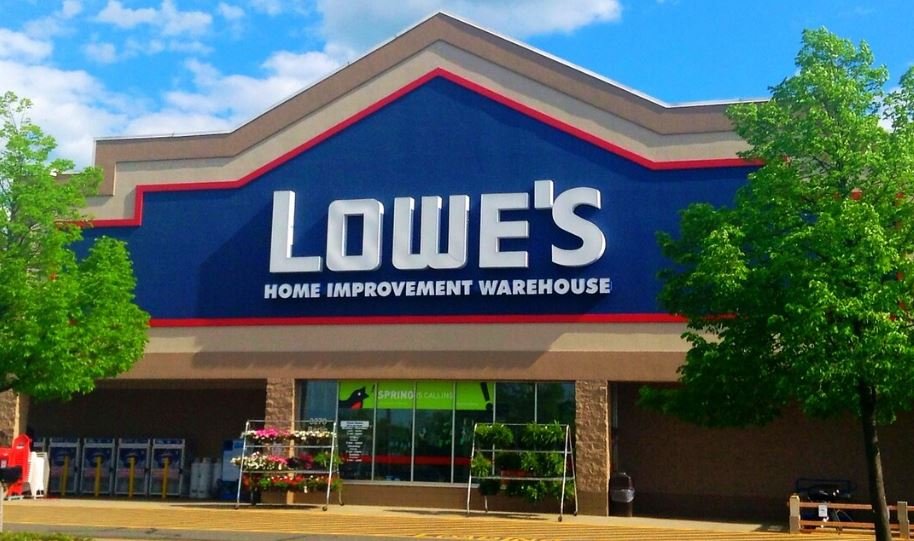
Jessica Getty and her husband, Mark, went to a Lowe’s hardware store in Brookhaven, Pennsylvania, earlier this month to buy materials to help their 5-year-old son, Will, make a significant leap in his development. They were looking to buy PVC pipes to build parallel bars so he could learn to walk.
“He was born very prematurely, just 23 weeks, so as a result, he has quadriplegic spastic cerebral palsy,” Jessica told Fox 29. People with spastic cerebral palsy have difficulty controlling muscles in their arms, legs, trunk and face, making walking difficult.
The Gettys hoped their son could learn to walk by training on a set of parallel bars that would help him safely remain upright while he moved his legs and feet. “One of our goals for William is to get him walking,” Jessica told Fox 29.
When the family got to the PVC pipe section, they asked Lowe’s employee Dave Urban for help, and he quickly realized that the job would require more than cutting a few pieces. “I thought I would just be finding some fittings, making a couple of cuts, and I saw Will, and I found out what we were building,” Urban explained while holding back tears.
Urban got to work cutting and fitting together pipes for the Gettys’ project, and over the course of 30 minutes, he created a parallel bar device that matched their exact specifications.
William even got out of his chair and successfully tested the bars out in the PVC pipe aisle. Urban was moved by the youngster’s drive to learn to walk. “I think you saw that courageous smile of his,” Urban said, adding that he felt a “sense of pride” seeing William stand using the bars he built him. “It keeps getting me,” he said, overcome with emotion.
When parents are raising a child with special needs, they need all the support they can get, and the Gettys were moved that a stranger stepped up to help. “It was really cool,” Mark said, according to The Guardian, with his wife adding, “It was just kindness that touched us and really meant the world to us.”
It’s the type of practical kindness that may significantly impact William’s life.
Since they brought the parallel bars home, Jessica told The Guardian that William has been diligently working with them to learn to walk. The parallel bars help him to step forward, side to side and to pull himself up to stand. After just one day, he could use the bars to walk about 10 feet across the family’s kitchen floor.
Urban says the opportunity to help means as much to him as it did to the Getty family. He hopes his actions will inspire others to help when they can as well.
“Just go the extra mile,” Urban said. “And it just may reward you 100 times back.”
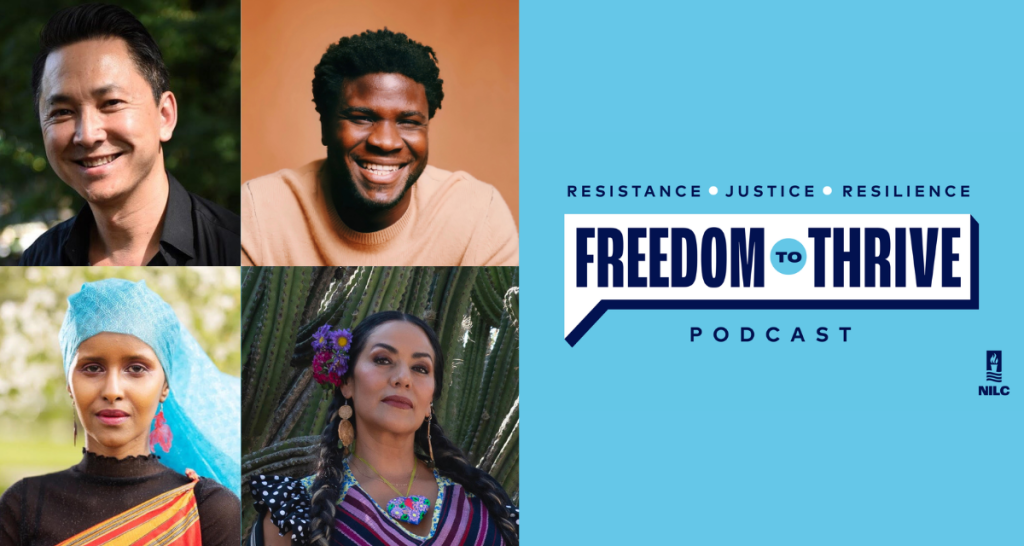
A Somali refugee and current resident of Minneapolis, the multimedia artist and activist draws on her lived experiences to create work that explores trauma, displacement, and resilience. But like so many of the guests on Freedom to Thrive, an award-winning podcast produced by the National Immigration Law Center (NILC), Mansour doesn’t want to focus only on trauma; she also wants to celebrate the unexpected beauty she’s found during difficult experiences.
“One of the beautiful things about tragedies is that it activates hearts, and courageous people are born,” she says. For example, Mansour has noticed more Minnesotans than ever are reaching out to help the vulnerable, after the anti-immigrant crackdowns carried out by the Department of Homeland Security. “They are bringing food, they’re bringing extra clothes, they’re walking with people, and it’s just really beautiful.”
Hector Flores, co-founder of the Las Cafeteras and host of Freedom to Thrive, agrees with her. A child of immigrants himself, he has also seen how hope and hardship often live side by side.
Flores comes from a family with mixed status and is highly aware of the challenges immigrants and refugees in his community face, and how they’re affected by people’s misconceptions. “People want to know about trauma all the time, but we’re more than just undocumented,” he says. “We’re artists, singers, creatives … there’s so much richness in the culture.”
At its core, Flores’ comment is exactly what the Freedom to Thrive podcast is all about: Celebrating immigrants as complex, dynamic individuals, and challenging the dominant narrative that too often reduces them to symbols of hardship.
Launched in 2024, Freedom to Thrive explores heritage, resilience, community, and the ways art and comedy can spark social change. Now in its second season, the podcast continues to feature conversations with immigrants, policymakers, artists, musicians, activists, and more. Recent guests have included comedian Mo Amer, Grammy Award-winning singer Lila Downs, and Pulitzer Prize-winning author Viet Thanh Nguyen.
Where the first season focused on individual stories of identity and belonging, Flores says his goal for season two, where he joins as host, is to “take it to the next level” — using storytelling to highlight “the fact that we’re more similar than different.”
One recent podcast episode drives this point home. In December, Flores interviewed Bryan Andrews, a rising country music star and rural Missouri native who frequently uses his platform to speak about issues affecting immigrant families. At the heart of his message and his songwriting, Andrews says, is the idea that small-town Americans and the rest of the country, including immigrants, have more in common than they realize.
“It doesn’t matter where you’re from,” Andrews says on the podcast. “We’re all trying to make a living and we’re tired of getting railroaded by corporate greed or by politicians who don’t care.”
Rural Americans, Andrews says, are often stereotyped as racist and misogynistic but “the overwhelming majority of people in my home town have love in their hearts.” Media stereotypes often amplify differences and divide, he says, but at the end of the day, “we’re all in this together.”
Flores, who was raised in a working-class immigrant neighborhood in East Los Angeles, had similar thoughts. He says he often sees its residents stereotyped as wealthy, consumerist, and status obsessed. “That exists, but that’s not my life, that’s not my community,” he says. Like small-town Americans, people in the city “just want to work hard and take care of their families. We all want the same thing.”
Although the podcast tackles some heavy issues, each episode’s ultimate focus is how personal and collective struggles can be healed through art, driving home a message of hope and resilience:
Mansour’s episode about her experiences in Minnesota is just one of many examples. Flores asks her,
“What gives you hope for the people creating a home here?”
“The love I feel from other Minnesotans. It is trumping any hate we’re experiencing,” she replies.
CTA: Stream all episodes now on the Freedom to ThriveYouTube channel or the website,here.
The podcast has been nominated for a Webby in the “Belonging & Inclusion” category. You can vote for it to win until Thursday, April 16!
This article is part of Upworthy’s “The Threads Between U.S.” series that highlights what we have in common thanks to the generous support from the Levis Strauss Foundation, whose grantmaking is committed to creating a culture of belonging.
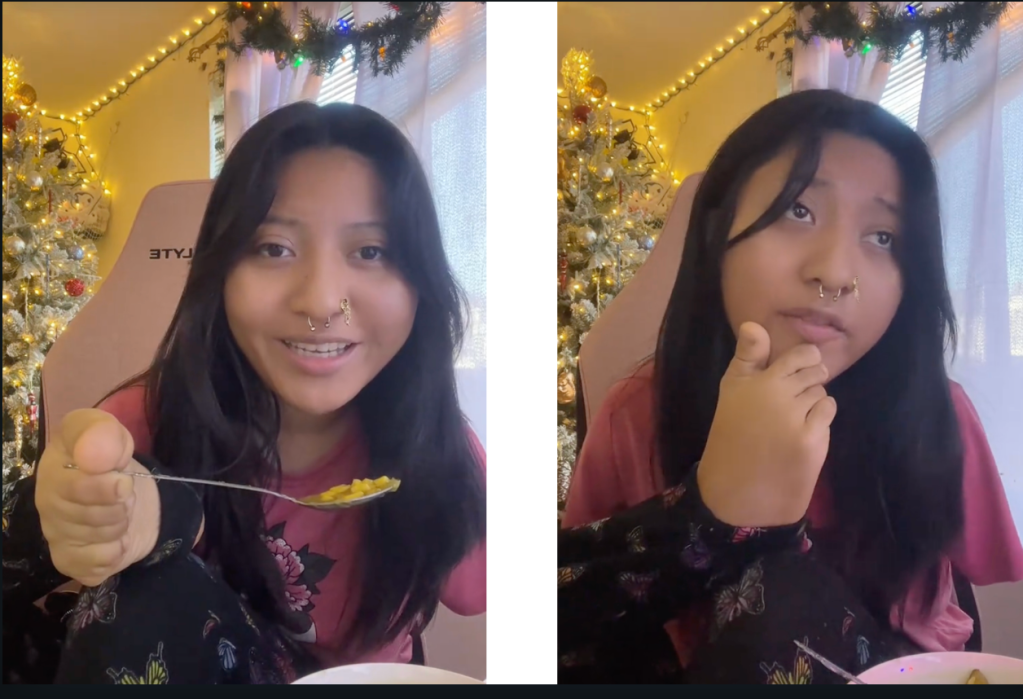
When she was three years old, Jackie Lopez lost her arms in an accident. Growing into adulthood without those appendages, she has learned and trained to use her legs as arms and her feet as her hands to feed herself, make meals, play video games, wrap Christmas gifts, and any other activity a person could do. Throughout her life, people have remarked about how tough her circumstances are and how strong she is, and to all of those people she has one request: Please stop.
“Because I don’t have arms, I get these comments a lot and a lot of people think it’s a compliment when it really isn’t. It’s so annoying and irritating to see and hear all the time,” Lopez explained on social media.
In her video, Lopez shared the three most common comments she receives as a disabled person that aren’t outwardly or intentionally mean, but annoy and actually hurt her. She prefaced her video saying that, while these comments are mostly her pet peeve and other disabled folks may not mind them, it might be a good idea to not say these things to other disabled people either.
“I could never…”
Lopez shared how hearing people say “I could never be like you/use my feet like you/live like you/etc.” really annoyed her because she had no other option but to use her feet as her hands. Saying “I could never” can be interpreted as a form of othering, even though the intention of the comment was good.
“Oh, my problems are suddenly small.”/ “I should stop complaining about my life.”
Lopez shared that this type of comment made her feel guilty, both for herself and for those who say it to her. She explains that just because an able-bodied person’s problems are different, it doesn’t invalidate them. Her having no arms doesn’t make the able-bodied person’s problems go away or mean those problems should be unaddressed.
“Girl, just complain,” said Lopez. “If I were you and I had hands, best believe I would complain, too.”
“God gives the hardest struggle to the strongest people.”
This comment really annoyed and hurt Lopez, especially when she was growing up in the church. Aside from the presumption of faith with a comment like this, the framing of it makes it seem like Lopez’s disability was destined or given as some form of divine “test” after going through a life-altering experience.
“Keep your belief to yourself and don’t put it on me,” she asked. “I went through this, not you.”
Other comments and thoughts
Commenters noted how impressed they were by what Lopez could do with her feet, while other commenters immediately replied to them with versions of, “This is the type of stuff she’s talking about.” In spite of that, several other commenters cosigned Lopez’s feelings with some of them sharing “kind” comments that bothered them:
“While you’re sitting commenting that you ‘couldn’t imagine’ living her life, she’s eating soup and making a TikTok like any other person.”
“I hate when people say ‘You’re such an inspiration’ like in what way have I inspired you? Are you trying to become disabled?”
“‘Suddenly my problems are small’, translation ‘I’m happy that I’m not like you and I see you as your struggles.’”
“‘You’re so strong, I just would’ve died’ Like, oh, okay, so you’d rather choose death than what I went through? What should I do with that information?”
“Those are very valid points. People need to be more considerate about what they say.”
“‘I could never.’ Well yeah, it didn’t happen to you, it happened to her and as we can all see she could and can. You aren’t obliged to make fantasy scenarios to be horrified at.”
“I get so annoyed for you. Even in this current comment section people are saying similar-ish things.”
“Some of them come from a place of kindness, but like you said, it gets to a point where you need to stop infantilizing and pitying every single disabled person you meet by reminding them that their life and their normal is different to everyone else’s.”
Lopez’s video went viral, encouraging her to make a second one with even more “compliments” or “nice” comments that she frequently hears that aren’t boosting or helpful at all.
She ends her video saying that those types of comments have formed into a type of ableism—and she has a point based on anecdotes from others who are blind, paralyzed, or are otherwise differently-abled. Based on hearing these experiences, it’s best for everyone to stop, slow down, and take an intentional beat to consider their words before saying them—even if they have the best intentions.
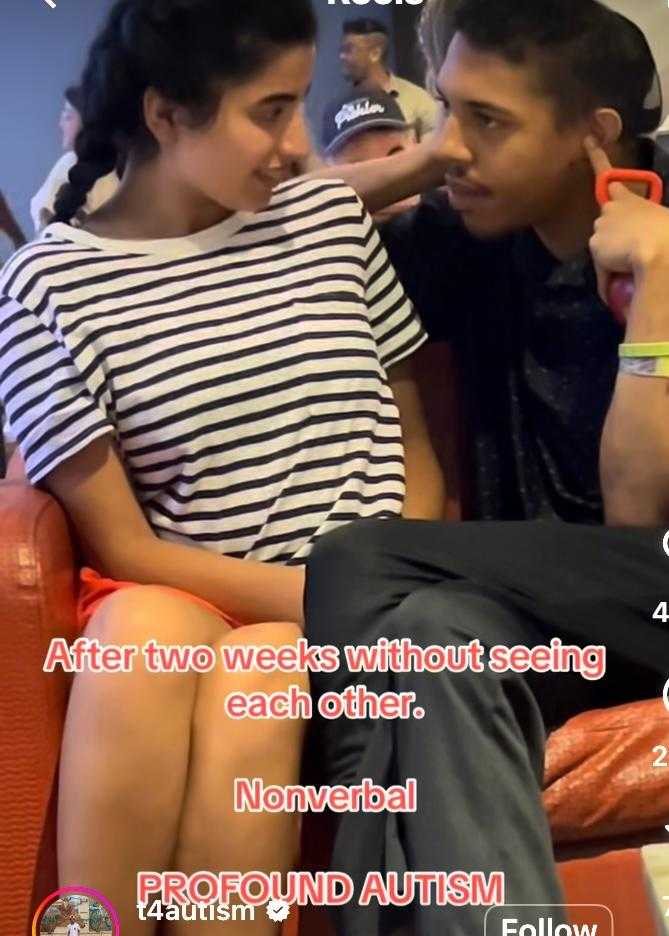
Sometimes love, whether it’s platonic or romantic, cannot be heard—only experienced. Such is the case for Thomas, a non-verbal 20-year-old young man, and his dear friend Sofia, who is 23.
In a beautiful clip posted by t4autism on behalf of Thomas AKA Cubby, we see these two souls reunite at a bowling alley after having not seen one another for two weeks. Sofia and Thomas sit next to each other—one knee touching. They lean in, still keeping a dash of personal space. Their eyes gaze into one another’s in a way that no words could truly capture. They each briefly smile when she looks up at his baseball cap. She gently touches it and then pushes it off. She smiles, and his gaze never wavers.
The camera briefly turns around to Thomas’s proud mother, who simply gives the “I know, right?” look. The chyron reads, “After two weeks without seeing each other. Nonverbal. Profound Autism,” while the song “A Thousand Years” by Christina Perri underscores the moment. Hashtags on the post include: “Happy, love, autism, parents, joy, mom, papa, girl, boy, adulting, T4Autism” and perhaps best of all…”telepathy.”
At nearly half a million likes, over 20,000 people took the time to comment on this video alone, many from people who claim to be neurodivergent themselves. One commenter writes, “This is literally the most beautiful thing I witnessed all year. She looks like a Disney princess, he’s handsome. Her presence is soothing his overstimulation.” Another notes, “They’re not nonverbal, we just can’t hear them.”
This Instagrammer was downright poetic: “She spoke two million and 42 words her own way. He listened to and heard each one.”
Upworthy had the honor of speaking with Thomas’s mother, Shannon Lowe. She shared that Thomas was diagnosed with profound autism at the age of two. “Our journey has been a roller coaster of highs and lows,” she said. “As a family, we’ve worked hard to find a tribe that truly understands our dynamic.”
Of Thomas and Sofia, she notes, they “share a beautiful bond and great affection for one another.”
She also opens up about what profound autism is and the impact it can have on families: “I wish the world understood that profound autism is a very different level of autism. It requires one-on-one care and often comes with self-injury behaviors. Unfortunately, we do not have many champions for this particular diagnosis. We lack legislation, resources, and support. Here in Fort Worth, we currently have a 17-year waitlist, and most of these families are led by single mothers—because only 18% of fathers stay, which adds even more trauma to an already stressful situation.”
But she doesn’t give up. She uses her social media platforms, including her YouTube channel T4Autism, to educate, vent, and exemplify that love knows no bounds. She even wrote a children’s book entitled “Profound Love: Profound Autism,” which she describes as an “invitation to see beyond diagnosis, beyond silence, and into the extraordinary ways love reveals itself—wordless, boundless, and profoundly real.”
On the book’s Amazon page, the description reads in part: “Though Thomas does not speak, he expresses joy, affection, and connection in ways that transcend language. His leaps of excitement, radiant smiles, and warm presence remind everyone around him of the purest form of love.
As Thomas, his family, and their three beloved dogs navigate daily life, their world expands when they meet Sasha and Sofia—two extraordinary young people also living with profound autism. Through shared walks, laughter, and simple moments, an unexpected and beautiful bond blossoms between Thomas and Sofia. Step by step, hand in hand, they discover a connection deeper than words—a love that speaks through smiles, gestures, and presence.”
There are few greater thrills than meeting someone amazing for the first time. So much happens in those first few moments.
Maybe it’s their eyes and the way they sparkle in the light. Maybe it’s their smile and how it makes the corners of their eyes crinkle in just the right way. Maybe. All you know is that with just one look, something is a little bit different. Just as Ed Sheeran says, everything has changed.
For people who see, so much of what is felt in those first few moments comes from the way a person looks. But what if we couldn’t see them? Would we still feel the same way about them after a first meeting?
It’s a real question and one that people who are blind or have low vision get asked a lot. To get a better understanding, we asked a few individuals what they wish sighted people knew about dating them.
1. They may not be able to see you, but first impressions still matter.
“The concept of a first impression in a meeting for us is not quite similar to [what] you are familiar with,” says Florian Beijers, a 24-year-old computer science student from the Netherlands. “You can see the style of their clothes, the way they look … [but] we don’t get these details. There is, of course, someone’s smell, someone’s voice, but they don’t always tell the same story as what you would be seeing … it takes us a bit longer to actually form an opinion on someone.”
Still, if you didn’t make an effort to dress up for the date, if you are uncomfortable, or even if you’re uninterested in the date, it is going to show.
“I don’t have to see their facial reactions to tell if they want to get out of there, if they are bored,” says Tanja Milojevic, 27, who works in the library at Perkins School for the Blind. “I am also interested in how they look to a point … [so] when I meet somebody, I give them a hug. The hug shows me what they look like in a sense, and that helps form my impression of them,” she adds.
2. Scent is important.
There’s a lot of unseen stuff that folks notice that shapes their attraction to someone new. Smells — the ones we cultivate or the ones we don’t even realize we have — are a big part of that.
“Body odor is a big one,” says Milojevic. “If they smell like sweat and beer and they didn’t brush their teeth — I am not going to be interested.”
3. Sound is too.
Like scent, the sound of a potential partner can go a long way to affecting how attracted a person will be to them. It’s more than the timbre of a voice; it’s everything from the sound of their breathing to their chewing to what their shoes sound like when they walk. Word choices and volume are key, too.
“Their voice is important to me,” Milojevic says. “I pay attention to their conversation skills, but also what their voice sounds like.”
She continues, noting, “You can definitely tell when you meet somebody whether they put a lot of emotion and emphasis into their voice. I personally like that because I can learn a lot about them as a person [and] I know how they are reacting … if they put a lot more passion into their voice, it’s easier to read them.”
4. Spontaneity is fun, but dating is often easier for blind people when they can plan ahead.
Until Elon Musk and Google replace all cars with perfectly self-driving ones, getting around wide distances will continue to be a bit of a challenge for blind and low vision folks. Many people, blind and sighted, rely on public transportation and the schedules that come with it. Having the time to plan travel in advance is important.
5. Don’t write off activities like going to movies or the theater. There are apps and tools for that.
Going to the movies or a play are time-honored dating activities. Those don’t have to be off-limits because you’re dating someone with a visual impairment. Lots of movie theaters are equipped with audio descriptions so that moviegoers can fill in the gaps for scenes without dialogue or narration.
And if you aren’t sure if it’s something a blind or low-vision friend would enjoy — just ask. “Better to not assume, better just to ask,” Milojevic says.
6. Open communication is key to any relationship — and asking questions is OK.
Every relationship will eventually fall apart if the people in it don’t trust each other enough to talk honestly. So talking and asking questions on a date is one of the best ways to get over any awkwardness.
“If you are unsure about something, just ask — we don’t bite,” Beijers says. “People start walking on eggshells when they are around someone with a disability; that is something that you shouldn’t do.”
“Asking questions is actually a wonderful way to get conversations going and putting yourself at ease,” notes Milojevic. “We don’t get offended easily, for the most part, and sometimes just asking ‘Is there something that I should avoid bringing up that might offend you’ is helpful and will put them at ease because usually [we] will say no.”
Beijers adds, “When you start a relationship with someone that can see and you cannot yourself, at some point, these things are going to come to light anyway, so you might as well start out knowing what you are comfortable talking about, what you feel comfortable discussing, and what you don’t feel comfortable talking about — this is going to help you grow closer.”
Beijers has been with his girlfriend, who is sighted, for more than two years. They met at a friend’s party, and he said they grew close because they had open communication from the beginning. “[If] both parties try not to be awkward with each other, I think you come a lot further and have this chemistry that will grow a lot faster,” he says.
7. Don’t diminish the relationship between a blind person and their guide dog.
For a relationship between a person and their service animal to work, they both need to trust each other implicitly. Potential partners need to be comfortable with always having a third (four-legged) wheel around and not distracting the service animal from their important daily duties.
“If they don’t like dogs or they are allergic, I don’t pursue it because it is not going to work out,” says Milojevic.
8. They don’t need a savior or a servant.
Having a partner who is helpful can be wonderful but not when it comes at the expense of being self-reliant.
In an interview with Tab’s View, blind dater Abby described her experiences with an ex-boyfriend who used her condition as an excuse to do everything for her.
“I would ask him to not pick me up somewhere, because I have a guide dog; I wanted to walk on the pretty days,” she said. “He would pick me up anyway, and it just drove me crazy after a while, I would tell him, ‘Hey! You can just meet me at home,’ or something like that. He sometimes would be okay with it, but it got to a point where he would use my visual impairment to his advantage.”
Milojevic also had a particularly bad — and creepy — date with a man who enjoying “helping” just a little too much.
“The person was very interested in the whole process of helping me out, even if I didn’t really need the help, and they liked the fact that traveling around an unfamiliar area, I was depending on them,” she recalls. “It was more like they liked having the whole ‘dependent/co-dependent thing’ going on at that moment, and I don’t know. I didn’t like that. It kind of freaked me out.”
“I am capable of doing things myself,” she explains. “I don’t want the person to feel like they have to do everything. If I am in a relationship, I want to feel like I’m equal.”
9. Blind people date using a lot of the same tools and apps you do — though nothing beats meeting in person.
There are a few specialized dating apps and websites for people who are blind or have low vision, but most don’t offer the same wide pool of potential dates. As a result, more and more people use the same dating websites and apps that everyone uses — or at least the ones that are accessible to screen-readers.
Milojevic says she used to have an online dating profile but that it isn’t her favorite way to meet people. “I had a few experiences on there where it just didn’t go anywhere,” she says.
Also, not all parts of dating websites were accessible. “There was a lot on there, a lot of advertisements. And it would freeze up my page, so I got frustrated with it.” She prefers meeting people at events or on websites like Meetup, where she can get to know someone face-to-face.
10. Relationships matter because we’re people and we matter.
It’s a fact: Not everyone one in the world will seem attractive to everyone else. But all of us, regardless of who we are and what we like, deserve the chance to find love and happiness. Whether you are sighted, blind, or in between, remembering our basic shared humanity is essential.
This post was originally published in 2016. It has been updated.
If a child has a disability that requires a wheelchair in the United States, we generally assume they’ll be able to get one. If a family can’t afford a wheelchair, we know there are programs and resources that can help fill that need, so the idea that a child wouldn’t be able to go to school at all because of a physical disability doesn’t really cross our minds.
That is the reality in many parts of the world, however. In developing nations with limited resources, kids with mobility issues often languish at home, unable to participate in or contribute to many aspects of community life. Especially in rural areas that are far from large medical centers and services, kids with disabilities can slip through the cracks and lose the opportunity to get an education.
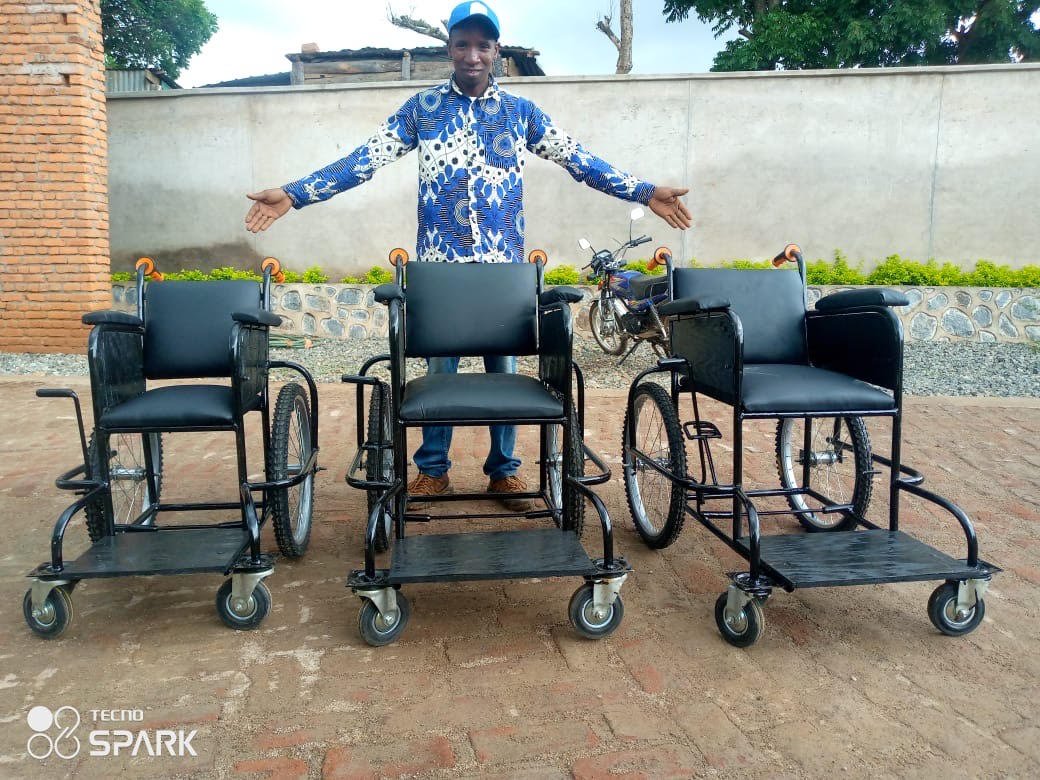
Malawi Wheels Country Coordinator Gelson Mtinga poses with three new wheelchairs. Courtesy of Malawi Wheels
Behavioral therapist Danielle Kama encountered that reality while volunteering on international service trips during college at San Diego State University. After her first service trip took her to Tanzania, she returned every other year, helping to build schools or teach English. After college, she became a Christian and started doing mission work as well, which eventually led her to Malawi.
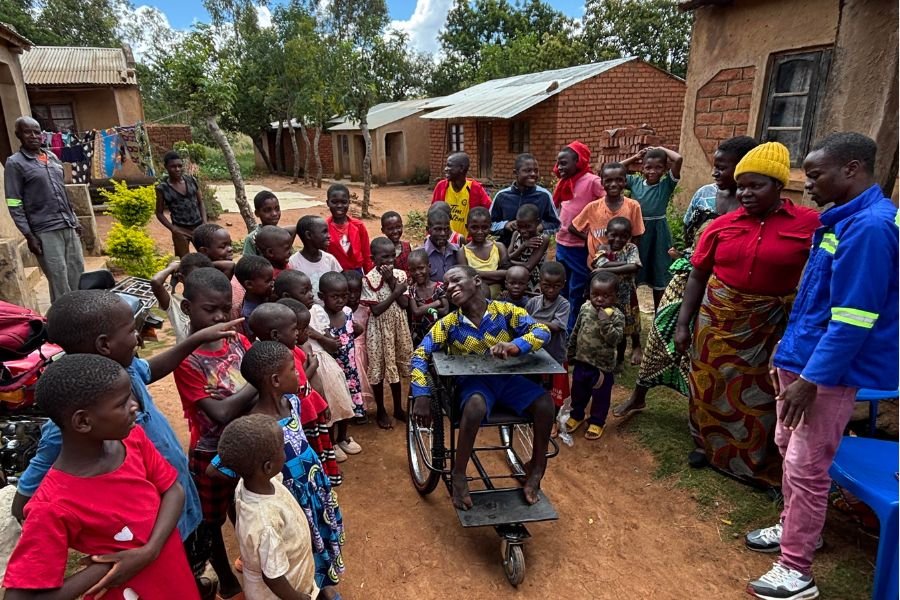
It was in Malawi that Danielle met Justin, an eight-year-old living with mobility differences. Danielle was helping with a children’s program when she noticed Justin sitting on the ground while playing with his friends.
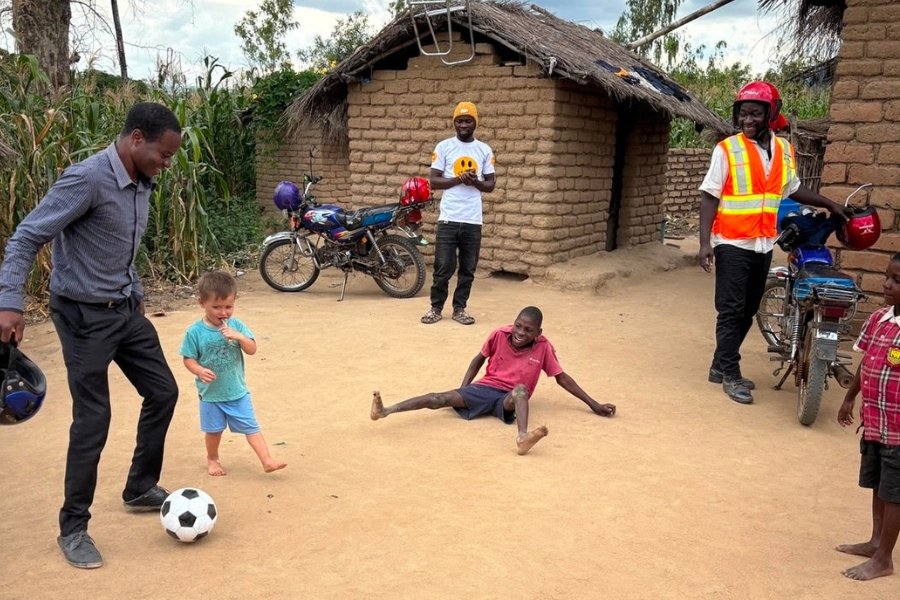
Justin may not be able to walk, but he loves to play soccer. Courtesy of Malawi Wheels
“He had the biggest smile on his face, just like beaming from ear to ear,” Danielle tells Upworthy. “And all the kids were around him, also smiling. They just kind of ran off to the next cool thing, and then I noticed him start to crawl, with his arms dragging his knees. He couldn’t walk, but he kept smiling while trailing all the way behind these other kids trying to keep up.”
“I don’t even remember thinking, ‘That’s so sad’,” she adds. “It was just really beautiful to see his joy despite the mobility difference.”
Danielle visited with Justin’s family to find out what kind of needs they had. She found out that Justin’s father carried him to school, two miles each way, so he was able to attend. But most kids in Justin’s circumstances aren’t that fortunate. In fact, according to the 2018 Population and Housing Census, approximately 11.6% of Malawians aged five and older have at least one type of disability. With only 14 prosthetists and orthotists, 200 physiotherapists and assistants, and 15 orthopedic surgeons serving the entire country, Malawi has a limited number of professionals to address mobility and disability issues.
“It kind of became my mission to see if it was possible to get [Justin] a wheelchair to at least make that easier for him and his family getting him to school,” she says. “And I found quickly that there’s not a lot of options or organizations in Malawi for making or donating wheelchairs.”
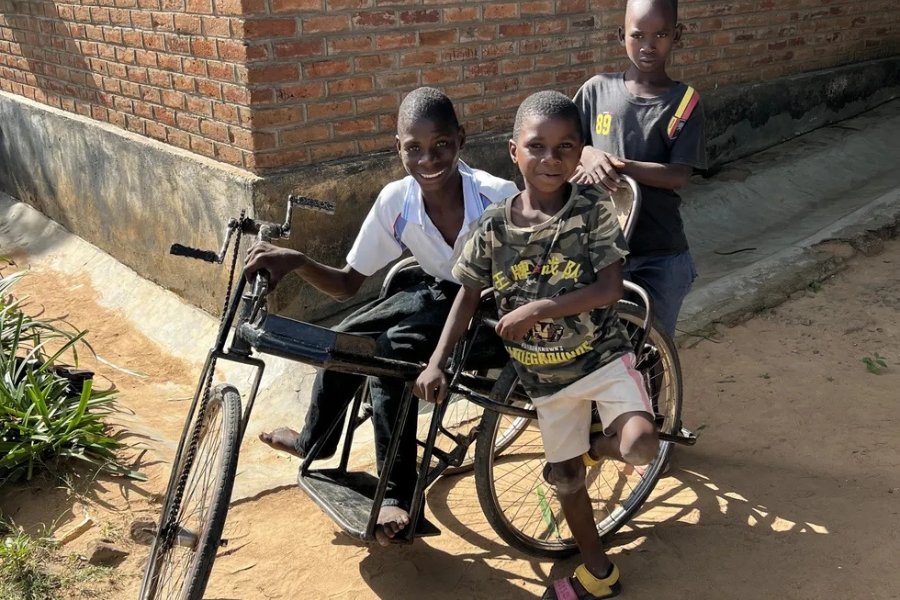
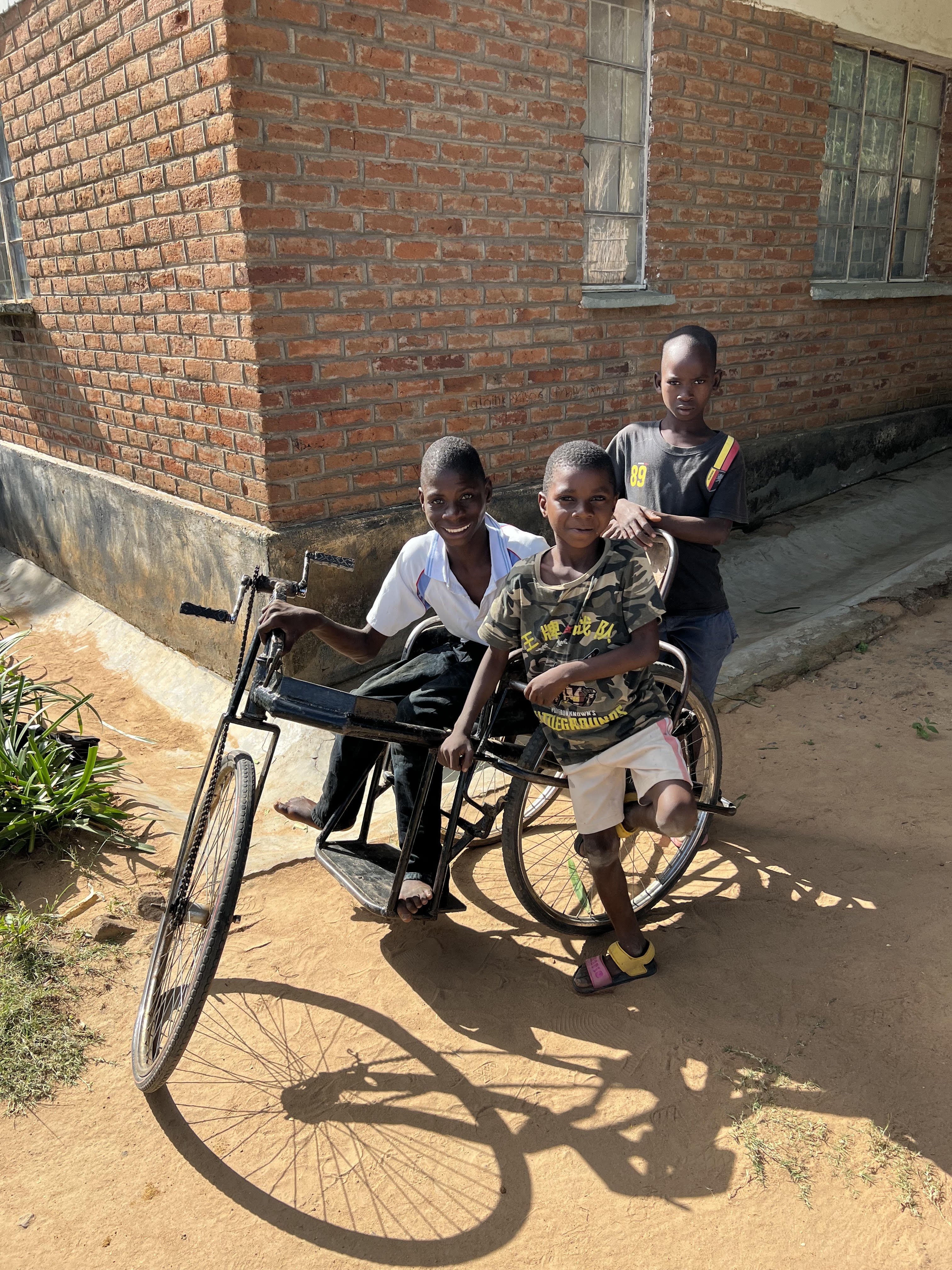
Justin in his chairu00a0with his brother and a friend. Courtesy of Malawi Wheels
Danielle managed to track down a chair for Justin, but knowing the need was greater than just one child, she became determined to find a way to get more wheelchairs made locally. She met an “amazingly clever and funny” Malawian named Richard, who was a wheelchair engineer. After he trained three welders in his craft, Danielle hired them to start a wheelchair-making operation, now known as Malawi Wheels.
“So that was in December of 2021,” Danielle shares. “And then in February, just two months later, [Richard] died of a heart attack. Terrible, terrible. But I truly believe God allowed his knowledge and passion for making wheelchairs for kids to be transferred to our team before his death. And I know that it was really meaningful for his wife to have that legacy live on through now Malawi Wheels.”
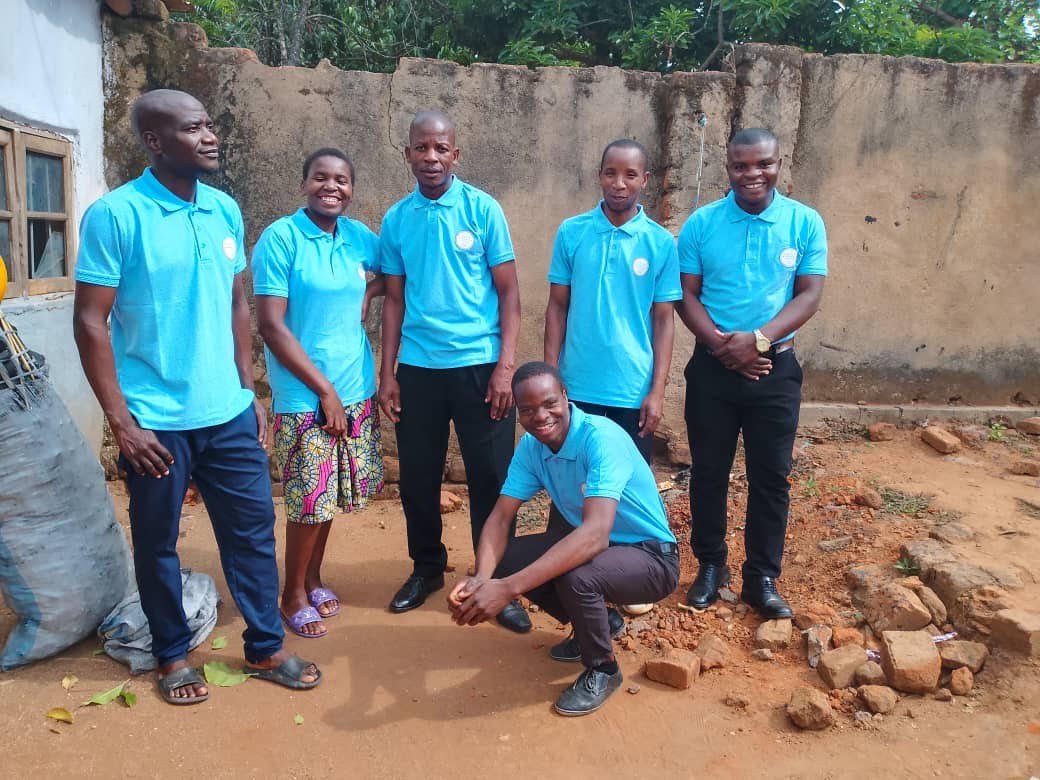
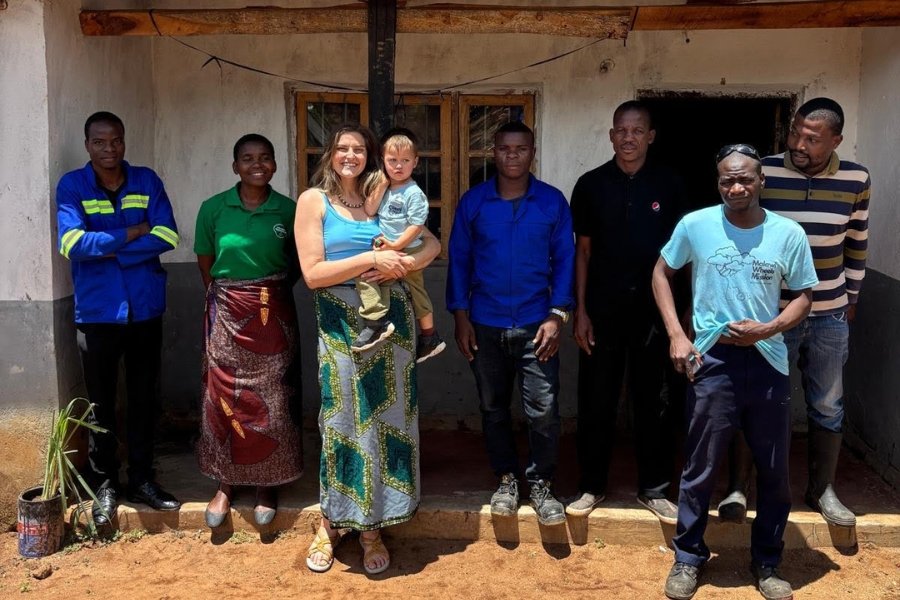
The Malawi Wheels team, left to right: Samuel George (wheelchair engineer) Esther Anthony (office manager), Emmanuel Fred (wheelchair engineer), Stevie Wilson (fieldwork manager), Gelson Mtinga (country director) , Oscar Tamatha (wheelchair engineer) Courtesy of Malawi Wheels
What started with Justin and Richard has now become a team of six men and women, all local Malawians, who identify children with mobility needs, build wheelchairs for them, and deliver them. Danielle says that so far about 200 kids have gotten wheelchairs from Malawi Wheels, which are all made and repaired locally.
“We believe that local needs should have local solutions,” she explains. “All of our materials to make wheelchairs are purchased in Malawi so that we can 1) repair them in Malawi and 2) we can give back to Malawian-owned businesses and of course the local economy. So all of our team is local Malawians, our supplies are purchased in Malawi, and our wheelchairs are built and delivered in Malawi.”
Miracle and his community the day he got his wheelchair Courtesy of Malawi Wheels
Danielle says there are advantages to staying local and not being part of a large international organization. There are non-profits that give millions of wheelchairs away on a global scale, which Danielle praises, but she says there can be issues with not being able to repair or find replacement parts for wheelchairs shipped in from other places. Additionally, as kids outgrow their chairs, they may not have anyone to contact to get a larger one because the chair was just dropped off for them.
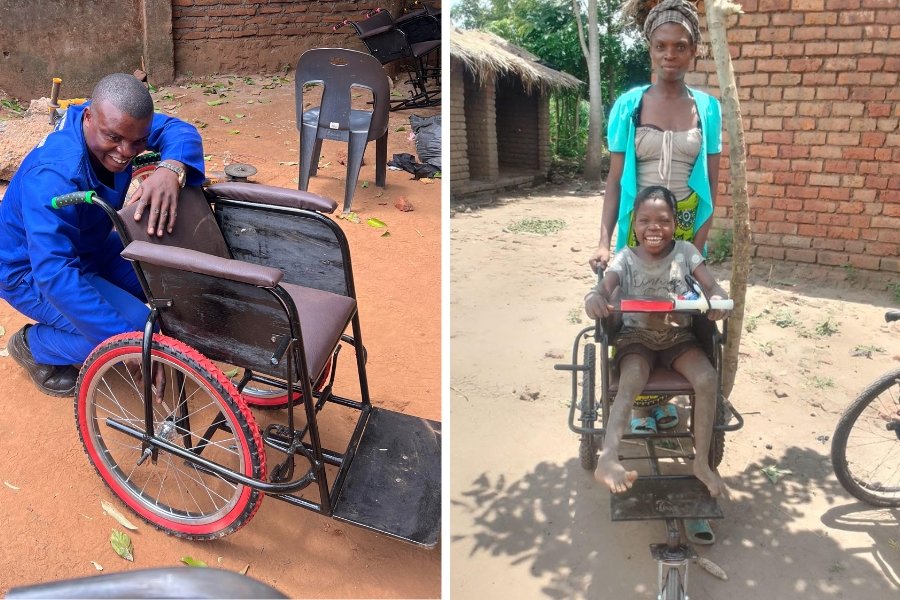
Malawi Wheels wheelchairs are custom made for each child so they are safe and their individual needs are catered to.
Oscar puts finishing touches on a wheelchair (left), Rose with her mom after getting into her Malawi Wheels chair for the first time (right) Courtesy of Malawi Wheels
“We really like being small right now,” Danielle says, “because we’re able to carry those 200 children and really hold them and see their story. Our desire is not just to give a wheelchair, give a handout, and then leave. We want to see their progress, repair wheelchairs, make updates, sustainably support the family for the future with some of our programs like parent support groups, which focus on more of the financial, spiritual help for the parent, and then our small business programs, which focus on empowering families financially so that they can support their children long term.”
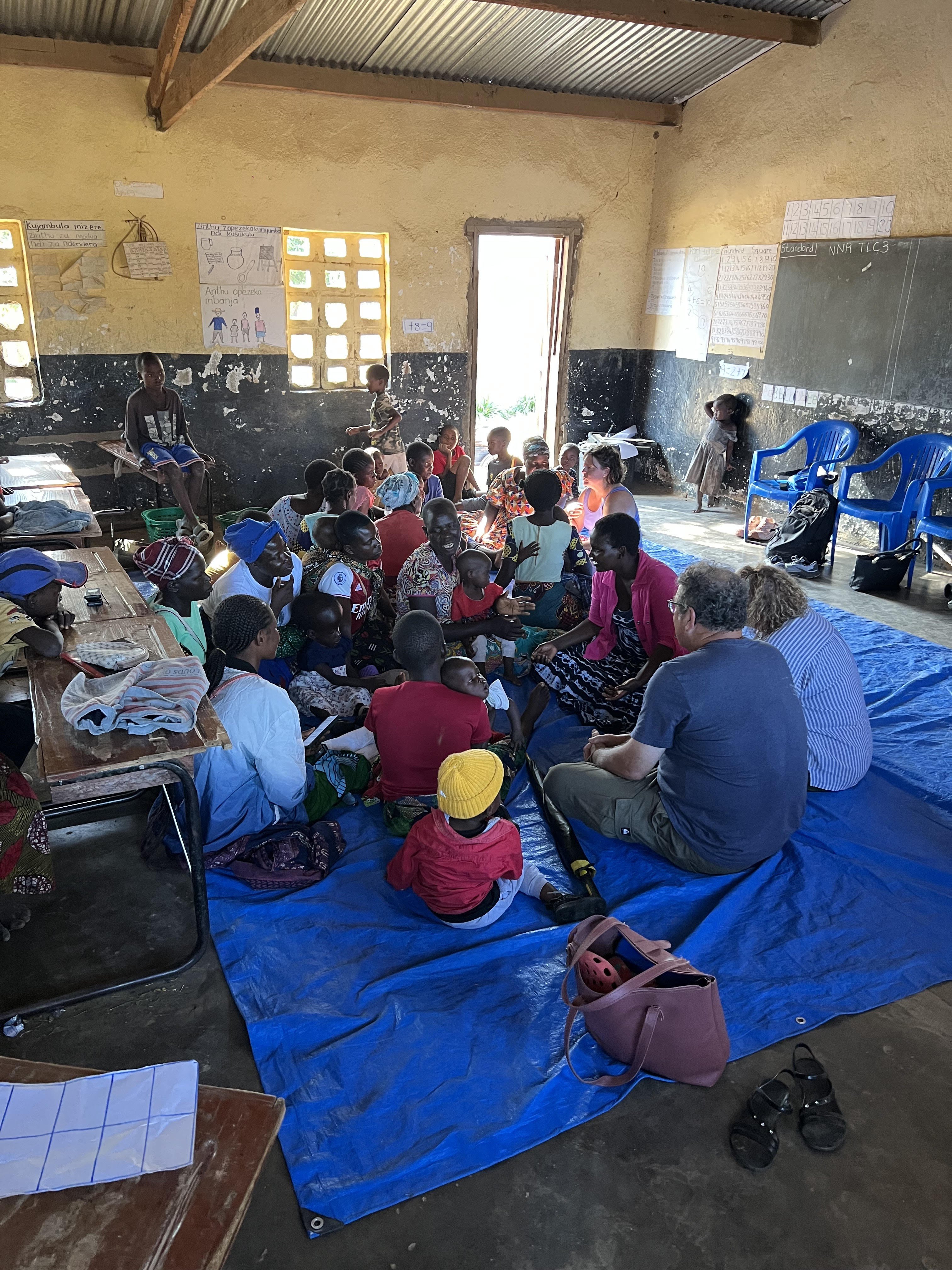
This holistic approach to service is purposeful. The support groups where parents of kids with disabilities gather to pray for one another and provide mutual support also receive physical therapy educational training to better help their children with their needs.
“We transport licensed physiotherapists to the groups to focus on parent training for exercises so that they can take those exercises home and then continue them daily with their children,” Danielle shares. “And the main purpose for a lot of these groups is to try to defeat some of that isolation and discrimination that these parents experience.”
Parent groups provide emotional andu00a0spiritual support as well asu00a0physical therapy educationu00a0for parents of kids with disabilities. Courtesy of Malawi Wheels
It’s not uncommon in Malawi for a child born with special needs to be seen as cursed or as a punishment from God for a family or individual. It’s also a common and accepted practice for a father to leave the family if a child is born with or develops a disability, so there’s a lot of stigma and discrimination that follows these kids.
“That leaves, of course, a lot of single mothers caring for their children alone and a lot of lonely mothers and families,” says Danielle. “So our goal has been to start new communities for those parents and caregivers that share that common bond so that they can lean on one another, because there are common struggles and common joys that come with having a child with special needs that can then bring them together and help them feel not so alone. So yeah, we kind of get that emotional spiritual care but then also that physical care because we have the physical therapy embedded within the groups as well.”
Malawi Wheels also provides business support to help the families become more self-sufficient financially.
“We recognize that a lot of the time, special needs does mean special expenses like medical equipment, monthly medicines, hospital care, so one solution we’ve found that can be be helpful is coming alongside those families to assist them in starting their own business so that with the profits they can better support their child long term. Again, not just giving a handout that’s not going to help them in the long run, but sustainably supporting them. So, when a family is interested in starting a business, we start with a one-on-one small business training for them, we help them make a business plan and then we supply a grant or a no-interest loan, and then we support them through the building process and check in bimonthly for updates. And we found that this can be a huge help for families.”
Businesses are often small grocery businesses, selling various items like tomatoes, cooking oil, eggs, etc. Some families also start cooked food businesses like a French fry stand—known as chips in Malawi—or selling small donuts called mandazis.
Danielle says their research over the last couple of years has indicated that no-interest business loans tend to be much more effective than grants. Having the responsibility and accountability of paying the money back, even without any interest, seems to be more empowering to recipients than being given a grant, leading to greater success. Continuous learning helps the organization hone their programs to have the most impact.
It really all comes down to ministering to people’s needs holistically, says Danielle, with the mission being for “people to come away with an understanding of Christianity that reflects God’s love for his people, especially regardless of ability, regardless of looks, regardless of religion. Because we believe that God created everyone, that everyone bears his image, that he loves everyone, that he really wants healing for his people, mind, body, and soul. So that’s why we focus on that holistic model of helping. Of course, we want to provide spiritually, but we’re also there to help with physical needs because that’s what Jesus did. He didn’t just offer prayer. He offered physical healing and provided for physical needs. So I think that collision of faith and works is really important.”
Danielle and her son with the Malawi Wheels team. Courtesy of Malawi Wheels
As for Justin, he’s been thriving with his increased mobility.
“After receiving a chair, we’ve seen Justin become so social in his community,” Danielle says. “Every time our team visits the village he’s from, they always pass him on the road and see him at the soccer fields or with his friends. He’s always out, every time I go to Kabekere where he’s from, he is always along the road somewhere.”
Additionally, the physical therapy Justin has received through the parent support group has helped him gain enough strength and balance to be able to use a walking frame for short distances. He’s also become a soccer coach for his team of friends.
“I’ve seen him play soccer, too—adaptively, of course—but he’ll sit on the floor and swing his legs to kick it to his friends,” says Danielle. “So just seeing that now he’s even a soccer coach and how involved he’s been in his community since being able to have that mobility and independence is so cool.”
Mobility truly is a gift that empowers and opens up a world of possibilities. Learn more about the Malawi Wheels mission and see how you can support their efforts here.
For some people, talking comes easily and words and conversation flow freely. For others, an obstacle can impede that flow, whether it’s something that manifests psychologically, like social anxiety, or something that manifests physically, like a stutter.
People who find it super easy to talk might not know how to handle talking with those who don’t, and some people’s reactions can make a person who struggles feel even more uncomfortable than they already do. Most people don’t want to make others feel bad, so learning about an unfamiliar perspective, such as what a person with a stutter might experience, can be helpful in avoiding unintentional discomfort or offense.
Travis, a speech-language pathologist who helps educate the public about stuttering, shared a video example of someone handling his stuttering “perfectly.” The video shows Travis in his car at a drive-up window getting his food from a fast food worker and stuttering as he asks for some barbecue sauce.
Watch:
There are a few things the employee does right here. First, as Travis points out, the guy maintained eye contact with him through the stutter. Second, he didn’t try to finish Travis’s sentence or guess at what he wanted to say. Third, he waited patiently until he got it all out. And finally, he responded to Travis the way he would respond to anyone asking for barbecue sauce, as if everything was normal. Because it was. For a person with a stutter, this is how normal conversation goes.
As people in the comments pointed out, these are often the biggest questions people have about stuttering. Should I keep looking at the person while the stutter is happening? Is that more or less comfortable for them? If they’re stuttering and I think I know what they want to say, should I go ahead and say it or wait until they get the words out? These are honest questions that people with no experience with stuttering might wonder about but don’t feel comfortable asking directly.
Commenters were thrilled to get guidance from someone with experience:
“I always thought maintaining eye contact would make someone feel more vulnerable. But I see it makes people feel seen, listened too and normal.”
“Acting normal is so key. Ignore the stutter. Let them speak! Sometimes trying to help by filling in words is more hurtful than anything. My brother and dad have a stutter so I understood how to help. I later ended up managing an employee with a severe stutter that was never ending at first. He stopped stuttering when he realized I never once flinched, blinked too hard or did anything to suggest I was trying to help him along, and he felt secure that he had my full attention. Imagine if you’re talking to your friend like normal, you let them speak and take their time. It is no different for stutters in my experience. Hopefully that helps people that encounter this. People can really be so intentionally horrible or unintentionally harmful when they’re trying to help. Bless you!”
“This is good information to know. I’m always mortified when I think I’m being helpful but later learn that I wasn’t.”
Did you know? Stuttering is not a disease, an illness, or a mental disability. It does NOT reflect a persons' intellectual capacity.
People who stutter are as intelligent and capable as those who speak fluently. pic.twitter.com/bsPEGhNHNa
“I’m so glad I saw this. I have a regular customer that comes into my place of work who has a stutter. I always feel bad because I don’t know if maintaining eye contact makes him stutter worse, or helps him. But I do exactly this. Maintain eye contact, wait for him quietly to finish, and carry about just like any customer.”
“I love that you’re saying what is the right thing to do. It’s very important information. A lot of us have very good intentions and care about others, but we may not know how to tactfully handle some situations. Thank you for educating us!”
Other people who have experience with stuttering also weighed in to share their thanks.
“This healed a huge part of my preteen self. I used to always talk like this. No matter what. Thank you for being vulnerable like this and showing so many people. I saw this today, and I got humbled again. It put me right back there. I need to remember and honor that version of me more often. Thank you.”
Recorded a few weeks ago. You’ve all been so nice when it comes to my stutter. I’ve try to hide it in videos but you all said you wouldn’t mind if I stuttered in them. So, I’m nervous here, but here’s a little video about stuttering & simple tips. I even stutter a few times so. pic.twitter.com/HnxyX18MC6
“I really appreciate when people wait for me to get my words out instead of finishing my sentence for me or trying to guess what i want to say. good for you dude!”
“Thanks a lot for showing your stutter and educating people! As a person who stutters myself, I find that most of the times what keeps people from truly connecting with me while I talk is the embarrassment of not knowing how to behave. That’s why I LOVE when they accept their embarrassment and ask me what would be best to do. Be genuine, no worries!”
“I’ve had a stutter my entire life. I completely understand EVERYTHING you said. God, it feels so good to be seen. Love the videos man, good luck.”
What exactly causes stuttering is a bit of a mystery. There are different kinds of stuttering, including developmental stuttering that begins in childhood and stuttering from other causes, such as a neurological event like a stroke or some sort of emotional or psychological trauma. Family history and genetics can play a role, as stuttering appears to run in families, and structural differences in the brain may contribute to a stutter as well.
Whatever the cause, stuttering affects around 1 in 100 adults, so chances are we’ll all meet people who live with it. The more we learn from those folks, the more kind, compassionate, and inclusive we can all be.
Reality TV isn’t usually the place you go to see great examples of kindness and empathy. But that’s exactly what happened on NBC just the other night in a brief moment of humanity wedged in-between all the usual conniving and backstabbing.
Over 80 million people worldwide live with a stutter. It’s more common in childhood and many people will outgrow it as they get older, but millions of adults live with this speech disorder. One of them is a man named Mitch Guerra, who just so happens to be a contestant on the latest season of Survivor. Just his presence on the show is bringing so much awareness to an under-discussed and commonly misunderstood disability.
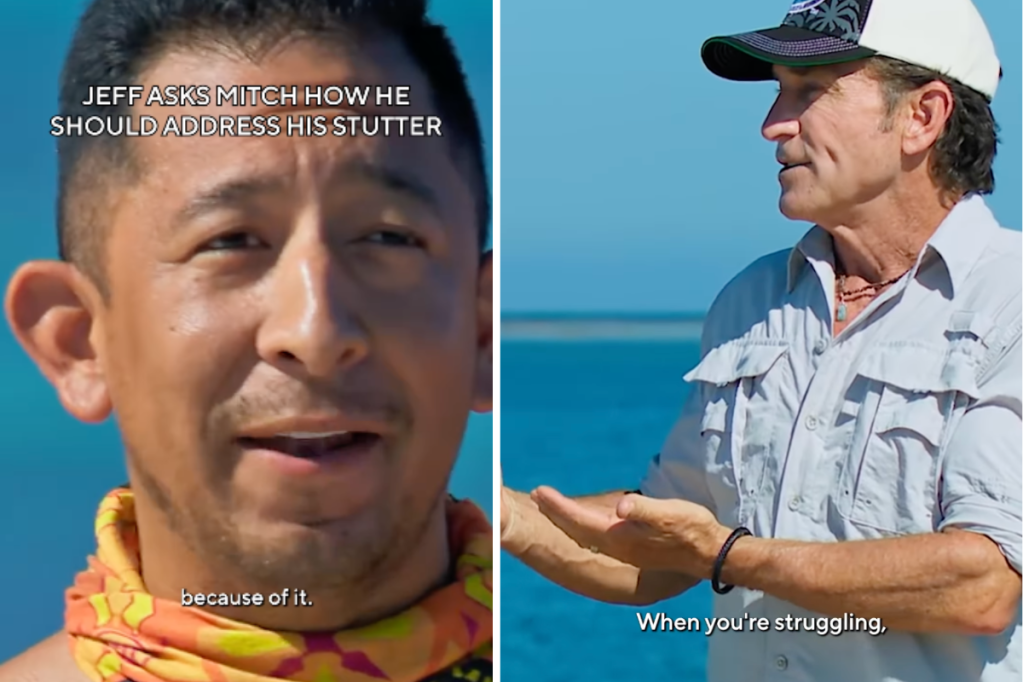
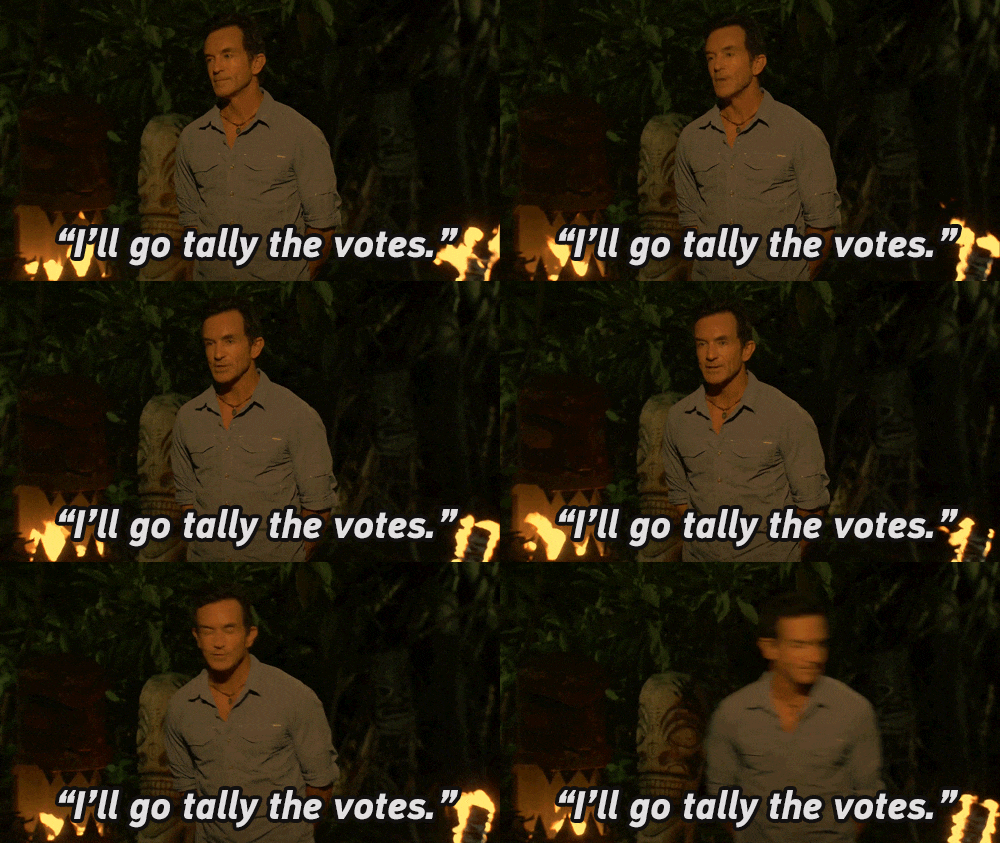
Survivor host Jeff Probst is getting universal praise for the way he handled an interaction with Guerra in a recent episode.
In a clip shared on the official Survivor Instagram account, Probst and Guerra share a short but powerful moment.
“Mitch, I have a question,” Probst asks after Guerra finishes a sentence with some difficulty. “When you’re struggling, do you want help from someone? Or is part of it to let you finish when you’re ready to finish.”
The question is natural, honest, and refreshing. A lot of people can relate to the genuine confusion—is it better to fill in the blanks for someone who’s struggling to speak, or be patient and let them finish when they’re having a hard time?
“The hope is that everyone would just kind of hang in there for me and just give me the opportunity to finish my sentence,” Guerra answers. “But I’m so thankful you asked that, because people just naturally want to help others, and sometimes we don’t feel comfortable enough asking that. So thank you for that.”
“Thank you for teaching us how to do it,” Probst says.
For what it’s worth, the experts say Guerra is exactly right. Friends and allies of people who stutter should maintain eye contact, avoid suggestions or words of encouragement (“Take your time” is not helpful), and wait patiently for the person to finish speaking rather than trying to finish their sentences for them.
Viewers are applauding Probst for his empathetic curiosity, and appreciating Guerra for representing the stuttering community so well.
Over a million people viewed the Reel on Instagram, and the comment section quickly got emotional:
“Super interesting how in answering that, his speech settled – like just being asked how to help relaxed him so that he wasn’t worrying about finishing. Might be coincidence but lovely to see someone asking”
“As a momma with a child who stutters, I loved seeing this moment. Our kiddo has been stuttering since around age 6, now he’s 17 and still struggles with it. Even after after many years of speech therapy. The one thing we learned is just let them continue to talk and don’t try and help with completing the sentences. Mitch is right, just hang in there and let them finish!”
“I have his same stutter so this really hit home for me. It is SO much better (for me personally) when someone just waits out my stutters with me and stays engaged. There’s been so many times where people try to guess what I want to say (often incorrectly) or seemingly lose interest in what I have to say and it makes me feel so rushed and belittled for something I can’t control. I love Mitch so much and he’s really been helping me get over my fear of applying due to my stutter.”
“This has literally been one of the most thought provoking and beautiful moments in recent Survivor history. I never considered how our attempts at wanting to be kind and help someone finish their sentence could make them feel less than. THIS was such a powerful interaction and I’m so grateful he had the opportunity to voice this this. Truly beautiful.”
One user pointed out that not only was this a beautiful interaction between two people, but the fact that it occurred in front of such a big audience means the small moment could have a big impact in educating people all over the globe.
“Just like that a bunch of people are now informed how to address a situation like that”
Disabilities tend to make us uncomfortable. Even the most well-meaning people can twist themselves into knots not knowing how best to empathetically approach a situation where another person is struggling, and we might feel like it’s rude or inconsiderate to ask. But that fear ultimately holds us back from a deeper understanding of what people are going through and how we can help. Kudos to Probst and Guerra for showing us what an honest and empathetic conversation can and should look like.
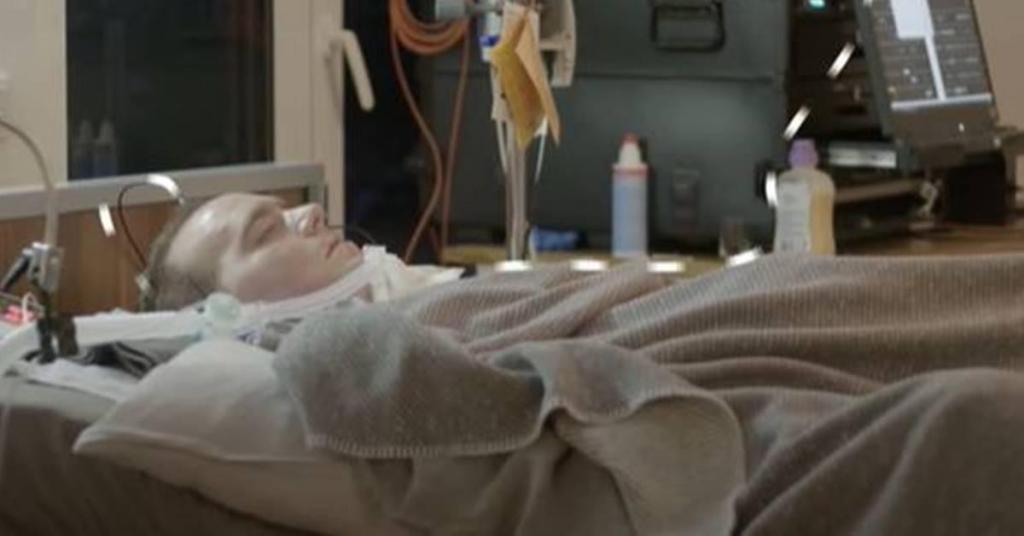
I can’t imagine worse torture than being stuck in a locked-in state caused by amyotrophic lateral sclerosis (ALS). ALS is a disease of the nervous system where nerve cells slowly break down, causing muscles to weaken throughout the body.
Patients who survive through the weakening process eventually reach a “locked-in” state where even though their brain still functions, they are completely paralyzed with their eyes mostly closed.
In this state, the person is unable to communicate. People with ALS typically live two to five years after being diagnosed and usually die from paralysis of the respiratory diaphragm.
However, life may get a little better for people with ALS after a new development that has allowed a man to form sentences using only his brain waves. In 2022, Researchers at the Wyss Center for Bio and Neuroengineering in Geneva, Switzerland, developed a brain electrode that they implanted into a 36-year-old man in a locked-in state that has allowed him to communicate.
“Ours is the first study to achieve communication by someone who has no remaining voluntary movement and hence for whom the BCI is now the sole means of communication,” said Dr. Jonas Zimmermann, a senior neuroscientist at the Wyss Center.
“This study answers a long-standing question about whether people with complete locked-in syndrome–who have lost all voluntary muscle control, including movement of the eyes or mouth–also lose the ability of their brain to generate commands for communication,” Zimmermann added.
After three months of unsuccessful attempts, the patient was able to spell “yes” or “no” and to form sentences through a speller program.
One of his first requests was to be put in an elevated position when there are guests in the room. He also was able to ask for one thing he probably needed more than anything at that point: a beer. He had to be dying for a beer. He also asked for the band Tool to be played “loud.”
The electrodes allowed him to interact with his 4-year-old child, who he was able to call “my cool son.” He also asked for specific foods to be put into his feeding tube. “For food, I want to have curry with potato then Bolognese and potato soup,” he said.
This was the first time that brain electrodes were even implanted into a locked-in patient and researchers had no idea if they would work.
Completely locked-in man uses brain-computer interface to communicate. Today, Wyss Center COO, Olivier Coquoz, discussed the team’s new Nature Communications paper on @RTScqfd. Listen back to the interview here: https://t.co/y6SIz5y8Y1#neuroscience#BCIhttps://t.co/gzBCQym5H2
The scientists behind the groundbreaking technology are now seeking funding to provide similar implants for other people with ALS. “This is an important step for people living with ALS who are being cared for outside the hospital environment,” said George Kouvas, chief technology officer at the Wyss Center.
It’s stories like this that remind us that we should never take for granted the ability to communicate our basic needs. Let’s hope that the man with ALS will be able to drink as many beers as he likes and to be able to rock out to Tool as loud as possible for the rest of his days.
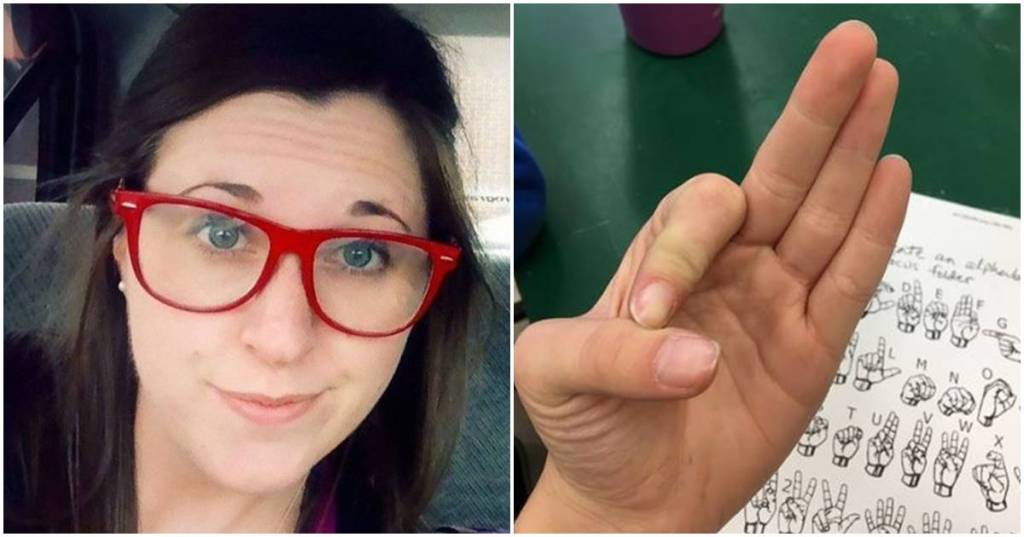
Anna Trupiano is a first-grade teacher at a school that serves deaf, hard-of-hearing, and hearing students from birth through eighth grade.
In addition to teaching the usual subjects, Trupiano is charged with helping her students thrive in a society that doesn’t do enough to cater to the needs of the hard-of-hearing.
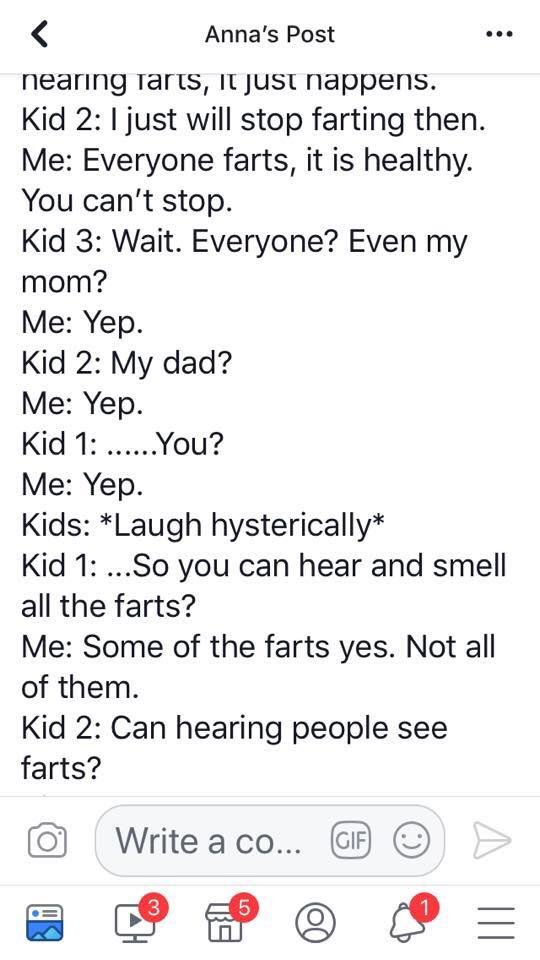
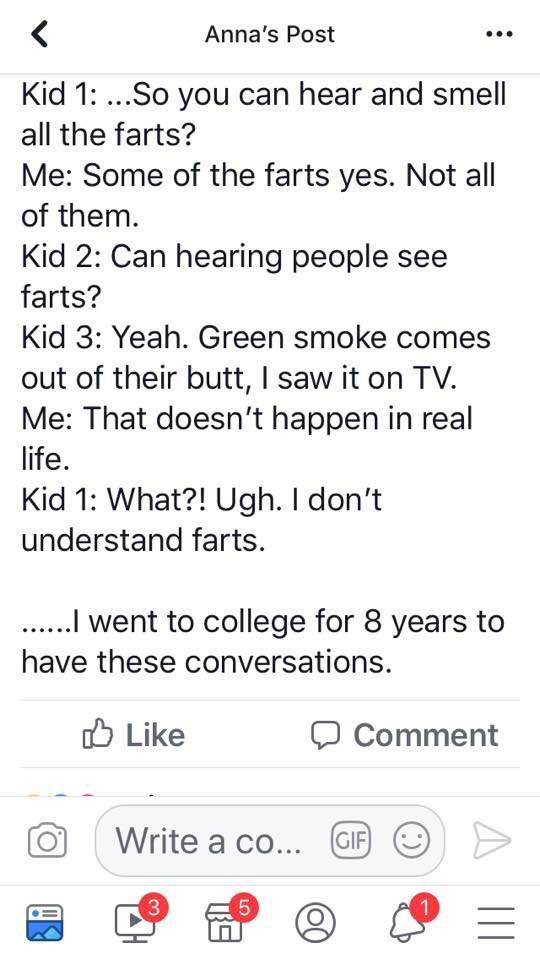
Once, Trupiano had to teach her students about a rather personal topic: passing gas in public.
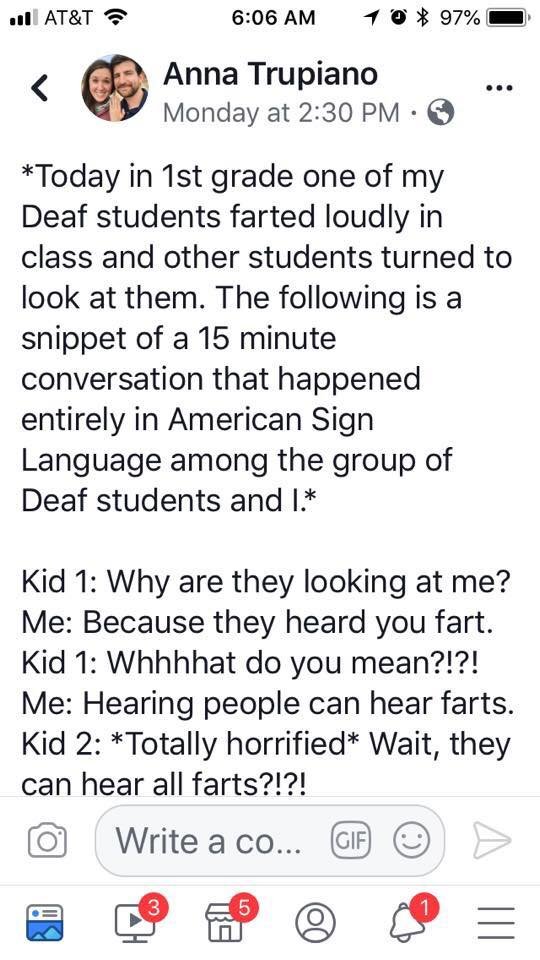
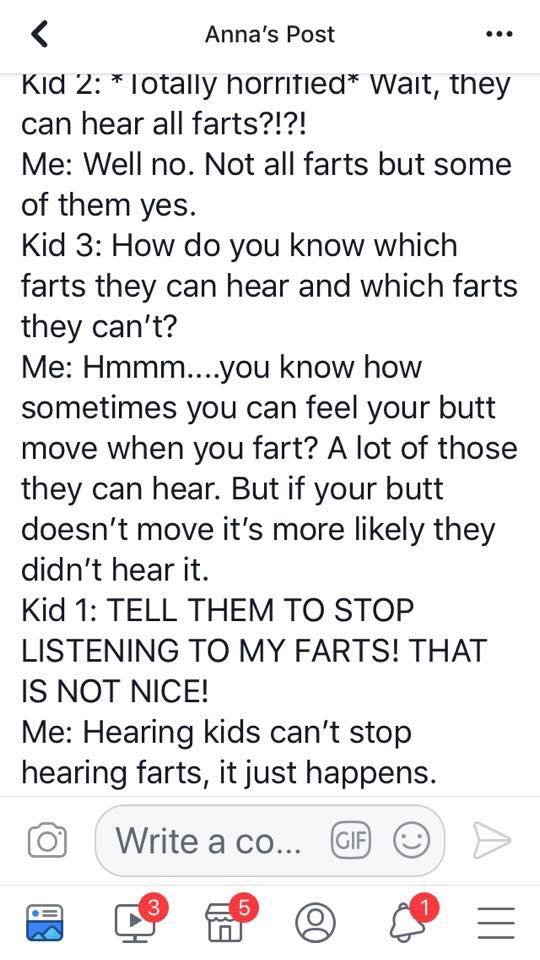
A six-year-old child farted so loud in class that some of their classmates began to laugh. The child was surprised by their reaction because they didn’t know farts make a sound. This created a wonderful and funny teaching moment for Trupiano.
Trupiano shared the conversation on Facebook.
"Wait, they can hear all farts?!?!" <a href="https://www.facebook.com/photo/?fbid=2327955523941389&set=a.170651393005157">See posts, photos and more on Facebook.</a>The discerning listener. <a href="https://www.facebook.com/photo/?fbid=2327955523941389&set=a.170651393005157">See posts, photos and more on Facebook.</a>
While the discussion Trupiano had with her students was funny, it points to a serious problem faced by the deaf community. “I know it started with farts, but the real issue is that many of my students aren’t able to learn about these things at home or from their peers because they don’t have the same linguistic access,” she told GOOD.
“So many of my students don’t have families who can sign well enough to explain so many things it’s incredibly isolating for these kids,” she continued.
Trupiano hopes her funny story about bodily functions will inspire others to become more involved with the deaf community by learning sign language.
“I would love to see a world where my students can learn about anything from anyone they interact with during their day,” she told GOOD. “Whether that means learning about the solar system, the candy options at a store, or even farts, it would be so great for them to have that language access anywhere they go.”
Farts are funny. <a href="https://www.facebook.com/photo/?fbid=2327955997274675&set=a.170651393005157">See posts, photos and more on Facebook.</a>An education reduced to conversations on farts. <a href="https://www.facebook.com/photo/?fbid=2327956267274648&set=a.170651393005157">See posts, photos and more on Facebook.</a>
While the discussion Tupiano had with her students was funny, it points to a serious problem faced by the deaf community. “I know it started with farts, but the real issue is that many of my students aren’t able to learn about these things at home or from their peers because they don’t have the same linguistic access,” she told GOOD.
“So many of my students don’t have families who can sign well enough to explain so many things and it’s incredibly isolating for these kids,” she continued.
Tupiano hopes her funny story about bodily functions will inspire others to become more involved with the deaf community by learning sign language.
“I would love to see a world where my students can learn about anything from anyone they interact with during their day,” she told GOOD. “Whether that means learning about the solar system, the candy options at a store, or even farts, it would be so great for them to have that language access anywhere they go.”