Michael Angelakos, lead singer of the band Passion Pit, began a Facebook Live video in quite the unexpected way on April 4, 2017.
He was about to start a procedure many of us have never even heard of, let alone have had performed.
“So, everybody, this is Bobby,” he explained to the tens of thousands of fans watching, a medical professional by his side. “And I’m getting TMS today — transcranial magnetic stimulation.”
TMS stimulates nerve cells in the brain associated with mood control, and is typically used as a treatment for certain mental illnesses.
Update 4/5/17: Angelakos’ original Facebook Live recording has been removed, but he shared this video reflecting on the procedure shortly after.
In 2012, in an interview with “Pitchfork,” Angelakos opened up about having been diagnosed with bipolar disorder at 18.
The disorder — characterized by dramatic shifts in mood, energy, and activity levels — affects nearly 3% of U.S. adults.
It can be deadly.
“It’s a constant thing,” Angelakos explained candidly to “Pitchfork.” “I’m on suicide watch all the time.”
Photo by Victoria Will/Invision/AP.
But Angelakos is getting the important care he needs and deserves, and he’s not afraid to share the experience with millions of others tuning in.
He captioned in the Facebook Live video: “this is what getting help looks like,” to make a point of de-stigmatizing mental illness and empowering others to seek help.
As he explains in the video:
“The whole point is like, everyone says, ‘Oh, I don’t want to show people what I do, I don’t want to talk about therapy.’ If we don’t talk about it, it’s quite literally why no one understands what we’re talking about. So, I don’t have anything to hide. I think this is an amazing treatment.”
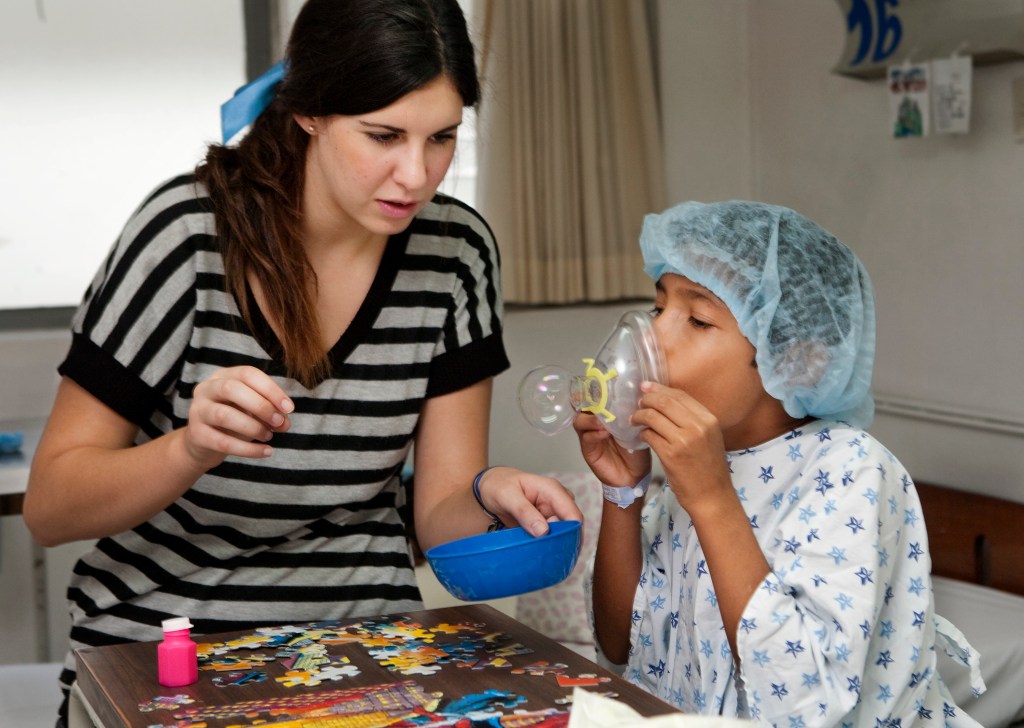
An Operation Smile volunteer reverses an oxygen mask so a child with a cleft condition can blow a bubble for the first time in Guadalajara, Mexico. (Operation Smile Photos)
For thousands of children born with cleft conditions, Operation Smile provides simple, playful tools—like bubbles—to strengthen the skills they need to speak and thrive.
While a bottle of bubbles might seem out of place in a hospital setting, you might be surprised to learn that, for thousands of children around the world born with cleft lip and palate, they can be a helpful tool in comprehensive cleft care. Lilia, who was born with cleft lip and palate in 2020, is one of the many patients who received this care.
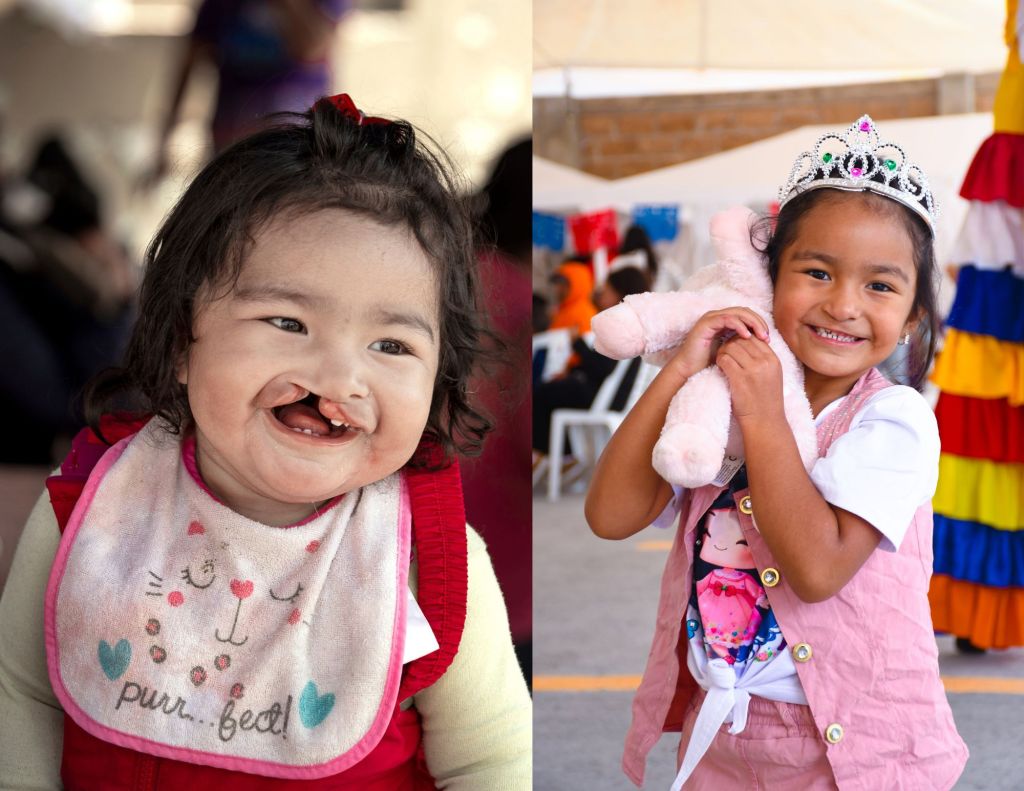
As a toddler, Lilia underwent two surgeries to treat cleft lip and palate with Operation Smile’s surgical program in Puebla, Mexico. Because of Operation Smile’s comprehensive care, it wasn’t long before her personality transformed: Lilia went from a quiet and withdrawn toddler to an exuberant, curious explorer, babbling, expressing herself with a variety of sounds, and engaging with others like any child her age.
Lilia is now a healthy five-year-old, with the same cheerful attitude and boundless energy. Her progress is the result of care at every level, from surgery to speech therapy to ongoing support at home—but it’s also evidence that small, sustained interventions throughout it all can make a meaningful difference.
Lilia at age 1, before surgery, and at age 5, 4 years post-surgery
Cleft Conditions: A Global Problem
Since 1982, Operation Smile has provided cleft lip and cleft palate surgeries to more than 500,000 patients worldwide with the help of generous volunteers and donors. Cleft conditions are congenital conditions, meaning they are present at birth. With cleft lip and palate, the lip or the roof of the mouth do not form fully during fetal development. Cleft conditions put children at risk for malnutrition and poor weight gain, since their facial structure can make feeding challenging. But cleft conditions can have an enormous social impact as well: Common difficulties with speech can leave kids socially isolated and unable to meet the same developmental milestones as their peers.
Surgery is a vital step in treating cleft conditions, but it’s also just one part of a much larger solution. Organizations like Operation Smile emphasize the importance of multi-disciplinary teams that provide comprehensive, long-term care to patients across many years. This approach, which includes oral care, speech therapy, nutritional support, and psychosocial care, not only aids in physical recovery from surgery but also helps children develop the skills and confidence to eat easily, speak clearly, and engage in everyday life. This ensures that each patient receives the full range of support they need to thrive.
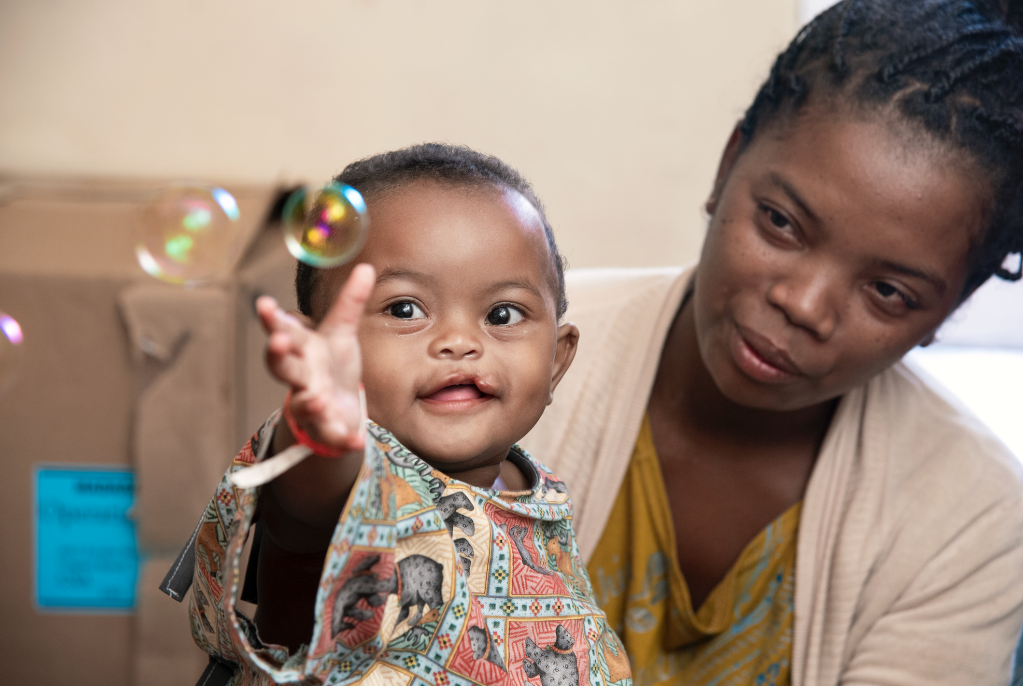
Marie, 11 months, with her mother at Operation Smile Madagascar before her cleft surgery (Operation Smile Photos)
A Playful (and Powerful) Solution
Throughout a patient’s care, simple tools like bubbles can play a meaningful role from start to finish.
Immediately before surgery, children are often in a new and unfamiliar environment far from home, some of them experiencing a hospital setting for the first time. When care providers or loved ones blow bubbles, it’s a simple yet effective technique: Not only are the children soothed and distracted, the bubbles also help create a sense of joy and playfulness that eases their anxiety.
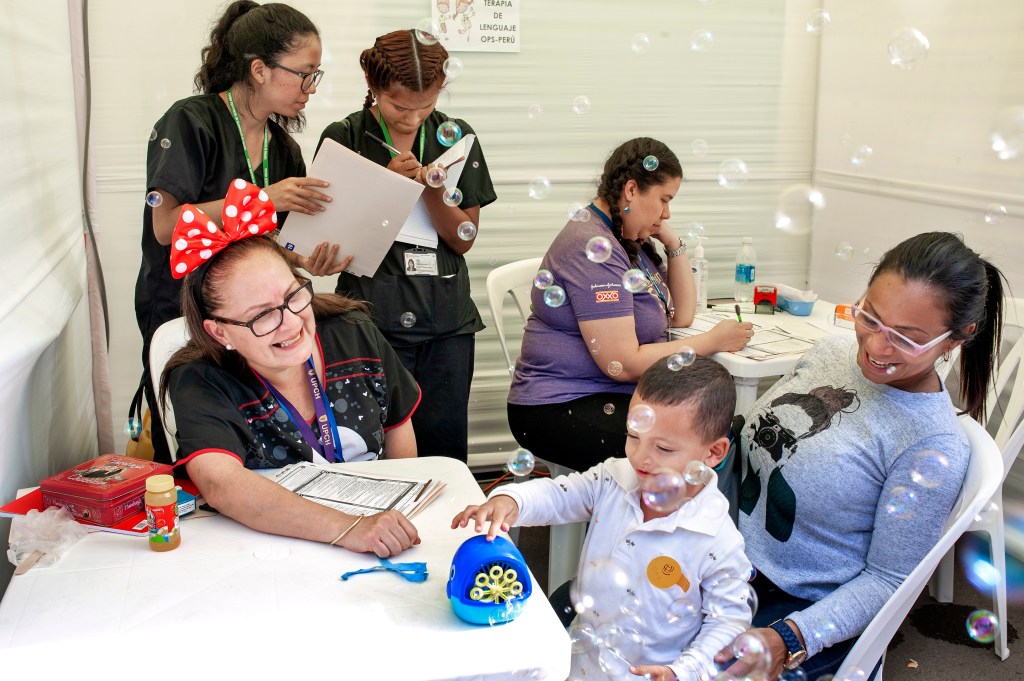
Milagros Rojas, a volunteer speech therapist in Peru, using bubbles in a screening with a patient. (Operation Smile Photos)
In speech therapy, bubbles can take on an even more important role. Blowing bubbles requires controlled airflow, as well as the ability to form a rounded “O” shape with the lips, which are skills that children with cleft conditions may struggle to develop. Practicing these skills with bubbles allows children to gently strengthen their facial muscles, improve breath control, and support the motor skills needed for speech development. Beyond that, blowing bubbles can help kids connect with their parents or providers in a way that’s playful, comforting, and accessible even for very young patients.
Finally, bubbles often follow patients with cleft conditions home in the “smile bags” that each patient receives when the surgical procedure is finished. Smile bags, which help continue speech therapy outside of the hospital setting, can contain language enrichment booklets, a mirror, oxygen tubing, and bubbles. While regular practice with motor skills can help with physical recovery, small acts of play help as well, giving kids space to simply enjoy themselves and join in on what peers are able to do.
Bubbles at Home and Beyond
Today, because of Operation Smile’s dedication to comprehensive cleft care, Lilia is now able to make friends and speak clearly, all things that could have been difficult or impossible before. Instead of a childhood defined by limitation, Lilia—and others around the world—can look forward to a childhood filled with joy, learning, discovery, friends, and new possibilities.
CTA: Lilia’s life was changed for the better with the care she received through Operation Smile. Find out how you can make an impact in other children’s lives by visiting operationsmile.org today.
“All I have to do is look in the eyes of my two girls, and they take me back, every time, to the most beautiful, colorful, emotional scrapbook I could ever dream of having.”
The decades parents spent raising children are full, rich, exciting, exhausting, and loud. From babies crying to siblings bickering to the raucous laughter that creates collective memories, the sounds of family life are constant. Your home is full. The laundry never ends. Food gets purchased in bulk.
For one couple, the process of downsizing their empty nest brought about a reflection on their family life, their relationship with their kids, and their stuff. In 2021, Jimmy Dunne shared that reflection entitled “Downsizing” on Facebook in a viral post that resonated with many people who are at or near this stage in life.
Here is what he wrote, in his own words
“My wife Catherine and I recently moved.
I realized I had something I never knew I had.
Thirty-four years ago, I carried my wife in my arms over the threshold in our home. Thirty-four years ago. From newlywed days, to witnessing our babies go from little girls to young adults. So many great memories in every inch of every room of our home.
I didn’t think I was ready to ‘downsize.’ What an awful word. I liked walking through our girls’ bedrooms and still seeing their stuff on the walls and on the shelves. I liked our backyard. I liked imagining our kids coming down the steps every Christmas morning.
We put it on the market, it sold in a couple days, and suddenly agreements thicker than my leg were instructing me to clear everything I ever had and knew – out.
Every night I found myself saying goodbye to our backyard, to our garden of roses that Catherine would till and trim, to the sidewalk where the girls drove their Barbie cars and learned to ride their bikes, to our front lawn where we hosted tons of talent shows with all the kids on the block, and the red swing on the front porch.
We found a condo in town and started lining up our ducks of what we were keeping, and what we were tossing. We vowed, if we’re going to do this, we weren’t putting anything in storage.
I literally threw out half my stuff. Half. Half of the furniture. Half of my clothes, books. And the big one… way more than half the boxes in the attic.
The attic was more than an attic. It held our stories. Every thing in every box, every framed picture was a story. After we gave away almost all of the living room furniture, we split the room in half and brought down everything of the girls from the attic and from their rooms. We invited the girls over, handed them a cocktail and said, “There’s good news and bad news. We’ve saved all this stuff; your outfits, drawings, dolls, skates — for you. It’s now yours. The bad news, whatever’s not gone by Friday at 10 in the morning, it’s getting chucked in that giant green dumpster in front of the house.
The girls thought we were Mr. and Mrs. Satan. But they went through it, and that Friday, most of it went out the front door and right in the dumpster.
I filled the entire dining room with boxes of all my old stuff. Grade school stories and pictures, report cards, birthday cards, trophies, you name it. Boxes of old plaques and diplomas and just stuff and stuff and stuff like that. How could I throw any of this out? I may as well have been throwing me in the dumpster!
But this little jerk on my shoulder kept asking — what are your kids going to do with all this a week after you’re six feet under? They’re gonna chuck it all out!
And we moved in a half-the-size condo – and the oddest thing happened.
It became our home.
A picture here and there on the wall, Catherine’s favorite pieces of furniture, all her knickknacks in the bathroom. We blinked, and it looked and felt just like us.
And then I found that thing I never knew I had.
Enough.
I had enough.
The wild thing was that having less – actually opened the door to so much more. More in my personal life. More in my career. More in everything.
All I have to do is look in the eyes of my two girls — and they take me back, every time, to the most beautiful, colorful, emotional scrapbook I could ever dream of having.
All I have to do is hold my wife’s hand, and it hypnotizes me back to kissing her for the first time, falling in love with everything she did, seeing her in that hospital room holding our first baby for the first time.
It sure seems there is so much more to see, and feel, and be — if I have the courage, if I have the will to shape a life that’s just…
Enough.”
You can also read Dunne’s reflection on his website.
Why this post resonated with so many people
People shared Dunne’s post more than 24,000 times, and it’s easy to see why. He’s speaking a truth we probably all know deep down on some level: Things don’t make a life. Things don’t make relationships. They don’t even make memories, though we tend to hold onto them as if they do. We may associate places and things with memories, but we don’t need the places and things for our memories to live on.
Kudos to Dunne and his wife for looking ahead to what their children would have to go through after they pass if they didn’t go through it now themselves. And kudos to them for truly embracing the freedom that comes with having raised your children to adulthood. The empty nest years can be whatever you choose to make of them, and this couple has figured out a key to making the most of theirs.
Keep up with the Dunnes on their Instagram, where they share more writing, wisdom, family moments, and sweetest of all, their grandbabies.
This article originally appeared five years ago. It has been updated.
A woman taking her husband’s last name is no longer a given. Couples have been mixing things up for a while now, but one couple decided to turn old and new norms on their heads. Instead of the new husband and wife arguing over why one of them should relinquish their surname, they decided to let the “best family” win.
Women have been expected to give up their family’s last name for their husband’s for hundreds of years. This goes back to when women were considered property transferred from a father to a husband. While the thought of women being considered property stopped with women’s rights movements, the tradition of adopting a husband’s surname persists today.
The practice originated in 14th-century England and was part of “coverture,” which transferred nearly all of a woman’s assets to her new husband, according to Cambridge University. Taking the husband’s last name wasn’t required, but it was widely practiced and spread to other Western countries. In recent years, women have been choosing to hyphenate or retain their birth surname. But one cheeky couple decided to throw all the norms out of the window in favor of a more inclusive process that involved everyone.
Brett Borland and Gorgie Abela recently tied the knot in front of their loved ones. When the time came for reception activities, Borland got on the mic to announce that their families would be competing in a “Battle of the Surname.”
“What we’ve decided is that neither one of our names is going to disappear,” Borland says. “So what we’re going to do is that we’ve organized some games where we’re going to battle the families out against each other, and the winning family, we will be taking the last name of them.”
That’s right. If Abela’s family wins, then she keeps her name and Borland changes his, and vice versa. In the video uploaded to Instagram, the families (still dressed in their formal attire), played tug of war, potato sack races, and more. By the end of the activities, the scorekeeper announces the couple’s new last name–Mr. and Mrs. Borland.
It seemed that the Borland family had a ringer. While everyone was playing in sock feet and fancy clothes, one participant was sporting sneakers, shorts, and a t-shirt. Some could argue that it gave them an advantage, though it was only beneficial in the game of tug-of-war, not the booty-shaking ping-pong balls out of a tissue box game.
Viewers of the unique surname wedding competition were thoroughly amused, with one saying, “This should’ve been televised.”
One person takes notes, “When dressing for a wedding, pick dress that I could play field games in. GOT IT!”
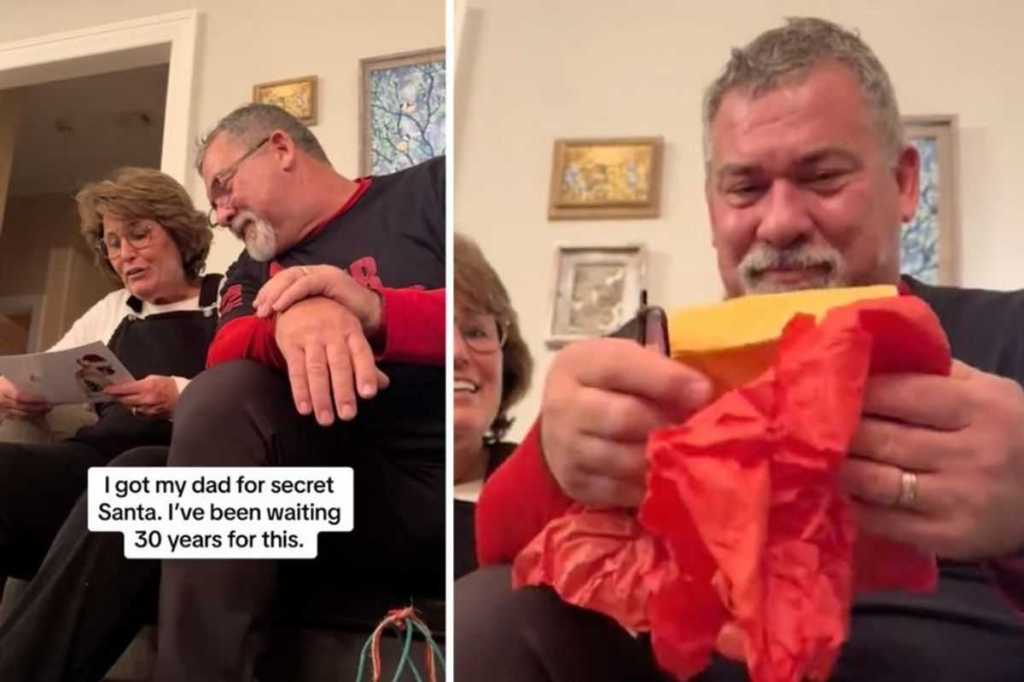
In a TikTok that went absolutely viral in 2023, Moore’s father is seen reliving this memory as he holds onto a Christmas bag and a family member reads a card out loud.
“Money was tight, so you were selling your most prized possession, at least I viewed it as that,” Moore wrote. “I felt your sacrifice and it taught me that I would do whatever necessary to ensure my future family never needed anything. It was a lesson that has stuck with me since that moment.”
She made herself a promise that day
It was also the moment she became “determined” to pay her father back. More than thirty years later, she has drawn her father’s name for Secret Santa. It was the perfect opportunity to fulfill that promise.
“I will never be able to fully repay that debt,” her note continued. “Seven-year-old me would be so elated to see that I finally fulfilled that promise I made to myself. Thank you for everything.”
As he listened, Moore’s dad began tearing up. Sure enough, he opened his gift to see it was the cherished card he sold all those years ago.
The video concludes as Moore and her father enjoy a warm embrace.
For those wondering about the card’s value: a 1984 Topps Dan Marino rookie card in mint condition can fetch as much as $30,000. The sweet exchange certainly struck a chord online.
The internet completely lost it
The sweet exchange certainly struck a chord online.
“When he started crying I LOST IT,” one person wrote.
Another added, “Something about bringing a grown man to tears always gets me.”
A few parents shared their own stories of sacrificing prized possessions:
“As someone who has sold his prized Gretzky rookie to provide for his kids, I appreciate and respect this a lot,” commented one person.
“Just had to sell my signature MacKinnon jersey to pay bills. Sucked so much but kid comes first,” echoed another.
On the flip side, some shared their one experience of getting to repay their parents. One wrote:
“I got to do this for my mom last year. She won a [Dolce & Gabbana] purse one year at work and sold it to buy my prom dress and never thought twice. She never [got] name brand anything. So this year I took her to get her very first name brand fancy hand bag or her picking, my treat.”
But perhaps the best comment belonged to this person, who astutely pointed out: “The card wasn’t the real gift to him. It was hearing his impact on you. Priceless.”
Moore shared another video showing a close up of the Christmas card for viewers to read, as well as the prized football card in question.
We might not all get to reclaim what our parents sacrificed, and that’s okay. There are so many ways to share just how much of a positive impact they made on our lives. Even saying how much we appreciate them can be an invaluable reward. When all is said and done, letting our parents know how much they mean to us and how much their sacrifices matter to us is the best gift of all.
This article originally appeared three years ago. It has been updated.
Like for many of us, having connected moments with her mother are timeless and special for musician Ester Wiesnerova. She’s incredibly vulnerable about her mom (whose real name is Maria but is mostly referred to as Marina) and her Alzheimer’s diagnosis. The disease moves bit by bit, fading her memory and ability to find words. But in a silver-lined twist, Wiesnerova found that she and mother are still able to bond through music.
In clips making the rounds on social media, Wiesnerova shares moments where she is able to harmonize with her mom through various songs. At the top of one of her videos, she notes, “The power of music is incredible.” One look at these clips, and it’s clear that’s true.
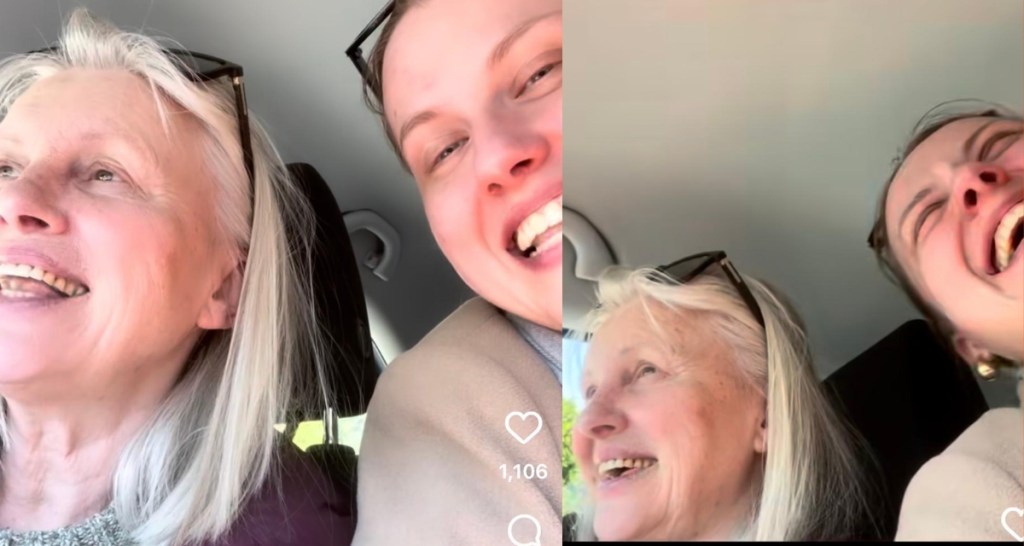
In an Instagram Reel posted on Mother’s Day, we see the pair joyfully singing in a car. The chyron across the clip reads, “Alzheimer’s took her words. But she still sings a full chorus – by heart in her second language in harmony with me.” As they lean in, each with sunglasses atop their heads, they smile while crooning “Guantanamera” in Spanish. (The song, with lyrics by Cuban poet José Martí, is a patriotic folk tune celebrating the “people.”)
Wiesnerova comments, “Music is how I communicate with my mom these days. I’ve never been more grateful for it.” So many in the comment section agree, with one even claiming, “This is the most beautiful video ever.” Another notes how Marina seems lit up by the music: “Her eyes are sparkling.”
In a second Instagram clip marked “Part 2,” Wiesnerova ups the ante. The chyron reads, “Alzheimer’s took my mom’s words. But she still sings. In harmony. In a foreign language.” This time the two sing the traditional Hebrew song “Hava Nagila.” She writes, “I’m starting a song. Will she join in?”
After just a few seconds, a text pops up on the video: “It worked! Wait to hear her sing gorgeous harmonies. So nice to hear her voice again.” She then asks Marina if “she wants to harmonize.” Indeed, she does. Wiesnerova gives her mother the starting pitch, and once again, pure glee spreads across both of their faces. She writes, “Finding a way to connect with her and smile means so much.”
Neuropsychology researchers continue to find the special link between dementia and music. In a piece posted to the Northwestern Medicine site, they quote neurologist Borna Bonakdarpour, MD, who they state “combines his love of music with research on how musical intervention affects the brain of people with dementia.”
Bonakdarpour shares, “When we use musical intervention, we’re looking for areas and networks in the brain that are intact to serve as bridges and help the areas that are not working well. Singing, for example, can be a bridge to communicating better through language. The rhythmic nature of music can help people walk better.”
This can be equally beneficial for caregivers and family members. He states, “People with Alzheimer’s may come alive again when they hear music. Some start dancing alone or with their caregivers, which is a very big deal. Caregivers find the person lost to them in the context of music.”
Anna Maria Matziorinis and Stefan Koelsch of the Department of Biological and Medical Psychology, University of Bergen in Bergen, Norway, co-authored a 2022 study entitled, “The Promise of Music Therapy for Alzheimer’s Disease.” In it, they also note how important music can be for these patients, writing, “Musical memory is partially spared in patients with AD, despite severe deficits in episodic (and partly semantic) memory. AD patients can learn new songs, encode novel verbal information, and react emotionally to music.”
Upworthy had the chance to chat with Wiesnerova about the lovely bond she maintains with her mom. She shares that it was in early 2023 when she got her diagnosis. “Singing and playing the piano together is something that was always very natural for us—that’s what we did together. She was a piano teacher and songwriter her whole life, I’m a singer and composer. When she got diagnosed, we just kept doing what we always did together. First she would play and I would sing.”
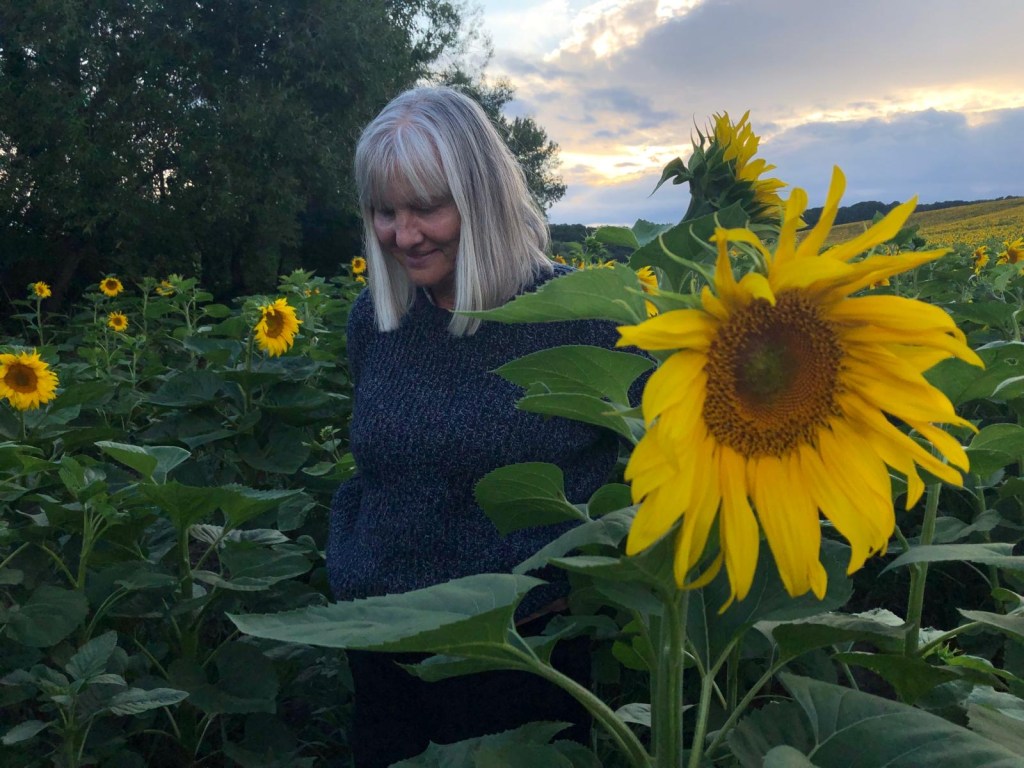
Marina Wiesnerova and sunflowers. Photo Credit: Ester Wiesnerova
She explained that even as Marina’s ability to speak was fading, she still maintains the power of music. “Even as her capacity to speak and understand language was going down, her musical abilities very much stayed. She even responds to verbal cues as long as they’re music-related. Like if I say, sing quieter, articulate more, or harmonize with me, she usually does it. But then if I ask her where she is right now or what my name is, she doesn’t respond. It’s fascinating.”
As for their relationship, they’ve always been close. “My whole life we’ve been very close—true best friends. We shared everything. She was also the only person in my family who encouraged my music career. Slowly losing her to the illness has been very difficult, as I was slowly adjusting to this new version of her and learning to love who she is now. And learning to find my ground when the person who grounded me is slowly disappearing. I am writing an album about this process to be released next year.”
Losing a loved one is arguably one of the hardest human experiences, but also one of the most universal. Few of us will go through life untouched by grief, but some losses hit harder than others, even when we know they are coming. For instance, most people expect their parents will die before they do, but that doesn’t make the loss any easier when it happens.
One man’s raw embrace of grief after losing his mother is resonating with people everywhere.
“I don’t want to,” replied Galloway, wiping away his tears.
Grief isn’t a bug, but a feature
“I think the receipts for love is grief,” Galloway said. “I hope my boys feel the same way about me. It hasn’t gotten in the way of my life. It makes me be more bold with my emotions. I used to see it as a problem. I went to grief counseling. Now I see it not as a bug, but as a feature. And so what I would tell every young person is I hope they have a lot of joy in their life. I also hope they have a decent amount of grief, because that means they have people they love immensely.”
“You can never tell your parents how much you love them too much,” he continued. “Forgive them, and…my mom died slowly, which was bad for her, but it was good for me because nothing went unsaid. I miss my mom terribly. I’m a middle-aged man who hasn’t gotten over the death of his mother. Light of my life. Raised me on her own. Secretary’s salary. Gave me confidence. Everything.”
I lived w/ my mother as she was dying of cancer. Taking care of a sick parent is one of the best things you can do in life and that you'll feel proudest of looking back. https://t.co/JlP11iiKuD
Do we really need to “get past” the loss of a loved one?
Galloway’s honesty about not wanting to get over his mom’s death hit home for a lot of people. So often, grief gets treated as a problem to fix, rather than an integral part of the human experience. Counseling can help when grief interferes with someone’s daily life, of course. But the idea that we need to “get over” or “get past” the loss of a loved one doesn’t make sense for a lot of people, as evidenced by the Instagram comments:
“Profound grief has not hindered my life. I welcome the tears. Heart forever broken but still beating.”
“My mom passed away 10 years ago and the pain can be unbearable. This is a beautiful way to frame this as ‘Receipts for love is Grief’ 🥹 I needed to hear this 🙏🏾 Thanks for sharing Scott.”
“Lost my mum 3 years ago and miss her everyday – the reason the way I am is because of her and I can never thank her enough – single mother warrior queen. ❤️”
“Exactly what I say when people tell me I need to get over losing my mom 🥹❤️ thank you.”
“I’ve never ever gotten over my mother passing nor will I ever and I am pleased to watch this video as I know I’m not alone. 💔”
“We need more of this type of conversation – BE BOLD WITH YOUR EMOTIONS! ♥️ People run away and hide from grief, pain and the uncomfortable – grief really is the receipts for LOVE ❤️ Grief doesn’t need fixing, just honour 🤍”
“I wonder at what point did humanity veer so off course that we started seeing grief as a problem. Thank you for this conversation! Grief is here because love was here first! ❤️”
“Grief is healthy. And we’re not supposed to ‘get over’ the loss of loved ones, in my opinion, we learn to love them and honor them differently.”
“This is exactly how I feel about my dad. What a beautiful way of looking at grief.”
Grief is evidence of love, and in Galloway’s case, the evidence clearly speaks for itself. What a beautiful tribute to his mother and a relatable approach to processing a profound loss.
Teaching kids how to clean up after themselves is one of the hardest things to do as a parent…mainly because it’s difficult to make taking out the trash or washing the dishes exciting.
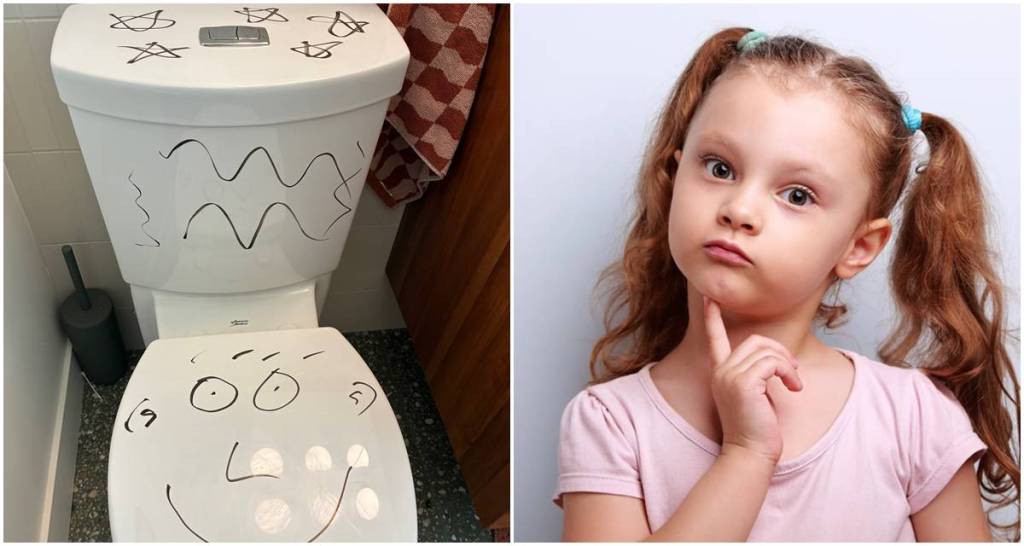
Jayne Ann Osborne, the creator behind MommingonPurpose, deserves love from parents everywhere because she took an incredibly icky chore, cleaning the toilet, and turned it into an activity her kids enjoyed. “Ready to teach your kids how to level up their toilet cleaning skills? You’re just a dry-erase marker game away!” Osborne opens her video.
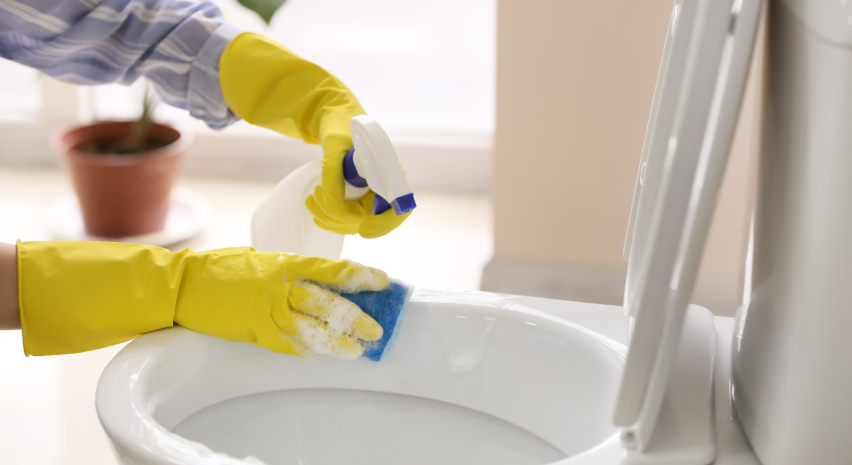
To teach her kids how to clean the toilet, Osborne first disinfected it herself, so her young kids wouldn’t be exposed to any germs. Then, she drew all over it with a dry-erase marker that wipes off easily with a wet rag. She told her kids that all the marks on the toilet were germs and that they all had to be wiped away.
Mom has a fun way of teaching her kids to clean the toilet
“By scrubbing the dry-erase marker off, they are learning all the nooks and crannies of the toilet in a way that is fun, challenging, and memorable. Without the ick,” she captions the video.
The dry-erase marker game works well because it teaches multiple lessons. Firstly, there are many hidden spots on a toilet that need cleaning and may not be noticed at first glance. Secondly, a toilet should be thoroughly cleaned because germs have many places to hide. After the job was complete, she gave her kids a prize depending on how well they wiped away all the evil germs.
Osborne does have a big note for everyone who tries this at home: “Keep a little isopropyl alcohol handy in case the dry-erase marker scribbles leave anything behind.”
Editor’s note: I tried this on my own toilet, and it took a little soap and water to get the dry-erase marker off the plastic toilet lid. It doesn’t wipe down as easily as porcelain.
Shifrah Combiths, a writer at Apartment Therapy, tried the toilet game and made sure her children understood the importance of cleaning the entire bowl. “The kids were exuberant about wiping off the marker, and we had to make sure they didn’t scrub the toilet tank lid too hard. My husband was worried it might crack! I also let them discover and wipe down all the marker lines as they found them, but I made sure after they were done, to explain to them that when cleaning a dirty toilet for real, it’s very important to start with the cleanest areas on the toilet and then work their way to the dirtiest. Of course, this only teaches them about the outside and lid of the toilet and not the bowl, but it’s still a useful lesson,” Combiths wrote.
Combiths also had a little difficulty getting the marker off the toilet lid. “The marker wiped perfectly clean from the porcelain surfaces of the toilet, but left marks behind on the plastic lid. Osborne recommends using isopropyl alcohol if this happens, and a Magic Eraser got most of it off in our case,” she wrote.
Osborne’s toilet-cleaning hack is a great way to teach kids how to clean one of the dirtiest and trickiest parts of the house, but she also has a great lesson for parents. With a little creativity and a sense of humor, just about anything can be made to be fun, even cleaning the toilet.
Raising kids is tough no matter what generation you fall into, but it’s hard to deny that there was something much simpler about the childrearing days of yesteryear, before the internet offered a million and one ways that parents could be, and probably are, doing it all very, very wrong.
What’s especially fascinating is that our data and best-practices have gotten so much better over time. Parents in the 80s had no idea that crib bumpers were dangerous, just like their parents didn’t know that using whiskey as a sleep aid probably wasn’t the best idea! We know better, and yet, we’re burdened by the overwhelming amount of knowledge and potential dangers around us.
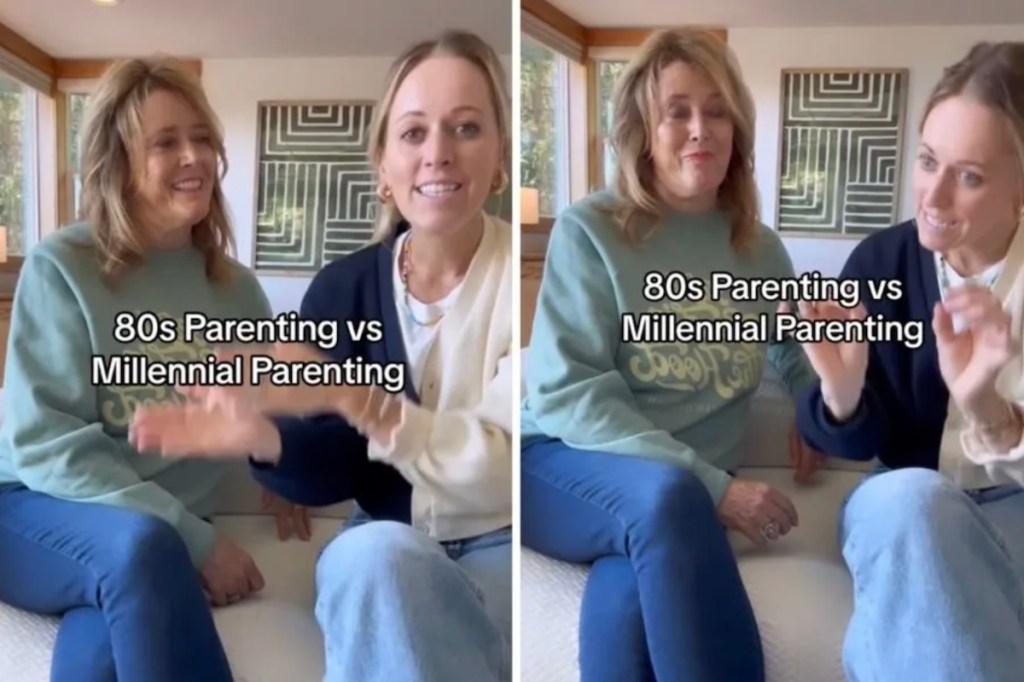
Taylor Wolfe, a millennial mom, nails this conundrum perfectly as she asks her own mother a series of rapid-fire questions about raising her during the 80s and the stark contrast in attitudes becomes blatantly apparent.
The conversation that hit a collective nerve
In a clip posted on TikTok, Wolfe and her mom sit side by side on the couch and have a fascinating discussion.
First off, Wolfe can’t comprehend how her mom survived without being able to Google everything. (Not even a parent, but I feel this.)
“What did we have to Google?” her mom asks while shaking her head incredulously.
“Everything! For starters, poop!” Wolfe says. “Cause you have to know if the color is an okay color, if it’s healthy!”
“I was a nursing mom, so if the poop came out green, it was because I ate broccoli,” her mom responds.
…Okay, fair point. But what about handy gadgets like baby monitors? How did Wolfe’s mom keep her kid alive without one?
“I was the monitor, going in and feeling you,” she says. Wolfe asked her mom how she slept without a baby monitor and knowing for certain, at every instant, that she was safe? “We just slept” her mom deadpanned.
Her mom’s answers are something else entirely
Could it really be that easy? It was for Wolfe’s mom, apparently. Rather than relying on technology, she simply felt her child and adjusted accordingly.
“If you were hot, you slept in a diaper. If you were cold, you had a blanket around you.” Done and done.
Wolfe then got into more existential questions, asking her mom if she ever felt the stress of “only having 18 summers” with her child, and how to make the most of it.
Without missing a beat, Wolfe’s mother says, “It’s summer, I still have you.”
Cue the tears!
Going by Wolfe’s mom, the 80s seems like a time with much less pressure on parents.
From feeding her kids McDonald’s fries guilt-free to being spared the judgment of internet trolls, she just sort of did the thing without worrying so much if she was doing it correctly.
Parents today are feeling it too
That’s nearly impossible in today’s world, as many viewers commented.
“Google just gives us too much information and it scares us,” one person quipped.
“it’s almost like all the technology, and it’s advertising, leads to so much unnecessary anxiety” someone added.
Even a professional noted: “As someone who has worked in pediatrics since the 80s, the parents are way more anxious now.”
It’s no wonder that parents’ mental health is, collectively, in the toilet. We’re more stressed today about money, work-life balance, getting into good schools, signing up for activities that gobble up all our time… everything.
I don’t think anyone truly wants to go back in time, per se. But many of us are yearning to bring more of this bygone mindset into the modern day. And the big takeaway here: No matter how many improvements we make to life, if the cost is our mental state, then perhaps it’s time to swing the pendulum back a bit.
This article originally appeared three years ago. It has been updated.
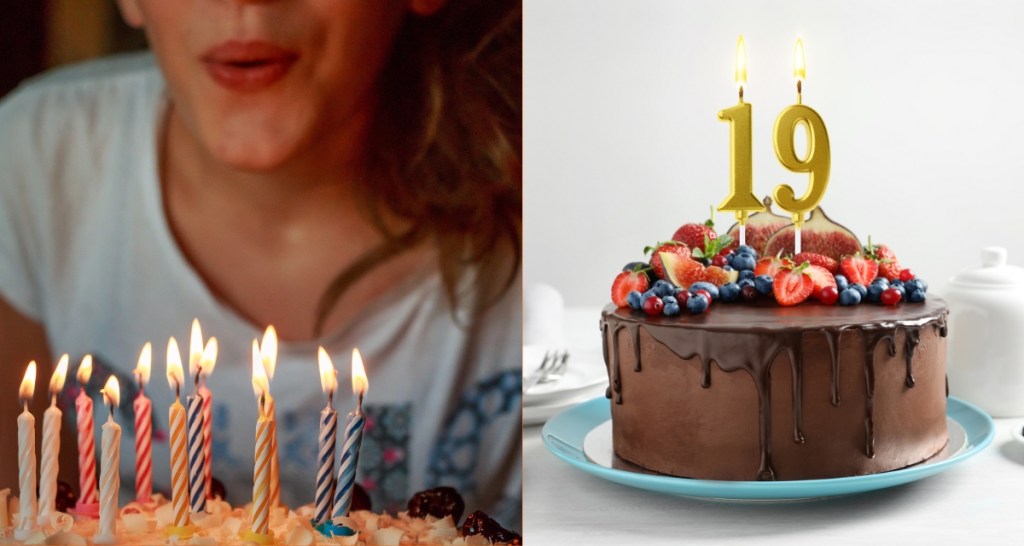
A woman who uses the Instagram handle Hope with Holly often makes videos in which she imparts wisdom from her own experiences. She’s candid in her discussions about feminism, marriage, divorce, finding courage, and much more. So when her daughter turned 19, it seemed like the perfect time to share 19 pieces of advice for a better life.
In a Reel dedicated to her daughter, she lays it all out with precision and love. Casually putting her hair in a ponytail while slicing a watermelon—and later placing strawberries on a white-frosted birthday cake—she looks straight into the camera and declares, “This is what all women should know by the time they turn 19.”
You are not here to be chosen. You are here to choose. “And if you build your life around being picked, then you will tolerate things that you should walk away from.”
Your ability to earn money will determine your freedom. “Love matters. But money determines if you can leave if it turns unhealthy.”
Attraction is not a sign of safety. “Your nervous system can be drawn to chaos. It’s not a sign of safety. Know the difference.”
A man’s potential is irrelevant. His patterns are everything. “Only patterns matter. Patterns are who he is.”
Chemistry can lie. Character doesn’t. “Butterflies are often anxiety. And peace often feels like boredom. But it’s what lasts.”
If he can’t regulate his emotions, he will regulate them through you. “That means control, blame, withdrawal, anger, or defensiveness. Don’t let that happen.”
You cannot love someone into being healthy. “Love does not fix trauma. Only therapy, accountability, and effort do.”
Marriage will not fix a relationship. “It will amplify whatever’s there, whether it’s good or bad.”
Children will expose a relationship, not save it. “They do not bring you closer. They just expose what’s already broken…or strong.”
Your standards will cost you relationships—and that’s the point.
Loneliness is not an emergency. “Rushing to fill it is how you end up in the wrong life.”
A man who wants you will pursue you with clarity. “If you feel confused about him, that’s your answer. Walk away.”
Sex is not a currency for love. “Instead, it’s the byproduct of a healthy relationship—and an emotionally safe relationship.”
Your body will change. Your value does not. “Anyone who ties your worth to your youth is not a safe person.”
Pay attention to how he handles the word “no.” “That will tell you everything you need to know about him.”
You teach people how to treat you by what you tolerate. “Boundaries are not words. They’re decisions. Enforce them.”
Healing is your responsibility. “What happened to you was not your fault. But what you allow to continue is your responsibility.”
Build a life that you do not need to escape from. “Then choose a partner who enhances it.”
You are allowed to want more. “More respect. More peace. Settling is not maturity. It’s just fear dressed up as acceptance.”
She adds, “Now I don’t need you to be perfect, girl. But I do need you to be powerful enough to walk away from anything that’s not perfect for you. Happy birthday, honey!”
The comment section is filled with support, especially from people who say they wish they’d learned these lessons earlier.
“I can only imagine how different my life would have looked had I heard this narrative by 19. Learning all this by 39. Better late than never. Thanks, mama.”
Some are also highly focused on her decorating and baking skills: “Now let me watch this again but this time without getting highly distracted by all the layers of that awesome fruit tower.”
And one 19-year-old was especially grateful, writing, “I turned 19 two months ago, seeing every woman wishing they heard these when they were younger, I would like thank you so much that you reached me in the right time 🙂 Happy birthday to your daughter and wishing your family the best 💛”