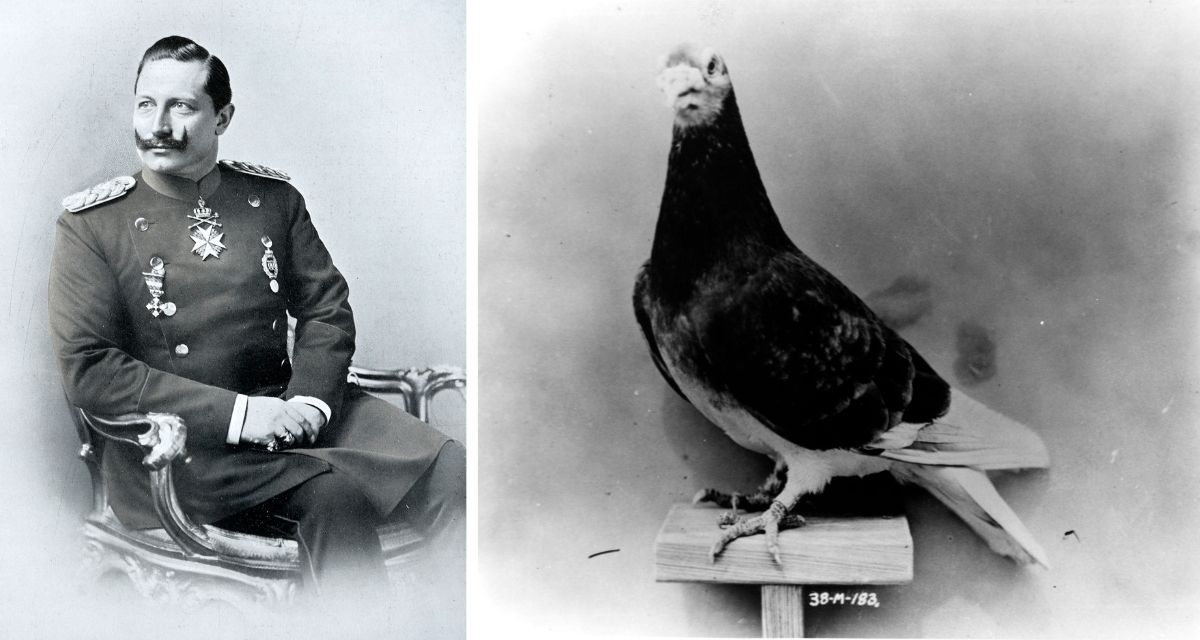
When you think of those who serve their countries in the military, you don’t usually think of pigeons. And yet, thousands of carrier pigeons did their patriotic duty (that is, were used by various countries’ militaries) during World War I and World War II. They played a vital role in getting messages through battlefields and into the trenches.
As the National Museum of the United States Army shares:
“In the Great War, pigeons proved essential in trench warfare. Massed artillery fire caused more casualties than any other weapon, and communication between the forces in the trenches and those in the rear areas was essential to avoiding friendly casualties. Artillery fire could cut communication wires and prevent human runners from bringing messages to the rear echelons, but homing pigeons were a low-technology solution, operating swiftly despite bombardments, dust, smoke, and bad weather.”
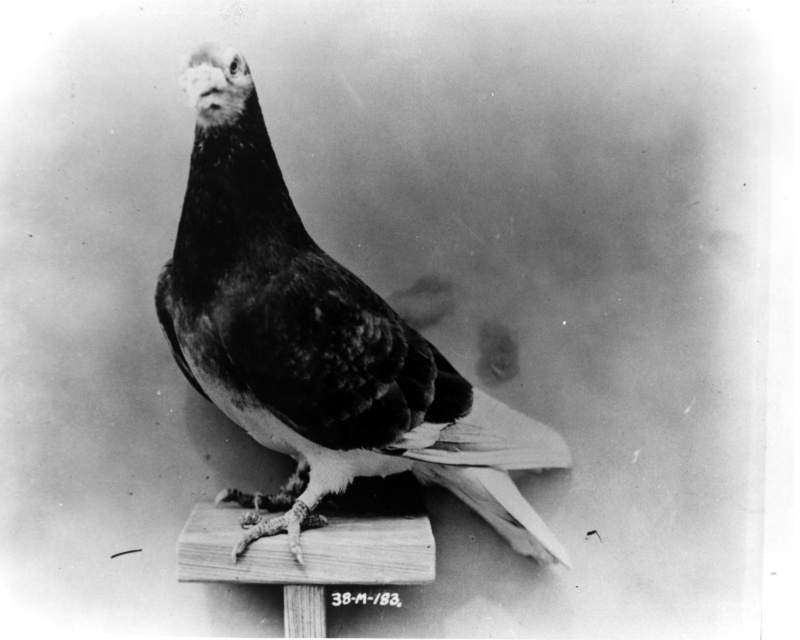
Kaiser was no ordinary war pigeon
One particular pigeon not only helped out in both World Wars, but also unwittingly switched sides. “Kaiser” the homing pigeon started carrying messages for Kaiser Wilhelm II’s army in April of 1917, right as the United States declared war on Germany. For a year and a half, he served the Germans, but was captured by American forces in October of 1918.
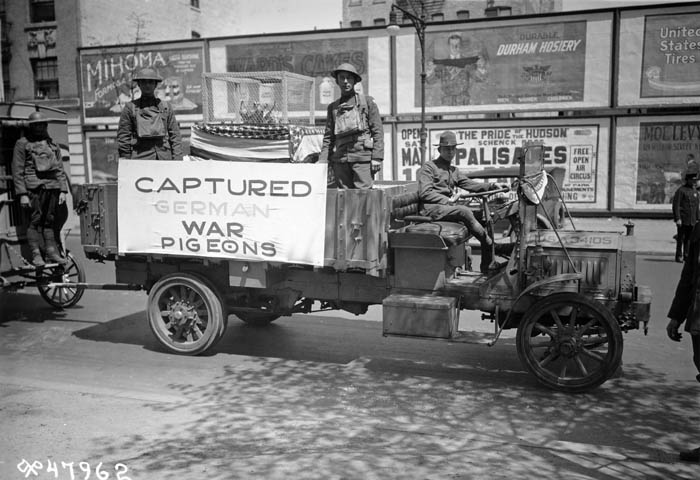
The war ended less than a month later, but Kaiser, along with 21 other German war pigeons, remained a captive of the U.S. armed forces. The military brought the birds to the U.S. and used them for public relations and morale purposes. Kaiser and his feathered friends were displayed in the 1919 Victory Parade in New York with a sign that read “Captured German War Pigeons.”
Kaiser ultimately settled in at the Signal Corps Pigeon Center in Fort Monmouth, New Jersey. While he was technically a prisoner of war, his American captors gave him a pretty comfortable life (in addition to his epic name). He was given a mate at the center and became a breeder of other champion homing pigeons.
A beloved member of the U.S. Army community
By the 1930s, Kaiser was the only surviving German war pigeon in American custody, but he lived on even longer than that.
Kaiser was prolific during his breeding years, siring over 75 birds. His progeny were legendary, too. Despite his advanced age, he produced many champion homing pigeons who served American forces in WWII.
When his offspring were sent off to the front for their messenger duties, Kaiser was transferred to the U.S. Army’s Pigeon Breeding and Training Center in Camp Crowder, Missouri. There, he and his latest mate, Lady Belle, were given their own private, white loft equipped with an electric heater to make cold nights cozier for the aging POW.
After the war, Kaiser was moved back to Fort Monmouth to live out his retirement at the Signal Corps center. By this time, he had become a beloved part of the U.S. military community. On February 27, 1948, the army celebrated Kaiser’s 31st birthday. The fort’s nursery school children even held a full-fledged birthday party, making him the guest of honor. He even attended the inauguration of President Harry Truman on January 20, 1949, joined by fellow war hero pigeons G.I. Joe and Jungle Joe.
Being immortalized in the Smithsonian Museum
By the time he died in October of 1949 at age 32, Kaiser was believed to be the world’s oldest pigeon. He had even outlived his namesake. Otto Meyer, chief of the Signal Corps Pigeon Breeding and Training Center at the time, said that his death was “a great blow” to the U.S. Army.
Kaiser now “lives” at the Smithsonian Museum, preserved for posterity and displayed for present and future generations to learn from. But Kaiser’s bloodline undoubtedly lives on out there among the free birds of the world. His great-great-great-great grandchildren were sold to the public when the army ended its pigeon service in 1957, so his descendants could be anywhere, probably outflying and outliving their fellow pigeons.