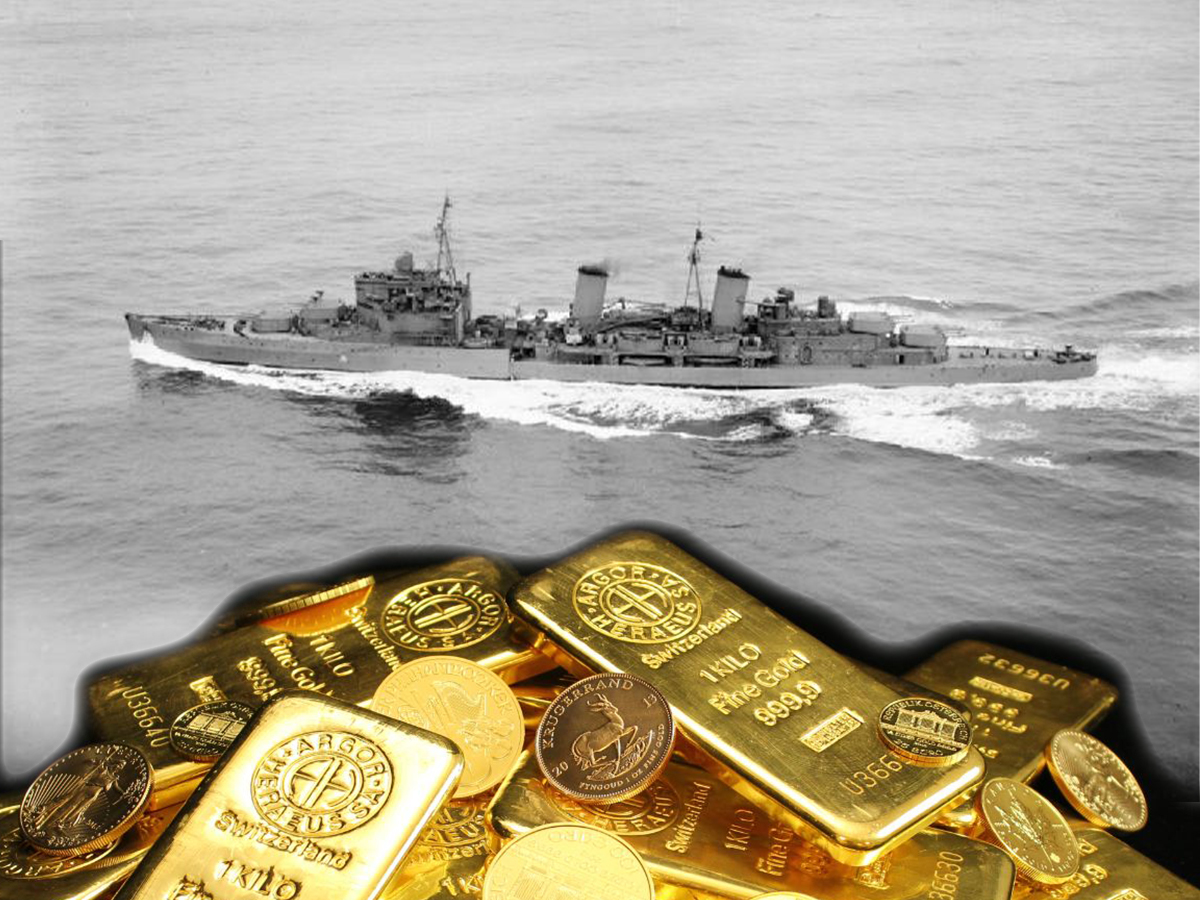
For almost 40 years, more than five tons of gold sat at the bottom of the Barents Sea. The treasure was locked inside the hull of a British World War II cruiser named HMS Edinburgh, 800 feet beneath the surface.
Finding the wreck was difficult enough. Getting 465 bars of gold out of a sunken warship was a whole other problem.
Pulling it off would require specialized divers, cutting-edge equipment, and somehow finding a way inside a ship that had been sitting on the seafloor for decades.
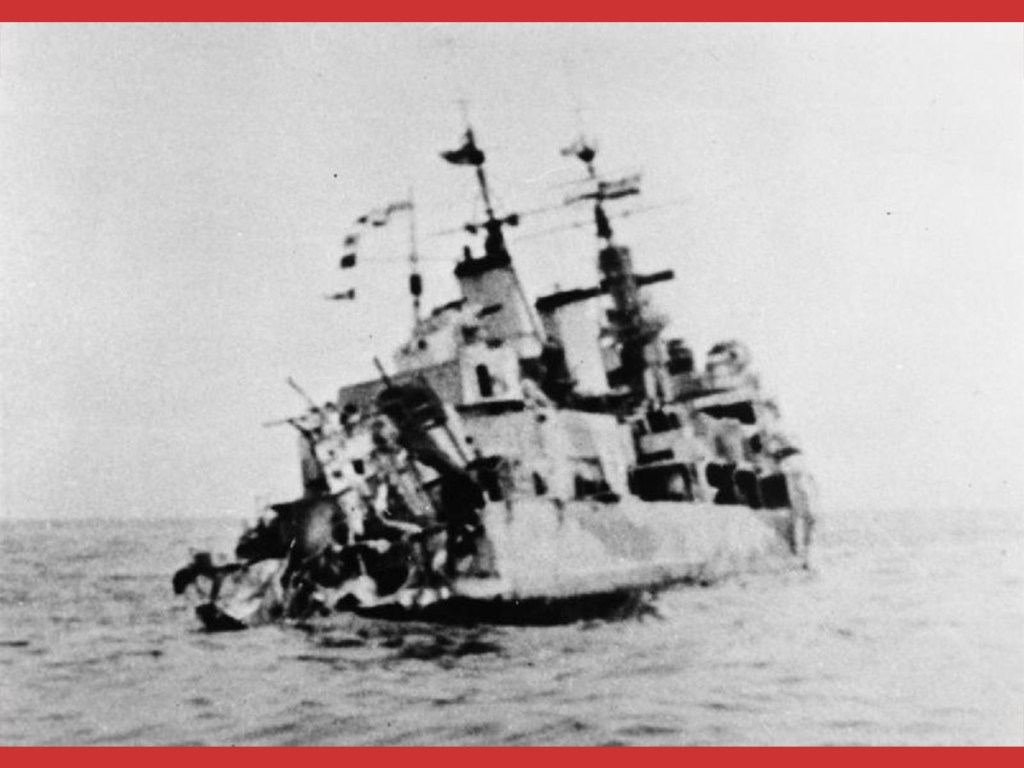
Photo credit: Imperial War Museum/Wikipedia Commons
465 bars of gold sunk beneath the Arctic Ocean
The HMS Edinburgh left Murmansk on April 28, 1942, as part of a convoy. On board was a shipment of gold from the Soviet Union, sent as payment for wartime supplies.
The ship didn’t get far. A German submarine, U-456, struck the Edinburgh with two torpedoes. Badly damaged, the cruiser was placed under tow and quickly turned back toward port.
In a story for BFBS Forces News, crew members described the ship’s quarterdeck as “ripped up like a sardine tin.”
On May 1, the Germans attacked again, and the crew was ordered to abandon ship. When it became clear the cruiser couldn’t be saved, British support vessels scuttled it. Fifty-eight crew members lost their lives, and 465 bars of gold disappeared beneath the icy waters of the Barents Sea.
Decades passed. There had been plans to recover the fortune, but obstacles prevented it from happening. The wreck sat extraordinarily deep. No one knew exactly where to find it, and it had been designated a war grave.
Keith Jessop spends years looking for a lost ship
Keith Jessop ran a marine salvage business, Jessop Marine Recoveries. His small operation didn’t have the resources to recover the gold alone, so he joined forces with other companies that could provide the ships, specialized diving and surveying expertise, and financing needed for the job.
Putting the right team together solved one problem. But they still had to find the ship.
For years, Jessop gathered whatever clues he could find about the ship’s location. He studied historical naval records and survivor accounts that offered some direction. By the spring of 1981, his research had helped narrow down where to look.
On May 14, powerful sonar and echo sounders detected a wreck below. A remotely operated vehicle was sent 800 feet down to take a closer look.
It was the Edinburgh.
Jessop reportedly said, “That’s one in the eye for all the people who have been calling me a blind fool for the past six years.”
Finding it had taken years. Getting the gold out would prove much harder.
The easiest way into the ship was blocked
The wreck was too deep for ordinary scuba diving. The salvage required saturation divers who lived under constant pressure within a steel chamber aboard the ship. The two-man teams worked day and night, descending for their shifts 800 feet down to the site in a diving bell. An umbilical cable supplied the breathing gases they needed, along with hot water to keep their diving suits warm in the near-freezing water.
The expedition was the first commercial diving operation to use a gas-recovery system. In a 2010 interview with The Scotsman, Ric Wharton, whose company worked on the salvage, described it as “the maritime equivalent of a Moonwalk.”
A computer-controlled positioning system kept the ship from drifting and pulling the divers across the seafloor below. Once they reached the wreck, the plan was to enter through the hole left by one of the German torpedoes that had doomed the Edinburgh. But wreckage and ammunition blocked the way.
There were millions of dollars in gold somewhere inside the ship, yet the divers couldn’t reach it. So they decided to make their own door.
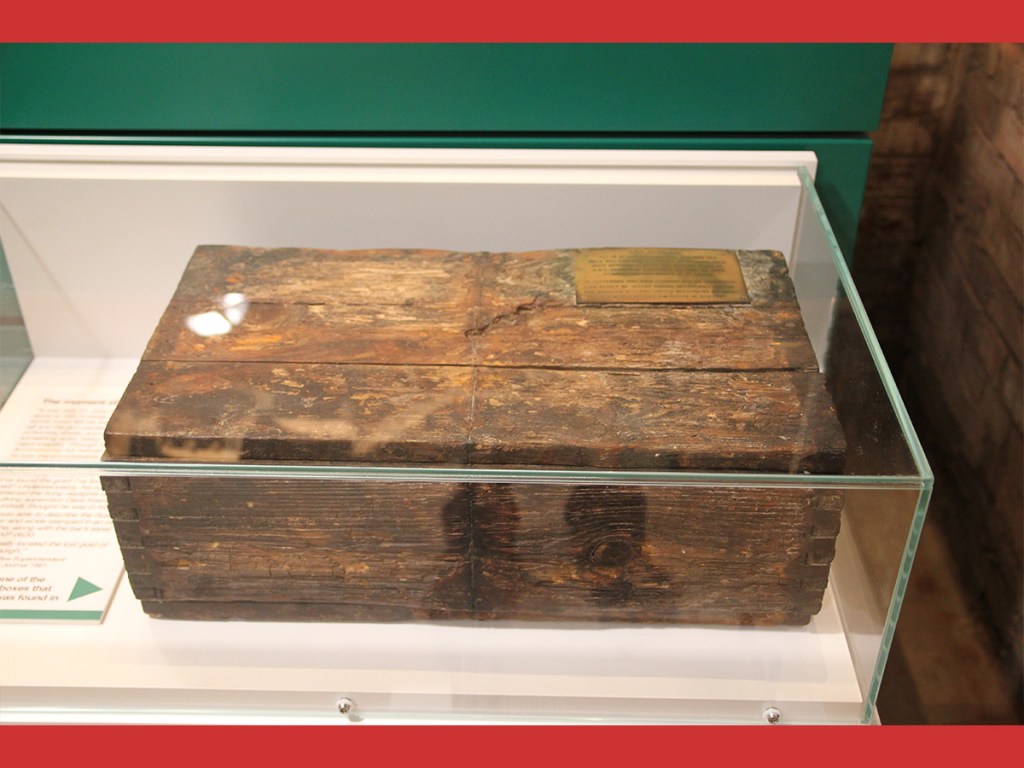
Photo credit: Tim Sheerman-Chase/Wikimedia Commons
4 inches of steel stood between them and the treasure
This ship wasn’t designed to be easily broken into. It was, after all, a warship.
A 2025 Subsea Formula account of the salvage explains that the divers used oxy-arc cutting torches to cut through the four-inch armor and fuel-tank area. Even then, they weren’t at the gold.
This cutting approach allowed the team to avoid using explosives and disturbing the designated war grave.
The divers spent about a week cutting and clearing a path through the ship toward the bomb room that held the gold. Along the way, they also had to remove dangerous ammunition.
Then, on September 15, diver John Rossier found the first gold bar. Nearly three football fields beneath the surface, he radioed up, “We found the bar, we found the bar, we found the bar!”
From there, the crew loaded as many as 40 bars at a time into a metal cage and hauled them back to the surface. Worsening Arctic weather brought the operation to a stop, but not before the team had recovered 431 of the 465 bars.
With gold trading at a little over $4,300 a troy ounce, the 431 recovered bars would be worth around $716 million today. But 34 bars were still somewhere inside the Edinburgh.
Five years later, another expedition returned to the wreck with more advanced diving equipment. This time the divers recovered another 29 bars, bringing the total to 460.
As for the final five bars, they remain unaccounted for.