
Iconic actor and author Henry Winkler is not only a delight to watch on-screen; he brings a little sprinkle of hope to nearly everyone he meets. Winkler has never taken his success for granted. On the contrary, he’s extremely open and aware that he’s a product of talent having had the fortune of intersecting with genuine luck.
One of the attributes that makes Winkler extra special is that he authentically champions those around him. No matter their age, background, or lot in life, he doesn’t seem to lose hope in humanity (even when we sometimes lose it in ourselves). In a recent Instagram clip shared by The Female Quotient (@femalequotient), Winkler gives invaluable advice for anyone who thinks they may have missed the proverbial boat.
A window is rarely closed
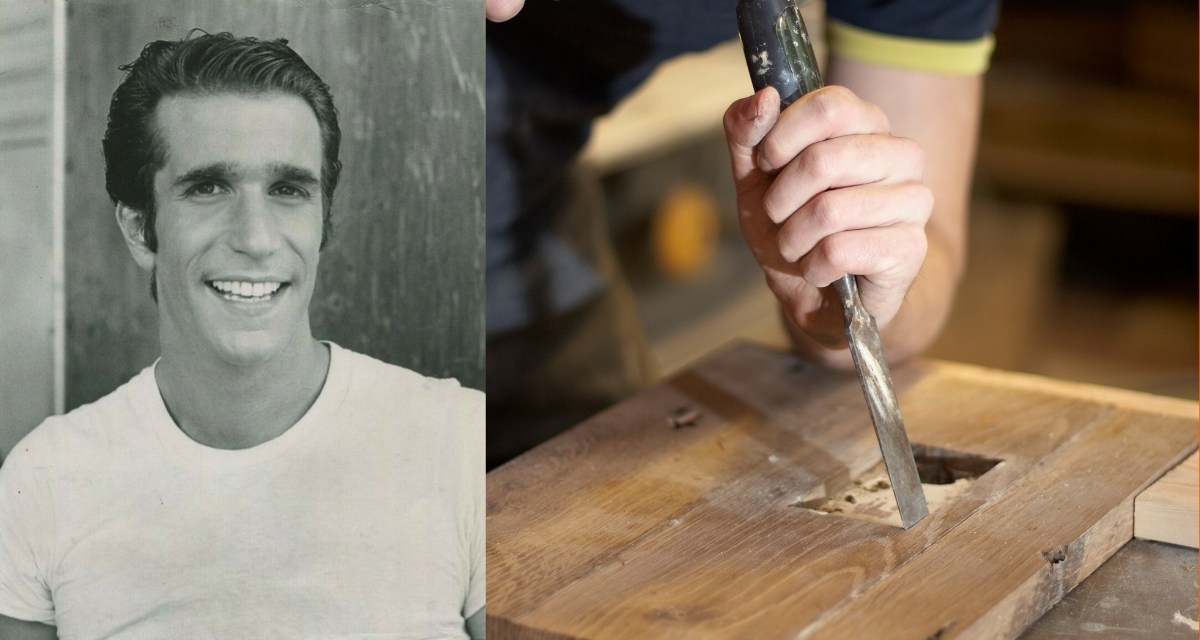
Winkler looks straight into the camera and says with passion, “If you think your window is closed, I am here to tell you, it is not. It might be painted shut. You get a chisel, and you open it.”
The simplicity of the words “you get a chisel” stood out to many in the growing comment section. Winkler himself writes, “I only know this because I lived it.”
Although Winkler had major success as Fonzie in Happy Days in his late 20s and 30s, he didn’t win his first Primetime Emmy until he was 72!
One fan shares, “Love the metaphor of the chisel. It is absolutely appropriate. Yes, it implies a lot of effort, but it is hopeful.”
Maintaining hope
Hope is the key. Research has shown time and again that as we age, one element of life is feeling like it has all passed us by. Maintaining a sense of hope and believing there is always a way to find joy is crucial for happiness.
A study by University of Missouri researchers suggests that not only does ‘hope” motivate, it also helps overall happiness. “A team of researchers led by Megan Edwards and Laura King from Mizzou’s Department of Psychological Sciences is challenging that idea, showing that hope stands apart as one of the strongest positive emotions that directly fosters a sense of meaning,” they write.
Edwards shares, “‘Our research shifts the perspective on hope from merely a cognitive process related to goal attainment to recognizing it as a vital emotional experience that enriches life’s meaning. This insight opens new avenues for enhancing psychological well-being.”
Back to Winkler’s comment section, another adds a beautiful sentiment: “Sometimes the window didn’t close. We just outgrew the version of ourselves that knew how to open it.”
True kindness
Winkler’s kindness is one of his standout traits. One Instagrammer shares, “I lived in Hollywood for about a dozen years while my husband ran a studio. Henry was the nicest person I ever met there. He always looked me in the eyes when he spoke to me, and never looked over my shoulder for someone more important to talk to.”
My experience with Winkler
I can attest to his kindness as well. Many years ago, a close friend was a writer on a game show, which Winkler was producing. She invited me to come have lunch with the team in the greenroom, and as I loaded up my plate in the “serving buffet,” she introduced us. He looked at me like we were long-lost family and asked, “Can I call you CEC?” I, of course, said, “You bet!’ He then picked me up and spun me around. “Cec! It was great to meet you!”
It was just 2:00 p.m. on a Thursday in the middle of a workday. What would have normally been just a few free paninis turned into a buttery “feeling” I could carry with me the rest of my life. So if anyone could inspire someone feeling hopeless to find that chisel, it’s him.








.jpg)