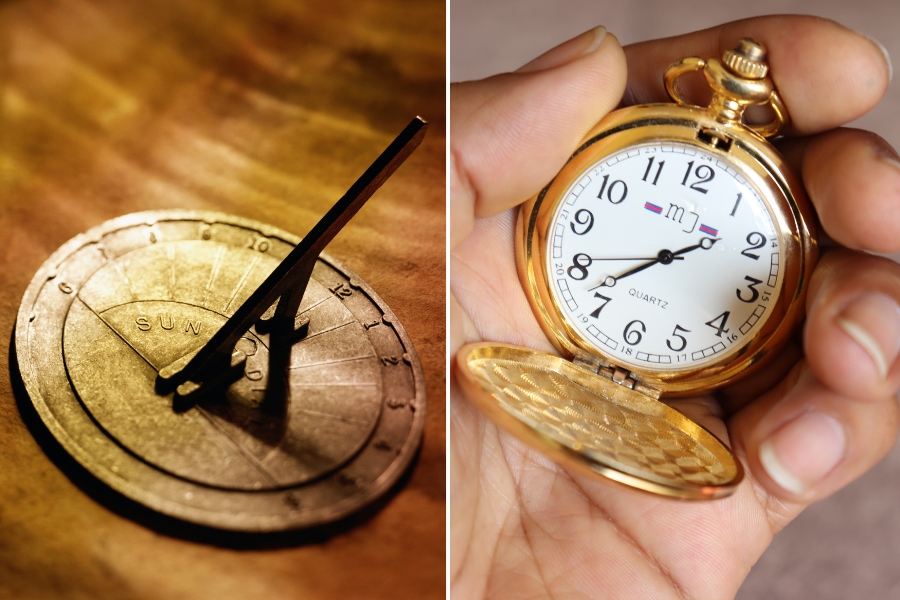
Humans have devised many ways of measuring things in an attempt to learn more about our world, including numerical systems that help get us all on the same page. But we haven’t always agreed. The ongoing battle between the imperial and metric systems demonstrates the challenge of standardizing measurement. As most of the world uses the base-10 metric system, the United States remains the primary imperial holdout.
But one thing we agree on is how we measure time, or at least how we measure hours and seconds. And oddly enough, it’s not using the metric system. Why is that? How did we decide to split days into 60-minute hours and 60-second minutes instead of splitting them into, say, hundredths?
Why there are 24 hours in a day
Let’s start with how we got the 24-hour day. We measure time, in general, by years using the Earth’s full orbit of the sun. But we could really split that year up any way we choose. The rising and setting of the sun gives us a framework for days, so that’s a helpful divisor. However, daylight length varies greatly from place to place and from season to season. So how did we land on 24 hours in a day?
We have the ancient Egyptians, Babylonians, and Greeks—and their affinity for duodecimals (counting by 12)—to thank for that. They each had a way of breaking light and dark hours into 12 parts each, giving us a 24-part day. However, those 12 parts were not measured equally.
According to Scientific American:
“The concept of fixed-length hours, however, did not originate until the Hellenistic period, when Greek astronomers began using such a system for their theoretical calculations. Hipparchus, whose work primarily took place between 147 and 127 B.C., proposed dividing the day into 24 equinoctial hours, based on the 12 hours of daylight and 12 hours of darkness observed on equinox days. Despite this suggestion, laypeople continued to use seasonally varying hours for many centuries. (Hours of fixed length became commonplace only after mechanical clocks first appeared in Europe during the 14th century.)”
Why there are 60 minutes in an hour
Oddly enough, the need for a standard way to divide 12-hour days and nights into smaller parts led us back to ancient times once again. The Babylonians used a sexagesimal (base-60) system to make astronomical calculations, which they had inherited from the Sumerians, who used it around 2000 B.C.
What makes 60 special? With 12 divisors (1, 2, 3, 4, 5, 6, 10, 12, 15, 20, 30, 60), it can be evenly divided in more ways than any other number up to and including 100, which has only nine divisors.
Using that system, Greek astronomer Eratosthenes (276 to 194 B.C.) divided a circle into 60 parts to measure latitude. Hippocrates honed this sexagesimal (base-60) system by adding in longitude a century later. Ptolemy later improved those measurements, subdividing the 360 degrees of latitude and longitude into smaller parts.
The first 60 parts became known as partes minutae primae, or “minutes.” The second division of 60 became partes minutae secundae, or “second minute” (what we now call seconds).
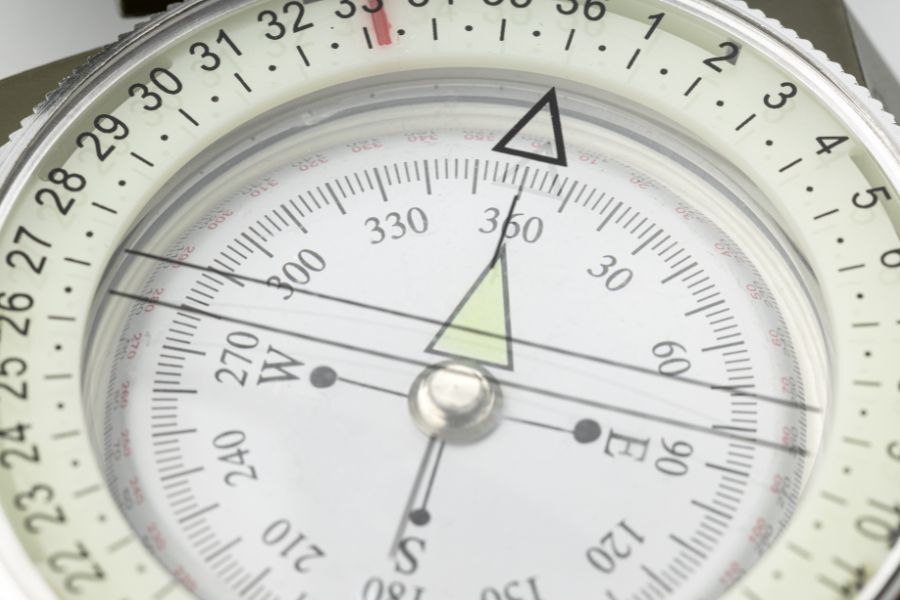
Those minutes and seconds were used for measuring latitude and longitude, not time, but a circle is a circle. The very first round clock displays divided hours into halves, thirds, quarters, and even twelfths, but not sixtieths. The 60-minute hour didn’t become popularized until minutes were put on mechanical clocks at the end of the 16th century. The spread of the Gregorian calendar around that time also helped universalize how humans measured time, but countless questions remained about the precision of timekeeping.
Exactly how long is a second?
After all, how long is a second exactly? We can measure it as a division of larger units of time, but on its own, how do we determine a standard for it? Precision and standardization in timekeeping became more and more important as things like train travel, where people had to know what time a train would arrive or depart, became more common.
That happened in 1967, when researchers gathered at the 13th General Conference of the International Committee for Weights and Measures. Among other things, they debated which element to use as the standard for atomic clocks. Ultimately, they landed on Cesium-133, which had been used in atomic clock research since the 1950s.
The video above explains exactly how and why scientists chose that element and made the calculation, but the result was that a second became formally defined as exactly 9,192,631,770 ticks of a Cesium-133 atom.
That may be far more than you ever wanted to know about time measurement. But isn’t it fascinating how a combination of ancient wisdom and modern technology gave us 60-minute hours and clocks that can tell us, down to the second, what time it is anywhere in the world? Aren’t humans amazing?