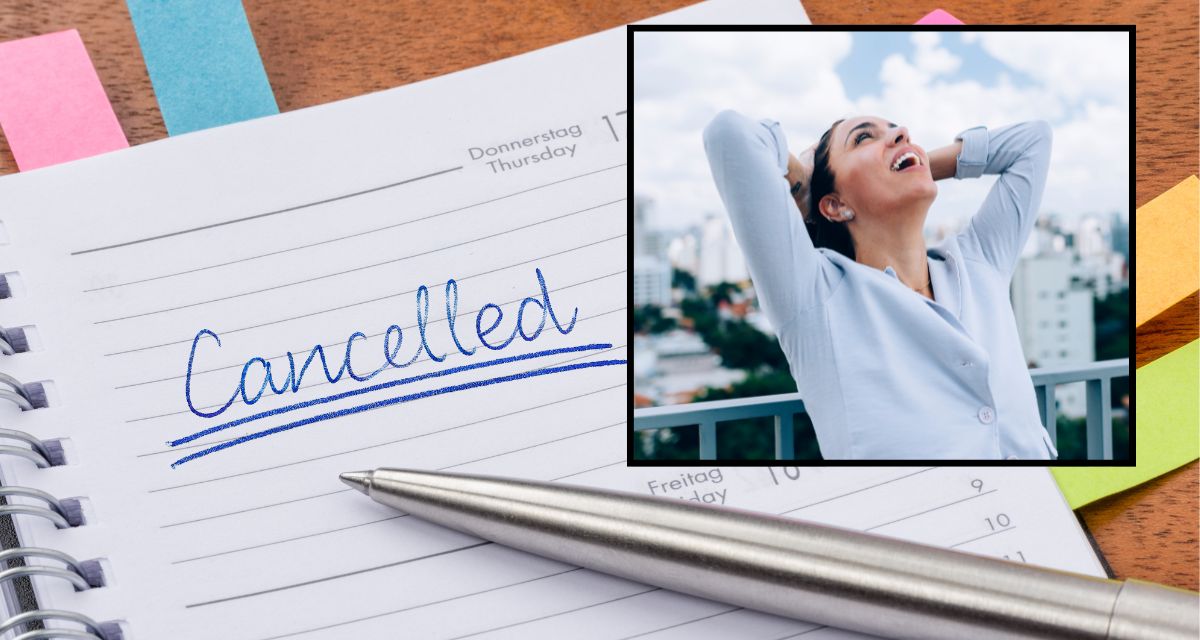
Most of us are familiar with the sudden rush of relief that comes when a work meeting gets canceled. Even if you’re only getting 60 minutes of your time back, it can feel like a huge chunk of the day is suddenly uncharted territory. That feeling is liberating—a rare moment when your schedule loosens its grip, reminding you that not every second of your time is spoken for.
It turns out there’s a scientific explanation for this wave of euphoria, and it has everything to do with our (very subjective) sense of time.
A Rutgers University study, published in the Journal of the Association for Consumer Research, found that when people unexpectedly gain free time, they perceive it as longer than time that was already designated as free. The researchers call this phenomenon “windfall time.”
“An hour gained feels longer than 60 minutes, and that deviation from expectation creates a unique sense of opportunity,” said Gabriela Tonietto, an associate professor of marketing at the Rutgers Business School and lead author of the study.

Tonietto’s past work has explored various aspects of time management and perception, including “time famine” (the persistent feeling of not having enough time) and the benefits of having nothing to do. Her research often highlights how our relationship with time is shaped less by the clock and more by context, expectation, and emotion.
After conducting seven surveys involving more than 2,300 participants, the team found that windfall time results from the “contrast effect.”
That surprise hour is inherently judged against the initial expectation of having no free time at all, and thus feels perceptually expanded. In other words, a canceled one-hour meeting gives you 60 more free minutes than you expected to have. That mental comparison alone is what makes the time feel richer, fuller, and more valuable.
In terms of productivity, the study also found that people were just as likely to use windfall time for work (often longer tasks) as they were for breaks or personal errands. Tonietto cautioned against employers trying to engineer these surprises, especially at the last minute, as it could backfire and create frustration rather than relief.
Instead, Tonietto suggests that whenever this windfall comes, we should simply “take the gift and make the most of it.”

And really, this discovery hits a little broader than just the workplace.
Parents, for example, might never know a sweeter bliss than the 45 minutes of free time gained when their child takes a nap. A delayed appointment, an early dismissal, or even a plan that falls through can become an unexpected pocket of possibility. That might mean being productive, or doing nothing at all, without guilt.
For example, some people find it helpful to use windfall time to start a task that normally feels too big to begin. Because the time feels more expansive, it can lower the mental barrier to getting started, even if only a small portion gets done. Others might choose something genuinely restorative, like stepping outside, taking a short walk, or simply sitting in silence without distractions.

It can also help to pause before automatically filling the time. Resisting the urge to default to scrolling or busywork, even briefly, allows you to decide what would actually feel good or useful in that moment. Keeping a loose mental list of things you enjoy or have been meaning to do can make these unexpected pockets of time feel even more rewarding.
Perhaps the biggest takeaway is to start seeing more of our time as “windfall time,” so we can make the most of it—or at least appreciate it more. Because sometimes it’s not about having more time, but about recognizing the moments when it unexpectedly appears.