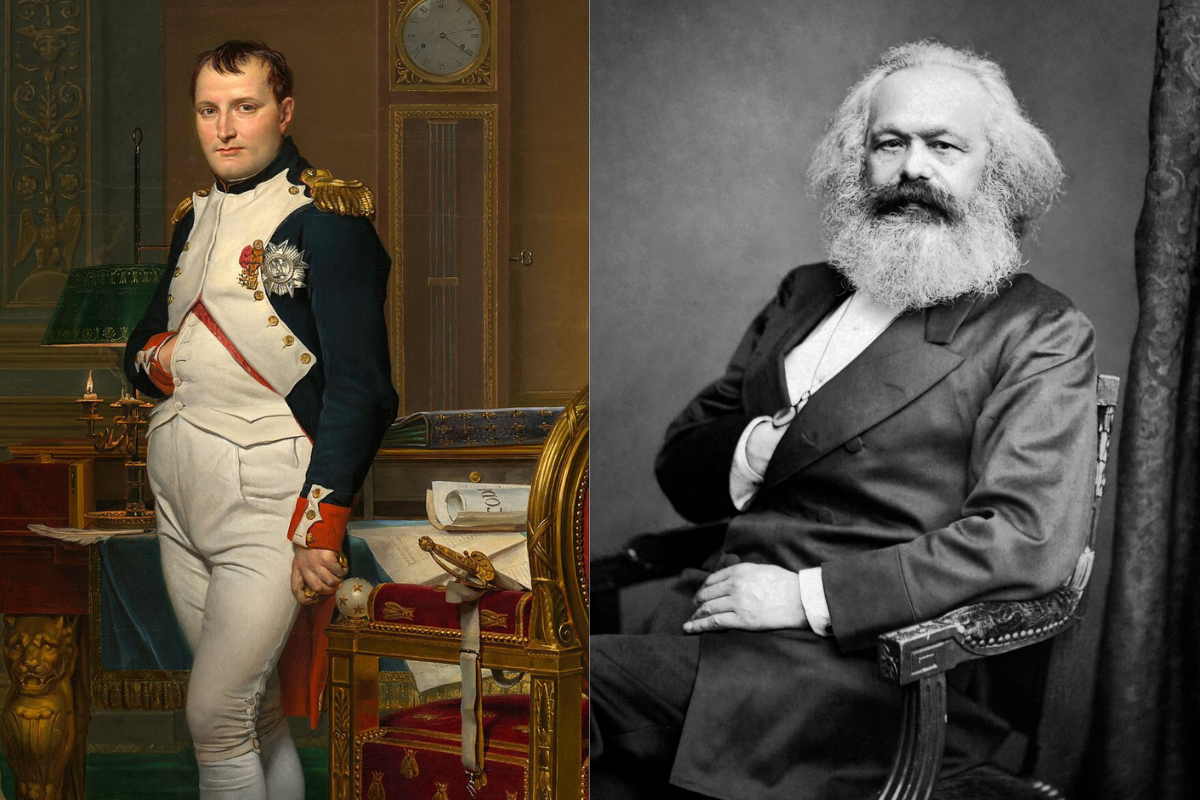
One of the most famous portraits of Napoleon, completed in 1812, features him striking a rather odd pose. He’s slouching in a formal uniform while standing in his study, but it’s the placement of his right hand that strikes some viewers as unique.
His hand is tucked into his uniform. Not in a pocket, per se, but right through the buttons, which have been opened to accommodate all five fingers. It looks a little like he’s getting ready to pull out a pocket watch or a pistol. It’s not a pose you would see commonly these days, that’s for sure.
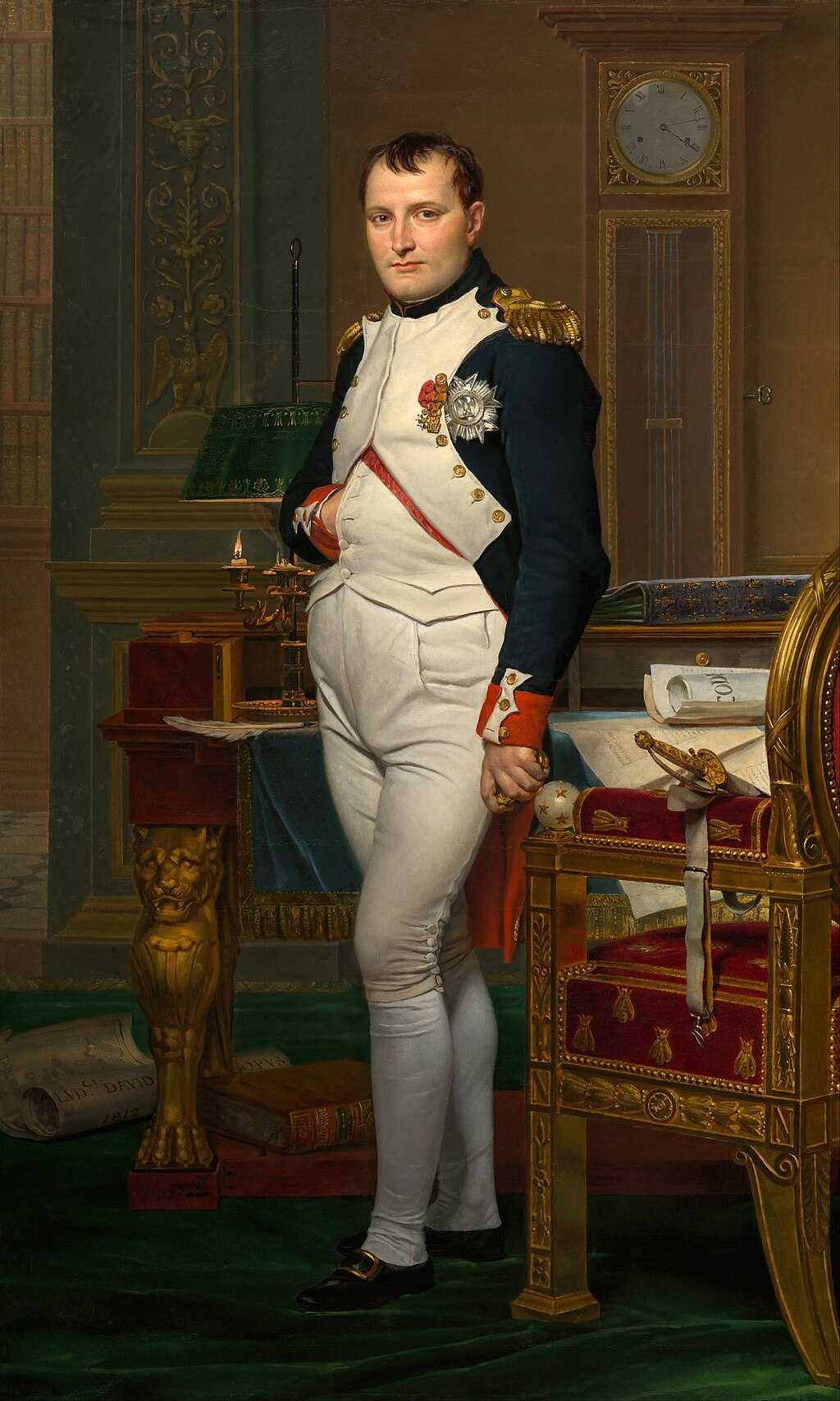
The more you look at it, the stranger it becomes. What’s especially interesting is that this wasn’t the first or only time Emperor Napoleon posed like this; it was something of his signature look.
Napoleon didn’t invent this pose
The “hand-in-waistcoat” pose wasn’t even Napoleon’s invention. It was extremely popular at the time, especially in portraits of royalty and noblemen.
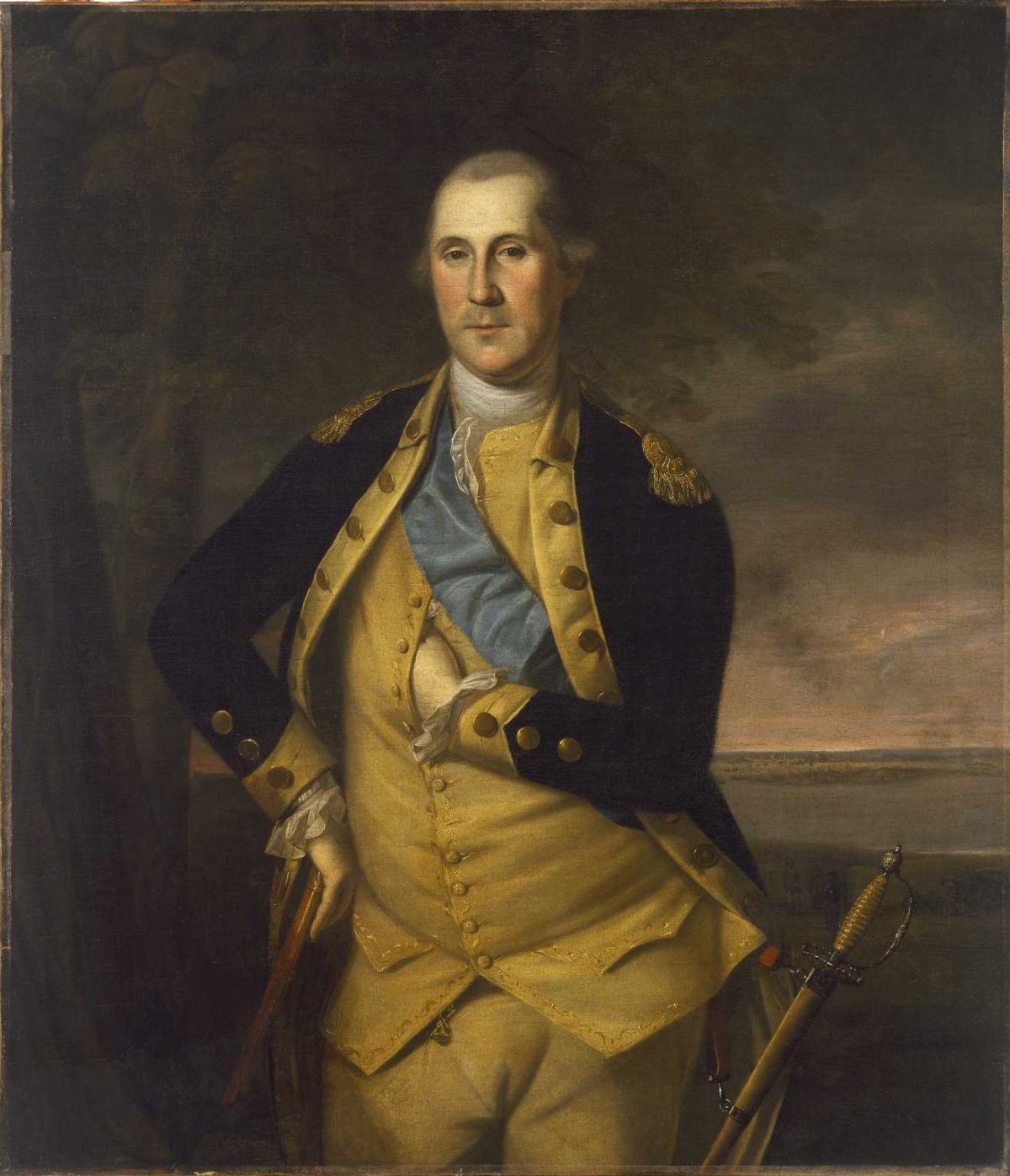
Some of the most famous portraits of all time feature men with a hand tucked inside a shirt, vest, or coat. A few notable examples include:
- General Lafayette
- The 1st Duke of Wellington
- George Washington
The pose wasn’t just ever-present in old paintings; it eventually made its way into the early days of black-and-white photography.
Here’s philosopher Karl Marx in 1875, doing the same thing with his right hand.
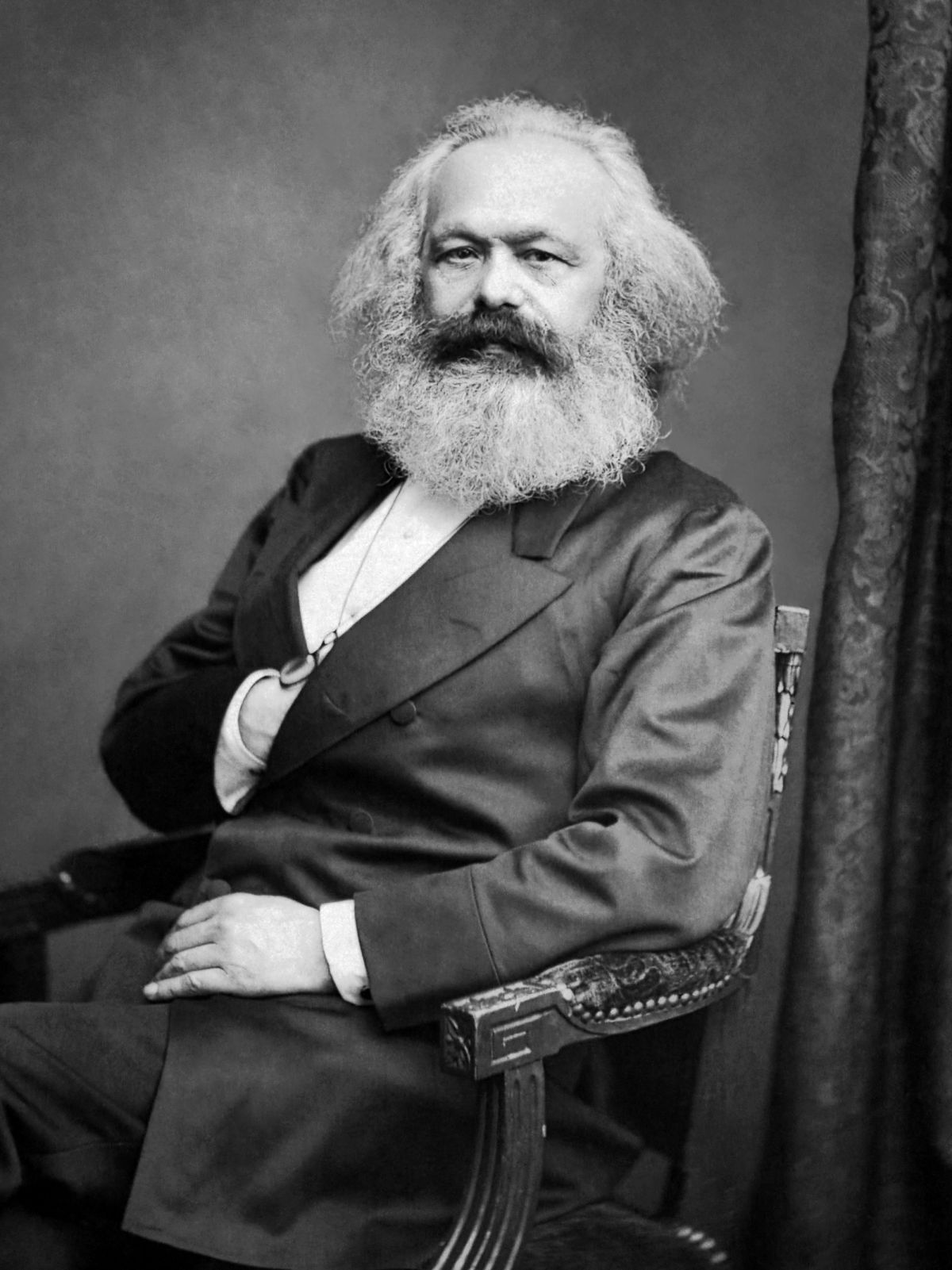
So why did everyone do this?
So, what gives? Why the hand tuck? The simple explanation is that the pose was a sign of dignity and high class.
It likely dates back to ancient Greece.
“Some societal circles in ancient Greece considered it disrespectful to speak with your hands outside of your clothing,” writes Readers Digest. “Statuary from the sixth century BC, therefore, showed celebrated orators such as Solon with their hands tucked into their cloaks.”
Keeping one hand in a robe also helped prevent nervous gestures while speaking, which made the pose commonplace among powerful men and great orators, such as Aeschines, who helped popularize it.
In the 17th and 18th centuries, portraiture was incredibly important. It helped symbolize the power held by royalty, functioning almost as propaganda. It was crucial for figures of nobility to appear powerful in their portraits, so they adopted the ancient Greek approach to posing.
“Concealing a hand in a shirt became a common pose in paintings as a symbol of statesmanlike nobility and restraint,” writes BBC History Magazine. “According to a 1737 book on etiquette, The Rudiments of Genteel Behaviour by François Nivelon, it symbolised ‘manly boldness tempered with modesty.’”
Similar poses, like holding your hands behind your back, are still often perceived as displays of confidence and thoughtfulness.
There are some fun theories too
But there are other, more fun explanations and theories behind this iconic pose.
Some theorize that sitting for portraits, especially paintings, took so long that it was more comfortable to rest one hand inside a jacket. In fact, portrait sittings could require several sessions, each lasting multiple hours.
Others point to the famous idiom, “It costs an arm and a leg!” Hands and feet are notoriously difficult to paint, even for seasoned artists, so hiding one’s fingers could make a portrait easier and perhaps even cheaper. Painter Thomas Hudson was responsible for so many famous portraits featuring this pose that some theorized he was simply terrible at painting hands.
Some say the hand-in-waistcoat pose signifies membership in the Freemasons, a secret fraternal society. Others suggest that, when it came to Napoleon’s role in popularizing the pose, he may have been clutching a painful stomach ulcer. After all, he later died of stomach cancer.
But most of these theories are not backed by evidence. The pose most likely caught on as a symbol of power and nobility and, frankly, because people thought it looked cool at the time. Frankly, anyone sitting for a portrait needs something to do with their hands, and today you’ll often see men posing with one hand in a pocket or “candidly” adjusting a sleeve. In a weird way, it’s Napoleon’s legacy living on.
This article originally appeared last year. It has been updated.