Everything changes the moment a new parent leaves the hospital. You check that the car seat is buckled correctly (probably three times, just to be sure.) The baby is the most precious thing you’ve ever laid eyes on and astonishingly small. All you want to do is love, protect, and cherish this new life. But beneath the joy is a frantic math problem running through your head, one that millions of families know all too well: How are we going to afford all those diapers?
For some parents, that math gets brutal fast, sometimes meaning skipping their own meals so the baby stays clean. But starting in summer 2026, California has an answer.
The first of its kind
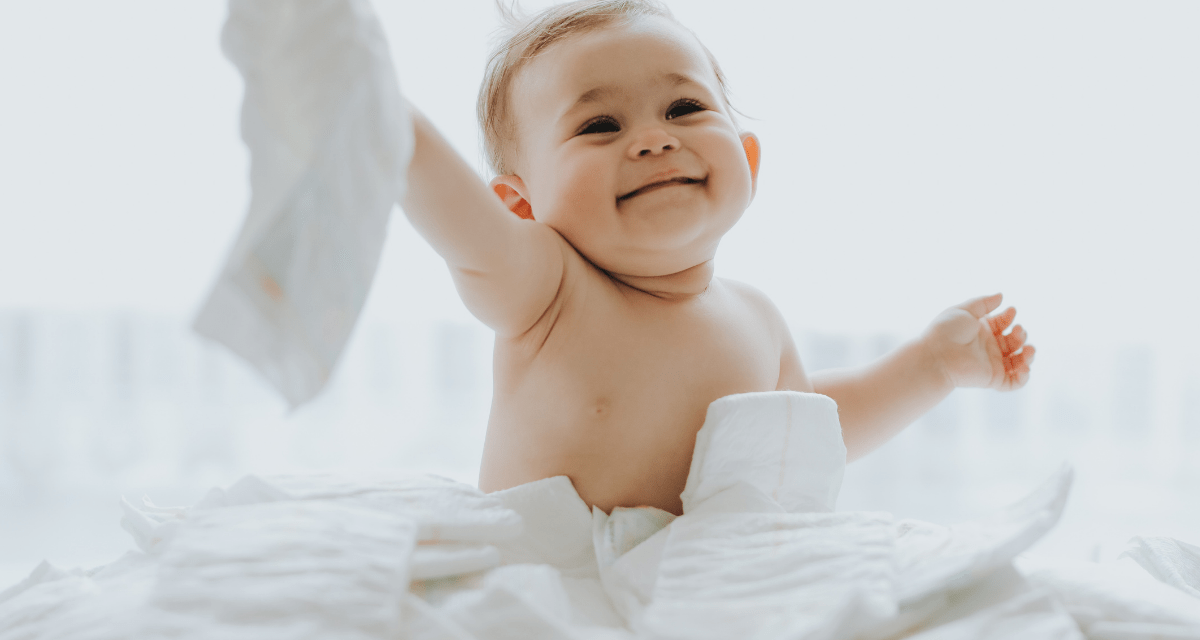
Welcome to the world, Golden State Start. The program is refreshingly straight-forward: every newborn discharged from a participating hospital goes home with 400 free diapers—a month-plus starter supply—tucked in alongside the baby blankets.
No application. No waiting. No proving you qualify. Families just leave with them.
That “no application” part matters more than it sounds. Other assistance programs mean well (and undoubtedly do good) but require anxious, exhausted new parents to jump through hoops just to qualify: fill out forms, sign here, prove your income, and pray for approval. Golden State Start meets families right where they already are: walking out the hospital doors with a brand-new bundle of joy.
In its first year, the state is partnering with the Los Angeles nonprofit Baby2Baby to launch the program at roughly 65 to 75 hospitals. These facilities will see about a quarter of all California births, or close to 100,000 newborns. Hospitals serving large numbers of Medi-Cal patients come first, which puts the families who need it most at the front of the line.
A hardship most people never see
Not everyone realizes this, but you can’t buy diapers with SNAP, WIC, or other food-assistance benefits. There’s no federal safety net for them at all. And Medi-Cal doesn’t cover diapers for newborns, either.
Families end up covering the cost themselves. On average, diapers run $80 to $100 a month per child, making them the fourth-largest household expense for struggling families, right behind rent, food, and utilities.
When the money isn’t there, parents are forced to make impossible choices. Nearly half of families facing diaper need say they cut back on other essentials to afford them. The most common solution? Less food. More than a quarter skip meals themselves so they can keep their baby clean and dry. For the lowest-income families, diapers become an insurmountable expense and can swallow up to 14% of their after-tax income, the kind of number that turns a clean diaper into a luxury good.
This is happening everywhere. In California, advocacy groups estimate nearly one in two families with babies or toddlers can’t afford enough diapers. Nationally, it’s roughly 40% of households with young kids.
Clean diapers are a health issue
When diapers are scarce and parents lack better options, they do the only thing they can: they “stretch” them, leaving a baby in the same diaper far longer than is safe. Again, that’s not any one individual’s fault, but a flaw in the system that’s supposed to take care of its most vulnerable. In practice, that turns into rashes that won’t clear, an uncomfortable baby who cries through the night, and sometimes a 2 a.m. trip to urgent care for an infection that never had to happen.
The good news is that fixing the supply genuinely helps. A 2025 study of families receiving diaper bank products found 41% fewer cases of diaper rash and 50% fewer cases of severe rash once parents had the supplies they needed.
There’s a mental-health side, too, and it’s a pretty sizable piece of the puzzle. A landmark 2013 study found that diaper need predicts maternal depression more powerfully than food insecurity does. Later surveys back it up: about 79% of mothers facing diaper insecurity feel stressed or anxious when they can’t afford them, and three in four feel helpless.
Beyond the nursery
The benefits of free diapers extend far beyond the changing table. Childcare centers often require parents to supply their own diapers, so running out can cause major disruption at a parent’s workplace or in school. Roughly one in four parents facing diaper insecurity report that they’ve missed work because of this issue.
Even if you haven’t had a newborn for nearly three decades, fixing diaper insecurity is an issue we all need to care about. The National Diaper Bank Network estimates that for every dollar that goes towards free diaper distribution, approximately two dollars are returned to society. Families with enough diapers require fewer medical visits. Parents can continue working and rely less on other forms of emergency help.
There are limits, though
Golden State Start isn’t a cure-all, and it’s important to name that. The 400 diapers cover the newborn’s first four weeks, sure, but what about the next two years of ongoing costs? Families that participate in this program still run the risk of being diaper insecure in the very near future. Not to mention, when the program rolls out, three out of four California births won’t be covered yet.
There’s also a live debate in Sacramento about the program’s costs and contract, and the future of the program lies in flux. A second-year budget request of $12.5 million still needs legislative approval, a difficult ask amid an already tight state budget. These are real questions worth watching.
But none of that erases what the program does well: for the first time in the country’s history, families receive free diapers at the exact moment they need them without ever making them ask.
The takeaway
Big policy ideas don’t always look impressive or jargon-stuffed. You don’t typically need a law degree or political science background to recognize a program that’s meant to do good. Sometimes it just looks like a box of diapers, handed to a tired new parent on the way out the door.
And that “without making them ask” part is the heart of it. Diapers, it turns out, are about a parent’s dignity as much as a baby’s comfort. Golden State Start takes a burden that families have silently carried alone for a long time, and treats it as a problem worth sharing.
If you’re interested in fighting diaper need wherever you are, check out the “Ways to Help” page on the National Diaper Bank Network’s website.
No, Golden State Start won’t fix diaper insecurity on its own. But for those first babies going home with 400 diapers and the parents who can breathe a tiny sigh of relief, it’s a pretty good place to start.