
Researchers at De Montfort University and Ulster University surveyed 571 people between the ages of 17 and 25 about their mental health, outlook on life, and family dynamics. The finding that got everyone’s attention: people who grew up with sisters were significantly happier, more optimistic, and more emotionally balanced than those who didn’t.
This held true regardless of whether the sister was older or younger.
The study’s lead researcher, Professor Tony Cassidy explained the mechanism. “Sisters appear to encourage more open communication and cohesion in families. However, brothers seem to have the alternative effect. Emotional expression is fundamental to good psychological health and having sisters promotes this in families.”
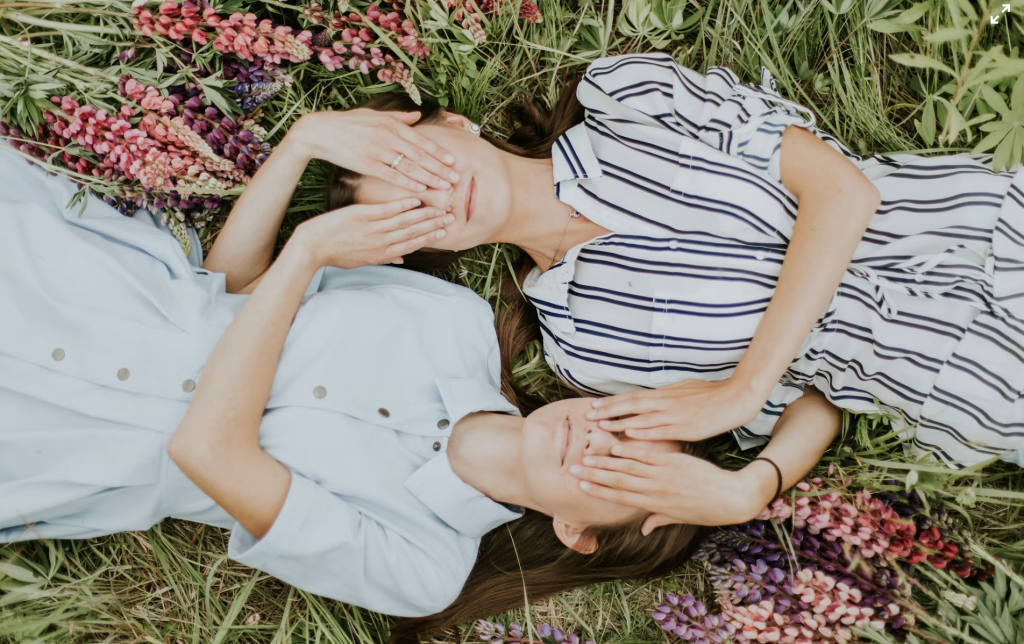
Daiga Ellaby via Unsplash
On why brothers don’t tend to produce the same effect, Cassidy was pretty direct: “It could be that boys have a natural tendency not to talk about things. With boys together it is about a conspiracy of silence not to talk. Girls tend to break that down.”
The effect was particularly strong in families where parents had separated or divorced. Cassidy noted “markedly less distress in broken homes with a sister,” suggesting that having a girl in the family helped keep communication open during periods of family stress. He added that the findings could be useful for people supporting families through difficult times, and that professionals “may have to think carefully about the way we deal with families with lots of boys.”

Annie Spratt via Unsplash
Beyond happiness and optimism, the research also found that people with sisters were more likely to be ambitious and successful in their careers, more willing to strive toward their goals, and better equipped to cope with problems generally.
The sister effect also isn’t just about having someone to talk to. Professor Laura Padilla-Walker from Brigham Young University’s School of Family Life told ABC News that sibling affection across the board is linked to better behavior. “Sibling affection from either gender was related to less delinquency and more pro-social behaviors like greater kindness and generosity, volunteering and helping others,” she said. “Even if there is a little bit of fighting, as long as they have affection, the positive will win out.”
Padilla-Walker also offered a useful way to think about why sibling relationships work differently than parent-child relationships. “The parent-child relationship is vertical, with the parent in charge. The sibling relationship is horizontal, you’re on the same ground. That’s a good thing because you can talk about what you’re really feeling. There is no feeling of authority or being told you’re doing something wrong.”
She added something worth sitting with: “Sibling relationships are the most enduring relationships people have. Parents die and you don’t meet your spouse until later in life. So throughout life, siblings really remain important.”
So if your sister is annoying, she’s also apparently making you a more functional human being. Maybe send her this article. She’ll probably already know.