
If you’ve ever loaded someone else’s dishwasher, you may know the wrath that comes with “loading the dishwasher wrong.” Maybe you put a bowl on the bottom when it should go on the top. Perhaps you put the forks and spoons “down” when they should be “up.” Maybe you didn’t rinse the dishes enough…or maybe you weren’t supposed to rinse them at all.
People have strong feelings about dishwasher habits, and conflicting conventional wisdom doesn’t help. However, when it comes to the “to rinse or not to rinse” question, a former appliance repair tech says there is no question: Unless your dishwasher pre-dates this century, you should not rinse your dishes before loading them in the dishwasher.
To be clear, “should not rinse” doesn’t mean “you can if you want, but you don’t really need to.” It means actually, literally do not rinse your dishes. Why? Because, believe it or not, your dishwasher actually works better if your dishes are dirtier when you load them.
‘But my dishwasher doesn’t clean the dishes unless they are fully rinsed!’
Cue the folks insisting that their dishwasher doesn’t clean dishes if they aren’t rinsed well. I know that argument because I myself used to make it. I thought our dishwasher just sucked. But after hearing this “don’t rinse” advice, my family started loading visibly dirty dishes into the dishwasher. I was skeptical, but the machine miraculously started working as intended.
Renae, an “appliance care and use specialist,” explains why. The keyword you need to know is “turbidity,” meaning the cloudiness or haziness of water:
“Every dishwasher and dishwasher detergent manufacturer will tell you the same thing: You’re supposed to scrape the excess food off of your dishes, but not rinse them,” she says. “That’s because your dishwasher has a turbidity sensor. The purpose of a turbidity sensor is to see how turbid the water is. It’s checking to see the dirtiness and cloudiness of it. It uses the information it collects from the turbidity sensor to determine how long to run the cycle for.”
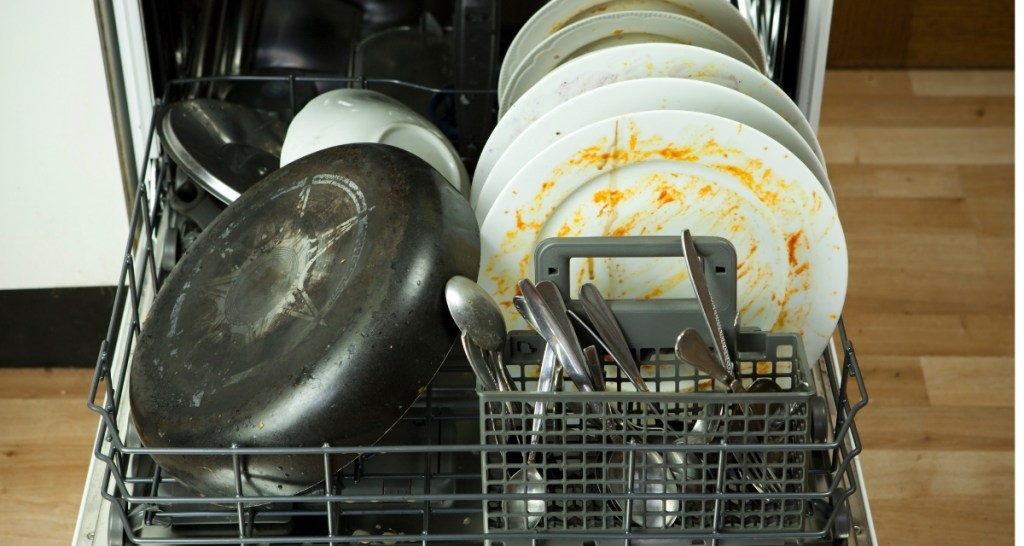
The magic of the dishwasher turbidity sensor
When dishwashers start, the first thing most of them do is run a rinse cycle. Then the turbidity sensor checks that rinse water as it drains. If it’s super cloudy, the machine kicks into “Alright, let’s wash these bad boys!” mode. If the water is mostly clear, it’s more like, “Oh, these just need some light sanitizing.” In other words, you’re telling the dishwasher how hard to work with how dirty your dishes are.
“Basically, what I’m saying is if you were to load your dishwasher with mostly clean dishes (because you rinsed them off), and just a couple of more heavily soiled dishes (like things that have baked-on food on them), the baked-on stuff might not come off. Because the turbidity sensor didn’t detect enough turbidity in the water to run the cycle for long enough.”
If you think it’s only fancy new dishwashers that have this feature, think again. Dishwasher turbidity sensors have been around since the mid-1990s, and major brands have been including them in their dishwashers since the early 2000s. It’s more likely than not that your dishwasher works this way.
What if your dishwasher still isn’t getting dishes clean?
Of course, some dishwashers really do struggle, and Renae offers tips in that case as well:
1. Preheat the water by turning on the hot water at your sink tap before running the dishwasher.
2. Load the dishwasher correctly according to your manual, and make sure you’re not blocking the spray arms or detergent dispenser.
3. Use a good quality dishwasher detergent.
4. Keep your dishwasher clean, which usually means cleaning the filter and using a dishwasher cleaner monthly. (But refer to your manual for specifics.)
“If you’re doing all that and your dishes STILL aren’t getting cleaned, that’s when it’s time to call an appliance repair tech!” she says.
Most people’s dishwashers really do work better than we think. We just have to trust them to work like they’re supposed to.