92-year-old former ballet dancer with dementia wrote a poem that has us all wrecked
What a beautiful gut punch.

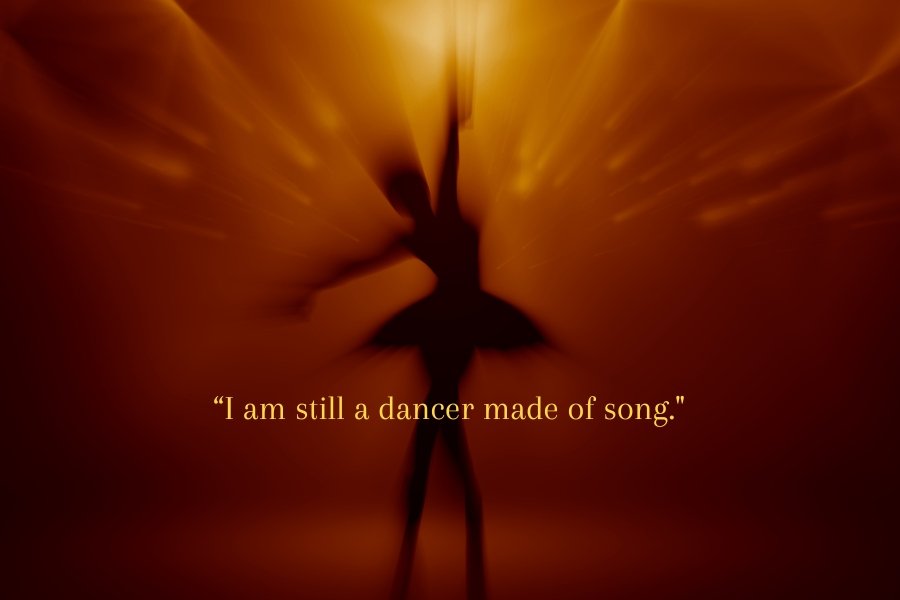
"I am still a dancer made of song."
Humans have been writing poetry for thousands of years, communicating feelings and ideas in beautiful, powerful ways that prose just can't quite reach. Poetry can be hard to define, but you know it when you see it—or rather, when you feel it.
Emily Dickinson once wrote, “If I feel physically as if the top of my head were taken off, I know that is poetry.” A poem hits you somewhere—your brain, your heart, your gut. And one poem that packs an incredibly moving punch has come from an unlikely source—an elderly woman with dementia.
Poet Joseph Fasano shared a message from a fan who shared that they had brought his book, "The Magic Words: Simple Poetry Prompts That Unlock the Creativity in Everyone," to their mother, a 92-year-old former ballet dancer living with dementia. The mother was excited to write a poem, and they slowly worked through a prompt from the book together aloud.
This poem was the result:
"Let the days be warm
Let the fall be long.
Let every child inside me find her shoes
and dance wildly, softly, toward the world.
I have a story I have never told
Once, when I was small,
I looked up at the sky and saw the wind
and knew I was a dancer made of song.
I am still a dancer made of song."
Wow. What a testament to the power of poetry to reach beyond our usual modes of communication, which dementia so cruelly disrupts. In a few simple lines, we're able to see this woman as she might see herself, as the human living under the veils of age and disease: "I am still a dancer made of song."
Poetry prompts can help people express themselves
The person who shared the poem thanked Fasano for "helping people find their voices," which is exactly what his book of poetry prompts was meant to do.
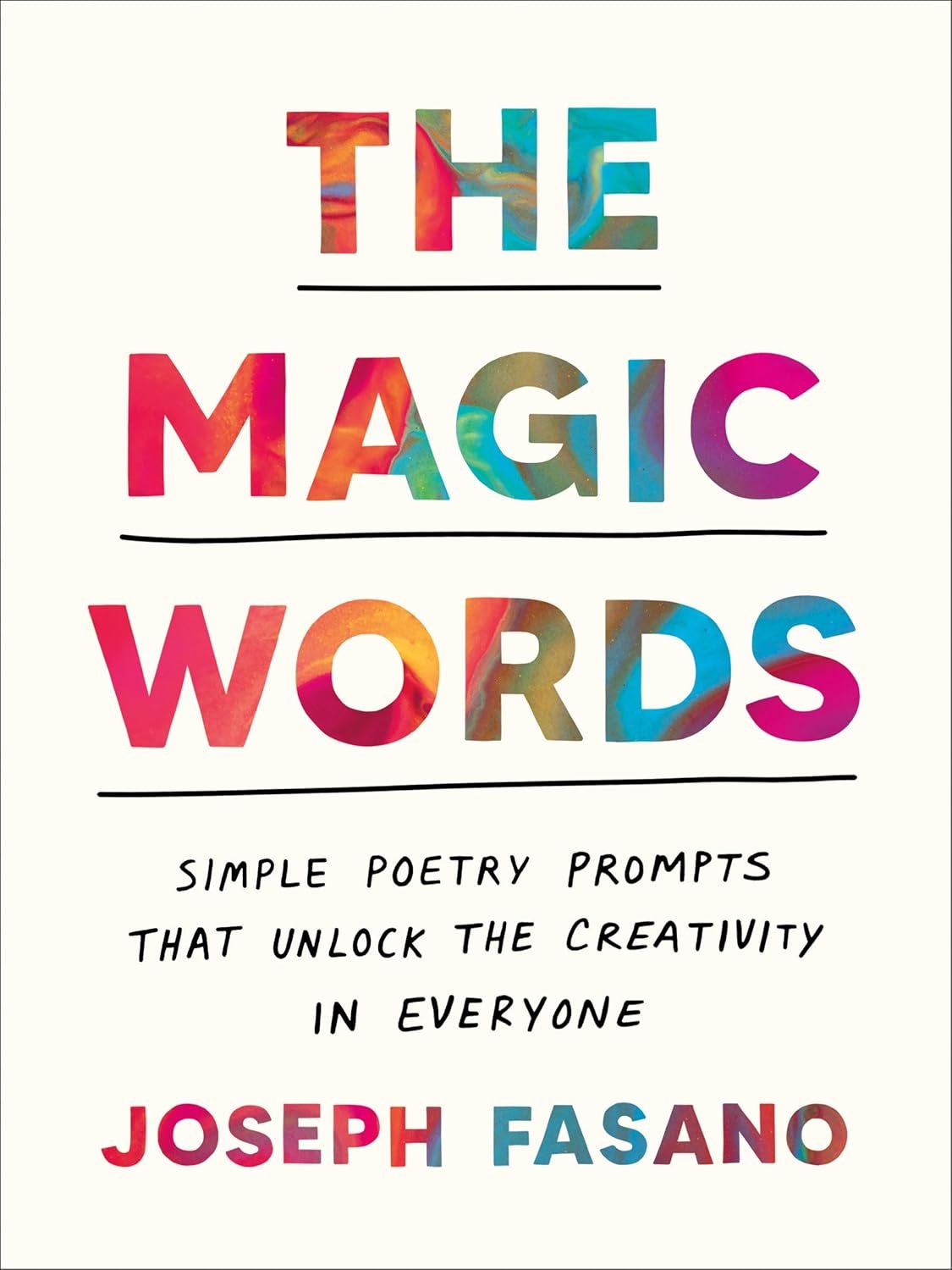
In the book's introduction, Fasano shares that he'd been invited to speak to a class of second graders in New Jersey in 2022 to share "the craft and magic of poetry." As part of his efforts, he came up with a poetry prompt that could "help guide their imaginations" and "unlock the images, thoughts and feelings inside them, without asking them to worry about how to structure a poem." He called the results "astonishing." When he shared one of the students' poems on social media, it and the prompt took off like wildfire, as people who never thought of themselves as poets felt empowered to share their imaginations within that framework.
From 7-year-olds to 92-year-olds, anyone can benefit from the self-expression that poetry facilitates, but many people feel hesitant or intimidated by the idea of writing a poem. Fasano writes, "Poetry is what happens when we let ourselves be," and this idea seems so clear than in the former dancer's poem above. Dementia can create roadblocks, but poetry provides a different avenue of communication.

The arts can be a powerful tool for people with dementia
Using poetry to help dementia patients communicate and express themselves isn't just wishful thinking. Studies have demonstrated that cultural arts interventions, including poetry specifically, can be beneficial for people with dementia. In fact, the Alzheimer's Poetry Project (APP) aims to use poetry as a means of improving the quality of life of people living with dementia by facilitating creative expression. "We do not set boundaries in our beliefs in what possible for people with memory impairment to create," the APP website states. "By saying to people with dementia, we value you and your creativity; we are saying we value all members of our community."
Poet Gary Glazner founded APP and shared a story with WXPR radio about how he came up with the idea while studying poetry at Sonoma State University:
“I applied for a grant and got a grant to work at an adult care program. The moment I love to share with people is there was a guy in the group, head down, not participating and I said the Longfellow poem. ‘I shot an arrow into the air’ and his eyes popped open and he said, ‘It fell to earth I know not where.’ And suddenly he was with us and participating. It was just this powerful moment to see how poetry could be of use to elders but specifically with people with dementia."
Whether we read it, write it, speak it or hear it, poetry has the power to reach people of all ages in all kinds of mysterious ways.
You can follow Joseph Fasano on Twitter and Instagram, and find his books on Amazon.
This article originally appeared last year.
- A poem about death went viral for the beautiful, universal truth it contains ›
- Poet says he won't let his sons play with dolls and women are tearfully praising the message ›
- A powerful poem about race and gender shows us what we lose if we can't speak for ourselves. ›
- Poet inspired the 'I met my younger self for coffee' trend - Upworthy ›
- Inside a Dutch 'dementia village' built for quality memory care - Upworthy ›
- Cole Escola's touching insight about dementia has people moved to tears - Upworthy ›
- Poet Andrea Gibson reads 'Love Letter From the Afterlife' to fiancée just months before dying - Upworthy ›
- 'Don't orient them.' Psychologist has beautiful advice for talking to people with dementia. - Upworthy ›
- Man sends letter to stylist who served his wife with dementia - Upworthy ›
- Inside a Dutch 'dementia village,' where the whole neighborhood is designed for memory loss - Upworthy ›
- 21-year-old's poem about having dinner with himself at every age is bringing people to tears - Upworthy ›
- Professional life hacker shares 13 'magic words' that are cheat codes for any situation - Upworthy ›
- Inside a Dutch 'dementia village,' where the whole neighborhood is designed for memory loss - Upworthy ›


A Generation Jones teenager poses in her room.Image via Wikmedia Commons
An office kitchen.via
An angry man eating spaghetti.via 


An Irish woman went to the doctor for a routine eye exam. She left with bright neon green eyes.
It's not easy seeing green.
Did she get superpowers?
Going to the eye doctor can be a hassle and a pain. It's not just the routine issues and inconveniences that come along when making a doctor appointment, but sometimes the various devices being used to check your eyes' health feel invasive and uncomfortable. But at least at the end of the appointment, most of us don't look like we're turning into The Incredible Hulk. That wasn't the case for one Irish woman.
Photographer Margerita B. Wargola was just going in for a routine eye exam at the hospital but ended up leaving with her eyes a shocking, bright neon green.
At the doctor's office, the nurse practitioner was prepping Wargola for a test with a machine that Wargola had experienced before. Before the test started, Wargola presumed the nurse had dropped some saline into her eyes, as they were feeling dry. After she blinked, everything went yellow.
Wargola and the nurse initially panicked. Neither knew what was going on as Wargola suddenly had yellow vision and radioactive-looking green eyes. After the initial shock, both realized the issue: the nurse forgot to ask Wargola to remove her contact lenses before putting contrast drops in her eyes for the exam. Wargola and the nurse quickly removed the lenses from her eyes and washed them thoroughly with saline. Fortunately, Wargola's eyes were unharmed. Unfortunately, her contacts were permanently stained and she didn't bring a spare pair.
- YouTube youtube.com
Since she has poor vision, Wargola was forced to drive herself home after the eye exam wearing the neon-green contact lenses that make her look like a member of the Green Lantern Corps. She couldn't help but laugh at her predicament and recorded a video explaining it all on social media. Since then, her video has sparked a couple Reddit threads and collected a bunch of comments on Instagram:
“But the REAL question is: do you now have X-Ray vision?”
“You can just say you're a superhero.”
“I would make a few stops on the way home just to freak some people out!”
“I would have lived it up! Grab a coffee, do grocery shopping, walk around a shopping center.”
“This one would pair well with that girl who ate something with turmeric with her invisalign on and walked around Paris smiling at people with seemingly BRIGHT YELLOW TEETH.”
“I would save those for fancy special occasions! WOW!”
“Every time I'd stop I'd turn slowly and stare at the person in the car next to me.”
“Keep them. Tell people what to do. They’ll do your bidding.”
In a follow-up Instagram video, Wargola showed her followers that she was safe at home with normal eyes, showing that the damaged contact lenses were so stained that they turned the saline solution in her contacts case into a bright Gatorade yellow. She wasn't mad at the nurse and, in fact, plans on keeping the lenses to wear on St. Patrick's Day or some other special occasion.
While no harm was done and a good laugh was had, it's still best for doctors, nurses, and patients alike to double-check and ask or tell if contact lenses are being worn before each eye test. If not, there might be more than ultra-green eyes to worry about.