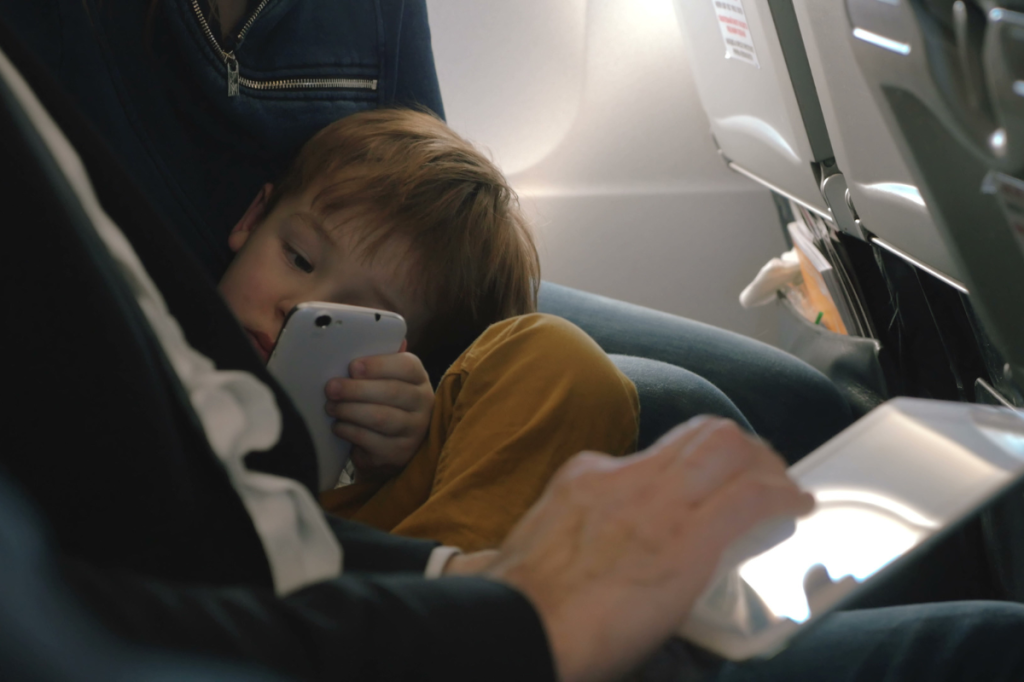
In “Back to the Future,” teenager Marty McFly goes back in time 30 years, from 1985 to 1955. But what if the film were made today and he went back from 2021 to 1991? I think the culture shock of a modern teenager going from a post-to-pre internet world would be much greater than the one that Marty experienced in the original film.
Would a kid from today be able to dial a payphone? Read a clock with actual hands? Look up directions on a Thomas Guide map?
A lot has changed since the dawn of the new millennium so a group of Redditors marked the changes in a post entitled: “What is something that was used heavily in the year 2000, but it’s almost never used today?”
GeoCities is definitely one of those things that was everywhere and then suddenly disappeared. At its peak, GeoCities hosted millions of websites, but its popularity declined after it was purchased by Yahoo and web hosting became cheaper.
2.
“If you had a big screen TV it was probably a ridiculously thick rear projection TV,” — ParoxysmAttack
Before plasma TVs came around, if you had a big screen it was also a seriously deep-screen TV.
3.
“Re-writable CDs. I used to burn so many mix cds after downloading from napster, bearshare, limewire, frostwire,” — Shittinwithmykitten
Napster created a music revolution overnight, but where were we going to save all of that new, stolen music? Rewriteable CDs were all the rage before the iPod came along and put ’em in the palm of your hand.
4.
“Payphones. (Yes I know payphones still exist. Also, I am now very aware payphones are free in Australia, thank you for informing me.)” — Adreeisadyno
Kids these days have never had to walk five blocks to make a phone call.
5.
“Dial-Up.
weeeeeeeee WOOOOOO_OOOOOO_ E E E E E E E EEEEEeeeeee eee eee URRRRRRRRRBEDULUDOLEDULUDOLEEPEEPEEP R R R R R R R R R R R R RUMMMMMMMMMMMM,” — Martini_Man_
Those of us who lived in the dial-up era will never, ever forget the whizzing, belching sound that we had to sit through to experience the World Wide Web.
“Indoor smoking. My young-ish kids marvel at the fact that people used to sit in restaurants and smoke,” — TurdFergDSF
People used to smoke on airplanes, in hospitals, at restaurants … pretty much everywhere.
8.
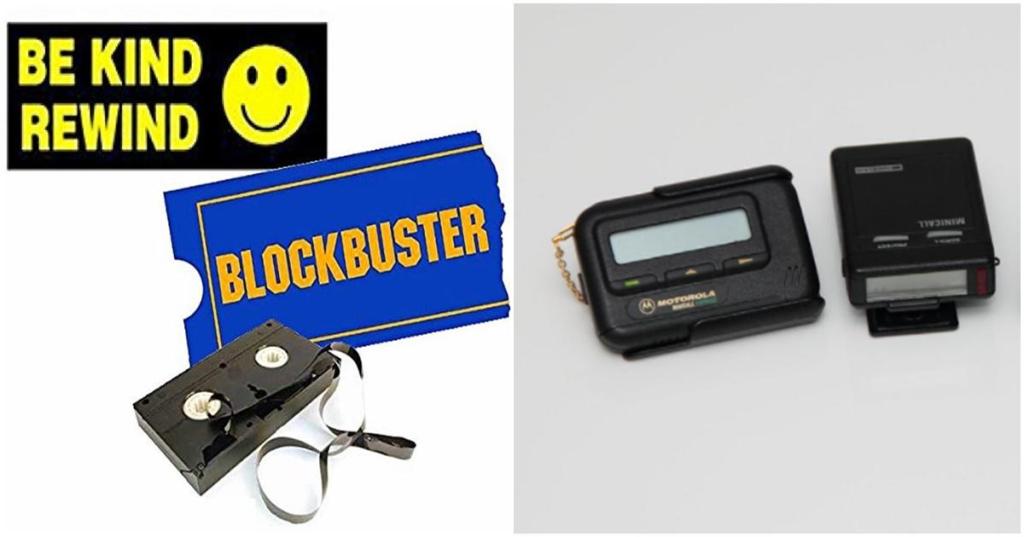
“Blockbuster card,” — larrythetarry
It wasn’t Friday night in the ’90s without a two-liter of Pepsi, a large pizza and a stack of VHS tapes from Blockbuster video.
9.
“VCRs,” — Murtamatt
Want to feel old? In 2016, Funai, which manufacturers the VCRs in China for Sanyo, announced it would produce its final VHS player, making it the last one ever produced.
10.
“AOL,” — PacMan8112
“Welcome!” “You’ve got mail!” AOL was the leading internet provider in the late ’90s but soon lost its relevance after merging with Time Warner, Inc. in 2000.
11.
“Calculators; teachers kept saying ‘you won’t have one with you all the time,’ look who’s stupid now?! Both of us…” — elika007
A calculator was a luxury item in the ’80s. In the ’90s, a Texas Instruments graphing calculator could cost you $90. Now, it’s all on your phone along with a million other apps.
12.
“A/S/L” — Smart_North_3374
Anyone who’s a proud member of Gen X knows the “age/sex/location” question. It’s the first thing you asked in an AOL chatroom when people used to try to hook up online. Of course, nobody answered it honestly, but that was half the fun.
13.
”JNCO jeans,” — ccherry124
In the 2000s everyone wore skinny jeans. But in the 1990s, people wore the baggiest jeans possible. The award for baggiest jeans goes to JNCO, the manufacturers of raver pants that fit two legs and a few kilos worth of MDMA.
14.
“Pagers,” — skaote
The pager was one of the most popular status symbols of the ’90s. Nothing said “cool” like having a pager that was constantly blowing up. (Does anyone under the age of 40 know what it means for a pager to “blow up”?)
15.
“‘Wanna Cyber?’” God . We were awful,” — icanbeafrick
Back in the AOL days, the closest you could come to getting it on while online was through cyber sex. There were no pictures or video so you just exchanged dirty messages until the other person logged off. The typical cyber session began with, “What are you wearing?”
16.
“Limp Bizkit,” — Timmah_1984
Unfortunately, they’re back.
17.
“Travel agencies. Now I can do everything on my phone,” — whatdoineedaname4
If you can belive it, before there was Priceline, there was a person sitting at a desk with a rotary phone who booked your seven-day trip to Europe.
In a small village in Pwani, a district on Tanzania’s coast, a massive dance party is coming to a close. For the past two hours, locals have paraded through the village streets, singing and beating ngombe drums; now, in a large clearing, a woman named Sheilla motions for everyone to sit facing a large projector screen. A film premiere is about to begin.
It’s an unusual way to kick off a film about gender bias, inequality, early marriage, and other barriers that prevent girls from accessing education in Tanzania. But in Pwani and beyond, local organizations supported by Malala Fund and funded by Pura are finding creative, culturally relevant ways like this one to capture people’s interest.
The film ends and Sheilla, the Communications and Partnership Lead for Media for Development and Advocacy (MEDEA), stands in front of the crowd once again, asking the audience to reflect: What did you think about the film? How did it relate to your own experience? What can we learn?
Sheilla explains that, once the community sees the film, “It brings out conversations within themselves, reflective conversations.” The resonance and immediate action create a ripple effect of change.
MEDEA Screening Audience in Tanzania. Captured by James Roh for Pura
Across Tanzania, gender-based violence often forces adolescent girls out of the classroom. This and other barriers — including child marriage, poverty, conflict, and discrimination — prevent girls from completing their education around the world.
Sheilla and her team are using film and radio programs to address the challenges girls face in their communities. MEDEA’s ultimate goal is to affirm education as a fundamental right for everyone, and to ensure that every member of a community understands how girls’ education contributes to a stronger whole and how to be an ally for their sisters, daughters, granddaughters, friends, nieces, and girlfriends.
Sheilla’s story is one of many that inspired Heart on Fire, a new fragrance from the Pura x Malala Fund Collection that blends the warm, earthy spices of Tanzania with a playful, joyful twist. Here’s how Pura is using scent as a tool to connect the world and inspire action.
A partnership focused on local impact, on a global mission
Pura, a fragrance company that recognizes education as both freedom and a human right, has partnered with Malala Fund since 2022. In order to defend every girl’s right to access and complete 12 years of education, Malala Fund partners with local organizations in countries where the educational barriers are the greatest. They invest in locally-led solutions because they know that those who are closest to the problems are best equipped to solve and build durable solutions, like MEDEA, which works with communities to challenge discrimination against girls and change beliefs about their education.
But local initiatives can thrive and scale more powerfully with global support, which is why Pura is using their own superpower, the power of scent, to connect people around the world with the women and girls in these local communities.
The Pura x Malala Fund Collection incorporates ingredients naturally found in Tanzania, Nigeria, Pakistan, and Brazil: countries where Malala Fund operates to address systemic education barriers. Eight percent of net revenue from the Pura x Malala Fund Collection will be donated to Malala Fund directly, but beyond financial support, the Collection is also a love letter to each unique community, blending notes like lemon, jasmine, cedarwood, and clove to transport people, ignite their senses, and help them draw inspiration and hope from the global movement for girls’ education. Through scent, people can connect to the courage, joy, and tenacity of girls and local leaders, all while uniting in a shared commitment to education: the belief that supporting girls’ rights in one community benefits all of us, everywhere.
You’ve already met Sheilla. Now see how Naiara and Mama Habiba are building unique solutions to ensure every girl can learn freely and dare to dream.
Naiara Leite is reimagining what’s possible in Brazil
Julia with Odara in Brazil. Captured by Luisa Dorr for Pura
In Brazil, where pear trees and coconut plantations cover the Northeastern Coast, girls like ten-year-old Julia experience a different kind of educational barrier than girls in Tanzania. Too often, racial discrimination contributes to high dropout rates among Black, quilombola and Indigenous girls in the country.
“In the logic of Brazilian society, Black people don’t need to study,” says Naiara Leite, Executive Coordinator of Odara, a women-led organization and Malala Fund partner. Bahia, the state where Odara is based, was once one of the largest slave-receiving territories in the Americas, and because of that history, deeply-ingrained, anti-Black prejudice is still widespread. “Our role and the image constructed around us is one of manual labor,” Naiara says.
But education can change that. In 2020, with assistance from a Malala Fund grant, Odara launched its first initiative for improving school completion rates among Black, quilombola, and Indigenous girls: “Ayomidê Odara”. The young girls mentored under the program, including Julia, are known as the Ayomidês. And like the Pura x Malala Fund Collection’s Brazil: Breath of Courage scent, the Ayomidês are fierce, determined, and bursting with energy.
Ayomidês with Odara in Brazil. Captured by Luisa Dorr for Pura
Ayomidês take part in weekly educational sessions where they explore subjects like education and ethnic-racial relations. The girls are encouraged to find their own voices by producing Instagram lives, social media videos, and by participating in public panels. Already, the Ayomidês are rewriting the narrative on what’s possible for Afro-Brazilian girls to achieve. One of the earliest Ayomidês, a young woman named Debora, is now a communications intern. Another former Ayomidê, Francine, works at UNICEF, helping train the next generation of adolescent leaders. And Julia has already set her sights on becoming a math teacher or a model.
“These are generations of Black women who did not have access to a school,” Naiara says. “These are generations of Black women robbed daily of their dreams. And we’re telling them that they could be the generation in their family to write a new story.”
Mama Habiba is reframing the conversation in Nigeria
Centre for Girls' Education, Nigeria. Captured by James Roh for Pura
In Mama Habiba’s home country of Nigeria, the scents of starfruit, ylang ylang and pineapple, all incorporated into the Pura x Malala Collection’s “Nigeria: Hope for Tomorrow,” can be found throughout the vibrant markets. Like these native scents, Mama Habiba says that the Nigerian girls are also bright and passionate, but too often they are forced to leave school long before their potential fully blooms.
“Some of these schools are very far, and there is an issue of quality, too,” Mama Habiba says. “Most parents find out when their children are in school, the girls are not learning. So why allow them to continue?”
When girls drop out of secondary school, marriage is often the alternative. In Nigeria, one in three girls is married before the age of 18. When this happens, girls are unable to fulfill their potential, and their families and communities lose out on the social, health and economic benefits.
Completing secondary school delays marriage, and according to UNESCO, educated girls become women who raise healthier children, lift their families out of poverty and contribute to more peaceful, resilient communities.
Centre for Girls’ Education, Nigeria. Captured by James Roh for Pura
To encourage young girls to stay in school, the Centre for Girls’ Education, a nonprofit in Nigeria founded by Mama Habiba and supported by Malala Fund and Pura, has pioneered an initiative that’s similar to the Ayomidê workshops in Brazil: safe spaces. Here, girls meet regularly to learn literacy, numeracy, and other issues like reproductive health. These safe spaces also provide an opportunity for the girls to role-play and learn to advocate for themselves, develop their self-image, and practice conversations with others about their values, education being one of them. In safe spaces, Mama Habiba says, girls start to understand “who she is, and that she is a girl who has value. She has the right to negotiate with her parents on what she really feels or wants.”
“When girls are educated, they can unlock so many opportunities,” Mama Habiba says. “It will help the economy of the country. It will boost so many opportunities for the country. If they are given the opportunity, I think the sky is not the limit. It is the starting point for every girl.”
From parades, film screenings to safe spaces and educational programs, girls and local leaders are working hard to strengthen the quality, safety and accessibility of education and overcome systemic challenges. They are encouraging courageous behavior and reminding us all that education is freedom.
Experience the Pura x Malala Fund Collection here, and connect with the stories of real girls leading change across the globe.
Imagine you’re an older woman sitting alone in a small apartment in Tokyo. Your children live across the country. Your husband passed away years ago. Most days, you don’t talk to anyone at all. But on Mondays? On Mondays, you get dressed. You straighten the cushions on the couch. You wait by the door. Because you know someone is coming.
That someone is your Yakult Lady—one of more than 31,000 women who crisscross Japan on bicycles and motorbikes, delivering small bottles of probiotic drinks to elderly homes. On paper, it’s a sales job. In practice, it may be one of the most important social welfare roles in the country.
And most people outside Japan have never heard of it.
It started with a doctor who wanted everyone to be healthy, not just the rich
The story begins in 1930 with a young Japanese medical student named Minoru Shirota. He was deeply concerned that poor children kept dying from preventable diseases, something most doctors at the time ignored. This wasn’t because medicine didn’t exist, but because it had no way of reaching them.
So Shirota made it his life’s work to change that.
By 1963, Yakult had launched a home-delivery network staffed by women from local neighborhoods: people they trusted, who knew their communities, and who could sit with a customer and explain what “good bacteria” actually meant in plain terms. Thus, the Yakult Lady was born. Today, 81,288 of these women operate across 40 countries and regions worldwide, with 31,341 working in Japan, visiting between 30 and 50 homes a day, up to four days a week.
Japan’s loneliness crisis is bigger than most people realize
In 2024, 76,020 people died alone in Japan, and 76.4% of them were over 65. Some of those bodies weren’t found for weeks. In 130 cases, they weren’t discovered for more than a year.
This problem is so widespread and serious that it even has a name in Japanese: “kodokushi”—lonely death.
So when a woman on a bicycle shows up at your door with a cooler box and a warm smile—when she’s been doing it every week for years, when she remembers your knee has been bothering you and asks how it’s going?—that’s not just a sales call. That’s a lifeline.
“We are watchers”: What Yakult Ladies actually do
Asuka Mochida is 47 years old and has been a Yakult Lady for years. When the BBC asked her to describe her role, she didn’t mention sales targets. “We are watchers in a sense,” she said. “People who look out for others. We notice small changes in health or lifestyle.”
That phrase—”small changes”—is everything.
What makes a Yakult Lady genuinely irreplaceable isn’t the probiotic drink (though research does suggest it helps). It’s the consistency. She sees the same faces week after week. She knows Mrs. Tanaka takes her delivery at 9 a.m. sharp, and that if it’s still on the step at noon, something is wrong. She knows Mr. Yamamoto doesn’t like to talk about his health directly, but always mentions his energy levels when you ask how his garden is doing.
That kind of knowledge—intimate, earned over months and years—can’t be replicated by a government form or a wellness app. When something seems off, these women act. They’ve contacted family members, alerted local authorities, and in multiple documented cases, helped locate seniors who were in real medical danger.
They’re neighbors who show up, and keep showing up.
One anonymous customer said it better than any policy paper ever could: “Knowing that someone will definitely come to see my face each week is a tremendous comfort. Even on days when I feel unwell, hearing her say, ‘How are you today?’ at my doorstep gives me strength.”
Small bottle, big idea
There’s something almost quietly revolutionary about what the Yakult Ladies represent. In a world that keeps looking to technology to solve the loneliness epidemic—chatbots, wellness trackers, social apps—Japan’s most effective answer turns out to be a woman on a bicycle who remembers your name.
Children often possess a remarkable ability to make friends wherever they go, largely because they operate with an innate openness that’s not yet hindered by learned social barriers. It can make for some unexpected friendships and truly heartwarming stories.
That was certainly the case for Hudson Drew, a three-year-old Oklahoma boy who went viral for his sweet interaction with an elderly man during breakfast at McDonald’s.
As Ashlyn Drew, Hudson’s mother, explained to KFOR-TV, they had made a “last-minute” decision to stop at the fast-food chain for a quick breakfast. That’s when Hudson, affectionately known as “Huddy,” noticed the senior eating alone.
Curious, Huddy asked his mom where the man’s children might be. She replied, “They probably grew up and moved away.”
This didn’t sit well with the boy, so he immediately marched over to the man so they could share a meal together. This kind gesture left Drew “crying in the middle of a McDonald’s.”
“My little boy has the biggest heart,” she proudly wrote in her TikTok video’s caption.
My little boy has the biggest heart. He was sad that this man was eating alone so he took his food over and sat with him. Made this momma’s heart happy and sad at the same time 🥺❤️#fyp#raisingaman#bigheart#mcdonalds#toddlersoftiktok
Duracell’s official account urged folks to “protect his positive energy at all costs.”
“Pass me the tissues,” echoed Pizza Hut. Meanwhile, Eggo shared, “immediately starting sobbing this is SO sweet.”
This kind of behavior is typical of Huddy
“Since he was born, he has always lit up the world,” she told KFOR-TV. “He’s a very sweet kid. I didn’t think I would get emotional. I always say ‘Live like Huddy’ because he doesn’t see people any differently. He loves everyone.”
He also apparently has an affinity for intergenerational friendships. As Drew explained in the comments, “he loves all old people like they are his own grandparents.” At the restaurant his family owns, “he always sits with older couples.”
“He lost his great-great-grandparents and misses them dearly,” she explained.
Interestingly, Drew later discovered that the man lives just three miles away, and was good friends with Huddy’s late great-grandfather. Perhaps their connection was destined. Either way, more Mickey D’s meetups are in store.
As for the overwhelming positive response to Huddy’s video, Drew hopes it inspires others to show some love to the elderly community.
“When you see an older person, more than likely their spouse has passed away or is in a nursing home, so I just say take the time to say hi, smile,” she said. “A smile can do a lot. Sit with them. They can tell you some great stories.”
A teacher in Northern Michigan became the living embodiment of “the show must go on” during a schooltalent show.
On March 24, eight-year-old Emberly Lau took to the stage to perform a dance set to Alicia Keys’ “Girl on Fire.”
Like many young performers, she had spent weeks preparing for her big moment, carefully practicing each move and building up the courage to step into the spotlight.
Only, midway through the routine, the audio suddenly cut out, leaving Emberly dancing in silence.
For a brief second, it could have spelled disaster. A missing soundtrack can throw even seasoned performers off their game, and for a child, it can feel overwhelming.
Teacher comes to the rescue
But without missing a beat, Emberly’s former first-grade teacher, Kurstin Frank, began singing the lyrics from the audience.
Even when she did not know every word, she carried the rhythm and melody forward, giving Emberly exactly what she needed to continue. It helped that Frank had a lovely voice, but more importantly, she had the instinct to support her student without hesitation.
Thanks to that spontaneous act, Emberly never stopped dancing. Instead of freezing or running offstage, she pushed through, finishing her routine with confidence. What could have been an awkward interruption turned into something unexpectedly beautiful. Other audience members began to join in, clapping and singing along, transforming the would-be catastrophe into a shared experience filled with encouragement and joy.
Emberly’s mother, Meg, who caught the whole thing on camera, shared in a sweet Facebook post that Emberly had been working on her routine since Christmas. Understandably, Meg felt “mom panic” set in when the music glitch set out to ruin Emberly’s hard work, but those fears were quickly set at ease by Frank.
In the post, Meg hailed Frank as a “true hero,” thanking her for creating a “magical, special, and memorable” moment completely on the spot, all with a student on her lap.
Other folks were equally quick to praise the teacher as the video began making the rounds online.
“Teachers can really change a person’s life”
Check out some of these lovely comments from Instagram:
“Anyone else get CHILLS? I can only imagine how she felt once the music cut off. Go teach. 🙌”
“This is probably gonna be a formative memory for this young girl who was vulnerable and went onstage for perhaps the first time.”
“Teachers can really change a person’s life.”
“The way she lit up at ‘burn baby burn baby’ that confidence came right back! 💐🥹 There are truly teachers who stay with you 😭”
Moments like this remind us that sometimes it isn’t perfection that makes an experience unforgettable, but the people who show up when things don’t go as planned. It’s also a testament to the teachers who go out of their way to make sure their students can succeed—whether in the classroom, onstage, or in adulthood. All in all, it’s a truly feel-good story.
Picture this: It’s a Tuesday night in Queens, New York—the kind most young people spend doomscrolling on their couches or making out at a local bar to Ariana Grande songs. But at a packed honky-tonk, a room full of twenty-somethings in cowboy boots is learning to two-step. By the end of the night, they don’t want to leave.
This isn’t a one-off or a dream scenario. It’s a reality happening all over the country. In Atlanta and Boston, in San Francisco and Washington, D.C., young people who grew up glued to their phones are lacing up boots, heading out to line dancing classes, trail rides, and rodeos, and finding something they didn’t know they were missing: each other.
Young people all over the country are participating in "Western" socializing events like never before.
Welcome to the “Western Revival.” It’s a lot bigger than you think.
The numbers will stop you in your tracks
Let’s drop some statistics that’ll make you do a double take. According to Eventbrite data comparing 2024 to 2025, line-dancing events grew by 165%, and attendance jumped by a staggering 254%.
And here’s the part that really says something big: the fastest growth isn’t happening in country-friendly places like Texas or Nashville. It’s happening in New York, Atlanta, Boston, and San Francisco—cities where, until recently, the closest thing to a cowboy was a Halloween costume.
Nearly half of all young adults—49%—say they’re actively seeking experiences that feel less curated and more real. Another 79% say it’s important that events feel spontaneous or unpredictable, and 44% say they’re willing to spend more if a venue feels genuinely unique. So what about a ranch bathed in golden-hour light? Or a neon-lit honky-tonk with a live fiddle player? Yup, that’ll do it.
No, it’s not really about the boots
Sure, the cowboy boots are cute. Okay, make that really cute. But this isn’t a fashion story…or at least, it’s not only a fashion story.
It's not only about the cowboy boots. – Photo credit: Canva
The amazing thing about Western Revival events is that they’re inherently participatory. You can’t passively attend a line dancing class. You have to show up, plant your feet, and be a little bit goofy while you learn the steps. There’s something deeply human about that. And for a generation that spent its formative years staring at screens during a pandemic, it turns out that “a little bit goofy in a room full of people” is exactly what the doctor ordered.
Of course, Beyoncé helped start the fire
You can’t tell this story without talking about Cowboy Carter. When Beyoncé released her country album in 2024, she didn’t just make great music; she rewrote the rules about who gets to claim Western culture. More than a third of Gen Z music fans say they first explored country music because of that album. She took a genre that had long felt exclusive and made it feel like it belonged to everyone.
Cowboy culture didn’t start in Hollywood. The original cowboys were Mexican vaqueros: Indigenous, Afro-Mexican, and mestizo horsemen who developed the techniques, tools, and clothing we now associate with the American West. After the U.S. took over northern Mexico, including what is now Texas, that culture was appropriated, repackaged, and whitewashed. Beyoncé’s Cowboy Carter era isn’t just about country music or fashion. It’s a powerful act of reclamation. As a Black woman from Texas, she’s tapping into a legacy that’s been erased: the deep, intertwined roots of Mexican and Black communities in shaping cowboy life. From the sombrero to the rodeo, from Black cowboys post-emancipation to Afro-Mexican vaqueros before the U.S. even existed, this is the real story behind the cowboy hat. #beyonce#cowboy#vaquero#cowboycarter
Funnily enough, honky-tonks and dance halls are becoming exactly that: a new kind of communal third space, somewhere between home and work where you don’t have to perform for an algorithm. You just have to know how to count to eight.
As one line dance instructor put it: “It’s pretty low risk, high reward. Come out, have fun, learn something, and enjoy time with your friends.” There’s a beautiful simplicity to that. In an era of infinite options and zero commitment, sometimes the most radical thing you can do is just show up.
Is this bigger than a trend?
Short answer: yes. Trends come and go, but what’s happening here feels different—it’s more like a generation quietly course-correcting. Young people are choosing presence over passive scrolling. They’re putting their phones in their pockets and their boots on the floor. It’s just like Nancy Sinatra sang in 1966: “These boots were made for walkin’, and that’s just what they’ll do.”
It’s refreshing to know that, sixty years later, there’s still a kernel of truth in that line.
And what Gen Z is finding there, in the middle of a line dance or on the back of a horse at sunset, is something the Internet can never replicate: the feeling of belonging somewhere real.
You don’t have to be a country music fan to understand that. You just have to be human.
So if you’ve been curious, maybe grab a pair of boots and find a class near you. The strangers waiting on that dance floor might just become your people.
Domestic violence survivors cheered on the winner of the 2024 Miss Kansas competition after she stood on stage and called out her abuser who showed up to the pageant. Before Alexis Smith was chosen from 26 participants in the state competition on June 8, 2024 to represent Kansas in the 2025 Miss America contest, she was asked to speak on stage about her Reclaimed Respect initiative.
“My vision as the next Miss Kansas is to eliminate unhealthy and abusive relationships,” Smith said. “Matter of fact, some of you out in this audience saw me very emotional because my abuser is here today. But that’s not going to stop me from being on this Miss Kansas stage and from representing as the next Miss Kansas. Because I, and my community, deserve healthy relationships. We deserve a domestic [violence] free life.”
Respect Reclaimed is about reclaiming your power and standing firmly in it. On the night of Miss Kansas, my journey took an unexpected turn when someone I have been healing from tried to disrupt my peace. Instead of falling into silence, I chose to live out my vision for a better world. I took back my power—not just for myself, but for my dreams and everyone watching and listening. This isn’t about shunning others; it’s about turning our pain into purpose and channeling it in a way that unifies and uplifts. I’m ready to use my story, tools, and resources to end unhealthy relationships in all forms. My voice and advocacy will empower everyone to reclaim their own power in their own unique way. I might be small in stature, but I stand tall in strength, purpose, and power with hopes of inspiring others to do the same. #fyp#abuse#miss#misskansas#missamerica#pageant#awareness#me#relationship#respect#tiktok
In the video shared on TikTok, the freshly-crowned Miss Kansas wrote, “Respect Reclaimed is about reclaiming your power and standing firmly in it. On the night of Miss Kansas, my journey took an unexpected turn when someone I have been healing from tried to disrupt my peace. Instead of falling into silence, I chose to live out my vision for a better world. I took back my power—not just for myself, but for my dreams and everyone watching and listening.”
She wrote that it wasn’t about shunning anyone, but about “turning our pain into purpose and channeling it in a way that unifies and uplifts.”
“I’m ready to use my story, tools, and resources to end unhealthy relationships in all forms,” she wrote. “My voice and advocacy will empower everyone to reclaim their own power in their own unique way.
I might be small in stature, but I stand tall in strength, purpose, and power with hopes of inspiring others to do the same.”
People who have experienced abuse themselves applauded her advocacy.
“As a victim of domestic violence I applaud you for speaking out!! I watched this 10 times!! I’m still getting bullied by his parents even with a no contact order. I plan on helping women like us as well.”
“WHAT A WOMAN. This is absolutely incredible. From one survivor to another, I am SO SO proud of you for reclaiming this moment for yourself. You will do amazing things “
“Incredibly brave of you. You just made a statement for all women. I appreciate you so much.”
A woman holds a sign that reads: “Love shouldn’t hurt.” Photo credit: Canva
“As an old survivor…I’m so damn PROUD OF YOU!! Love, A Stranger “
“We got to see you ACTIVELY showcasing your platform LIVE IN PERSON! My utmost respect to you Miss Alexis. This is beyond any crown, I cannot wait to watch your journey. As someone who grew up around domestic violence, I have chills watching you. You will always have a supporter in me. You absolutely ate that. “
“YAS GIRL! As a fellow survivor, you are an inspiration and I’m so proud of you for using your voice and showing your strength.”
“”I experienced emotional and psychological abuse for a very long time,” Smith shared with KMUW, “and it was recognizing that I was losing control over my own personal emotions, trying to save the emotions of someone else, and so to be able to save myself. I recognize that we don’t want to both go down together. I need to be able to leave this relationship. That way, I’m able to pursue a future, because you just never know what can happen to your partner or happen to yourself when you’re in those relationships.”
According to The Wichita Eagle, Smith uses her 19 years of experience as a ventriloquist to teach kids about healthy relationships with puppets as part of her Reclaimed Respect initiative. She also works full-time as a cardiothoracic ICU nurse. And she went on to compete at Miss America 2025 in Orlando in January, where Miss Alabama Abbie Stockard was crowned.
This article originally appeared two years ago.It has been updated.
An ideal partner isn’t just someone you can celebrate with. They’re the person who makes the bad times feel just a bit better. One husband is getting a lot of praise online for doing just that.
In a Reddit post titled “My Husband’s Response to My Really Bad Week Made Everything Just a Bit Better,” a wife explained how she had really been having a “rough week” on multiple levels. Not only had she faced a setback at work, but she also “accidentally ripped off a fingernail.” Talk about adding injury to insult.
Needing to vent, she texted her husband, saying, “I think I’m having a bad day 😕 like, I’ll be fine. I just wish I could curl up on the couch and feel all the feelings and also nap for three days 😅.”
What followed was a text that had viewers saying she should “marry” her husband all over again.
From the start, her husband both validated her emotional state and reminded her that it was temporary.
“My sweetheart,” his message began. “I know you’re going through a lot, both emotionally and physically with how draining the last week has been. I also know you’re resilient as heck and you’ll be fine, but that doesn’t make those feelings right now any less real.”
That alone earned him major brownie points, but then he sweetened the deal—literally, with ice cream.
“But we’ve got a pint of Ben and Jerry’s at home…and a lot of Critical Role to catch up on,” he wrote, referencing one of their beloved television shows. “I’m all for the curling up part of your plan.”
Then he asked, “In the meantime, want to meet up for lunch today?”
It’s easy to see why this response won over so many. It was emotionally aware, attentive, and generous, leaving many to call him a “certified keeper.”
“The ‘curling up’ part of the plan is elite support honestly.”
“Man, when someone is happily willing to just slow down with you for a bit and not find more and more reasons to be busy or not available, that’s someone that really sees you and wants to be there for you and with you. It makes it feel like it’s ok to take care of you instead of feeling guilty and like you’re just lazy.”
“Marry him. I don’t care if you’re already married, marry him again.”
“This is what love should look like.”
“Having a love like that is truly a blessing!”
On a wholesome note, it also inspired many others to share some love for their equally attentive and supportive partners.
“I have one like this and it’s nearly impossible to describe to other people how very much I love and appreciate him without looking like I’m a boasting a*****. I’m just so glad you have one too.”
“Same. I wish I could clone mine and give him out as gifts to friends I love, because I wish everyone could experience this kind of amazing love and support. It is sadly so so rare.”
“Legends like this are one in a million!! I’m lucky enough to have one too.”
This is what everyday romance looks like: rough weeks turned into cozy date nights, solitary struggles made more manageable by knowing someone is in your corner, and challenges transformed into opportunities for connection. It’s not necessarily the kind of romance we see in the movies, but it’s magical nonetheless.
Shay Taylor-Allen’s dreams came true on March 20. The Howard University College of Medicine student was matched into the anesthesiology residency program at Yale New Haven Hospital—the same hospital where she was born and later worked as a janitor for 10 years.
In an emotional clip on TikTok, Taylor-Allen shared the moment she found out she had been matched at Yale. “#1 match and so happy to come back not as a janitor this time but as a doctor!” she captioned the video.
She told ABC News, “I was jumping up and down to the point I [thought] the concrete was going to break!”
Taylor-Allen’s mom inspires her journey
Back when she was just 18, Taylor-Allen took a job as a janitor at Yale New Haven Hospital to earn extra money. At the time, she didn’t know she would later pursue a career as a doctor.
“I was working full-time as a janitor because around that time also my mom got sick, and she was in and out of hospital,” Taylor-Allen told People. “They couldn’t figure out what was going on with her.”
After years on the job, Taylor-Allen leveraged a connection she had made with the hospital’s CEO—whose trash she once emptied—according to ABC News. She reached out directly to ask for help with her mother’s care and finding a diagnosis.
“She got back to me literally within that same day because she knew me from cleaning her room,” Taylor-Allen said. “She was like, ‘We’re going to do whatever we can to help your mom. Let me figure out what’s going on with the team.’ And within the next week, they figured out that she had a vocal cord dysfunction and everything completely changed. It was just night and day.”
She decides to become a doctor herself
The experience led her to pursue a career as a doctor and future patient advocate. “I started Googling how to become a doctor and I just went on from there,” she added.
Taylor-Allen was accepted into Howard University College of Medicine in 2021 and is set to graduate in May 2026.
“I could have never imagined that I would be going back to the same hospital that I was not only born at, but a janitor at, to be a doctor,” she told ABC News.
To support Taylor-Allen in her journey, check out her GoFundMe.
According to her daughter, Lucille Ball never considered herself a feminist, but there’s no question she blazed many a trail for women. A working mother in real life, she depicted issues facing housewives with her brilliant television comedy and became the first female studio head in Hollywood. She broke glass ceilings but wasn’t particularly outspoken about women’s rights. In fact, in a 1980 interview with People she said, “They can use my name for equal rights, but I don’t get out there and raise hell because I’ve been so liberated, I have nothing to squawk about.”
Ball empowered women by example—and by speaking her mind. Carol Burnett shared a story on PBS about how Ball was unhappy with a script for her new show, but women at that time didn’t raise concerns about such things. Men could express criticism and demand changes, but women simply didn’t. Ball did—and firmly—despite being non-confrontational by nature. Later she told Burnett, “Kid, that’s when they put the ‘s’ at the end of my name.”
Lucille Ball shuts down TV host
A video has been circulating on social media showing Ball’s no-nonsense way of speaking up when she felt the need to, and people are gushing over it.
Lucille Ball was a massive star, but perhaps best known for the show ‘I Love Lucy By CBS Television – Public Domain
In 1978, Ball participated in a Q & A session with UCLA theater arts students on the television program “America Alive!” The viral clip shows Ball repeatedly telling one of the hosts, David Sheehan, to take his hands off of female audience members when they were asking a question.
“Will you take your hands off, David?” she says as he introduces one young woman. “Take your hands off of her,” she says again as he places his hand on the shoulder of another. “David, would you take your hands away?” she says as he places his hands on another woman in a sparkly gold dress.
People laughed every time, but Ball didn’t so much as crack a smile during her clear, simple, repeated “hands off” admonitions.
For 1978 especially, her advocacy for the women in the audience was extraordinary. Sheehan wasn’t touching these women in a lewd or sexual manner, but he was touching them in a way that he wouldn’t have touched a man who was asking a question. Most people wouldn’t have thought much of it at the time, but Lucille Ball immediately noted it and didn’t let it stand.
Here are some of the best comments
“I love that she didn’t even laugh when the room was. She was not joking.”
“‘Take your hands off her, David,’ should be a sound AND a t-shirt.”
“He kept trying. She kept telling him. Love her.”
“Lucille Ball always reminds me of my grandma. She hated to be seen as delicate, and she hated men that would touch her even more. She would say, stone-faced, ‘Get your paws off.’”
“The audience laughed and she said ‘ain’t nothing funny.’ Love her”
.”This happened to me so much growing up and I noticed from very young the boys weren’t treated this way.”
“Even then she knew how the industry was. I LOVE IT AND LOOOOVE LUCY SO MUCH.”
A commenter on Reddit noted that Ball started her career as a chorus girl and dancer. “She knows every creepy man trick in the book”
The wider culture of handsy TV hosts
Television and game shows from the 70s and 80s are an incredible time capsule of the culture and norms of the era. Sheehan wasn’t the only one who tended to get a little handsy.
It was common for male hosts to kiss female contestants. Richard Dawson, host of The Family Feud, was famous for it. Even our beloved Bob Barker of The Price Is Right often had women suggestively reach into his jacket to fish out their $100 bill.
Richard Dawson kissing all the women in the family. YouTube
There’s a casual lecherous-ness that famous men seemed to get away with easily at the time. For anyone to publicly challenge them on their behavior was absolutely shocking.
Even if Sheehan was casually touching those women out of habit and not ill intent, it’s laudable that Ball made a point of making him aware of it. Unfortunately, women are still having to deal with men touching them without being invited to, but seeing Lucille Ball’s serious face while calling it out is a good reminder that women have been fighting this battle for a long time. Good for her for using her microphone and the respect afforded her to speak up for the young women in her audience.