9 risk factors for suicide and 1 important question you can ask to hopefully know for sure.

There’s something you should know about people with severe depression.

Many of us feel inept when it comes to acknowledging suicide.

“It’s so tragic.”

“What a waste of a beautiful life.”


“Why didn’t he just talk to us about it?”

We are often at a loss for how to deal with the profoundly devastating topic of suicide. We can talk about it in a removed, social-ill, this-world-is-so-messed-up, throw-our-hands-up-in-helplessness kind of way when it comes up in passing — like when people are talking about how much they miss Robin Williams.

But we are poorly equipped to discuss it in any substantial way. Which is understandable. Most of us aren’t trained in psychiatric services and are doing our best to muddle through our own difficulties in life. Figuring out how to solve America’s suicide problem seems above our pay grade.

It’s important for each of us to commit to getting better at talking about it.

When you have that one friend you can just sit and talk with about anything. Image by Garry Knight/Flickr.

The truth is that each of us could have a friend who’s suicidal right now — today — and isn’t telling us about it. They’re not telling us about it because they know very well that they live in a world ill-equipped to help them without judging them.

The main thing that kept me from speaking up long ago when I toyed with the thought of ending my own life was: “If I admit I’m barely able to take each next breath right now, will I always be labeled as fragile or troubled forever for the rest of time?” Saying something is a decision to commit to someone else’s memory that this messed-up mental stumble is happening. It takes bravery to talk about it, especially when you’re in the thick of it.

Everyone and anyone could be at risk for suicide. Suicide doesn’t have a “look.” Moms, dads, 11-year-olds, pastors — the thought of ending it all can take root in anybody’s mind. But there are some groups who are more prone to suicide than others. According to the CDC, lesbian, gay, and bisexual youth are four times more likely to attempt suicide than straight peers. And 25% of transgender young people surveyed report having made an attempt to take their own life. The thing that some well-meaning people don’t know is that snapping out of it or learning how to enjoy life isn’t an option for those who are truly depressed — it’s not a mind-over-matter thing. At that particular moment in their lives, the afflicted person just can’t.

The little things that can spark our spirit during normal times don’t do the same thing for someone who’s depressed. Image by Rick/Flickr.

Why does suicide start looking like a viable option?

John Gibson, a pastor whose name was recently released as part of the Ashley Madison hack (where people were outed for starting accounts with the intent to cheat on their spouses), committed suicide in August.

“He talked about depression. He talked about having his name on there, and he said he was just very, very sorry. What we know about him is that he poured his life into other people, and he offered grace and mercy and forgiveness to everyone else, but somehow he couldn’t extend that to himself.”
Christi Gibson, on her husband John’s suicide letter

Jody Nelson, a clinical social worker in Lansing, Michigan, explains part of why a person can be drawn to suicide in the first place:

“A suicidal person will often see suicide as a neat, tidy, and self-contained solution to their emotional state of desperation. Suicide is never neat. Never tidy. And never truly self-contained. Suicidal people are not capable of seeing or predicting the ripples and waves their act will cause in lives around them. Yet their suicide will impact lives they aren’t even aware they are touching via connections their own illness makes impossible for them to see.”

He advises us to know the risk factors:

“Not all of these are going to mean impending suicide attempts, but the risk increases as they pile on each other.”

1. Depression. Isolation. Losses.

2. Big life changes (and sometimes, just some small ones like going on or off certain meds).

3. Prior attempts. Substance abuse.

4. Irrational or erratic behaviors.

5. Financial difficulties.

6. Access to means.

7. Suicidal intention.

8. A family history of suicide.

9. Connections to others who have died by suicide.

Nelson says that if we see those signs, we should ask straight-up something like this question:

“Hey I’ve noticed you’ve been particularly down lately. Are you thinking about hurting yourself?”

It won’t make someone who’s not suicidal suddenly consider it. And it won’t make someone who is thinking suicidal thoughts go through with it. What it will do, if they have been thinking about it, is break through a wall that’s keeping the person isolated and suddenly alleviate some of that buildup they’ve been sitting alone with. A person struggling with depression and suicidal thoughts is often very grateful to find someone they can talk frankly with about their thoughts.

And if they say yes, listen and talk, but also get them to an emergency room. Go with them. Get them there. They will be connected to the right resources once they get there. Then follow up and keep an eye. Keep talking with them. But don’t let them put it off — they will try to downplay it as not that serious. Who wouldn’t?

Here’s why it’s important for us to talk about this right now, and publicly.

There’s no shame in needing your friends. These guys know. Image by SmellyAvocado.

When we learn how to talk about suicide more productively and demonstrate publicly that we’re trying to understand it a little better than we used to, we open doors in case someone in our circle is thinking about opening up.

We signal that we aren’t going to judge our friends and loved ones — just love them. Sharing an article like this is one way to start sending that signal.

And when more people get the message that there’s someone around they can talk to, maybe we’ll see the suicide numbers drop significantly.

In the big picture, that would be amazing. But as anyone who’s lost a loved one to suicide can tell you, saving one person and stopping those devastating ripple effects from starting is immeasurably valuable.


  • Historian debunks the notion that grief in ‘Hamnet’ was portrayed unrealistically for the time
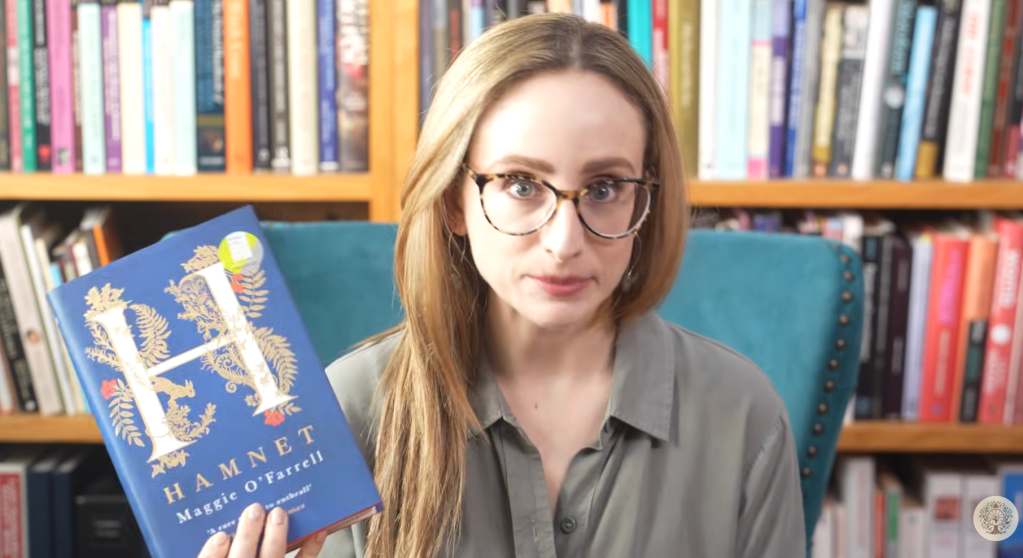
    Were medieval parents less attached to their children?Photo credit: Living History by Dr Julia Martins/YouTube

    The majority of parents today have never known the pain of losing a child. Sadly, that was not the case throughout history. Before the 20th century, many parents could expect one or more of their children to die before reaching adulthood, usually due to infectious disease.

    As in the book it was based on, the film adaptation of Hamnet centers on parental grief. Even if you haven’t seen the movie, there’s a good chance you’ve seen the tear-streaked aftermath of others who have.

    Jessie Buckley’s Oscar-winning performance as a grieving mother wrecked audiences far and wide. Her improvised, guttural scream after her child’s death went straight to the heart. Her calling the scream “ancient” couldn’t feel more accurate.

    @screenplayed

    Jessie Buckley talks about this moment in Hamnet wasn’t in the script. It came up on the day. Buckley is nominated for an Academy Award for her performance. What do you think of the film? 🎥 #hamnet #jessiebuckley #academyawards #oscars #filmtok

    ♬ original sound – Screenplayed

    However, some people have questioned whether the film’s intense portrayal of grief is realistic for the time period. Naturally, we would expect a child’s death to devastate a parent today. But was that the case historically? Did parents mourn the loss of a child as hard or as long when nearly half of children died? Would knowing you were likely to lose a child, or multiple children, make their deaths easier to handle?

    The idea that parents hundreds of years ago weren’t as emotionally attached to their kids isn’t new, even in academic circles. Dr. Julia Martins, a historian, explored the debate in a YouTube video titled “Did They Love Their Children? The History of Grief.”

    It began with French historian Philippe Ariès, who published a book in 1960 about childhood through the centuries.

    “Ariès argued that the concept of childhood as a distinct, protected phase of life is a modern invention that only emerged around the 17th century,” Martins said. “Children were understood as mini adults and, from the time they were around seven, they mixed with the adult world. He suggested that, because of the incredibly high infant mortality, parents were forced to be emotionally distant and not get too attached to their children, who might not live to see their first birthday. This indifference would be a defense mechanism. Expecting to lose half the children you had would make you not as emotionally invested in them.”

    In his 1977 book The Family, Sex and Marriage in England 1500–1800, historian Lawrence Stone also posited that colder, more pragmatic family relationships were the norm. In his assessment, the affectionate, loving bonds we associate with family today developed late in our history.

    However, by the 1980s, historians began to question this idea. Martins pointed out that Ariès relied on paintings from the past to draw his conclusions.

    For her 1983 book Forgotten Children, historian Linda Pollock focused her research on diaries and autobiographies from the 16th to 19th centuries. She argued that parents have always had intense love for their children and felt a deep sense of loss when they died.

    Martins’ own examination of the historical record has led her to the same conclusion. The difference, she suggested, lies in how parents coped with the pain of losing a child.

    “We forget how deeply religious early modern Europe was,” Martins said. “Could this indifference be religious resignation, instead of lack of affection? In a world where people understood death as God’s will, parents might console themselves thinking things like ‘The Lord gave, and the Lord has taken away.’ That doesn’t mean they weren’t grieving, but rather that they were focusing on the child being in heaven and accepting God’s will. Ariès interpreted this as a lack of feeling. But you could argue that this was a coping strategy for deep pain. The grief was real; the cultural script for expressing it was different.”

    And of course, grief is and has always been an individual experience. Even in Hamnet, the parents express their grief differently, despite losing the same child.

    People in the comments on Martins’ video reiterated how historical artifacts demonstrate expressions of parental grief:

    “Sometimes I find myself thinking of the skull of the ancient Greek child with the crown of painted ceramic flowers on her head. Someone loved that child to the point that they couldn’t bear the thought of those flowers wilting.”

    “Whenever I hear the claim that people didn’t grieve their children, I think of the ancient graves we find where children are so carefully prepared for burial, with a toy (obviously made by hand, so carrying a time cost and not quickly replaceable) buried with them. That doesn’t seem like the actions of a parent who doesn’t care.”

    “My favorite example about children always being children are ancient Egyptian ‘hot wheels’: toys shaped like a tiny chariot or wagon with wheels on it, and holes to put a string through… I can’t erase the mental image I got of an ancient Egyptian child thousands of years ago running around lugging A TOY CAR around, forgetting or breaking it and crying to parents, or being happy about getting a new one as a holiday gift, nothing really changed.”

    “Cicero was inconsolable when his daughter Tullia died. Julius Caesar, who had also lost his daughter Julia, his only child, wrote to him to offer sympathy. They had a whole correspondence on grief. Cicero built a temple (lost today) to the memory of his daughter. The idea that parents from the past did not care is ludicrous.”

    “It always felt to me so strange to figure that people in the past ‘wouldn’t care so much’ for their kids because a lot of children died. Two things can be true at the same time. People surely knew that lots of people died in a very early age AND that doesn’t diminish any kind of bond or attachment. Ironically, it’s this theory itself that IS detached (from reality): humans are social creatures!”

  • ‘Old soul’ kid chooses his own name, then cracks himself up for a full minute
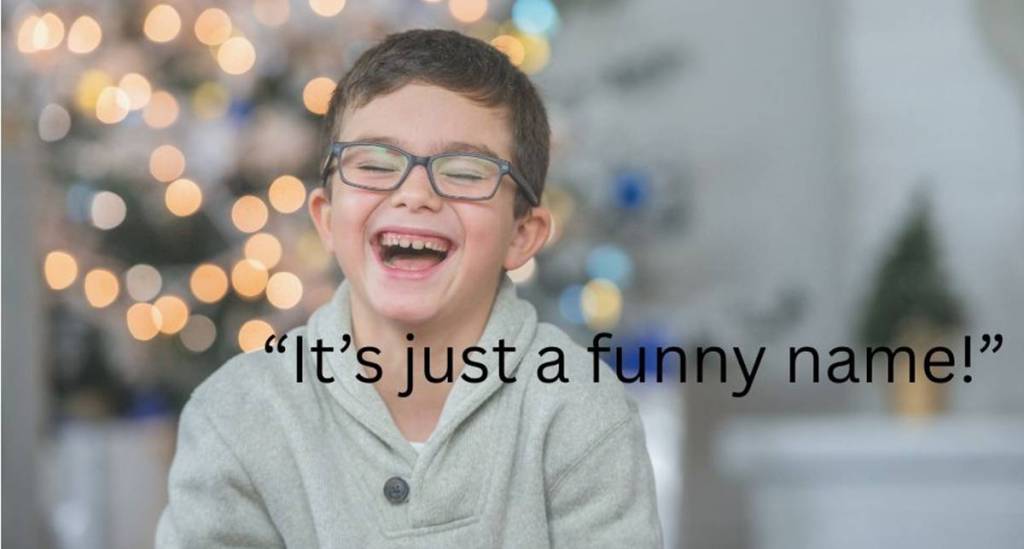
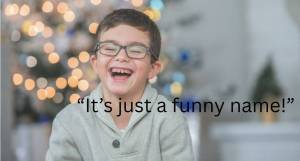
    A child with glasses laughing.Photo credit: Canva

    Donna Whelan describes her young son, Jacob, as an “old soul,” and well over a million people on social media seem to agree. She shares many adorable clips of him online, but one recent video of Jacob choosing his own name might just take the cake.

    In a clip from Donna’s Instagram page, she begins to ask Jacob a question: “Right, if you could choose a name for yourself…” She doesn’t even have a chance to finish before he confidently answers, “Roberto,” playing with a small lock of hair behind his ear. Just as quickly, he bursts into laughter and can’t seem to stop. “Didn’t even finish the sentence, and I gave ya an answer. Roberto!”

    Donna asks, “Do you like that name?” It’s now time for Jacob to get serious. “Yeah. Roberto is my favorite name.” He puts his hands into a pyramid, not unlike a politician or a TED Talk speaker. “When you think of… say Roberto slowly, though. Ro-bert-to. Ro-ber-toe. Rubber toe.” The laughing fit continues, his cheeks turning pink beneath his thick glasses.

    “Why does that name make you laugh so much?” Donna asks. Jacob immediately dissolves into giggles once again. “It’s just a funny name! Rubber toe!” It’s clear he’s not mocking it in any way, but simply delighted by his quick reaction and the joke.

    The laugh is truly infectious. Nearly 75,000 likes and over 3,500 comments (and counting) just heap love onto this child.

    One commenter says, “His little laugh gets me every time.” Another adds, “I actually laughed out loud too when he said ROBERTO😂😂 We never know what he’s going to say next.”

    And of course, a few “Robertos” chime in. “My name is Roberto,” one person says. “What’s so funny about being called Roberto? 😂” Another commenter adds, “Ya gotta say it slowly, though. Then it’s funny, haha.”

    Another Instagrammer shares that their son wanted to change his name when he was young: “My son wanted to change his name to Fun because he just wanted to have fun. His name is Benjamin or Ben. We call him Funjamin or Fun to this day, and he’s 29 years old!”

    This isn’t uncommon. In a piece I wrote for Upworthy a few months ago, I explored a popular parenting Reddit thread where people discussed their kids choosing new names, or even wanting to reinvent themselves.

    “For what it’s worth, I wanted to change my name a million times growing up,” one person confessed. “First, I wanted Dawn, then Angel, and lord knows what after that. I’m sure I went by Lilith during high school for a moment. My parents were so blasé about it. I never did change my name.”

    Another joked, “My son went by Spider-Man for almost a year at age 4. He’s 23 now and happy with his given name.”

    As for Jacob and his mom, who have more than 4 million followers on social media, they continue to delight the Internet with little Jacob-isms. In another popular clip, Jacob shares that he has “had about a million lives.” When Donna asks, “Would you like me to be your mum in every life?” Jacob slyly smiles, nods, and gives a resounding “Yes.”

    In a book by Donna and Jacob, The World According to Jacob: Hilarious Words of Wisdom From a Little Old Soul, they reveal that “Jacob has captured millions of hearts around the world with his infectious sense of humour, his fun, and his cheeky smile.”

  • The 1 mistake grandparents who don’t see their grandkids enough make with their daughter-in-law
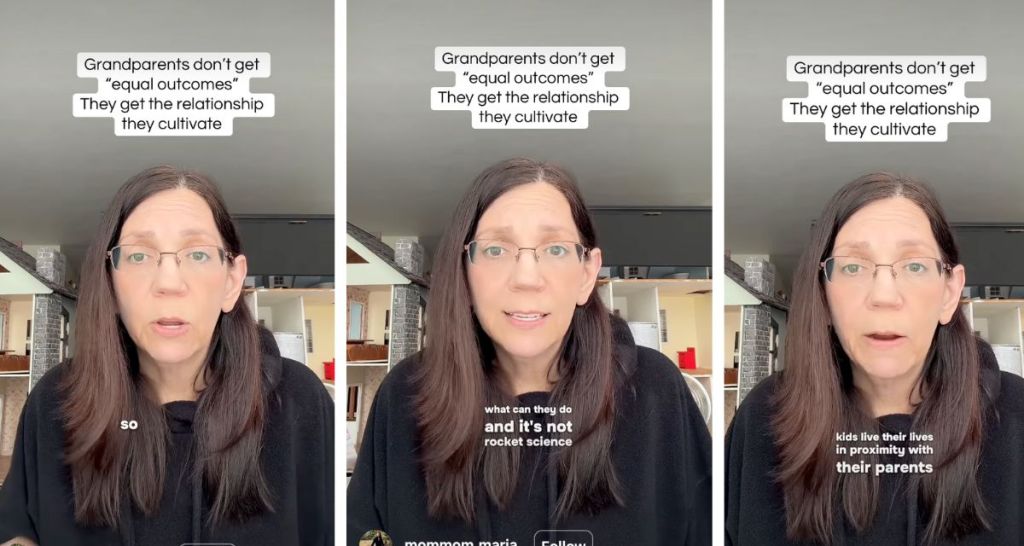
    Maria DeLorenzo discusses the MIL/DIL dynamic. Photo credit: @mommom.maria/Instagram

    A grandmother’s candid take on family dynamics is getting people talking, and for many, nodding in agreement. After noticing a recurring question from frustrated grandparents online, one woman decided to address a sensitive topic head-on: why grandchildren often seem to spend more time with their mother’s side of the family.

    In a recent Instagram reel, Maria DeLorenzo, 59, responded to a wave of comments, particularly from mothers-in-law (MIL), wondering how to “counteract” what feels like an uneven relationship. Her answer was simple but eye-opening.

    “Kids live their lives in proximity to their parents,” she said, implying that they’re often closer to their mother. As a result, if grandparents on the father’s side don’t try to “cultivate” a relationship with the mom, aka the daughter-in-law (DIL), they may have fewer opportunities to see their grandchildren as a consequence.

    “It’s not rocket science,” she added. “That’s all there is to it…so choose.”

    That opinion is shared by Cheryl Groskopf, a holistic therapist at Evolution to Healing.

    “It’s important to understand that grandparent relationships usually grow out of the parent relationship first,” Groskopf said. “A child’s primary sense of safety runs through their parent—especially early on. So if a mother feels supported, respected, and emotionally safe with a grandparent…the most effective mindset shift is understanding that connection with the grandchild comes through connection with the parent.”

    Video sparks thoughtful debate

    The Instagram video drew more than 100,000 views and sparked a thoughtful discussion in the comments.

    Many parents shared personal experiences that supported DeLorenzo’s perspective. However, others felt it was an “outdated” view of MIL/DIL dynamics and argued that both the DIL and the son share responsibility for cultivating closeness.

    Even Groskopf agreed that “DILs can also be intentional about creating space for connection. Many grandparents are trying to figure out what their role is in a new family system. Small gestures like sharing updates, inviting them into moments with the child, and acknowledging their excitement about being a grandparent can go a long way toward building safe and supportive relationships.”

    No matter how you slice it, effort and intention from all sides seem to be necessary ingredients for building relationships.

    What a grandparent can do to build a relationship

    Here are some helpful ideas, courtesy of certified parent coach Sari Goodman

    1. Ask the parents, “How can I help?” and then follow through.
    2. Show up without judgment. Your grandkids may not be raised the way you would raise them, but it’s best to keep that to yourself.
    3. Show up with compliments. Notice something the parents do well and share the observation. When the grandkids do something brilliant, adorable, or sweet, point it out.
    4. Follow the rules the parents have established. If, for example, the children aren’t allowed to have sugar, don’t give it to them.
    5. Compliment the DIL’s parents. Did they bring the grandchildren a clever toy? Tell them. Do they have a method for getting the grandchildren into the car calmly? Say you want to learn from them.

    What a DIL can do to cultivate a relationship

    @heyjanellemarie

    Getting On the Same Page ✅ Honestly regardless of age, both parties should always be coming to any relationship with the intention and expextation for mutual respect. But noting that just because a Daughter-In-Law or future daughter-in-law isn’t a child and is in fact a grown person may help guide the approach you take as a parent of an adult or MIL. #relationshipbuilding #healthyrelationships #inlawrelationships #toxicmil #toxicdil #toxicinlaws #mutualrespect #mutualbenefit #opencommunication #effectivecommunication

    ♬ original sound – Janelle Marie

    Here are some helpful ideas from Goodman:

    1. Ask for help. Grandparents want to feel needed. Raising kids is hard. It’s a win-win.
    2. Ask grandparents for their opinion once in a while.
    3. Ask grandparents how things were done when you were a child.
    4. Be clear about the rules and policies you have established for your family.
    5. If the grandparents are babysitting, be sure to show them where the drinks and snacks are.
    6. If the grandparents are babysitting over a mealtime, have a meal prepared for them to eat.
    7. Compliment their grandparenting skills.

    Bottom line: all relationships take work. And very often, whether it’s with grandparents or within friendship circles, that effort pays off exponentially.

  • Mom took her teenage son to the ER, and the doctor seriously doubted their relationship
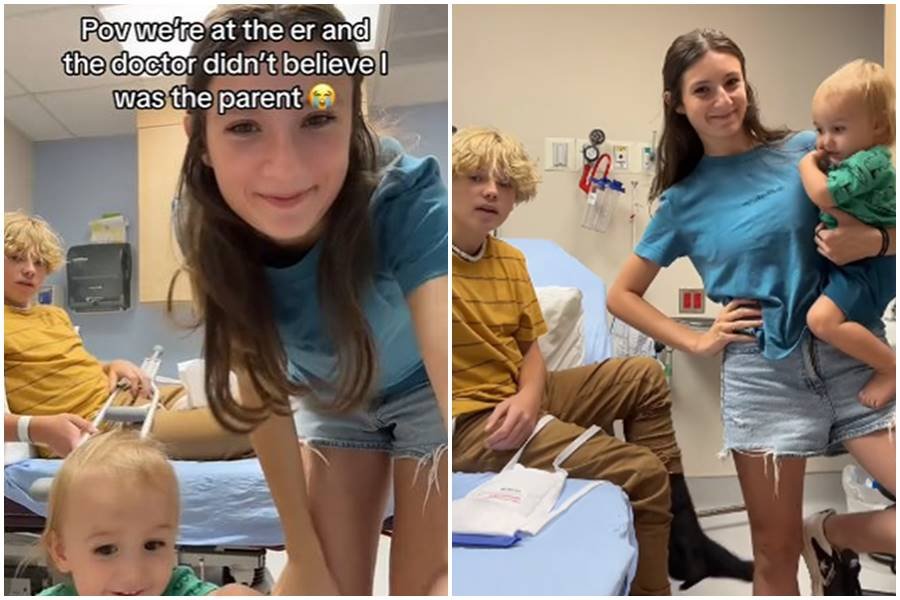
    A young mom with her kids in the ER.Photo credit: Coffe4LifeSage/TikTok

    Sage Pasch’s unique family situation has attracted a lot of attention recently. The 20-something mother of 2 shared a 6-second TikTok video on September 29 that has been viewed over 48 million times because it shows how hard it can be for young moms to be taken seriously.

    In the video, the young-looking Pasch took her son Nick to the ER after he injured his leg at school. But when the family got to the hospital, the doctor couldn’t believe Pasch was his mother.

    “POV, we’re at the ER, and the doctor didn’t believe I was the parent,” she captioned the post.

    Pasch and her fiancé , Luke Faircloth, adopted the teen in 2022 after his parents tragically died two years apart. “Nick was already spending so much time with us, so it made sense that we would continue raising him,” Pasch told Today.com.

    The couple has two sons together, including toddler Laith, and is now a family of five.

    Pasch says that people are often taken aback by her family when they are out in public. “Everybody gets a little confused because my fiancé and I are definitely younger to have a teenager,” she said. “It can be very frustrating.”

    It may be hard for the young parents to be taken seriously, but their story has made a lot of people in a similar situation feel seen. “Omg, I feel this. I took my son to the ER, and they asked for the guardian. Yes, hi, that’s me,” Brittany wrote in the comments. “Meee with my teenager at a parent-teacher conference. They think I’m her older sister and say we need to talk with your parents,” KatMonroy added.

    This article originally appeared last year.

  • Her husband got kissed by a stranger at a bar. Her response got more criticism than the woman who did it.
    A man and a woman talk at a barPhoto credit: Canva
    ,

    Her husband got kissed by a stranger at a bar. Her response got more criticism than the woman who did it.

    A night out in Los Angeles turned into a debate about consent, boundaries, and what it actually means to keep your cool.

    When a drunk woman grabbed her husband’s face and kissed him at a Los Angeles bar, @toastedciabatta stayed cool. No confrontation, no scene. When the woman’s friend rushed over to apologize, she smiled and said, “He’s a hot guy, I get it.” Later, when their groups crossed paths again, she let it go entirely.

    She thought she’d handled it well. Then she went home and couldn’t stop replaying it.

    In a TikTok posted in late August, she walked through the whole night, explaining that as her husband stepped up to order drinks, a woman approached him, held his face, and tried to kiss him on the mouth. He turned away just in time, so it landed on his cheek. The woman walked off. A friend of hers spotted the wife nearby and immediately started apologizing. The wife, not wanting to embarrass anyone, kept things light. The friend apologized again, explaining that her friend was very drunk. The wife told her not to worry about it.

    @rjchild

    Is there a “right” way to handle something like that? Did I completely miss my shining opportunity for a justified bar brawl?! #storytime #fypage #dramatiktok #couples #relationships

    ♬ original sound – RJ

    But something about the moment stuck. Not because she wished she’d gotten angry, she made that clear, but because she felt she’d let something genuinely not okay just dissolve into the noise of a crowded bar. In the video, she said she imagined going back and calmly asking the woman if she remembered what she’d done, and making clear that kissing a stranger without their consent isn’t acceptable regardless of how much you’ve had to drink. “Is there a ‘right’ way to handle something like that?” she asked viewers. “Did I completely miss my shining opportunity for a justified bar brawl?”

    The internet had opinions, and they weren’t all what she might have expected. The Mary Sue covered the response, noting that while some viewers backed her composure, “Girl, you’re GENTLE PARENTING at a BAR???” became something of a rallying cry in the comments. A number of people pointed out that the real issue wasn’t how she handled a social awkwardness but that her husband had been kissed without his consent, full stop, and that framing it as a question of her reaction somewhat missed the point. “He was just assaulted in front of you,” one commenter wrote, “and you just asked like ‘you OK that was weird?’”

    Four women sitting at a bar
    Bar patrons drinking on a busy night. Photo credit: Canva

    Others pushed back on that framing, arguing that the woman was clearly too drunk to have a meaningful conversation and that nothing said in that moment would have landed anyway. “That is a conversation she needs while sober,” one user noted.

    A smaller contingent said they would have handled it very differently. “I probably would not have been that understanding,” wrote @brooklynn_beast. “I’d start swinging.” @birdmo_k was more measured: “It’s assault. I would have called security.”

    The split in the comments is the real story. Most people watching agreed the kissing woman was wrong. What divided them was whether a calm non-reaction is grace under pressure or something closer to normalizing behavior that shouldn’t be normalized.

    For more videos like this, you can follow @toastedsourdoug on TikTok.

    This article originally appeared earlier this year.

  • A mom noticed her dog acting strange around her son for days. His explanation left her speechless.
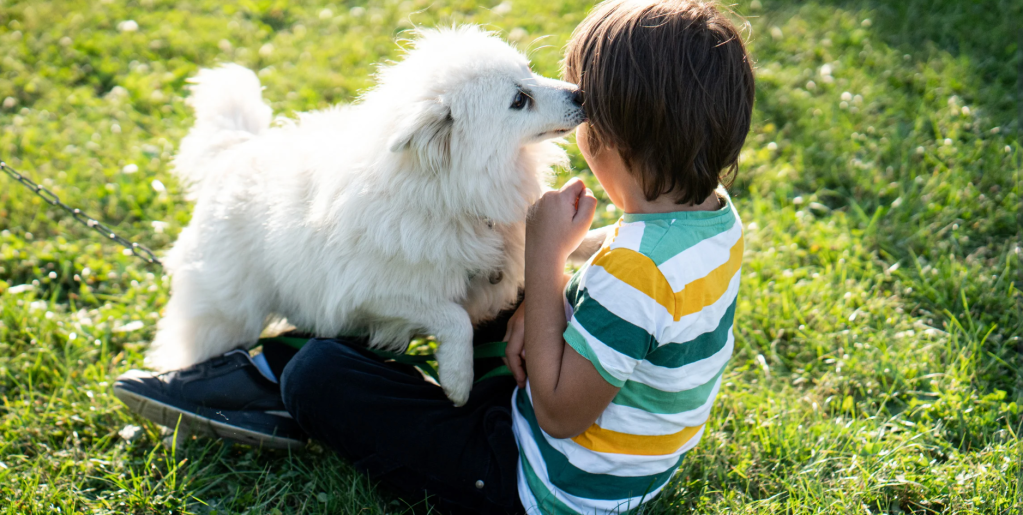
    A young boy plays with his dogPhoto credit: Canva

    Annie noticed her dog acting strange on a Saturday and spent the better part of the weekend trying to figure out what was wrong with him.

    The dog had become completely fixated on her son, following him from room to room, nudging him, hovering nearby. “Like Velcro,” as Annie, who posts on Threads as @annie.wade00, put it. She ran through the usual checklist: was he limping? Off his food? Showing any signs of pain? Nothing. He seemed physically fine. He just wouldn’t leave her son alone. “I thought the dog was sick or something was wrong with him,” she wrote in a post that has since racked up more than 21,000 likes, comments and shares.

    After a few days of watching the behavior continue, she finally asked her son if he had noticed the dog “acting weird.” That’s when the real story came out.

    Young child walking the dog. Photo credit: Canva

    Her son told her he had been under serious stress about an upcoming school presentation. He’d been losing sleep, replaying worst-case scenarios, dreading the moment he’d have to stand up in front of his classmates. He hadn’t said much about it to anyone. The dog, it turned out, had been responding to something her son had been quietly carrying for days.

    “Now my son says having the dog nearby actually helps him feel calmer,” Annie wrote. “Animals pick up on things we don’t talk about. Sometimes they’re better at checking in than I am.”

    A frollicking dog running with its rope toy. Photo credit: Canva

    The story landed because so many people recognized it. In the comments, readers shared their own versions. One person described how their dog, Snoopy, grabbed a sock and hid under the bed the morning they were scheduled for cancer surgery. He had never stolen a sock before, and never did it again. “He knew I was anxious that morning and was trying to keep me home,” they wrote.

    As Newsweek reported, animal behavior expert Kate LaSala said none of this is really surprising from a scientific standpoint. “Dogs are also very attuned to routines and our own emotions,” LaSala said. “They have evolved to be especially good at reading our body language, much better than we are at reading theirs.” Stress and disrupted sleep both alter a person’s scent, their body language, and their daily patterns, and dogs register all of it. Research published in the journal Biology Letters backs this up, finding that dogs can integrate visual and auditory cues to identify emotional states in both humans and other dogs, an ability researchers described as previously known only in humans.

    This article originally appeared earlier this year.

  • Siblings rap version of ‘The Little Mermaid’ song has people hooked
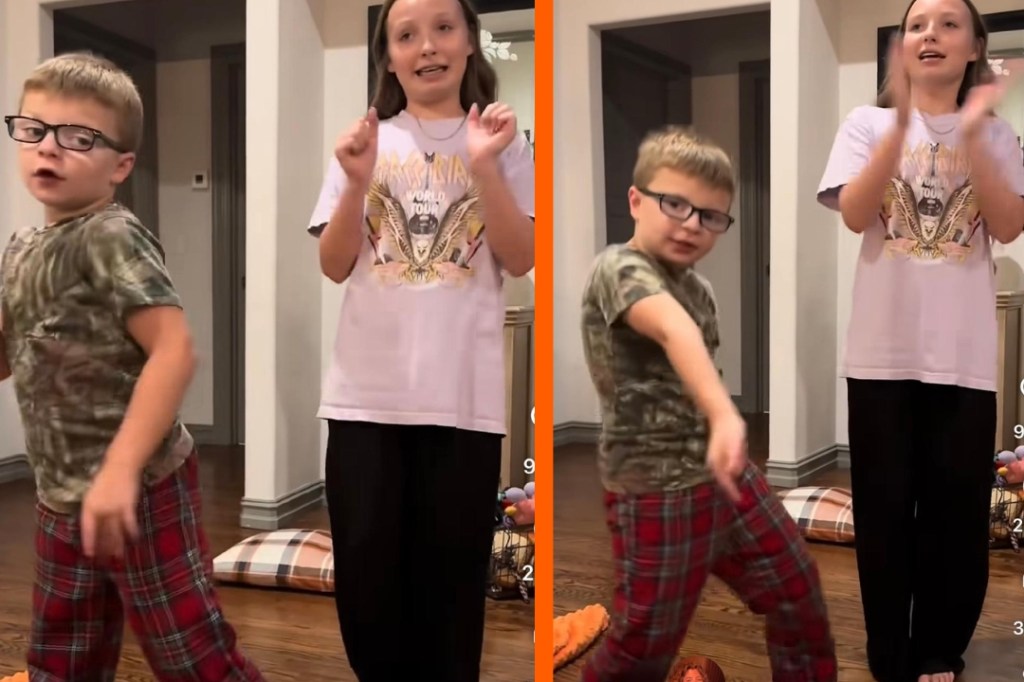
    Siblings perform their unique rap version of a song from "The Little Mermaid."Photo credit: Tara Annan/Instagram
    ,

    Siblings rap version of ‘The Little Mermaid’ song has people hooked

    “This is a Grammy-level performance in the world of ‘mom look at this!'”

    It was just an average Friday night for Tara Annan and her family of seven. Everyone was enjoying downtime in the living room when suddenly the two youngest kids created a unique spin on a Disney musical classic. The world took notice.

    Cohen, who goes by the nickname Buggy, stands casually next to his older sister, Joee (pronounced Joey). In a light purple shirt, Joee begins to set the beat while singing, “Look at this stuff, isn’t it neat? Wouldn’t you think my collection’s complete?”

    The Little Mermaid

    The song the kids are singing/rapping is “Part of Your World” from the hit movie The Little Mermaid. (Alan Menken composed the music, and Howard Ashman provided the lyrics.) It’s a beautiful, swooning ballad and a pivotal part of the musical. For those unaware, the story centers around a lovely redheaded mermaid named Ariel. She gets a glimpse of life on land, and she wants in.

    In the song, Ariel admits to herself that no matter how wonderful her world is under the sea, she wants more: “I’ve got gadgets and gizmos aplenty. I’ve got whosits and whatsits galore. Want thingamabobs? I’ve got twenty. But who cares? No big deal. I want more…”

    So of course the song deserves a hype man. That’s where Buggy comes in. Clad in his signature glasses and plaid pants, he begins his interpretive dance, adding in ridiculously hilarious sound effects and dance moves. The best part? The siblings just play off one another, as though they’re an old Vaudeville act that’s been doing it for ages.

    A musical family

    Upworthy had a chance to chat with Annan, a busy mom of five, who shared what her family’s typical weekends look like.

    “I didn’t cook that night so we all were hanging out in the living room after our DoorDash,” she says.

    She admits that having five kids creates a rather bustling energy:

    “We are a very loud bunch. We love music. Either my kids are making up their own beats or we have music on. We listen to all types of music. One thing I love is my home sets the tone for my kids to be themselves.”

    As for that particular song? “I just so happened to capture that little mix that night and the world loved it,” she says.

    The loving reaction

    This clip has over 850,000 likes on Instagram alone and more than 21,000 comments. One person jokingly writes that a “trap” version of the rendition would be done by rapper Lil Wayne—or, as they call him, “Lil Mermayne.”

    There are so many wholesome and funny comments pointing out the magic this family seems to have when creating together.

    “Imagine you tell your daughter to ‘go play with your little brother’ and 15 minutes later, they come down with this MASTERPIECE,” a commenter notes.

    Another commenter gives it the highest praise, writing, “This is a Grammy-level performance in the world of ‘mom look at this!’”

    Finally, this commenter shares that if they’d had these particular kids, they might have made different choices in life: “It’s embarrassing how many times I’ve watched this. If I knew this was guaranteed, I’d consider having kids.”

  • A dad was camping with his kids when a fellow camper slipped him this handwritten note
    A dad got a sweet note from a fellow father after camping with his kids.Photo credit: Canva, Note image via RCampR6/Reddit

    There are a lot of challenging things about being a parent; take your pick. The sleep deprivation, the overwhelming responsibility, the lack of free time. But truly, one of the hardest parts of being a parent is never being sure whether you’re doing a good job or totally bombing it. If you’re conscientious enough to even wonder if you’re a good parent, you probably are, but parenting entails a million little choices and interactions, and there’s always a lingering voice in your head saying, “What if you’re really screwing this whole thing up?”

    Reassurance and encouragement are always appreciated by parents, but not always received, which is why a note from one camping dad to another has people celebrating the kindness of anonymous strangers.

    “You are killing it as a dad.”

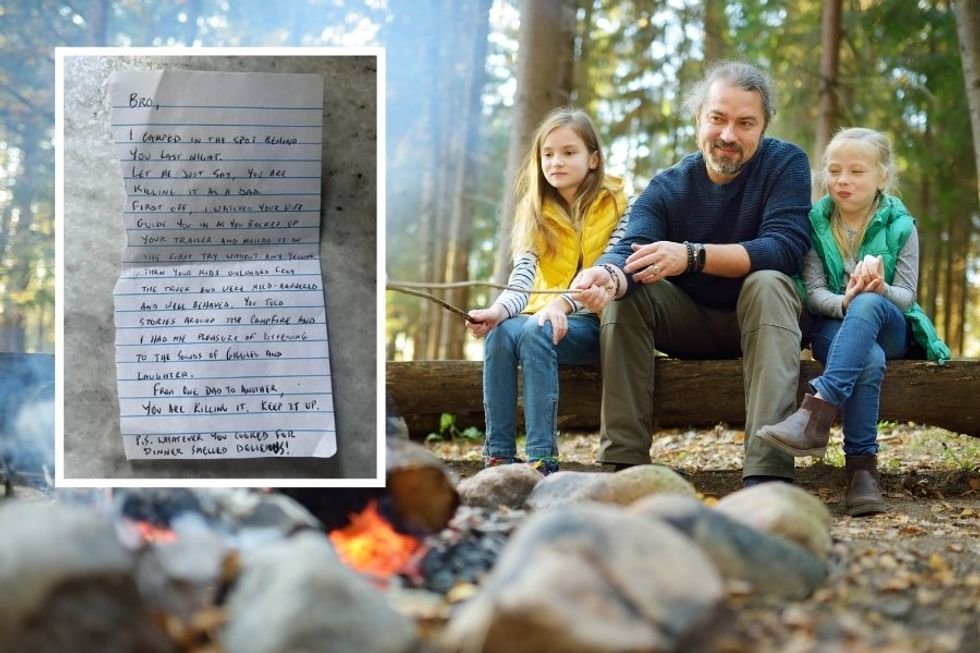
    Someone on Yosemite Reddit thread shared a photo of a handwritten note with the caption, “To the man who left this thoughtful note on my windshield at Lower Pines Campground this weekend, I extend my heartfelt gratitude; your acknowledgment of my efforts to be a good father means a great deal to me.”

    The note reads:

    “Bro,

    I camped in the spot behind you last night. Let me just say, you are killing it as a dad. First off, I watched your wife guide you in as you backed up your trailer and nailed it on the first try without any yelling. Then your kids unloaded from the truck and were mild-mannered and well behaved. You told stories around the campfire and I had the pleasure of listening to the sounds of giggles and laughter.

    From one dad to another, you are killing it. Keep it up.

    P.S. Whatever you cooked for dinner smelled delicious!”

    How often do we share these thoughts with strangers, even if we have them? And who wouldn’t love to get a surprise bit of praise with specific examples of things we did right?

    Everyone needs to hear a compliment once in a while.

    dads, giving men compliments, fatherhood, camping, camping with kids
    A handwritten note with the words Photo credit: Canva

    So many people found the note to be a breath of fresh air and a good reminder to compliment people when we feel the urge:

    “That would make any daddy’s eyes water.”

    “It’s always nice, as a guy, to get a compliment.”

    “I complimented a guy’s glasses at work (I’m also a guy, and btw they were really cool glasses, I wasn’t just being nice) and now he keeps trying to tell me where he got his glasses and how I should get some. But I’m just having to be polite because I already have glasses and I’m not in the market. I finally had to tell him I’m not going to buy them lmao I just like them on him.

    Made me feel like that’s the first compliment he’s had in years because he can’t stop talking about it. Also I mainly liked the glasses because I think he’s cute but he really thinks it’s just the glasses haha jokes on him that cute bastard.””I was in the store with my wife and one of our ‘adopted nephews’ yesterday (we’re close friends with his parents and we’ve known him and his brother since they were newborns and 2yo, respectively). A woman came up to me at checkout while my wife was running out to the car and said ‘I’m not sure what your family relationship is here, but I just have to tell you how nice and refreshing it is to hear all the laughter and joy from the 3 of you. You both seem like such a good influence on him and it warms my heart.’ It’s such a small thing but as a dude, I can’t remember the last time someone gave me a compliment in public and it made my freaking day.”

    “10/10 letter. The and not yelling part gave me a good chuckle lol.”

    “We need so much more of men getting such heartfelt and sincere compliments. Thanks for sharing. ❤️”

    dads, giving men compliments, fatherhood, camping, camping with kids

    A man smiling Photo credit: Canva

    “I’ve never considered leaving a note, but when I see a harmonious family with good parenting, it’s healing for me. My childhood was awful.”

    “Such an awesome compliment! Even though I don’t have children myself, I like to remind my friends too that they’re doing great & it brings them happy tears.”

    “This made me cry. I love that you are getting your ‘flowers.’ My dad sucked, I’m so glad you are one of the good ones.”

    “This made me cry too. It’s so hard to be a human. Let alone a parent. Getting a good job sticker every now and then really means a lot these days.”

    “I’m a big bearded guy and I would cry if I got this note. More people like this, please.”

    The best part of this story is that no one knows who the dad who wrote the note is, not even the dad who shared it. It wasn’t written for clout or notoriety, it wasn’t to get attention or make himself look good. No name or signature, just an anonymous act of kindness to uplift a stranger whether he needed it or not.

    dads, giving men compliments, fatherhood, camping, camping with kids

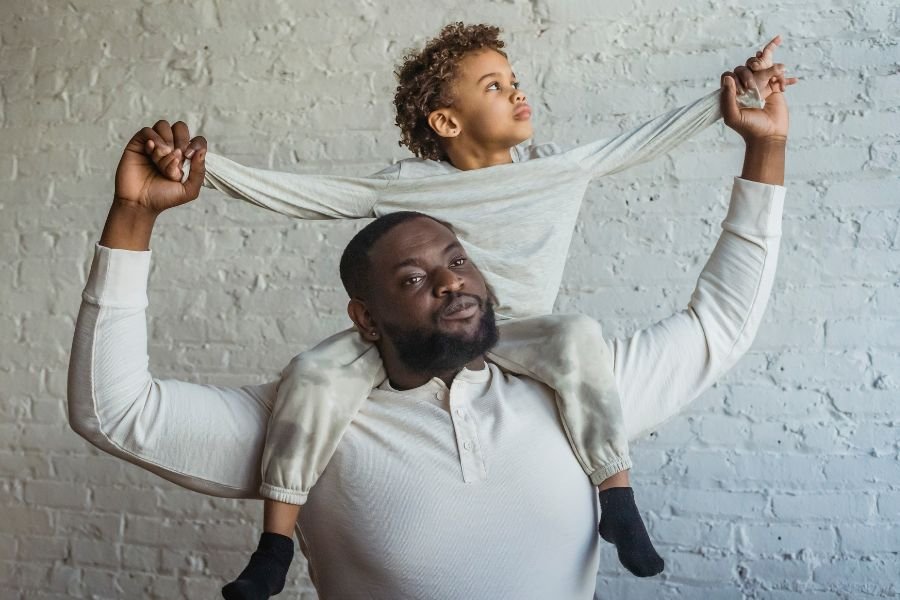
    A dad with his kid on his shoulders Photo credit: Canva

    We all need to hear or read kind things said about us, and sometimes it means even more coming from an anonymous stranger who has nothing to gain by sharing. A good reminder to share it when you feel it—you never know how many people you may move and inspire.

    This article originally appeared two years ago. It has been updated.

Nostalgia

14 ‘latchkey kid cuisine’ essentials Gen Xers whipped up in the ’80s

Kids

‘Old soul’ kid chooses his own name, then cracks himself up for a full minute

Pets

He made a teeny house for a stray cat visitor, and it turned into an adorable kitty village

Pop Culture

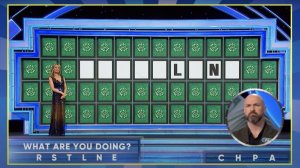
Fans boo after ‘Wheel of Fortune’ contestant gets ‘unfair’ puzzle worth $1 million