Why some shoppers avoid self-checkout (even when it’s faster), according to psychologists

Science says these people are smarter than you think.

self, checkout, psychology, shoppers, grocery
Photo credit: CanvaWhich lane do you choose at the grocery store?

Which lane do you choose at the grocery store?

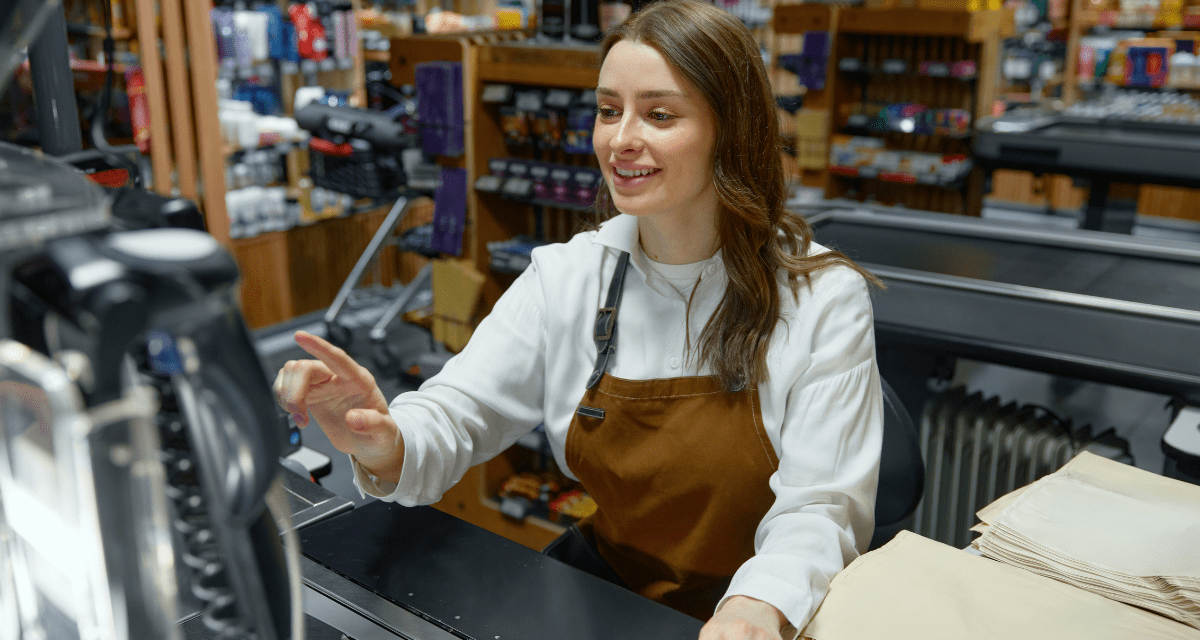
To your left, the self-checkout area: a collection of blinking, beeping, whirring, computer-speaking machines with bright LED screens and audible prompts to “please select a payment type.” To your right, a single lane with a human cashier…and a line that snakes into the next aisle and out of sight.
self, checkout, psychology, shoppers, grocery
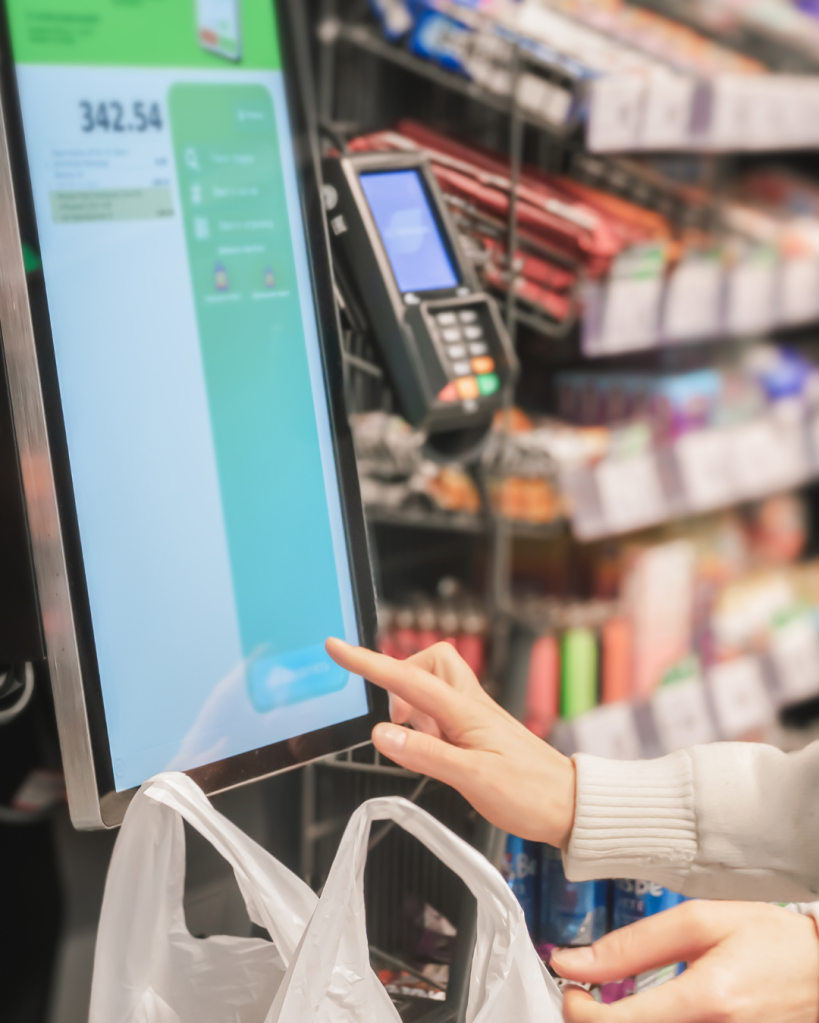
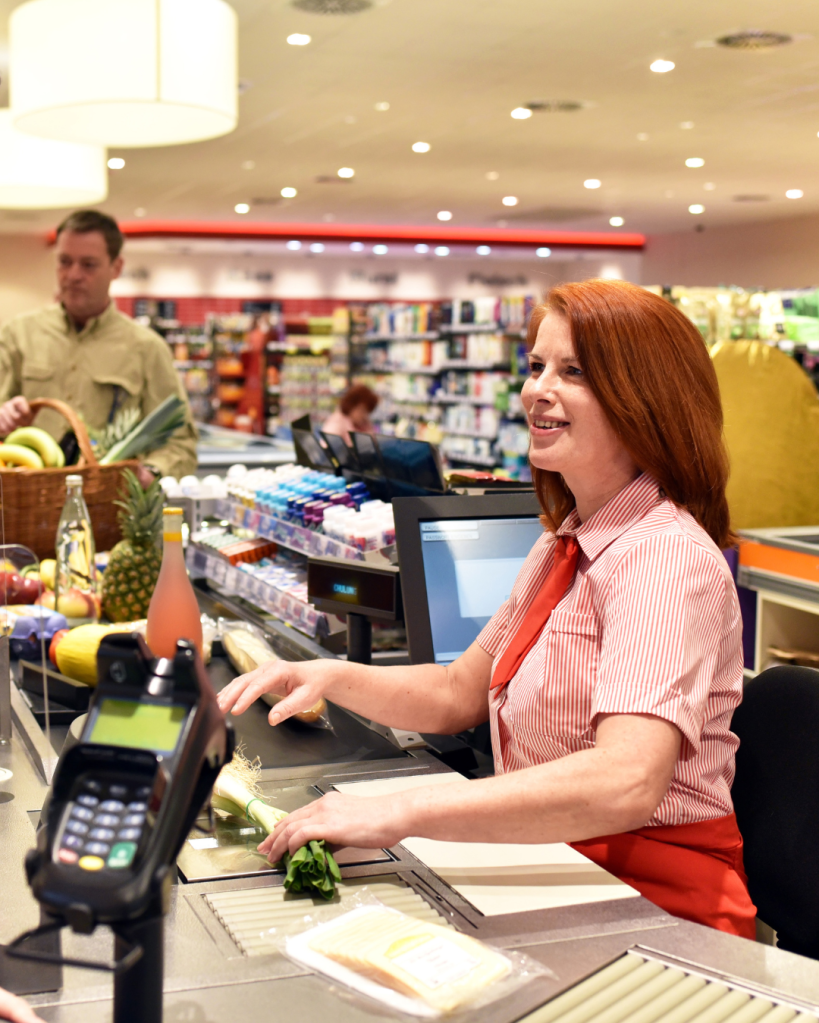
A person using the self-checkout at a grocery store. Photo credit: Canva

You look down. You have six things; the math is obvious. The kiosks will be faster.

But somehow, you and your little basket find yourselves at the back of that winding line.

What’s going on here? If you have ever steered your cart away from self-checkout, even when it is the faster, more efficient option, you are not alone. It may seem like a simple preference on paper: You’re either a “kiosk person” or a “not-kiosk person.” Optimized or old-school. But for many shoppers, that choice is rooted in a human desire for connection and emotional safety, and a small, stubborn refusal to do more work under cameras.

A ritual quietly disappears

Within a single generation, grocery shopping moved from “you hand your stuff to a person” to “you become the person.” For most of the 20th century, buying groceries meant interacting with at least one other human: You chose the lane, loaded items onto the belt, and handed your entire life—cloves of garlic, wine that costs $2, strawberry ice cream, tissues infused with lotion and  Vicks VapoRub—to another person. They scanned, bagged, and told you, “Have a good night.”

Today, 40% of checkout lanes at major U.S. grocery chains are self-checkout. They are everywhere: In 2026, 96% of grocery stores in the U.S. offered self-checkout technology, while 86% of consumers claim to use it. You scan. You bag. You look up codes for organic green onions. You do all this on camera, with a disembodied voice ready to tell you about an “unexpected item in the bagging area.”

There was a time when a “full-service checkout” meant that someone else—a trained professional—handled everything. They asked about your day, made sure that egg cartons never wound up at the bottom of your bag, and sometimes carried everything out to your car. It felt like being taken care of.

Self-checkout machines didn’t just replace a series of tasks. They erased the human at the end of a grocery trip.

The importance of “weak ties”

So, you avoid self-checkout lines. Psychologists say a few different things are going on here.

Researchers use the term “weak ties” for the small, casual relationships we maintain with people we don’t know well: the kind cashier who always smiles, the guy behind the fish counter who saves his best salmon for you, and the bus driver who recognizes your face even if they don’t know your name.
self, checkout, psychology, shoppers, grocery
Weak-tie connections make you feel important in the world. Photo credit: Canva

Brief, ordinary, easy to overlook—and, for many people, irreplaceable. Toni Antonucci, a professor of psychology at the University of Michigan, explained the significance to the Daily Mail: Weak ties are “somebody who makes you feel important in their world—somebody who makes you feel human.”

When self-checkout replaces the cashier, it eliminates one of the last reliably recurring weak-tie interactions in many people’s daily lives. 

Studies on social connectedness show that these fleeting moments play an important role in our day-to-day lives and measurably improve our mood and sense of belonging, particularly for people who otherwise move through their days in relative isolation.

Imagine the person who works from home or whose apartment falls quiet by 9 a.m. When that cashier remembers something they mentioned weeks ago, they experience the “weak-tie connection.” It’s not friendship. But on certain days, it’s the only exchange that reminds them they exist outside their apartment. It’s a microdose of belonging: proof that they still live in the minds of others.

When habits don’t meet expectations

Researchers who study checkout behavior note that many shoppers—particularly older ones—carry a strong expectation that being served by a person is simply part of what it means to be a customer. It is not entitlement in the pejorative sense. It is a social contract that made sense for decades: You bring items to the cashier, and they handle the transaction. When a kiosk breaks that contract and hands the transaction back to you, it is not just inconvenient; it feels like a small breach in the way the world works.

If you have spent 50 years handing your groceries to a human, your nervous system quietly codes that as “how this is supposed to work.” A touch screen, no matter how “user-friendly,” does not feel like a convenient feature. It makes many older shoppers ask, “Wait, why am I suddenly doing this part myself?”

“These systems aren’t really about innovation or collaboration between companies and consumers,” said Mathieu Lajante, a business management professor at Toronto Metropolitan University. “They’re about maximizing profits while weakening social norms of reciprocity and responsibility.”

Layer tech anxiety on top of that—worrying about “doing it wrong,” getting stuck in the bag selection menu, holding up the line—and the kiosk feels antagonistic. It is an intrusion into a ritual they have followed for decades.

“Am I supposed to be doing this? Really?”

People who do not like self-checkout often hold a strong sense of how labor should work. They remember when a grocery trip included a checker, a bagger, and sometimes even someone who walked your cart out. In their mental contract, paying for groceries includes paying for human help: people who do the things you’re bad at, like the game of Jenga happening in your brown paper bag.

Handing that job to a machine—and, by extension, back to them—can feel like a tiny erosion of what they’re owed as a customer.

When they say, “I’m not doing that—that’s not my job,” it’s not “self-entitlement” or brattiness: it’s a fairness instinct kicking in. They’re refusing to do unpaid work.

All the small stuff in between

Research shows that people who prefer human lanes are often at least partly extroverted: They get energy from small talk, feel safer in familiar social scripts, and like the feeling of being known in their regular spots. Even if they’re shy in other areas of life, the grocery line gives them a structured stage where they know their role and the beats.

And for some, there’s a softer motive: protection. They want to preserve human workers and, by extension, a way of life. They’ve watched their local supermarket cut hours, close lanes, and replace faces with screens. Choosing a cashier feels like a tiny act of solidarity: “If I keep standing here, maybe this job doesn’t disappear as fast.”

3 big reasons you might be right

Then there are the people who see that same setup—self-checkout kiosks to the left, a single checkout lane, and a long line to the right—and make the opposite call.

@idanabada

Self checkout store in LAX. The future is here! #ai #lax #store #shopping #cheetos #doritos ♬ original sound – Idan Abada

You know them: the person who snakes past the full‑service lanes and beelines for the one open machine. They move at their own pace, bag their groceries the way they like (frozen together, produce on top, no smashed bread), and skip the part where they talk to a stranger. They can buy late‑night junk food, an embarrassing product, or six cans of cat food and wine without bracing for a comment.

“When you’re at a cashier register, the cashier sees everything you purchase. When you’re at self-checkout, you can control what others see, so you might be more likely to buy embarrassing items.”
– Becca Taylor, University of Illinois Urbana-Champaign

Plenty of introverts and people with social anxiety describe kiosks this way. They don’t hate people; they have a limited social battery, and they’d rather use it for work, friends, kids, or a long Lyft ride to the airport. A machine that lets them coast through in near‑silence feels like mercy.

1. You’re doing unpaid labor

Here’s where the research complicates the convenience story. Across four separate experiments, researchers found that shoppers using self-checkout felt less rewardedless satisfied, and less likely to return compared to those who used a staffed lane.

According to these studies, when you do everything—scan, bag, troubleshoot—this extra effort can shrink the feeling of reward. That means dollars saved and loyalty points don’t hit the same when you’ve had to work for them. You feel like you’re owed something.

self, checkout, psychology, shoppers, grocery
Are you doing labor at the self-checkout lane? Photo credit: Canva

Santiago Gallino, a professor at The Wharton School of the University of Pennsylvania, states this plainly: “For retailers, it’s a combination of cutting labor and adding flexibility. It’s not to make checkout more efficient. They are basically transferring the labor to the customer.”

Self-checkout didn’t show up because shoppers begged for more chores; it showed up because it lets stores shift paid labor onto us without lowering prices. We didn’t vote for fewer workers; we voted for the only thing the store put in front of us.

2. It’s possible you’re being watched while you work

Self-checkout stations rely on a kind of slightly menacing, almost dystopian level of ambient suspicion: overhead cameras, weight sensors that double-check every bag, pop-ups that demand an attendant’s key before you can move on. AI-based loss-prevention systems increasingly use computer vision and facial recognition to flag suspected shoplifting.

Retailers say this is necessary—theft occurs at a much higher rate at kiosks than traditional lanes—but the solution includes treating everyone like suspects. When you use a self-checkout kiosk, you can see yourself on a little security screen in the corner. So can their security team, and they’re watching closely.

Psychologists would call this a fairness gap: doing more work while being trusted less. Investigations have found that these cameras and the AI systems running them mis‑flag people of color more often, which makes every beep feel a little more loaded.

“AI technologies frequently mirror existing inequalities as they are developed by individuals in environments lacking diversity, which prevents the technology from being fair. If the same stereotypes that are used to profile Black individuals in daily interactions are integrated into algorithms, the resulting facial recognition systems will perpetuate those stereotypes as a human would.”
– Shaun HarperForbes

3. The plight of the kiosk keeper

Meanwhile, the workers who once stood at a single lane are now sent to babysit the self-checkout kiosks, responsible for eight machines at once. They half‑jog from flashing light to flashing light while a walkie‑talkie crackles in their ear and apologize for errors they didn’t cause. Helper and hall monitor, all in one fluorescent vest. The employee who runs the self-checkout corral holds an impossible dual role: be warm, be helpful, and also watch for theft while fielding the frustration of kiosk users who all think their machine is broken.

Research from the Harvard Shift Project, which surveyed tens of thousands of service-sector employees, found that stores with self-checkouts were more likely to be chronically understaffed and that understaffing drove higher rates of customer hostility aimed at the employees who remained.

self, checkout, psychology, shoppers, grocery
So, what’s your choice? Photo credit: Canva

What’s really at stake at the checkout lane

Let’s be clear: self-checkout lanes aren’t evil. But when we reduce everything to “convenience,” we miss what’s really at stake.

That little fork in the floor—screens on one side, a person on the other—has become one of the everyday places where we decide how much work, how much watching, and how little conversation we’re willing to accept in exchange for speed.


  • Neil deGrasse Tyson reveals the science of why he wants to be buried instead of cremated
    Photo credit: Norwegian University of Science and Technology, CanvaAstrophysicist Neil deGrasse Tyson discusses death

    Astrophysicist Neil deGrasse Tyson is seemingly driven by an endless amount of curiosity. Whether it’s the tiniest sea quark or the biggest black hole known to astronomers, he wants to dig in and make it make sense. And what’s especially unique is his need to not only understand the science around us, but to make us understand too.

    In a recent clip posted from the account of Tyson’s popular podcast StarTalk, we see Tyson giving a quick rundown of where “energy” goes when we die. With a chyron reading, “You don’t disappear. You transform. Some of you returns to Earth. Some of you travels the universe,” Tyson leans in and speaks directly to the camera. “In death, you’ve got pretty much two choices in modern society.”

    When we are buried

    He makes a case for being buried, as we see a traditional coffin being lowered into the ground. “You can be buried. That’s my choice, so that the energy content of my body—which is still there when you die—your molecules were built up from your lifetime of eating and exercise, and the building of your organs and your muscles and other tissue. In death, those molecules still contain energy.”

    The clip cuts to a graveyard as Tyson continues. “If I’m buried and I decompose, all that energy gets absorbed by microbes, by flora and fauna dining upon my body the way I have dined upon flora and fauna my whole life. And that way, giving back to the Earth.”

    When we are cremated

    We then see a fire moving in warm yellow, orange, and red tones. Tyson explains what happens during cremation. “If you’re cremated, the energy content of those molecules doesn’t go away. It gets transferred to heat that then radiates infrared energy that was once the molecules of your body. It radiates it out into space, moving at the speed of light.”

    He adds a most intriguing thought, which is that one could conceivably track that energy after cremation. “After somebody has been cremated, you can keep a timeline.” A photo of an AI-generated video of a milky, gaseous star system swirling around a bright light is shown. Tyson continues, “Where has their radiant energy been by now? If they were cremated four years ago, they would have reached the nearest star system, Alpha Centauri. So that, in a way, you’re still a part of the universe, just in a different form.”

    What are our ashes made from?

    In his piece, “What Happens to Your Atoms After You Die?” chemical/mechanical engineer Arvin Ash gives a specific step-by-step as to what happens to our atoms after we pass on. In cremation, he explains, “What are these ashes composed of? Phosphate and calcium make up your bones, so that’s where these atoms come from. What happens to these ashes? These ashes are likely to make their way eventually to soil, where they will be incorporated into the structure of plants. These plants will be eaten by animals and humans, and end up back in your body. Eventually, tiny bits of you will end up in your great-grandchildren’s morning cereal or hamburger.”

    And he too believes that some of our atoms will reach the farthest corners of the universe. “Your body also has a tiny amount of radioactive elements. Tiny amounts of thorium and uranium will eventually become lead. But along with this decay, some atoms of helium will also be formed. Earth’s gravity isn’t strong enough to hold helium to our planet, and so tiny bits of what once was you will float off into space. So some of your atoms are in for a fantastical and exciting journey, forever floating to the farthest reaches of the universe until the end of time.”

    On the Facebook, where this clip was also posted, this received over 3,000 comments, many of whom seemed fascinated by the cross-section of science and spirituality.

    “Green burial”

    Many had their own two cents to add. “Cremation, but then the ashes are used in a bios urn to plant a tree. You get a twofer… radiant energy from cremation to travel the universe, and then your ashes are used as nutrients for the tree.”

    Some note that even though the video clip showed a coffin, they believe Tyson was most likely referring to a “green burial.” After one Facebooker asked, “How does your ‘energy’ get out of that sealed coffin to feed flora and fauna?” another answers, “That is exactly the point—in a traditional sealed casket and concrete vault, it doesn’t… at first. It actually delays that natural cycle for decades. That’s why there is such a growing interest in green burials or human composting; they remove those barriers so our nutrients can actually rejoin the ecosystem and support new life immediately. Over a long enough time, the coffin will probably decay too. Most things do.”

  • Couple uses a potato and honey to turn grocery store rose into a garden
    Photo credit: CanvaA jar of honey. A sack of potatoes. A bouquet of roses.
    ,

    Couple uses a potato and honey to turn grocery store rose into a garden

    There you are at the grocery store check-out, tempted to buy a bouquet of roses. They’re beautiful and cheery and so easy to grab and go. Only, you opt out. Sure, they’re beautiful, but they don’t usually last more than a week, making it tough to rationalize the spending. But what if that weren’t true?…


    There you are at the grocery store check-out, tempted to buy a bouquet of roses. They’re beautiful and cheery and so easy to grab and go. Only, you opt out. Sure, they’re beautiful, but they don’t usually last more than a week, making it tough to rationalize the spending.

    But what if that weren’t true? The popular social media handle known as Jeff & Lauren (@Jeff&Lauren) have a clip making the rounds wherein Jeff shows that something magical can be done with a single “store-bought” rose. By simply using a few household food items, he is able to turn one rose into an entire rose bush.

    Honey, potatoes, and water

    In the clip, we see Jeff dipping a bright pink rose into a jar of honey. The top chyron reads, “I did this for my wife.” He then takes the honey-dipped flower and sticks it firmly into a pre-cut hole in a russet potato. He takes the entire potato/flower hybrid and buries it into a potted plant. Lastly, he cuts the bulb and leaves off, leaving just the stem, and waters it heavily. In time (at least according to the simulated video), it re-grows into a rose plant.

    On the YouTube account My Garden Channel (which is self-described as a channel that “focuses on houseplants and gardening, run by a team of experienced gardeners and horticulturists”), they note a super interesting tidbit. The flowers and the spores of the potato are in direct competition with one another. In other words, sometimes the experiment yields, well…potatoes instead of flowers.

    To avoid this, the expert in the video suggests shaving the skin off the potato. “The skin of the potato is where the shoots will most likely develop. You’re not trying to grow a potato. You’re simply trying to feed the rose cutting, as it tries to root.”

    How to do it

    Under the clip, they explain how it’s done, and they spare no detail. “Rooting roses in a potato is an unconventional yet intriguing method of propagation. The idea is simple: the moisture and nutrients from the potato can help nourish the rose cutting as it develops roots. To try this, you start by selecting a healthy rose cutting, about 6-8 inches long, with at least a couple of leaf nodes. After trimming the bottom of the cutting at a 45-degree angle, remove any leaves near the base.”

    Now it’s time for the potato. “Next, you poke a hole in a medium-sized potato, just large enough to insert the cutting without wiggling. Push the drill bit through the potato to make sure the stem comes out of the bottom of the potato just a little bit. The potato acts like a natural nutrient sponge, keeping the cutting hydrated. After placing the cutting into the potato, you can plant the entire potato in soil, burying it a few inches deep in a pot or directly in the garden. Keep the soil moist but not waterlogged, and cover the cutting with a plastic bag or bottle to create a humid greenhouse effect.

    Over the next few weeks, with care and patience, roots may form as the rose cutting absorbs moisture and nutrients from the potato, potentially growing into a new plant. While not guaranteed, this method combines natural elements in a creative attempt to root roses in a novel, supportive environment.”

    Why a potato?

    In an article for The Spruce, author Ashlyn Needham explains why, in fact, a potato is used. “In essence, you’re using the potato to speed up the rooting process, which is crucial for producing established roses. It’s important to note that you won’t actually be growing roses in potatoes, just starting the process.”

    Does it work?

    Commenters have weighed in. Under Jeff&Lauren’s Facebook post, there are over a quarter of a million likes and thousands of comments. One shares, “My grandmother did that. Back in the seventies, she came for a visit. I had many different rose bushes. She cut stems from every bush. She wrapped them in damp paper towels and then wrapped them in plastic. She flew home to Oregon and planted the stems. She had rose bushes the next year.”

    Another wound up with what we knew could happen: “I tried this… and I wound up with potatoes.” This comment alone got a lot of support.

    This Facebooker gives the surprising tip that, perhaps, you don’t even need the potato, writing, “I just cut off part of a stem and stuck it in the dirt. Then watered it regularly. I have several new rose plants from doing just that. They took almost immediately.”

  • Scientists identify 5 types of sleepers, and each has different brain wiring
    Photo credit: CanvaWhat type of sleeper are you?

    To be honest, most sleep advice sounds like it was written for people who already sleep well. We’re offered platitudes like “Stick to a consistent bedtime.” Revolutionary. Or, “Avoid screens before bed.” Sure. “Try to relax.” Oh, thanks. Never thought of that.

    For millions of people, this sort of run-of-the-mill sleep advice feels like being handed a pamphlet about umbrellas in the middle of a tropical storm. The advice isn’t wrong, not really. But it’s basic. Generic. It fails to account for the wildly diverse reasons people struggle with sleep in the first place.

    Sleep, however, remains an essential problem for many. Roughly one in three American adults fails to get the recommended 7+ hours of sleep per night. Nearly half report trouble staying asleep on three or more nights a week. A record-high 57% of Americans say they would simply feel better if they could get more sleep.

    new study from Concordia University feels radical for a simple reason: Instead of lumping all sleepers into “good” and “bad” categories, researchers identified five distinct sleep profiles, each with its own causes, brain patterns, and emotional fingerprints. Once you know which one sounds like you, the advice actually starts to make sense.

    A quick look at the science

    Researchers in Montreal studied 770 healthy adults aged 22 to 36. They analyzed a large, diverse group of real people, not statistical abnormalities. Scientists combined MRI brain scans, sleep quality surveys, cognitive tests, mood assessments, and lifestyle data to build the most complete picture of human sleep patterns ever assembled.

    What they found: Your sleep isn’t just about what happens when you close your eyes. It’s deeply intertwined with your brain wiring, your emotional life, and how you move through the world during the day. These findings align with the current sleep-deprivation crisis. Six in ten adults aren’t getting enough sleep, according to the National Sleep Foundation, and the Centers for Disease Control and Prevention reports that one in three adults is chronically sleep-deprived. But not all of those sleepers are struggling for the same reasons, and that distinction matters more than previously realized.

    Your sleep profile isn’t a quirky, fun fact like an astrological sign. Knowing which profile you belong to could unlock a good night’s rest—not just tonight, but for a lifetime.

    The 5 sleep profiles

    sleepers, sleep, profiles, rest, brain
    Are you a Struggling Sleeper? Photo credit: Canva

    Profile 1: The Struggling Sleeper (LC1)

    Does this sound familiar? You get into bed exhausted, lie there for an hour, and suddenly your brain wants to review every awkward conversation you’ve had since 2009. When you do sleep, it’s shallow. You wake up wondering why you even bothered.

    LC1, known as the Struggling Sleeper, is the most prevalent and clinically significant sleep profile. It is defined by a potent combination: sleep difficulty and underlying mental health struggles, including anxiety, depression, low mood, and poor concentration. These factors are so closely linked that it’s almost impossible to tell which came first. Research has consistently shown that insomnia and anxiety and depression have a bidirectional relationship, with each feeding and amplifying the other in a self-reinforcing cycle. Treating only the sleep without addressing the emotional root is like mopping the floor while the faucet is still running.

    Brain scans reveal another neurological layer: Individuals with LC1 exhibit hyperactivity in emotional processing regions and reduced connectivity in areas tied to rumination and focus. The brain gets stuck in a loop. So when it’s 2 a.m. and you’re mentally planning contingencies for catastrophes that haven’t happened, this is your brain’s wiring, not a personal failure.

    Somehow, Resilient Sleepers make it through the night. Photo credit: Canva

    Profile 2: The Resilient Sleeper (LC2)

    This one’s surprising. While Resilient Sleepers often carry real psychological stress—attention difficulties, low mood, pressure that would flatten most people—somehow, they sleep.

    This profile offers a fascinating contrast to LC1. People in LC2 experience similar levels of psychological burden as those in Profile 1, but their sleep does not break down under that pressure. Researchers think this may reflect a neural resilience pathway—a different kind of wiring that prevents stress from taking over the sleep system.

    Their brain scans reveal something intriguing: strong attention and control networks that act as a buffer, preventing emotional noise from flooding the sleep system at night. You might even underestimate your own sleep quality, thinking it’s worse than it actually is. Researchers believe this profile could be key to understanding what the brain can learn to defend, and whether those defenses can be developed in other sleepers.

    sleepers, sleep, profiles, rest, brain
    For the Medicated Sleeper, sleeping aids are non-negotiable. Photo credit: Canva

    Profile 3: The Medicated Sleeper (LC3)

    Melatonin gummies, sleepy tea, a glass of wine, a Benadryl “just this once” that became every night—if sleep aids have quietly become non-negotiable, you probably recognize this profile.

    Medicated Sleepers are often doing well by most measures—they’re socially active and physically healthy—but simply can’t fall asleep on their own without a little chemical assist. The trade-off? Mild declines in visual memory and emotional regulation, as sedating medications have been shown to affect both perceptual and emotional processing.

    An important note: The researchers found that LC3, LC4, and LC5 were less robust than LC1 and LC2, suggesting these profiles may be more variable across populations and should be interpreted with caution.

    sleepers, sleep, profiles, rest, brain
    Short Sleepers don’t need less sleep—they’re sleep-deprived. Photo credit: Canva

    Profile 4: The Short Sleeper (LC4)

    You’re efficient. You’ve adapted. So five and a half hours of sleep is fine—you’ve been running on it for years.

    Here’s the hard truth: The brain scans of Short Sleepers look nearly identical to those of people who have pulled a full all-nighter. No, not just tired people—people who literally haven’t slept. As you can imagine, the cognitive costs of this sleeper profile accumulate quickly, often below the threshold of what we can feel but well above what researchers can measure.

    LC4 is characterized by regularly sleeping fewer than six to seven hours per night, and the cognitive impacts are measurable: slower reaction times, decreased problem-solving ability, lower emotional patience, and difficulty managing interpersonal frustration. You may pride yourself on needing little sleep, having built an identity around efficiency. But your partner notices you snap more easily. You’ve forgotten three appointments this month. You’re not superhuman. You’re sleep-deprived, and your brain is working overtime to hide it from you.

    sleepers, sleep, profiles, rest, brain
    Fractured sleep? You might be a Disturbed Sleeper. Photo credit: Canva

    Profile 5: The Disturbed Sleeper

    You spend eight hours in bed, but you wake up exhausted. Throughout the night, everything in the world seems to keep you from rest—discomfort, noise sensitivity, a partner who snores—and despite spending plenty of time technically “sleeping,” Disturbed Sleepers rarely feel rested. The quality of sleep is just too fractured.

    LC5 is characterized by nighttime disturbances and interruptions in physical sleep, and its downstream effects include anxiety, substance use as a coping mechanism, and poor performance across various cognitive domains.

    This was the only profile in the study to show a notable gender difference, with women scoring significantly higher—consistent with research showing that women experience greater sleep fragmentation over their lifetimes.

    Why your sleep type matters

    The stakes go well beyond feeling groggy. Each of these profiles carries unique long-term health risks, and the brain research is truly concerning.

    The dementia connection

    Every night, while you’re asleep, your brain quietly does something extraordinary. It activates what scientists call the glymphatic system—a built-in janitorial crew of fluid channels that weave between your brain cells. Their job? To flush out toxic proteins that accumulate during the day, including amyloid beta and tau. These are the same proteins that clump and tangle in the brains of people with Alzheimer’s disease.

    This cleanup process happens primarily during deep, slow-wave sleep—the kind that disrupted, shortened, or fragmented sleep tends to steal first. And even one night of sleep deprivation measurably impairs that clearance. Not a year of bad habits. One night.

    When this system fails over time—as it does in people with the Struggling Sleeper, Short Sleeper, and Disturbed Sleeper profiles—toxic proteins don’t just linger; they build up. They cluster together. They trigger inflammation, worsening the problem. It’s a slow, silent spiral that can develop for years before anyone notices anything wrong.

    The anxiety-depression loop

    The relationship between sleep and mental health isn’t a one-way street where anxiety causes bad sleep. It’s more like a revolving door. Decades of research have confirmed that insomnia predicts the onset of depression, and depression predicts the worsening of insomnia. Each one fuels the other, back and forth, in a cycle that can go on for years.

    If you treat depression alone and ignore sleep, you’ll often get incomplete results. If you treat only the sleep and overlook the underlying anxiety, the same issue occurs. The two are so closely connected that addressing one without the other usually leaves the whole thing unchanged.

    sleepers, sleep, profiles, rest, brain
    Different sleep problems require different solutions. Photo credit: Canva

    Okay, so what can you actually do about it?

    The biggest takeaway from the research is the idea that sleep problems don’t all stem from the same place. They can’t all be fixed in the same way. What helps a Struggling Sleeper might do nothing for a Short Sleeper. What a Disturbed Sleeper needs is a completely different conversation from what a Medicated Sleeper needs. Here’s a rundown of what your sleeper profile requires for genuine rest:

    If you’re a Struggling Sleeper (Profile 1):

    The most important thing to understand is that you can’t just treat the sleep and ignore what’s underneath it. The anxiety and the insomnia are in a relationship, and both of them need to be addressed at the same time. The treatment with the strongest evidence is CBT-I (Cognitive Behavioral Therapy for Insomnia), but it could also help to keep a “worry list.” Before bed, spend 15 minutes writing down everything that’s rattling around in your mind. Getting it on paper moves it out of your brain.

    If you’re a Resilient Sleeper (Profile 2):

    Congrats! You’re doing something right, even if you’re not sure what it is.

    Take a minute to take stock of your stress-management habits; something in your routine is actively protecting your sleep. Jot this down, whatever it is, and try not to trade it away when life gets busy. It’s doing more for your mental health than you realize.

    One gentle caution: Resilience isn’t a permanent condition. Major life disruptions—loss, burnout, significant transitions—can shift your profile over time. Keep checking in.

    If you’re a Medicated Sleeper (Profile 3):

    No judgment here: a lot of people are in this category, and most of them didn’t plan to be.

    But it’s worth having an honest conversation with a doctor about whatever you’re taking, because many over-the-counter sleep aids are designed for occasional use, not nightly use. Long-term reliance changes how your brain reaches sleep, and that shift is worth understanding. CBT-I is worth trying here, too: Studies specifically show it reduces dependence on sleep medications while improving overall outcomes.

    If you’re a Short Sleeper (Profile 4):

    Let’s name the thing directly: The belief that you’ve adapted to six hours is one of the most common and most convincing lies the sleep-deprived brain tells itself.

    True Short Sleepers—people who genuinely thrive on less than seven hours due to a rare genetic trait—represent less than 3% of the population. Everyone else who “only needs six hours” has simply stopped noticing the deficit. Treat 7–8 hours the way you treat eating or exercise: a non-negotiable, not a nice-to-have.

    If you’re a Disturbed Sleeper (Profile 5):

    Sleep hygiene alone probably isn’t going to fix this, because the root is often physical, and physical problems need physical solutions.

    If you wake up multiple times a night, snore, or feel unrested despite spending plenty of time in bed, consider getting evaluated for sleep apnea. If chronic pain is disrupting your sleep, address it directly rather than just managing around it at night.

    consistent sleep and wake schedule also helps anchor your circadian rhythm, making it easier for your body to build the biological pressure for sleep that actually gets you through the night.

    sleepers, sleep, profiles, rest, brain
    You deserve genuine rest. Photo credit: Canva

    One size doesn’t fit all (and it never did)

    Knowing your profile isn’t just interesting self-knowledge. It’s a starting point for solving the problem and finally getting the kind of sleep that makes everything else in life feel a little more possible.

    So, which one sounds like you?

  • Professor uses two balls and string to show how far the Moon actually is from Earth
    Photo credit: NASAHow far away is the Moon from Earth, really?
    ,

    Professor uses two balls and string to show how far the Moon actually is from Earth

    The physical demonstration showed it’s farther than most of us imagine.

    On April 6, 2026, the Orion spacecraft officially took four astronauts farther from Earth than any human has gone before. While the Artemis II mission did not include a Moon landing, it did involve making a pass around the Moon (in addition to making the world cry over naming a Moon crater after the late wife of one of the astronauts).

    But how far did they go, exactly? We can look at the historic number of miles the Orion flew from Earth—approximately 252,756—but that distance is a little tough for us to visualize. Thankfully, Professor Anu Ojha’s scientific demonstration at The Royal Institution makes it a lot easier.

    The Moon is farther away from Earth than many people imagine

    First, Ojha explained that the distance between the Earth and Moon varies because the Moon’s orbit around the Earth is elliptical. But very roughly speaking, he said, the Moon’s orbital distance from the Earth is equal to 10 circumferences of the Earth.

    He held up an inflatable globe to represent Earth and explained that he had wrapped a piece of string around it 10 times. At the end of the string, he attached a ball that was the correct scale compared to the Earth.

    “It’s about the same size as Australia or Canada or China,” he explained. “About a quarter of the diameter of the Earth.”

    He showed a graphic that depicted the Earth and Moon in proper scale, but with a totally inaccurate distance between them. Then, holding the globe, he asked a student to take the Moon ball at the end of the string and start walking away from him.

    NASA photo of the moon taken from the International Space Station
    Photo from the ISS of the moon “rising” over the Earth’s atmosphere (Photo credit: NASA)

    After the string unwound about six or seven feet, he asked the student to stop. “That’s the sort of visualization we get from this image,” he explained. “But, you know, there’s a lot of string left here.”

    Ojha had the student keep walking, and keep walking, and keep walking until he had fully unwound the string. We can barely see the student as he walked up a flight of stairs into a darkened area of the classroom, but it’s clear the distance between the Earth and Moon is much farther than we are used to picturing it.

    The International Space Station’s location compared to the Moon drives the point home

    After showing how far the Moon—”our nearest naturally occurring neighbor in space”—is from Earth, Ojha put it into even clearer perspective.

    “How far away did I say the international boundary of space was?” he asked the students, who responded, “100 kilometers.”

    “That’s 1 millimeter on this scale,” Ojha said. “International Space Station (ISS) 400km—a finger width. The Moon is a thousand times the distance to the orbit of the International Space Station.”

    But he wasn’t done. He also said that if we go to the next nearest planet, Venus, we are talking about a distance more than 100 times the distance between the Earth and the Moon.

    “So we start to see the challenges that we are facing in directly exploring even our own solar system, let alone the universe,” he said.

    This demonstration also makes it clearer why space missions to the Moon haven’t been a regular occurrence. Many of us had no idea how much further the Moon was than the ISS. They’re not even close to comparable trips.

    Physical science demonstrations for the win

    People appreciated the old-school science lesson:

    “There is no substitute for physical demonstration in a room.”

    “A lot of people just don’t realise the sheer scale of astronomical units, there’s too much ‘space’ out there to wrap their heads around it.”

    “Most people can only understand what they can GRASP. This kind of physical demo is the most efficient.”

    “I used to do that thing with my elementary school students where we go out to the football field and lay down planets showing how far away everything is from the sun. Blew their minds every time.”

    “Everything I learn about space tends to come with the subtext of ‘It’s big. No, not the scale you’re thinking, bigger.’”

    “Crazy how even with such a distance and small mass the Moon can still have such a massive effect on our water (and other such things).”

    Our understanding of the cosmos is always growing and evolving, of course. But the math that tells us the scale of the objects in space has been around a long time and still has the power to boggle our minds. The universe is awesome, literally. Isn’t it wonderful how the awe that space exploration inspires in us is a reminder of everything that makes us human?

  • 1976 research study confirms science behind ‘urinal etiquette’
    Photo credit: CanvaA fascinating decades-old study revealed the science behind “urinal etiquette.”
    ,

    1976 research study confirms science behind ‘urinal etiquette’

    The “buffer urinal” is more important than we realize.

    There’s a theory that most men, and people in general, intuitively understand “urinal etiquette.” It’s the art and science of where to stand in relation to other men when using a public restroom. Stand too far away, and you risk coming across as standoffish or rude. Stand too close, and you’ll make the other person uncomfortable.

    Most people prefer to have a “buffer” between themselves and strangers, and it’s not limited to urinals or public restroom stalls. When given the option, most of us will sit at least one seat away from the nearest stranger in a movie theater or auditorium. We’ll leave a bench or treadmill between ourselves and a fellow gym-goer.

    The buffer may seem like common decency and consideration for the people around us, but there could be more to it than that, according to a decades-old research study.

    Scientists put theory to the test

    In 1976, a team of researchers actually got the idea to test whether the proximity of a stranger had an effect on the way men urinated. Yes, really.

    More specifically, they wanted to test what happens when someone invades your personal space. Do you just feel awkward or uncomfortable, or are there more measurable things happening in the body?

    men, bathrooms, public restrooms, urinals, urinal etiquette, personal space, public spaces, society, psychology, science, research studies
    Objectively, the worst kind of urinal. Photo Credit: Photo credit: Wikimedia Commons

    For the experiment, researchers began with a pilot study in a men’s public restroom. An observer stood by the sink, appearing to busy himself with washing and grooming, all while secretly keeping tabs on the men who entered. The published study takes it from there:

    “When a potential subject entered the room and walked to a urinal, the observer recorded the selected urinal and the placement of the next nearest user. He also noted (with a chronographic wristwatch) and recorded the micturation delay (the time between when a subject unzipped his fly and when urination began) and the micturation persistence (the time between the onset and completion of urination). The onset an cessation of micturation were signaled by the sound of the stream of urine striking the water in the urinal.”

    Ethical concerns about observing unsuspecting men in a restroom aside, the study found that none of the 48 subjects chose to stand directly next to another “user” at the urinal banks. The data also showed that men urinated longer the farther they were from the nearest person.

    The study was repeated, but this time, confederates were involved. Volunteers were stationed at specific distances from unsuspecting bathroom users, while another observer hid in a nearby stall and used a “periscope” to get a clear sightline of the urine stream.

    The surprising findings

    Once again, the data was extremely conclusive: men who stood directly next to a confederate while urinating took longer to begin and also urinated for longer overall.

    “These findings provide objective evidence that personal space invasions produce physiological changes associated with arousal,” the authors noted in their abstract.

    It was an important, if controversial, study in advancing the field of proxemics—the study of physical space in human nonverbal communication. Research like this unusual bathroom study has helped us understand “intimate distance,” a space very close to our bodies that we reserve for romantic partners, children, and close friends.

    Research in the field has also mapped the “personal bubble,” or “personal distance,” typically reserved for family members and friends. However, when strangers invade this space—in a crowded elevator, a packed subway car, or by standing next to us at the urinal—that’s when things get really interesting.

    Our bodies respond, and MIT Press notes that people often deal with an invasion of personal space by “psychologically removing themselves from the situation” by listening to music or staring blankly at a wall.

    Now we know a little more about the physiological response behind this aversion, and it makes urinal etiquette make much more sense. It’s not just “machismo” or homophobia—it’s a way of avoiding a serious stress and anxiety trigger. Or, at the very least, a way to have a much more satisfying pee.

  • People are finding out firsthand why you ‘can’t’ pour water down the Hoover Dam
    Photo credit: @rarity_eddie/TikTokA guy’s trick at the Hoover Dam went viral on TikTok.

    Most people have a love-hate relationship with social media these days, but it has provided at least one public service. All those rumors and old wives’ tales that have been flying around for years? People around the world can now put them to the test and compare notes on their findings.

    That’s exactly what Eddie, a TikTok user, decided to do on his recent visit to the Hoover Dam.

    Putting the theory to the test

    The Hoover Dam, located on the border between Nevada and Arizona, isn’t just one of the largest dams in the world. It also has a unique design that makes it recognizable around the world.

    And even though the dam can handle some 300,000 gallons of water per second, if you try pouring a bit of your own water over the ledge…well, you can’t. At least, that’s the theory.

    In a recent video shared on social media, Eddie writes, “POV you heard you can’t pour water down the Hoover Dam.” He then proceeds to do just that, or at least attempt it.

    Eddie walks toward the edge of the dam with a cup of water in hand and tips some of it over the side. Immediately, as if by magic, it begins to levitate and break into droplets. The drops scatter along the face of the dam, with some even splashing back onto Eddie, prompting a joyful chuckle.

    @rarity_eddie

    They said it couldn’t be done. So we did it. What else should I try? #hooverdam #waitforit #whatishappening #oddlysatisfyingvideo #traveltok

    ♬ Doin What I Want – Natalie Nunn

    Mystery solved…or is it?

    Other tenacious folks have tested the theory and had no trouble watching their water tumble down the side of the dam.

    Annie, inspired by Eddie’s success, tried it with her boyfriend, and found herself bamboozled:

    And yet, other people had no problem replicating the “viral trick.”

    Here’s Luis, who visited the dam in 2022:

    Science behind the trick

    So, what’s really going on here?

    According to IFLScience, your results in replicating this trick may vary depending on the day, where you’re standing on the dam, and the conditions.

    Simply put, strong winds flow up the wall of the dam, pushing the water upward at high speed and causing it to splash. But it’s not an effect that’s easily replicated at other large, man-made structures. The dam’s design is perfectly suited to this result.

    The Hoover Dam is situated above Black Canyon, whose high walls act as a wind funnel on breezy days. Winds in the valley can reach over 50 miles per hour. Naturally, when the air hits the wall of the dam, it has nowhere to go but up.

    The wind accelerates up the face of the Hoover Dam because the water at the top cools the air.

    So, on windy days, you get an extremely powerful upward draft—sometimes called ridge lift or slope lift—that can make small amounts of water appear to levitate.

    Other places that seem to defy nature

    The Hoover Dam isn’t a magical anti-gravity spot, but it is unique in the way it harnesses natural forces.

    You might have heard of “gravity hills,” which are spots around the world that trick your eyes. These optical illusions make downhill slopes appear to go uphill, leading to some wild experiences—like cars in neutral “rolling uphill.”

    @lovetwb

    This was so creepy! Its called Gravity Hill. Noone knows why this happens here. Personally it reallt freaked us out… we probably won’t go back 🤣🫣. Would you go? Or have you been? #washingtonstate #hauntedhistory #gravityhill #prosserwa #gravityhillwa #travelingwhileblack

    ♬ Spooky, quiet, scary atmosphere piano songs – Skittlegirl Sound

    People lucky enough to swim in the Dead Sea are often amazed at how they seem to magically float, thanks to the water’s extremely high salt content.

    @luisaasim_

    Salt Beach, Dead Sea, in Jordanien 🇯🇴 Wusstet ihr, dass das Tote Meer der tiefste Punkt der Erde ist, etwa 430 Meter unter dem Meeresspiegel, und der Salzgehalt so hoch ist, dass man gar nicht untergehen kann? ✨ Konnte es erst nicht glauben, aber man schwebt wirklich und kann sogar ein Buch lesen 📖 #travel #jordan #deadsea #saltbeach #amman

    ♬ suono originale – Jr Stit

    Like these locales, the Hoover Dam trick isn’t magic. It’s science. Some might say that makes it even cooler.

  • ‘Windfall time’: Why unexpected free time feels so much better than the kind we plan
    Photo credit: CanvaImage of a canceled event in a planner (left) and a relieved woman (right).

    Most of us are familiar with the sudden rush of relief that comes when a work meeting gets canceled. Even if you’re only getting 60 minutes of your time back, it can feel like a huge chunk of the day is suddenly uncharted territory. That feeling is liberating—a rare moment when your schedule loosens its grip, reminding you that not every second of your time is spoken for.

    It turns out there’s a scientific explanation for this wave of euphoria, and it has everything to do with our (very subjective) sense of time. 

    A Rutgers University study, published in the Journal of the Association for Consumer Research, found that when people unexpectedly gain free time, they perceive it as longer than time that was already designated as free. The researchers call this phenomenon “windfall time.”

    “An hour gained feels longer than 60 minutes, and that deviation from expectation creates a unique sense of opportunity,” said Gabriela Tonietto, an associate professor of marketing at the Rutgers Business School and lead author of the study. 

    windfall time, work meeting, psychology
    Computer, clock, and letters spelling “TIME.” Photo credit: Canva

    Tonietto’s past work has explored various aspects of time management and perception, including “time famine” (the persistent feeling of not having enough time) and the benefits of having nothing to do. Her research often highlights how our relationship with time is shaped less by the clock and more by context, expectation, and emotion.

    After conducting seven surveys involving more than 2,300 participants, the team found that windfall time results from the “contrast effect.”

    That surprise hour is inherently judged against the initial expectation of having no free time at all, and thus feels perceptually expanded. In other words, a canceled one-hour meeting gives you 60 more free minutes than you expected to have. That mental comparison alone is what makes the time feel richer, fuller, and more valuable.

    In terms of productivity, the study also found that people were just as likely to use windfall time for work (often longer tasks) as they were for breaks or personal errands. Tonietto cautioned against employers trying to engineer these surprises, especially at the last minute, as it could backfire and create frustration rather than relief.

    Instead, Tonietto suggests that whenever this windfall comes, we should simply “take the gift and make the most of it.”

    productivity, Rutgers, neuroscience
    A man stretching at his desk. Photo credit: Canva

    And really, this discovery hits a little broader than just the workplace.

    Parents, for example, might never know a sweeter bliss than the 45 minutes of free time gained when their child takes a nap. A delayed appointment, an early dismissal, or even a plan that falls through can become an unexpected pocket of possibility. That might mean being productive, or doing nothing at all, without guilt.

    For example, some people find it helpful to use windfall time to start a task that normally feels too big to begin. Because the time feels more expansive, it can lower the mental barrier to getting started, even if only a small portion gets done. Others might choose something genuinely restorative, like stepping outside, taking a short walk, or simply sitting in silence without distractions.

    to-do list, windfall time, psychology
    A woman walking, refreshed. Photo credit: Canva

    It can also help to pause before automatically filling the time. Resisting the urge to default to scrolling or busywork, even briefly, allows you to decide what would actually feel good or useful in that moment. Keeping a loose mental list of things you enjoy or have been meaning to do can make these unexpected pockets of time feel even more rewarding.

    Perhaps the biggest takeaway is to start seeing more of our time as “windfall time,” so we can make the most of it—or at least appreciate it more. Because sometimes it’s not about having more time, but about recognizing the moments when it unexpectedly appears.

  • What it means to look at the ground while walking, according to psychology
    Photo credit: CanvaSilhouette of a man walking.

    So much about a person’s inner world can be revealed without them having to say a single word. Even the smallest gestures can offer clues to their deeper emotions, coping mechanisms, and how they navigate the world.

    For instance, you may have noticed people who keep their eyes on the ground while walking. You might even be one of them yourself. Experts suggest that even this tells a psychological story—but not necessarily the one you might be thinking.

    Walking with one’s eyes down is commonly associated with shyness, depression, social anxiety, and low self-esteem. There does appear to be some science to support this.

    For example, researchers have found that people experiencing social anxiety are more likely to avert others’ gaze, often looking toward the ground rather than making eye contact. Some studies suggest this behavior may stem from a fear of being judged or negatively evaluated, making eye contact feel uncomfortable or even threatening.

    At the same time, psychologists caution against making quick assumptions. Human behavior is rarely driven by a single cause, and the same outward action can reflect very different internal states. In fact, looking down while walking can serve multiple purposes, many of which have little to do with anxiety or emotional distress.

    Cultural context, for instance, is another important factor. In some cultures, lowering one’s gaze is considered a sign of respect, humility, or politeness, especially when encountering elders or authority figures. What might be interpreted as insecurity in one setting could actually be a learned social norm in another.

    There is also a cognitive explanation. Many people use walking as a time to think, process, or problem-solve. Looking down can reduce visual distractions, allowing the brain to focus more fully on internal thoughts. This kind of inward attention may be especially common among creative thinkers or those working through complex ideas.

    @lizroseofficial

    Reposting this bc TikTok decided I’m not getting views on it 😤 What does your walk say about you? #walking #walkthewalk #bodylanguage #movement #communicationskills

    ♬ original sound – Liz Rose

    Another factor is more practical and straightforward: balance and navigation. Researchers at the University of Rochester found that people instinctively spend more time looking at the ground when it’s uneven in an effort to avoid tripping. This behavior is particularly noticeable in unfamiliar environments or places with obstacles where visual attention shifts downward to maintain stability and prevent falls.

    Expanding on this, age can also play a role. Older adults, for example, may be more likely to watch their steps carefully to reduce the risk of injury. Similarly, people recovering from injuries or dealing with mobility challenges might rely more on visual cues from the ground.

    Lastly, we live in a smartphone-dominated world. Many, if not most, of us regularly look down at our devices while walking. Over time, this habit can carry over even when a phone is not in hand. The posture becomes automatic, shaped by repetition rather than emotion.

    Taken together, these perspectives suggest that a downward gaze is not a one-size-fits-all signal. It can reflect anxiety, yes, but it can also point to cultural norms, deep thought, environmental awareness, or simple habit. Like many aspects of human behavior, its meaning depends heavily on context.

Pop Culture

19 viral photos show what happens after drinking 1, 2, and 3 glasses of wine

Nature

Goth woman rescues a flightless carpenter bee and gives it the most heartwarmingly wonderful life

Wholesome

Two vacationing paramedics deliver a baby at 30,000 feet with a shoelace and borrowed blankets

Culture

A baby was born landing at JFK. The pilot ran with the traffic controller’s name pick on the spot.