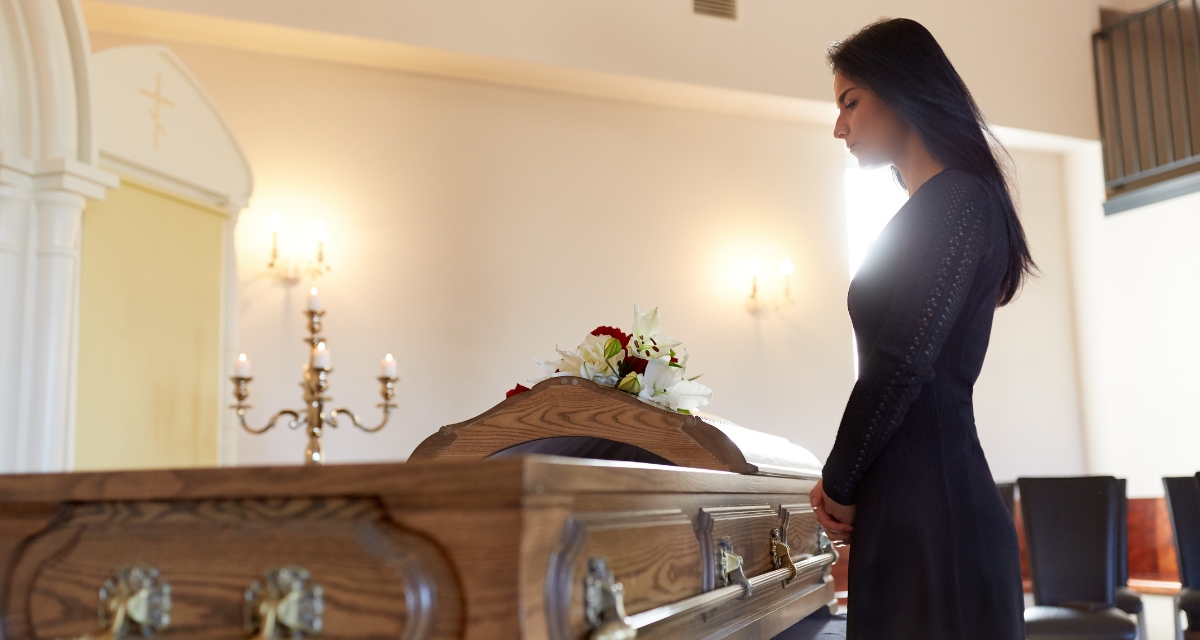
Several prominent deaths have happened over the past few years, and a generational divide around the topic has started to emerge. It seems that older generations still hold to the custom of not speaking ill of the dead, while Millennials and younger generations have moved to a more honest eulogy of the deceased.
But where did the idea of not speaking ill of the dead come from, and why are people under 45 tossing it out the window? Like many things that get passed down through multiple generations, most people have no idea where this unspoken rule comes from. It turns out that the answer may go back further than you think.
The origin of ‘don’t speak ill of the dead’
English tutor and YouTuber Tutor Nick P revealed in a video that the phrase likely originated in 4 A.D. by Chilon of Sparta, one of the Seven Sages of Greece. The term was officially recorded and attributed to Chilon in Book I, Chapter 70 of Lives and Opinions of Eminent Philosophers by Diogenes Laërtius.
According to Tutor Nick P, the saying was originally written in Ancient Greek as “τὸν τεθνηκóτα μὴ κακολογεῖν,” which translates to, “Of the dead do not speak ill.” Laërtius’ book was later translated into Latin from Greek by Ambrogio Traversari, an Italian monk, as credited by Archive.org. A second edition was also translated by Traversari in 1474, according to the George Peabody Library at Johns Hopkins University. Most sources cite the Latin translation,“De mortuis nil nisi bonum dicendum est,” as the origin of the phrase, which states, “Of the dead, nothing but good is to be said.”
Tradition dictates behavior
Whether you learned the Greek, Latin, or English version of Chilon’s proverb, it has hung around for centuries without being questioned. Humans like consistency, and when it comes to social rules, change is uncomfortable. It should come as no surprise, then, that younger generations tossing out the rulebook would ruffle a few feathers. Not everyone may agree with their approach, but their reasoning is sound. And, oddly enough, it may be the same reason older generations cling to the old phrase: their moral compass.
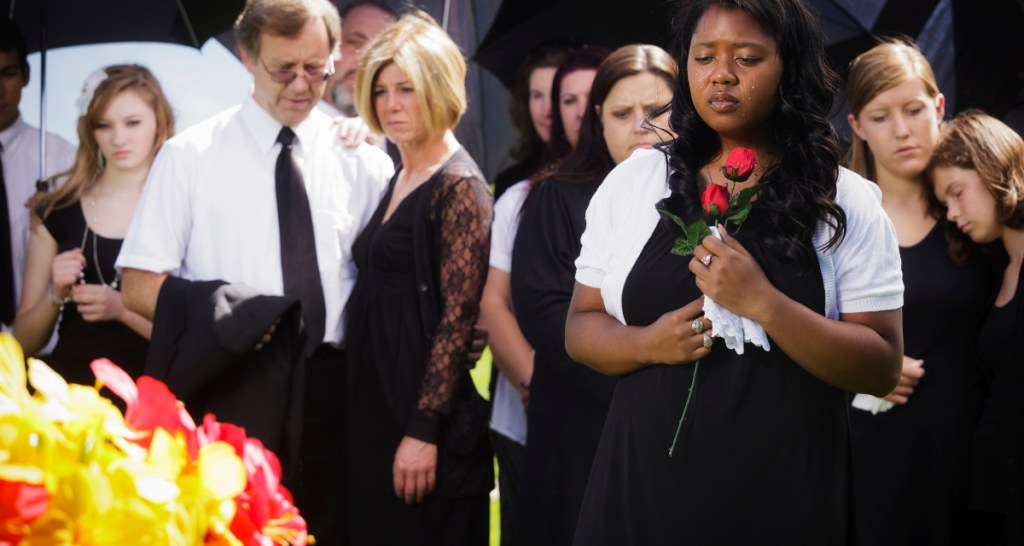
Photo Credit: Canva
Rewriting history for the bereaved
In a YouTube video, grief coach, author, and podcaster Shelby Forsythia explains that the people who may have been profoundly harmed by the decedent find being told not to speak ill of the dead damaging.
Forsythia says, “It is basically society telling you, or your friends or family telling you, that your pain is less important than preserving the image of someone who’s no longer here.” She later adds, “When somebody dies, we are often pressured to soften sharp edges. To rewrite somebody’s entire history and just strip away complexity and nuance, and pain, frankly, in the name of respect.”
Photo Credit: Canva
The shift from sharing rose-colored platitudes became most apparent in 2025 when Jennette McCurdy shattered the quiet expectation with her book, I’m Glad My Mom Died. An honest look at complicated grief, it was clear that McCurdy loved her mom, but she also had no desire to rewrite history. She told the uncomfortable truths about the abuse she experienced at the hands of her mother and how it shaped her. The actress also spoke of her mother with admiration at times. It was a book as complex as the grief she was processing. It opened the door for others to admit their own journeys with the same experience.
Honesty is healing
“For many grieving people, myself included,” Forsythia explains, “especially anyone who is mourning anyone who was abusive, or absent, or estranged, or toxic, this societal norm can feel like a form of emotional gaslighting.” She goes on to say that while the phrase may be well-meaning, it can inadvertently silence survivors while protecting abusers, and “erases hurt from the story of your grief.”
Of course, this is typically not the intention when family members or friends repeat the proverb. For some, “speaking ill” may make them uncomfortable, or they may feel it is tainting their positive memories of the deceased. For others, it could feel distasteful without much thought given to whether it’s appropriate for that particular grieving person. In many cases, the intent is usually not to cause additional harm.
Older generations want to be respectful of those mourning the deceased. Younger generations want to be respectful of the people who may have been harmed by the deceased person’s actions in life. Neither generation is wrong or right because grief is as subjective as the relationships each person had with the deceased.