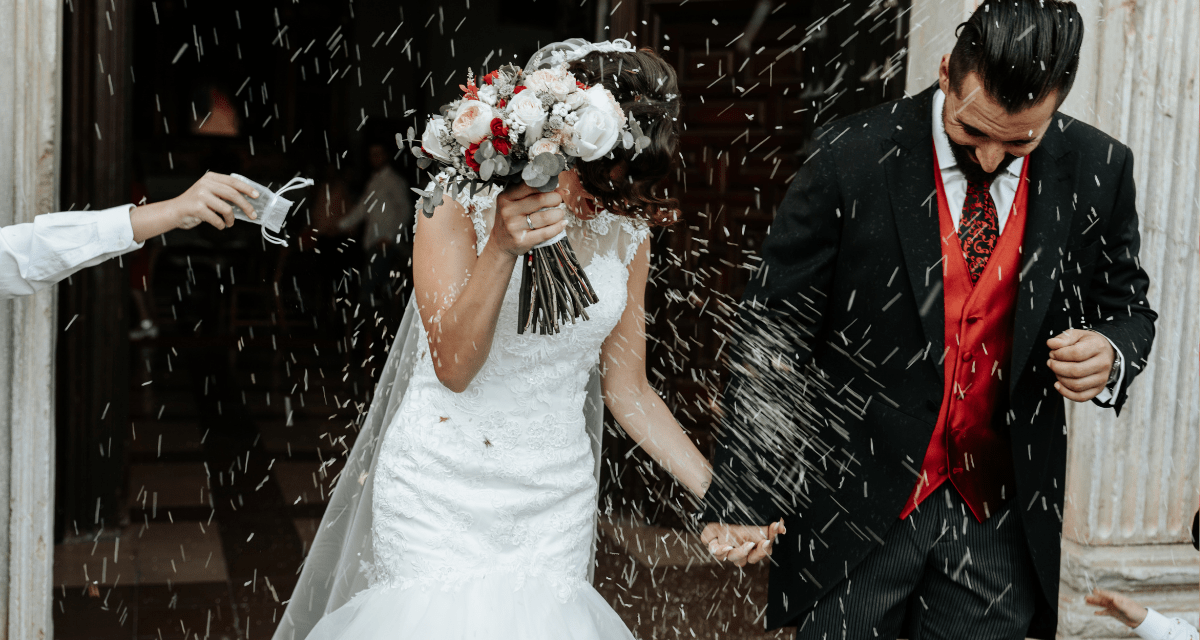
You’ve seen it a hundred times, even if only in the movies: a couple bursts through the doors and the happy crowd showers them with a burst of tiny white grains.
Throwing rice at weddings is one of those rituals so woven into our culture that you’ve probably never stopped to ask why we do it. Or why, lately, it seems like almost nobody does it anymore.

And what is that strange rumor you might have heard? The one about rice making birds…explode? Let’s clear the whole thing up, because the truth is a lot nicer (and a lot less violent) than the myth.
“We hope good things for you”
Here’s the heart of it: throwing rice was never really about the rice.
For most of human history, grain equaled survival. A full harvest meant a fed family, a secure home, and a future. So when people tossed grain over a newly married couple, they were acting out a wish—a desire, a good luck charm—that this new household would be just as full, fruitful, and abundant as the grain they were throwing.
The custom is often said to stretch back some 2,000 years with roots usually traced to the ancient Romans and Celts. Though, fair warning, historians don’t fully agree on who started it. The Romans threw wheat and oats to honor Ceres, their goddess of the harvest. The Celts tossed grain both to bless the couple and to distract any mischief-making spirits drawn to the party. Rice came later, likely during the Middle Ages, once trade routes made it cheap, white, and far less messy than a bushel of wheat.
Everybody throws something
Around the world, nearly every culture independently landed on the same instinct—to throw objects at the happy couple—just with different stuff in hand.
In Italy, guests have tossed candies or sugared nuts in hopes of a sweet marriage. In Morocco, they hand out dried dates, figs, and raisins for a fruitful one. In Poland, rice and coins are scattered at the couple’s feet. At Greek Orthodox weddings, rice is mixed with sugar-coated almonds—the rice for fertility, the almonds for the bittersweet—to represent a marriage that’s both things. And in Hindu ceremonies, couples are showered with akshata, whole rice grains dyed orange-yellow with turmeric, as a sacred blessing for prosperity and protection.
The object changes everywhere you look, but the message never wavers: may your life together be full.
What’s this “rice makes birds explode” nonsense?
The story goes like this: after the ceremony, birds would gobble up the uncooked rice left behind, it would swell inside their little stomachs, and…well, you can guess where this is headed.
Then the urban legend got serious. In 1985, a Connecticut state legislator named Mae Schmidle introduced a bill to ban rice-tossing at weddings on exactly those grounds. While the bill didn’t pass, the claim struck fear in the nation’s heart. The next year, panic swelled when advice columnist Ann Landers repeated it in her syndicated column. (She’d later print a retraction.)
There’s just one problem. It isn’t true.
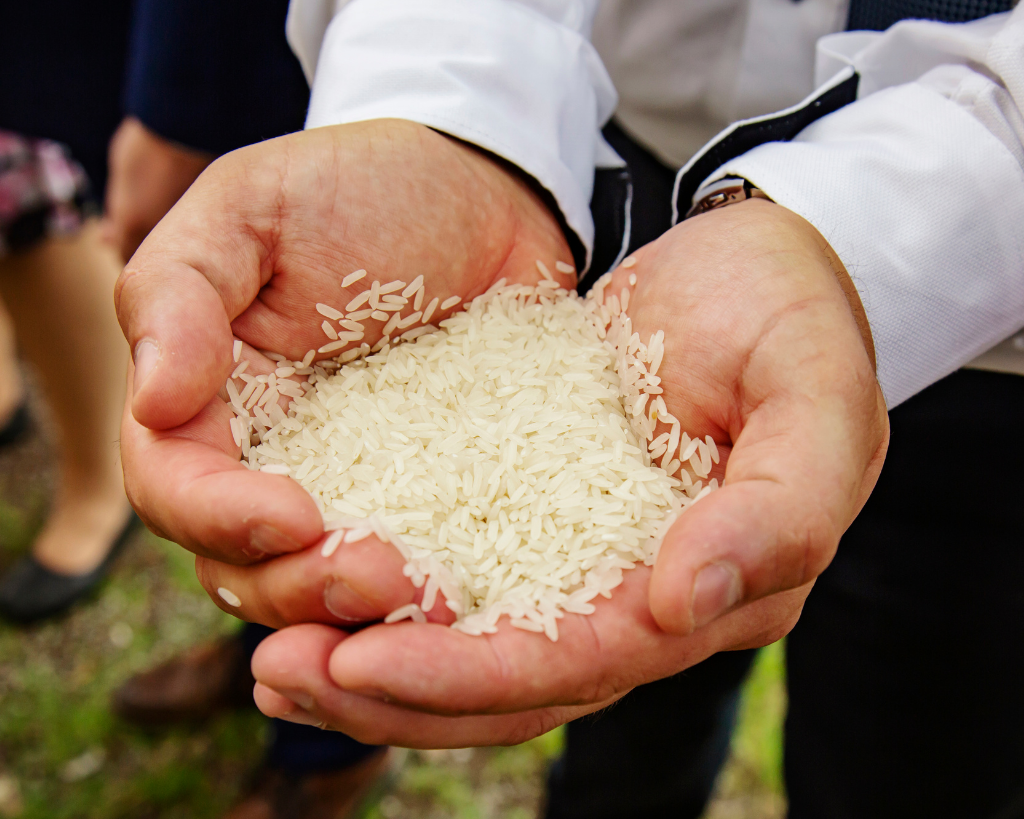
Steven Sibley of the Cornell Laboratory of Ornithology put it bluntly: “Rice is no threat to birds. It must be boiled before it will expand.” In 2002, a biology professor at the University of Kentucky even fed 60 doves and pigeons an all-rice diet, then watched every single one stroll away unbothered. Here’s the kicker: that same research found birdseed expands about 40% when wet, more than rice’s 33%. Yet, have you noticed that nobody’s trying to ban birdseed? Also, plenty of wild birds—from waterfowl to bobolinks—eat uncooked rice as a normal part of their diet.
So you can exhale. No birds were harmed in the making of this tradition.
In fact, the real bird story is the opposite of the myth. In 2007, Venice banned the wedding rice toss at St. Mark’s Square, because an estimated 40,000 pigeons kept showing up to crash weddings. Turns out, they loved the rice a little too much.
Where did the tradition go?
If the bird thing is a myth, why has rice basically vanished from modern weddings?
The real reasons are far less dramatic. Rice is a pain to clean up. Strewn grains turn church steps and polished floors into a skating rink. And plenty of venues simply ban it outright. Perhaps the bird myth handed them a guilt-free excuse to enforce a policy they already wanted.
Ask anyone who’s planned a wedding recently and you’ll hear some version of the same sentence: “the venue said no rice.” So couples in love did what they’ve always done. They improvised.
Why we throw things at the people we love
Think about how often we mark our biggest moments by throwing something: rice at weddings, confetti on New Year’s, a graduation cap into the air. There’s a reason for that. Some feelings are just too big for words, so we reach for a gesture instead.

A wedding is one of those wordless moments. Because what do you even say to two people stepping into the rest of their lives together? “Good luck” feels too small. So, a whole crowd does something physical and a little ridiculous instead: they pick up a handful of hope and throw it into the air, all at once. The mess is the point. It’s love you can see, hear, and sweep off the steps afterwards.
That’s the part worth holding onto, no matter what’s in your hand.
Wedding expert Priya Patil frames the concept well: “It’s a tradition for family and friends to shower the newlyweds with good wishes as they walk into a new life together,” she says in a YouTube explainer. “No matter the culture, the significance of the throw is similar. It’s a demonstrative ritual performed by the guests and family to wish the couple good fortune, a prosperous marriage, and children if they desire.”
The tradition didn’t die; it changed outfits
Walk into a wedding today and you’ll still get the send-off moment. It just looks different.
Now it’s bubbles catching the light, a tunnel of sparklers, a flurry of flower petals, or biodegradable confetti that won’t upset the venue. Some couples even toss birdseed. Which, given everything, feels like a small apology to the pigeons.
Isn’t that lovely? The grain changed. The mess got cleaner. But the meaning stayed exactly the same: a crowd of people you love, gathered to physically throw their hopes into the air for you.