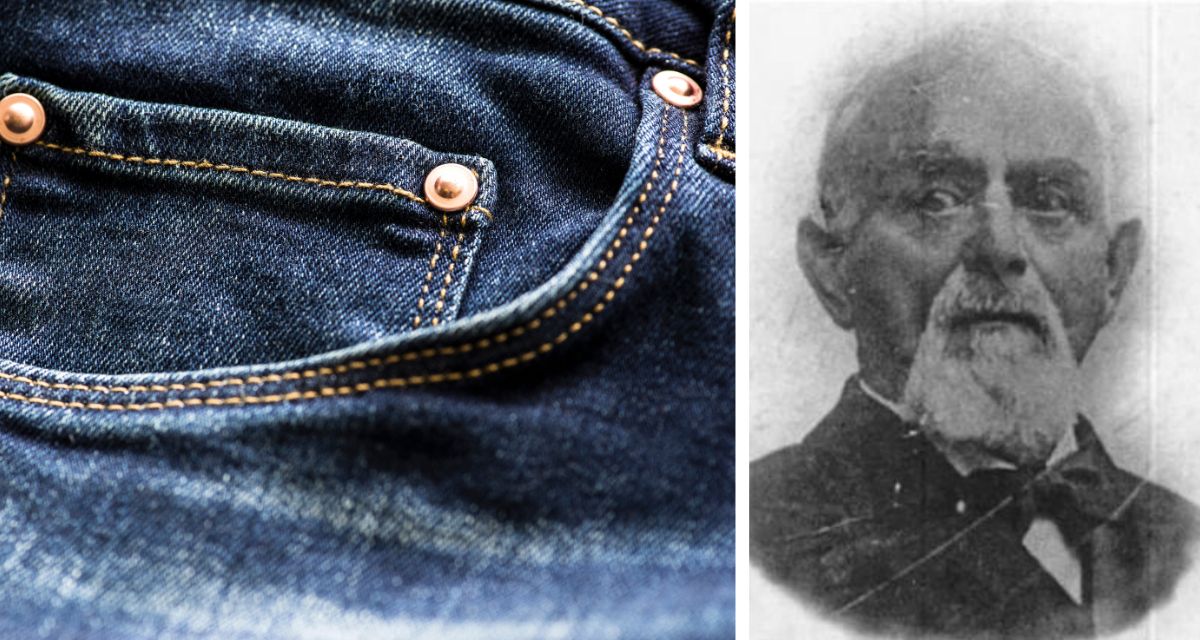
Anyone who’s worn jeans (and if you don’t fall into this category…how?) has seen those odd little metal buttons around the pockets. While those metal bits might seem like meaningless decoration upon first glance, in truth, they are an amazing feat of engineering and ingenuity.
In a now-viral video by content creator Fineas Jackson, we go back in time 150 years to the late 1870s, when laborers—the original denim trendsetters—kept tearing through their jeans while working.
Usually this damage wasn’t a result of long-term wear and tear, but of premature rips made by a single motion. Crouch down to hammer a railroad spike, tear. Push a saw back and forth for lumber, tear. You get the idea.
Tired of making endless repairs to jean rips, Reno-based tailor Jacob Davis became determined to find a solution. Davis just so happened to make horse blankets and tents as well, which were fortified with copper metal rivets. It dawned on him that the same studs could be used to strengthen certain stress points in jeans. The pockets, the waistband, the crotch area, etc. And so, he began replacing the stitches in those areas with rivets using a hammer.
Et voilà: impenetrable pants.
From quick fix to global staple
However, this was only part of the puzzle. Davis needed to protect his idea, and to do so, a patent was needed. Being unable to fund it himself, he reached out to his fabric supplier, Levi Strauss. Yes, the Levi behind Levi jeans.
By 1873, Strauss and Jacobs received their patent for “fastening pocket-openings,” as they were called, ushering in the ever-enduring era of blue jeans.
Today, the rivets we see in modern jeans look almost exactly the same as those in the late 1800s…except the crotch area and back pockets.
For the former, you can thank cowboys lamenting about their nether regions heating up and getting accidentally branded by the campfire, explained Jackson.
And for the latter, they were removed after customers complained that they scratched up furnishings like chairs, saddles, and so on.
An inventor who faded into obscurity
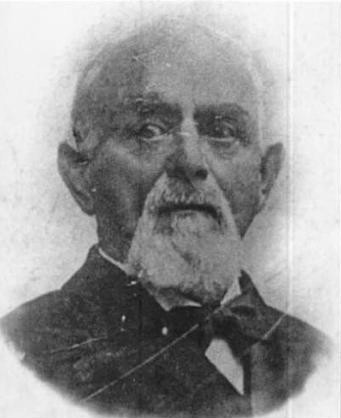
As for Jacobs, he spent the remainder of his days in San Francisco manning the production side of things while the company, under Levi’s name, went global. As the public began to use “Levi’s” as a generic term for all blue jeans, Strauss’ credit slowly dissolved. Add to that the catastrophic 1906 San Francisco Earthquake and subsequent three-day fire, which caused the company to lose much of its early records, including the crucial role played by Davis. Nowadays, it’s mostly fashion historians who remember his name. And anyone reading this article, of course.
It goes to show that not all fashion is decorative, especially when we look at clothes of yesteryear. Many details we know and love were shaped by the everyday needs of real people, and in turn, tell the stories of those people. Jeans, rivets and all, in particular carry a history of persistence, determination, and ruggedness.
Even if many of us slip on a pair to work from our couch these days, perhaps keeping those little mementos on helps us remember that legacy…and the man who helped create it in the first place.