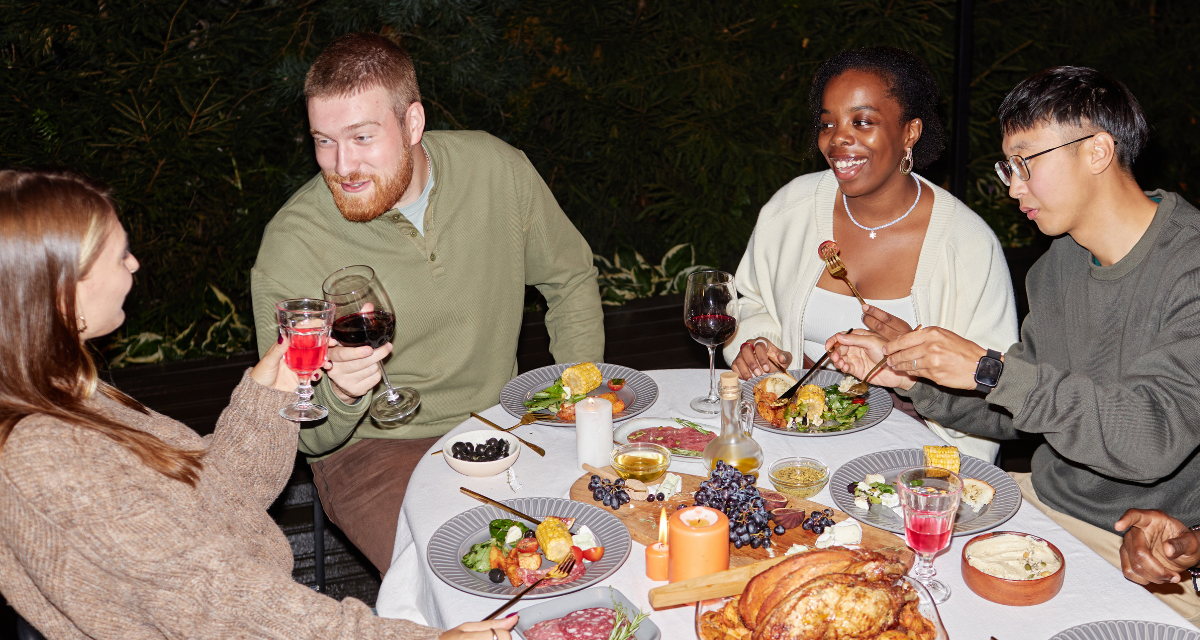
Here’s a strange sentence: Gen Z is throwing more dinner parties than any generation in history.
What?
Yes, Gen Z. The generation we all picture glued to their screens, who we assumed had given up on getting together. Turns out, they are the most enthusiastic group of hosts we’ve ever seen. They’re swapping pricey nights out for fun themed dinners, potluck spreads, and cozy nights in with their friends. The dinner party, once a symbol of stuffy adulthood, is officially back on the menu. For a generation that’s battling loneliness on a historic scale, yes, it really is that serious. Dinner parties have become a lifeline.
There’s one catch. Throwing a dinner party and actually knowing how to host one are two very different skills. A confusing, almost contradictory trend has emerged, too. Although Gen Z craves connection, the act of hosting? It stresses them out.
One study found that 87% of Gen Z hosts dread guests arriving, so much so, that 77% have cancelled plans because they felt overwhelmed. In a national survey, 49% of Gen Zers admitted that they were too uncertain of their cooking to host guests. Mid-charcuterie-board, Gen Z is beginning to realize that nobody ever taught them how to do this.
Enter a mom from the Midwest and her Gen Z daughter.
The video that struck a nerve
On TikTok, a mother-daughter duo behind the account @ourtablescompany has been racking up millions of views with a deceptively simple series: “Chic things my mom does as a host that change the whole night.”
The pinned video— with 1.7 million views—opens with a line that says:
“She never called it hosting. She just said she was having people over.”
Boom. That’s it, the magic summed up in a single line. Hospitality doesn’t have to come with a performance review. It is merely what you do when people come over.
The account is run by Georgia and her mom Annette, a Midwest duo from a home “where the kitchen is always running and the table is always set for one more.”
The origin story is sweet: at the start of 2025, Georgia asked Annette to host monthly dinner parties so she could study the art of hospitality she’d grown up seeing. What began as a few videos for their dinner guests became a community of nearly a million across TikTok, Instagram, and their Substack, Saved You a Seat.
When did the rules change?
To understand why young viewers are flocking to @ourtablescompany’s videos, it’s important to know what the dinner party has become. In a recent Telegraph piece, writer Lorna Perry contrasts her own gatherings with the ones her mother enjoyed at the same age. Her mom planned elaborate three-course meals from cookbooks and made everything from scratch. Perry’s generation reaches for social-media recipes, a big pot of pasta, and store-bought snacks. Paper invitations became Partiful notifications. Thank-you notes became follow-up texts. Cancellations got easier…and more common.
“The golden rules for entertaining have been torn up and rewritten. No one even calls it a dinner party any more,” Perry writes.
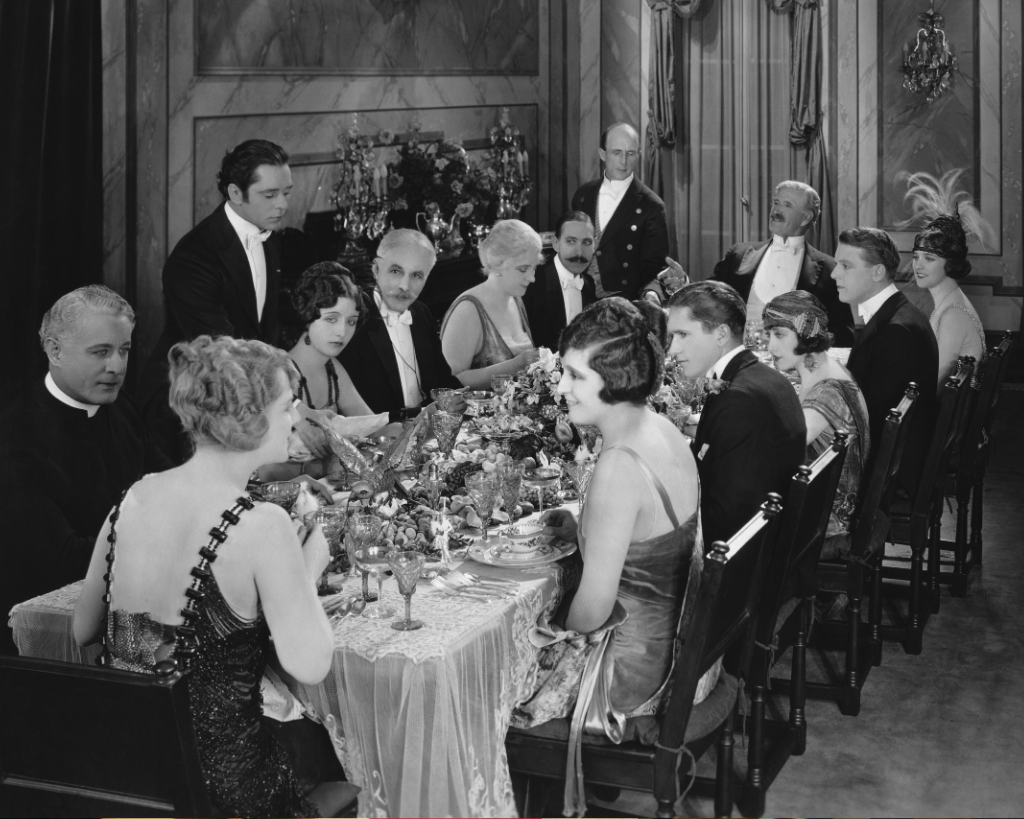
She’s not knocking Gen Z, but capturing a snapshot of a generation that’s entertaining under different rules: it’s more casual, more candid, and more affordable. That’s what happens when you live in a time plagued by financial uncertainty and where more people than ever are in the workforce. But it also means the old script for how to make a night feel special got lost somewhere. And an entire generation is feeling its absence.
The tips aren’t revolutionary. That’s the point.
None of Annette’s advice will shock a seasoned host. She puts a drink in your hand within the first five minutes. She dims the lights before the first guest arrives. She sets the table the day before, and pulls something out of the oven right as you walk in, so the house smells like a wonderful dinner.
The more meaningful advice centers around people, not props. They’re the kind of simple, obvious things that only seem so when pointed out. Annette seats everyone intentionally. She introduces guests with a sentence about why they’ll like each other. She keeps a water pitcher nearby so refills happen without anyone asking, walks every guest to the door, and sends a text the next morning naming something specific she loved about the night.
And maybe the most radical one of all: she never apologizes for the food.
For a Millennial raised with Martha Stewart Living magazines and The Barefoot Contessa always playing in the background, this might feel like muscle memory. If you’ve ever taken a serious home economics class, these tips are in your bones, too. But Gen Z largely grew up without either. Home Ec vanished from most schools, and with it domestic know-how stopped being passed down by default. So for a younger generation that wants to gather but was never handed the playbook, these tips are far from obvious.
“From someone who never entertains and wants to, and also knows nothing on where to start, this was perfect. Simple, easy and intimate tips,” wrote one person in the comments.
“Hosting is a dying art and she’s quite the artist! Your mom is a glimmer of hope in a world of nonchalance and dysfunctional social settings,” praised another.
Why this resonates
Gen Z wants connection, badly. They came of age during a global pandemic, are living through a loneliness epidemic, and experience a large part of their social lives through screens. Hosting feels like the antidote, but they don’t know where to start. The desire is there; their confidence isn’t. And you don’t go viral solving a problem people don’t have.
That’s where Georgia and Annette come in. Almost none of these tips are about being a better cook, or better floral arranger, or better chooser-of-candles. This is not a matter of taste. They’re teaching audiences about how to make their guests feel comfortable, and the host less frantic in the moment. Set the table the night before. Don’t apologize. Let the night end when it wants to.
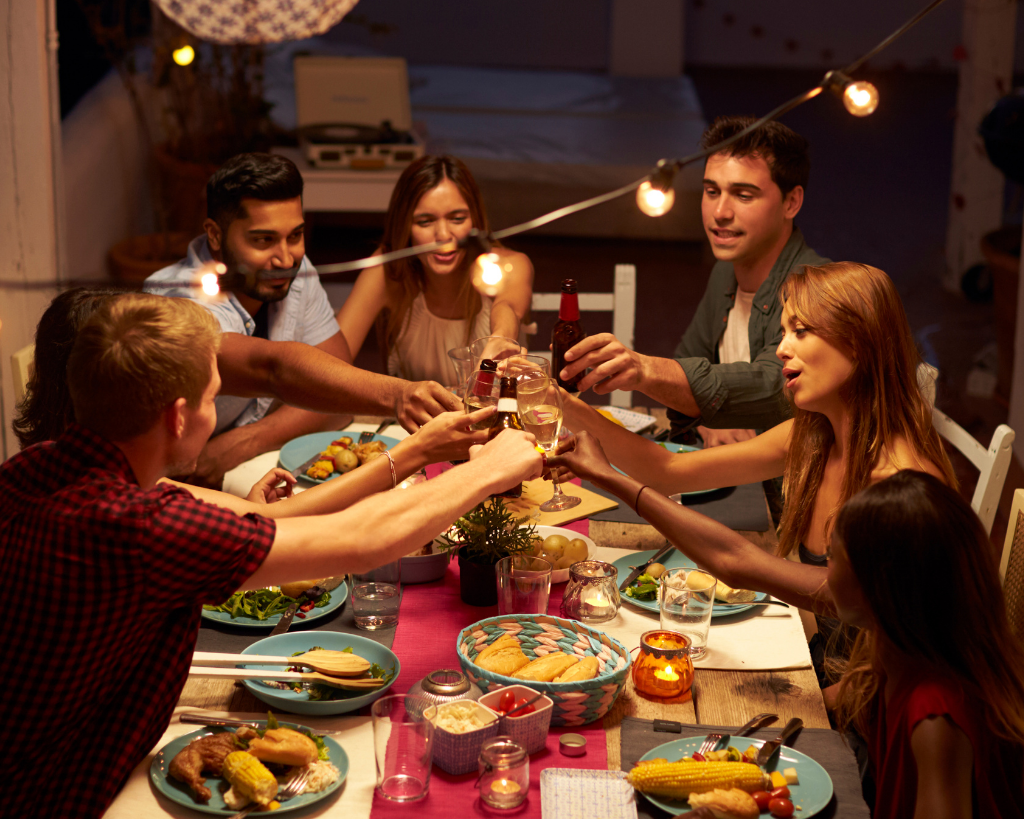
If hosting anxiety is really a fear of being judged, each of these approaches removes the stress of being seen. It turns hosting—a vague, scary concept—into small, controllable actions. In essence, you shrink the fear by shrinking the task.
It won’t be the answer for everyone. Not every twenty-something has the space, the budget, or a willing co-host, and many argue hosting still falls disproportionately on women. But for the many who want to invite guests over yet freeze at just the thought of it, @ourtablescompany videos offer a gift: a way of recontextualizing the situation.
What you should take away
Hosting can be fun! At its best, it transcends into an art, a way to creatively express yourself while enjoying the company of those who love you. And at its heart lies a generous instinct: put a drink in someone’s hand, seat them next to someone they’ll adore, and make sure the shyest person in the room feels seen. Gathering people around a table is how grown-ups build the friendships and community the loneliness research keeps telling us we’re starved of.
Gen Z already wants a seat at the table, and a mom from the Midwest is showing them that the rest is learnable. You don’t even need to call it hosting. You can just have people over.