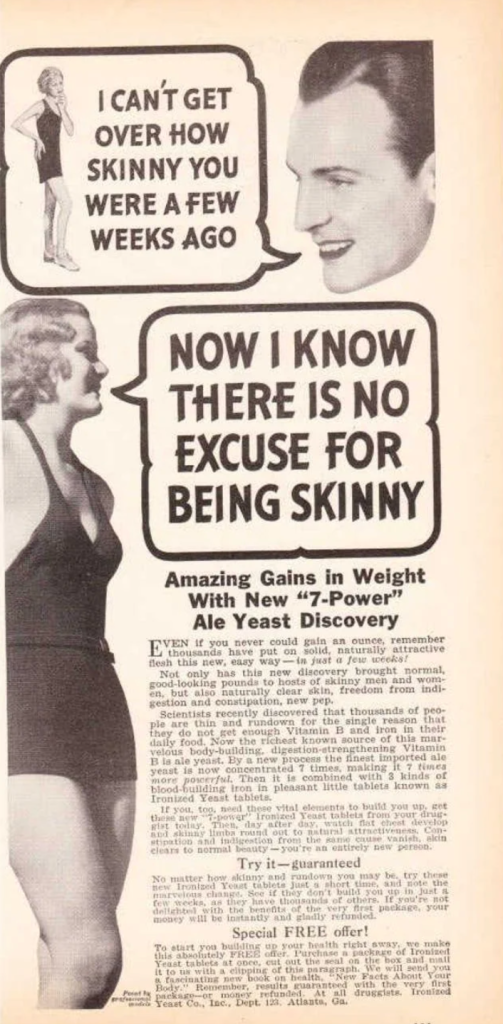
Beauty standards are historically volatile. While modern advertising often centers on weight loss, the 1930s through the 1950s presented a completely different physical ideal. During the mid-20th century, the advertising industry aggressively pushed weight gain for women, framing thinness as a social defect and a direct threat to a woman’s romantic prospects.
On Reddit, a recently resurfaced collection of print advertisements from that era illustrates this intense social pressure. The campaigns utilized blatant shame tactics to sell dietary supplements.
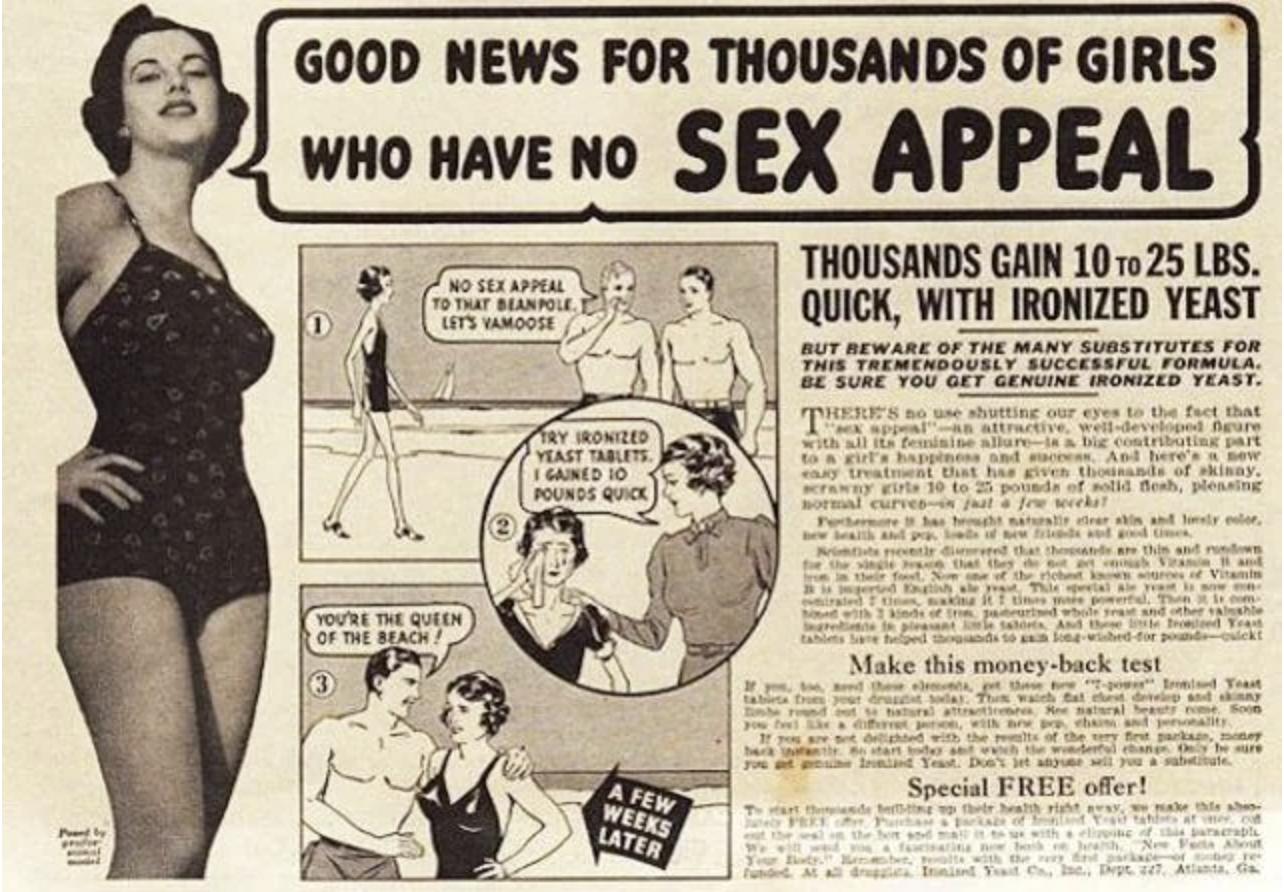
“Good news for thousands of girls who have no sex appeal!”
One advertisement for ironized yeast tablets announced, “Good news for thousands of girls who have no sex appeal!” The illustration depicted a slim woman at the beach being mocked by two men who declared, “No sex appeal to that beanpole. Let’s vamoose!” The advertisement offered the yeast tablets as a rapid solution. In a later panel, the woman reappears with new curves and earns the title “queen of the beach” from an admirer.
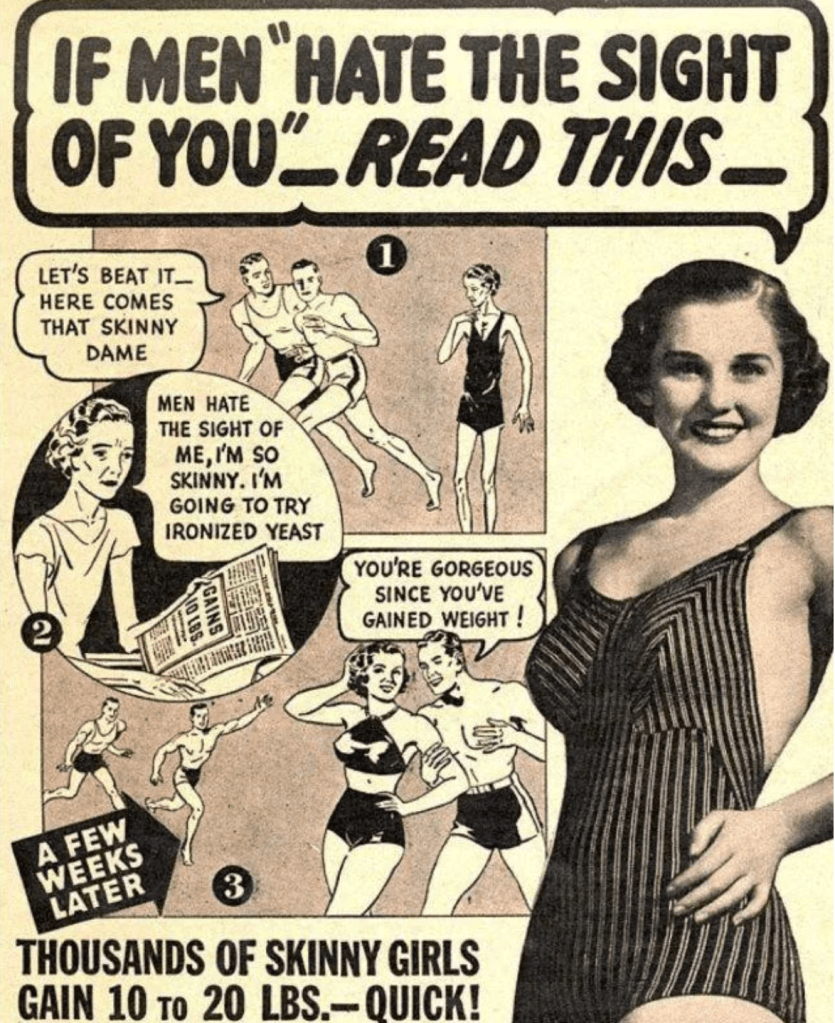
Other campaigns adopted a highly dramatic tone to manufacture insecurity. One featured a frustrated woman complaining, “Men hate the sight of me. I’m so skinny.” After taking the ironized yeast supplement, a man compliments her physical transformation by saying, “You’re gorgeous since you’ve gained weight!”
Arbitrary beauty standards
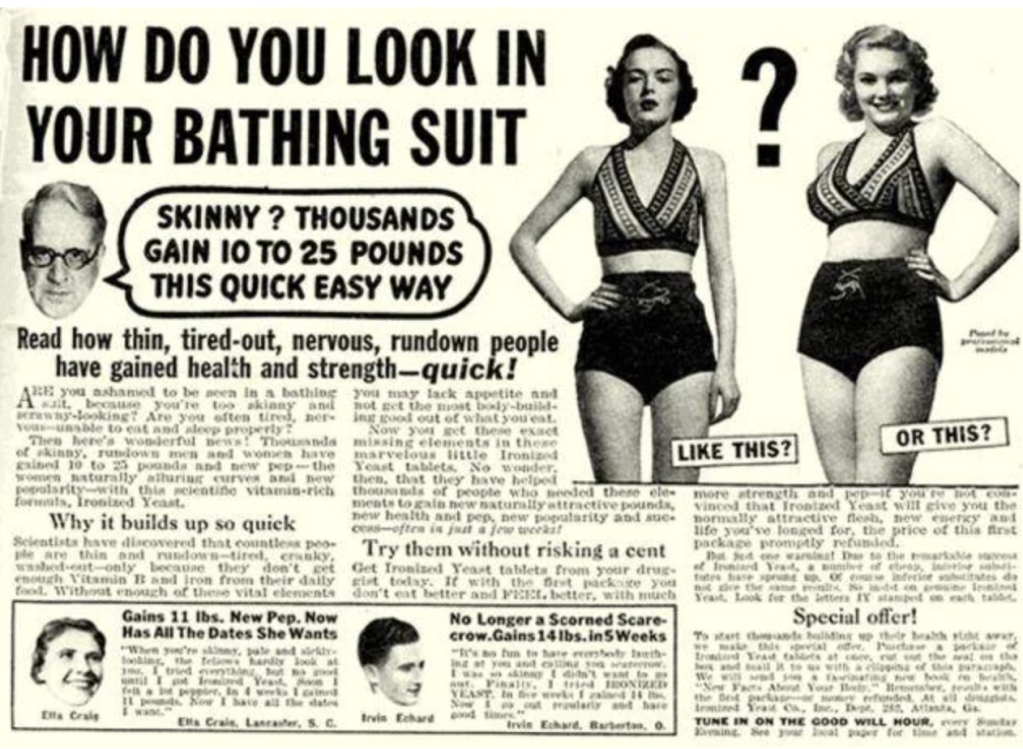
Brands like Wate-On promised to “bring out your natural curves” and claimed that women could easily add 10 to 20 pounds to their frames. The marketing copy was relentlessly blunt. One ad asked readers, “How do you look in your bathing suit?” Another stated clearly, “Skinny girls don’t have oomph!” The campaigns occasionally targeted male insecurities as well, employing slogans that warned, “Skinny men are not attractive either.”
To drive the point home, the advertisements frequently included fictional dialogues designed to highlight the supposed social stigma of being underweight, such as one panel where a man says, “Let’s beat it. Here comes that skinny dame!”
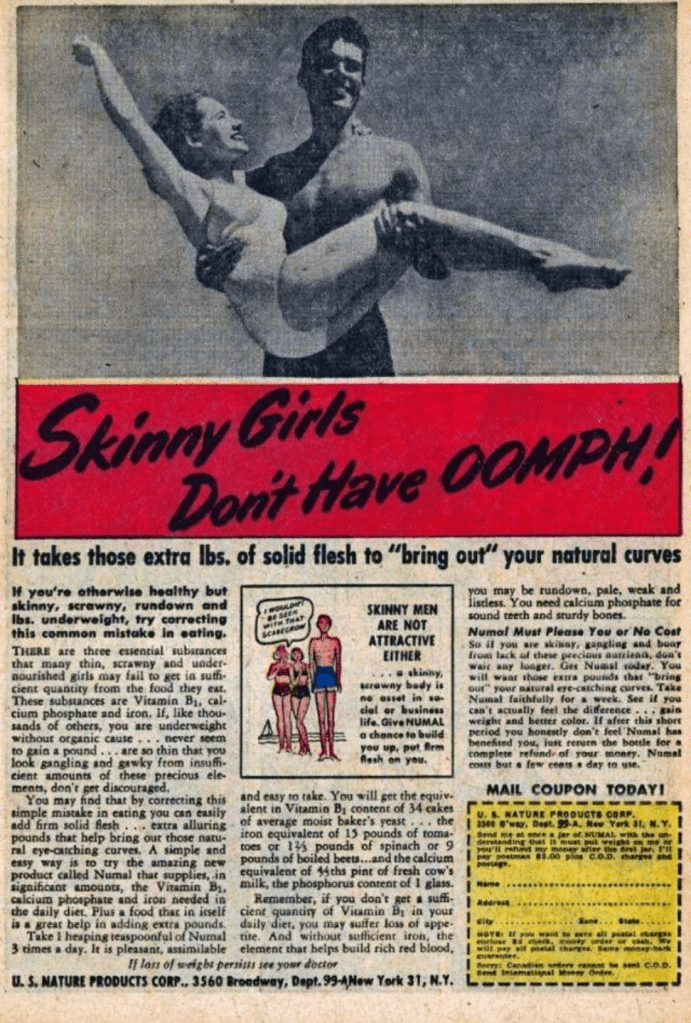
The resurgence of these images provides a stark visual record of how corporate marketing dictates physical ideals. By looking back at what was shamed and what was celebrated in previous decades, it becomes clear how arbitrary manufactured beauty standards truly are.