If you have ever taken a crowded subway during rush hour, you know the unspoken rules. Keep your head down, put your headphones in, and slip into mental autopilot.
This collective trance is exactly what a team of psychologists in Italy wanted to disrupt.
In a fascinating field study published in the journal npj Mental Health Research in November 2025, researchers from the Università Cattolica del Sacro Cuore in Milan decided to test human altruism in public spaces. The team, led by clinical psychology professor Francesco Pagnini, wanted to see if a bizarre and unexpected disruption could jolt commuters out of their daily routines and make them more compassionate to the people around them.
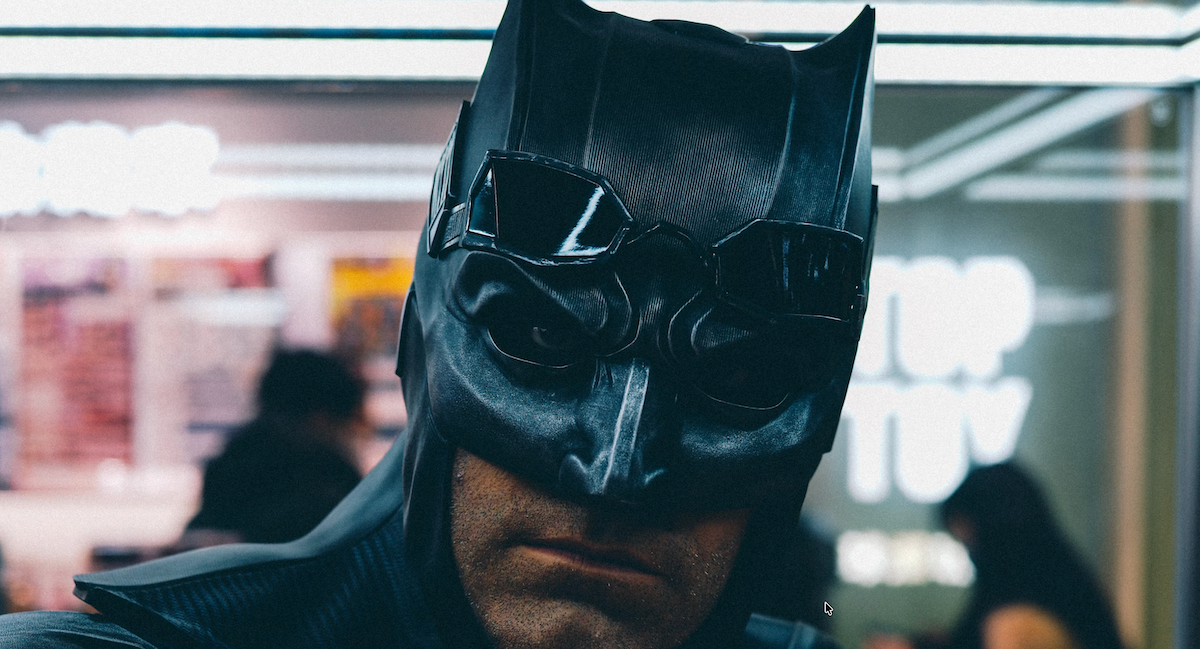
To test this theory, they needed a disruption. They chose the Dark Knight.
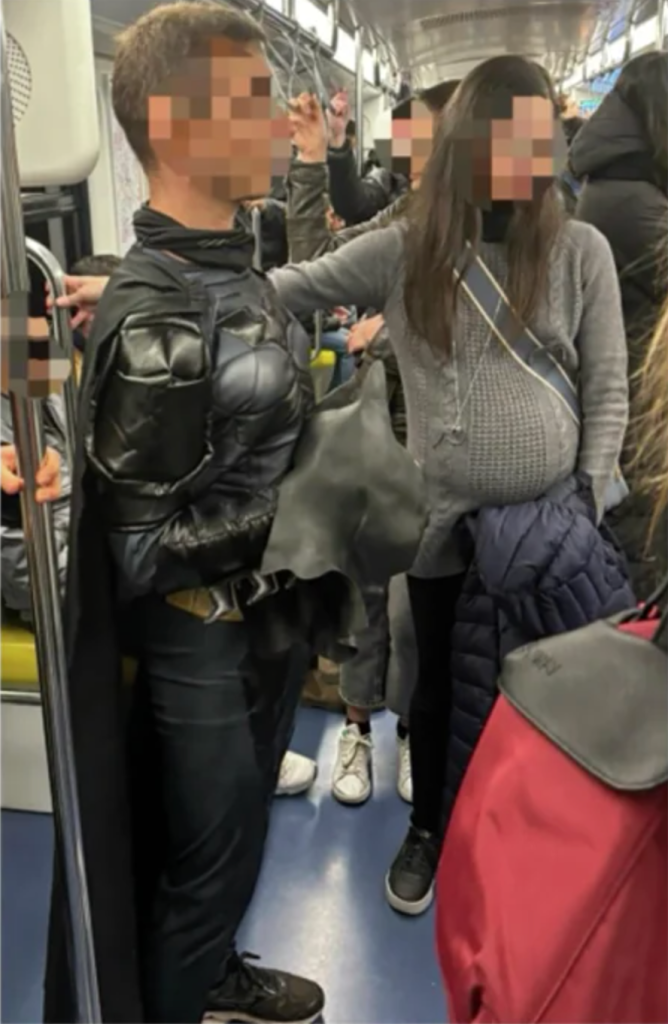
Photo credit: mvea/Reddit
The researchers set up a covert social experiment on the Milan metro. Over the course of 138 observations, a female researcher wearing a prosthetic pregnancy belly boarded a crowded train.
During the control runs, the woman boarded the train alone, and researchers quietly observed how many seated passengers offered her their seats. Under these normal conditions, about 37% of commuters gave up their seats for the pregnant woman.
However, during the experimental runs, a man dressed as Batman boarded the train through a separate door at the exact same time. The costume was recognizable but did not include a full face mask, so as to avoid causing panic.
When Batman was present on the train, the percentage of passengers who offered their seats to the pregnant woman skyrocketed to 67%.
The researchers dubbed this phenomenon the “Batman effect.” While the numbers alone are impressive, the most fascinating part of the study came during the follow-up interviews.
When researchers asked the passengers why they gave up their seats during the experimental runs, they expected people to credit the superhero with reminding them of civic duty or justice. Instead, 44% of the people who gave up their seats said they hadn’t even consciously noticed Batman was on the train.
According to Pagnini, this reveals a powerful truth about human behavior. The unexpected presence of a superhero created a ripple of involuntary mindfulness throughout the subway car. The disruption subtly broke the mental autopilot of the commuters, prompting them to more closely scan their environment and re-engage with the present moment. Once they were fully present, they were naturally more empathetic to the needs of the pregnant woman standing nearby.